Tag Archives: writer

Monday morning writing joke: “Correction”

Two writers were sitting at a bar, as writers are sometimes known to do.

A woman at a table near the bar was doing her best to get the attention of one of the writers. The other writer noticed this and asked the first writer what was going on.

First writer: “She sent me a text message.”

Second writer: “A fan of yours?”

First message: “I hope not. Her message said: ‘Y-o-u-r cute.’ I sent her back a message that said: ‘No. Y-O-U-R-‘-E cute.’ I was only correcting her misspelling.”

Second writer: “And?”

First writer: “And now she thinks I like her. I can’t get her to leave me alone.”

Second writer: “Here, let me see you phone.”

First writer hands the second writer his phone. Second writer types a message and sends it. The woman looks at it, shows it to her friend, puts a sour look on her face, and then gets up and leaves.

First writer: “What did you write?”

Second writer shows him. The message read: “You’re not my typo.”

1 Comment

Filed under Monday morning writing joke

Monday morning writing joke: “hard work”

Q.: What did the hard-working zombie writer named Kate call herself?

A.: Dead-i-Kate

Leave a comment

Filed under Monday morning writing joke

Big Publishing is the Problem | Hugh Howey

Big Publishing is the Problem | Hugh Howey.

A few weeks ago, I speculated that Hachette might be fighting Amazon for the power to price e-books where they saw fit, or what is known as Agency pricing. That speculation was confirmed this week in a slide from Hachette’s presentation to investors:

So, no more need to speculate over what this kerfuffle is about. Hachette is strong-arming Amazon and harming its authors because they want to dictate price to a retailer, something not done practically anywhere else in the goods market. It’s something US publishers don’t even do to brick and mortar booksellers. It’s just something they want to be able to do to Amazon.

The biggest problem with Hachette’s strategy is that Hachette knows absolutely nothing about retail pricing. That’s not their job. It’s not their area of expertise. They don’t sell enough product direct to consumers to understand what price will maximize their earnings. Amazon, B&N, Kobo, and Apple have that data, not Hachette.

Beyond their ignorance of pricing strategy, Hachette also has a strong bias toward print books. Their existing relationships with major brick and mortar retailers gets in the way of their e-book pricing. This has been confirmed by my own publishers, who have admitted privately that they would like to experiment with digital pricing but don’t want to upset print book retailers. This puts their pricing strategy at odds with their investors’ needs, their authors’ needs, even their own profitability. In sum, they are making irrational decisions with their pricing philosophy. Hachette is making the same mistake that many publishers make, which is to think that harming Amazon somehow helps themselves.

The same presentation by Hachette to investors stressed the importance of DRM and

The rest of the article at: http://www.hughhowey.com/big-publishing-is-the-problem/

1 Comment

Filed under publishers, publishing, publishing news

Rough Stuff: In Which I Discuss Being Accused of Having a Sordid Mind

Rough Stuff: In Which I Discuss Being Accused of Having a Sordid Mind.

This is probably one of those blogs I shouldn’t write, but impulsivity and I are old, old friends. (Remember that time I decided to wear only clothes from Wal-Mart for a year? Yeah.)

I get a lot of very generous feedback about my writing. Some of it in the form of reviews, some of it direct to my inbox. It’s the kind of feedback that keeps me going, writing the next book or story. It helps me put out the flames of self-doubt when they come shooting out of my brain, obliterating the words before they can take shape on the page. I won’t say that I can’t live without it, but it surely makes my work easier to put out there. You know. Welcoming arms and all.

I’ve never addressed a reviewer directly, and I won’t do it now. But there’s a thread that runs through some of the uglier criticism of my novels and stories that I think is worth mentioning and examining.

Vulgar is a word that’s commonly used. Lurid as well (though it was used in conjunction with entertainingly, which I rather liked). My favorite and most recent hint that all is not hunky dory in my world is the observation that I must have a sordid mind.

It does make me think. It makes me wonder if,

To read the rest of the essay: http://www.laurabenedict.com/rough-stuff-in-which-i-discuss-being-accused-of-having-a-sordid-mind/

Leave a comment

Filed under Writers on writing

7 Things Every Twenty-First Century Writer Needs To Do | PHOENIX Magazine

7 Things Every Twenty-First Century Writer Needs To Do | PHOENIX Magazine.

Writing can be a lonely business, and the fragmentation of the publishing industry can leave aspiring authors feeling unsure as to whether they’re got more or less opportunity of getting their work read than ever before.

Last weekend’s Writing In The Digital Age conference – an event organised by leading manuscript assessment service The Literary Consultancy – was a rare opportunity for the UK’s leading publishers, editors, agents, writers and digital innovators to gather in an atmosphere of honesty and openness to swap experiences, perspectives and practical advice.

From a blistering keynote by journalist and sci-fi author Cory Doctorow to a panel about what book reviewing means in the twenty-first century, it was a rollercoaster ride through the opportunities and challenges on offer for those of us mad enough to cobble together careers based on words.

If you fall into that category, here are seven things you need to know.

1. Take control of your own career.

Whether you choose to self-publish or pursue the traditional route, it is no longer viable to shut yourself in a garret and expect the royalty cheques to come. Orna Ross, founder of The Alliance of Independent Authors, got it in one when she said that “every writer should be an indie [independent].” Define why you want to write, what sort of things you want to write, how much money you want to make, and the lifestyle you want to live while you’re doing it. Make it into a proper business plan, with a timeline, marketing strategy and KPIs. Then go out and find the tools and partners that are the best fit.

2. Self-publish, at least once.

Ross also insisted that even trade published writers should experiment with self-publishing at some point. It’ll give you a much better understanding of the full range of publishing services and tools out there, and will encourage you to get over the mental barrier of sharing your work. Beware of making anything public too early – you still want to thoroughly polish before you slap an ebook onto Amazon – but genre novels, specialist non-fiction, short stories and experimental formats might get more traction on niche platforms than in the traditional marketplace. You won’t learn until you start producing, and there’s real value in overcoming your ego and learning how to ‘ship.’

Other points covered:

3. Turn one manuscript into multiple streams of income.

4. Think beyond books and experiment with multimedia storytelling.

5. Get creative with funding.

6. Don’t sacrifice editing for marketing.

7. Never give away your DRM.

Details at: http://www.phoenixmag.co.uk/culture/7-lessons-every-twenty-first-century-writer-needs-to-learn/

1 Comment

Filed under writing tip, Writing Tip Wednesday, writing tips

Talent

“…talent is like electricity. We don’t understand electricity. We use it.”
–Maya Angelou

Maya Angelou (1928 - 2014)

Maya Angelou
(1928 – 2014)

http://mayaangelou.com/

Leave a comment

Filed under writer, Writers on writing

Writers on Writing: “Times are….”

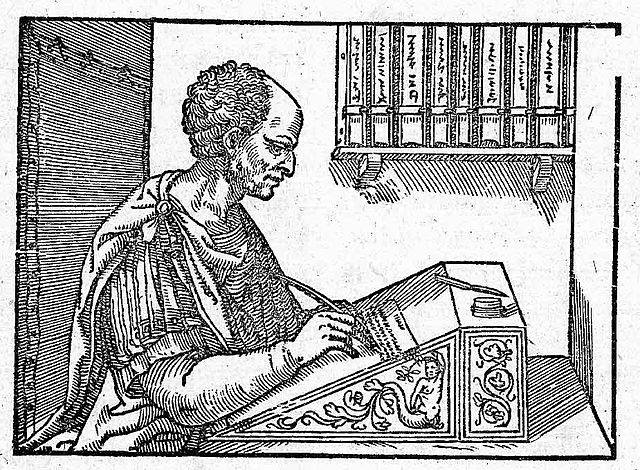
“Times are bad. Children no longer obey their parents and everyone is writing a book.” — Cicero, 43 BCE

“Times are bad. Children no longer obey their parents and everyone is writing a book.”
— Cicero, 43 BCE

Since I am working on a book or two, I guess I am adding to the bad times. And you?

Leave a comment

Filed under Writers on writing

Crime Writer Michael Connelly Shares Secrets With Students | TheLedger.com

Crime Writer Michael Connelly Shares Secrets With Students | TheLedger.com.

Sample:
Bestselling crime novelist Michael Connelly had just returned from two weeks in New York, where he met with writers planning scripts for a new TV series adapted from his books about the Los Angeles Detective Harry Bosch.

He planned to take part in a conference call Thursday evening to help determine who would direct each episode for the first season of “Bosch.”

In between, Connelly stood in the Mini Theater at Harrison School for the Arts on Thursday afternoon, handing out copies of the script for the first episode of “Bosch” to a group of teenagers. Connelly, also author of “The Lincoln Lawyer,” spent nearly two hours talking to some 30 students in the Motion Picture Arts program at the Lakeland school.

Connelly, who lives in Tampa, talked about the writing process, the creation of characters and the challenges of adapting novels for TV and movies. He also treated Motion Pictures Arts instructor Rick Jansen’s class to the opening scene of the pilot for “Bosch,” which is still in production will be available for streaming on Amazon as early as next fall.

“I think that’s really nifty,” senior Eric Moots said afterward about Connelly’s visit to the school. “I don’t think this could happen anywhere besides Harrison.”

Continued at: http://www.theledger.com/article/20140419/NEWS/140419149/1002/sports?p=1&tc=pg

Leave a comment

Filed under Writers on writing

Interview: Joe R. Lansdale : Under the Moons of Mars

Interview: Joe R. Lansdale : Under the Moons of Mars.

Sample of interview…

Interview: Joe R. Lansdale

How did you first come to discover the Barsoom books by Edgar Rice Burroughs?

Actually, as a child when TV was beginning to look for things to fill the air waves, every Saturday they showed Tarzan movies, or Bomba movies, or Flash Gordon, or Buck Rogers, or a combination there of. The Tarzan movies got me interested in the name Edgar Rice Burroughs, and Flash Gordon and Buck Rogers serials got me interested in S.F. adventures, so when I was eleven, and came across a Princess of Mars, and a little later Tarzan of the apes, I was hooked through the gills. I had always wanted to be a writer, seemingly from birth, but when I found Edgar Rice Burroughs, I knew I had to be.

What do you find appealing about the characters and milieu?

It was so different from my life, and at that age I pretty much felt the stories were real. The first person narrative of so many of the John Carter tales was what worked for me, more than the Tarzan novels, or any of the series that were not first person. The framing device of Burroughs receiving the story was another one of the things that pulled me in. I think from that moment on my favorite form of storytelling, and writing, was first person. When I look at the thirty novels I’ve written, most of them are in first person, and I think Burroughs influenced that. I write things, normally, very different from what Burroughs wrote, but he is still my sentimental favorite, and the narrative drive he had in his stories has stayed with me to this day. Oh, and add to the fact that John Carter was a Southerner, could live forever, and could go to Mars by just spreading is arms wide was way cool. I did that, you know, as I’m sure a lot of young boys did back then. Spread my arms hoping, just hoping, those stories, were as I suspicioned then, true. Now I realize if I had been swept across that vast void to Mars, I’d have been killed in moments by most anything I encountered. Dang it.

Leave a comment

Filed under Uncategorized

Monday (morning) writing joke: “Liar”

Q: What’s the difference between a novelist and a politician?

A: One gets paid to tell lies; the other lies to get paid.

Leave a comment

Filed under Monday morning writing joke