
Writer’s Block, n.: The place where a writer lives with his/her imaginary friends. Something like the neighborhood of make believe.
Tag Archives: writer
I have a haunted bathroom
I have a haunted bathroom,
A sink that runs with blood.
I have a haunted bathroom,
It’s full of grime and crud.
I have a haunted bathroom,
From toilet nary a stink.
I have a haunted bathroom,
Because a ghost there stops to drink.
I have a haunted bathroom,
Its walls are cracked and old.
I have a haunted bathroom,
It’s a place too scary for mold.
I have a haunted bathroom,
A bathtub full of red.
I have a haunted bathroom,
An alien bathes there it is said.
I have a haunted bathroom
A cracked mirror in which to stare.
I have a haunted bathroom.
It is beyond repair.
I have a haunted bathroom
With a curtain nice and thick.
I have a haunted bathroom,
If you open it, you’ll say, “Ick!”

I have a hauted bathroom....
Enter, if you dare.
I have a haunted bathroom,
If you look, the word is there.
I have a haunted bathroom,
With a picture of my home.
I have a haunted bathroom,
A place I like to roam.
I have a haunted bathroom,
Come visit me on Halloween.
I have a haunted bathroom,
The spookiest you’ve ever seen.
Self-mutating
Captured on pixels and only on pixels. Don't try this at home, unless you want to be silly.
Who says you need a professional photography to get a good portrait photo? suitable for framing, for use on resumes, or to simply impress a date on your dating web site page or personal blog. And for the mere price of three easy installments of $39.95 each, I will teach you the same tricks and tips that I know.
Building a better story: Tension
In the last installment, I said there was a difference between conflict and tension. Conflict, as Bob McKey pointed out, is the gap between expectation and result. The gap can be small, such as being overcharged a dime or great, such as losing a loved one when you thought he would survive.
The best way to explain tension is to refer to a small book on writing by the writer and editor Algis Budrys, Lithuanian for “Gordon John Sentry, more or less.” His book, Writing to The Point: A complete guide to selling fiction is only 64 pages long, and may be hard to get. But this Strunk and White-sized guide to writing is worth your time (and it even covers manuscript formatting).
For Gordon John Sentry, more or less, a story consists of seven parts: 1) a character 2) in a context with a 3) problem, who 4) makes an intelligent attempt to solve the problem and 5) fails, tries a second time and fails, tries a third time and finally 6) succeeds or completely fails, and whose actions are then 7) validated by another character in the story.
Sounds simple, doesn’t it? That is the allure of telling a good story. But the execution is often more difficult, for writer as well as story character. Step 4 – 6 above is where in a story you find tension. The key is that the character makes an intelligent attempt and fails. With increased knowledge, he or she tries again, and fails. The increased knowledge increases the stakes in the attempt and thus increases the tension. After all, it should succeed, right? Then there is a third and final attempt. This is, in essence, all or nothing, so the tension should be at its highest here.

Tension, while often confused with conflict, is not the same thing.
Filed under advice, Algis Budrys, building a better story, tension, words, writer, writing, writing tip
The Kibitzer and the Kidd, parts 1 and 2
888888
The Cough Drop Kidd and the Kibitzer rode into town. It would have been in a cloud of mentholated dust, but because it was raining, it was in a slosh of mud and a cough laced with glycol. They were almost out of cough drops and the Kidd was not happy.
“Kibitzer,” he said between sniffles, “go get us some.”
“I’m only here to watch,” the Kibitzer said, “and for the popcorn.”
The Cough Drop Kidd pulled his six-shooter and pointed it at the head of Kibitzer’s horse. “You wanna observe riding or walking?”
The Kibitzer’s horse’s ears flicked back and forth as if trying drive away a fly. The Kibitzer blinked a couple times and finally said, “I’ll go watch the apothecary mix up a batch.”
The Kidd nodded and raised the barrel of his pistol skyward. “Be quick about it. I’ll be in the saloon getting a hot toddy. A little honey will help my throat.”
888888
The Kidd entered the saloon. It was beat up ol’ place with chairs that had legs that didn’t match and a bar rail so wobbly it had a hand printed sign hanging from it that said: Donut touch. That means u.
The floor creaked to the point he was sure it was talking to him, saying something like, “Donut go there.” But he paid it no heed as he stepped toward the bar. This part of the Wild Side was full of things that spoke when not spoken to. Some said it was haints. Others said it was spirits. And some even said it was bottled spirits. Even though he was wet all over, the Kidd was parched.
“Hey, dandy boy, wipe your feet. What do you think this is, your corral?”
A few people looked his way and a couple of folks chuckled, but most kept doing the mopping and card playing and lying they were doing before.
The woman yelling at him was tall and a little on the heavy side, which meant this business had been good to her. The Kidd liked that about her. She was standing behind the bar, so thus far what he liked was only from about the waist up. She was wiping out a glass.
When he was up near her, he whispered, “I’ll have a hot toddy.” His voice was about gone.
“Well, I do declare,” she said, “the dandy wants a hot toddy.”
“A what?” somebody at the bar asked. His back was to the Kidd, so the Kidd didn’t know what he looked like.
“A toddy. A hot toddy.” She said the words again and winked back at the Kidd. He wasn’t sure if it was a friendly gesture, or a twitch.
The man turned around. His face was as scuffed as the floor and as beaten up as the chairs. Tobacco juice ran out of one of the corners of his mouth. One eye was lazy and one earlobe looked as though a coyote had chewed on it.
“Dandy,” the man said, spitting on the floor, “we don’t serve your kind.”
It was that moment that the saloon went quiet, except for the gentle swinging of the saloon doors and the floor saying, “Told you.”
“Package,” a voice said. “Package for a Cough Drop Kidd. Is there a Cough Drop Kidd here?”
All eyes turned toward the Kidd.
The Kidd turned toward the delivery boy in his granny spectacles, gray cap with a black bill, and clothes too starched and too new to have been worn much in this town.
“One D or two?” the Kidd asked, lightening still flashing just outside the saloon doors.
“Ah,” the delivery boy looked down at the package, “two.”
“Good. The Kid with one D works the lower territory south of the divide. We call the divide the D-M-D for short.”
“And for long?” the boy asked.
“His D ain’t that long,” some cowboy shouted.
The others in the saloon chuckled.
The delivery boy turned bright red, dropped the package, and skedaddled out of the saloon, getting immediately struck by a lightning bolt. The box hit the floor and broke along one of its sides. It bulged open, spewing books across the hardwood, every last one of them different, one of each and each one about vampires.
“So, you a blood sucker, Dandy?” The floor-faced man stepped away from the bar and his hand rattled toward his holster. He had rattlesnake rattles in a band around his wrist and his hand twitched slightly.
The Kidd glanced around. The card games had stopped. The lying had stopped. Even the moping had stopped. The woman behind the bar twitched him another smile and then ducked down behind it. She moved quick for a big woman.
This town is cursed, thought the Kidd. But he didn’t have much time to think anything else. The floor-faced man’s hand was at the top of his holster.
If love the answer
If love the answer,
do I know the right question?
Silence enfolds me.
Writing Tip: Conflict
In the last installment of this feature, I put forth a little paradigm about writing that started off with “Drama is conflict….” But what is conflict? Is it open hostilities between two armies? It can be. It is the harsh words a husband has for a wife? It can be that, too. It is dealing with opposing desires or wants, such as deciding between love and honor? Yes, it can be that as well.
But all three examples listed above and in a host of others there is a common thread, something unspoken, and as important as words are, it is often the unspoken or unwritten element that defines a scene in a story and sometimes the story itself.
As I said in the previous article, I learned the paradigm that begins “Drama is conflict …” in 1993. Some twelve years later, and even though I wasn’t looking, I learned from author, screen writer, and teacher Steven Womack a definition of conflict that adds depth and, dare I say, meaning to the word conflict and the entire paradigm. He credits learning it from Bob McKey, a script doctor. McKey has made a living and a small fortune fixing other people’s scripts though he often doesn’t get screen credit for it. All scripts need conflict; conflict drives the story forward. How will the protagonist react? What will she do? But conflict is not car chases, gun battles, or galaxies spiraling out of control. Conflict, McKey said, is the gap between expectation and result. That’s it.
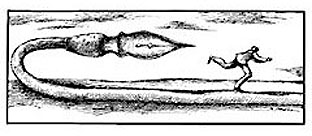
Conflict can be a small thing, or a large one, real or imagined.
Filed under advice, Bob McKey, building a better story, novel, Steven Womack, tension, words, writer, writing, writing tip
Some writing advice to consider
Here are three writing places you can go to get some advice. I sure there are others, but these three stops could be helpful:
http://janeyolen.com/the-alphabetics-of-story/
From A to Z, literally in alphabetical order prolific author Jane Yolen discusses almost every aspect of story writing, from architecture to endings. None of the entries are long, so it is not as if you have to spend hours with your eyeballs glued to the screen. But hey, if you write, you’re probably already doing that anyway.
http://blogs.plos.org/neurotribes/2011/06/02/practical-tips-on-writing-a-book-from-22-brilliant-authors/
If you are more into writing non-fiction, then this list of practical tips from twenty-two authors could be of help for you. But there are nuggets of information for any writer, such as being willing to delete entire chapters and favorite passages. Not all the recommendations are so painful, but it takes more than fast fingers and a fluid imagination to make your writing work.
http://blog.nathanbransford.com/
A former agent turned author, Nathan Bransford covers a wide variety of topics dealing with writing, including poles where he asks his readers to offer their opinions. He has entries for subjects such as How to find an agent and How to write a synopsis or query letter, all under a heading called Publishing Essentials.
Filed under advice, blog, fiction, Jane Yolen, Nathan Brandsford, non-fiction, publishing, Steve Silberman, words, writer, writing, writing blog, writing tip
I drink
Found this on the back of an old paperback book published in 1949. In describing himself, the author writes: “Yes, I have actually mined coal, and distilled liquor,

James M. Cain brief biography
Don’t know that you would find a brief author write up in the back of a book quite so colorful today.
I found this book at a local used book shop called Central Street Books. The original price was 50 cents, but I paid $4, and that was primarily because I liked the brief author autobiography on the back.
Filed under author write up, blurb, drink, James M. Cain, pink dress, words, writer, writing
You have your book written — what now?
If anyone is interested in publishing a book — fiction or nonfiction — the Knoxville Writers’ Guild has a great workshop this Saturday.
Chris Hebert is an acquisitions editor at the University of Michigan Press. He’s the guy at the receiving end of author query letters and can provide invaluable advice on what works and what doesn’t. He also knows what it’s like from the author’s end: HarperCollins is publishing his first novel, The Boiling Season, next year. (His wife has also published a novel with Simon & Schuster).
This is a rare chance to talk at length with a publishing insider about selling a book.
The workshop will be held from 1 to 3:30 p.m. on Saturday, June 4 at the Redeemer Church, 1642 Highland Ave., Knoxville, TN. Cost is $20 for members and $25 for nonmembers. To register, go to http://www.knoxvillewritersguild.org/orderpaypal.htm
Filed under editor, Knoxville Writers' Guild, publishers, publishing, writer, writing, writing tip


