Tag Archives: writer

Writing tip: a writer can’t just be a writer

Should You Focus on Your Writing or Your Platform?

by Jane Friedman

April 27, 2012

Source: http://writerunboxed.com/2012/04/27/should-you-focus-on-your-writing-or-your-platform/#more-14057

Craft!

Platform!

Craft!!

Platform!!

It’s a debate that might span eternity: how much time should you devote to writing versus platform building?

I don’t know if there was ever a real beginning to this debate, but if so, it was when editors and agents started telling nonfiction authors that their book was only viable if a platform was in place. Which made sense for technological and cultural reasons. Take the ease of word processing and affordable personal computers, add Baby Boomers with free time to pursue their dreams, and presto! Suddenly there were more people than ever trying to write a book and get it published, with limited skills and experience, and often no credentials.

So what does a well-meaning agent or editor say to one of these people? The easiest thing to say is: You need a platform.

Fast forward a decade or two, and we now live inside an unending media conversation wheel, where anyone can find a niche readership, do solid work on building a platform, and even put writing on the backburner—and still reasonably claim to be a writer.

I think there’s a backlash against some of these people, which I understand. It’s applying the entrepreneurial, get-rich-quick Tim Ferriss mindset to the world of literature, where we tend to believe that blood, sweat, and tears (and rejection) are demanded before you gain recognition.

Plus: Real writers write. (Right?) They don’t tweet, they don’t blog, they don’t connect with readers, at least not joyfully.

I exaggerate, but you know the people I’m talking about.

The horrible catch is—at least for beginning writers without fame and fortune, who are starting their careers in a transitioning industry—focusing on your writing work to the exclusion of all else can hamper you later down the road. If you shut yourself away and don’t learn to navigate the online world (the personalities, the flow of conversations, the tools), you’re terribly disadvantaged when it comes time to get a publisher, market your work, and find readers.

Excellent arguments reside on each side of this debate, which often boil down to: “Writing is all that matters,” and “audience is all that matters.”

But the truth is a little different for each of us, and that’s why it’s next to impossible to give general advice on platform. It necessarily varies based on the author and the work in question.

But it does rip me apart to hear very new writers feel anxious that they can’t figure out their platform, especially when they have not a single book or credit to their name.

Well, it’s not a mystery why platform is so confusing when you don’t know who you are yet as a writer!

This has been a very long preface to what I’d like to offer: a set of general guidelines to help any writer understand how to balance writing with platform building.

Balance is the key word here.

Focusing on your writing probably means spending 10%-25% of your available writing time on platform activities. I never recommend abandoning platform activities entirely, because you want to be open to new possibilities. Being active online—while still focused on your writing—could mean finding a new mentor or the perfect critique partner, connecting with an important influencer, or pursuing a new writing retreat or fellowship opportunity.

Without further ado, the list.

When to focus more on your writing:

If you are within the first five years of seriously attempting to write with the goal of publication
For novelists: If you have not yet completed and revised one or two full-length manuscripts
If you can tell that what you’re writing is falling short of where you want and need to be
If you see a direct correlation between the amount of writing you put out and the amount of money that comes into your bank account (the JA Konrath model)
If you are working on deadline.

When to focus more on your platform:

If you start to realize you’re on the verge of publication
If you have a firm book release date of any kind
If you want to sell a nonfiction book concept (non-narrative)
If you intend to profit from online/digital writing that you are creating, distributing, and selling on your own
If you need to prove to a publisher or agent that your work has an audience.

Brief Bio.: Jane Friedman is a professor of media and writing at the University of Cincinnati, and the former publisher of Writer’s Digest. Visit her at JaneFriedman.com, for regular insights into the future of publishing.

4 Comments

Filed under writer, writing, writing tip

I’m a writer and I don’t get no respect

Writer don't get no respect

She threw the book at me!

I’m a writer and I don’t get no respect. Just the other day I hired an editor to help me with my manuscript, and the first thing she did was throw the book at me! The unabridged book at me. The one that defines words. You know it. D-i-k something something something.

Leave a comment

Filed under Cartoon, cartoon by author, no respect, writing

Writing Tip: Plotting backwards

[Editor’s note: the essay below is taken from an e-mail newsletter sent out by the writer Bruce Hale. you can find his web site at: http://www.brucehalewritingtips.com/. You can also sign up for his e-newsletter at that site. Each electronic newsletter comes with other information, including a writing joke.]

WHY BACKWARDS IS BEST WHEN PLOTTING A MYSTERY

By BRUCE HALE

When I wrote my first mystery, I hadn’t a clue. I tried writing it straight through, plotting as I went, and ended up falling flat on my face. Why? I hadn’t yet learned that backwards is best.

You see, contrary to the way most fiction is mapped out, mysteries are backwards creatures. They’re easiest to write when plotted backwards from the ending, rather than forward from the beginning. Mysteries, by their nature, are a complex tangle, and if you’re not careful, you’ll get stuck in it.

As I learned the hard way, if you write from the beginning, you’ll be left flatfooted with your detective, trying to figure out how to solve the mystery.

Better to go the easy way: work from the solution. Start from the ultimate revelation of whodunit and work your way backwards to mystery writing success. Here’s how:

– DECIDE WHODUNIT, WHY, AND HOW
First, pick the crime to be solved and the culprit. Suss out why they committed the crime – and the less obvious the reason, the better. Your villain (or clues from him) should be part of the story from fairly early on, but his motives and actions must remain hidden until the twist reveals them. Hide your villain in plain
sight – heck, you could even go so far as to make them a seeming ally of your hero.

– PLAN YOUR TWIST
This is the dramatic reveal, the “It’s not Snape, it’s Quirrell!” moment. (Sorry if I spoiled Harry Potter I for you.) The twist should occur at the least convenient moment, preferably when the hero is most vulnerable. Usually the twist occurs at or just before the climax.

To make the twist work, you need to come up with at least one or two plausible culprits, then show why they didn’t commit the crime.

– LAY OUT YOUR RED HERRINGS
These are the likely culprits, the leads your detective follows that turn out to be dead ends. Be sure the herrings are motivated as well, and if you can disguise their motivations or make them ambiguous, so much the better. Anything to make them *more* plausible, and your true villain *less* plausible.

– SCATTER YOUR CLUES
What tips your hero off to the fact that the villain is guilty? A latticework of little clues (usually connected much too late). You must always play fair with the reader, so be sure the clues are there, even if the detective and her trusty assistant initially dismiss them.

The key with clues is to use misdirection — have them seem insignificant, or be misinterpreted. You can’t make it too easy for the detective, or the reader!

– START WITH A BANG
And last, but not least, come up with a grabber of an opening that plunges us right into the heart of the mystery. Ideally, it should contain some small clue that points us toward the true culprit.

With all that in place, now you’re ready to write your first words. Happy mystery writing, and may the spirit of Chandler and Hammett be with you!

2 Comments

Filed under Bruce Hale, plot, writer, writing, writing blog, writing tip

I’m a writer and I don’t get no respect

[Editor’s note: I believe it was the late Rodney Dangerfield who had a comedy routine based on “I don’t get no respect.” The lack of respect could come from anybody, anywhere, including his wife. Below is a playwright Rodney could empathize with. He writes to Dear Abby, and she responds. I have known one or two other writers in the same situation. Maybe you, do, too.]

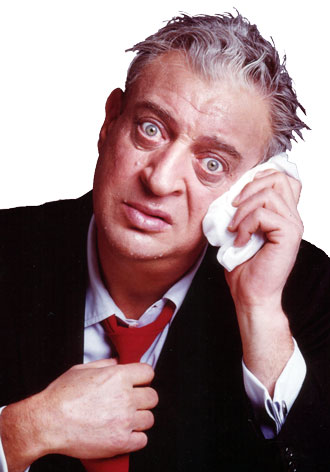
Rodney Dangerfield

Sometimes respect is hard to come by for a writer, or a comic. Just ask Rodney Dangerfield.

DEAR ABBY: I am an amateur playwright. Our local theater sponsors an annual playwriting contest. The prize isn’t monetary, but something far more important to an author – full scale production of the play.

I have won this prize four times – more than any other writer in the history of the contest. But is my family impressed? Not at all! My wife told me she thinks I write everything the same way and have simply repeated myself four times.

I am up in years. It’s unlikely I will ever again win this prize. So how do I respond to such indifference? What do you do when you feel you have accomplished something important and the response is, “so what else is new?”

–Looking for Validation in Florida

DEAR LOOKING FOR VALIDATION: My hat’s off to you. That you have won this prize more than any other writer in the history of the contest is a notable achievement. Attend the production, take your well-earned bow in the spotlight, and accept that the less you look to your wife for validation, the happier your life will be.

Leave a comment

Filed under advice, Dear Abby, humor, respect, Rodney Dangerfield, writer, writing

Unwise wit: Pain of a different sort

Wise author Paul Coelho writes: Contrary to glasses and windows, a broken heart remains intact.

Unwise wit responds: That’s because it’s a pain of a different sort.

The window pain

The window pain ... in The Twilight Zone.

Leave a comment

Filed under pain, Paul Coelho, wit, Woirds to live by, word play, words, writer

Writing Tip: Successful Revision

[Editor’s note: the essay below is taken from an e-mail newsletter sent out by the writer Bruce Hale. you can find his web site at: http://www.brucehalewritingtips.com/. You can also sign up for his e-newsletter at that site. Each electronic newsletter comes with other information, including a writing joke.]

5 ELEMENTS OF A SUCCESSFUL REVISION

By Bruce Hale

So you’ve finished that first draft and let your story marinate in its own juices for a while, and now it’s time for revision. Only question is: where to start?

With a picture book, that’s not too terribly daunting. But with a longer novel, you’d be well served to devise a strategy before plunging into those narrative hickets that can swallow the unwary writer. I suspect everyone has his or her own favored approach to revision. Here’s the one I’ve found most useful…

1. FIRST READ
First time through, the hardest thing is to *just* read your story and take notes. No line edits, no grammar corrections, no paragraph revisions — just reading. But if you want to be able to see the whole forest, instead of the individual trees, this approach is vital.

By all means, take copious notes. “Tighten the opening on page 43;” “wonky sentence on page 12, first paragraph;” “fix the plot logic in Chapter 18.” These are all helpful. And they prepare the way for…

2. FIRST REVISION
Once you’ve waded through your story and taken copious notes, congratulate yourself. It’s not as bad as you thought, right? (We hope.) With this optimistic thought, it’s time to roll up the sleeves and plunge into wholehearted revision.

The first time through, work on larger issues: plot holes, character inconsistencies, gaps in story logic, slow scenes that need to be trimmed, and so forth. You can always do the fine polishing later.

Revise sequentially if you can, rather than skipping around. For any sections that require you to write new material, use the same method you would in a first draft: write it fast and sloppy. After all, you can always fix it in the NEXT revision.

3. READ-ALOUD REVISION
Taking the time to read your work aloud may seem redundant at this point, but it’s necessary. You won’t believe how many errors you’ll catch. Homonyms, awkward phrasing, missing words, echoes (unintentionally repeated words) — all these will pop out at you like Halloween skeletons at a haunted house.

This is the revision where you can really focus on the sound and rhythm of your writing. Listen for those areas that sound clunky and don’t really roll off the tongue — that’s your cue to break out the belt sander and make things smooooth.

4. DIALOG REVISION
Once the story is as good as you can make it, and you’ve read aloud to catch hidden glitches, it’s time to turn the microscope on your dialog. First, make sure each character speaks differently. Have them use different idioms, word choice and catch phrases — otherwise, they’ll all sound like each other (or like you).

Top-notch authors like Elmore Leonard vary their character dialog so deftly, they don’t even need attributions (he said/she said). It’s that clear who’s speaking. In real life, we all have our own ways of putting things. So just make sure your fictional characters possess that same distinction.

5. FINAL CHECK
Before I send my story off to agent or editor, I usually try to let it sit for a week or so, then do one last read-through, to make sure all my changes fit, and to smooth out any remaining rough edges. This is an ideal time to search for words you overuse. (And we *all* overuse certain pet words.)

For example, I know that I tend to drop in “just” and “only” too often, and I tend to have too many characters shrugging and nodding. A quick search for these words shows me where I’ve overdone it, and a quick fix guards against too much sameness in the manuscript.

And that’s about all I can bear to write on the subject of revision right now. I think you know why. Yes — time to get back to revising my latest story.

Leave a comment

Filed under advice column, Bruce Hale, revising, words, writer, writing, writing tip

Ten Rules for Writing, and a bonus rule

Pathway

Rules are like a pathway and can be helpful.

Despite the writer W. Somerset Maugham’s admonition that there are three rules for writing, but unfortunately nobody knows them, there continue to be plenty of offerings from an ever-growing number of people. Here is yet another set of rules provided by European bestselling author Glenn Meade at the Knoxville Writers’ Guild on Thursday, Feb. 2, 2012. Commentary and fleshing out provided by the blog editor, David E. Booker. A partial list of Meade’s novels are at the end of this entry. Use these writing rules as you see fit.

1) First, action, then reaction

Your protagonist needs to be taking action, not just reacting to the events of the story / novel / film / play. Of course, there is always one major exception to this. That is at the very beginning. At that point, the protagonist is usually reacting to what is referred to as the inciting incident. For example, think of the first Star Wars movie. Luke Skywalker is “stuck” on his uncle’s farm in an out-of-the-way part of the galaxy. He longs for something else, but feels like he will never get it. Then storm troopers arrive, ransack the farm, kill his uncle and aunt, and as it puts it: “There is nothing for me here now.” So, to borrow from another story about a young boy: he lights out for the territories. So, at the start of your story, it is usually the antagonist that takes the first action, to which the protagonist reacts, and then begins action to restore the balance upset by the antagonist.

2) Showing is better than telling

It usually works better if you show how a character feels about another one rather than telling. If boy loves his dog, how does he show it? By feeding the dog, playing with it, letting it sleep with him (especially if his parents object), or in spite of having allergies which the dog dander might aggravate.

3) Every scene has three senses

Photo of three leaves

Every scene has three senses.

There is more than meets the eye on the printed page. How do the flowers smell? What does the rain feel like? Even, how does a particular place make the protagonist feel? Does going back to a childhood home make him feel sad or happy, angry or melancholic? Smells can evoke emotions, so describe how something smells, then maybe describe how the protagonist reacts to the smell, if it is important for him or her to do.

4) If you have two heroines, make one blond and the other brunette

Give your main characters distinguishing physical characteristics, or some sort of distinguishing characteristics. Certainly, hair color is a very easy characteristic, and can help you, the author, tell your characters apart, regardless of their sex.

5) Likeable protagonist

Readers want to at the very least empathize with your protagonist and her situation and the easiest way to do this is to make her likeable. That doesn’t meant she should be perfect. Perfection won’t help your character.

There are other ways to make your protagonist empathetic. One, make her the best at whatever she does. Two, put her in extreme peril early on in the story. This could be mental or physical, though physical might be easier to show. Three, make her the underdog. Almost everybody has a soft spot for the underdog, even a smart alecky one. Four, use humor. Nothing like humor to break the ice and break the barrier between protagonist and reader.

6) Dialogue is people talking

It is not, as it is sometimes referred to: “As you know, Fred” exchanging of information. It is not one chemist telling another chemist something they should both already know about chemical reactions.

It is also not rambling speech that goes nowhere, or tails off, or full of the “ahs” and “ohs” and other verbal ticks we all have.

Dialogue

Dialogue is not as easy as it sounds.

No real-life conversation would work verbatim in a story. Dialogue is “heighten” speech. It gives the impression of everyday speech, but with “half the fat” so to say.

Also, the best dialogue is often not about what the dialogue is about. Or, to quote Bob McKee, from his writing book Story: “If the scene is about what the scene is about, then the scene is dead.” In short, dialogue is often as much about what is NOT said as what is said.

All of the above is part of what makes dialogue tough to master.

7) Speech ties to speech acts

This can be overdone, both in the number of times used and as a way to sneak in adverbs and adjectives. Example: “Hey,” Bob said, waving his hand to get her attention. He straightened his tie as his date approached. This lets the reader know that Bob might be a little nervous, that this could be his first date with the woman. What you don’t want to do is go: “Hey,” Bob said, waving his hand excitedly to get her attention. He straightened his tie nervously as she approached.

Speech ties to speech acts is also the simple matter of if there is an action that follows somebody speaking, the action is that of the person speaking. Example: “Hey,” Bob said. She waved her hand to get his attention. Unless Bob is short for Bobbie is short for Roberta and “Bob” is how she is usually referred to and the reader knows this, the above is one person speaking followed by another person doing an action.

8) Paragraphs are for point of view

Within a paragraph, stick to one character’s point of view. If you need to switch points of view, start a new paragraph.

9) Scenes have a certain movement

Each scene or chapter has its own small arc to it. A chapter might have several small arcs to them. Within that arc, there is movement: physical, emotional, mental, spiritual. That movement is generally from a negatively charge beginning to a positively charged ending, or from a positive beginning to a negative ending.

Example, if in scene A, your protagonist is trying to get to a friend’s house, the end of that scene will be when he gets there or doesn’t. But along the way, he shouldn’t stop to buy a Mother’s Day card for his mother, a sweet role for his breakfast, stop and read the newspaper (whatever that is), or anything else that interrupts the flow. Certainly, the protagonist can run into obstacles, but the obstacles should be in importance to the scene and story. For example, if the protagonist getting to his friends house is a minor part of the story, it should not be weighed down with major obstacles. The only possible exception to this is if you are writing a humorous story, the obstacles can be out of proportion, but they should still be weighed against the overall flow of the story. After all, a humorous story with one scene that is much more funny than the rest of the story will only make the rest of the story seem flat.

10) Stick to the rules

If a character has a characteristic on page one, she should still have that characteristic on page 10 and throughout the story.

11) Upon occasion, don’t be afraid to break the rules

Know the rules, but also know when to bend or even break them. God won’t smite you and sometimes it’s necessary. But it should not be the first thing you try and like seasoning in a soup often works best when done in small amounts. A little salt can go a long.

Writing books to consider:
Stein on Writing by Sol Stein
Writing the Breakout Novel by Donald Maass
Story: Substance, Structure, Style, and the Principles of Screenwriting by Robert McKee.

Some novels by Glenn Meade:
The Second Messiah: a Thriller
Snow Wolf
Resurrection Day
Web of Deceit
The Devil’s Disciple.

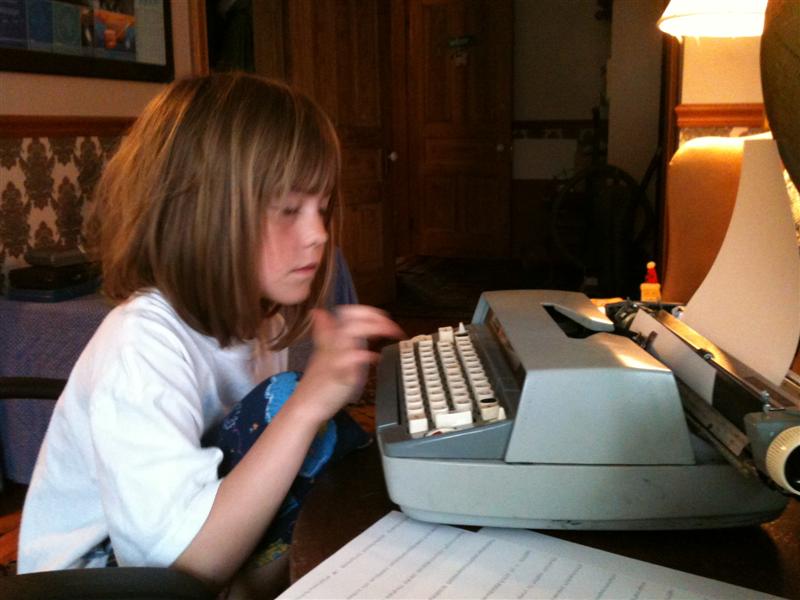
Young writer at work

Young writer at work.

Some novels by the web log editor:
Not one. Not yet, anyway. Working on it.

Disclaimer: any errors are mine. Somebody has to own them.

2 Comments

Filed under Glenn Meade, Knoxville Writers' Guild, writer, writing, writing tip

The Writing Life: The point of the long and winding sentence

Pico Iyer says writing longer phrases is a way to protest the speed of information bites people are subjected to each day.

By Pico Iyer, Special to the Los Angeles Times

January 8, 2012

“Your sentences are so long,” said a friend who teaches English at a local college, and I could tell she didn’t quite mean it as a compliment. The copy editor who painstakingly went through my most recent book often put yellow dashes on-screen around my multiplying clauses, to ask if I didn’t want to break up my sentences or put less material in every one. Both responses couldn’t have been kinder or more considered, but what my friend and my colleague may not have sensed was this: I’m using longer and longer sentences as a small protest against — and attempt to rescue any readers I might have from — the bombardment of the moment.

When I began writing for a living, my feeling was that my job was to give the reader something vivid, quick and concrete that she couldn’t get in any other form; a writer was an information-gathering machine, I thought, and especially as a journalist, my job was to go out into the world and gather details, moments, impressions as visual and immediate as TV. Facts were what we needed most. And if you watched the world closely enough, I believed (and still do), you could begin to see what it would do next, just as you can with a sibling or a friend; Don DeLillo or Salman Rushdie aren’t mystics, but they can tell us what the world is going to do tomorrow because they follow it so attentively.

Yet nowadays the planet is moving too fast for even a Rushdie or DeLillo to keep up, and many of us in the privileged world have access to more information than we know what to do with. What we crave is something that will free us from the overcrowded moment and allow us to see it in a larger light. No writer can compete, for speed and urgency, with texts or CNN news flashes or RSS feeds, but any writer can try to give us the depth, the nuances — the “gaps,” as Annie Dillard calls them — that don’t show up on many screens. Not everyone wants to be reduced to a sound bite or a bumper sticker.

Enter (I hope) the long sentence: the collection of clauses that is so many-chambered and lavish and abundant in tones and suggestions, that has so much room for near-contradiction and ambiguity and those places in memory or imagination that can’t be simplified, or put into easy words, that it allows the reader to keep many things in her head and heart at the same time, and to descend, as by a spiral staircase, deeper into herself and those things that won’t be squeezed into an either/or. With each clause, we’re taken further and further from trite conclusions — or that at least is the hope — and away from reductionism, as if the writer were a dentist, saying “Open wider” so that he can probe the tender, neglected spaces in the reader (though in this case it’s not the mouth that he’s attending to but the mind).

“There was a little stoop of humility,” Alan Hollinghurst writes in a sentence I’ve chosen almost at random from his recent novel “The Stranger’s Child,” “as she passed through the door, into the larger but darker library beyond, a hint of frailty, an affectation of bearing more than her fifty-nine years, a slight bewildered totter among the grandeur that her daughter now had to pretend to take for granted.” You may notice — though you don’t have to — that “humility” has rather quickly elided into “affectation,” and the point of view has shifted by the end of the sentence, and the physical movement through the rooms accompanies a gradual inner movement that progresses through four parallel clauses, each of which, though legato, suggests a slightly different take on things.

Many a reader will have no time for this; William Gass or Sir Thomas Browne may seem long-winded, the equivalent of driving from L.A. to San Francisco by way of Death Valley, Tijuana and the Sierras. And a highly skilled writer, a Hemingway or James Salter, can get plenty of shading and suggestion into even the shortest and straightest of sentences. But too often nowadays our writing is telegraphic as a way of keeping our thinking simplistic, our feeling slogan-crude. The short sentence is the domain of uninflected talk-radio rants and shouting heads on TV who feel that qualification or subtlety is an assault on their integrity (and not, as it truly is, integrity’s greatest adornment).

If we continue along this road, whole areas of feeling and cognition and experience will be lost to us. We will not be able to read one another very well if we can’t read Proust’s labyrinthine sentences, admitting us to those half-lighted realms where memory blurs into imagination, and we hide from the person we care for or punish the thing that we love. And how can we feel the layers, the sprawl, the many-sidedness of Istanbul in all its crowding amplitude without the 700-word sentence, transcribing its features, that Orhan Pamuk offered in tribute to his lifelong love?

To pick up a book is, ideally, to enter a world of intimacy and continuity; the best volumes usher us into a larger universe, a more spacious state of mind akin to the one I feel when hearing Bach (or Sigur Rós) or watching a Terrence Malick film. I cherish Thomas Pynchon’s prose (in “Mason & Dixon,” say), not just because it’s beautiful, but because his long, impeccable sentences take me, with each clause, further from the normal and the predictable, and deeper into dimensions I hadn’t dared to contemplate. I can’t get enough of Philip Roth because the energy and the complication of his sentences, at his best, pull me into a furious debate in which I see a mind alive, self-questioning, wildly controlled in its engagement with the world. His is a prose that banishes all simplicities while never letting go of passion.

Not every fashioner of many-comma’d sentences works for every one of us — I happen to find Henry James unreadable, his fussily unfolding clauses less a reflection of his noticing everything than of his inability to make up his mind or bring anything to closure: a kind of mental stutter. But the promise of the long sentence is that it will take you beyond the known, far from shore, into depths and mysteries you can’t get your mind, or most of your words, around.

When I read the great exemplar of this, Herman Melville — and when I feel the building tension as Martin Luther King’s “Letter from Birmingham Jail” swells with clause after biblical clause of all the things people of his skin color cannot do — I feel as if I’m stepping out of the crowded, overlighted fluorescent culture of my local convenience store and being taken up to a very high place from which I can see across time and space, in myself and in the world. It’s as if I’ve been rescued, for a moment, from the jostle and rush of the 405 Freeway and led back to something inside me that has room for certainty and doubt at once.

Watch Dillard light up and rise up and ease down as she finds, near the end of her 1974 book “Pilgrim at Tinker Creek,” “a maple key, a single winged seed from a pair. Hullo. I threw it into the wind and it flew off again, bristling with animate purpose, not like a thing dropped or windblown, pushed by the witless winds of convection currents hauling round the world’s rondure where they must, but like a creature muscled and vigorous, or a creature spread thin to that other wind, the wind of the spirit which bloweth where it listeth, lighting, and raising up, and easing down.”

I love books; I read and write them for the same reason I love to talk with a friend for 10 hours, not 10 minutes (let alone, as is the case with the average Web page, 10 seconds). The longer our talk goes, ideally, the less I feel pushed and bullied into the unbreathing boxes of black and white, Republican or Democrat, us or them. The long sentence is how we begin to free ourselves from the machine-like world of bullet points and the inhumanity of ballot-box yeas or nays.

There’ll always be a place for the short sentence, and no one could thrill more than I to the eerie incantations of DeLillo, building up menace with each reiterated note, or the compressed wisdom of a Wilde; it’s the elegant conciseness of their phrases that allow us to carry around the ideas of an Emerson (or Lao Tzu) as if they were commandments or proverbs of universal application.

But we’ve got shortness and speed up the wazoo these days; what I long for is something that will sustain me and stretch me till something snaps, take me so far beyond a simple clause or a single formulation that suddenly, unexpectedly, I find myself in a place that feels as spacious and strange as life itself.

The long sentence opens the very doors that a short sentence simply slams shut. Though the sentence I sent my copy editor was as short as possible. No.

Iyer is the author, most recently, of “The Man Within My Head,” published this month.

Copyright © 2012, Los Angeles Times

5 Comments

Filed under long sentence, sentence, writer, writing, writing tip

Epic fight to put awesome in its place

http://www.latimes.com/news/local/la-me-holland-20120106,0,2183189.column

Trying to drive a stake through a conversational staple

British-born poet and journalist John Tottenham says that saying ‘awesome’ in his presence is like ‘waving a crucifix in a vampire’s face.’

Gale Holland, Los Angeles Times

January 6, 2012

“Awesome,” according to one dictionary of slang, is “something Americans use to describe everything.”

The linguistic overkill horrifies John Tottenham. So the British-born L.A. poet, painter and journalist has launched what he calls the Campaign to Stamp Out Awesome, or CPSOA.

“Saying the word in my presence is like waving a crucifix in a vampire’s face,” Tottenham says. “It’s boiled down to one catchall superlative that’s completely meaningless.”

I met with Tottenham last week at CSPOA headquarters inside Stories, the Echo Park bookstore he is trying to turn into the world’s first awesome-free zone. “Ground zero for a quiet revolution,” Tottenham calls the cafe and shop, where he has a day job. The group’s manifesto is posted at the counter, and no-awesome stickers with the usual diagonal slash are on sale, with T-shirts to follow, Tottenham said.

“It’s a matter of semantic satiation,” Tottenham told me. “Sometimes I’m sitting in a crowd and I hold my breath until someone says it. Seldom do I die of asphyxiation as a result.”

There’s no arguing with Tottenham’s premise that “awesome” is seen and heard everywhere, from the sign on the tchotchke aisle at the 99-cent store to the lips of supermarket cashiers. UC Santa Barbara linguist Mary Bucholtz says that from its dusky origins, perhaps in 1970s surfer slang, it’s spread to Australia and English-speaking India.

But Tottenham failed to convince me it’s a bad thing. What’s wrong with bathing everything in the sunny light of superlativity? I asked him.

I admire the “awesome” generation’s ability to talk at all with only a few words at its disposal.

The economy of expression is poetic, I argued. The conversations go like this:

Caller 1: Dude?

Caller 2: Dude.

Caller 1: Whadup?

Caller 2: Chillin.

Caller 1: Awesome. Want to kick it?

Caller 2: I’m down.

Caller 1: Now?

Caller 2: Awesome. I’m out.

Caller 1: Peace.

Somewhere, DEA agents are holed up in a hotel room listening to this for hours on end and going out of their minds.

But there’s a subtle genius in language that has been wiped clean of almost all content. Nobody has to risk expressing a real thought or sentiment. Bland affirmation is an impenetrable defense. No one can object. As Syme, the language specialist in charge of shrinking the dictionary in George Orwell’s dystopian novel “1984” put it, “It’s a beautiful thing, the destruction of words.”

Tottenham was having none of it.

“The bogus sense of positivity has a demoralizing effect,” he said. “People resent it if you don’t say you’re doing great.”

Bucholtz, the linguist, pointed out that every generation thinks the next one is wrecking the English language. Tottenham, an old punk rocker who fled dreary old England for the Wild West, gave that point some consideration. But in the end, he rejected it.

“I hated it when I was young, ” Tottenham said. “It is the most irritating word.”

Tottenham said his linguistic cleansing movement has mostly been embraced, at least within “the two-block radius of Echo Park where I am a minor celebrity.” One Stories customer bristled when he tried to get her to honor the awesome ban, though.

“But I’m from California,” she said. “I can’t help it.”

As we chatted, a man in a cowboy shirt came up to congratulate Tottenham on his recent performance of an anti-awesome screed at a local gallery.

“That was awesome,” the man said, grinning widely.

Tottenham smiled back sourly.

“I know I’m setting myself up as a target to be churlishly bombarded by people who use the word to irritate me,” Tottenham said. “People who know about the campaign and want to further express their lack of verbal ingenuity….They do it because they think it’s witty, which it isn’t.”

“But I’m willing to take it on the nose in an honorable cause,” he said.

Tottenham already is looking toward other cliches to conquer.

“Other words will be addressed once we get rid of awesome,” Tottenham promises. “‘It’s all good.’ That’s definitely crying out to be done.”

But as with all social engineering movements, Tottenham has hit unexpected obstacles. As we chatted, we walked to a nearby cafe that had posted his no-awesome sticker in the window. The waitress stopped by to say the restaurant had been forced to take the sign down.

“The staff vetoed it,” she said. “They’re afraid people are going to think the restaurant is not awesome.”

gale.holland@latimes.com

Copyright © 2012, Los Angeles Times

[Blog editor’s note: The title of this blog entry is mine, and is done a bit tongue-in-cheek. I approve this poet’s efforts, as all writers should. Poor and inadequate as they are at times, words are all we have to build our stories, poems, essays, novels, and other word constructs for examining life and who we are. Words are our tools and they deserve our respect.]

1 Comment

Filed under awesome, words, writer, writing, writing tip