
Frosting in the fridge. /
Cake unfinished on counter. /
Resting birthday.
Frosting in the fridge. /
Cake unfinished on counter. /
Resting birthday.
Filed under 2020, Haiku to You Thursday, Poetry by David E. Booker
This common affliction is behind so much unclear and confusing writing in the world today.

“Why is so much writing so hard to understand? Why must a typical reader struggle to follow an academic article, the fine print on a tax return, or the instructions for setting up a wireless home network?”
These are questions Harvard psychologist Steven Pinker asks in his book, The Sense of Style: The Thinking Person’s Guide to Writing in the 21st Century. They’re questions I’ve often encountered –and attempted to tackle– throughout my career as a business writer and editor. Whenever I see writing that is loaded with jargon, clichés, technical terms, and abbreviations, two questions come immediately to mind. First, what is the writer trying to say, exactly? And second, how can the writer convey her ideas more clearly, without having to lean on language that confuses the reader?
For Pinker, the root cause of so much bad writing is what he calls “the Curse of Knowledge”, which he defines as “a difficulty in imagining what it is like for someone else not to know something that you know. The curse of knowledge is the single best explanation I know of why good people write bad prose.”
“Every human pastime –music, cooking, sports, art, theoretical physics –develops an argot to spare its enthusiasts from having to say or type a long-winded description every time they refer to a familiar concept in each other’s company. The problem is that as we become proficient at our job or hobby we come to use these catchwords so often that they flow out of our fingers automatically, and we forget that our readers may not be members of the clubhouse in which we learned them.”
People in business seem particularly prone to this “affliction.” You could argue that business has developed its own entirely unique dialect of English. People are exposed to an alphabet soup of terms and acronyms at business school, which they then put into use in their day-to-day interactions once they enter the working world.
And what starts out as a means of facilitating verbal communication between people becomes the primary mode with which people communicate their ideas in writing, from email to chat apps to business proposals and presentations.
“How can we lift the curse of knowledge?” asks Pinker. “A considerate writer will…cultivate the habit of adding a few words of explanation to common technical terms, as in ‘Arabidopsis, a flowering mustard plant,’ rather than the bare ‘Arabidopsis.’ It’s not just an act of magnanimity: A writer who explains technical terms can multiply her readership a thousandfold at the cost of a handful of characters, the literary equivalent of picking up hundred-dollar bills on the sidewalk.”
“Readers will also thank a writer for the copious use of for example, as in, and such as, because an explanation without an example is little better than no explanation at all.”
Whenever I write a sentence that makes me pause and wonder about what it means, I assume that other readers might react in the same way. If a sentence is not clear to me, it might not be clear to others. It’s an approach that I recommend to anyone who is trying to improve his own writing.
Before hitting publish and sending your writing out to the world, it’s better to be honest with yourself about how much your reader is likely to understand a given passage or sentence. Before you commit your writing to print– or to the internet– take a few moments to make sure that what you write is clear and understandable by as many of your intended readers as possible.
As Richard Feynman, the Nobel prize-winning physicist, once wrote, “If you ever hear yourself saying, ‘I think I understand this,’ that means you don’t.”
—Glenn Leibowitz
Filed under 2020, writing tip, Writing Tip Wednesday
Two writers went to the same doctor’s office on the same day. She told each one he didn’t have long to live.
“It’s awful,” said the first writer. “I’m right in the middle of a novel and she’s only given me six months to live. I’ll never get it finished. What about you?”
“It’s awful for me, too,” said the second writer. “She gave me three years to live.”
“Three years!” the first writer said. “Three years! What’s so awful about that?”
“I write short stories,” the second writer said. “And I’m fresh out of ideas.”
Filed under 2020, joke by author, Monday morning writing joke
It’s not easy, but you can do it.
https://getpocket.com/explore/item/how-to-actually-concentrate?utm_source=pocket-newtab
NYLON |
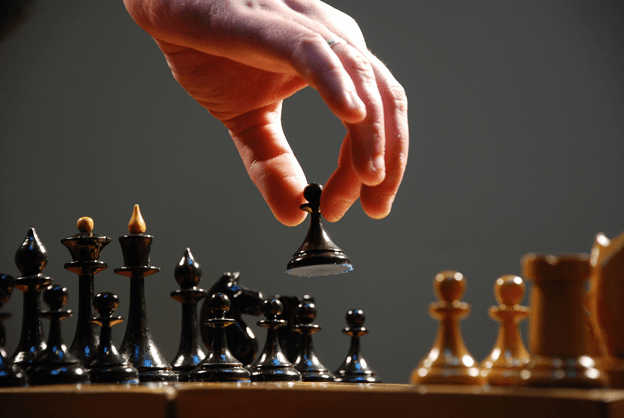
Ever have those trains of thought that just… wait, what were we talking about, again? Staying focused can be hard, especially in an age when there are tons of distractions around you. So, whether it’s something you don’t really want to have to pay attention to—like work; or something you do—like talking to a friend in a crowded bar—sometimes it’s just plain hard to concentrate on what’s happening right in front of you.
Jumping to other stimuli—like someone looking at you, or your phone buzzing—can give you a dopamine push, which is one reason it can be so appealing. But another is that, when multitasking is the norm, it’s hard to stop doing it. “We have trained ourselves to be constantly distracted and multitasking, so even though we may have a project in front of us, or we may be talking to someone, our minds have been trained to look to other things,” says Natalie Bell, a mindfulness coach based in Los Angeles.
Distractibility can run deeper than habit. “You might be distracted because you have sensory problems or visual processing problems or slow processing or memory problems, and you can also have biochemical problems,” says Kelly Dorfman, a clinical nutritionist. “If your chemistry is out of balance, then your brain doesn’t work.” What you’re eating and when can impact that chemistry. Skipping meals, eating irritants, and not eating nutrient-rich foods can make it harder to concentrate.
What’s going on around you and where you are right now as a person also matter. You might be more distracted in some environments, and less distracted in others. Or while working on certain tasks. Or while talking to different people. “It might have to do with something as simple as how much sleep you got, or what else is going on in your life. There are a lot of different factors. But being tuned into what your tendency is and what your current state of being is can go a long way to helping you make the adjustments you need to be able to focus on the things that are important,” says Natalie Houston, a productivity coach in the Boston area.
But it is possible to change your attention span. To get better at concentrating, start small.”Choose one point of focus or one task. Just choose one, putting all others to the side or shutting them down,” says Bell. If you’re working on one project, clear away materials that don’t have anything to do with it, like closing tabs, moving papers off of your desk, and putting down your phone. “A sense of more calm in the immediate visual environment helps you focus better,” says Houston.
Look at the rest of your environment, too: Does silence help you more? Or do you work better with ambient noise? Or maybe white noise? Or even music? How comfortable is your chair? Are you better at doing certain tasks in certain places?
You can also train yourself to be more mindful by focusing on your breath in your body. Set a timer for three minutes and keep your attention on your breath as it goes in and out, and bring your mind back to your breath when it inevitably wanders. “Learning to refocus attention by using that kind of mindfulness technique can really help you to train your attention back to focus on one thing,” says Bell.
If focusing on your breath doesn’t work, try turning your awareness to the soles of your feet where they touch the floor. Or to the sensations of where you’re sitting. Or to your hands, as they rest against each other. “Try to use a sensory experience to help focus attention while you’re in the middle of something,” says Bell. “Any sensation can help you ground yourself.”
Being compassionate with yourself helps, too. If you’re distracted because of something going on internally or something bigger happening in your life, be kind to yourself and remind yourself that’s what’s going on. “There’s a saying in mindfulness, name it to tame it. If you can name a difficult experience, your brain can begin to regulate that feeling in your body,” says Bell. Share with someone around you if that’s an option, but if it’s not, talk to yourself like you’re your own supportive friend. Or put a hand over your heart or give yourself a hug. “Be there for yourself. Physical soothing touch releases oxytocin and other opiates in your bloodstream to counteract stress. So this is really powerful neuroscience,” says Bell.
If you’re distracted because you’re just really busy right now, keep a notepad nearby to jot down thoughts, so your brain doesn’t have to worry about remembering them. That way, “your brain can just relax, instead of tapping you on the shoulder every 10 minutes saying, ‘Don’t forget,’” says Houston.
And don’t be afraid of getting distracted—because you’re going to get distracted. When that happens, notice it and gently bring your attention back. Remember, once you get used to mindfulness, it becomes way easier to practice it anywhere. “The more you do these practices, the more you train yourself to have that response. You need to remember that you can do these things,” says Bell.
But total mindfulness and balance are lies we tell ourselves in order to live. “It’s really important as an idea, and it’s also in some ways a fiction,” says Houston. Instead, “allowing for seasonal shifts helps us relax about the idea of feeling insufficient if we’re not living up to some kind of fictitious ideal of work-life balance that very few people really enact.”
After all, distraction is a capitalist construct. “We live in a world where the financial interests of large corporations put a lot of effort into keeping us distracted. When we’re distracted, we spend more time online, we spend more time in front of advertisements, we spend more time in various states of trance, meaning eating, drinking, shopping, consuming our ways into distracting ourselves from the harder questions in our lives,” says Houston.
Break out of that by finding joy in smaller moments of focus, and then building. “We need to recondition ourselves to find a certain pleasure in focused attention. Which actually there is,” says Bell. “What we get from focusing our attention is a sense of calm in our mind and body.”
This article was originally published on August 16, 2017, by NYLON.
Filed under 2020, concentration
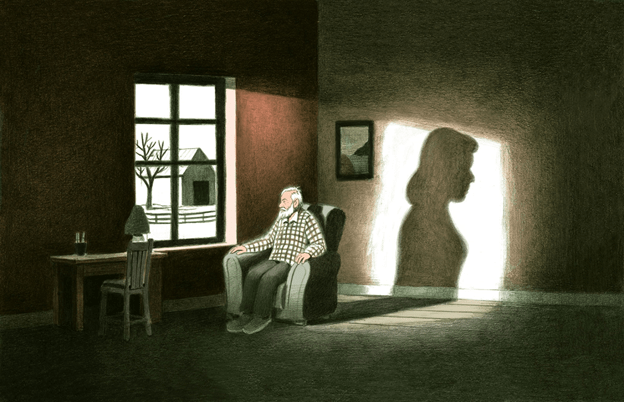
At eighty-seven, I am solitary. I live by myself on one floor of the 1803 farmhouse where my family has lived since the Civil War. After my grandfather died, my grandmother Kate lived here alone. Her three daughters visited her. In 1975, Kate died at ninety-seven, and I took over. Forty-odd years later, I spend my days alone in one of two chairs. From an overstuffed blue chair in my living room I look out the window at the unpainted old barn, golden and empty of its cows and of Riley the horse. I look at a tulip; I look at snow. In the parlor’s mechanical chair, I write these paragraphs and dictate letters. I also watch television news, often without listening, and lie back in the enormous comfort of solitude. People want to come visit, but mostly I refuse them, preserving my continuous silence. Linda comes two nights a week. My two best male friends from New Hampshire, who live in Maine and Manhattan, seldom drop by. A few hours a week, Carole does my laundry and counts my pills and picks up after me. I look forward to her presence and feel relief when she leaves. Now and then, especially at night, solitude loses its soft power and loneliness takes over. I am grateful when solitude returns.
Born in 1928, I was an only child. During the Great Depression, there were many of us, and Spring Glen Elementary School was eight grades of children without siblings. From time to time I made a friend during childhood, but friendships never lasted long. Charlie Axel liked making model airplanes out of balsa wood and tissue. So did I, but I was clumsy and dripped cement onto wing paper. His models flew. Later, I collected stamps, and so did Frank Benedict. I got bored with stamps. In seventh and eighth grade, there were girls. I remember lying with Barbara Pope on her bed, fully clothed and apart while her mother looked in at us with anxiety. Most of the time, I liked staying alone after school, sitting in the shadowy living room. My mother was shopping or playing bridge with friends; my father added figures in his office; I daydreamed.
In summer, I left my Connecticut suburb to hay with my grandfather, on this New Hampshire farm. I watched him milk seven Holsteins morning and night. For lunch I made myself an onion sandwich—a thick slice between pieces of Wonder Bread. I’ve told of this sandwich before.
At fifteen, I went to Exeter for the last two years of high school. Exeter was academically difficult and made Harvard easy, but I hated it—five hundred identical boys living two to a room. Solitude was scarce, and I labored to find it. I took long walks alone, smoking cigars. I found myself a rare single room and remained there as much as I could, reading and writing. Saturday night, the rest of the school sat in the basketball arena, deliriously watching a movie. I remained in my room in solitary pleasure.
At college, dormitory suites had single and double bedrooms. For three years, I lived in one bedroom crowded with everything I owned. During my senior year, I managed to secure a single suite: bedroom and sitting room and bath. At Oxford, I had two rooms to myself. Everybody did. Then I had fellowships. Then I wrote books. Finally, to my distaste, I had to look for a job. With my first wife–people married young back then; we were twenty and twenty-three–I settled in Ann Arbor, teaching English literature at the University of Michigan. I loved walking up and down in the lecture hall, talking about Yeats and Joyce or reading aloud the poems of Thomas Hardy and Andrew Marvell. These pleasures were hardly solitary, but at home I spent the day in a tiny attic room, working on poems. My extremely intelligent wife was more mathematical than literary. We lived together and we grew apart. For the only time in my life, I cherished social gatherings: Ann Arbor’s culture of cocktail parties. I found myself looking forward to weekends, to crowded parties that permitted me distance from my marriage. There were two or three such occasions on Friday and more on Saturday, permitting couples to migrate from living room to living room. We flirted, we drank, we chatted–without remembering on Sunday what we said Saturday night.
After sixteen years of marriage, my wife and I divorced.
For five years I was alone again, but without the comfort of solitude. I exchanged the miseries of a bad marriage for the miseries of bourbon. I dated a girlfriend who drank two bottles of vodka a day. I dated three or four women a week, occasionally three in a day. My poems slackened and stopped. I tried to think that I lived in happy license. I didn’t.
Jane Kenyon was my student. She was smart, she wrote poems, she was funny and frank in class. I knew she lived in a dormitory near my house, so one night I asked her to housesit while I attended an hour-long meeting. (In Ann Arbor, it was the year of breaking and entering.) When I came home, we went to bed. We enjoyed each other, libertine liberty as much as pleasures of the flesh. Later I asked her to dinner, which in 1970 always included breakfast. We saw each other once a week, still dating others, then twice a week, then three or four times a week, and saw no one else. One night, we spoke of marriage. Quickly we changed the subject, because I was nineteen years older and, if we married, she would be a widow so long. We married in April, 1972. We lived in Ann Arbor three years, and in 1975 left Michigan for New Hampshire. She adored this old family house.
For almost twenty years, I woke before Jane and brought her coffee in bed. When she rose, she walked Gus the dog. Then each of us retreated to a workroom to write, at opposite ends of our two-story house. Mine was the ground floor in front, next to Route 4. Hers was the second floor in the rear, beside Ragged Mountain’s old pasture. In the separation of our double solitude, we each wrote poetry in the morning. We had lunch, eating sandwiches and walking around without speaking to each other. Afterward, we took a twenty-minute nap, gathering energy for the rest of the day, and woke to our daily fuck. Afterward I felt like cuddling, but Jane’s climax released her into energy. She hurried from bed to workroom.
For several hours afterward, I went back to work at my desk. Late in the afternoon, I read aloud to Jane for an hour. I read Wordsworth’s “Prelude,” Henry James’s “The Ambassadors” twice, the Old Testament, William Faulkner, more Henry James, seventeenth-century poets. Before supper I drank a beer and glanced at The New Yorker while Jane cooked, sipping a glass of wine. Slowly she made a delicious dinner—maybe veal cutlets with mushroom-and-garlic gravy, maybe summer’s asparagus from the bed across the street—then asked me to carry our plates to the table while she lit the candle. Through dinner we talked about our separate days.
Summer afternoons we spent beside Eagle Pond, on a bite-sized beach among frogs, mink, and beaver. Jane lay in the sun, tanning, while I read books in a canvas sling chair. Every now and then, we would dive into the pond. Sometimes, for an early supper, we broiled sausage on a hibachi. After twenty years of our remarkable marriage, living and writing together in double solitude, Jane died of leukemia at forty-seven, on April 22, 1995.
Now it is April 22, 2016, and Jane has been dead for more than two decades. Earlier this year, at eighty-seven, I grieved for her in a way I had never grieved before. I was sick and thought I was dying. Every day of her dying, I stayed by her side—a year and a half. It was miserable that Jane should die so young, and it was redemptive that I could be with her every hour of every day. Last January I grieved again, this time that she would not sit beside me as I died.
By Donald Hall, October 15, 2016
I opened my heart. /
You slammed shut the wooden door. /
Hard knocks all around.
Filed under 2020, Haiku to You Thursday, Poetry by David E. Booker
There once was a writer from Dubuque.
He thought his success was a fluke.
Still, the notoriety, it’s said
Inflated his head
And his wife caught him with a girl half as cute.
There once was a writer at night
Who wrote all the way to daylight.
His stories were grand
About a sun-drenched land
But his descriptions were never quite right.
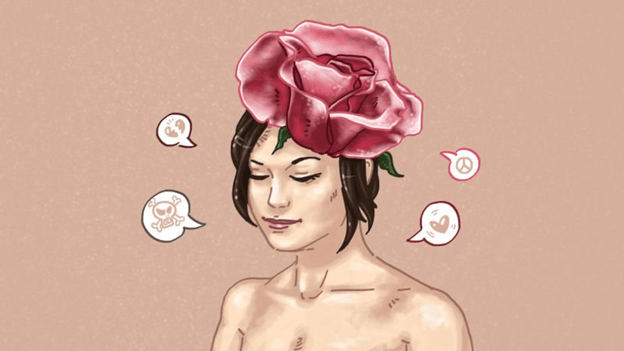
You’re taught about history, science, and math when you’re growing up. Most of us, however, aren’t taught how to identify or deal with our own emotions, or the emotions of others. These skills can be valuable, but you’ll never get them in a classroom.
Emotional intelligence is a shorthand that psychological researchers use to describe how well individuals can manage their own emotions and react to the emotions of others. People who exhibit emotional intelligence have the less obvious skills necessary to get ahead in life, such as managing conflict resolution, reading and responding to the needs of others, and keeping their own emotions from overflowing and disrupting their lives. In this guide, we’ll look at what emotional intelligence is, and how to develop your own.
What Is Emotional Intelligence?
Measuring emotional intelligence is relatively new in the field of psychology, only first being explored in the mid-80s. Several models are currently being developed, but for our purposes, we’ll examine what’s known as the “mixed model,” developed by psychologist Daniel Goleman. The mixed model has five key areas:
You can read a bit more about these different categories here. The order of these emotional competencies isn’t all that relevant, as we all learn many of these skills simultaneously as we grow. It’s also important to note that, for our purposes, we’ll only be using this as a guide. Emotional intelligence isn’t an area that most people receive formal training in. We’ll let psychologists argue over the jargon and models, but for now let’s explore what each of these mean and how to improve them in your own life.
Self-Awareness
Before you can do anything else here, you have to know what your emotions are. Improving your self-awareness is the first step to identifying any problem area you’re facing. Here are some ways to improve your self-awareness:
If you’ve never practiced intentional self-awareness, these tips should give you a practical head start. One strategy I personally use is to go on long walks or have conversations with myself discussing what’s bothering me. Often, I’ll find that the things I say to the imaginary other end of the conversation can give me some insight into what’s really bugging me. The important aspect is to look inwards, rather than focusing solely on external factors.
Self-Management
Once you know how your emotions work, you can start figuring out how to handle them. Proper self-management means controlling your outbursts, distinguishing between external triggers and internal over-reactions, and doing what’s best for your needs.
One key way to manage your emotions is to change your sensory input. You’ve probably heard the old advice to count to ten and breathe when you’re angry. Speaking as someone who’s had plenty of overwhelming issues with depression and anger, this advice is usually crap (though if it works for you, more power to you). However, giving your physical body a jolt can break the cycle. If you’re feeling lethargic, do some exercise. If you’re stuck in an emotional loop, give yourself a “snap out of it” slap. Anything that can give a slight shock to your system or break the existing routine can help.
Lifehacker alum Adam Dachis also recommends funneling emotional energy into something productive. It’s alright to let overwhelming emotions stew inside you for a moment, if it’s not an appropriate time to let them out. However, when you do, rather than vent it on something futile, turn it into motivation instead:
I recently started playing tennis for fun, knowing that I’d never become exceptional because I began too late in life. I’ve become better and have a very minor talent for the game, so when I play poorly I now know and I get down on myself. When up against an opponent with far more skill I find it hard to do much else than get angry. Rather than let that anger out, I take note of it and use it to fuel my desire to practice more. Whether in sports, work, or everyday life, we can get complacent with our skill and forget that we always have some room for improvement. When you start to get mad, get better instead.
You can’t always control what makes you feel a certain way, but you can always control how you react. If you have some impulse control problems, find ways to get help when you’re feeling calm. Not all emotions can be vented away. My struggle with depression taught me that some emotions persist long after the overflow. However, there’s always a moment when those feelings feel a little less intense. Use those moments to seek help.
Motivation
We talk about motivation a lot . When we’re talking about motivation as it relates to emotional intelligence, however, we don’t just mean getting up the energy to go to work. We’re talking about your inner drive to accomplish something. That drive isn’t just some feel-goody nonsense, either. As Psychology today explains, there’s a section of your prefrontal cortex that lights up at the mere thought of achieving a meaningful goal.
Whether your goal is building a career, raising a family, or creating some kind of art, everyone has something they want to do with their life.When your motivation is working for you, it connects with reality in tangible ways. Want to start a family? Motivated people will start dating. Want to improve your career? Motivated people will educate themselves, apply for new jobs, or angle for a promotion.
Daniel Goleman suggests that in order to start making use of that motivation, you first need to identify your own values. Many of us are so busy that we don’t take the time to examine what our values really are. Or worse, we’ll do work that directly contradicts what we value for so long that we lose that motivation entirely.
Unfortunately, we can’t give you the answer for what it is you want in life, but there are lots of strategies you can try . Use your journal to find times when you’ve felt fulfilled. Create a list of things you value. Most of all, accept the uncertainty in life and just build something. Fitness instructor Michael Mantell, Ph.D suggests that using lesser successes you know you can accomplish. Remember, everyone who’s accomplished something you want to achieve did it slowly, over time.
Empathy
Your emotions are only one half of all your relationships. It’s the half you focus on the most, sure, but that’s only because you hang out with yourself every day. All the other people that matter to you have their own set of feelings, desires, triggers, and fears. Empathy is your most important skill for navigating your relationships . Empathy is a life-long skill, but here are some tips you can use to practice empathy:
By definition , empathy means getting in the emotional dirt with someone else. Allowing their experiences to resonate with your own and responding appropriately. It’s okay to offer advice or optimism, but empathy also requires that you wait for the right space to do that. If someone’s on the verge of tears, or sharing some deep pain, don’t make light of it and don’t try to minimize the hurt. Be mindful of how they must feel and allow them space to feel it.
Social Skills
Summing up all social skills in one section of an article would do about as much justice to the topic as if we snuck in a brief explainer on astrophysics. However, the tools you develop in the other four areas will help you resolve a lot of social problems that many adults still wrestle with. As Goleman explains, your social skills affect everything from your work performance to your romantic life:
Social competence takes many forms – it’s more than just being chatty. These abilities range from being able to tune into another person’s feelings and understand how they think about things, to being a great collaborator and team player, to expertise at negotiation. All these skills are learned in life. We can improve on any of them we care about, but it takes time, effort, and perseverance. It helps to have a model, someone who embodies the skill we want to improve. But we also need to practice whenever a naturally occurring opportunity arises – and it may be listening to a teenager, not just a moment at work.
You can start with the most common form of social problems: resolving a disagreement. This is where you get to put all your skills to the test in a real-world environment. We’ve gone into this subject in-depth here , but we can summarize the basic steps:
Not every type of interaction with another person will be a conflict, of course. Some social skills just involve meeting new people , socializing with people of different mindsets , or just playing games . However, resolving conflict can be one of the best ways to learn how to apply your emotional skills. Disputes are best resolved when you know what you want, can communicate it clearly, understand what someone else wants, and come to favorable terms for everyone. If you’ve been paying attention, you’ll notice that this involves every other area of the emotional intelligence model.


 Booker's Blog