The Four Desires Driving All Human Behavior

Bertrand Russell’s magnificent Nobel prize acceptance speech.

Brain Pickings |

Maria Popova

https://getpocket.com/explore/item/the-four-desires-driving-all-human-behavior-bertrand-russell-s-magnificent-nobel-prize-acceptance?utm_source=pocket-newtab

Bertrand Russell (May 18, 1872–February 2, 1970) endures as one of humanity’s most lucid and luminous minds — an oracle of timeless wisdom on everything from what “the good life” really means to why “fruitful monotony” is essential for happiness to love, sex, and our moral superstitions. In 1950, he was awarded the Nobel Prize in Literature for “his varied and significant writings in which he champions humanitarian ideals and freedom of thought.” On December 11 of that year, 78-year-old Russell took the podium in Stockholm to receive the grand accolade.

Later included in Nobel Writers on Writing (public library) — which also gave us Pearl S. Buck, the youngest woman to receive the Nobel Prize in Literature, on art, writing, and the nature of creativity — his acceptance speech is one of the finest packets of human thought ever delivered from a stage.

Russell begins by considering the central motive driving human behavior:

All human activity is prompted by desire. There is a wholly fallacious theory advanced by some earnest moralists to the effect that it is possible to resist desire in the interests of duty and moral principle. I say this is fallacious, not because no man ever acts from a sense of duty, but because duty has no hold on him unless he desires to be dutiful. If you wish to know what men will do, you must know not only, or principally, their material circumstances, but rather the whole system of their desires with their relative strengths.

[…]

Man differs from other animals in one very important respect, and that is that he has some desires which are, so to speak, infinite, which can never be fully gratified, and which would keep him restless even in Paradise. The boa constrictor, when he has had an adequate meal, goes to sleep, and does not wake until he needs another meal. Human beings, for the most part, are not like this.

Russell points to four such infinite desires — acquisitiveness, rivalry, vanity, and love of power — and examines them in order:

Acquisitiveness — the wish to possess as much as possible of goods, or the title to goods — is a motive which, I suppose, has its origin in a combination of fear with the desire for necessaries. I once befriended two little girls from Estonia, who had narrowly escaped death from starvation in a famine. They lived in my family, and of course had plenty to eat. But they spent all their leisure visiting neighbouring farms and stealing potatoes, which they hoarded. Rockefeller, who in his infancy had experienced great poverty, spent his adult life in a similar manner.

[…]

However much you may acquire, you will always wish to acquire more; satiety is a dream which will always elude you.

In 1938, Henry Miller also articulated this fundamental driver in his brilliant meditation on how money became a human fixation. Decades later, modern psychologists would term this notion “the hedonic treadmill.” But for Russell, this elemental driver is eclipsed by an even stronger one — our propensity for rivalry:

The world would be a happier place than it is if acquisitiveness were always stronger than rivalry. But in fact, a great many men will cheerfully face impoverishment if they can thereby secure complete ruin for their rivals. Hence the present level of taxation.

Rivalry, he argues, is in turn upstaged by human narcissism. In a sentiment doubly poignant in the context of today’s social media, he observes:

Vanity is a motive of immense potency. Anyone who has much to do with children knows how they are constantly performing some antic, and saying “Look at me.” “Look at me” is one of the most fundamental desires of the human heart. It can take innumerable forms, from buffoonery to the pursuit of posthumous fame.

[…]

It is scarcely possible to exaggerate the influence of vanity throughout the range of human life, from the child of three to the potentate at whose frown the world trembles.

But the most potent of the four impulses, Russell argues, is the love of power:

Love of power is closely akin to vanity, but it is not by any means the same thing. What vanity needs for its satisfaction is glory, and it is easy to have glory without power… Many people prefer glory to power, but on the whole these people have less effect upon the course of events than those who prefer power to glory… Power, like vanity, is insatiable. Nothing short of omnipotence could satisfy it completely. And as it is especially the vice of energetic men, the causal efficacy of love of power is out of all proportion to its frequency. It is, indeed, by far the strongest motive in the lives of important men.

[…]

Love of power is greatly increased by the experience of power, and this applies to petty power as well as to that of potentates.

Anyone who has ever agonized in the hands of a petty bureaucrat — something Hannah Arendt unforgettably censured as a special kind of violence — can attest to the veracity of this sentiment. Russell adds:

In any autocratic regime, the holders of power become increasingly tyrannical with experience of the delights that power can afford. Since power over human beings is shown in making them do what they would rather not do, the man who is actuated by love of power is more apt to inflict pain than to permit pleasure.

But Russell, a thinker of exceptional sensitivity to nuance and to the dualities of which life is woven, cautions against dismissing the love of power as a wholesale negative driver — from the impulse to dominate the unknown, he points out, spring such desirables as the pursuit of knowledge and all scientific progress. He considers its fruitful manifestations:

It would be a complete mistake to decry love of power altogether as a motive. Whether you will be led by this motive to actions which are useful, or to actions which are pernicious, depends upon the social system, and upon your capacities. If your capacities are theoretical or technical, you will contribute to knowledge or technique, and, as a rule, your activity will be useful. If you are a politician you may be actuated by love of power, but as a rule this motive will join itself on to the desire to see some state of affairs realized which, for some reason, you prefer to the status quo.

Russell then turns to a set of secondary motives. Echoing his enduring ideas on the interplay of boredom and excitement in human life, he begins with the notion of love of excitement:

Human beings show their superiority to the brutes by their capacity for boredom, though I have sometimes thought, in examining the apes at the zoo, that they, perhaps, have the rudiments of this tiresome emotion. However that may be, experience shows that escape from boredom is one of the really powerful desires of almost all human beings.

He argues that this intoxicating love of excitement is only amplified by the sedentary nature of modern life, which has fractured the natural bond between body and mind. A century after Thoreau made his exquisite case against the sedentary lifestyle, Russell writes:

Our mental make-up is suited to a life of very severe physical labor. I used, when I was younger, to take my holidays walking. I would cover twenty-five miles a day, and when the evening came I had no need of anything to keep me from boredom, since the delight of sitting amply sufficed. But modern life cannot be conducted on these physically strenuous principles. A great deal of work is sedentary, and most manual work exercises only a few specialized muscles. When crowds assemble in Trafalgar Square to cheer to the echo an announcement that the government has decided to have them killed, they would not do so if they had all walked twenty-five miles that day. This cure for bellicosity is, however, impracticable, and if the human race is to survive — a thing which is, perhaps, undesirable — other means must be found for securing an innocent outlet for the unused physical energy that produces love of excitement… I have never heard of a war that proceeded from dance halls.

[…]

Civilized life has grown altogether too tame, and, if it is to be stable, it must provide harmless outlets for the impulses which our remote ancestors satisfied in hunting… I think every big town should contain artificial waterfalls that people could descend in very fragile canoes, and they should contain bathing pools full of mechanical sharks. Any person found advocating a preventive war should be condemned to two hours a day with these ingenious monsters. More seriously, pains should be taken to provide constructive outlets for the love of excitement. Nothing in the world is more exciting than a moment of sudden discovery or invention, and many more people are capable of experiencing such moments than is sometimes thought.

Complement Nobel Writers on Writing with more excellent Nobel Prize acceptance speeches — William Faulkner on the artist as a booster of the human heart, Ernest Hemingway on writing and solitude, Alice Munro on the secret to telling a great story, and Saul Bellow on how literature ennobles the human spirit — then revisit Russell on immortality and why science is the key to democracy.

Leave a comment

Filed under 2020, author tribute

The ‘Untranslatable’ Emotions You Never Knew You Had

From gigil to wabi-sabi and tarab, there are many foreign emotion words with no English equivalent. Learning to identify and cultivate these experiences could give you a richer and more successful life.

By David Robson / BBC Future

https://getpocket.com/explore/item/the-untranslatable-emotions-you-never-knew-you-had

Have you ever felt a little mbuki-mvuki – the irresistible urge to “shuck off your clothes as you dance”? Perhaps a little kilig – the jittery fluttering feeling as you talk to someone you fancy? How about uitwaaien – which encapsulates the revitalising effects of taking a walk in the wind?

These words – taken from Bantu, Tagalog, and Dutch – have no direct English equivalent, but they represent very precise emotional experiences that are neglected in our language. And if Tim Lomas at the University of East London has his way, they might soon become much more familiar.

Lomas’s Positive Lexicography Project aims to capture the many flavours of good feelings (some of which are distinctly bittersweet) found across the world, in the hope that we might start to incorporate them all into our daily lives. We have already borrowed many emotion words from other languages, after all – think “frisson”, from French, or “schadenfreude”, from German – but there are many more that have not yet wormed their way into our vocabulary. Lomas has found hundreds of these “untranslatable” experiences so far – and he’s only just begun.

Learning these words, he hopes, will offer us all a richer and more nuanced understanding of ourselves. “They offer a very different way of seeing the world.”

Lomas says he was first inspired after hearing a talk on the Finnish concept of sisu, which is a sort of “extraordinary determination in the face of adversity”. According to Finnish speakers, the English ideas of “grit”, “perseverance” or “resilience” do not come close to describing the inner strength encapsulated in their native term. It was “untranslatable” in the sense that there was no direct or easy equivalent encoded within the English vocabulary that could capture that deep resonance.

Intrigued, he began to hunt for further examples, scouring the academic literature and asking every foreign acquaintance for their own suggestions. The first results of this project were published in the Journal of Positive Psychology last year.

Many of the terms referred to highly specific positive feelings, which often depend on very particular circumstances:

  • Desbundar (Portuguese) – to shed one’s inhibitions in having fun
  • Tarab (Arabic) – a musically induced state of ecstasy or enchantment
  • Shinrin-yoku (Japanese) – the relaxation gained from bathing in the forest, figuratively or literally
  • Gigil (Tagalog) – the irresistible urge to pinch or squeeze someone because they are loved or cherished
  • Yuan bei (Chinese) – a sense of complete and perfect accomplishment
  • Iktsuarpok (Inuit) – the anticipation one feels when waiting for someone, whereby one keeps going outside to check if they have arrived

But others represented more complex and bittersweet experiences, which could be crucial to our growth and overall flourishing.

  • Natsukashii (Japanese) – a nostalgic longing for the past, with happiness for the fond memory, yet sadness that it is no longer
  • Wabi-sabi (Japanese) – a “dark, desolate sublimity” centred on transience and imperfection in beauty
  • Saudade (Portuguese) – a melancholic longing or nostalgia for a person, place or thing that is far away either spatially or in time – a vague, dreaming wistfulness for phenomena that may not even exist
  • Sehnsucht (German) – “life-longings”, an intense desire for alternative states and realisations of life, even if they are unattainable

In addition to these emotions, Lomas’s lexicography also charted the personal characteristics and behaviours that might determine our long-term well-being and the ways we interact with other people.

  • Dadirri (Australian aboriginal) term – a deep, spiritual act of reflective and respectful listening
  • Pihentagyú (Hungarian) – literally meaning “with a relaxed brain”, it describes quick-witted people who can come up with sophisticated jokes or solutions
  • Desenrascanço (Portuguese) – to artfully disentangle oneself from a troublesome situation
  • Sukha (Sanskrit) – genuine lasting happiness independent of circumstances
  • Orenda (Huron) – the power of the human will to change the world in the face of powerful forces such as fate

You can view many more examples on his website, where there is also the opportunity to submit your own. Lomas readily admits that many of the descriptions he has offered so far are only an approximation of the term’s true meaning. “The whole project is a work in progress, and I’m continually aiming to refine the definitions of the words in the list,” he says. “I definitely welcome people’s feedback and suggestions in that regard.”

In the future, Lomas hopes that other psychologists may begin to explore the causes and consequences of these experiences – to extend our understanding of emotion beyond the English concepts that have dominated research so far.

But studying these terms will not just be of scientific interest; Lomas suspects that familiarising ourselves with the words might actually change the way we feel ourselves, by drawing our attention to fleeting sensations we had long ignored.

“In our stream of consciousness – that wash of different sensations feelings and emotions – there’s so much to process that a lot passes us by,” Lomas says. “The feelings we have learned to recognise and label are the ones we notice – but there’s a lot more that we may not be aware of. And so I think if we are given these new words, they can help us articulate whole areas of experience we’ve only dimly noticed.”

As evidence, Lomas points to the work of Lisa Feldman Barrett at Northeastern University, who has shown that our abilities to identify and label our emotions can have far-reaching effects.

Her research was inspired by the observation that certain people use different emotion words interchangeably, while others are highly precise in their descriptions. “Some people use words like anxious, afraid, angry, disgusted to refer to a general affective state of feeling bad,” she explains. “For them, they are synonyms, whereas for other people they are distinctive feelings with distinctive actions associated with them.”

This is called “emotion granularity” and she usually measures this by asking the participants to rate their feelings on each day over the period of a few weeks, before she calculates the variation and nuances within their reports: whether the same old terms always coincide, for instance.

Importantly, she has found that this then determines how well we cope with life. If you are better able to pin down whether you are feeling despair or anxiety, for instance, you might be better able to decide how to remedy those feelings: whether to talk to a friend, or watch a funny film. Or being able to identify your hope in the face of disappointment might help you to look for new solutions to your problem.

In this way, emotion vocabulary is a bit like a directory, allowing you to call up a greater number of strategies to cope with life. Sure enough, people who score highly on emotion granularity are better able to recover more quickly from stress and are less likely to drink alcohol as a way of recovering from bad news. It can even improve your academic success. Marc Brackett at Yale University has found that teaching 10 and 11-year-old children a richer emotional vocabulary improved their end-of-year grades, and promoted better behaviour in the classroom. “The more granular our experience of emotion is, the more capable we are to make sense of our inner lives,” he says.

Both Brackett and Barrett agree that Lomas’s “positive lexicography” could be a good prompt to start identifying the subtler contours of our emotional landscape. “I think it is useful – you can think of the words and the concepts they are associated with as tools for living,” says Barrett. They might even inspire us to try new experiences, or appreciate old ones in a new light.

It’s a direction of research that Lomas would like to explore in the future. In the meantime, Lomas is still continuing to build his lexicography – which has grown to nearly a thousand terms. Of all the words he has found so far, Lomas says that he most often finds himself pondering Japanese concepts such as wabi-sabi (that “dark, desolate sublimity” involving transience and imperfection). “It speaks to this idea of finding beauty in phenomena that are aged and imperfect,” he says. “If we saw the world through those eyes, it could be a different way of engaging in life.”

David Robson is BBC Future’s feature writer. He is @d_a_robson on Twitter.

1 Comment

Filed under 2020, words

Haiku to you Thursday: "Now"

Covid-19 now /

Shelter in place this day: now. /

Tomorrow is now.

Leave a comment

Filed under 2020, Haiku to You Thursday, Poetry by David E. Booker

Want to ‘Train Your Brain’? Forget Apps, Learn a Musical Instrument

Musical training can have a dramatic impact on your brain’s structure, enhancing your memory, spatial reasoning, and language skills.

The Guardian |

  • Mo Costandi

https://getpocket.com/explore/item/want-to-train-your-brain-forget-apps-learn-a-musical-instrument?utm_source=pocket-newtab

The multimillion dollar brain training industry is under attack. In October 2014, a group of over 100 eminent neuroscientists and psychologists wrote an open letter warning that “claims promoting brain games are frequently exaggerated and at times misleading.” In 2016, industry giant Lumosity was fined $2m, and ordered to refund thousands of customers who were duped by false claims that the company’s products improve general mental abilities and slow the progression of age-related decline in mental abilities. And a recent review examining studies purporting to show the benefits of such products found “little evidence … that training improves improves everyday cognitive performance.”

While brain training games and apps may not live up to their hype, it is well established that certain other activities and lifestyle choices can have neurological benefits that promote overall brain health and may help to keep the mind sharp as we get older. One of these is musical training. Research shows that learning to play a musical instrument is beneficial for children and adults alike, and may even be helpful to patients recovering from brain injuries.

“Music probably does something unique,” explains neuropsychologist Catherine Loveday of the University of Westminster. “It stimulates the brain in a very powerful way, because of our emotional connection with it.”

Playing a musical instrument is a rich and complex experience that involves integrating information from the senses of vision, hearing, and touch, as well as fine movements, and learning to do so can induce long-lasting changes in the brain. Professional musicians are highly skilled performers who spend years training, and they provide a natural laboratory in which neuroscientists can study how such changes – referred to as experience-dependent plasticity – occur across their lifespan.

Changes in brain structure

Early brain scanning studies revealed significant differences in brain structure between musicians and non-musicians of the same age. For example, the corpus callosum, a massive bundle of nerve fibres connecting the two sides of the brain, is significantly larger in musicians. The brain areas involved in movement, hearing, and visuo-spatial abilities also appear to be larger in professional keyboard players. And, the area devoted to processing touch sensations from the left hand is increased in violinists.

These studies compared data from different groups of people at one point in time. As such, they could not determine whether the observed differences were actually caused by musical training, or if existing anatomical differences predispose some to become musicians. But later, longitudinal studies that track people over time have shown that young children who do 14 months of musical training exhibit significant structural (pdf) and functional brain changes (pdf) compared to those who do not.

Together, these studies show that learning to play a musical instrument not only increases grey matter volume in various brain regions, but can also strengthen the long-range connections between them. Other research shows that musical training also enhances verbal memory, spatial reasoning, and literacy skills, such that professional musicians usually outperform non-musicians on these abilities.

Long-lasting benefits for musicians

Importantly, the brain scanning studies show that the extent of anatomical change in musicians’ brains is closely related to the age at which musical training began, and the intensity of training. Those who started training at the youngest age showed the largest changes when compared to non-musicians.

Even short periods of musical training in early childhood can have long-lasting benefits. In one 2013 study, for example, researchers recruited 44 older adults and divided them into three groups based on the level of formal musical training they had received as children. Participants in one group had received no training at all; those in the second had done a little training, defined as between one and three years of lessons; and those in the third had received moderate levels of training (four to 14 years).

The researchers played recordings of complex speech sounds to the participants, and used scalp electrodes to measure the timing of neural responses in a part of the auditory brainstem. As we age, the precision of this timing deteriorates, making it difficult to understand speech, especially in environments with a lot of background noise. Participants who had received moderate amounts of musical training exhibited the fastest neural responses, suggesting that even limited training in childhood can preserve sharp processing of speech sounds and increase resilience to age-related decline in hearing.

More recently, it has become clear that musical training facilitates the rehabilitation of patients recovering from stroke and other forms of brain damage, and some researchers now argue that it might also boost speech processing and learning in children with dyslexia and other language impairments. What’s more, the benefits of musical training seem to persist for many years, or even decades, and the picture that emerges from this all evidence is that learning to play a musical instrument in childhood protects the brain against the development of cognitive impairment and dementia.

Unlike commercial brain training products, which only improve performance on the skills involved, musical training has what psychologists refer to as transfer effects – in other words, learning to play a musical instrument seems to have a far broader effect on the brain and mental function, and improves other abilities that are seemingly unrelated.

“Music reaches parts of the brain that other things can’t,” says Loveday. “It’s a strong cognitive stimulus that grows the brain in a way that nothing else does, and the evidence that musical training enhances things like working memory and language is very robust.”

Learning to play a musical instrument, then, seems to be one of the most effective forms of brain training there is. Musical training can induce various structural and functional changes in the brain, depending on which instrument is being learned, and the intensity of the training regime. It’s an example of how dramatically life-long experience can alter the brain so that it becomes adapted to the idiosyncrasies of its owner’s lifestyle.

Leave a comment

Filed under 2020, writing tip, Writing Tip Wednesday

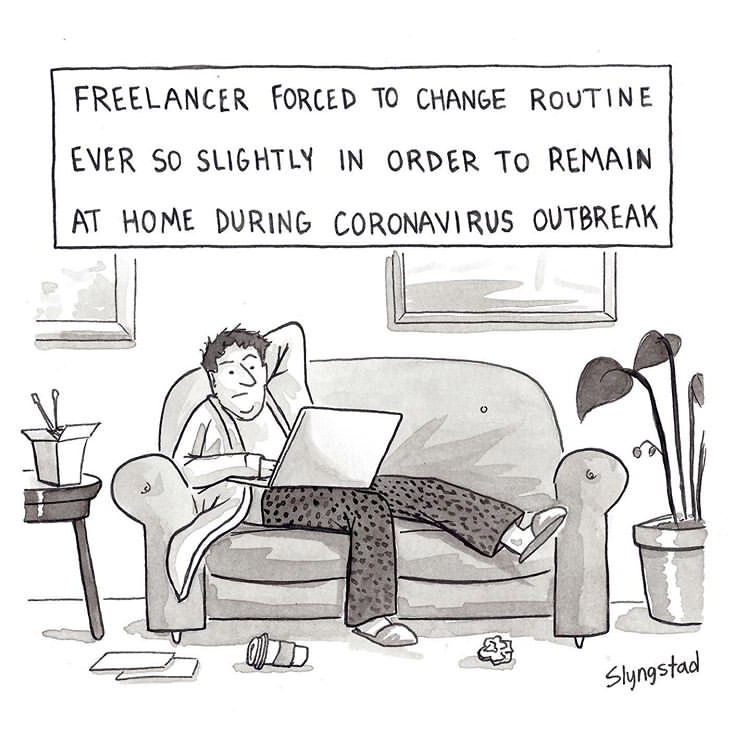
cARtOONSdAY: “iT cOULD BE cATCHING”

FREELANCER RECLINING ON HIS COUCH
SUFFERING THE sLINGS AND aRROWS OF oUTRAGEOUS fORTUNE

Leave a comment

Filed under 2020, CarToonsday

Monday morning writing joke: “Writer in Saskatchewan”

Once a science fiction writer moved to Saskatchewan. /

He heard that’s where all the aliens had gone. /

They’d landed there /

For the Canadian healthcare /

And belief that they could belong.

Leave a comment

Filed under 2020, Monday morning writing joke, Poetry by David E. Booker

A dirty secret: you can only be a writer if you can afford it

‘Like most other American systems and professions, delusions around meritocracy continue to pervade the writing world. ‘ Illustration: Julien Posture/The Guardian

There is nothing more sustaining to long-term creative work than time and space – and these things cost money

https://www.theguardian.com/us-news/2020/feb/27/a-dirty-secret-you-can-only-be-a-writer-if-you-can-afford-it?utm_source=pocket-newtab

Let’s start with me: I’m not sure how or if I’d still be a writer without the help of other people’s money. I have zero undergrad debt. Of my three years of grad school, two of them were funded through a teaching fellowship; my parents helped pay for the first. The last two years my stipend barely covered the childcare I needed to travel uptown three days a week to teach and go to class and my husband’s job is what kept us afloat.

I got connections from that program. I got my agent through the recommendation of a professor. Nearly every year since I graduated from that program, I have been employed by them. The thing I’m most sure I had though, that was a direct result of my extraordinary privilege, is the blindness with which I bounded toward this profession, the not knowing, because I had never felt, until I was a grownup, the very real and bone-deep fear of not knowing how you’ll live from month to month. Other versions of this story that I know from other people: a down payment from a grandpa on a brownstone; monthly parental stipends; a partner who works at a startup; a partner who’s a corporate lawyer; a wealthy former boss who got attached and agreed to pay their grad school off.

Once, before a debut novelist panel geared specifically to aspiring writers, one of the novelists with whom I was set to speak mentioned to me that they’d hired a private publicist to promote their book. They told me it cost nearly their whole advance but was worth it, they said, because this private publicist got them on a widely watched talkshow. During this panel, this writer mentioned to the crowd at one point that they “wrote and taught exclusively”, and I kept my eyes on my hands folded in my lap. I knew this writer did much of the same teaching I did, gig work, often for between $1,500-$3,000 for a six to eight-week course; nowhere near enough to sustain one’s self in New York. I knew their whole advance was gone, and that, if the publicist did pay off, it would be months before they might accrue returns.

I did not know what this writer, who I thought was single, paid in rent, or all the other ways that they might have been able to cut corners, that I, a mother of two, could not cut, but even then, it felt impossible to me that this writer was sustaining themselves in any legitimate way without some outside help. I thought, maybe, when they said “write” they might be including copywriting or tech, as some others that I know support themselves.

I knew all these aspiring writers, though, heard this person say this and assumed that there was a way to make a living as a writer, that they thought this person was “making it” in ways they hoped one day to be. I don’t know this writer and don’t know how, actually, they lived. What I do know is, when the panel was over, I wanted to take the microphone back and say loudly to the students that what this writer said was, at least in part, a lie.

On Instagram and Twitter there are writers who “write full time” also. They post pictures of their desk or their pens and talk about “process”. Maybe, two years ago, they sold a quiet literary novel to an independent press. For my students, for all the people I see out there, trying to break in or through and watching, envious, I want to attach to these statements and these Instagram posts, a caveat that says the writing isn’t what is keeping this person safe and clothed and fed.

According to a 2018 Author’s Guild Study the median income of all published authors for all writing related activity was $6,080 in 2017, down from $10,500 in 2009; while the median income for all published authors based solely on book-related activities went from $3,900 to $3,100, down 21%. Roughly 25% of authors earned $0 in income in 2017.

I would argue that there is nothing more sustaining to long-term creative work than time and space – these things cost money – and the fact that some people have access to it for reasons that are often outside of their control continues to create an ecosystem in which the tenor of the voices that we hear from most often remains similar. It is no wonder, I say often to students, that so much of the canon is about rich white people. Who else, after all, has the time and space to finish a book. Who else, after all, as the book is coming out, has the time and space and money to promote and publicize that book?The median income of all published authors for all writing related activity was $6,080 in 2017

There are ramifications, I think, of no one mentioning the source of this freedom when they have it. There is the perpetuation of an illusion that makes an unsustainable life choice appear sustainable, that makes the specific achievements of particular individuals seem more remunerative than they actually are. There is the feeling that the choices that we’ve made outside of writing: who we married, whether or not we had children, the families we were born to, will forever hinder our ability to make good work.

When students ask me for advice with regard to how to “make it as a writer”, I tell them to get a job that also gives them time and space somehow to write; I tell them find a job that, if they still have it 10 years from now, it wouldn’t make them sad. I worry often that they think this means I don’t think their work is worthy; that I don’t believe they’ll make it in the way that they imagine making it, but this advice is me trying help them sustain themselves enough to make the work I know they can.

Like most other American systems and professions, delusions around meritocracy continue to pervade the writing world. Those of us who are not bolstered by outside sources, those of us who are but still struggle, and say it out loud, often run the risk of seeming whiny or ungrateful; maybe we worry we will just be thought not good enough. To be a writer is a choice, after all, and I continue to make it. But perpetuating the delusion that the choice is not impossibly risky, precarity-inducing, only hurts the participants’ ability to reconsider the various shapes their lives might take in service of sustaining it and them.

It allows a system that cannot sustain most of the producers of its products to continue to pretend it can.

  • Lynn Steger Strong is the author of the novel Want, to be released in July 2020

Leave a comment

Filed under 2020

How To Wake Up And Not Feel Like Going Right Back To Bed

Fitness gurus share their morning routines.

NYLON |

  • Molly Hurford

https://getpocket.com/explore/item/how-to-wake-up-and-not-feel-like-going-right-back-to-bed?utm_source=pocket-newtab

How do some people manage to look so darn perky as they sip coffee and smoothies in their Instagram stories in the morning? It all comes down to establishing a winning routine, one that’s easy for you to do every day and leaves you feeling awake, alert, and inspired. You don’t have to steal an entire routine from these fitness and wellness experts, but they have some pretty great suggestions of places to start.

Once you begin to develop a routine of your own, optimize it to your specific needs. Meditation for 20 minutes might not work for you, but maybe you can handle five minutes. Yoga might not be your jam, but what about a few basic stretches instead? And journaling can feel a little cliche, but what about a Google Doc where you list one thing daily that you’re grateful for? We don’t all need to be fitness and wellness junkies, but we can all get a little bit better at managing our mornings and crushing the rest of our day. 

Stay Offline

“I’d say my number one tip is to get ready for your day, whether that be breakfast, journaling, meditation, or working out before looking at your phone,” Sophie Gray of WayofGray.com says. “I recommend being off of your phone for at least 30 to 60 minutes in the morning! I like to do this because I can check in with myself first, before checking in with others.”  

Productivity gurus and the authors of Peak Performance, Brad Stulberg and Steve Magness, also back this one up. The more time you can stay off your phone and not be distracted, the better. Getting your primary workout for the day done before the flood of emails, Instagrams, and text is going to make the day feel a lot smoother. 

“This year has officially been the year of slowing down and learning to give myself what I need in order to thrive throughout the day with sustained energy and inspiration,” adds The Balance Blonde blogger Jordan Younger. “You could say I am a notorious overcommitter and a workaholic-slash-iPhone-aholic—who isn’t?—so I decided to get serious with my morning routine, to start to cultivate more peace and serenity in my daily life. I start each day with a digital detox where I do not look at my phone until I feel ready to be on and communicate with the world!”

Get Some Sun

“Working from home can sometimes mean there’s no need for you to leave the house, but, for me, getting outdoors every day for fresh air, a sense of vitality, and vitamin D is so important,” says Melissa Hemsley of the Hemsley Sisters. “Daylight helps to reset your internal body clock, also known as the circadian rhythm, leading to better sleep and allowing your body to tune into what it needs. I’ve got a staffy called Nelly who I take for runs around my local park, so it’s a non-negotiable for me!”

Studies bear this out: We need vitamin D to stay happy and energized. One such study even linked vitamin D deficiency in young women with depression. You don’t need to start supplementing to get it. Just getting sunlight should do the trick. And if, like Melissa, you work at home, a walk outside can give you the divide between “you time” and working hours.

Add a Yoga Flow

It’s no shock that Strala Yoga creator Tara Stiles starts every morning with a yoga flow, though as a new mom, her routine varies daily depending on what she needs and how she feels. And that’s a good thing! Even if you’re not nursing a newborn, switching up your yoga flow makes the morning a bit more exciting. Strala Yoga has a ton of quick and simple morning flows that Stiles created, and most of them run between seven and 12 minutes. Check out this one and this one if you prefer to have a video to flow with, or just do a few sun salutations and poses that make you feel particularly good. 

A regular yoga practice—10 minutes a day is over an hour a week!—can increase strength, balance, and flexibility, calm the mind, and reduce stress, according to the American College of Sports Medicine. It can even help battle things like lower back pain, according to a recent study

Scrape Your Tongue (or Whatever)

“Tongue scraping with a copper or stainless steel tongue scraper removes the toxins that brushing and flossing your teeth doesn’t,” says the other Hemsley sister, Jasmine. “Quite frankly, I’d rather forget to brush my teeth!” If tongue scraping isn’t for you, that’s fine, too, but having a morning beauty/cleansing routine can go a long way toward making you feel more awake and alert if you’re having a tough time crawling out of bed and perking up. 

Meditate

“I wake up, make a matcha tea or coffee in my kitchen, stretch on my yoga mat, and do a mindfulness meditation practice,” says Younger. “I have also gotten very into crystals, sage, essential oils, and palo santo. The morning is my ‘me time’ to play around with all of my yogi, kundalini grounding practices and also get some reading or journaling in. Then I head off to teach yoga down the street and feel like a new human! Also breathing. It sounds simple, but it’s been a game changer to really focus on my breath.” 

Meditation also makes you more creative, according to one study. And another championed morning meditation because that’s when we’re at our most spiritually aware.

It’s not just the yogis who are doing morning meditation, fitness junkies are into it, too. “Everyday is different for me, but no matter where I am, I make sure to spend a few moments alone setting my intention and purpose for the day through meditation,” says Karena Dawn of ToneItUp.com. It really helps me stay centered and focused.  After that, I head out for my workout. If I don’t workout in the morning, it usually won’t happen.” 

Get in a Quick Workout

Dawn also digs a morning workout to get the blood pumping. If you’re an early riser and can sneak in a quick run or strength workout, it’s a great way to kick off the day. And bonus, if you do a low-key workout before you eat breakfast; you’ll reap the benefits of fasted state training and gain extra strength and aerobic capacity in the process. Bonus: You can burn almost 20 percent more fat if you exercise pre-breakfast, according to one study. Plus, let’s be honest, breakfast will taste a whole lot better when you’ve really worked for it. 

Leave a comment

Filed under 2020, writing tip

‘Sleep Should Be Prescribed’: What Those Late Nights Out Could Be Costing You

A leading neuroscientist on why sleep deprivation is increasing our risk of cancer, heart attack, and Alzheimer’s – and what you can do about it.

Matthew Walker has learned to dread the question “What do you do?” At parties, it signals the end of his evening; thereafter, his new acquaintance will inevitably cling to him like ivy. On an aeroplane, it usually means that while everyone else watches movies or reads a thriller, he will find himself running an hours-long salon for the benefit of passengers and crew alike. “I’ve begun to lie,” he says. “Seriously. I just tell people I’m a dolphin trainer. It’s better for everyone.”

Walker is a sleep scientist. To be specific, he is the director of the Center for Human Sleep Science at the University of California, Berkeley, a research institute whose goal – possibly unachievable – is to understand everything about sleep’s impact on us, from birth to death, in sickness and health. No wonder, then, that people long for his counsel. As the line between work and leisure grows ever more blurred, rare is the person who doesn’t worry about their sleep. But even as we contemplate the shadows beneath our eyes, most of us don’t know the half of it – and perhaps this is the real reason he has stopped telling strangers how he makes his living. When Walker talks about sleep he can’t, in all conscience, limit himself to whispering comforting nothings about camomile tea and warm baths. It’s his conviction that we are in the midst of a “catastrophic sleep-loss epidemic”, the consequences of which are far graver than any of us could imagine. This situation, he believes, is only likely to change if government gets involved.

Walker has spent the last four and a half years writing Why We Sleep, a complex but urgent book that examines the effects of this epidemic close up, the idea being that once people know of the powerful links between sleep loss and, among other things, Alzheimer’s disease, cancer, diabetes, obesity and poor mental health, they will try harder to get the recommended eight hours a night (sleep deprivation, amazing as this may sound to Donald Trump types, constitutes anything less than seven hours). But, in the end, the individual can achieve only so much. Walker wants major institutions and law-makers to take up his ideas, too. “No aspect of our biology is left unscathed by sleep deprivation,” he says. “It sinks down into every possible nook and cranny. And yet no one is doing anything about it. Things have to change: in the workplace and our communities, our homes and families. But when did you ever see an NHS poster urging sleep on people? When did a doctor prescribe, not sleeping pills, but sleep itself? It needs to be prioritised, even incentivised. Sleep loss costs the UK economy over £30bn a year in lost revenue, or 2% of GDP. I could double the NHS budget if only they would institute policies to mandate or powerfully encourage sleep.”

Why, exactly, are we so sleep-deprived? What has happened over the course of the last 75 years? In 1942, less than 8% of the population was trying to survive on six hours or less sleep a night; in 2017, almost one in two people is. The reasons are seemingly obvious. “First, we electrified the night,” Walker says. “Light is a profound degrader of our sleep. Second, there is the issue of work: not only the porous borders between when you start and finish, but longer commuter times, too. No one wants to give up time with their family or entertainment, so they give up sleep instead. And anxiety plays a part. We’re a lonelier, more depressed society. Alcohol and caffeine are more widely available. All these are the enemies of sleep.”

But Walker believes, too, that in the developed world sleep is strongly associated with weakness, even shame. “We have stigmatised sleep with the label of laziness. We want to seem busy, and one way we express that is by proclaiming how little sleep we’re getting. It’s a badge of honour. When I give lectures, people will wait behind until there is no one around and then tell me quietly: ‘I seem to be one of those people who need eight or nine hours’ sleep.’ It’s embarrassing to say it in public. They would rather wait 45 minutes for the confessional. They’re convinced that they’re abnormal, and why wouldn’t they be? We chastise people for sleeping what are, after all, only sufficient amounts. We think of them as slothful. No one would look at an infant baby asleep, and say ‘What a lazy baby!’ We know sleeping is non-negotiable for a baby. But that notion is quickly abandoned [as we grow up]. Humans are the only species that deliberately deprive themselves of sleep for no apparent reason.” In case you’re wondering, the number of people who can survive on five hours of sleep or less without any impairment, expressed as a percent of the population and rounded to a whole number, is zero.

The world of sleep science is still relatively small. But it is growing exponentially, thanks both to demand (the multifarious and growing pressures caused by the epidemic) and to new technology (such as electrical and magnetic brain stimulators), which enables researchers to have what Walker describes as “VIP access” to the sleeping brain. Walker, who is 44 and was born in Liverpool, has been in the field for more than 20 years, having published his first research paper at the age of just 21. “I would love to tell you that I was fascinated by conscious states from childhood,” he says. “But in truth, it was accidental.” He started out studying for a medical degree in Nottingham. But having discovered that doctoring wasn’t for him – he was more enthralled by questions than by answers – he switched to neuroscience, and after graduation, began a PhD in neurophysiology supported by the Medical Research Council. It was while working on this that he stumbled into the realm of sleep.

“I was looking at the brainwave patterns of people with different forms of dementia, but I was failing miserably at finding any difference between them,” he recalls now. One night, however, he read a scientific paper that changed everything. It described which parts of the brain were being attacked by these different types of dementia: “Some were attacking parts of the brain that had to do with controlled sleep, while other types left those sleep centres unaffected. I realised my mistake. I had been measuring the brainwave activity of my patients while they were awake, when I should have been doing so while they were asleep.” Over the next six months, Walker taught himself how to set up a sleep laboratory and, sure enough, the recordings he made in it subsequently spoke loudly of a clear difference between patients. Sleep, it seemed, could be a new early diagnostic litmus test for different subtypes of dementia.

After this, sleep became his obsession. “Only then did I ask: what is this thing called sleep, and what does it do? I was always curious, annoyingly so, but when I started to read about sleep, I would look up and hours would have gone by. No one could answer the simple question: why do we sleep? That seemed to me to be the greatest scientific mystery. I was going to attack it, and I was going to do that in two years. But I was naive. I didn’t realise that some of the greatest scientific minds had been trying to do the same thing for their entire careers. That was two decades ago, and I’m still cracking away.” After gaining his doctorate, he moved to the US. Formerly a professor of psychiatry at Harvard Medical School, he is now professor of neuroscience and psychology at the University of California.

Does his obsession extend to the bedroom? Does he take his own advice when it comes to sleep? “Yes. I give myself a non-negotiable eight-hour sleep opportunity every night, and I keep very regular hours: if there is one thing I tell people, it’s to go to bed and to wake up at the same time every day, no matter what. I take my sleep incredibly seriously because I have seen the evidence. Once you know that after just one night of only four or five hours’ sleep, your natural killer cells – the ones that attack the cancer cells that appear in your body every day – drop by 70%, or that a lack of sleep is linked to cancer of the bowel, prostate and breast, or even just that the World Health Organisation has classed any form of night-time shift work as a probable carcinogen, how could you do anything else?”

There is, however, a sting in the tale. Should his eyelids fail to close, Walker admits that he can be a touch “Woody Allen-neurotic”. When, for instance, he came to London over the summer, he found himself jet-lagged and wide awake in his hotel room at two o’clock in the morning. His problem then, as always in these situations, was that he knew too much. His brain began to race. “I thought: my orexin isn’t being turned off, the sensory gate of my thalamus is wedged open, my dorsolateral prefrontal cortex won’t shut down, and my melatonin surge won’t happen for another seven hours.” What did he do? In the end, it seems, even world experts in sleep act just like the rest of us when struck by the curse of insomnia. He turned on a light and read for a while.

Will Why We Sleep have the impact its author hopes? I’m not sure: the science bits, it must be said, require some concentration. But what I can tell you is that it had a powerful effect on me. After reading it, I was absolutely determined to go to bed earlier – a regime to which I am sticking determinedly. In a way, I was prepared for this. I first encountered Walker some months ago, when he spoke at an event at Somerset House in London, and he struck me then as both passionate and convincing (our later interview takes place via Skype from the basement of his “sleep centre”, a spot which, with its bedrooms off a long corridor, apparently resembles the ward of a private hospital). But in another way, it was unexpected. I am mostly immune to health advice. Inside my head, there is always a voice that says “just enjoy life while it lasts”.

The evidence Walker presents, however, is enough to send anyone early to bed. It’s no kind of choice at all. Without sleep, there is low energy and disease. With sleep, there is vitality and health. More than 20 large scale epidemiological studies all report the same clear relationship: the shorter your sleep, the shorter your life. To take just one example, adults aged 45 years or older who sleep less than six hours a night are 200% more likely to have a heart attack or stroke in their lifetime, as compared with those sleeping seven or eight hours a night (part of the reason for this has to do with blood pressure: even just one night of modest sleep reduction will speed the rate of a person’s heart, hour upon hour, and significantly increase their blood pressure).

A lack of sleep also appears to hijack the body’s effective control of blood sugar, the cells of the sleep-deprived appearing, in experiments, to become less responsive to insulin, and thus to cause a prediabetic state of hyperglycaemia. When your sleep becomes short, moreover, you are susceptible to weight gain. Among the reasons for this are the fact that inadequate sleep decreases levels of the satiety-signalling hormone, leptin, and increases levels of the hunger-signalling hormone, ghrelin. “I’m not going to say that the obesity crisis is caused by the sleep-loss epidemic alone,” says Walker. “It’s not. However, processed food and sedentary lifestyles do not adequately explain its rise. Something is missing. It’s now clear that sleep is that third ingredient.” Tiredness, of course, also affects motivation.

Sleep has a powerful effect on the immune system, which is why, when we have flu, our first instinct is to go to bed: our body is trying to sleep itself well. Reduce sleep even for a single night, and your resilience is drastically reduced. If you are tired, you are more likely to catch a cold. The well-rested also respond better to the flu vaccine. As Walker has already said, more gravely, studies show that short sleep can affect our cancer-fighting immune cells. A number of epidemiological studies have reported that night-time shift work and the disruption to circadian sleep and rhythms that it causes increase the odds of developing cancers including breast, prostate, endometrium and colon.

Getting too little sleep across the adult lifespan will significantly raise your risk of developing Alzheimer’s disease. The reasons for this are difficult to summarise, but in essence it has to do with the amyloid deposits (a toxin protein) that accumulate in the brains of those suffering from the disease, killing the surrounding cells. During deep sleep, such deposits are effectively cleaned from the brain. What occurs in an Alzheimer’s patient is a kind of vicious circle. Without sufficient sleep, these plaques build up, especially in the brain’s deep-sleep-generating regions, attacking and degrading them. The loss of deep sleep caused by this assault therefore lessens our ability to remove them from the brain at night. More amyloid, less deep sleep; less deep sleep, more amyloid, and so on. (In his book, Walker notes “unscientifically” that he has always found it curious that Margaret Thatcher and Ronald Reagan, both of whom were vocal about how little sleep they needed, both went on to develop the disease; it is, moreover, a myth that older adults need less sleep.) Away from dementia, sleep aids our ability to make new memories, and restores our capacity for learning.

And then there is sleep’s effect on mental health. When your mother told you that everything would look better in the morning, she was wise. Walker’s book includes a long section on dreams (which, says Walker, contrary to Dr Freud, cannot be analysed). Here he details the various ways in which the dream state connects to creativity. He also suggests that dreaming is a soothing balm. If we sleep to remember (see above), then we also sleep to forget. Deep sleep – the part when we begin to dream – is a therapeutic state during which we cast off the emotional charge of our experiences, making them easier to bear. Sleep, or a lack of it, also affects our mood more generally. Brain scans carried out by Walker revealed a 60% amplification in the reactivity of the amygdala – a key spot for triggering anger and rage – in those who were sleep-deprived. In children, sleeplessness has been linked to aggression and bullying; in adolescents, to suicidal thoughts. Insufficient sleep is also associated with relapse in addiction disorders. A prevailing view in psychiatry is that mental disorders cause sleep disruption. But Walker believes it is, in fact, a two-way street. Regulated sleep can improve the health of, for instance, those with bipolar disorder.

I’ve mentioned deep sleep in this (too brief) summary several times. What is it, exactly? We sleep in 90-minute cycles, and it’s only towards the end of each one of these that we go into deep sleep. Each cycle comprises two kinds of sleep. First, there is NREM sleep (non-rapid eye movement sleep); this is then followed by REM (rapid eye movement) sleep. When Walker talks about these cycles, which still have their mysteries, his voice changes. He sounds bewitched, almost dazed.

“During NREM sleep, your brain goes into this incredible synchronised pattern of rhythmic chanting,” he says. “There’s a remarkable unity across the surface of the brain, like a deep, slow mantra. Researchers were once fooled that this state was similar to a coma. But nothing could be further from the truth. Vast amounts of memory processing is going on. To produce these brainwaves, hundreds of thousands of cells all sing together, and then go silent, and on and on. Meanwhile, your body settles into this lovely low state of energy, the best blood-pressure medicine you could ever hope for. REM sleep, on the other hand, is sometimes known as paradoxical sleep, because the brain patterns are identical to when you’re awake. It’s an incredibly active brain state. Your heart and nervous system go through spurts of activity: we’re still not exactly sure why.”

Does the 90-minute cycle mean that so-called power naps are worthless? “They can take the edge off basic sleepiness. But you need 90 minutes to get to deep sleep, and one cycle isn’t enough to do all the work. You need four or five cycles to get all the benefit.” Is it possible to have too much sleep? This is unclear. “There is no good evidence at the moment. But I do think 14 hours is too much. Too much water can kill you, and too much food, and I think ultimately the same will prove to be true for sleep.” How is it possible to tell if a person is sleep-deprived? Walker thinks we should trust our instincts. Those who would sleep on if their alarm clock was turned off are simply not getting enough. Ditto those who need caffeine in the afternoon to stay awake. “I see it all the time,” he says. “I get on a flight at 10am when people should be at peak alert, and I look around, and half of the plane has immediately fallen asleep.”

So what can the individual do? First, they should avoid pulling “all-nighters”, at their desks or on the dancefloor. After being awake for 19 hours, you’re as cognitively impaired as someone who is drunk. Second, they should start thinking about sleep as a kind of work, like going to the gym (with the key difference that it is both free and, if you’re me, enjoyable). “People use alarms to wake up,” Walker says. “So why don’t we have a bedtime alarm to tell us we’ve got half an hour, that we should start cycling down?” We should start thinking of midnight more in terms of its original meaning: as the middle of the night. Schools should consider later starts for students; such delays correlate with improved IQs. Companies should think about rewarding sleep. Productivity will rise, and motivation, creativity and even levels of honesty will be improved. Sleep can be measured using tracking devices, and some far-sighted companies in the US already give employees time off if they clock enough of it. Sleeping pills, by the way, are to be avoided. Among other things, they can have a deleterious effect on memory.

Those who are focused on so-called “clean” sleep are determined to outlaw mobiles and computers from the bedroom – and quite right, too, given the effect of LED-emitting devices on melatonin, the sleep-inducing hormone. Ultimately, though, Walker believes that technology will be sleep’s saviour. “There is going to be a revolution in the quantified self in industrial nations,” he says. “We will know everything about our bodies from one day to the next in high fidelity. That will be a seismic shift, and we will then start to develop methods by which we can amplify different components of human sleep, and do that from the bedside. Sleep will come to be seen as a preventive medicine.”

What questions does Walker still most want to answer? For a while, he is quiet. “It’s so difficult,” he says, with a sigh. “There are so many. I would still like to know where we go, psychologically and physiologically, when we dream. Dreaming is the second state of human consciousness, and we have only scratched the surface so far. But I would also like to find out when sleep emerged. I like to posit a ridiculous theory, which is: perhaps sleep did not evolve. Perhaps it was the thing from which wakefulness emerged.” He laughs. “If I could have some kind of medical Tardis and go back in time to look at that, well, I would sleep better at night.”

• Why We Sleep: The New Science of Sleep and Dreams by Matthew Walker is published by Allen Lane.

Sleep in numbers

■ Two-thirds of adults in developed nations fail to obtain the nightly eight hours of sleep recommended by the World Health Organisation.

■ An adult sleeping only 6.75 hours a night would be predicted to live only to their early 60s without medical intervention.

■ A 2013 study reported that men who slept too little had a sperm count 29% lower than those who regularly get a full and restful night’s sleep.

■ If you drive a car when you have had less than five hours’ sleep, you are 4.3 times more likely to be involved in a crash. If you drive having had four hours, you are 11.5 times more likely to be involved in an accident.

■ A hot bath aids sleep not because it makes you warm, but because your dilated blood vessels radiate inner heat, and your core body temperature drops. To successfully initiate sleep, your core temperature needs to drop about 1C.

■ The time taken to reach physical exhaustion by athletes who obtain anything less than eight hours of sleep, and especially less than six hours, drops by 10-30%.

■ There are now more than 100 diagnosed sleep disorders, of which insomnia is the most common.

■ Morning types, who prefer to awake at or around dawn, make up about 40% of the population. Evening types, who prefer to go to bed late and wake up late, account for about 30%. The remaining 30% lie somewhere in between.

The Guardian |

  • Rachel Cooke

https://getpocket.com/explore/item/sleep-should-be-prescribed-what-those-late-nights-out-could-be-costing-you?utm_source=pocket-newtab

Leave a comment

Filed under 2020, writing tip

Photo finish Friday (and haiku): “Shadows”

Light bends, shadows fall

World is canvas for us all

Painting winter’s world.

Leave a comment

Filed under 2020, photo by David E. Booker, Photo Finish Friday, Poetry by David E. Booker