
Cost: $6.95 / entry Start: February 02, 2020 Deadline: May 08, 2020 Prize: Grand prize: $500 cash, one free week of boosts for their winning story, and a gold contest badge. Runner-ups: $100 cash and a silver contest badge.
Booksie 2020 Flash Fiction Writing Contest
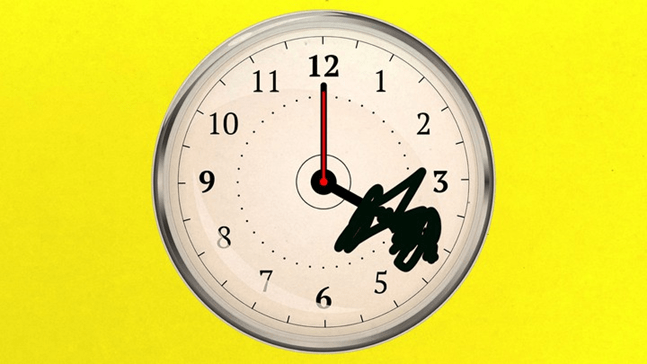
Take a look at the picture above.
In 500 words or less, write a story about the image. The challenge of flash fiction is to create a thought-provoking story within the tight word constraints of the writing form.
The story can be any genre as long as it is based on the picture.
Prizes:
One grand-prize winner will receive $500 and receive a gold contest badge.
Two runner-ups will receive $100 and receive a silver contest badge.
Cost
The cost is $6.95/entry.
Writers can submit as many entries as they want.
Booksie 2020 Flash Fiction Writing Contest

The ‘Sunday Scaries’ and the Anxiety of Modern Work – The Atlantic
To Alec Burks, a 30-year-old project manager at a construction company in Seattle, Sunday evenings feel like “the end of freedom,” a dreadful period when time feels like it’s quickly disappearing, and, all of a sudden, “in 12 hours, I’m going to be back at my desk.” It’s not that Burks doesn’t like his job—he does. But one thing that contributes to the feeling, he told me, is that “you almost have to shrink who you are a little bit sometimes to fit into that mold of your job description.” The weekend, by contrast, doesn’t require any such shrinking.
The not-exactly-clinical diagnosis for this late-weekend malaise is the Sunday scaries, a term that has risen to prominence in the past decade or so. It is not altogether surprising that the transition from weekend to workweek is, and likely has always been, unpleasant. But despite the fact that the contours of the standard workweek haven’t changed for the better part of a century, there is something distinctly modern about the queasiness so many people feel on Sunday nights about returning to the grind of work or school.
Regardless of whether people call this experience the Sunday scaries (Sunday evening feeling and Sunday syndrome are two alternatives), a lot of them undergo some variation of it. A 2018 survey commissioned by LinkedIn found that 80 percent of working American adults worry about the upcoming workweek on Sundays. Another survey by a home-goods brand found that the Sunday scaries’ average time of arrival is 3:58 p.m., though they seem to set in later than that for many people. (A cousin of the Sunday scaries is the returning-from-vacation scaries, which can fall on any day of the week.)
Read: Workism is making Americans miserable
“This feeling, whether we call it anxiety, worry, stress, fear, whatever, it’s all really the same thing,” says Jonathan Abramowitz, a clinical psychologist and professor at the University of North Carolina at Chapel Hill. “Psychologically, it’s a response to the perception of some sort of threat.” The perceived threat varies—it might be getting up early, or being busy and “on” for several days in a row—but the commonality, Abramowitz says, is that “we jump to conclusions” and “underestimate our ability to cope.” For most people, he reckons, the stress of Sunday is uncomfortable but ultimately manageable—and they end up coping just fine. (And just as with other forms of anxiety, some people don’t feel the Sunday scaries at all.)
“Low-grade existential dread” is how Erin Thibeau, a 28-year-old who works in marketing at a design firm in Brooklyn, describes the feeling she gets on Sunday afternoons and evenings. For her, the end of a weekend presents stressful questions about whether she has taken full advantage of having two days off. Those questions fall under two categories that seem to be in tension: “It’s a mix of ‘Have I been productive enough?’ and ‘Have I relaxed enough?’” she told me.
“In 19—whatever—52, some people hated their jobs and didn’t want to go back to work, but I don’t think this is about hating your job,” says Anne Helen Petersen, a senior culture writer at BuzzFeed and the author of the forthcoming book Can’t Even: How Millennials Became the Burnout Generation. “I think the Sunday scaries are about feeling an overwhelming sense of pressure”—to perform well at work and thus pursue or maintain financial stability, as well as to keep up other everyday responsibilities, like cooking or child care.
“I don’t think there’s anything that’s timeless about [the Sunday scaries],” Petersen told me. “Burnout and the anxiety that accompanies it are so much about living under our current iteration of capitalism and about class insecurity.” From roughly the end of World War II to 1970—a period that’s often called the Golden Age of American capitalism—Petersen says, “there were a ton of jobs that weren’t great, but the difference was that people were more secure in their class position … [Now] it’s this huge combination of not only ‘How am I going to do in my job?,’ but all these other things that I’m anxious about—‘If I lose my job, then I’m not going to have medical insurance.’” This goes some way toward explaining the need to make weekends both productive and relaxing—workers need to both get stuff done and also make sure that they’ve sufficiently recharged to get more stuff done during the week.
Read: ‘Ugh, I’m so busy,’ a status symbol for our time
Work has changed, and so have Sundays themselves. One analysis of Canadian time-use data from 1981 to 2005 that tracked paid work, chores, shopping, and child care found that “Sundays became busier and behaviorally closer to weekdays than they were at the beginning of the 1980s.” “This change would probably become even more obvious,” the study’s author speculated, “if one were to go back to the older data sets, such as [one 1968 data set] from Washington, D.C., where Sunday meals at home occupied more than 90 minutes and shopping only 8 minutes.”
Given how work (side gigs included) has, for many people, bled into nights and weekends, Petersen says, “Two days is not enough—it’s just not … For people I know, myself included, Saturday is a catch-up day, and then Sunday is the only real day of leisure. So people, as soon as they start, they’re like, ‘It’s about to end!’ You’re so conscious of the fact that it’s so short.”
This is the economic milieu from which the Sunday scaries have emerged. It is responsible for the Sunday scaries–branded vegan CBD gummies, the how-to videos outlining “productive” Sunday routines for preparing for the workweek, and—perhaps most troublingly—the tweets from brands such as Starbucks, Mary Kay, and Malibu Rum about warding off the Sunday scaries.
The phrase itself hasn’t been around for very long. Kory Stamper, a lexicographer and author, told me that the first written usage of Sunday scaries she could find after searching around was in a hangover-inspired entry from 2009 on the website Urban Dictionary. Over the course of the 2010s, though, the scaries became less about the consequences of partying than the anticipation of the week ahead. A spokesperson for Twitter told me that use of the phrase has been “growing steadily” on its platform since early 2016, and that 90 percent of tweets that mention it come from people in the U.S.
One advantage of the term is that it is immediately graspable, but at the same time it is almost gratingly infantilizing, expressing genuinely uncomfortable emotions in the language of toddlers. (Multiple people I interviewed for this story disliked the term on these grounds, even as they noted its usefulness.)
“For some reason, we have a great whack of words that sound silly but describe unpleasant feelings or negative emotions: the heebie-jeebies, the screaming meemies, the collywobbles, the jitters, the creeps, a case of the Mondays, boo-hoo,” Stamper says. She notes that some of these terms are playful and sonically repetitive, and wondered if “we like these ameliorating terms because their humor makes it easier to talk about something we would rather not talk about at all.”
The phrase seems even more modern, and even more childish, considering the dangerous outcomes that many American workers used to fear on the job. “There are lots of stories, almost 100 years ago, of people dreading going back to the factory, whether it’s injuries or being yelled at,” says Nelson Lichtenstein, a professor of history at the University of California at Santa Barbara. “It was said that at the Ford Motor Company, the foreman knew how to shout ‘Speed up!’ in 15 languages.” Scaries doesn’t quite do justice to the awful work experiences that many people had back then, and still have today.
Whatever this feeling is called, and whatever economic conditions may be in place right now, people have probably been mourning the end of weekends in one way or another for as long as days off have existed. In the mid-19th century, when Sunday was workers’ only official full day off in England, many of them extended their break by skipping work on Monday, “whether to relax, to recover from drunkenness, or both,” explained Witold Rybczynski in The Atlantic in 1991. This habit, which scans as a symptom of a Sunday scaries–like feeling, was effectively formalized in some industries and was referred to as “keeping Saint Monday.”
Precursors to the modern Sunday scaries were detectable as long as 30 years ago. In 1991, The New York Times published an analysis of “the Sunday blues,” and while economic precarity was listed among the potential causes, the article presented a host of other possible explanations: an interruption of the internal biological clock’s usual weekday sleep cycles, caffeine withdrawal, hangovers, and, of course, a simple dislike of work (or school, or housework).
The proposed cures for this unease range from the micro to the macro. Some of the people I interviewed who experience the Sunday scaries have been implementing plans to thwart them. Erin Thibeau finds some success with what she calls her “Sunday Funday initiative”—a program that aims to “extend the feeling of the weekend” by strategically scheduling movies, museum visits, and walks in the park when the scaries typically set in. Maggie Lofboom, a 36-year-old who works in landscape design and as an opera singer in Minneapolis, says she cross-stitches and takes baths to keep the scaries at bay.
Sarah Savoy, a 35-year-old who works at a think tank in Washington, D.C., stumbled on an unexpected antidote: having young children. She used to get the Sunday scaries in her 20s, but they’ve since subsided. “Our older daughter is a terrible napper, so [on Sundays] from 2 o’clock on it’s survival parenting, just trying to get to the end of the day,” she told me. “One of the things I look forward to about the week is that we have a pretty set routine, which can fall apart on a weekend.” Of course, this pattern has produced its own weekly emotional cycle, with a feeling of stress that crests on Saturday mornings, when Savoy makes a household to-do list for the weekend.
Jonathan Abramowitz, the psychology professor, says that the most reliable way to banish the Sunday scaries, especially if they have escalated to the point of being debilitating, is to practice cognitive behavioral therapy, a means of revising mental and behavioral patterns that can be learned from a therapist, an app, or a workbook. “In the short term,” he says, “exercising, taking a walk, or doing some activity that you really enjoy on Sunday can take your mind off the scaries temporarily.”
When I asked Anne Helen Petersen what would cure the Sunday scaries, she laughed and gave a two-word answer: “Fix capitalism.” “You have to get rid of the conditions that are creating precarity,” she says. “People wouldn’t think that universal health care has anything to do with the Sunday scaries, but it absolutely does … Creating a slightly different Sunday routine isn’t going to change the massive structural problems.”
One potential system-wide change she has researched—smaller than implementing universal health care, but still big—is a switch to a four-day workweek. “When people had that one more day of leisure, it opened up so many different possibilities to do the things you actually want to do and to actually feel restored,” she says.
As a haver of the Sunday scaries myself, I would like to live in a world where there’s less to fear about Monday. At the same time, I suspect that there is an element of tragedy inextricable from the basic nature of weekends, which (not to get too glum about it) are like lives in miniature: That approaching expanse of leisure that one can survey on Friday evenings, no matter how well used, is followed within 48 hours by the distressing realization that the end of it is inevitable, and that what once seemed like so much time has been used up. On Sundays, we each reckon with the passing of time and die a small death. And that’s scary.
Filed under 2020
Book Review: “Farewell, My Lovely”

Farewell, My Lovely by Raymond Chandler
My rating: 5 of 5 stars
Trying to fill in my mystery history education, I finally read this novel. My tardiness is not a reflection on the novel, which I enjoyed. If you like private detective novels and the noir slice of life that it can portray, read this book. You may wind up feeling like the pink bug found on the 18th floor of LA police headquarters that Marlowe captures and sets free, or maybe you won’t, but you have to admire the use of telling details throughout the novel to help convey the story. There are a few things that were a bit overdone for me, and really it should 4.5 stars, but half stars aren’t allowed. For me, the use of metaphors was a bit heavy in the first half of the book. Their use settled down — at least so it seemed to me — in the second half. But, overall, the novel is good example of an author striving to bring his best skill and talent to a genre that at the time it was published (1940) that was considered by many to be less than a noble or worthy pursuit. I hope you read and enjoy the novel, too.
View all my reviews
Filed under 2020, book review
The Single Reason Why People Can’t Write, According to a Harvard Psychologist
“Why is so much writing so hard to understand? Why must a typical reader struggle to follow an academic article, the fine print on a tax return, or the instructions for setting up a wireless home network?”
These are questions Harvard psychologist Steven Pinker asks in his book, The Sense of Style: The Thinking Person’s Guide to Writing in the 21st Century. They’re questions I’ve often encountered –and attempted to tackle– throughout my career as a business writer and editor. Whenever I see writing that is loaded with jargon, clichés, technical terms, and abbreviations, two questions come immediately to mind. First, what is the writer trying to say, exactly? And second, how can the writer convey her ideas more clearly, without having to lean on language that confuses the reader?
For Pinker, the root cause of so much bad writing is what he calls “the Curse of Knowledge”, which he defines as “a difficulty in imagining what it is like for someone else not to know something that you know. The curse of knowledge is the single best explanation I know of why good people write bad prose.”
“Every human pastime –music, cooking, sports, art, theoretical physics –develops an argot to spare its enthusiasts from having to say or type a long-winded description every time they refer to a familiar concept in each other’s company. The problem is that as we become proficient at our job or hobby we come to use these catchwords so often that they flow out of our fingers automatically, and we forget that our readers may not be members of the clubhouse in which we learned them.”
People in business seem particularly prone to this “affliction.” You could argue that business has developed its own entirely unique dialect of English. People are exposed to an alphabet soup of terms and acronyms at business school, which they then put into use in their day-to-day interactions once they enter the working world.
And what starts out as a means of facilitating verbal communication between people becomes the primary mode with which people communicate their ideas in writing, from email to chat apps to business proposals and presentations.
“How can we lift the curse of knowledge?” asks Pinker. “A considerate writer will…cultivate the habit of adding a few words of explanation to common technical terms, as in ‘Arabidopsis, a flowering mustard plant,’ rather than the bare ‘Arabidopsis.’ It’s not just an act of magnanimity: A writer who explains technical terms can multiply her readership a thousandfold at the cost of a handful of characters, the literary equivalent of picking up hundred-dollar bills on the sidewalk.”
“Readers will also thank a writer for the copious use of for example, as in, and such as, because an explanation without an example is little better than no explanation at all.”
Whenever I write a sentence that makes me pause and wonder about what it means, I assume that other readers might react in the same way. If a sentence is not clear to me, it might not be clear to others. It’s an approach that I recommend to anyone who is trying to improve his own writing.
Before hitting publish and sending your writing out to the world, it’s better to be honest with yourself about how much your reader is likely to understand a given passage or sentence. Before you commit your writing to print– or to the internet– take a few moments to make sure that what you write is clear and understandable by as many of your intended readers as possible.
As Richard Feynman, the Nobel prize-winning physicist, once wrote, “If you ever hear yourself saying, ‘I think I understand this,’ that means you don’t.”
I Trained Myself to Be Less Busy — and it Dramatically Improved My Life
I am a robot, programmed to obliterate my to-do list. During the day, I direct a research laboratory, write papers, and teach classes as a professor of psychology at the University of Arizona. Come 4:30 pm, I run a kid limousine service, shuttling between various activities, preparing dinner, helping with homework and the evening routine. I scurry through these activities — often missing the moments of joy embedded in everyday life — until I have some sort of nightly electrical shortage, then crash out on the couch. I reboot in the morning and do it all again.
I am addicted to busyness. I am embarrassed to say it, largely because I am lucky to have a wonderful life and a great career, and, to be fair, the struggles, demands, and slings and arrows are all of my own doing (especially the part about having kids; I know I was there for that).
I created this mess — a life at breakneck speed from the moment I wake until I finally watch 30 minutes of Netflix before drifting off. But, I recently hit rock bottom, feeling as if I was going through the motions of my life rather than truly living it.
I’m not the only one who feels overwhelmed — you probably do too
I don’t think I am alone in my feelings about busyness, nor do I think these feelings are especially new for the average working adult. I might be alone at my rock bottom, but there are many indicators that we are feeling more overcommitted, overscheduled, overtired, and overburdened than ever before.
Brigid Schulte, in her 2014 book, Overwhelmed, writes incisively about this trend, “So much do we value busyness, researchers have found a human ‘aversion’ to idleness and need for ‘justifiable busyness.’” My favorite example from her book: Researchers can track the rise of busyness in holiday cards dating back to the 1960s. In holiday cards, Americans used to share news about our lives (the joys and sorrows of the year), but now we’re more likely than ever to mention how busy we are as well.
As a clinical psychologist, I have worked with many people who are trying to make substantial changes — from improving a marriage to overcoming generalized anxiety or depression. The idea that these changes begin with acknowledging that there’s a problem is a truism. Personal responsibility is the vehicle for behavior change. When it came to my busyness, though, I had what might be described as extreme difficulty looking beyond the hamster wheel. (Professionally, people in my line of work call this “very little insight.”)
I don’t think I am busier than anyone else. My wife and friends are just as busy as me. I think the difference is that I became aware of my busyness and started to hate it. I was feeling claustrophobic in my own life. I asked my wife if I could retire and get some time back in the day. (She said no.) Then I started to wonder about the opposite of busyness. I thought immediately of the slow food movement. I needed a slow food movement in my everyday life.
I realized busyness had devoured my values
The first change took root for me about 18 months ago when the graduate program that I direct started teaching Acceptance and Commitment Therapy (pronounced as the single word ACT) to our doctoral students, who are future clinical psychologists. ACT is a scientifically validated psychotherapy treatment for a range of mental health problems. Basically, it’s a form of talk therapy.
A central tenet of ACT is that emotional pain is driven in large part by getting over-involved in difficult experiences and thoughts (that is, going over and over things in our mind, getting stuck in our experiences, and being unable to create any psychological distance between yourself and the terribleness of things). Consequently, when we become stuck on or in our emotional pain, we go through each day in a way that is disconnected from our core values — the essential principles that, ideally, come to guide our lives. In ACT, value-centered living is paramount, and a big part of the treatment is to help people separate themselves from the painful language in their heads (“This is so awful. I feel so terrible.”)to get on with the business of living a meaningful life.
As I learned more about ACT and started incorporating its methods into my psychotherapy practice with clients, something important dawned on me: Busyness devoured my values. I was working, parenting, loving, emailing, and exercising in a sort of mindless way, just doing and doing. Busyness is not, nor was it ever, a guiding principle in my life. Yet, I had let the inertia of doing take deep root without realizing what was happening to me. To get more out of life — more meaning, more joie de vivre — I needed to start doing less and to become more conscious about my choices.
How I started to reclaim my life from busyness
I started with a simple value: being outside. I am a regular exerciser, but I was losing touch with being outside and moving my body through space. I began walking more, that’s all. It was not a hard change to make — I just park a little farther from work and hoof it a bit more, or I go for a nice stroll during lunch. It would not be an overstatement to say that an additional 40 minutes a day of walking just two or three times a week has changed me in a profound way. Walking provides time to think, to be energized by nature, and to feel less frenzied. Quite dramatically, I am much less of a robot and much more of a human being.
Next, I focused on valuing idleness. I do not mean being a sloth, only that I was coming to see the value of doing as little as possible for long periods of time. I just finished Tim Kreider’s incredibly thoughtful and hilarious book of essays We Learn Nothing. The audiobook includes a bonus chapter called “Laziness: A Manifesto.” Kreider writes, “This busyness serves as a kind of existential reassurance, a hedge against emptiness. Obviously your life cannot possibly be silly, or trivial, or meaningless if you are so busy, completely booked every hour of the day. All this noise, and rush, and stress seem contrived to cover up some fear at the center of our lives.”
I cannot say if I my busyness was a hedge against some sort of existential emptiness, but all the doing certainly left me feeling empty in the end. Now, with idleness in mind, I just park myself on the couch as often as possible and see what happens. Mostly, I am looking for an opportunity to enjoy the moments of life in an unstructured way; I am looking for more play. In my idleness last night, I spent a long time just tickling my 5-year-old daughter, pretending to scare her, and lying on my back with her in “airplane position” while she perfected a move she called the hummingbird. That was the best half-hour of my year so far. What is more, I’ve found that the less I work, the better my work actually is in the end, from the ability to attend to students and clients to the creative energies needed for doing science.
As part of my effort to create time and space for doing less, I also got off Facebook. At first, I was simply trying to escape the toxicity of the election on social media. In time, though, I realized I was also escaping an attentional black hole, one with an incredible gravitational pull. I would never willfully stand in the middle of a room noisy room with everyone screaming for my attention, yet this is best metaphor I can think of to describe my mind on Facebook. I was weak and could not resist its forces, fair enough, but I also started to see it as filler and fluff. When I got past my FOMO and let it go, I gained back many moments in my day.
I’ve also tried to get serious about laughing more. For me, busyness’s neighbor is seriousness. Seriousness is overrated, and I feel much healthier and even childlike when I am not taking myself so seriously, and when I am trying to make other people laugh.
Finally, my relationships. In my days of busyness, I loathed the work pop-in — too many unscheduled interruptions. Now, I’m coming to appreciate people dropping by to say hello and to joke around (see: laughter). My door is a little more open, so to speak. I am also focusing on my local drinking club, where a few friends have been going for beers together for several years. Sometimes I am too busy and have to miss, but that really bothers me now. Friendships are sustenance, just like food.
Have I sustained these changes? Sort of. I am working as much as ever and find it hard to not get sucked into the trappings of busyness. Sometimes I look at my schedule shout to myself, “Too much, too much!” When this is the case, I just go for a walk. Or I just get on the floor and mess with my kids. Or I follow the mantra of our club: “Relax, have a homebrew.” (If my busyness freakout is in the morning, I do wait for the homebrew, in case you’re wondering. At least until lunch.)
By and large, though, I am feeling better than I have in a long time — more deliberate in the choices I make, more connected to the people around me, and more energized for the demands of the day. The surprising irony here, for me at least, is that by doing less, I am getting way more out life. I have banished my inner robot.
David Sbarra, PhD, is a professor of psychology at the University of Arizona. His new ebook, Love, Loss, and the Space Between, is available on Amazon.
Filed under 2020, life studies

The Strange Library by Haruki Murakami
My rating: 3 of 5 stars
I am not sure what to make of this short book. Modern fable? Twilight Zone-like tale. If I could give it half stars, it would be 3.5 stars. In some ways, I feel that the story is simple enough, but still eludes me. A young boy goes to a library to return borrowed books before they are overdue and winds up being trapped in an underground labyrinth where he is forced to study arcane text. When he is done, his brain will be eaten as a delicacy by his captor. With help, he tries to escape and does. He has had to abandon his new shoes, which his mother never mentions to him once he returns home, but then she doesn’t mention his absence from home for several days, either. In some ways, it’s a modern Hansel and Gretel tale. After finishing the book, I was left with a strange feeling of wanting just a little more, but maybe that just means I am not quite the right person for this story.
View all my reviews
Filed under 2020, book review
A short review: The Good Dog

The Good Dog by Walker Jean Mills
My rating: 4 of 5 stars
You wouldn’t think a slim volume with eye-catching illustrations would wait on the shelf so long before being read, but that’s what happened. This mostly picture book has a simple message: that if we acted more in the manner of the best qualities of our dogs, the world would be a better place. Kindness, concern, and service to others. A good book for young readers and older ones as well to take to heart.
View all my reviews
Filed under 2020, book review

‘American Dirt’ was planned as a publishing triumph. What went wrong? – Los Angeles Times
 Celebrities endorsed ‘American Dirt’ — then the reactions on Twitter turned negative. Cries of appropriation — and barb-wire dinner pieces — spark scorn for book
Source: ‘American Dirt’ was planned as a publishing triumph. What went wrong? – Los Angeles Times
It was poised to be a blockbuster long before copies arrived in bookstores last week: a thrilling contemporary migration story following a mother and her son, desperate to cross Mexico and reach the United States.
Its publisher, Flatiron Books, an imprint of Macmillan, paid a seven-figure advance after outbidding several competitors for the novel. It snagged a coveted selection in Oprah’s Book Club and had been shipped to key celebrity influencers, including Stephen King, Sandra Cisneros and Salma Hayek. A reported first run of 500,000 copies was printed. The film rights were sold.
But by week’s end, the novel “American Dirt” had garnered attention that its boosters likely didn’t expect: angry charges of cultural appropriation, stereotyping, insensitivity, and even racism against author Jeanine Cummins, who herself said in the book’s author’s note, “I was worried that, as a nonmigrant and non-Mexican, I had no business writing a book set almost entirely in Mexico, set entirely among migrants.”
Despite the backing of towering figures in American media, Cummins’ page-turning portrayal of a mother on the run is now at the center of the first bonafide literary controversy of the year, and is forcing a hard reflection on the state of Latinos in a cultural field that remains overwhelmingly white.
In the face of critiques, Cummins is pushing back in public. Her publisher released a statement encouraging discussion around the title, while some authors and booksellers have come to Cummins’ defense. In a culture that is used to debating black and Asian representation and stereotypes, the entrenchment around “American Dirt” is fueling even more complaints over the ease with which popular culture still employs Latino-related stereotypes in contemporary movies, television and fiction.
“American Dirt” is also highlighting factors that observers say have contributed a near shutout of contemporary Mexican and Mexican American voices from the top tier of the publishing publicity machine — the sorts of books that are guaranteed handsome sales by virtue of projection.
What went wrong?
As passages from the novel began emerging last month, Mexican and other Latino voices began raising red flags. The author’s portrayal of Mexican culture was called outlandish, littered with stereotypes, stilted bilingualism and an awkward peppering of italicized Spanish phrases.
“I assert that American Dirt fails to convey any Mexican sensibility,” said Long Beach writer Myriam Gurba in an early negative review that became a catalyst of the controversy.
It is the marketing of this brown and black pain.
Lilliam Rivera, author
“American Dirt” has also sparked an emotional discussion about how far the publishing industry still must go to more richly represent the scope and diversity of the Latino experience, said authors, literary agents and other industry figures in interviews last week. It’s a discussion focused on a complicated question: Who gets to frame others’ stories, and how?
Barbed-wire centerpieces
Publishing, like Hollywood, has yet to fully confront its lack of diversity involving Latinos, the largest nonwhite demographic and now largest minority voting group in the United States. A 2019 Publishers Weekly study based on self-reported survey of 699 industry respondents found that Latinos comprised just 3 percent of the publishing workforce in 2018. An earlier Diversity Baseline Survey conducted in 2015 by Lee & Low Books found that Latinos represented 6% of the publishing industry overall, while whites were 79%.
“American Dirt” has opened a window into the ways a few select books are brought to the public’s attention at a time when many authors have to hire their own publicists or arrange their own book readings and events. The roll-out to some took on the veneer of insult to Central American trauma and pain surrounding the treacherous passage through Mexico.
“They’re handling it like they handle a Marvel comics movie,” said Roberto Lovato, a Salvadoran American writer in San Francisco, who is finalizing an upcoming memoir. “But this industry will make you dance the minstrel salsa dance or the minstrel cumbia dance,” he added, in reference to the tenor of Latino-themed titles that are deemed palatable to wide audiences.
Indeed, the operation behind “American Dirt” made what many describe as cringe-worthy errors even before the book hit stores.
Back in May, Flatiron Books hosted a dinner for Cummins during a booksellers convention in New York, a sign that the novel would have strong publisher support. On the tables at the dinner were barbed-wire centerpieces holding flowers. Evoking a border wall, the table decorations, complete with faux barbed wire made from twigs, played off the novel’s cover design. Critics found a photo Cummins posted of the centerpieces on her Twitter account, and have circulated the image as a symbol of the publisher’s insensitivity.
“It’s disturbing to see a publishing dinner with barb-wire centerpieces,” said Lilliam Rivera, the L.A.-based Puerto Rican author of successful young adult novels. “It is the marketing of this brown and black pain.”
More criticism followed among Latino writers, from the fringes to the center of the literary power establishment. Mexican author Valeria Luiselli, a MacArthur Foundation “genius” grant recipient, called the book the “worst possible” pick for Oprah’s nod. Francisco Goldman, the celebrated Guatemalan American novelist and journalist who divides his time between New York and Mexico City, said in an interview he was “shocked” by the “tone-deaf” publicity roll-out. “And these are supposedly sophisticated people.”
When Oprah Winfrey’s super-charged publicity campaign for “American Dirt” launched Tuesday, with the announcement of her book club pick on “CBS This Morning” and on Winfrey’s social media accounts, the already-simmering anger over the novel only grew.
Critics noted a string of similar casual-seeming social posts from famous figures such as Yalitza Aparicio (“Roma”), MJ Rodriguez (“Pose”) and Gina Rodriguez (“Jane the Virgin”). Hayek, the Academy Award-nominated Mexican actress, posted her own glowing review for “American Dirt” later in the week, then deleted it on Friday. “I confess I have not read it and was not aware of any controversy,” she said on Instagram. Each entertainer displayed an e-reader version of the novel and nearly all of them thanked Winfrey for sending the book, hinting at a multiplatform publicity campaign.
Not everyone went along. Kate Horan, the director of the McAllen Public Library in Texas, posted portions of a letter she sent to the American Library Assn. and Oprah’s Book Club, declining to participate in a recorded “unboxing” event meant to push “American Dirt.” Horan said she felt compelled to turn down the offer from Oprah’s Book Club after seeing the reactions among Latinx writers she and her staff admire.
“When we took the book out, our hearts dropped,” Horan said in a telephone interview from Philadelphia, where the American Library Assn. is holding its mid-winter conference. “There followed many conversations with people in my community, and of course reading the book, I can only compare it to a telenovela. It’s so hyper stereotyped, that it’s harmful.” (The McAllen public library will still have a dozen copies of the book for checkout, Horan said.)
A muddled identity
Buzz around “American Dirt” had been building since 2018, when it was sold at auction to Flatiron editor Amy Einhorn, who is known for acquiring the novel “The Help” — a bestseller whose white author was criticized for, among other things, comparing a black maid character’s skin to a cockroach. Cummins’ book scored blurbs from not only King and Cisneros, but also Don Winslow and John Grisham. Winslow, who called “American Dirt” “a ‘Grapes of Wrath’ for our times,” and others defended their endorsements of the book.
“I read the book and I loved it. That experience can’t be changed by people who don’t like it,” said novelist Ann Patchett, who called “American Dirt” a “moral compass” in her quote for the title. “There’s a level of viciousness that comes from a woman getting big advance and a lot of attention,” she added. “If it had been a small advance with a small review in the back of the book section, I don’t think we’d be seeing the same level of outrage.”
By week’s end, as the U.S. commercial publishing industry was reeling from the expanding maelstrom over what its critics called a cartoonish melodrama about contemporary Mexico, Cummins still hit the road on a book tour. At an industry conference last week in Baltimore, she defended her right to write the novel from the perspective of the Mexican woman at the heart of her book.
Her character Lydia, 32, is middle-class, college-educated wife and mother who owns a bookshop in the resort city of Acapulco and survives a bloody massacre at a family quinceañera. With her journalist husband and other family members killed, the bookish protagonist and her 8-year-old son make a desperate run for the U.S. border, partly on the freight train La Bestia. Critics have mocked the narrative ploy as implausible for anyone of Lydia’s class stature, who can usually buy airline or bus tickets.
In Baltimore, Cummins said the migrants she met during her research for the novel “made me recognize my own cowardice” as she grappled with early failed drafts and doubts about authenticity. “When people are really putting their lives on the line, to be afraid of writing a book felt like cowardice,” she said, according to a report for the trade site Publishers Lunch.
The author, who did not respond to a request for comment for this article, identified as white as recently as 2016. On Wednesday, Cummins, whose grandmother was from Puerto Rico, said she was “a Latinx woman” while addressing the negative reactions to the book among Mexican, Central American and Chicano readers who have vigorously questioned her authorial integrity. “Not everyone needs to love my book,” she said.
On Friday, Cummins turned up her defense during an interview with NPR: “I am a white person. … I am a person who has a very privileged life. I am also Puerto Rican. … That fact has been attacked and sidelined by people who, frankly, are attempting to police my identity.”
But her critics weren’t buying it.
Gurba and others accused Cummins of profiting off Latina identity and transforming her own ethnicity over time to suit professional interests. “She became a person of color for the sake of financial convenience,” Gurba told The Times. “I call that POC, a person of convenience.”
Another set of earlier photos of Cummins with barbed-wire decorated fingernails brought even more criticism. “Every day I see something new that pertains to this, that it seems like it can’t get worse, and it gets worse,” said YA author Rivera.
Cummins’ somewhat apologetic author’s note also fanned the flames. In it, she says she wished someone “slightly browner” than her had written her book. She also argued that her effort seeks to counter depictions of immigrants as a “faceless brown mass.” Goldman, reached in New York, called the phrase an admission to the book’s “pornographic feedback of violence.”
“It’s just unbelievable,” he said Thursday. “How mediocre, third-rate and sleazy it is for a fiction writer to appropriate violence and suffering that way.”
In her note, he added, Cummins also writes, “we seldom think of [migrants] as human beings.”
“Who is that ‘we’?” Goldman said. “It sounds like Donald Trump Jr. was doing a book club and trying to come up as woke. … How could anyone think of themselves as being the corrective for that?”
Industry buzzing
Goldman said he hopes that the persistent negative buzz may force the publishing establishment to address uncomfortable questions about how U.S. Latinos are reflected in the adult-fiction space, just as similar discussions of portrayals of African American and Asian American characters in film, television and the world of YA novels has led to some changes.
The controversy doesn’t look to go away soon. On Saturday, a group of writers including Lovato, Gurba and others said they sent a letter to Macmillan promising more “action” if the publishing house doesn’t respond more directly to their critiques. Industry players are abuzz with the topic, book agents said, as a string of “American Dirt”-inspired Twitter parodies by brown writers took flight, mocking the publishing industry’s devotion to tired Latino tropes involving gangs and grandmothers.
Eddie Schneider, vice president of JABerwocky Literary Agency, and who represents author Rivera, said Flatiron Books made a string of mistakes in rolling out “American Dirt” and isn’t correcting them. On Thursday, the publishing house defended the title in a statement to The Times.
“I’m baffled I haven’t seen any apology yet,” Schneider said. “Maybe not for the book, but certainly it seems like an apology is in order for the insensitivity of the roll-out.”
Schneider suggested that Flatiron and Cummins should clearly state how immigrant-rights organizations could benefit from the sales that are certain to follow the Oprah Winfrey endorsement. “That to me seems sort of like a bare minimum corporate response — even if they’re still making a ton of money off of it,” he said.
As of Saturday, “American Dirt” was No. 4 on Amazon’s bestseller list.
Times staff writer Dorany Pineda contributed to this report.
Filed under 2020, book publishing, books
Photo finish Friday (and haiku): “Protesters in the rain”

Remember your heart
when you take your mind and storms
for a rainy walk.


 Booker's Blog