Tag Archives: Sunday

New words to live by: “Awkwapella”

It is the first or second weekend of the month and time, once again, for a new word to live by. This is a word or phrase not currently in use in the U.S. English lexicon, but might need to be considered. Other words, such as obsurd, crumpify, subsus, flib, congressed, and others, can be found by clicking on the tags below. Today’s New Word is a compounding of word and a suffix two words. Without further waiting, awkwapella is the new word for this month.

Old Words
awkward, adj. 1. Missing social graces or manners. 2. Caused by a lack of social grace. [Editor’s note: There are other definitions for awkward, but these are the two best applicable to the new word.]

a cappella, adv., adj.. without instrument accompaniment.

New Word
awkwapella, adj. an unplanned and often awkward activity that suddenly casts full and unwanted attention on you.

For example, doing something embarrassing in front of others, especially your peers, co-workers, or friends that gets you attention from everybody in the immediate area. Maybe you have a noticeable laugh, which you try to hide by only laughing when everybody laughs, but then once you keep laughing after everybody else has stopped. Or maybe you start laughing at something, believing others will join you, but they never do.

1 Comment

Filed under 2015, new word, New words to live by

Random act of poetry: “The ramparts”

I stand on the ramparts of tautology
Forever eschewing any hint of scatology.
But don’t ask me this fine day
To bind my obfuscations away.

For where o’ where would I be
If I could not in confidence convolute thee?
Oh, where o’ where, pray tell
Would my alliterations have place to dwell?

I am but a humble servant of words
Trundling through this world of the absurd.
A land of regret full of monsters who fete
On a mind that will now be quite quiet.

1 Comment

Filed under 2015, poetry by author, Random acts of poetry

12 underrated Canadian novels you need to read

With so many amazing books being published every year, some don’t get the attention they deserve. Here are 12 great Canadian novels we think deserve another look.

Source: http://www.cbc.ca/books/2015/08/12-underrated-canadian-novels-you-need-to-read.html

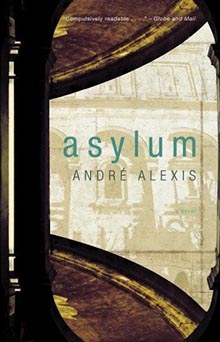
Asylum

Asylum

From the publisher: Set in Ottawa during the Mulroney years, Asylum is André Alexis’s sweeping, edged-in-satire, yet deeply serious tale of intertwined lives and fortunes, of politics and vain ambition, of the building of a magnificent prison, of human fallibility, of the search for refuge, of the impossibility of love, and of finding home.

From the book: Little had changed and yet everything had changed. On this, the anniversary of his attempted suicide, Walter Barnes sat in one of the two chairs he now owned, reading one of his two books. Of the two, a Bible and the Arden King Lear, he had chosen the Bible, not for any consciously spiritual reason but rather because he found it beautiful and amusing, in particular the Pentateuch, of which he was reading Leviticus.He was not aware that a year had passed since he’d first tried to kill himself. If he had been, he would not have known whether to rejoice or mourn; though, in any case, he might well have chosen to mark the event in this way: reading, at home.

From Asylum by André Alexis ©2009. Published by Emblem Editions.

***
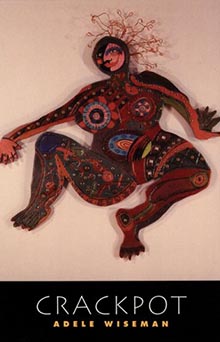
Crackpot

Crackpot

From the publisher: Hoda, the protagonist of Crackpot, is one of the most captivating characters in Canadian fiction. Graduating from a tumultuous childhood to a life of prostitution, she becomes a legend in her neighbourhood, a canny and ingenious woman, generous, intuitive, and exuding a wholesome lust for life. Resonant with myth and superstition, this radiant novel is a joyous celebration of life and the mystery that is at the heart of all experience.

From the book: In the daytime her frail and ever-so-slightly humpbacked mother, or so they described her to blind Danile before they rushed them off to be married, used to take Hoda along with her to the houses where she cleaned. And partly to keep her quiet, and partly because of an ever-present fear, for she felt that she would never have another child, Rahel carried always with her, in a large, cotton kerchief, tied into a peasant-style sack, a magically endless supply of food. All day long, at the least sign of disquiet, she fed the child, for Hoda even then was big-voiced and forward, and sometimes said naughty things to people. Rather than risk having an employer forbid her the privilege of bringing the little girl to work, Rahel forestalled trouble. Things can’t go in and out of the same little mouth simultaneously.

From Crackpot by Adele Wiseman ©1974. Published by New Canadian Library.

For the other ten: http://www.cbc.ca/books/2015/08/12-underrated-canadian-novels-you-need-to-read.html

[Editor’s note: Thank you, Ashlie, for sending the link.]

Leave a comment

Filed under 2015, books

Shelf catering: tourists offered chance to run a bookshop on holiday

For £150 a week, AirBnB users are invited to live in – and run – The Open Book store in Wigtown, Scotland

The Open Book in Wigtown, Scotland

The Open Book in Wigtown, Scotland

by Allison Flood

Source: http://www.theguardian.com/books/2015/aug/21/tourists-offered-chance-to-run-a-bookshop-on-holiday-wigtown

For all those who agree with Neil Gaiman’s maxim in American Gods that “a town isn’t a town without a bookstore”, and who yearn to spend their days amongst the pristine spines and glossy covers of a small bookshop, what might be the perfect holiday retreat has just been listed on AirBnB: the opportunity to become a bookseller for a week or two.

For the sum of £150 a week, guests at The Open Book in Wigtown, Scotland’s national book town, will be expected to sell books for 40 hours a week while living in the flat above the shop. Given training in bookselling from Wigtown’s community of booksellers, they will also have the opportunity to put their “own stamp” on the store while they’re there. “The bookshop residency’s aim is to celebrate bookshops, encourage education in running independent bookshops and welcome people around the world to Scotland’s national book town,” says the AirBnB listing.

The Open Book is leased by the Wigtown book festival from a local family. Organisers have been letting paying volunteers run the shop for a week or two at a time since the start of the year, but opened the experience up to the world at large this week when they launched what they are calling “the first ever bookshop holiday experience” on AirBnB.

“I wouldn’t call it a working holiday,” said Adrian Turpin, director of the Wigtown book festival. “It’s a particular kind of holiday [for people] who don’t feel that running a bookshop is work. It’s not about cheap labour – it’s about offering people an experience … It’s one of those great fantasies.”

The money is “just essentially to cover our costs”, said Turpin, admitting that “it can be a hard life, selling books in a small town, so it’s not a holiday for everybody”.

“I suspect [the shop] would have closed, without this,” he said. “Wigtown is Scotland’s national book town, but it’s quite a long way from anywhere. So part of the idea was to get new people in – people who would hopefully end up having a good time and a long-standing relationship with the town. And also to keep the bookshop afloat. It might otherwise have shut down.”

The rest of the article: http://www.theguardian.com/books/2015/aug/21/tourists-offered-chance-to-run-a-bookshop-on-holiday-wigtown

Leave a comment

Filed under 2015, bookshop, bookstore

New Cormac McCarthy Book, “The Passenger,” Unveiled

Thirty years in the making. Scheduled for release in 2016.

by Jack Martinez

Source: http://www.newsweek.com/cormac-mccarthy-new-book-363027#.Vc-Q6I8RjpQ.twitter

Cormac McCarthy

Cormac McCarthy

After incubating for some 30 years, Cormac McCarthy’s next novel just made a dramatic first entrance onto the public stage. Passages from the much-anticipated book, called The Passenger, were read as part of a multimedia event staged by the Lannan Foundation in Santa Fe, New Mexico. The reading is the first public confirmation of the novel and its title, long the subject of rumors in the literary world.

The occasion marks nearly 50 years since the publication of McCarthy’s The Orchard Keeper, which won the PEN/Faulkner prize for best debut novel in 1966.

While academics and critics have long praised his work, the legendary author keeps a low profile, spending most of his time at a science and mathematics think tank in New Mexico, the Santa Fe Institute (SFI), where he is a trustee. Organizers at SFI confirmed to Newsweek that the novel will be released in 2016, though McCarthy’s agent and publishers declined to comment on the status of the book.

Prior to the Lannan Foundation event on August 5, details about the book’s eventual publication were hard to come by. Now, The Passenger appears to be approaching.

That alone is enough to excite McCarthy’s substantial following. Steven Frye, president of the Cormac McCarthy Society, is more than a little biased when it comes to ranking authors. But there are plenty who share his opinion when he says: “I would rate him No. 1” among contemporary authors. “It’s bold to say that we’ll be reading him in 500 years, the way we read Shakespeare…. But if we’re still reading novels, then I think it will be the case.”

Given the author’s history when it comes to public appearances, it was a surprise to members of the Society (which has no affiliation with the author) when the event was announced on the Santa Fe Institute’s web site.

Read more at: http://www.newsweek.com/cormac-mccarthy-new-book-363027#.Vc-Q6I8RjpQ.twitter

Leave a comment

Filed under 2015, authors, books

New words to live by: “citybilly” and “hill slicker”

It is the first or second weekend of the month and time, once again, for a new word to live by. This is a word or phrase not currently in use in the U.S. English lexicon, but might need to be considered. Other words, such as obsurd, crumpify, subsus, flib, congressed, and others, can be found by clicking on the tags below. Today’s New Word is a compounding of word and a suffix two words. Without further waiting, citybilly and hill slicker are the new words / phrases for this month.

Old Words
Hillbilly, n. a person from a remote or backwoods area, usually meaning somebody from the Appalachian Mountains in the southern U.S.

City slicker, n. a term, often meant disparagingly, for a natty dressed, worldly focused city dweller.

New Words
Citybilly, n. second, even third generation hillbilly who has moved to the city but retains many if not most of their hillbilly ways. Also, those who act like hillbillies in the city even if they have been city dwellers for some time/generations.

Hill slicker, n. city person who has moved to the country, but still retains many of his or her city ways and expects the same big city amenities in the country setting. Think of the wife, Lisa Douglas, in TV sitcom Green Acres.

Leave a comment

Filed under 2015, new word, New words to live by

The best recent science fiction – review roundup

Eric Brown on Chris Beckett’s Mother of Eden; Becky Chambers’s The Long Way to a Small, Angry Planet; Stephen Palmer’s Beautiful Intelligence; Ian Sales’s All That Outer Space Allows; SL Grey’s Under Ground; Alex Lamb’s Roboteer

by Eric Brown

Source: http://www.theguardian.com/books/2015/jul/31/science-fiction-roundup?CMP=twt_books*gdnbooks

Chris Beckett won the 2013 Arthur C Clarke award for his novel Dark Eden, about the survival and adaptation of human colonists on a world without light. The sequel, Mother of Eden (Corvus, £17.99), begins generations later, charting the growth and political divisions between the colonists. It follows the rise of Starlight Brooking, a humble fishergirl, and her quest to bring equality and revolution to Edenheart, a settlement ruled by a conservative patriarchy. Beckett doesn’t do traditional heroes and villains: Starlight Brooking is contradictory and flawed, at once brave and vulnerable, and likewise his villains are portrayed with sympathy and understanding. He also eschews easy answers and formulaic plotting; where a hundred other writers would have Starlight triumph over her enemies, her victories are on a more profound and personal level, and not without tragedy. Mother of Eden is a masterpiece.

When the captain of the Wayfarer starship is offered a job travelling to a faraway planet that could make him and his crew financially secure, he agrees despite the dangers involved.Such a precis might suggest that Becky Chambers’s first novel, The Long Way to a Small, Angry Planet (Hodder & Stoughton, £18.99), originally self‑published and shortlisted for the Kitschies awards, is an action-adventure space opera. But this is a slow, discursive novel of character as the motivations of the diverse and likable crew, comprising humans and aliens, are laid bare for the reader’s delight. It is a quietly profound, humane tour de force that tackles politics and gender issues with refreshing optimism.

Stephen Palmer’s marvellous ninth novel, Beautiful Intelligence (Infinity Plus, £8.99), posits a beleaguered 22nd century in which oil has run out, water is scarce, and in a neat inversion of the contemporary world order, Europe is an economic ruin and Africa the promised land. Two techno wizards abscond from a Japanese laboratory, each attempting to develop artificial intelligence according to their own philosophies – one based on the social intelligence theory of consciousness, the other on a linguistic approach – but billionaire tech-mogul Aritomo Ichikawa will stop at nothing to get them back. What follows is a thrilling chase across a ravaged Europe, a burgeoning North Africa and balkanised US, interleaving excellent action set-pieces with fascinating philosophising on the nature of consciousness. A gripping read to the poignant last line.

More at: http://www.theguardian.com/books/2015/jul/31/science-fiction-roundup?CMP=twt_books*gdnbooks

Leave a comment

Filed under 2015, book review, books

The Harper Lee “Go Set a Watchman” Fraud

by Joe Nocera

Source: http://www.nytimes.com/2015/07/25/opinion/joe-nocera-the-watchman-fraud.html?smid=fb-share&_r=0

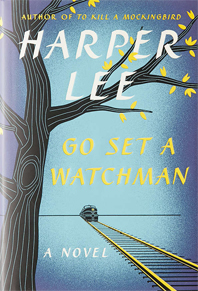
Called away on family business, I was afraid I’d missed the sweet spot for commentary on the Harper Lee/“To Kill a Mockingbird”/“Go Set a Watchman” controversy — that moment right after “Watchman’s” release on July 14 when it was all anybody in literary circles could talk about.

Go Set a Watchman

Go Set a Watchman

Then again, the Rupert Murdoch-owned publishing house HarperCollins announced just this week that it had sold more than 1.1 million copies in a week’s time, making it the “fastest-selling book in company history.” “Watchman” has rocketed to the top of the New York Times best-seller list, where it will surely stay for a while. And the Rupert Murdoch-owned Wall Street Journal not only excerpted the first chapter on the Friday before publication, but it also gave its readers a chance to win a signed first edition of the book. Talk about synergy!

So perhaps it’s not too late after all to point out that the publication of “Go Set a Watchman” constitutes one of the epic money grabs in the modern history of American publishing.

The Ur-fact about Harper Lee is that after publishing her beloved novel, “To Kill a Mockingbird,” in 1960, she not only never published another book; for most of that time she insisted she never would. Until now, that is, when she’s 89, a frail, hearing- and sight-impaired stroke victim living in a nursing home. Perhaps just as important, her sister Alice, Lee’s longtime protector, passed away last November. Her new protector, Tonja Carter, who had worked in Alice Lee’s law office, is the one who brought the “new novel” to HarperCollins’s attention, claiming, conveniently, to have found it shortly before Alice died.

If you have been following The Times’s cleareyed coverage, you know that Carter participated in a meeting in 2011 with a Sotheby’s specialist and Lee’s former agent, in which they came across the manuscript that turned out to be “Go Set a Watchman.” In The Wall Street Journal — where else? — Carter put forth the preposterous claim that she walked out of that meeting early on and never returned, thus sticking with her story that she only discovered the manuscript in 2014.

But the others in the meeting insisted to The Times that she was there the whole time — and saw what they saw: the original manuscript that Lee turned in to Tay Hohoff, her editor. Hohoff, who appears to have been a very fine editor indeed, encouraged her to take a different tack. After much rewriting, Lee emerged with her classic novel of race relations in a small Southern town. Thus, The Times’s account suggests an alternate scenario: that Carter had been sitting on the discovery of the manuscript since 2011, waiting for the moment when she, not Alice, would be in charge of Harper Lee’s affairs.

That’s issue No. 1. Issue No. 2 is the question of whether “Go Set a Watchman” is, in fact, a “newly discovered” novel, worthy of the hoopla it has received, or whether it something less than that: a historical artifact or, more bluntly, a not-very-good first draft that eventually became, with a lot of hard work and smart editing, an American classic.

Rest of the article: Source: http://www.nytimes.com/2015/07/25/opinion/joe-nocera-the-watchman-fraud.html?smid=fb-share&_r=0

Leave a comment

Filed under 2015, publishing

Kafka’s Metamorphosis: 100 thoughts for 100 years

Kafka’s tale of a man who wakes to find he has changed into a giant insect still has the power to shock and delight a century after it was first published. Many regard it as the greatest short story in all literary fiction.

by RICHARD T. KELLY

Source: http://www.theguardian.com/books/2015/jul/18/franz-kafka-metamorphosis-100-thoughts-100-years

  1. What need a modern reader know of Franz Kafka’s Metamorphosis (Die Verwandlung) – arguably the most famous, also greatest, short story in the history of literary fiction?
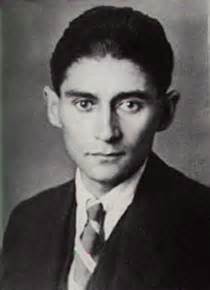
  2. Franz Kafka

    Franz Kafka

  3. Of its stature, for example, Elias Canetti wrote that the story was something Kafka “could never surpass, because there is nothing which Metamorphosis could be surpassed by”. As endorsements go, the bar could not be set higher.
  4. Kafka’s place in the literary pantheon has been assured for some time, most pleasingly expressed by George Steiner’s suggestion that he is the only author of whom it may be said that he made his own a letter of the alphabet – K.
  5. Here, though, is a little novelty: in 2015, Metamorphosis is 100 years old. At least, 1915 is when the story was published, which is to say “finished”; and Kafka, famously, didn’t finish very much.
  6. Kafka worked on Metamorphosis through the autumn of 1912 and completed a version on 7 December that year. But negotiations with publishers were complicated, and circumstances – the first world war, among other things – intervened.
  7. Finally Metamorphosis was set before readers in October 1915, in the avant-garde monthly Die Weissen Blätter, then put between covers that December.
  8. A century on, why does Metamorphosis still attract readers? One reason is that it’s a horror story of sorts. Its premise – a man awakens in the body of an insect – exerts a ghastly fascination beyond anything in even the consummate short works of Chekhov or Joyce or Alice Munro.
  9. Another is that it is, amid its pathos, awfully funny. Gregor Samsa wakes to discover he has six legs and a shell, yet for some pages he thinks that what ails him might just be the kind of throat complaint that is “the occupational malady of travellers”. What can you do but laugh?
  10. And there’s more. As Gregor struggles to crawl off his bed, a clerk from his company calls at the Samsa apartment. As Vladimir Nabokov commented: “This grim speed in checking a remiss employee has all the qualities of a bad dream.” But it is also farce: a personal embarrassment raised to a debacle by multiple easily shocked persons arriving on the scene to witness it.
  11. Metamorphosis exemplifies the world Kafka invented on paper – recognisable but not quite real, precisely detailed and yet dreamlike.
  12. We call this world “Kafkaesque”, of course, while keeping mindful of Italo Calvino’s lament that one hears that term “every quarter of an hour, applied indiscriminately”.
  13. I’ll venture we mean “Kafkaesque” to denote a sense of suddenly inhabiting a world in which one’s customary habits of thought and behaviour are confounded and made hopeless.
  14. To dig a little deeper, the term evokes an individual’s sense of finding himself victimised by large impersonal forces, feeling after a while that he can’t but take it personally – and feeling haunted, too, by the sense that maybe, after all, he deserves it.
  15. If you grant the preceding, then Metamorphosis is perhaps the quintessential Kafka story.
  16. Given how well the story has aged, it is telling that Kafka at first didn’t wholly delight in his handiwork. Even as he inspected the proofs he was unpersuaded. (“Unreadable ending. Imperfect almost to its very marrow.”)
  17. But the very fact that Metamorphosis was read, chuckled over and frowned on while Kafka was alive may bear repeating; for the myth rather persists that Kafka was unknown and unpublished in his lifetime.
  18. Though his great fame was posthumous, he did have a reputation to speak of while he was alive. If a minor figure, he nonetheless had a better class of admirer (e.g., Robert Musil).
  19. In 1915 the dramatist Carl Sternheim, winner of the prestigious Theodor Fontane prize, bestowed his prize money on Kafka as a mark of writer-to-writer respect.
  20. (Can you imagine the Man Booker prizewinner of 2015 declaring from the dais that s/he plans to hand over the £50,000 to a rival novelist whose stuff s/he considers so much better?)
  21. Legendarily, though, Kafka had no bigger fan than his university friend Max Brod, who decided early on that Kafka was a genius, and duly ended up saving his works from incineration.

For the rest of the 100 thoughts, go to: http://www.theguardian.com/books/2015/jul/18/franz-kafka-metamorphosis-100-thoughts-100-years

Leave a comment

Filed under 2015, Metamophosis

The Devil’s Dictionary: “Un-American and Understanding”

In our continuing quest to revisit a classic, or even a curiosity from the past and see how relevant it is, we continue with The Devil’s Dictionary by Ambrose Bierce. Originally published in newspaper installments from 1881 until 1906. You might be surprised how current many of the entries are.

A young Ambrose Bierce

A young Ambrose Bierce

For example, here is a definition for the words Un-American and Understanding. The Old definitions are Bierce’s. The New definitions are, in many cases, updates. Sometimes little change is needed. Sometimes more. From time to time, just as it was originally published, we will come back to The Devil’s Dictionary, for a look at it then and how it applies today. Click on Devil’s Dictionary in the tags below to bring up the other entries.

OLD DEFINITION
Un-American, adj. Wicked, intolerable, heathenish.

Understanding, n. A cerebral secretion that enables one having it to know a house from a horse by the roof on the house. Its nature and laws have been exhaustively expounded by Locke, who rode a house, and Kant, who lived in a horse.

His understanding was so keen
That all things which he’d felt, heard, seen,
He could interpret without fail
If he was in or out of jail.
He wrote at Inspiration’s call
Deep disquisitions on them all,
Then, pent at last in an asylum,
Performed the service to compile ’em.
So great a writer, all men swore,
They never had not read before.
—Jorrock Wormley

NEW DEFINITION
Un-American, adj. Wicked, intolerable, heathenish.

Example, the rest of the world and the Democratic Party as defined by Faux News.

Example, anything the other politician stands for, even if it’s very much like what the accuser stands for.

Example, anything that requires understanding, or as one politician recently said, “big syllable words.”

Understanding, n. See Un-American.

Leave a comment

Filed under 2015, Devil's Dictionary