Tag Archives: Sunday

The Harper Lee “Go Set a Watchman” Fraud

by Joe Nocera

Source: http://www.nytimes.com/2015/07/25/opinion/joe-nocera-the-watchman-fraud.html?smid=fb-share&_r=0

Called away on family business, I was afraid I’d missed the sweet spot for commentary on the Harper Lee/“To Kill a Mockingbird”/“Go Set a Watchman” controversy — that moment right after “Watchman’s” release on July 14 when it was all anybody in literary circles could talk about.
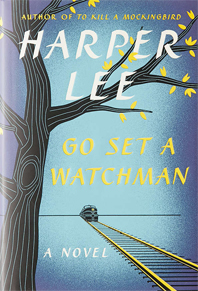
Go Set a Watchman

Go Set a Watchman

Then again, the Rupert Murdoch-owned publishing house HarperCollins announced just this week that it had sold more than 1.1 million copies in a week’s time, making it the “fastest-selling book in company history.” “Watchman” has rocketed to the top of the New York Times best-seller list, where it will surely stay for a while. And the Rupert Murdoch-owned Wall Street Journal not only excerpted the first chapter on the Friday before publication, but it also gave its readers a chance to win a signed first edition of the book. Talk about synergy!

So perhaps it’s not too late after all to point out that the publication of “Go Set a Watchman” constitutes one of the epic money grabs in the modern history of American publishing.

The Ur-fact about Harper Lee is that after publishing her beloved novel, “To Kill a Mockingbird,” in 1960, she not only never published another book; for most of that time she insisted she never would. Until now, that is, when she’s 89, a frail, hearing- and sight-impaired stroke victim living in a nursing home. Perhaps just as important, her sister Alice, Lee’s longtime protector, passed away last November. Her new protector, Tonja Carter, who had worked in Alice Lee’s law office, is the one who brought the “new novel” to HarperCollins’s attention, claiming, conveniently, to have found it shortly before Alice died.

If you have been following The Times’s cleareyed coverage, you know that Carter participated in a meeting in 2011 with a Sotheby’s specialist and Lee’s former agent, in which they came across the manuscript that turned out to be “Go Set a Watchman.” In The Wall Street Journal — where else? — Carter put forth the preposterous claim that she walked out of that meeting early on and never returned, thus sticking with her story that she only discovered the manuscript in 2014.

But the others in the meeting insisted to The Times that she was there the whole time — and saw what they saw: the original manuscript that Lee turned in to Tay Hohoff, her editor. Hohoff, who appears to have been a very fine editor indeed, encouraged her to take a different tack. After much rewriting, Lee emerged with her classic novel of race relations in a small Southern town. Thus, The Times’s account suggests an alternate scenario: that Carter had been sitting on the discovery of the manuscript since 2011, waiting for the moment when she, not Alice, would be in charge of Harper Lee’s affairs.

That’s issue No. 1. Issue No. 2 is the question of whether “Go Set a Watchman” is, in fact, a “newly discovered” novel, worthy of the hoopla it has received, or whether it something less than that: a historical artifact or, more bluntly, a not-very-good first draft that eventually became, with a lot of hard work and smart editing, an American classic.

Rest of the article: Source: http://www.nytimes.com/2015/07/25/opinion/joe-nocera-the-watchman-fraud.html?smid=fb-share&_r=0
Leave a comment

Filed under 2015, publishing

Kafka’s Metamorphosis: 100 thoughts for 100 years

Kafka’s tale of a man who wakes to find he has changed into a giant insect still has the power to shock and delight a century after it was first published. Many regard it as the greatest short story in all literary fiction.

by RICHARD T. KELLY

Source: http://www.theguardian.com/books/2015/jul/18/franz-kafka-metamorphosis-100-thoughts-100-years

  1. What need a modern reader know of Franz Kafka’s Metamorphosis (Die Verwandlung) – arguably the most famous, also greatest, short story in the history of literary fiction?
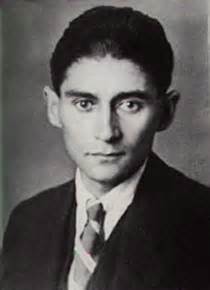
  2. Franz Kafka

    Franz Kafka

  3. Of its stature, for example, Elias Canetti wrote that the story was something Kafka “could never surpass, because there is nothing which Metamorphosis could be surpassed by”. As endorsements go, the bar could not be set higher.
  4. Kafka’s place in the literary pantheon has been assured for some time, most pleasingly expressed by George Steiner’s suggestion that he is the only author of whom it may be said that he made his own a letter of the alphabet – K.
  5. Here, though, is a little novelty: in 2015, Metamorphosis is 100 years old. At least, 1915 is when the story was published, which is to say “finished”; and Kafka, famously, didn’t finish very much.
  6. Kafka worked on Metamorphosis through the autumn of 1912 and completed a version on 7 December that year. But negotiations with publishers were complicated, and circumstances – the first world war, among other things – intervened.
  7. Finally Metamorphosis was set before readers in October 1915, in the avant-garde monthly Die Weissen Blätter, then put between covers that December.
  8. A century on, why does Metamorphosis still attract readers? One reason is that it’s a horror story of sorts. Its premise – a man awakens in the body of an insect – exerts a ghastly fascination beyond anything in even the consummate short works of Chekhov or Joyce or Alice Munro.
  9. Another is that it is, amid its pathos, awfully funny. Gregor Samsa wakes to discover he has six legs and a shell, yet for some pages he thinks that what ails him might just be the kind of throat complaint that is “the occupational malady of travellers”. What can you do but laugh?
  10. And there’s more. As Gregor struggles to crawl off his bed, a clerk from his company calls at the Samsa apartment. As Vladimir Nabokov commented: “This grim speed in checking a remiss employee has all the qualities of a bad dream.” But it is also farce: a personal embarrassment raised to a debacle by multiple easily shocked persons arriving on the scene to witness it.
  11. Metamorphosis exemplifies the world Kafka invented on paper – recognisable but not quite real, precisely detailed and yet dreamlike.
  12. We call this world “Kafkaesque”, of course, while keeping mindful of Italo Calvino’s lament that one hears that term “every quarter of an hour, applied indiscriminately”.
  13. I’ll venture we mean “Kafkaesque” to denote a sense of suddenly inhabiting a world in which one’s customary habits of thought and behaviour are confounded and made hopeless.
  14. To dig a little deeper, the term evokes an individual’s sense of finding himself victimised by large impersonal forces, feeling after a while that he can’t but take it personally – and feeling haunted, too, by the sense that maybe, after all, he deserves it.
  15. If you grant the preceding, then Metamorphosis is perhaps the quintessential Kafka story.
  16. Given how well the story has aged, it is telling that Kafka at first didn’t wholly delight in his handiwork. Even as he inspected the proofs he was unpersuaded. (“Unreadable ending. Imperfect almost to its very marrow.”)
  17. But the very fact that Metamorphosis was read, chuckled over and frowned on while Kafka was alive may bear repeating; for the myth rather persists that Kafka was unknown and unpublished in his lifetime.
  18. Though his great fame was posthumous, he did have a reputation to speak of while he was alive. If a minor figure, he nonetheless had a better class of admirer (e.g., Robert Musil).
  19. In 1915 the dramatist Carl Sternheim, winner of the prestigious Theodor Fontane prize, bestowed his prize money on Kafka as a mark of writer-to-writer respect.
  20. (Can you imagine the Man Booker prizewinner of 2015 declaring from the dais that s/he plans to hand over the £50,000 to a rival novelist whose stuff s/he considers so much better?)
  21. Legendarily, though, Kafka had no bigger fan than his university friend Max Brod, who decided early on that Kafka was a genius, and duly ended up saving his works from incineration.

For the rest of the 100 thoughts, go to: http://www.theguardian.com/books/2015/jul/18/franz-kafka-metamorphosis-100-thoughts-100-years

Leave a comment

Filed under 2015, Metamophosis

The Devil’s Dictionary: “Un-American and Understanding”

In our continuing quest to revisit a classic, or even a curiosity from the past and see how relevant it is, we continue with The Devil’s Dictionary by Ambrose Bierce. Originally published in newspaper installments from 1881 until 1906. You might be surprised how current many of the entries are.

A young Ambrose Bierce

A young Ambrose Bierce

For example, here is a definition for the words Un-American and Understanding. The Old definitions are Bierce’s. The New definitions are, in many cases, updates. Sometimes little change is needed. Sometimes more. From time to time, just as it was originally published, we will come back to The Devil’s Dictionary, for a look at it then and how it applies today. Click on Devil’s Dictionary in the tags below to bring up the other entries.

OLD DEFINITION
Un-American, adj. Wicked, intolerable, heathenish.

Understanding, n. A cerebral secretion that enables one having it to know a house from a horse by the roof on the house. Its nature and laws have been exhaustively expounded by Locke, who rode a house, and Kant, who lived in a horse.

His understanding was so keen
That all things which he’d felt, heard, seen,
He could interpret without fail
If he was in or out of jail.
He wrote at Inspiration’s call
Deep disquisitions on them all,
Then, pent at last in an asylum,
Performed the service to compile ’em.
So great a writer, all men swore,
They never had not read before.
—Jorrock Wormley

NEW DEFINITION
Un-American, adj. Wicked, intolerable, heathenish.

Example, the rest of the world and the Democratic Party as defined by Faux News.

Example, anything the other politician stands for, even if it’s very much like what the accuser stands for.

Example, anything that requires understanding, or as one politician recently said, “big syllable words.”

Understanding, n. See Un-American.

Leave a comment

Filed under 2015, Devil's Dictionary

Emotions people feel but can’t explain

Some words to consider when you're not sure what you're feeling.

Some words to consider when you’re not sure what you’re feeling.

1 Comment

Filed under 2015, new words

The blathering idiot and a word from our sponsor

The quest for the highest office in the land begins … again.

The blathering idiot and Lydia were sitting in a conference room with the consultant. The blathering idiot was about to go out to the podium and microphone and announce his candidacy for the highest office in the land.

“We have to do it now,” the consultant said. “June is National Accordion month. We are the Pro-Accordion Party. If we don’t announce now, what will people think?”

Lydia nodded. “He has a point.”

“Then why aren’t accordion makers sponsoring us?” the blathering idiot asked.

“Because there are no accordion makers in the U.S. They’re all made overseas and foreign companies and countries can’t buy elections.”
“But U.S. companies can?”

“That’s not what I meant,” the consultant said. He wiped the sweat from his brow. “Look, this was the best I could do. I will try for additional sponsors, but right now this is the only one, and unlike other parties and candidates, we need one. Hell, we need more than one.”

“I have to read all of it?”

Lydia touched his arm. “I will be out there with you. You read part of it. I’ll read part of it.”

“And the consultant will read part of it?”

“That’s not his job,” Lydia said.

“But it is mine?”

Lydia nodded. “Sadly, yes.”

Shaking his head, the blathering idiot walked to the next room and stepped up on podium. It looked out at the two, maybe three people who had come to hear his announcement.

“I, today, am again a candidate for the highest office in the land. I do this because … because …” From that point on, the blathering idiot rambled about making the country a better place, unifying the waring ideological factions, and giving a voice to the voiceless. He finished, turned, and started to leave. Lydia grabbed his arm and gently turned him around and handed him a piece of paper. The blathering idiot turned, cleared his throat, and read:

“And now a word from our sponsor: This campaign for the highest office in the land is brought to you by Puns in a Pak. Whether you buy one pack, two, or get the deep discount for buying by the gross, Puns in a Pak are shop-tested and well-lubricated – ready to slip into your casual conversation, work e-mail, or most intimate moment. Nothing lifts a trite phrase up out of the dust bin of inequity like Puns in a Pak. On sale today online or at your local grammarian shop. And for those politically minded, try our Puns in a PAC. Nothing says politics like Puns in a PAC. Ask us about our special Super-Pak PAC of puns, created especially for this election season. Puns in PAC, when nothing else will do.”

1 Comment

Filed under 2015, political humor

New words to live by: “Wallowacity”

It is the first or second (or in this case, third) weekend of the month and time, once again, for a new word to live by. This is a word or phrase not currently in use in the U.S. English lexicon, but might need to be considered. Other words, such as obsurd, crumpify, subsus, flib, congressed, and others, can be found by clicking on the tags below. Today’s New Word is a compounding of word and a suffix two words. Without further waiting, Wallowacity is the new word / phrase for this month:

Wallow, n. The ability to self-indulge or revel.

-acity, noun suffix meaning “strong characteristic of” or “quality of.” or It is Latin suffix and appears Latin words such as tenacity.
tenacity.

New word Wallowacity, n. The state or degree to which you can master wallowing.

Example: There are few things that a man can do that woman can’t do equally as well and sometimes better. There is one thing, though, that men are more naturally born to and that is wallowing. From a young age, boys begin mastering the art of wallowing, but it rarely comes into full bloom or full wallowacity until around 55 years of age.

Boys may read about great men such as George Washington or Napoleon, sports greats such as Babe Ruth, great composers such as Mozart or dynamic world leaders such as Martin Luther King, Jr., but the men most of them grow up secretly admiring and then emulating is the guy in their circle of friends who has achieved his full wallow potential, his full wallowacity.

Maybe this entry was a week late due to a bit of wallowacity.

Just the gift to give dad for Father’s Day.

Leave a comment

Filed under 2015, new word, New words to live by

Up the Amazon with the BS Machine

Up the Amazon with the BS Machine,

or

Why I keep Asking You Not to Buy Books from Amazon

by Ursula K. Le Guin

Source: http://bookviewcafe.com/blog/2015/06/01/up-the-amazon/

Amazon and I are not at war. There are vast areas in which my peaceful indifference to what Amazon is and does can only be surpassed by Amazon’s presumably equally placid indifference to what I say and do. If you like to buy household goods or whatever through Amazon, that’s totally fine with me. If you think Amazon is a great place to self-publish your book, I may have a question or two in mind, but still, it’s fine with me, and none of my business anyhow. My only quarrel with Amazon is when it comes to how they market books and how they use their success in marketing to control not only bookselling, but book publication: what we write and what we read.

Best Seller lists have been around for quite a while. Best Seller lists are generated by obscure processes, which I consider (perhaps wrongly) to consist largely of smoke, mirrors, hokum, and the profit motive. How truly the lists of Best Sellers reflect popularity is questionable. Their questionability and their manipulability was well demonstrated during the presidential campaign of 2012, when a Republican candidate bought all the available copies of his own book in order to put it onto the New York Times Top Ten Best Seller List, where, of course, it duly appeared.

If you want to sell cheap and fast, as Amazon does, you have to sell big. Books written to be best sellers can be written fast, sold cheap, dumped fast: the perfect commodity for growth capitalism.

The readability of many best sellers is much like the edibility of junk food. Agribusiness and the food packagers sell us sweetened fat to live on, so we come to think that’s what food is. Amazon uses the BS Machine to sell us sweetened fat to live on, so we begin to think that’s what literature is.

I believe that reading only packaged microwavable fiction ruins the taste, destabilizes the moral blood pressure, and makes the mind obese. Fortunately, I also know that many human beings have an innate resistance to baloney and a taste for quality rooted deeper than even marketing can reach.

If it can find its audience by luck, good reviews, or word of mouth, a very good book may become a genuine Best Seller. Witness Rebecca Skloot’s Immortal Life of Henrietta Lacks, which for quite a while seemed to have immortal life among the Times Top Ten. And a few books work their way more slowly onto BS lists by genuine, lasting excellence — witness The Lord of the Rings, or Patrick O’Brian’s sea stories. Not products of the BS Machine, such books sell because people actually like them. Once they get into the BS Machine, they are of course treated as products of the BS Machine, that is, as commodities to exploit.

Making a movie of a novel is a both a powerful means of getting it into the BS Machine and a side-effect of being there.

Read the rest: http://bookviewcafe.com/blog/2015/06/01/up-the-amazon/

Leave a comment

Filed under 2015, writer

John Scalzi, Science Fiction Writer, Signs $3.4 Million Deal for 13 Books

Mr. Scalzi said he hoped books like “Lock In” could draw more readers toward science fiction, since many, he said, are still “gun-shy” about the genre.

By JOHN SCHWARTZ

Source: http://www.nytimes.com/2015/05/25/business/media/science-fiction-writer-signs-a-3-4-million-deal.html?ref=books&_r=2

John Scalzi, a best-selling author of science fiction, has signed a $3.4 million, 10-year deal with the publisher Tor Books that will cover his next 13 books.

Mr. Scalzi’s works include a series known as the “Old Man’s War” and the more recent “Redshirts,” a Hugo-award-winning sendup of the luckless lives of nonfeatured characters on shows like the original “Star Trek.” Three of his works are being developed for television, including “Redshirts” and “Lock In,” a science-inflected medical thriller that evokes Michael Crichton. Mr. Scalzi’s hyper-caffeinated Internet presence through his blog, Whatever, has made him an online celebrity as well.

Mr. Scalzi approached Tor Books, his longtime publisher, with proposals for 10 adult novels and three young adult novels over 10 years. Some of the books will extend the popular “Old Man’s War” series, building on an existing audience, and one will be a sequel to “Lock In.” Mr. Scalzi said he hoped books like “Lock In” could draw more readers toward science fiction, since many, he said, are still “gun-shy” about the genre.

Patrick Nielsen Hayden, the executive editor for Tor, said the decision was an easy one. While Mr. Scalzi has never had a “No. 1 best seller,” he said, “he backlists like crazy.”

“One of the reactions of people reading a John Scalzi novel is that people go out and buy all the other Scalzi novels,” Mr. Nielsen Hayden said.

He said Mr. Scalzi sells “a healthy five-figure number of his books every month,” and that he “hasn’t even begun to reach his full potential audience.”

Science fiction films like “2001: A Space Odyssey” and “Star Wars” have been considered popular classics for decades, “but there’s a lot of work to be done,” Mr. Scalzi said, in bringing readers to the genre. He said the long-term contract would allow him to continue experimenting with different forms of publishing, including online serialization, a technique he has tried with some success.

Mr. Scalzi, who lives in Ohio, said he was still trying to come to grips with the size and scope of the deal. He said his wife, Kristine, had kept his ego from going supernova.

“My celebration, personally, has just been standing around,” exclaiming with profane expressions of delight, he said. “And my wife saying, ‘Yes, now go take out the trash.’ ”

Leave a comment

Filed under 2015, writer

A brief survey of the short story: David Foster Wallace

For all its elaborate formal tricks, Wallace’s work is marked by a deep desire for authentic connection, to his subjects and to his readers

By CHRIS POWER

Source: http://www.theguardian.com/books/booksblog/2015/may/25/a-brief-survey-of-the-short-story-david-foster-wallace

David Foster Wallace was a maximalist. His masterpiece, Infinite Jest, is a 1,000-page, polyphonic epic about addiction and obsession in millennial America. His journalism and essays, about television and tennis, sea cruises and grammar, always swelled far beyond their allotted word counts (cut for publication, he restored many of them to their full length when they were collected in book form). In a letter sent to a friend from a porn convention in Las Vegas, Wallace exclaimed that, “writing about real-life stuff is next to impossible, simply because there’s so much!” It might seem surprising that a writer like this could or should want to function within the confines of the short story, yet besides Infinite Jest it is arguably his three story collections that represent the most important part of his work.

That said, many of Wallace’s short stories aren’t all that short, and often test the limits of traditional conceptions of story. As he told Larry McCaffery in 1993: “I have a problem sometimes with concision, communicating only what needs to be said in a brisk efficient way that doesn’t call attention to itself.” In fact, Wallace’s later works would rewire this statement: in order to say what needed to be said, he found his writing had no option but to call attention to itself. To experience a Wallace story is often also to experience someone making an agonised attempt to write a story. This was nothing new, of course: the postmodernists of the 1960s were committed to metafiction, the literary technique of self-consciousness that puts the lie to realism, making the audience constantly aware that what they are reading is an artificial construct.

This approach appealed to the young Wallace, who once remarked that Donald Barthelme’s short story The Balloon was the first work of fiction to “ring my cherries”, and who subsequently found a deep affinity with the work of Thomas Pynchon. Yet by the time of his first collection, 1989’s Girl With Curious Hair, and despite the significant debts individual stories owe to postmodern writers (John Billy is a tribute to Omensetter’s Luck by William Gass, while the political epic-in-miniature Lyndon takes its lead from Robert Coover’s A Public Burning), Wallace’s relationship with postmodernism had grown more complicated. He believed that a movement that had taken shape to unmask the hypocrisies of mass culture had come to lend them an insidious power: once advertising became knowing and ironic, the postmodernist game was up. Wallace began attempting to move beyond irony towards a new sincerity, although he struggled with how to achieve this.

The novella that ends the collection, Westward the Course of Empire Takes Its Way, is a tortuously long assault on postmodernism that paradoxically satirises the strategies of metafiction by employing an encyclopaedic array of metafictional strategies – skilfully enough that it could easily be taken for a piece of metafiction itself. It is illustrative of the struggle Wallace had throughout his career with the shape and content of his fiction, that after several years of considering the story to be by far the most important thing he had written, he then disowned it: “In Westward I got trapped one time just trying to expose the illusions of metafiction the same way metafiction had tried to expose the illusions of the pseudo-unmediated realist fiction that came before it. It was a horror show. The stuff’s a permanent migraine”.

Rest of the article: http://www.theguardian.com/books/booksblog/2015/may/25/a-brief-survey-of-the-short-story-david-foster-wallace

Leave a comment

Filed under 2015, writers

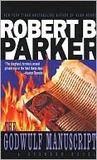
Book Review: “The Godwulf Manuscript”

The Godwulf Manuscript (Spenser, #1)The Godwulf Manuscript by Robert B. Parker
My rating: 4 of 5 stars

This was actually a reread, having read all the Spenser novels. Shows signs of being a first novel and the Spenser here is not quite the Spenser of the later books, but the elements are here. It is worth reading and enjoying either as a first-time reader or coming back to it again.

View all my reviews

Leave a comment

Filed under 2015