Tag Archives: Sunday

‘American Dirt’ was planned as a publishing triumph. What went wrong? – Los Angeles Times

Celebrities endorsed ‘American Dirt’ — then the reactions on Twitter turned negative. Cries of appropriation — and barb-wire dinner pieces — spark scorn for book

Source: ‘American Dirt’ was planned as a publishing triumph. What went wrong? – Los Angeles Times

It was poised to be a blockbuster long before copies arrived in bookstores last week: a thrilling contemporary migration story following a mother and her son, desperate to cross Mexico and reach the United States.

Its publisher, Flatiron Books, an imprint of Macmillan, paid a seven-figure advance after outbidding several competitors for the novel. It snagged a coveted selection in Oprah’s Book Club and had been shipped to key celebrity influencers, including Stephen King, Sandra Cisneros and Salma Hayek. A reported first run of 500,000 copies was printed. The film rights were sold.

But by week’s end, the novel “American Dirt” had garnered attention that its boosters likely didn’t expect: angry charges of cultural appropriation, stereotyping, insensitivity, and even racism against author Jeanine Cummins, who herself said in the book’s author’s note, “I was worried that, as a nonmigrant and non-Mexican, I had no business writing a book set almost entirely in Mexico, set entirely among migrants.”

Despite the backing of towering figures in American media, Cummins’ page-turning portrayal of a mother on the run is now at the center of the first bonafide literary controversy of the year, and is forcing a hard reflection on the state of Latinos in a cultural field that remains overwhelmingly white.

In the face of critiques, Cummins is pushing back in public. Her publisher released a statement encouraging discussion around the title, while some authors and booksellers have come to Cummins’ defense. In a culture that is used to debating black and Asian representation and stereotypes, the entrenchment around “American Dirt” is fueling even more complaints over the ease with which popular culture still employs Latino-related stereotypes in contemporary movies, television and fiction.

“American Dirt” is also highlighting factors that observers say have contributed a near shutout of contemporary Mexican and Mexican American voices from the top tier of the publishing publicity machine — the sorts of books that are guaranteed handsome sales by virtue of projection.

What went wrong?

As passages from the novel began emerging last month, Mexican and other Latino voices began raising red flags. The author’s portrayal of Mexican culture was called outlandish, littered with stereotypes, stilted bilingualism and an awkward peppering of italicized Spanish phrases.

“I assert that American Dirt fails to convey any Mexican sensibility,” said Long Beach writer Myriam Gurba in an early negative review that became a catalyst of the controversy.

It is the marketing of this brown and black pain.

Lilliam Rivera, author

“American Dirt” has also sparked an emotional discussion about how far the publishing industry still must go to more richly represent the scope and diversity of the Latino experience, said authors, literary agents and other industry figures in interviews last week. It’s a discussion focused on a complicated question: Who gets to frame others’ stories, and how?

Barbed-wire centerpieces

Publishing, like Hollywood, has yet to fully confront its lack of diversity involving Latinos, the largest nonwhite demographic and now largest minority voting group in the United States. A 2019 Publishers Weekly study based on self-reported survey of 699 industry respondents found that Latinos comprised just 3 percent of the publishing workforce in 2018. An earlier Diversity Baseline Survey conducted in 2015 by Lee & Low Books found that Latinos represented 6% of the publishing industry overall, while whites were 79%.

“American Dirt” has opened a window into the ways a few select books are brought to the public’s attention at a time when many authors have to hire their own publicists or arrange their own book readings and events. The roll-out to some took on the veneer of insult to Central American trauma and pain surrounding the treacherous passage through Mexico.

“They’re handling it like they handle a Marvel comics movie,” said Roberto Lovato, a Salvadoran American writer in San Francisco, who is finalizing an upcoming memoir. “But this industry will make you dance the minstrel salsa dance or the minstrel cumbia dance,” he added, in reference to the tenor of Latino-themed titles that are deemed palatable to wide audiences.

Indeed, the operation behind “American Dirt” made what many describe as cringe-worthy errors even before the book hit stores.

Back in May, Flatiron Books hosted a dinner for Cummins during a booksellers convention in New York, a sign that the novel would have strong publisher support. On the tables at the dinner were barbed-wire centerpieces holding flowers. Evoking a border wall, the table decorations, complete with faux barbed wire made from twigs, played off the novel’s cover design. Critics found a photo Cummins posted of the centerpieces on her Twitter account, and have circulated the image as a symbol of the publisher’s insensitivity.

“It’s disturbing to see a publishing dinner with barb-wire centerpieces,” said Lilliam Rivera, the L.A.-based Puerto Rican author of successful young adult novels. “It is the marketing of this brown and black pain.”

More criticism followed among Latino writers, from the fringes to the center of the literary power establishment. Mexican author Valeria Luiselli, a MacArthur Foundation “genius” grant recipient, called the book the “worst possible” pick for Oprah’s nod. Francisco Goldman, the celebrated Guatemalan American novelist and journalist who divides his time between New York and Mexico City, said in an interview he was “shocked” by the “tone-deaf” publicity roll-out. “And these are supposedly sophisticated people.”

When Oprah Winfrey’s super-charged publicity campaign for “American Dirt” launched Tuesday, with the announcement of her book club pick on “CBS This Morning” and on Winfrey’s social media accounts, the already-simmering anger over the novel only grew.

Critics noted a string of similar casual-seeming social posts from famous figures such as Yalitza Aparicio (“Roma”), MJ Rodriguez (“Pose”) and Gina Rodriguez (“Jane the Virgin”). Hayek, the Academy Award-nominated Mexican actress, posted her own glowing review for “American Dirt” later in the week, then deleted it on Friday. “I confess I have not read it and was not aware of any controversy,” she said on Instagram. Each entertainer displayed an e-reader version of the novel and nearly all of them thanked Winfrey for sending the book, hinting at a multiplatform publicity campaign.

Not everyone went along. Kate Horan, the director of the McAllen Public Library in Texas, posted portions of a letter she sent to the American Library Assn. and Oprah’s Book Club, declining to participate in a recorded “unboxing” event meant to push “American Dirt.” Horan said she felt compelled to turn down the offer from Oprah’s Book Club after seeing the reactions among Latinx writers she and her staff admire.

“When we took the book out, our hearts dropped,” Horan said in a telephone interview from Philadelphia, where the American Library Assn. is holding its mid-winter conference. “There followed many conversations with people in my community, and of course reading the book, I can only compare it to a telenovela. It’s so hyper stereotyped, that it’s harmful.” (The McAllen public library will still have a dozen copies of the book for checkout, Horan said.)

A muddled identity

Buzz around “American Dirt” had been building since 2018, when it was sold at auction to Flatiron editor Amy Einhorn, who is known for acquiring the novel “The Help” — a bestseller whose white author was criticized for, among other things, comparing a black maid character’s skin to a cockroach. Cummins’ book scored blurbs from not only King and Cisneros, but also Don Winslow and John Grisham. Winslow, who called “American Dirt” “a ‘Grapes of Wrath’ for our times,” and others defended their endorsements of the book.

“I read the book and I loved it. That experience can’t be changed by people who don’t like it,” said novelist Ann Patchett, who called “American Dirt” a “moral compass” in her quote for the title. “There’s a level of viciousness that comes from a woman getting big advance and a lot of attention,” she added. “If it had been a small advance with a small review in the back of the book section, I don’t think we’d be seeing the same level of outrage.”

By week’s end, as the U.S. commercial publishing industry was reeling from the expanding maelstrom over what its critics called a cartoonish melodrama about contemporary Mexico, Cummins still hit the road on a book tour. At an industry conference last week in Baltimore, she defended her right to write the novel from the perspective of the Mexican woman at the heart of her book.

Her character Lydia, 32, is middle-class, college-educated wife and mother who owns a bookshop in the resort city of Acapulco and survives a bloody massacre at a family quinceañera. With her journalist husband and other family members killed, the bookish protagonist and her 8-year-old son make a desperate run for the U.S. border, partly on the freight train La Bestia. Critics have mocked the narrative ploy as implausible for anyone of Lydia’s class stature, who can usually buy airline or bus tickets.

In Baltimore, Cummins said the migrants she met during her research for the novel “made me recognize my own cowardice” as she grappled with early failed drafts and doubts about authenticity. “When people are really putting their lives on the line, to be afraid of writing a book felt like cowardice,” she said, according to a report for the trade site Publishers Lunch.

The author, who did not respond to a request for comment for this article, identified as white as recently as 2016. On Wednesday, Cummins, whose grandmother was from Puerto Rico, said she was “a Latinx woman” while addressing the negative reactions to the book among Mexican, Central American and Chicano readers who have vigorously questioned her authorial integrity. “Not everyone needs to love my book,” she said.

On Friday, Cummins turned up her defense during an interview with NPR: “I am a white person. … I am a person who has a very privileged life. I am also Puerto Rican. … That fact has been attacked and sidelined by people who, frankly, are attempting to police my identity.”

But her critics weren’t buying it.

Gurba and others accused Cummins of profiting off Latina identity and transforming her own ethnicity over time to suit professional interests. “She became a person of color for the sake of financial convenience,” Gurba told The Times. “I call that POC, a person of convenience.”

Another set of earlier photos of Cummins with barbed-wire decorated fingernails brought even more criticism. “Every day I see something new that pertains to this, that it seems like it can’t get worse, and it gets worse,” said YA author Rivera.

Cummins’ somewhat apologetic author’s note also fanned the flames. In it, she says she wished someone “slightly browner” than her had written her book. She also argued that her effort seeks to counter depictions of immigrants as a “faceless brown mass.” Goldman, reached in New York, called the phrase an admission to the book’s “pornographic feedback of violence.”

“It’s just unbelievable,” he said Thursday. “How mediocre, third-rate and sleazy it is for a fiction writer to appropriate violence and suffering that way.”

In her note, he added, Cummins also writes, “we seldom think of [migrants] as human beings.”

“Who is that ‘we’?” Goldman said. “It sounds like Donald Trump Jr. was doing a book club and trying to come up as woke. … How could anyone think of themselves as being the corrective for that?”

Industry buzzing

Goldman said he hopes that the persistent negative buzz may force the publishing establishment to address uncomfortable questions about how U.S. Latinos are reflected in the adult-fiction space, just as similar discussions of portrayals of African American and Asian American characters in film, television and the world of YA novels has led to some changes.

The controversy doesn’t look to go away soon. On Saturday, a group of writers including Lovato, Gurba and others said they sent a letter to Macmillan promising more “action” if the publishing house doesn’t respond more directly to their critiques. Industry players are abuzz with the topic, book agents said, as a string of “American Dirt”-inspired Twitter parodies by brown writers took flight, mocking the publishing industry’s devotion to tired Latino tropes involving gangs and grandmothers.

Eddie Schneider, vice president of JABerwocky Literary Agency, and who represents author Rivera, said Flatiron Books made a string of mistakes in rolling out “American Dirt” and isn’t correcting them. On Thursday, the publishing house defended the title in a statement to The Times.

“I’m baffled I haven’t seen any apology yet,” Schneider said. “Maybe not for the book, but certainly it seems like an apology is in order for the insensitivity of the roll-out.”

Schneider suggested that Flatiron and Cummins should clearly state how immigrant-rights organizations could benefit from the sales that are certain to follow the Oprah Winfrey endorsement. “That to me seems sort of like a bare minimum corporate response — even if they’re still making a ton of money off of it,” he said.

As of Saturday, “American Dirt” was No. 4 on Amazon’s bestseller list.

Times staff writer Dorany Pineda contributed to this report.


Leave a comment

Filed under 2020, book publishing, books

Book to read?

How to Think Like a Roman Emperor: The Stoic Philosophy of Marcus Aurelius by Donald J. Robertson

My rating: 4 of 5 stars


I wasn’t sure what to expect when I began How to Think Like a Roman Emperor: The Stoic Philosophy of Marcus Aurelius, but I had an interest in Stoic philosophy and decided to delve in with this book. In the end, I found it an interesting and often entertaining mixture of history, philosophy, and psychology, mostly Cognitive Based Therapy. I both read and listed to this book on tape. My only knock in regards to the audio version is that at times the author / reader’s accent got in the way of my understanding some words. Overall, I found it a good grounding in Stoicism and even how other philosophies of the time, such as Epicurean philosophy influenced Stoicism. And as much as it provides some background and history, it is also a book with some concrete suggestions for how to deal with issues today and how to remain grounded.


View all my reviews

Leave a comment

Filed under 2020, book review

The Origins of Gabriel Garcia Marquez’s Magic Realism – The Atlantic

“Surrealism runs through the streets,” the Colombian author, who died today at age 87, told The Atlantic in 1973. “Surrealism comes from the reality of Latin America.”

Source: The Origins of Gabriel Garcia Marquez’s Magic Realism – The Atlantic

It’s often said that the works of Colombian novelist and short-story writer Gabriel Garcia Marquez are quintessential examples of “magic realism”: fiction that integrates elements of fantasy into otherwise realistic settings. In his 1967 novel One Hundred Years of Solitude, which ambles through a century in the lives of one family in the enchanted Latin American hamlet of Macondo, magic carpets fly, ghosts haunt villagers, and trickles of blood from a killing climb stairs and turn corners to find the victim’s mother in her kitchen.

When Garcia Marquez, who died today at age 87, spoke to William Kennedy in an extensive interview published in the January 1973 issue of The Atlantic, he explained why he and other Latin American authors chose to weave fantastical details into their stories:

In Leaf Storm, the old doctor sits down to a pretentious, bourgeois dinner and startles everybody by saying to a servant: “Look, miss, just start boiling a little grass and bring that to me as if it were soup.” “What kind of grass, doctor?” the servant asks. “Ordinary grass, ma’am,” the doctor says. “The kind that donkeys eat.”

Surreal? Not to García. “A man said that in my house,” he said.

He believes that Faulkner differs from him on this matter in that Faulkner’s outlandishness is disguised as reality.

“Faulkner was surprised at certain things that happened in life,” García said, ‘but he writes of them not as surprises but as things that happen every day.”

García feels less surprised. “In Mexico,” he says, “surrealism runs through the streets. Surrealism comes from the reality of Latin America.”

About two weeks before he talked, a newsman had called to ask García for his reaction to an occurrence in a rural Colombian town. About ten in the morning at a small school, two men pulled up in a truck and said, “We came for the furniture.” Nobody knew anything about them, but the schoolmaster nodded, the furniture was loaded onto the truck and driven off, and only much later was it understood that the truckmen were thieves.

“Normal,” says García.

“One day in Barcelona,” he continued, “my wife and I were asleep and the doorbell rings. I open the door and a man says to me, ‘I came to fix the ironing cord.’ My wife, from the bed, says, ‘We don’t have anything wrong with the iron here.’ The man asks, ‘Is this apartment two?’ ‘No,’ I say, ‘upstairs.’ Later, my wife went to the iron and plugged it in and it burned up. This was a reversal. The man came before we knew it had to be fixed. This type of thing happens all the time. My wife has already forgotten it.”

García likes the principles of surrealism but not the surrealists themselves. Given a choice, he prefers the painters to the poets, but he does not think of himself as being like any of them. And it is true that his work is based more in the anecdote than in the symbolic or random flow of events so important to the surrealists; true also that his aim is to be accessible, not obscure. And yet, a surreal quality, a rendering of the improbable and impossible as real, pervades his work.

In 1982, Garcia Marquez won the Nobel Prize for Literature, and three years later, he published the widely acclaimed novel Love in the Time of Cholera.

Read Kennedy’s full interview with Gabriel Garcia Marquez here.

Leave a comment

Filed under 2020, author interview

The Unlikely Success of ‘One Hundred Years of Solitude’ – The Atlantic

When Gabriel García Márquez’s most famous novel was published 50 years ago, it faced a difficult publishing climate and baffled reviews.

Source: The Unlikely Success of ‘One Hundred Years of Solitude’ – The Atlantic

In 1967, Sudamericana Press published One Hundred Years of Solitude (Cien años de soledad), a novel written by a little known Colombian author named Gabriel García Márquez. Neither the writer nor the publisher expected much of the book. They knew, as the publishing giant Alfred A. Knopf once put it, that “many a novel is dead the day it is published.” Unexpectedly, One Hundred Years of Solitude went on to sell over 45 million copies, solidified its stature as a literary classic, and garnered García Márquez fame and acclaim as one of the greatest Spanish-language writers in history.

Fifty years after the book’s publication, it may be tempting to believe its success was as inevitable as the fate of the Buendía family at the story’s center. Over the course of a century, their town of Macondo was the scene of natural catastrophes, civil wars, and magical events; it was ultimately destroyed after the last Buendía was born with a pig’s tail, as prophesied by a manuscript that generations of Buendías tried to decipher. But in the 1960s, One Hundred Years of Solitude was not immediately recognized as the Bible of the style now known as magical realism, which presents fantastic events as mundane situations. Nor did critics agree that the story was really groundbreaking. To fully appreciate the novel’s longevity, artistry, and global resonance, it is essential to examine the unlikely confluence of factors that helped it overcome a difficult publishing climate and the author’s relative anonymity at the time.

* * *

In 1965, the Argentine Sudamericana Press was a leading publisher of contemporary Latin American literature. Its acquisitions editor, in search of new talent, cold-called García Márquez to publish some of his work. The writer replied with enthusiasm that he was working on One Hundred Years of Solitude, “a very long and very complex novel in which I have placed my best illusions.” Two and a half months before the novel’s release in 1967, García Márquez’s enthusiasm turned into fear. After mistaking an episode of nervous arrhythmia for a heart attack, he confessed in a letter to a friend, “I am very scared.” What troubled him was the fate of his novel; he knew it could die upon its release. His fear was based on a harsh reality of the publishing industry for rising authors: poor sales. García Márquez’s previous four books had sold fewer than 2,500 copies in total.

The best that could happen to One Hundred Years of Solitude was to follow a path similar to the books released in the 1960s as part of the literary movement known as la nueva novela latinoamericana. Success as a new Latin American novel would mean selling its modest first edition of 8,000 copies in a region with 250 million people. Good regional sales would attract a mainstream publisher in Spain that would then import and publish the novel. International recognition would follow with translations into English, French, German, and Italian. To hit the jackpot in 1967 was to also receive one of the coveted literary awards of the Spanish language: the Biblioteca Breve, Rómulo Gallegos, Casa de las Américas, and Formentor.

This was the path taken by new Latin American novels of the 1960s such as Explosion in a Cathedral by Alejo Carpentier, The Time of the Hero by Mario Vargas Llosa, Hopscotch by Julio Cortázar, and The Death of Artemio Cruz by Carlos Fuentes. One Hundred Years of Solitude, of course, eclipsed these works on multiple fronts. Published in 44 languages, it remains the most translated literary work in Spanish after Don Quixote, and a survey among international writers ranks it as the novel that has most shaped world literature over the past three decades.

And yet it would be wrong to credit One Hundred Years of Solitude with starting a literary revolution in Latin America and beyond. Sudamericana published it when the new Latin American novel, by then popularly called the boom latinoamericano, had reached its peak in worldwide sales and influence. From 1961 onward, like a revived Homer, the almost blind Argentine writer Jorge Luis Borges toured the planet as a literary celebrity. Following in his footsteps were rising stars like José Donoso, Cortázar, Vargas Llosa, and Fuentes. The international triumph of the Latin American Boom came when the Nobel Prize in Literature was awarded to Miguel Ángel Asturias in 1967. One Hundred Years of Solitude could not have been published in a better year for the new Latin American novel. Until then, García Márquez and his work were practically invisible.

* * *

In the decades before it reached its zenith, the new Latin American novel vied for attention alongside other literary trends in the region, Spain, and internationally. Its primary competition in Latin America was indigenismo, which wanted to give voice to indigenous peoples and was supported by many writers from the 1920s onward, including a young Asturias and José María Arguedas, who wrote in Spanish and Quechua, a native language of the Andes.

In Spain during the 1950s and 1960s, writers embraced social realism, a style characterized by terse stories of tragic characters at the mercy of dire social conditions. Camilo José Cela and Miguel Delibes were among its key proponents. Latin Americans wanting a literary career in Spain had to comply with this style, one example being a young Vargas Llosa living in Madrid, where he first wrote social-realist short stories.

Internationally, Latin American writers saw themselves competing with the French nouveau roman or “new novel.” Supporters, including Jean-Paul Sartre, praised it as the “anti-novel.” For them, the goal of literature was not narrative storytelling, but to serve as a laboratory for stylistic experiments. The most astonishing of such experiments was George Perec’s 1969 novel A Void, written without ever using the letter “e,” the most common in the French language.

In 1967, the book market was finally ready, it seemed, for One Hundred Years of Solitude. By then, mainstream Latin American writers had grown tired of indigenismo, a style used by “provincials of folk obedience,” as Cortázar scoffed. A young generation of authors in Spain belittled the stories in social-realist novels as predictable and technically unoriginal. And in France, emerging writers (such as Michel Tournier in his 1967 novel Vendredi) called for a return to narrative storytelling as the appeal of the noveau roman waned.

Between 1967 and 1969, reviewers argued that One Hundred Years of Solitude overcame the limitations of these styles. Contrary to the localism of indigenismo, reviewers saw One Hundred Years of Solitude as a cosmopolitan story, one that “could correct the path of the modern novel,” according to the Latin American literary critic Ángel Rama. Unlike the succinct language of social realism, the prose of García Márquez was an “atmospheric purifier,” full of poetic and flamboyant language, as the Spanish writer Luis Izquierdo argued. And contrary to the formal experiments of the nouveau roman, his novel returned to “the narrative of imagination,” as the Catalan poet Pere Gimferrer explained. Upon the book’s translation to major languages, international reviewers acknowledged this, too. The Italian writer Natalia Ginzburg forcefully called One Hundred Years of Solitude “an alive novel,” assuaging contemporary fears that the form was in crisis.

And yet these and other reviewers also remarked that One Hundred Years of Solitude was not a revolutionary work, but an anachronistic and traditionalist one, whose opening sentence resembled the “Once upon a time” formula of folk tales. And rather than a serious novel, it was a “comic masterpiece,” as an anonymous Times Literary Supplement reviewer wrote in 1967. Early views on this novel were indeed different from the ones that followed. In 1989, Yale literary scholar Harold Bloom solemnly called it “the new Don Quixote” and the writer Francine Prose confessed in 2013 that “One Hundred Years of Solitude convinced me to drop out of Harvard graduate school.”

Nowadays scholars, critics, and general readers mainly praise the novel as “the best expression of magical realism.” By 1995, magical realism was seen as making its way into the works of major English-language authors such John Updike and Salman Rushdie and moreover presented as “an inextricable, ineluctable element of human existence,” according to the New York Times literary critic Michiko Kakutani. But in 1967, the term magical realism was uncommon, even in scholarly circles. During One Hundred Years of Solitude’s first decade or so, to make sense of this “unclassifiable work,” as a reviewer put it, readers opted for labeling it as a mixture of “fantasy and reality,” “a realist novel full of imagination,” “a curious case of mythical realism,” “suprarrealism,”or, as a critic for Le Monde called it, “the marvelous symbolic.”

Now seen as a story that speaks to readers around the world, One Hundred Years of Solitude was originally received as a story about Latin America. The Harvard scholar Robert Kiely called it “a South American Genesis” in his review for the New York Times. Over the years, the novel grew to have “a texture of its own,” to use Updike’s words, and it became less a story about Latin America and more about mankind at large. William Kennedy wrote for the National Observer that it is “the first piece of literature since the Book of Genesis that should be required reading for the entire human race.” (Kennedy also interviewed García Márquez for a feature story, “The Yellow Trolley Car in Barcelona, and Other Visions,” published in The Atlantic in 1973.)

Perhaps even more surprisingly, respected writers and publishers were among the many and powerful detractors of this novel. Asturias declared that the text of One Hundred Years of Solitude plagiarized Balzac’s 1834 novel The Quest of the Absolute. The Mexican poet and Nobel recipient, Octavio Paz, called it “watery poetry.” The English writer Anthony Burgess claimed it could not be “compared with the genuinely literary explorations of Borges and [Vladimir] Nabokov.” Spain’s most influential literary publisher in the 1960s, Carlos Barral, not only refused to import the novel for publication, but he also later wrote “it was not the best novel of its time.” Indeed, entrenched criticism helps to make a literary work like One Hundred Years of Solitude more visible to new generations of readers and eventually contributes to its consecration.

With the help of its detractors, too, 50 years later the novel has fully entered popular culture. It continues to be read around the world, by celebrities such as Oprah Winfrey and Shakira, and by politicians such as Presidents Bill Clinton and Barack Obama, who called the book “one of my favorites from the time I was young.”

More recently, with the aid of ecologically minded readers and scholars, One Hundred Years of Solitude has unexpectedly gained renewed significance as awareness of climate change increases. After the explosion of the BP drilling rig Deepwater Horizon in 2010 in the Gulf of Mexico (one of the worst accidental environmental catastrophes in history), an environmental-policy advocate referred to the blowout as “tragic realism” and a U.S. journalist called it the “pig’s tail of the Petro-World.” What was the connection with One Hundred Years of Solitude? The explosion occurred at an oil and gas prospect named Macondo by a group of BP engineers two years earlier, so when Deepwater Horizon blew up, reality caught up with fiction. Some readers and scholars started to claim the spill revealed a prophecy similar to the one hidden in the Buendías manuscript:  a warning about the dangers of humans’ destruction of nature.

García Márquez lived to see the name of Macondo become part of a significant, if horrifying, part of earth’s geological history, but not to celebrate the 50th anniversary of his masterpiece: He passed away in 2014. But the anniversary of his best known novel will be celebrated globally. As part of the commemoration, the Harry Ransom Center in Austin, Texas, where García Márquez’s archives have been kept since 2015, has opened an online exhibit of unique materials. Among the contents will be the original typescript of the “very long and very complex novel” that did not die but attained immortality the day it was published.

We want to hear what you think about this article. Submit a letter to the editor or write to letters@theatlantic.com.

Alvaro Santana-Acuña is an assistant professor of sociology at Whitman College. He is the author of the forthcoming book Ascent to Glory: The Transformation of One Hundred Years of Solitude Into a Global Classic.

Leave a comment

Filed under 2020, author, author tribute

Lee Child | December 28, 2019 – Air Mail

Given the enduring consistency with which Lee Child delivers sophisticated, gripping novels, you’d think he reads crime fiction and nothing else. Somehow, though, the British author, best known for his Jack Reacher thriller series, finds time for books he groups in the “random” category: “I grew up reading, before the Internet, before book-club culture, before any kind of recommendation network, and I became addicted to random finds—books I had never heard of, fields I had never thought about, avenues I had never explored,” says Child, whose new Jack Reacher novel, Blue Moon, is out now from Delacorte. This addiction has not gone away, and today Child allots about a third of his reading for random books. “True randomness is hard for the human mind to achieve,” he adds, “so lately I have enlisted my wife to bring me finds that are random to her, and thus doubly random to me.” Here, four of her latest successes.

Annals of the Former World, by John McPhee

A 4.6-billion-year geological history of the landmass now called the United States, beautifully written, always engaging, profoundly educational, and overwhelmingly humbling, in that our brief spark of existence really is nothing, compared to what came before and will come after.

When Einstein Walked with Gödel: Excursions to the Edge of Thought, by Jim Holt

Truthfully not 100 percent random, because I already knew Einstein and Gödel, but the book is mostly not about them—it’s about anyone who moved science and math down the field. The Los Angeles Review of Books called it a perfect bedtime book, which it was—the prose is clear and the touch is light; I would read an essay a night, making sure I totally got it, and then I would go to bed. The next morning some of it would come back to me, half-remembered, vague, but somehow magical—everything a great bedtime story should be.

Vacuum in the Dark, by Jen Beagin

Randomly selecting a novel stands a better-than-random chance of coming up with something like this, because this is where the talent is right now, and the passion and the energy and the ideas—whip-smart women writing whip-smart books that are simultaneously deep and funny. Balancing the two is harder than it looks, and Beagin does it better than most. This is her second novel, and I’m looking forward to her third. It won’t be a random find.

The Five: The Untold Lives of the Women Killed by Jack the Ripper, by Hallie Rubenhold

Jack the Ripper is one of history’s greatest true-crime obsessions. Who was he? Why did he do what he did? That stuff has been debated endlessly. This book, instead, is about his victims. Usually, and conveniently, they have in the past been written out of the story as common prostitutes, but they weren’t, Rubenhold shows us. They were five separate women with five complex lives, and hearing their stories feels like justice done, in a way. Crime is about the victims. Maybe it wasn’t a random choice. Maybe it was editorial input.

Source: Lee Child | December 28, 2019 – Air Mail

Leave a comment

Filed under 2020, books

Want a Happier, More Fulfilling Life? 75-Year Harvard Study Says Focus on This 1 Thing

We’ve already uncovered the key to long-term happiness and fulfillment.

Source: Want a Happier, More Fulfilling Life? 75-Year Harvard Study Says Focus on This 1 Thing

[Editor’s note: While not directly related to writing, this information can be used to build and understand characters in your writing. Or to be thankful for those who help you write.]

Positive Alacrity is the art of creating micro-experiences that have an emotionally uplifting impact on others. But I’m getting ahead of myself …

A quick Google search for “secret to happiness” brings up over 7,500,000 results.

That’s a lot of people writing about and searching for something that, according to a groundbreaking Harvard study, has already been found.

That’s right: Thanks to Harvard’s Grant and Glueck studies — which tracked 724 participants from varying walks of life over the course of 75 years — we’ve already uncovered the key to long-term happiness and fulfillment.

The answer? Our relationships.

Here’s Robert Waldinger, director of the Harvard Study of Adult Development:

“The clearest message that we get from this 75-year study is this: Good relationships keep us happier and healthier. Period.”

In other words: The quality of our life — emotionally, physically, and mentally — is directly proportional to the quality of our relationships.

But there’s a catch. If there’s one thing most of us have learned, it’s this: Just knowing a lot of people isn’t enough.

True fulfillment in relationships is about genuine connection, and one of the most efficient ways to form that connection is by practicing what we at Mindmaven call Positive Alacrity; a skill we define as creating micro-experiences that cause an emotional uplifting in others.

The Uncomfortable Truth About Relationships

Did we really need a 75-year study to tell us relationships are important?

Probably not; I bet many of you already knew that. So why do we so often struggle to treat many of the most important relationships in our lives with the reverence and priority we know they deserve?

For example, do any of these situations sound familiar?

  • When under stress, you may have a tendency to be ruder to your spouse than you’d ever dream of being to a complete stranger.
  • When building a business, you’re willing to work 60-hour weeks but somehow never “have time” to check in with lifelong friends.
  • Speaking of business: You may fail to consistently and proactively invest in deepening the professional relationships that might provide the breakthrough opportunities you need.

So why do we do this? Because …

Although many things in life are deadline and urgency driven, relationships almost never are.

As a result, they’re often one of the first parts of our lives that we neglect until we “find the time.”

The good news is, building those deep, meaningful relationships isn’t as daunting or time-consuming as it may sound. In fact, by focusing on one habit, anyone can build more fulfilling relationships every day.

The Secret Factor Controlling the Quality of Your Relationships

But what determines the level of fulfillment we find in our relationships? It isn’t simply “knowing” the other person.

What makes you feel happy or fulfilled isn’t the relationship itself, but the interactions that make that relationship up.

Here’s what it comes down to: The only path to achieving the goal of a fulfilling life is to have fulfilling relationships, and those relationships can only be created by consistently connecting through meaningful interactions.

Let me illustrate with a few examples.

#1: “I just want you to know how much I appreciate you.”

John’s wife Sarah welled up with tears as she read the unexpected thank you note her husband had written her before he left on a 6:00am flight for a business trip.

John — the CEO of an aggressively growing startup — thanked his wife for all the support and grace she’d given him over the last three years as he worked long hours to reach his — and his company’s — fullest potential.

The short note left Sarah feeling appreciated, loved, and truly known by her husband.

#2: “Thank you for sacrificing your time for our vision.”

Hannah, a recent intern-turned-engineer at a public company, felt pleasantly surprised and greatly affirmed after Erin, the CEO, walked over to her cubicle specifically to say thank you.

Without prompting, Hannah had recently pulled an all-nighter in order to ensure a backend patch was completed on time to restore server stability. And even though Erin’s visit was shorter than 30 seconds, the fact that the interaction was focused solely on thanking Hannah left her feeling appreciated for stepping up and excited to work for the company.

#3: “So you never have to lose something again.”

Cole — a die-hard Atlanta Falcons fan — laughed in amusement as he wrote back “Thanks, but I hate you lol ;)” to Rob, a friend who had sent him a Tile following the Falcon’s 2017 Super Bowl loss so he’d, “never have to lose something important again.”

The practical joke made Cole smile and deepened the sense of connection and friendly rivalry the two of them shared.

The Science-Backed Power of Positivity

Here’s the key takeaways from those examples: Each time, someone performed a small, lightweight gesture. For example:

  • John’s handwritten note to his wife,
  • Erin’s 30-second interaction, or
  • Rob’s quick email and gift.

And despite the ease of each interaction, they all delivered an uplifting sense of connection to the other person.

But perhaps the best proof of the power of interactions comes from Dr. Martin Seligman’s famous Gratitude Visits. For those unfamiliar, Dr. Seligman — founder of the positive psychology movement — introduced the concept of Gratitude Visits in a University of Pennsylvania study.

Here’s how it worked: Participants were asked to write a 300+ word letter of gratitude to someone in their life, and to then visit the recipient and read the letter aloud to them.

Simple though that may be, the effects were profound: Although Gratitude Visits were one of many positivity practices recorded in the study, they were the only practice that had participants reporting increased happiness and decreased depression for a full month after completing the action.

And while I fully support the practice of Gratitude Visits, they come with a challenge: Most of us don’t have time to sit down and write a 300-word letter every time we feel positive or grateful.

So I figured if Gratitude Visits are truly one of the most fulfilling things we can do, there must be a way we can simplify it into a habit that can be practiced daily.

Building Happy, Fulfilling Relationships with Ease

The solution? Positive Alacrity.

At the end of the day, this concept’s all about consistently delivering small, simple experiences that leave people feeling genuinely uplifted. So how do we do this? It all comes down to a single habit:

When you think something positive and you genuinely believe it, voice it.

As simple as that habit may be, we believe the impact of Positive Alacrity is as profound as Gratitude Visits, with one distinct advantage: That same simplicity allows you to practice it anytime, anywhere, with practically anyone.

Why? Because most of us already think positive thoughts on a daily basis. For example, I wouldn’t be surprised if you often thought things like …

  • “That’s a really insightful way to look at the situation,”
  • “I really appreciate the way she listens to me,” or
  • “Wow, he handled that ordeal really well.”

Pause a moment and test it for yourself: When was the last time you thought something positive? I’d venture to bet it was within the last 24 hours.

The problem is, we often let these thoughts come and go without ever practicing Positive Alacrity. But when we forgo voicing these thoughts to others, we cheat ourselves out of a valuable opportunity to enrich our relationships in three key ways:

  1. When you voice positive thoughts, you make the recipient feel emotionally uplifted.
  2. This feeling elevates their appreciation of you and the relationship you share.
  3. Because you were the source of that interaction, their emotional response creates an incredibly fulfilling sense of happiness and satisfaction in you.

That last part’s key: By uplifting others, we inadvertently uplift ourselves. Why? Because …

The effects of Positive Alacrity go both ways.

For instance, remember the example above with Hannah the CEO and Erin the engineer?

As a seasoned leader, Erin closely observed Hannah as she thanked her for working so diligently on that patch; so she noticed as Hannah’s expression slowly shifted from shocked confusion to recognition and, finally, to realization.

Seeing Hannah’s cheeks flush, smile spread, and eyes gleam made Erin realize she’d just delivered something truly meaningful, and Hannah’s reaction created a tremendous sense of satisfaction and fulfillment in Erin as the one who delivered that interaction.

If you’ve ever been in a similar situation to Erin’s, you probably understand exactly how she’s feeling, and know just how uplifting those feelings can be.

When you practice Positive Alacrity, you’re not only uplifting others. Above all, you’re uplifting yourself.

Positive Alacrity in Action: Mastering the Habit of Intentional Positivity

The action itself is simple: Think something positive? Voice it.

But until we turn that conscious action into an unconscious habit, we won’t be able to fully leverage it to impact our relationships and enrich our lives. And that all starts with a shift in awareness.

By default, positive thoughts often slip through the cracks before they ever reach conscious acknowledgement, let alone vocal affirmation. So how do you become more aware? By becoming intentional.

Once you’ve become aware of a positive thought, consciously label it “Positive,” then ask yourself: Do I genuinely believe this?

If you believe it, voice it. Positivity works so long as it’s perceived as genuine, and as long as you truly believe what you’re saying you can usually count on a positive outcome.

Habitualizing and Compounding the Secret to Happiness

Keep in mind: As with any new habit, practicing Positive Alacrity is probably going to feel a little clumsy or unnatural at first. But as long as you genuinely believe what you say, it doesn’t matter how awkward it comes out because it’s real.

The most important thing is that you’re voicing it. And if you’re able to push through that initial awkwardness, I can practically guarantee the process will become second nature in no time.

So how do you start? Thankfully, the practice is as simple as the theory. Try following this three-step process to utilize Positive Alacrity today.

  1. Recognition: Think of something positive that happened within the last 24 hours, then ask yourself: “Who was the cause of (or involved in) this experience that I could thank or compliment?”
  2. Specificity: Ask yourself: “What specifically did I like or appreciate about this experience/situation?”
  3. Action: Now, voice it. Pay this person a face-to-face visit. If that doesn’t work, call them. If you can’t call them, then text or email them; immediately, before you finish reading this.

Keep in mind: The steps above are an example of how to leverage Positive Alacrity retroactively, but it’s even easier to perform as you move forward in your day-to-day life.

The only thing you have to do is increase your ability to recognize these thoughts as they occur, then voice them as you become aware of them (rather than once a year when the holidays roll around).

John, Erin, and Rob are prime examples of these principles in action:

  • While getting ready to leave on his business trip, John looked over at his sleeping wife and realized just how appreciative he was for her continued understanding about his hectic travel schedule. So instead of just grabbing his jacket and heading out the door, John went over to the study, picked up some stationery, and wrote Sarah a short note expressing those feelings.
  • After learning of Hannah’s all-nighter, all Erin had to do was have a 30-second conversation genuinely thanking her. The only risk she took? Potentially being a few seconds late to her next meeting.
  • And as the Falcon’s loss made Rob realize how long it’d been since he and Cole talked, the only actions he had to take were writing his friend a tongue-in-cheek note and asking his assistant to mail it off along with a package of Tiles.

John, Erin, and Rob all spent less than a minute acting on their positive thoughts, but the uplifting emotions from those simple interactions have the potential to last for months.

And what about Sarah, Hannah, and Cole, the recipients of those interactions? They’re probably going to walk through the rest of the day feeling uplifted and empowered. In fact, I wouldn’t be surprised if, later that same day, they provided a similar experience for someone else.

That’s the Pay-it-Forward principle in practice:

A single positive interaction can have a multiplicative effect, building and spreading further than you’d ever imagine.

Ultimately, those simple interactions are the heart of Positive Alacrity and the foundation for meaningful relationships. And, as that 75-year Harvard study taught us, those very same relationships are the secret to lifelong happiness and fulfillment.

Want to master the art of Positive Alacrity to revolutionize your relationships and enhance your life? If this was intriguing and valuable to you, and you’d like to learn more …

Click here to learn how to incorporate Positive Alacrity into your day-to-day life!

About the Author:

Patrick Ewers is the founder and CEO of Mindmaven, an executive coaching firm and educational platform focused on helping startup CEOs, executives and their team members achieve their fullest potential by delivering exceptional experiences to the most valuable relationships in their network.

Check out his blog, then follow him on Twitter and LinkedIn for more content like this.

Leave a comment

Filed under 2019, character, character study

Why Do We Gesture When We Talk?

We all know people who talk with their hands. Turns out there’s quite a bit of research around the relationship between language and gestures.

Source: Why Do We Gesture When We Talk?

In the early 1970s, David McNeill, a psychology professor at the University of Chicago, was giving a talk in a Paris lecture hall when something odd caught his eye. There was a woman in the back of the room moving her arms in a way that seemed to convey exactly what he was saying. It took him a moment to realize that she was speaking, too, and another to realize that she was an interpreter, translating his words into French. For McNeill, that moment of confusion sparked an insight that would lead to a lifetime of research: Gesture and speech are not as separate as they seem.

Gesture researchers have spent the past 40+ years uncovering how movements (like a cupped hand rotating in space or a finger tracing a path through the air) are intimately tied to speech. Regardless of their spoken language or culture, humans gesture when they talk. They gesture even if they have never seen gestures before—people who have been blind since birth do it—and they gesture even if they’re talking to someone on the phone and know no one can see them. When speech is disrupted—by stuttering, for example—so is gesture.

In fact, gesture is so tightly bound to language that differences between languages show up as subtle differences in gesture. Whether a language puts information on the verb (“He flies out” in English), or on a particle outside the verb (“He exits flying,” in Spanish) will affect where the gesture for “flying” appears. In English, it will last only for the duration of the spoken verb: flies. But in Spanish, it will spread over the whole sentence, or even multiple sentences. In other words, the way you package your thoughts into speech is also how you package them into movement.

Researchers are especially interested in the times when gestures don’t match speech. The mismatch can be a valuable window to what’s going on in the mind. Susan Goldin-Meadow, another University of Chicago psychologist, has led a decades-long investigation of so-called speech-gesture mismatches. For example, until about 7 years of age, children don’t understand that if you pour a tall glass of water into a shorter, wider glass, the amount of water stays the same. They think the shorter glass contains less water. When asked to explain their reasoning, some children will say, “This one is shorter,” while gesturing that the glass is wider. That discrepancy shows they subconsciously grasp that both dimensions are important. Teachers who can spot these mismatches can tell when a student is ready to understand the relationship between height, width, and volume.

When we speak, we put our thoughts into words, and when we gesture, we put our thoughts into our hands. But gestures don’t just show what we’re thinking—they actually help us think. Toddlers who are encouraged to gesture tend to start producing more words. Adults involved in various problem-solving tasks do better when they are encouraged to gesture. There is something about putting ideas into motions that brings us closer to grasping what we need to grasp. In a way, what really caught McNeill’s attention in that Paris auditorium was a sideways glimpse, filtered through another language and another mind, of his very own thoughts.

Arika Okrent is a linguist, and author of In the Land of Invented Languages. She is living in Chicago, doing her part to fight off the cot-caught merger and keep “gym shoes” alive.

Leave a comment

Filed under 2019, language

These 13 Books Will Make You a Better Writer in 2019 | Inc.com

One of the best ways to improve your writing is to read about the craft.

Source: These 13 Books Will Make You a Better Writer in 2019 | Inc.com

  1. Ernest Hemingway on Writing, edited by Larry W. Phillips

Ernest Hemingway never codified his insights on writing into a book, but he did share his thinking on the topic in commissioned articles; letters to his agents, publishers, and friends; and through his novels. Ernest Hemingway on Writing is a collection of his insights on the craft of writing, and includes several practical and inspiring tips.

  1. Zen in the Art of Writing, by Ray Bradbury

The prolific science-fiction author Ray Bradbury collected the lessons he had learned about the craft during his long and successful career in Zen in the Art of Writing.

  1. Nobody Wants to Read Your Sh*t: Why That Is and What You Can Do About It, by Steven Pressfield

Steven Pressfield recently returned to writing about writing with a brand-new book, Nobody Wants to Read Your Sh*t. It’s a no-nonsense guide to writing stories that people will want to read. While the bulk of the book addresses how to write fiction, Pressfield shows how the same principles of writing good stories can apply to writing nonfiction.

  1. The Artist’s Way: A Spiritual Path to Higher Creativity, by Julia Cameron

The Artist’s Way: A Spiritual Path to Higher Creativity is the classic book by author and creativity coach Julia Cameron in which she introduces what she calls “morning pages.” Morning pages is a powerful stream of consciousness writing exercise that is not intended to yield publishable material, but which can help you get your pen moving and your thoughts flowing–even if you never intend to share them with the rest of the world.

  1. Turning Pro: Tap Your Inner Power and Create Your Life’s Work, by Steven Pressfield

Ever since reading his classic book, The War of Art, I’ve read every book about writing by Steven Pressfield (and I will continue to read every one he writes, including the one he’s publishing soon, which he’s generously serializing on his blog). In that book he gave a name to what every writer grapples with. He called it Resistance.

To fight the Resistance, writers (and other artists, for he was addressing artists broadly in that book) need to give up their amateur mindsets and habits and “turn pro.” In Turning Pro, his follow-up to The War of Art, Pressfield fleshes out what he means exactly when he tells writers to “turn pro.”

  1. On Writing Well: The Classic Guide to Writing Nonfiction, by William Zinsser

William Zinsser was a journalist, author, and writing instructor at Yale. His book On Writing Well is a classic among writers and has sold nearly 1.5 million copies in the 40 years since it was published. It’s one of the first books I recommend to anyone seeking to improve their writing.

  1. On Writing: A Memoir of the Craft, by Stephen King

Fifteen years ago, mega-best-selling author Stephen King wrote a book about the craft of writing that became an instant bestseller: On Writing: A Memoir of the Craft. After telling the story of how he became the writer he is today, King devotes the second half of the book to sharing his writing strategies, like his suggestion that you should write for your “Ideal Reader.”

  1. Process: The Writing Lives of Great Authors, by Sarah Stodola

This book looks at the techniques, inspirations, and daily routines of 18 iconic authors of the 20th century, including Franz Kafka, Ernest Hemingway, Virginia Woolf, David Foster Wallace, Toni Morrison, and Margaret Atwood.

After profiling so many successful authors, what did Stodola learn about their writing process? “Genius, I have concluded, is the presence of not one ability but several that work together in tandem. Genius is far more tedious, far less romantic, far more rote, far less effortless, than we imagine it.”

  1. The War of Art: Break Through the Blocks and Win Your Inner Creative Battles, by Steven Pressfield, edited by Shawn Coyne

All writers struggle with writer’s block in one form or another, but Steven Pressfield named the enemy and outlined a strategy for conquering it in The War of Art, the perennially best-selling guide for writers and other creative professionals. In the first part of the book he introduces what he calls Resistance – the force within us that conspires to prevent us from fulfilling our creative pursuits – and then spends the next two sections sharing his solutions for overcoming it.

  1. The Art of Nonfiction, by Ayn Rand

As the late novelist and philosopher Ayn Rand describes in The Art of Nonfiction, an edited collection of lectures she gave on the craft of writing, part of the reason why it took so long to finish her second novel is because she often suffered from severe bouts of writer’s block.

  1. Lifelong Writing Habit: The Secret to Writing Every Day, by Chris Fox.

In Lifelong Writing Habit: The Secret to Writing Every Day, Chris Fox describes the 12-step process he created that has allowed him to make the transition from part-time writer to full-time author of several best-selling thriller novels and nonfiction writing guides.

At the beginning of the book, Chris describes what a habit is, and explains how you can reprogram your brain just like a computer to install new habits. Habits live in a part of the brain called the basal ganglia, and they consist of three parts: The trigger, the routine, and the reward. The key to changing your habits is to identify which ones are good for you, which ones are bad, and then “flip” the bad ones to good ones.

  1. 8-Minute Writing Habit: Create a Consistent Writing Habit That Works With Your Busy Lifestyle, by Monica Leonelle

Monica Leonelle, a novelist and author of several books about writing, has written a book that speaks directly to those of us who struggle to get our writing done while balancing other commitments at work and home.

In the first part of The 8 Minute Writing Habit: Create a Consistent Writing Habit that Works With Your Busy Lifestyle, Leonelle describes several “blockers” that get in the way of our writing, thoughts like “writing might not pay off,” “I’m not good enough to be a writer,” and “I’m stuck in the planning/writing/editing phase.” For each blocker, she offers several practical tips for overcoming them. In the second part of the book, she shares nine strategies the pros use to write consistently.

  1. Several Short Sentences About Writing, by Verlyn Klinkenborg

Verlyn Klinkenborg is an author and creative writing instructor at Yale. In the preface to Several Short Sentences About Writing, he argues that “most of the received wisdom about how writing works is not only wrong but harmful,” and then devotes the rest of the book to smashing assumptions and correcting misconceptions about the craft.

Leave a comment

Filed under 2019, book list, writing, writing tip

The 8 Best Books for Writers in 2019

Read reviews and buy the best books for writers from top authors including Randy Ingermanson, Susan Thurman, Zachary Petit and more.

Source: The 8 Best Books for Writers in 2019

Become a better author in no time

By Emily Delbridge

Updated November 21, 2019


https://www.thebalance.com/best-books-for-writers-1360649


We are committed to researching, testing, and recommending the best products. We may receive commissions from purchases made after visiting links within our content. Learn more about our review process.

Making money as a writer is not an easy task. Depending on your goals it can feel downright impossible. Being a successful writer has nothing to do with luck, and everything to do with hard work, dedication and perseverance. Overcoming challenges like writer’s block and finding a publisher can be excruciating. The best thing you can do is continue self-education. Most people know reading more can make you a better writer. Reading the proper book at the right time can make all the difference. If you are looking to make things easier on yourself and make the best of your writing, you are in the right place. Take a look at the best books for writers beginning with tools for becoming a better writer and ending with getting your writing out to the masses.

Best for Fiction Writers: How to Write a Novel Using the Snowflake Method

Buy on Amazon

There are many different ways to approach writing a fiction novel. The Snowflake Method is a popular method of writing and the author, Randy Ingermanson, lays it out in a unique book where the technique is explained in a story. He uses the fairy tale characters, Goldilocks and the Three Bears with a murder mystery theme, and walks you through the process of using the Snowflake method. It makes it fun and easy to understand. If you have never heard of the Snowflake Method, it begins with a simple idea then develops and adds more intricate details along the way. It is a little different than laying out a rigid outline or just making it up as you go along. It is most helpful for writers who prefer to write as they go but often get stuck somewhere in the middle. The Snowflake method can help even a seasoned writer complete a novel with excitement.

Best for Improving Your Writing Skills: The Only Grammar Book You’ll Ever Need

Buy on Amazon

One skill that can not be overlooked as a writer is grammar. Having a resource you can depend on and refer to as needed is an absolute must. The Only Grammar Book You Will Ever Need is the one stop shop for your grammar needs. It is less than 200 pages and has a quick reference guide. Proper grammar is not always intuitive. Common misspelled words can leave a reader running or clicking away from your content in a heartbeat. Get expert tips for writing clearly and directly. Learn the parts of speech and elements of a sentence. Figure out how to avoid the most common grammar and punctuation mistakes, and finally get the right punctuation in every sentence. This is an excellent book for helping writers create professional documents, writing A+ school papers or writing effective personal letters. It is very likely your writing will improve rapidly after reading this book. Even though there is a lot of software available to correct writing errors, it is great to learn the why behind grammar errors. You will write more efficiently and will have a more cohesive end product.

Best for Freelance Writers: The Essential Guide to Freelance Writing

Buy on Amazon

The life of a freelance writer has its perks, but it has its challenges, too! If you have been looking to earn extra income, or if you are ready to kick the 9- to-5 day job completely, freelance writing is ripe with opportunities. It is a great way to enter the writing world and hone your writing skills. Freelance writing can help you gain experience, so you are more skilled and confident to write more elaborate pieces such as a novel. The Essential Guide to Freelance Writing will help you reach your goals, whatever they may be, faster. Learn how to write and structure different styles of articles. Get tips on how to dream up the perfect article idea. Explore various aspects of being a freelance writer you may never have considered before. The author Zachary Petit has a lot of expertise in the writing, which includes being the longtime managing editor of Writer’s Digest magazine. He sprinkles in humorous antidotes and makes this an easy read. If you are serious about becoming a freelance writer, this is the book that can help you make it happen.

Best for Self Publishing: Write. Publish. Repeat.

Buy on Amazon

There is one common goal nearly every writer works towards in their writing career, to write content your readers will love and come back to again and again. The publishing world has changed dramatically in recent years. Publishing options have exploded. However, it can be overwhelming to learn about all the different options and how to be successful in reaching your ideal reader. Write. Publish. Repeat. is written by a collaboration of successful Indie authors and is written in a conversation style. They make it clear it takes hard work to be successful at self-publishing; however, they provide invaluable insight on how to make it work without relying on luck. Expect to learn a little bit about everything, including building a story, understanding your market, tips for creating book covers, titles, formatting, pricing, getting your content on multiple platforms and more. Aspiring writers will learn a lot from this book. You will be motivated to continue and know there is proven success.

Best for Getting Published: Get a Literary Agent

Buy on Amazon

Securing a deal with a traditional publisher might be the most laborious task of any new writer. Some publishers are willing to take on the work of a writer without an agent, so check Writer’s Market books that contain publishers of all kinds. It is in the Writer’s Market books that you will find the majority of prominent publishers that want you to have an agent. The book Get a Literary Agent will help you figure out how to research agents and target the best ones for your work. It will teach you the ins and outs of the submission process. It delivers fantastic pointers on writing the perfect query letter and pitch. It also provides pro tips on assembling a book proposal, and how to form a healthy relationship with your agent. If you are still not sure an agent is needed, this book also dives into what a literary agent does and how they can benefit you. Getting your book on the Best Seller’s list is not an easy task. You will be happy you learned what to expect when getting a literary agent before spending tons of time trying to figure it out on your own.

Best Children’s Book Writing Resource: Children’s Writer’s Word Book

Buy on Amazon

Writing for children is a little different than writing for adults. If you are used to freelance writing for adults readers, there are a few things you need to consider when you change gears. The Children’s Writer’s Word Book written by Alijandra Mogilner will help you recognize some of the differences and make writing more natural for this target reader. You will need to pay attention to the reading level of the words you use. This book provides a list of specific words ranked by grades kindergarten through sixth. It also includes a thesaurus of those words and guidelines for sentence length. It has a useful introduction to each grade level and provides an overview of what the age group traditionally studies. Every children’s book writer will find this to be an essential handbook.

Best Writing Strategies Book: The Element of Style

Buy on Amazon

Do you want to learn how to write well? The Element of Style written by William Strunk is considered being one of the most concise yet all-inclusive writer’s handbooks despite being nearly 100 years old. It has almost every grammatical concept you might need to know. It is easy to find what you are looking for and can be used as a quick reference. The best part is its size. It is small enough to fit in your back pocket or backpack. Most writing guides are enormous textbooks nobody wants to read. This one answers most style questions in around 100 pages.

Best for Writer’s Block: The Miracle Morning for Writers

Buy on Amazon

Writer’s block can happen to anyone. Words are not flowing, and you are not sure what to do next. Creating good habits in your morning routine might be what you need. The Miracle Morning for Writers written initially by Hal Elrod has been described as the most life-altering book ever written. It has sold over 750,000 copies and has several different variations available. This edition, co-written by Steve Scott, pinpoints the specific habits you need to work into your morning routine to become a better writer than you ever thought imaginable. Learn how to overcome limiting beliefs and how to enter the “flow state” ending writer’s block once and for all.

Leave a comment

Filed under 2019, writing tip

Best fiction of 2019 | Books | The Guardian

Exceptional US novels, extraordinary translations and even two Booker winners … Guardian fiction editor Justine Jordan on the celebrated and overlooked books of the year

Source: Best fiction of 2019 | Books | The Guardian

It has been a year of doubles: two Nobel laureates, two Booker winners, even two Ian McEwan novels (his Kafka-lite satire The Cockroach was yet more fallout from Brexit). Having promised to look beyond Europe after skipping the award in 2018, the Nobel committee honoured two Europeans: the Polish writer Olga Tokarczuk and, more controversially, Austrian Milošević-supporter Peter Handke. Closer to home, the UK’s general air of indecision infected the Booker prize, which split the award in two, thus missing the chance to crown Bernardine Evaristo outright as the first ever black female winner for her innovative and life-affirming Girl, Woman, Other (Hamish Hamilton), interlinked stories of black British women which brim with heart and humour.

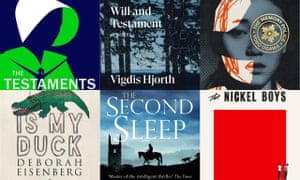
Evaristo shared the prize with the year’s biggest book by far: Margaret Atwood’s Handmaid’s Tale sequel The Testaments (Chatto), which combines Aunt Lydia’s sly perspective on the theocratic regime – its brutal birth and her ambiguous role at the heart of it – with more action-adventure strands about the two young women seeking to bring it down. Fan-pleaser, literary curio, a fascinating example of the interplay between written fiction and TV: the book is all three, with Atwood’s musings on power and the patterns of history as incisive as ever.

If history felt like a hall of mirrors in 2019, and current affairs a car crash, then Deborah Levy’s The Man Who Saw Everything (Hamish Hamilton) – the riddling story of one man, two time zones and two car accidents – was the novel to read. In the late 80s, Saul goes to East Berlin to study; in the recent past, he faces up to the rest of his life. Skewering different forms of totalitarianism – from the state, to the family, to the strictures of the male gaze – Levy explodes conventional narrative to explore the individual’s place and culpability within history. It’s one of the most unusual and rewarding novels of this or any year.

The timelines of history are similarly unstable in Sandra Newman’s high-concept The Heavens (Granta), in which a woman leads a double existence, waking up sometimes as Shakespeare’s Dark Lady in Renaissance England and sometimes in a 21st-century New York that is getting progressively worse. Can her actions really be influencing world events hundreds of years later? How far do we make our own reality? This is a dazzling exploration of creativity and madness in the poignant, panic-tinged end times.

The power of myth-making drives Mark Haddon’s best novel yet. The Porpoise (Chatto) begins as a propulsive thriller about abuse among the super-rich and segues into a classical-world adventure that reinvents the story of Pericles in prose of a hallucinatory vividness. Fantasy also mingles with reality in Max Porter’s light-footed second novel Lanny (Faber), as contemporary communal chatter and a spirit voice from deep time rise and fall together to tell the story of an extraordinary boy in an ordinary English village.

James Meek wound the clock back to 14th-century England for a feat of scholarship and storytelling combined. Written in gleeful approximations of priestly, courtly and peasant medieval English, To Calais, in Ordinary Time (Canongate) follows a motley group of travellers in the shadow of the Black Death. Its portrait of individual dramas unfolding against the prospect of apocalypse speaks to current fears of climate crisis and Brexit alike.

Robert Harris also conjured a quasi-medieval world for a page-turning, thought-provoking speculation on the fragility of civilisation, The Second Sleep (Hutchinson). It’s 1468, and a young priest is investigating ancient artefacts: Harris reveals his setup to be ingeniously, chillingly topical. Ali Smith reached book three of her quickfire Seasonal Quartet, which interprets news headlines through the filters of art and story. Like Haddon, Smith was inspired by Pericles, an apt fable for an era of globalised migration. She uses it in Spring (Hamish Hamilton) as a bedrock for a typically agile story about narrowing horizons and widening inequality, which is also a furious indictment of the UK’s detention of refugees.

The distribution and morality of wealth is an ever more urgent subject. The TV sensation Succession tackled money’s corrupting effect within a family; Sadie Jones did a similarly brilliant job in The Snakes (Chatto), a psychodrama about avarice, abuse and entitlement which is both a cautionary tale and a pitch-black race-to-the-end thriller.

It was an exceptional year for US fiction, with Tayari Jones winning the Women’s prize for An American Marriage (Oneworld), about black middle-class lives undone by structural racism, and Anglo-American Lucy Ellmann taking the Goldsmiths for her 1,000-page denunciation of Trump’s America and the world’s devaluing of motherhood, Ducks, Newburyport (Galley Beggar). Rising star Ben Lerner came into his own with the stunningly multilayered The Topeka School (Granta), exploring voice, power and masculinity in the 90s and now. Téa Obrecht’s long-awaited second novel Inland (W&N) is an ingenious reinvention of the western, while Colson Whitehead’s follow-up to The Underground Railroad, The Nickel Boys (Fleet), lifts the lid on the racist brutality of reform schools in the Jim Crow-era south.

Ann Patchett’s The Dutch House (Bloomsbury) is a gloriously immersive family saga about lost inheritance, while in Olive, Again (Viking) Elizabeth Strout continues to find moments of transcendence in the trials of daily life as her obstreperous, much-loved character Olive Kitteridge moves into her 80s. Chinese-American writer Yiyun Li’s Where Reasons End (Hamish Hamilton), a dialogue between a mother and the teenage son she has lost to suicide, is spare, profound and devastating.

Vietnamese-American poet Ocean Vuong’s autobiographical first novel On Earth We’re Briefly Gorgeous (Jonathan Cape) is a tender exploration of violence, migration and language, while Mexican author Valeria Luiselli’s Lost Children Archive (4th Estate), her first novel to be written in English, is an extraordinary achievement. It puts the desperate children crossing the border into the US at the heart of a beautifully composed, complex investigation into family, motherhood and the fragile connections between people.

Debuts to celebrate included Candice Carty-Williams’s witty Queenie (Trapeze), the adventures of a young black woman negotiating dating, family and identity in a gentrifying London, and Sara Collins’s The Confessions of Frannie Langton, a fantastically assured piece of historical gothic about an enslaved girl brought from a Jamaican plantation into the backbiting milieu of London society. Taffy Brodesser-Akner’s Fleishman Is in Trouble (Wildfire), a dissection of sexual politics in contemporary New York, was a deliciously biting summer hit.

Debuts stood out in the world of short stories, too, notably Wendy Erskine’s clear-eyed tales of Belfast life in Sweet Home and Julia Armfield’s haunting Salt Slow (both Picador). All eyes were on Kristen “Cat Person” Roupenian, whose first collection You Know You Want This (Cape) skewed towards urban gothic rather than dating malaise. Queen of dark short fiction Sarah Hall brought us more expertly turned tales of sex, death and danger in Sudden Traveller (Faber), while Zadie Smith’s first collection, Grand Union (Hamish Hamilton), is a restlessly wide-ranging anthology covering two decades. In Deborah Eisenberg’s wryly subversive Your Duck Is My Duck (Europa), we had the first collection in 12 years from a US master of the form.

One of the year’s gems in translation was Will and Testament by Vigdis Hjorth (Verso), translated by Charlotte Barslund. A story of abuse, inheritance and the battle for the truth among a privileged Norwegian family, it grips like a vice while interrogating national as well as individual self-conception. Other standouts included Khaled Khalifa’s Death Is Hard Work (Faber), translated by Leri Price, a road trip set against the backdrop of the Syrian civil war, and Pajtim Statovci’s Crossing (Pushkin), translated by David Hackston, which explores migration, gender and self-invention through the shifting character of a young Albanian. For the first time, the Man Booker International prize went to a writer in Arabic. Jokha Alharthi’s Celestial Bodies (Sandstone), translated by Marilyn Booth, is a generation-spanning family saga exposing the legacy of slavery in Oman.

Tove Ditlevsen’s Copenhagen Trilogy (Penguin Modern Classics), translated by Tiina Nunnally and Michael Favala Goldman, was a welcome rediscovery: the fearless reconstruction of a difficult creative and romantic life as a woman in 20th-century Denmark. Vasily Grossman’s Stalingrad (Harvill Secker), his prequel to Life and Fate translated by Robert and Elizabeth Chandler, was an extraordinary feat of scholarship. We have had to wait a quarter of a century for Yōko Ogawa’s The Memory Police (Harvill Secker), translated by Stephen Snyder, the story of an island where both objects and memories are “disappeared” by shadowy totalitarian forces and islanders must submit to enforced ignorance and diminished horizons. In an era beset by fears over news manipulation and Anthropocene extinction, this timeless fable of control and loss feels more timely than ever.

  • Save up to 30% on the books of the year at guardianbookshop.com

America faces an epic choice…

… in the coming year, and the results will define the country for a generation. Democracy is under attack, as is civility, truth and normal forms of political behaviour. The White House harbours white nationalists, incites fear and prejudice, undermines intelligence agencies, courts foreign influence in US elections and undermines the judiciary. The need for a robust, independent press has never been greater and with your help we can continue to provide fact-based reporting that offers public scrutiny and oversight.

These are perilous times. The administration’s willingness to deploy untruths, violent speech and hateful attacks on the media are now commonplace. This is why we are asking for your help so that we can continue to put truth and civility at the heart of the public discourse. You have read 6 articles in the last two months, so we hope you can appreciate the Guardian’s choice to keep our journalism open for all.

“Next year America faces an epic choice – and the result could define the country for a generation. It is at a tipping point, finely balanced between truth and lies, hope and hate, civility and nastiness. Many vital aspects of American public life are in play – the Supreme Court, abortion rights, climate policy, wealth inequality, Big Tech and much more. The stakes could hardly be higher. As that choice nears, the Guardian, as it has done for 200 years, and with your continued support, will continue to argue for the values we hold dear – facts, science, diversity, equality and fairness.” – US editor, John Mulholland

On the occasion of its 100th birthday in 1921 the editor of the Guardian said, “Perhaps the chief virtue of a newspaper is its independence. It should have a soul of its own.” That is more true than ever. Freed from the influence of an owner or shareholders, the Guardian’s robust independence is our unique driving force and guiding principle.

We also want to say a huge thank you to everyone who has supported the Guardian in 2019. You provide us with the motivation and financial support to keep doing what we do. We hope to surpass our goal by early January. Every contribution, big or small, will help us reach it.

Make a year-end gift from as little as $1. Thank you.

Leave a comment

Filed under 2019, book list, books