Tag Archives: Sunday

These 13 Books Will Make You a Better Writer in 2019 | Inc.com

One of the best ways to improve your writing is to read about the craft.

Source: These 13 Books Will Make You a Better Writer in 2019 | Inc.com

  1. Ernest Hemingway on Writing, edited by Larry W. Phillips

Ernest Hemingway never codified his insights on writing into a book, but he did share his thinking on the topic in commissioned articles; letters to his agents, publishers, and friends; and through his novels. Ernest Hemingway on Writing is a collection of his insights on the craft of writing, and includes several practical and inspiring tips.

  1. Zen in the Art of Writing, by Ray Bradbury

The prolific science-fiction author Ray Bradbury collected the lessons he had learned about the craft during his long and successful career in Zen in the Art of Writing.

  1. Nobody Wants to Read Your Sh*t: Why That Is and What You Can Do About It, by Steven Pressfield

Steven Pressfield recently returned to writing about writing with a brand-new book, Nobody Wants to Read Your Sh*t. It’s a no-nonsense guide to writing stories that people will want to read. While the bulk of the book addresses how to write fiction, Pressfield shows how the same principles of writing good stories can apply to writing nonfiction.

  1. The Artist’s Way: A Spiritual Path to Higher Creativity, by Julia Cameron

The Artist’s Way: A Spiritual Path to Higher Creativity is the classic book by author and creativity coach Julia Cameron in which she introduces what she calls “morning pages.” Morning pages is a powerful stream of consciousness writing exercise that is not intended to yield publishable material, but which can help you get your pen moving and your thoughts flowing–even if you never intend to share them with the rest of the world.

  1. Turning Pro: Tap Your Inner Power and Create Your Life’s Work, by Steven Pressfield

Ever since reading his classic book, The War of Art, I’ve read every book about writing by Steven Pressfield (and I will continue to read every one he writes, including the one he’s publishing soon, which he’s generously serializing on his blog). In that book he gave a name to what every writer grapples with. He called it Resistance.

To fight the Resistance, writers (and other artists, for he was addressing artists broadly in that book) need to give up their amateur mindsets and habits and “turn pro.” In Turning Pro, his follow-up to The War of Art, Pressfield fleshes out what he means exactly when he tells writers to “turn pro.”

  1. On Writing Well: The Classic Guide to Writing Nonfiction, by William Zinsser

William Zinsser was a journalist, author, and writing instructor at Yale. His book On Writing Well is a classic among writers and has sold nearly 1.5 million copies in the 40 years since it was published. It’s one of the first books I recommend to anyone seeking to improve their writing.

  1. On Writing: A Memoir of the Craft, by Stephen King

Fifteen years ago, mega-best-selling author Stephen King wrote a book about the craft of writing that became an instant bestseller: On Writing: A Memoir of the Craft. After telling the story of how he became the writer he is today, King devotes the second half of the book to sharing his writing strategies, like his suggestion that you should write for your “Ideal Reader.”

  1. Process: The Writing Lives of Great Authors, by Sarah Stodola

This book looks at the techniques, inspirations, and daily routines of 18 iconic authors of the 20th century, including Franz Kafka, Ernest Hemingway, Virginia Woolf, David Foster Wallace, Toni Morrison, and Margaret Atwood.

After profiling so many successful authors, what did Stodola learn about their writing process? “Genius, I have concluded, is the presence of not one ability but several that work together in tandem. Genius is far more tedious, far less romantic, far more rote, far less effortless, than we imagine it.”

  1. The War of Art: Break Through the Blocks and Win Your Inner Creative Battles, by Steven Pressfield, edited by Shawn Coyne

All writers struggle with writer’s block in one form or another, but Steven Pressfield named the enemy and outlined a strategy for conquering it in The War of Art, the perennially best-selling guide for writers and other creative professionals. In the first part of the book he introduces what he calls Resistance – the force within us that conspires to prevent us from fulfilling our creative pursuits – and then spends the next two sections sharing his solutions for overcoming it.

  1. The Art of Nonfiction, by Ayn Rand

As the late novelist and philosopher Ayn Rand describes in The Art of Nonfiction, an edited collection of lectures she gave on the craft of writing, part of the reason why it took so long to finish her second novel is because she often suffered from severe bouts of writer’s block.

  1. Lifelong Writing Habit: The Secret to Writing Every Day, by Chris Fox.

In Lifelong Writing Habit: The Secret to Writing Every Day, Chris Fox describes the 12-step process he created that has allowed him to make the transition from part-time writer to full-time author of several best-selling thriller novels and nonfiction writing guides.

At the beginning of the book, Chris describes what a habit is, and explains how you can reprogram your brain just like a computer to install new habits. Habits live in a part of the brain called the basal ganglia, and they consist of three parts: The trigger, the routine, and the reward. The key to changing your habits is to identify which ones are good for you, which ones are bad, and then “flip” the bad ones to good ones.

  1. 8-Minute Writing Habit: Create a Consistent Writing Habit That Works With Your Busy Lifestyle, by Monica Leonelle

Monica Leonelle, a novelist and author of several books about writing, has written a book that speaks directly to those of us who struggle to get our writing done while balancing other commitments at work and home.

In the first part of The 8 Minute Writing Habit: Create a Consistent Writing Habit that Works With Your Busy Lifestyle, Leonelle describes several “blockers” that get in the way of our writing, thoughts like “writing might not pay off,” “I’m not good enough to be a writer,” and “I’m stuck in the planning/writing/editing phase.” For each blocker, she offers several practical tips for overcoming them. In the second part of the book, she shares nine strategies the pros use to write consistently.

  1. Several Short Sentences About Writing, by Verlyn Klinkenborg

Verlyn Klinkenborg is an author and creative writing instructor at Yale. In the preface to Several Short Sentences About Writing, he argues that “most of the received wisdom about how writing works is not only wrong but harmful,” and then devotes the rest of the book to smashing assumptions and correcting misconceptions about the craft.
Leave a comment

Filed under 2019, book list, writing, writing tip

The 8 Best Books for Writers in 2019

Read reviews and buy the best books for writers from top authors including Randy Ingermanson, Susan Thurman, Zachary Petit and more.

Source: The 8 Best Books for Writers in 2019

Become a better author in no time

By Emily Delbridge

Updated November 21, 2019


https://www.thebalance.com/best-books-for-writers-1360649


We are committed to researching, testing, and recommending the best products. We may receive commissions from purchases made after visiting links within our content. Learn more about our review process.

Making money as a writer is not an easy task. Depending on your goals it can feel downright impossible. Being a successful writer has nothing to do with luck, and everything to do with hard work, dedication and perseverance. Overcoming challenges like writer’s block and finding a publisher can be excruciating. The best thing you can do is continue self-education. Most people know reading more can make you a better writer. Reading the proper book at the right time can make all the difference. If you are looking to make things easier on yourself and make the best of your writing, you are in the right place. Take a look at the best books for writers beginning with tools for becoming a better writer and ending with getting your writing out to the masses.

Best for Fiction Writers: How to Write a Novel Using the Snowflake Method

Buy on Amazon

There are many different ways to approach writing a fiction novel. The Snowflake Method is a popular method of writing and the author, Randy Ingermanson, lays it out in a unique book where the technique is explained in a story. He uses the fairy tale characters, Goldilocks and the Three Bears with a murder mystery theme, and walks you through the process of using the Snowflake method. It makes it fun and easy to understand. If you have never heard of the Snowflake Method, it begins with a simple idea then develops and adds more intricate details along the way. It is a little different than laying out a rigid outline or just making it up as you go along. It is most helpful for writers who prefer to write as they go but often get stuck somewhere in the middle. The Snowflake method can help even a seasoned writer complete a novel with excitement.

Best for Improving Your Writing Skills: The Only Grammar Book You’ll Ever Need

Buy on Amazon

One skill that can not be overlooked as a writer is grammar. Having a resource you can depend on and refer to as needed is an absolute must. The Only Grammar Book You Will Ever Need is the one stop shop for your grammar needs. It is less than 200 pages and has a quick reference guide. Proper grammar is not always intuitive. Common misspelled words can leave a reader running or clicking away from your content in a heartbeat. Get expert tips for writing clearly and directly. Learn the parts of speech and elements of a sentence. Figure out how to avoid the most common grammar and punctuation mistakes, and finally get the right punctuation in every sentence. This is an excellent book for helping writers create professional documents, writing A+ school papers or writing effective personal letters. It is very likely your writing will improve rapidly after reading this book. Even though there is a lot of software available to correct writing errors, it is great to learn the why behind grammar errors. You will write more efficiently and will have a more cohesive end product.

Best for Freelance Writers: The Essential Guide to Freelance Writing

Buy on Amazon

The life of a freelance writer has its perks, but it has its challenges, too! If you have been looking to earn extra income, or if you are ready to kick the 9- to-5 day job completely, freelance writing is ripe with opportunities. It is a great way to enter the writing world and hone your writing skills. Freelance writing can help you gain experience, so you are more skilled and confident to write more elaborate pieces such as a novel. The Essential Guide to Freelance Writing will help you reach your goals, whatever they may be, faster. Learn how to write and structure different styles of articles. Get tips on how to dream up the perfect article idea. Explore various aspects of being a freelance writer you may never have considered before. The author Zachary Petit has a lot of expertise in the writing, which includes being the longtime managing editor of Writer’s Digest magazine. He sprinkles in humorous antidotes and makes this an easy read. If you are serious about becoming a freelance writer, this is the book that can help you make it happen.

Best for Self Publishing: Write. Publish. Repeat.

Buy on Amazon

There is one common goal nearly every writer works towards in their writing career, to write content your readers will love and come back to again and again. The publishing world has changed dramatically in recent years. Publishing options have exploded. However, it can be overwhelming to learn about all the different options and how to be successful in reaching your ideal reader. Write. Publish. Repeat. is written by a collaboration of successful Indie authors and is written in a conversation style. They make it clear it takes hard work to be successful at self-publishing; however, they provide invaluable insight on how to make it work without relying on luck. Expect to learn a little bit about everything, including building a story, understanding your market, tips for creating book covers, titles, formatting, pricing, getting your content on multiple platforms and more. Aspiring writers will learn a lot from this book. You will be motivated to continue and know there is proven success.

Best for Getting Published: Get a Literary Agent

Buy on Amazon

Securing a deal with a traditional publisher might be the most laborious task of any new writer. Some publishers are willing to take on the work of a writer without an agent, so check Writer’s Market books that contain publishers of all kinds. It is in the Writer’s Market books that you will find the majority of prominent publishers that want you to have an agent. The book Get a Literary Agent will help you figure out how to research agents and target the best ones for your work. It will teach you the ins and outs of the submission process. It delivers fantastic pointers on writing the perfect query letter and pitch. It also provides pro tips on assembling a book proposal, and how to form a healthy relationship with your agent. If you are still not sure an agent is needed, this book also dives into what a literary agent does and how they can benefit you. Getting your book on the Best Seller’s list is not an easy task. You will be happy you learned what to expect when getting a literary agent before spending tons of time trying to figure it out on your own.

Best Children’s Book Writing Resource: Children’s Writer’s Word Book

Buy on Amazon

Writing for children is a little different than writing for adults. If you are used to freelance writing for adults readers, there are a few things you need to consider when you change gears. The Children’s Writer’s Word Book written by Alijandra Mogilner will help you recognize some of the differences and make writing more natural for this target reader. You will need to pay attention to the reading level of the words you use. This book provides a list of specific words ranked by grades kindergarten through sixth. It also includes a thesaurus of those words and guidelines for sentence length. It has a useful introduction to each grade level and provides an overview of what the age group traditionally studies. Every children’s book writer will find this to be an essential handbook.

Best Writing Strategies Book: The Element of Style

Buy on Amazon

Do you want to learn how to write well? The Element of Style written by William Strunk is considered being one of the most concise yet all-inclusive writer’s handbooks despite being nearly 100 years old. It has almost every grammatical concept you might need to know. It is easy to find what you are looking for and can be used as a quick reference. The best part is its size. It is small enough to fit in your back pocket or backpack. Most writing guides are enormous textbooks nobody wants to read. This one answers most style questions in around 100 pages.

Best for Writer’s Block: The Miracle Morning for Writers

Buy on Amazon

Writer’s block can happen to anyone. Words are not flowing, and you are not sure what to do next. Creating good habits in your morning routine might be what you need. The Miracle Morning for Writers written initially by Hal Elrod has been described as the most life-altering book ever written. It has sold over 750,000 copies and has several different variations available. This edition, co-written by Steve Scott, pinpoints the specific habits you need to work into your morning routine to become a better writer than you ever thought imaginable. Learn how to overcome limiting beliefs and how to enter the “flow state” ending writer’s block once and for all.

Leave a comment

Filed under 2019, writing tip

Best fiction of 2019 | Books | The Guardian

Exceptional US novels, extraordinary translations and even two Booker winners … Guardian fiction editor Justine Jordan on the celebrated and overlooked books of the year

Source: Best fiction of 2019 | Books | The Guardian

It has been a year of doubles: two Nobel laureates, two Booker winners, even two Ian McEwan novels (his Kafka-lite satire The Cockroach was yet more fallout from Brexit). Having promised to look beyond Europe after skipping the award in 2018, the Nobel committee honoured two Europeans: the Polish writer Olga Tokarczuk and, more controversially, Austrian Milošević-supporter Peter Handke. Closer to home, the UK’s general air of indecision infected the Booker prize, which split the award in two, thus missing the chance to crown Bernardine Evaristo outright as the first ever black female winner for her innovative and life-affirming Girl, Woman, Other (Hamish Hamilton), interlinked stories of black British women which brim with heart and humour.

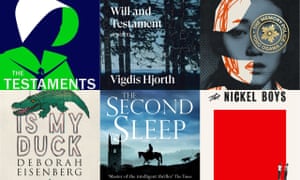
Evaristo shared the prize with the year’s biggest book by far: Margaret Atwood’s Handmaid’s Tale sequel The Testaments (Chatto), which combines Aunt Lydia’s sly perspective on the theocratic regime – its brutal birth and her ambiguous role at the heart of it – with more action-adventure strands about the two young women seeking to bring it down. Fan-pleaser, literary curio, a fascinating example of the interplay between written fiction and TV: the book is all three, with Atwood’s musings on power and the patterns of history as incisive as ever.

If history felt like a hall of mirrors in 2019, and current affairs a car crash, then Deborah Levy’s The Man Who Saw Everything (Hamish Hamilton) – the riddling story of one man, two time zones and two car accidents – was the novel to read. In the late 80s, Saul goes to East Berlin to study; in the recent past, he faces up to the rest of his life. Skewering different forms of totalitarianism – from the state, to the family, to the strictures of the male gaze – Levy explodes conventional narrative to explore the individual’s place and culpability within history. It’s one of the most unusual and rewarding novels of this or any year.

The timelines of history are similarly unstable in Sandra Newman’s high-concept The Heavens (Granta), in which a woman leads a double existence, waking up sometimes as Shakespeare’s Dark Lady in Renaissance England and sometimes in a 21st-century New York that is getting progressively worse. Can her actions really be influencing world events hundreds of years later? How far do we make our own reality? This is a dazzling exploration of creativity and madness in the poignant, panic-tinged end times.

The power of myth-making drives Mark Haddon’s best novel yet. The Porpoise (Chatto) begins as a propulsive thriller about abuse among the super-rich and segues into a classical-world adventure that reinvents the story of Pericles in prose of a hallucinatory vividness. Fantasy also mingles with reality in Max Porter’s light-footed second novel Lanny (Faber), as contemporary communal chatter and a spirit voice from deep time rise and fall together to tell the story of an extraordinary boy in an ordinary English village.

James Meek wound the clock back to 14th-century England for a feat of scholarship and storytelling combined. Written in gleeful approximations of priestly, courtly and peasant medieval English, To Calais, in Ordinary Time (Canongate) follows a motley group of travellers in the shadow of the Black Death. Its portrait of individual dramas unfolding against the prospect of apocalypse speaks to current fears of climate crisis and Brexit alike.

Robert Harris also conjured a quasi-medieval world for a page-turning, thought-provoking speculation on the fragility of civilisation, The Second Sleep (Hutchinson). It’s 1468, and a young priest is investigating ancient artefacts: Harris reveals his setup to be ingeniously, chillingly topical. Ali Smith reached book three of her quickfire Seasonal Quartet, which interprets news headlines through the filters of art and story. Like Haddon, Smith was inspired by Pericles, an apt fable for an era of globalised migration. She uses it in Spring (Hamish Hamilton) as a bedrock for a typically agile story about narrowing horizons and widening inequality, which is also a furious indictment of the UK’s detention of refugees.

The distribution and morality of wealth is an ever more urgent subject. The TV sensation Succession tackled money’s corrupting effect within a family; Sadie Jones did a similarly brilliant job in The Snakes (Chatto), a psychodrama about avarice, abuse and entitlement which is both a cautionary tale and a pitch-black race-to-the-end thriller.

It was an exceptional year for US fiction, with Tayari Jones winning the Women’s prize for An American Marriage (Oneworld), about black middle-class lives undone by structural racism, and Anglo-American Lucy Ellmann taking the Goldsmiths for her 1,000-page denunciation of Trump’s America and the world’s devaluing of motherhood, Ducks, Newburyport (Galley Beggar). Rising star Ben Lerner came into his own with the stunningly multilayered The Topeka School (Granta), exploring voice, power and masculinity in the 90s and now. Téa Obrecht’s long-awaited second novel Inland (W&N) is an ingenious reinvention of the western, while Colson Whitehead’s follow-up to The Underground Railroad, The Nickel Boys (Fleet), lifts the lid on the racist brutality of reform schools in the Jim Crow-era south.

Ann Patchett’s The Dutch House (Bloomsbury) is a gloriously immersive family saga about lost inheritance, while in Olive, Again (Viking) Elizabeth Strout continues to find moments of transcendence in the trials of daily life as her obstreperous, much-loved character Olive Kitteridge moves into her 80s. Chinese-American writer Yiyun Li’s Where Reasons End (Hamish Hamilton), a dialogue between a mother and the teenage son she has lost to suicide, is spare, profound and devastating.

Vietnamese-American poet Ocean Vuong’s autobiographical first novel On Earth We’re Briefly Gorgeous (Jonathan Cape) is a tender exploration of violence, migration and language, while Mexican author Valeria Luiselli’s Lost Children Archive (4th Estate), her first novel to be written in English, is an extraordinary achievement. It puts the desperate children crossing the border into the US at the heart of a beautifully composed, complex investigation into family, motherhood and the fragile connections between people.

Debuts to celebrate included Candice Carty-Williams’s witty Queenie (Trapeze), the adventures of a young black woman negotiating dating, family and identity in a gentrifying London, and Sara Collins’s The Confessions of Frannie Langton, a fantastically assured piece of historical gothic about an enslaved girl brought from a Jamaican plantation into the backbiting milieu of London society. Taffy Brodesser-Akner’s Fleishman Is in Trouble (Wildfire), a dissection of sexual politics in contemporary New York, was a deliciously biting summer hit.

Debuts stood out in the world of short stories, too, notably Wendy Erskine’s clear-eyed tales of Belfast life in Sweet Home and Julia Armfield’s haunting Salt Slow (both Picador). All eyes were on Kristen “Cat Person” Roupenian, whose first collection You Know You Want This (Cape) skewed towards urban gothic rather than dating malaise. Queen of dark short fiction Sarah Hall brought us more expertly turned tales of sex, death and danger in Sudden Traveller (Faber), while Zadie Smith’s first collection, Grand Union (Hamish Hamilton), is a restlessly wide-ranging anthology covering two decades. In Deborah Eisenberg’s wryly subversive Your Duck Is My Duck (Europa), we had the first collection in 12 years from a US master of the form.

One of the year’s gems in translation was Will and Testament by Vigdis Hjorth (Verso), translated by Charlotte Barslund. A story of abuse, inheritance and the battle for the truth among a privileged Norwegian family, it grips like a vice while interrogating national as well as individual self-conception. Other standouts included Khaled Khalifa’s Death Is Hard Work (Faber), translated by Leri Price, a road trip set against the backdrop of the Syrian civil war, and Pajtim Statovci’s Crossing (Pushkin), translated by David Hackston, which explores migration, gender and self-invention through the shifting character of a young Albanian. For the first time, the Man Booker International prize went to a writer in Arabic. Jokha Alharthi’s Celestial Bodies (Sandstone), translated by Marilyn Booth, is a generation-spanning family saga exposing the legacy of slavery in Oman.

Tove Ditlevsen’s Copenhagen Trilogy (Penguin Modern Classics), translated by Tiina Nunnally and Michael Favala Goldman, was a welcome rediscovery: the fearless reconstruction of a difficult creative and romantic life as a woman in 20th-century Denmark. Vasily Grossman’s Stalingrad (Harvill Secker), his prequel to Life and Fate translated by Robert and Elizabeth Chandler, was an extraordinary feat of scholarship. We have had to wait a quarter of a century for Yōko Ogawa’s The Memory Police (Harvill Secker), translated by Stephen Snyder, the story of an island where both objects and memories are “disappeared” by shadowy totalitarian forces and islanders must submit to enforced ignorance and diminished horizons. In an era beset by fears over news manipulation and Anthropocene extinction, this timeless fable of control and loss feels more timely than ever.

  • Save up to 30% on the books of the year at guardianbookshop.com

America faces an epic choice…

… in the coming year, and the results will define the country for a generation. Democracy is under attack, as is civility, truth and normal forms of political behaviour. The White House harbours white nationalists, incites fear and prejudice, undermines intelligence agencies, courts foreign influence in US elections and undermines the judiciary. The need for a robust, independent press has never been greater and with your help we can continue to provide fact-based reporting that offers public scrutiny and oversight.

These are perilous times. The administration’s willingness to deploy untruths, violent speech and hateful attacks on the media are now commonplace. This is why we are asking for your help so that we can continue to put truth and civility at the heart of the public discourse. You have read 6 articles in the last two months, so we hope you can appreciate the Guardian’s choice to keep our journalism open for all.

“Next year America faces an epic choice – and the result could define the country for a generation. It is at a tipping point, finely balanced between truth and lies, hope and hate, civility and nastiness. Many vital aspects of American public life are in play – the Supreme Court, abortion rights, climate policy, wealth inequality, Big Tech and much more. The stakes could hardly be higher. As that choice nears, the Guardian, as it has done for 200 years, and with your continued support, will continue to argue for the values we hold dear – facts, science, diversity, equality and fairness.” – US editor, John Mulholland

On the occasion of its 100th birthday in 1921 the editor of the Guardian said, “Perhaps the chief virtue of a newspaper is its independence. It should have a soul of its own.” That is more true than ever. Freed from the influence of an owner or shareholders, the Guardian’s robust independence is our unique driving force and guiding principle.

We also want to say a huge thank you to everyone who has supported the Guardian in 2019. You provide us with the motivation and financial support to keep doing what we do. We hope to surpass our goal by early January. Every contribution, big or small, will help us reach it.

Make a year-end gift from as little as $1. Thank you.

Leave a comment

Filed under 2019, book list, books

Countries that publish the most books

1. China

2. US

3. UK

4. France

5. Germany

6. Brazil

7. Japan

8. Spain

9. Italy

10. South Korea

11. Argentina

12. Netherlands

13. Saudi Arabia

14. Denmark

15. Switzerland

16. Thailand

17. Philippines

18. Sweden

19. Norway

20. Belgium

(IPA)

Leave a comment

Filed under 2019, books

The Ten Best History Books of 2019 | History | Smithsonian

Our favorite titles of the year resurrect forgotten histories and help explain how we got to where we are today

Source: The Ten Best History Books of 2019 | History | Smithsonian

The history books we loved most in 2019 span centuries, nations and wars. From womanhood to nationhood, they challenge the construction of identity and mythology. They tell the stories of celebrity weddings, bootlegging trials, and people, places and things we thought we knew but prove, upon closer inspection, to be far more complex.

The Season: A Social History of the Debutante

When Consuelo Vanderbilt of the wealthy American Vanderbilt family married the Duke of Marlborough in 1895, she was one of the most famous debutantes in the world, at a time when interest in the doings of the rich had never been more scrutinized. Consuelo had spent her whole life training to marry a royal, and the event itself was covered in major newspapers across the globe. In The Season: A Social History of the Debutante, author Kristen Richardson contextualizes Consuelo and her wedding—and those of other famous debutantes, or young women making their societal debut, from the 1600s to today. The book is a centuries-spanning look at how debutantes and their rituals, from the antebellum South to modern-day Russia, have shaped marriage and womanhood in America and abroad.


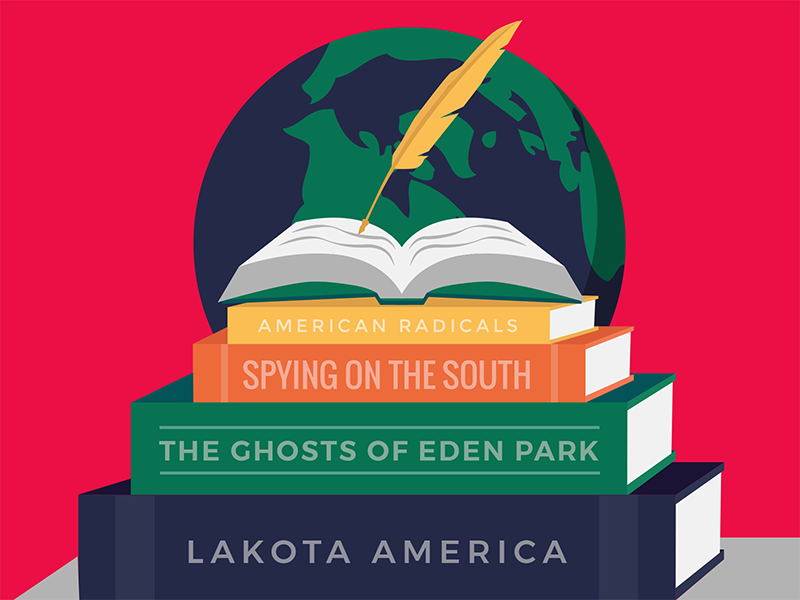
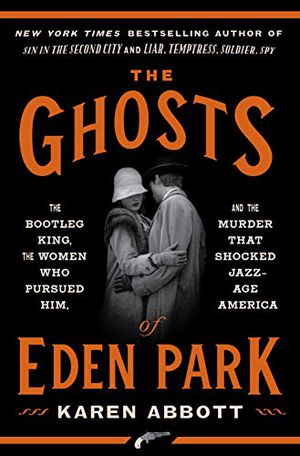
The Ghosts of Eden Park: The Bootleg King, the Women Who Pursued Him, and the Murder That Shocked Jazz-Age America

For a time, George Remus had it all. The most successful bootlegger in America, Cincinnati’s Remus controlled nearly 30 percent of illegal liquor in the United States in the early 1920s. Historian and bestselling author Karen Abbott traces the rise of Remus—he was a pharmacist and a defense attorney—and the inevitable fall as he found himself on trial not just for bootlegging, but for the murder of his own wife. In an interview with Smithsonian, Abbott talked about the connection between Remus and F. Scott Fitzgerald’s Jay Gatsby: “I think Gatsby and Remus both had these longings of belonging to a world that didn’t wholly accept them or fully understand them. Even if Fitzgerald never met Remus, everybody knew who George Remus was by the time Fitzgerald started to draft The Great Gatsby.”


Lakota America: A New History of Indigenous Power

Many Americans know the names of Red Cloud, Sitting Bull and Crazy Horse, key figures in North American Indigenous history. In his new book, Oxford history professor Pekka Hämäläinen (his previous book, The Comanche Empire, won the prestigious Bancroft Prize in 2009) looks at the history of the Lakota Nation as other historians have looked at ancient Rome—a massive (and massively adaptive) empire that shaped the literal landscape of the Western United States as well as the fates of Indigenous groups for centuries.


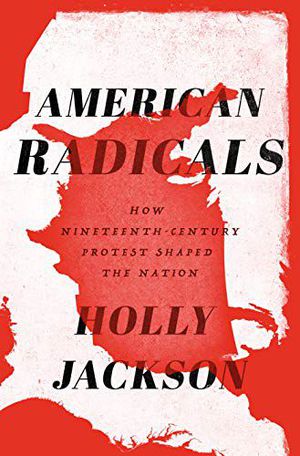
American Radicals: How Nineteenth-Century Protest Shaped the Nation

Civil Rights, free love and anti-war protests have become synonymous with the 1960s, but in American Radicals, Holly Jackson, an associate professor of English at the University of Massachusetts, Boston, traces these movements back a century in a reconsideration of radical protest and social upheaval in the mid-19th century. While some of the names that appear in Jackson’s story, like famed abolitionist William Lloyd Garrison, will be familiar to American history buffs, she also revives forgotten figures like Frances Wright, an heiress whose protests against the institution of marriage inspired Walt Whitman to call her “one of the best [characters] in history, though also one of the least understood.”


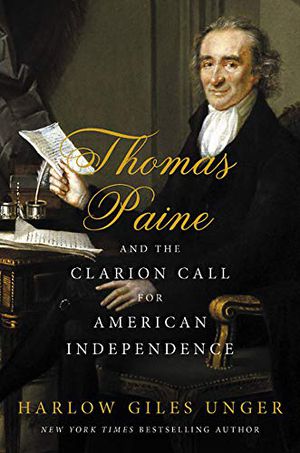
Thomas Paine and the Clarion Call for American Independence

Only six people attended Thomas Paine’s funeral. Once the most famous writer in the American colonies (and, later, the United States of America), the corsetmaker-turned-pamphleteer had been virtually expelled from public life for his radical beliefs and writings, like the ones that suggested a tax on landowners could be used to fund basic income for everyone else. Harlow Giles Unger, a renowned biographer of the Founding Fathers, looks at the Paine we know and the one we don’t, in his telling of the story of a man who pursued Enlightenment ideals even when those ideals ran afoul of what was socially acceptable.


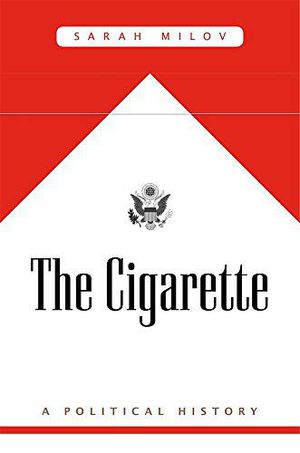
The Cigarette: A Political History

As every day a new story about the dangers of vaping—or the fervent support of vape fans—appears, historian Sarah Milov’s The Cigarette looks at the history of smoking in the United States and reminds us that once upon a time, the government was more concerned with the rights of tobacco companies than the rights of non-smokers. The book deftly connects the rise in organized opponents to smoking to food safety, car safety and other consumer rights movements of the 20th century. Kirkus says Milov “mixes big-picture academic theory with fascinating, specific details to illuminate the rise and fall of tobacco production.”


Policing the Open Road: How Cars Transformed American Freedom

In Policing the Open Road, legal historian Sarah A. Seo argues that while cars (and highways, for that matter) have long been associated with freedom in the eyes of American drivers, their advent and rapid domination of travel is the basis for a radical increase in policing and criminalization. From traffic stops to parking tickets, Seo traces the history of cars alongside the history of crime and discovers that the two are inextricably linked. “At times,” says Hua Hsu in The New Yorker, Seo’s work “feels like an underground history―of closeted gay men testing the limits of privacy; of African-Americans, like Jack Johnson or Martin Luther King, Jr., simply trying to get from one place to another.”


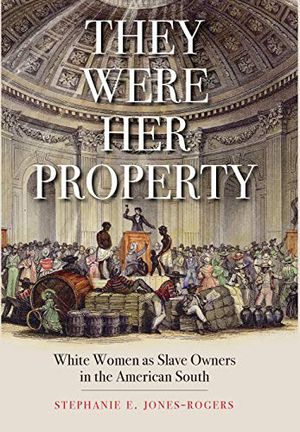
They Were Her Property: White Women as Slave Owners in the American South

Using the oral histories of formerly enslaved people, financial records and property history, Stephanie E. Jones-Rogers, associate professor of history at the University of California, Berkeley, makes a clear case that in the American South, many white women weren’t just complicit in the system of chattel slavery—they actively encouraged and benefited from it. Jones-Rogers’s work dismantles the notion that white women in slaveholding families were silent actors—instead, she argues, they used the institution of slavery to build a specific concept of womanhood that shaped the history of the nation before and after the Civil War.


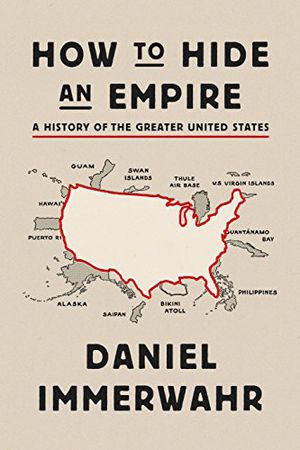
How to Hide an Empire: A History of the Greater United States

In 1856, the United States passed a law that entitled citizens to take possession of any unclaimed island containing guano deposits—guano, of course, being the excrement of bats. Guano is an excellent fertilizer, and over the course of the 20th century, the U.S. claimed dozens of small islands in remote parts of the world, turning them into territories with few rights of their own. The story of guano is one of many that touch upon the empire forged by the U.S. from Puerto Rico to the Philippines. Daniel Immerwahr, an associate professor of history at Northwestern University, tells the often brutal, often tragic stories of these territories in an attempt to make the ‘Greater United States’ truly part of U.S. history.


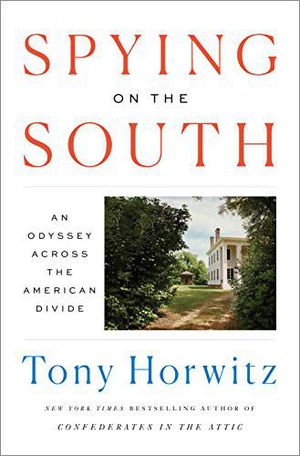
Spying on the South: An Odyssey Across the American Divide

In 1998, Tony Horwitz’s Confederates in the Attic changed the way we talk about the Civil War and the American South by making the point that for many, even 150 years after the war’s end, the conflict continued. In Spying on the South, published after Horwitz’s death this year, the author returned to the Southern states, this time following the trail of the young Frederick Law Olmsted, the landscape architect whose work defined northern cities like New York and Boston. Jill Lepore, writing in the New Yorker, called Horwitz “the rare historian—the only historian I can think of—equally at home in the archive and in an interview, a dedicated scholar, a devoted journalist.”

Leave a comment

Filed under 2019, book list, books

New words to live by: “Slug monkey”

Time, once again (though it has been a while), for New words to live by. This is a word or phrase not currently in use in the U.S. English lexicon, but might need to be considered. Other words, such as obsurd, crumpify, subsus, flib, congressed, tantrumony, and others, can be found by clicking on the tags below. Today’s New Word is created by taking two nouns and creating a new word. In this instance, the new word does not borrow from the names of the old words, but from their definitions. Without further waiting here is the new word: slug monkey.

OLD WORDS
Slug, n. Any one of various snaillike gastropods having no shell or only a rudimentary one. It feeds off plants and is often a pest to garden crops, often leaving a viscus trail.

v. Chiefly journalism. To furnish copy, article, story, with a slug.

Monkey, n. Any mammal of the order Primates, including guenons, langurs, capuchins, and macaques, but excluding humans and the anthropoid apes.

v. Informal. To play or trifle; sometimes to fool or screw up as in monkey with.

NEW WORD
Slug monkey, n. A sycophant, spokesperson, or follower repeating or defending the illogical ramblings, stupid pomposity, or uttered and written lies of a leader.

v. The act of uttering or repeating the illogical ramblings, stupid pomposity, or uttered and written lies.

Used in a sentence: Noun. The US Senator is nothing more than a slug monkey for the President.

Verb. The press conference was a chance for the President to slug monkey his position.

Most recent new word: clustrophobia.

Slug monkey

Leave a comment

Filed under 2019, new word, new words, New words to live by

Why these 4 habits are bad for your brain

Neuroscientist Tara Swart argues that snacking and comparing yourself to someone else can lessen your cognitive functions.

Source: Why these 4 habits are bad for your brain

By Tara Swart 5 minute Read

If someone asks you how you spend your time when you’re not at work, do you know where most of your day goes? It still surprises me that most busy people have their workday mapped out meticulously, yet they don’t realize how their time outside of work slips away. Partly, this is a consequence of the increasingly blurred lines that now exist between work and home. And partly, it’s a result of the fact that the tasks that take up time in our personal and home lives are difficult to quantify and account for.

But there is a more insidious reason for the time vortex. Many of us unknowingly fall into “harmless” habits that eat into our day. You probably don’t even realize that you’re doing them. If you are, you’re probably only marginally aware that they are a distracting drain on resources.

Here are the four habits that are probably lessening your cognitive function:

Checking the headlines

Most of us like to know what’s going on in the world. Once upon a time, we’d wait for the evening news or the next day’s headlines in the morning newspaper. However, now we can access breaking news anywhere and anytime from our phones. This setup has conditioned us to check in all the time to find out what’s happening and remind us to stay informed.

Most people understand that setting some boundaries around social media is a good idea. They switch off notifications, take breaks from particular apps, and designate a set time of day to check feeds.

However, they don’t apply the same self-discipline when it comes to checking news apps. A 2018 survey sponsored by global technology solutions company Asurion shows most of us check our phones every 12 minutes. And it isn’t just time that your news habit steals.

A number of my neuroscience colleagues actively avoid the news because they recognize that its negativity—and their impotence to do anything about most of what they hear—can lead to a sense of hopelessness. It saps mental energy and focus. In a study by the American Psychological Association, 56% of people said that following the news caused them stress. Opting out of following the news won’t work for everyone—I’d suggest setting some clear boundaries around it. Consider deleting, even for a while, apps that you’re tempted to open all the time.

Toxic comparison

Toxic comparison is a habit that’s as old as time. Sure, social media has given us more raw materials to compare to, but there’s nothing new about the urge to compare. As humans, we’re hardwired to compare ourselves to others in our group; to benchmark our successes and failures against others. It’s an evolutionary hangover from times when we lived in tribes and understanding our place in the social order was key to survival.

Nowadays, comparing ourselves to others is more likely to keep us stuck. This is whether we’re doing what psychologists call downward comparison (comparing ourselves to those less fortunate) or upward comparison (comparing ourselves to those we envy.) Both of these types of comparison can be bad for the brain. Downward comparison activates the brain’s “lack” network, emphasizing our insecurity and focuses on safeguarding the status quo at the expense of risk and adventure. Upward comparison can excite feelings of envy and low self-esteem.

To break free from the temptation to compare, you need to audit your social media feeds. That means deleting anyone whose posts make you feel envious. If you find that you’re comparing yourself to a particular friend, then it might be smart to mute them. If you haven’t already, set limits around social media, and do regular digital detoxes.

If you find yourself thinking about how your life matches up to a friend’s when you’re not on social media, try to shift your perspective. Think about their human traits, vulnerabilities, and things that you have in common. When you change your mindset, you can move from a place of jealousy to a place of empathy.

Comfort eating

The phrase “comfort eating” conjures an image of one consuming a pint of Ben & Jerry’s in their pajamas. But comfort eating can also be triggered by boredom: it’s something to do when we’re idle. Eating can also be a self-soothing activity. For some people, food is a coping mechanism for stress or anxiety.

So how do you change a habit that’s deeply rooted in emotions? The first trick is to notice you’re doing it. Try to keep a diary on your phone for a few days, noting whenever you find yourself reaching for a snack. Can you spot any patterns? Do you feel the urge to eat when you are bored, procrastinating, upset, or angry? When you notice your cues and responses, you’ll learn to pause before you eat, rather than doing it automatically.

It’s also important to remember that unhealthy foods are addictive. Eating foods high in sugar and fat conditions us to crave more of the same, and those kinds of foods do little for your brain function. When you do eat, make sure to fill up on nutrient-dense foods. Not only will you find them more satiating, but they’ll also give you a cognitive boost.

Multitasking

When you’re trying to juggle what seems like a million responsibilities, multitasking might seem like a necessary evil. But research shows that when we multitask, our brains suffer. Each time we try and batch unrelated tasks together, we tax our brain and use up energy in the transition. The more complex the tasks we are switching between, the higher the cognitive cost.

To stop making multitasking a habit, you need to set boundaries around what you will be working on when. Give yourself longer chunks of time to complete one thing at a time, and shut down other distractions such as email when you’re working on something.

On their own, these habits might seem harmless. But if you do them repeatedly, they can ruin your cognitive function in ways you don’t realize. Pay attention next time you find yourself doing any of these things, and ask yourself if there’s a better habit that can go in its place. Your brain will thank you.

Tara Swart is a neuroscientist, executive adviser, author, and medical doctor. Her book, The Source: The Secrets of the Universe, The Science of the Brain, is out in the U.S in October.

Leave a comment

Filed under 2019, brain, writing tip

Mad magazine’s demise is part of the ending of a world – The Washington Post

The joke’s on us, because we no longer have authority figures to keep in check.

Source: Mad magazine’s demise is part of the ending of a world – The Washington Post

The demise of Mad magazine is hardly a surprise. Times are tricky for print publications in general — all the more so for a title targeted with exquisite precision at middle-school boys. They are Nature’s neglected travelers, parked on an apron while the girls they used to know go racing down the evolutionary runway and take flight into the wild blue of adulthood.

Because life has, for the moment, scorned them, they return the favor, and for a couple of generations, Mad was both a tutor and a tool of their anarchy. Its cartooned pages confirmed their suspicions that parents are hypocrites, that heroes have clay feet, that popular culture is a ripoff and that a guy might as well laugh at existence because existence is already laughing at him. “What, me worry?” asked mascot Alfred E. Neuman, eternally hapless, perpetually 13.

In its day, Mad would have rolled its googly eyes at the corporate doublespeak of its own death notice. Mad will no longer publish new content, we were informed, but will continue into the uncertain future by repackaging old material between new covers. Television used to do a version of that. It was called “The Love Boat.” Each week, another washed-up celebrity took a cruise to nowhere. Mad ran a parody in 1978.

No doubt my interest in the subject is partly nostalgic. My own middle-school years in the early 1970s coincided with the peak of Mad’s influence and circulation. Two million people bought the magazine in those days, and even on a 50-cent weekly allowance, it was worth 40 cents. The “usual gang of idiots” (as Mad referred to its stable of contributors) included a number of supremely talented caricaturists and gag writers alongside a few authentic geniuses.

Chief among them was Don Martin, dubbed “Mad’s maddest artist.” He rendered a world full of ridiculous-looking adults with goofy faces, flabby guts and weirdly hinged oversize feet. These characters went blundering through familiar situations oblivious to their own pathos, accompanied by Martin’s inimitable written sound effects. “GISHKLURK,” for example, was the sound of Moses parting his soup, while “doop” was the sound of food falling from the mouth of someone choking and “SPLITCH” was the sound of a tomato in the face. (Martin’s vanity license plate read SHTOINK, which of course is what you hear when a nurse jabs your finger with a syringe.)

Every feature mined the same ironic vein: The world’s a joke, a sham, a tale told by an idiot. Antonio Prohias lampooned the Cold War in a wordless strip called “Spy vs. Spy.”

Norman Mingo rendered President Richard M. Nixon as Paul Newman in “The Sting,” cheerfully burning a subpoena. Even Al Jaffee’s ingenious back-page “fold-in” cartoons revealed dark truths masked within otherwise banal scenes.

Mad’s April 1974 cover boiled the entire sensibility down into a single outrageous image: an upraised middle finger. The blowback was sufficiently intense that publisher William Gaines never went there again. But it wasn’t the readers who objected; it was our moms, dads, ministers, librarians. Our oppressors.

To be subversive, however, requires a dominant culture to subvert. Mad was the smart-aleck spawn of the age of mass media, when everyone watched the same networks, flocked to the same movies and saluted the same flag. Without established authorities, it had no reason for being. Like the kid in the back of the classroom tossing spitballs and making fart sounds, a journal of subversive humor is funny only if there’s someone up front attempting to maintain order.

We now live in a time when everyone’s a spitballer, from the president of the United States on down. America elected the world’s oldest seventh-grader in 2016; we knew what we were getting from the earliest days of his campaign. Asked about one opponent, the successful business executive Carly Fiorina, Trump replied, “Look at that face! Would anyone vote for that?” He bullied the rest of the field with stupid nicknames. The hijinks continue to this day. Recently, Trump play-scolded Vladimir Putin as the Russian president smirked in reply. “Don’t meddle in the election, please,” said Trump — as if the two of them had been caught giving wedgies and were forced to apologize. What, us worry?

Today, whether we’re doing history or current events, commerce or religion, we’re awash in iconoclasm but nearly bereft of icons. Everyone’s a court jester now, eager to expose the foibles of kings and queens. But the joke’s on us, because we no longer have authority figures to keep in check. We’re needling balloons that have already gone limp.

Some say Mad lost its edge to its offspring, from Bart Simpson to Stephen Colbert. Yet I wonder how long its influence could have continued after the extinction of the adult establishment. Not just a magazine, but a world, has ended — not with a SPLITCH but a doop.

Leave a comment

Filed under 2019

The Poetry of America (unfinished), 1943, Salvador Dali

image_B61D579B-7CA0-4DFB-A309-99D57FDA2C8FWhat unfinished writing do you have?

Leave a comment

Filed under 2019, paint

The Month’s Best New Crime Fiction: April 2019 | CrimeReads

Source: The Month’s Best New Crime Fiction: April 2019 | CrimeReads

At the start of every month, CrimeReads staff members look over all the great crime novels and mysteries coming out in the weeks ahead and make recommendations based on what they’re reading and what they can’t wait to read. Check back over the course of the month for more suggestions for feeding your crime habit.

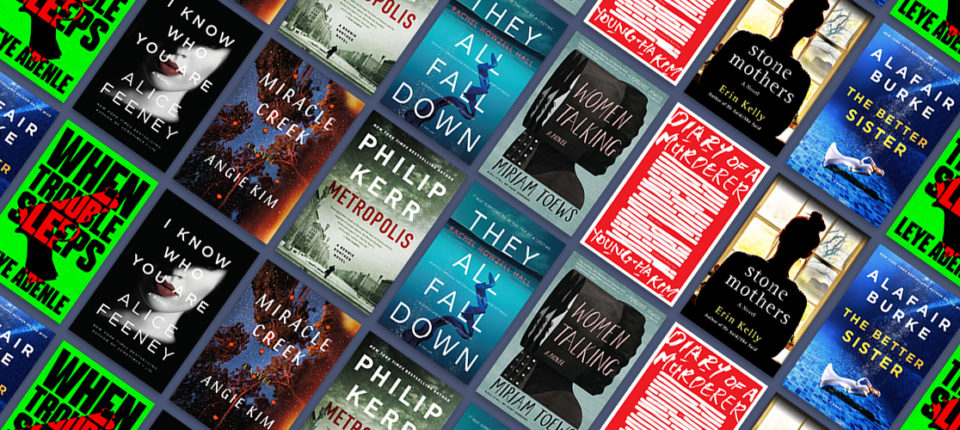
Philip Kerr, Metropolis (Putnam)

It’s a bittersweet pleasure to dive into the last Bernie Gunther mystery. After Kerr’s untimely death last year, it was announced that one more book would be released in the series: Metropolis, which takes us back to Bernie Gunther’s early days on the job, and concludes a 14-book-dive into the worst parts of 20th century history. I’m planning to savor this 1928-set investigation, which promises to be a fitting conclusion to an epic series. (Molly Odintz, CrimeReads associate editor)

Alice Feeney, I Know Who You Are (Flatiron)

Aimee Sinclair is a not quite A-list actress—her face is more familiar than her name. Yet there is one person from Aimee’s strange and upsetting past who keeps interfering in her present-day business. First, her husband goes missing after a particularly nasty fight. Then her bank tells her nearly all of her money has been withdrawn–and it wasn’t her husband who closed the account, it was Aimee. I Know Who You Are is a tense, almost nasty thriller, in which the past recurs in the most dramatic way. (Lisa Levy, CrimeReads contributing editor)

Young-ha Kim, Diary of a Murderer (HMH)

Unreliable memories are a trope in contemporary crime fiction, but Young-ha Kim’s title story from his new collection takes a novel twist when it comes to memory, as a serial killer with Alzheimer’s begins to forget the details of his own crimes while attempting to protect his adopted daughter, whom he suspects to be a target of a different killer in the same town. With Diary of a Murderer, Young-ha Kim joins a new wave of Korean crime writers making their mark on the psychological thriller. (MO)

Rachel Howzell Hall, They All Fall Down (Forge)

If there’s one thing I love in mystery, it’s when a bunch of strangers get summoned to an island. Rachel Howzell Hall’s latest thriller takes that classic scenario straight out of the Agatha Christie playbook and gives it a modern, subversive twist, as seven strangers answer an invitation to a few nights at a private estate on a lush, remote spit of land off the coast of Mexico. The clash of personalities and secrets is immediate, as the guests discover that their weekend getaway isn’t quite so tranquil as they’d hoped. Howzell Hall has spent the last few years establishing herself as one of the most promising voices in detective fiction with her Elouise Norton series. Here she proves that she knows her way around a traditional mystery scenario, with a few thriller twists for good measure. (Dwyer Murphy, CrimeReads managing editor)

Angie Kim, Miracle Creek (FSG)

In a rural Virginia town called Miracle Creek, Korean immigrants Young and Pak Yoo run an experimental medical treatment chamber believed to cure a broad range of issues, mental and physical. The treatment—pure, pressurized oxygen—fills the struggling residents of Miracle Creek with hope, and in turn, the Yoos, who followed hope to America. But when the tank explodes one night and two people are killed, a murder trial grips the town; Kim’s taut emotional thriller unfolds in the courtroom, where the events of that fatal night begin to illuminate the deep secrets and desperation of families fighting to survive. (Camille LeBlanc, CrimeReads editorial fellow)

Miriam Toews, Women Talking (Bloomsbury)

Miriam Toews comes from a Mennonite background herself. As this moving New Yorker profile recounts, she felt a need to reckon with her own past and the patriarchal institutions of Mennonite society after learning of the terrible happenings in a Mennonite village in Bolivia; over a 100 women and girls were raped over a substantial period of time by a group of men using livestock tranquilizers to knock out their nightly targets. In her new book Women Talking, based on this real life story, Toews puts us in the center of a meeting of Mennonite women. They have two days before the men in the village return from bailing out their arrested attackers, and they must decide whether they will fight, flee, or do nothing. (MO)

Alafair Burke, The Better Sister (Harper)

This enthralling domestic thriller finds Burke at her best, diving deep into character and probing the nature of sisterhood—the envy, the competition, the lifelong bond. Chloe Taylor is the editor-in-chief of a magazine and an icon in the #MeToo movement. Her husband, Adam, is a successful corporate lawyer, and Ethan—her teenage stepson—is the biological son of her less-successful, emotionally unstable sister—Adam’s ex. When Adam is murdered, the two long-estranged sisters find themselves in a strained alliance as they fight to exonerate the primary suspect: Ethan. The twists stun as the sisters are forced to confront their history of sacrifice and betrayal. (CL)

Erin Kelly, Stone Mothers (Minotaur)

Marianne Thackeray grew up in Nussted, a town noted for its looming asylum, the Nazareth Mental Hospital. She had planned on never living there again. But time changes things: the asylum has been converted to shiny renovated flats, and Marianne’s husband bought them one. She can’t explain to him that the asylum has negative associations for her which harken back to an incident involving herself, an ex, and a dangerous enemy. The truth will come out, somehow, and Marianne has to prepare for it. (LL)

Leye Adenle, When Trouble Sleeps (Cassava Republic)

Amaka returns! Leye Adenle burst onto the international crime scene with his debut Easy Motion Tourist, an intricate, fast-paced thriller that takes us through the underworld of Lagos as a British tourist teams up with a human rights attorney named Amaka to get the bottom of a wave of violence targeting sex workers in the Nigerian capital. In the second installment of the series, When Trouble Sleeps, Adenle picks up just where he left off, as Amaka continues to investigate and bring down those who would threaten Lagos’ most vulnerable population; this time, however, Adenle ups the stakes with a complex political subplot that dovetails perfectly with the main mystery for a stunning conclusion. (MO)

Ilaria Tuti, Flowers Over the Inferno (Soho)

This Italian debut introduces us to a formidable heroine, seasoned detective and criminal profiler Teresa Battaglia, when she is called to the small alpine village of Traveni to investigate a murder. The body was found naked with its eyes gouged out, and Teresa senses a killer who likes to play sick games and who will strike again if she can’t figure out his riddles. Of course she is paired with a hot-tempered young detective, and they keep investigating violent attacks. But the locals don’t believe this killer can be among them, and Teresa is sure he is.

Leave a comment

Filed under 2019, new fiction