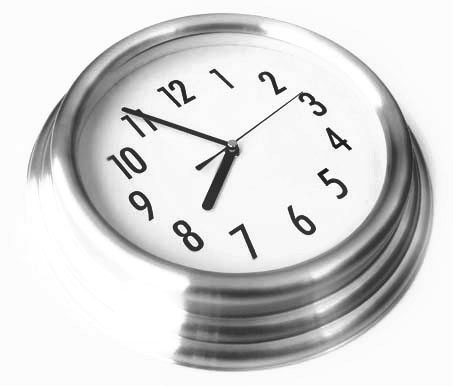
Photo Finish Friday: “The Big CrackUp”

“The World’s economy collapsed today when roughly the top third of the globe blew away. Nobody knows right off hand what caused the event to take place, nor why it appears that all of Canada, all of the U.S. — except for Hawaii — and most of Mexico where the hardest hit land masses, if hit was what happened. What has been almost as startling is the discovery that — contrary to scientific theories and the best evidence available until this unfortunate event — the World apparently is hollow.

“Wait, this just in. Apparently, the rest of the world is forming giant cracks, like puzzle pieces. It appears … it appears, ladies and gentlemen, it appears the world is literally cracking up….”

Oh, the humanity....

“Oh, the humanity….”

Leave a comment

Filed under Photo by author, Photo Finish Friday

Haiku to you Thursday: “Ideology”

Ideology /

will save the world from itself /

and such is its shame.

Leave a comment

Filed under Haiku to You Thursday, poetry by author

Writing tip Wednesday: “Dash-ing, aren’t we?”

What the heck is an em dash, and why use it?

PenPal answers:

Em dashes may be used for the following grammatical constructions:

1. Amplifying or explaining
[Example: She outlined her strategy—a strategy that would, she hoped, keep the peace.]

2. Separating a subject from a pronoun that introduces the main clause
[Example: Broken promises and lies—such were the obstacles he encountered in their marriage.]

3. Indicating sudden breaks or pauses:
[Example: “Will you—can you—please help me just this once?” asked Jared.]

4. Used in place of or with a comma (often to avoid comma confusion):
[Example 1: Although I can’t call you on Sunday—I’ll explain why later—expect an e-mail, probably early in the morning.] [Example 2, where both em dash and comma are needed: “I promise you I will never—,” Sylvia began, but Raymond cut her short.]

5. With other punctuation (a question mark or exclamation point—but never a comma, semicolon, or colon, and rarely a period—may precede an em dash. [Example: Only if—heaven forbid!—you do your homework first.]

6. Index entries
Example:
—Abelson, John
—Abernathy, Susan
—Bennington, Frank
(etc.)

Note: The em dash is a handy and legitimate punctuation tool often saving a sentence from comma confusion. For more information on correct usage, see The Chicago Manual of Style and William Zinsser’s On Writing Well.

[Next time around, watch for my explanation of ellipsis usage!]

________

Cathy Kodra a/k/a PenPal

Cathy Kodra a/k/a PenPal

About PenPal…
Cathy Kodra works as an independent editor in Knoxville, TN. Her poetry and short stories have appeared in numerous journals and anthologies including Roanoke Review, New Millennium Writings, Common Ground Review, Now & Then, Cavalier Literary Couture, Slow Trains, Still Crazy, The Medulla Review, Prime Mincer, Yemassee, and others. She is a contributing editor for New Millennium Writings and past guest poetry editor for The Medulla Review. She was first runner up in Prime Mincer’s 2011 Poetry Contest, judged by Rodney Jones, and took first place in the 2012 Old Gray Cemetery Poetry Contest. Cathy’s first poetry chapbook, Thin Ice, was published in 2011 by Medulla Publishing.

Cathy is a member of the Knoxville Writers’ Guild and of two local writing groups. An avid reader and writer, she is currently working on two poetry collections and a collection of short stories. Her hobbies include gardening and vegan cooking, and she lives happily with her husband Ron, two dogs, and a cat. She can be reached at www.cathykodra.com.

Leave a comment

Filed under Writing Tip Wednesday

Monday morning writing joke: “The butt of humor”

Two homeless guys are walking around the smoking area outside a hospital, heads down, stooping now and then to pick up the butts of cigarettes not completely smoked.

The first homeless guy picks up a butt.

The second homeless guy glances over and says, “Not that one. It’s unfiltered. Those things will kill you.”

[Editor’s note: This actually happened a few days ago near a local hospital. Sometimes life hands you a joke, complete with punchline and you run with it. And I will add this to that. The other day while downtown, I walked past a building. The glass front door read: “Non-smoking entrance.” To the right of the door was a bench and a sign that read: “Smoking area.” The smoking area was in front of a giant air intake grate for the building.]

Leave a comment

Filed under Monday morning writing joke

Photo finish Friday: “The piano at the loop of time”

Play it again....

Play it again….

“Sam, it’s December 1941 in Casablanca. What time is it in New York?”

“Ah … my watch stopped.”

“I bet they’re asleep in New York. I bet they’re asleep all over America. Of all the gin joints in all the towns in all the world, she walks into mine.”

Music from the piano.

“What’s that you’re playing?’

“Just a little something I wrote.”

“Stop it. You know what I want to hear.”

“But—”

“You played it for her. You can play it for me. If she can stand it, so I can.”

“But Boss, I played it for you last night.”

“Play it, again.”

“But Boss, I played it for you last night and she didn’t come.”

“She’ll be back, I know it.” He slugs down another drink. He’s had so many, he doesn’t remember what it is.

“But Boss, I played it before and she didn’t come.”

“As Time Goes By” rises up from the upright piano. It is a ghost in the room, rattling the chains of cords and notes. It rattles on and on evoking memories and mistakes.

“Sam, it’s December 1941 in Casablanca. What time is it in New York?”

“Ah … my watch stopped.”

“I bet they’re asleep in New York. I bet they’re asleep all over America. Of all the gin joints in all the towns in all the world, she walks into mine.”

“Ah … my watch stopped.”

[Editor’s note: with apologies to Casablanca. If you haven’t seen it — what are you waiting on? Now, it’s your turn. What would you write to this photo?]

Leave a comment

Filed under Photo by author, Photo Finish Friday

Haiku to you Thursday: “Ancient Messages”

Night sparkles, cloaked in /

ancient messages scarred by /

the fury of time.

Leave a comment

Filed under Haiku to You Thursday, poetry by author

Writing Tip Wednesday: “Plotting, part 1”

MAKE PLOTTING EASIER WITH THE PLOTCLOCK – PART 1

By JOYCE SWENEY

WHAT IT IS

Clock and time

Plotting takes time.

First and foremost, the patented Plotclock is all made up and not real. It’s just a template, a suggested map that tends to work for most
novels that are not tragedies. It’s based on my lifetime of research as a bad plotter into the secrets of good plotters such as scriptwriters,
intensified by my time partnered with Jamie Morris, another wonderful writing coach. Jamie and I took long walks together, argued about various books over the telephone and eventually co-created the Plotclock of today…which I have to say works darned well.

But you can certainly plot a novel *without* this tool, have high points where the clock suggests low points, follow another map, etc., and you’ll
be fine. It’s just a great map for writers like me who get very lost when trying to plot a novel.

WHY IT WORKS:
I believe there’s a basic ‘story’ hardwired into all our brains. We can’t articulate it, but we know it when we see it and we respond emotionally to it. It is the story of the character we love, overcoming all odds to do the thing they must do and somehow gaining something in the end. The highs and lows
of this are surprisingly similar and predictable, hence the effectiveness of The Clock.

HOW TO USE IT:
The story should begin in the main character’s ordinary world. But the early scene/scenes in this world should suggest to the reader something is lacking. I don’t like ‘What does the main character want?’ Who cares what they want?

A better question is, ‘What needs to happen to a person like this?’ So a shy person should be propelled, lured or trapped into a story where they will have to speak up. The ordinary world should make the reader say…I like this person but I wish they would ______. And then comes …..

The Inciting Event – the thing that makes that wish come true. This new thing crosses the main character’s path and invites them into the Special World of the story. In some novels it happens pretty quickly; in others, much closer to the Binding Point. In memoir, for reasons I haven’t figured out, the inciting event tends to come first, with the Ordinary World shown in flashback. But in fiction, it seems to be better the other way.

The Binding Point – comes about a quarter into the story and begins Act 2. Since the Inciting Event, the main character has probably been resisting or avoiding the Special World (because who wants to get involved in something that might change you?), but at the binding point they agree, are lured, tricked or shanghaied into the Special World. Dorothy in Oz is an easy binding point to understand. She can’t go back the way she came, so she now has to follow the Yellow Brick Road all the way through a story to get home.

Next time: From Low Point to Denouement

—-

Joyce Sweeney is the author of 14 novels for young adults and one book of poetry. A writing teacher and mentor to aspiring authors, she runs writer’s workshops, critiques manuscripts, and conducts classes and seminars throughout the state of Florida. This article is just one of the ten lessons included in her Fiction Writing Essentials which starts in July and is taking registrations now at: www.sweeneywritingcoach.com.

[Editor’s note: This entry comes courtesy of Bruce Hale. Bruce has written and illustrated over 25 books for kids. His Underwhere series includes Prince of Underwhere and Pirates of Underwhere. His Chet Gecko Mysteries series includes: The Chameleon Wore Chartreuse, The Big Nap, The Malted Falcon, Hiss Me Deadly, and others. More at http://www.brucehale.com/]

Leave a comment

Filed under Writing Tip Wednesday

cARtOONSDAY: “wORD TO THE wISE”

Some days, each word feels like a year.

Some days, each word feels like a year.

Leave a comment

Filed under cartoon by author, CarToonsday

Monday (morning) writing joke: “That’s the spirit”

A ghost walks into a bar and asks for a gin and tonic.

“Sorry,” says the bartender. “We don’t serve spirits.”

Leave a comment

Filed under Monday morning writing humor

Haiku to you Thursday: “Thunder jests”

Skyward, thunder jests /

a voice beyond placating /

rain and tears collide.

Leave a comment

Filed under Haiku to You Thursday, poetry by author