The Devil’s Dictionary: “Abscond”

In our continuing quest to revisit a classic, or even a curiosity from the past and see how relevant it is, we continue with The Devil’s Dictionary by Ambrose Bierce. Originally published in newspaper installments from 1881 until 1906. You might be surprised how current many of the entries are.

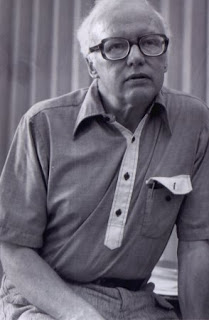
A young Ambrose Bierce

A young Ambrose Bierce

For example, here is a definition for the words Corporation and Congress. The Old definitions are Bierce’s. The New definition is mine. From time to time, just as it was originally published, we will come back to The Devil’s Dictionary, for a look at it then and how it applies today. Click on Devil’s Dictionary in the tags below to bring up the other entries.

OLD DEFINITION

Abscond, v.i. To “move in a mysterious way,” commonly with the property of another.

Spring beckons! All things to the call respond;
The trees are leaving and cashiers abscond.

–Phela Orm

NEW DEFINITION

Abscond, v.i. To “move in a mysterious way,” commonly with the property of another, usually a lobbyist in order to the bidding of “the people” as conveyed by the lobbyist to the politician. The people in this case being the person, persons, or corporation that hired the lobbyist(s).

Elections beckon! All candidates to the lobbyists respond;
The people are leaving and the politicians abscond.
–d.e.b.

Leave a comment

Filed under Devil's Dictionary

Photo finish Friday: “Missing”

Lost souls? Lost comma? Lost apostrophe? Oh, heavens.

Lost souls? Lost comma? Lost apostrophe? Oh, heavens.

If you have read Eats, Shoots and Leaves by Lynne Truss, you know the power of the comma, the apostrophe, and other well-placed parts of punctuation. Far be it for me to comment on a man’s beliefs (Okay, maybe not that far be it.), but in this case, I think it is more a matter of the missing-in-action comma and apostrophe. As it is, this church signage can lead one to believe this church is devoted to deprogramming the devout, to redirecting the religiously inclined, to subduing the souls of those who believe.

The name of the church, which is Christian, would make more sense if the sign read, “Overcoming, Believers’ Church.” As it is, the name, particularly in large white letters on a large slate-gray building (the photo only shows a part of the church exterior) looks a bit like something out of the X-Files. The aliens have stolen our apostrophes!

1 Comment

Filed under Photo by author, Photo Finish Friday

Haiku to you Thursday: “Passion plant”

I nuzzle your neck /

and plant moments of passion /

in folds of warm flesh.

1 Comment

Filed under Haiku to You Thursday, poetry by author

Writing tip Wednesday: “Getting in the suspense of things”

5 TIPS FOR WRITING SUSPENSE

by Kira Peikoff

Full article at: http://www.writersdigest.com/editor-blogs/guide-to-literary-agents/5-tips-for-writing-suspense?et_mid=693701&rid=239626420

I am a traditionally published thriller author. My latest book No Time to Die just hit shelves this week. When I first started writing suspense fiction, though, I had very little idea what I was doing. It took a humble amount of trial and error to get in a groove and overcome basic rookie errors. Now, seven years later, I like to think I’ve figured out some tricks of the trade. I’ve also been extremely lucky to receive the support and mentorship of some of the top names in the biz, like Jack Reacher’s creator Lee Child and the late Michael Palmer. So without further ado, here are some tips for budding thriller writers that I wish I’d known from day one…

1) Structure Scenes like Mini-Novels: Each one should contain its own narrative arc, with rising action and a climactic moment that signals the end of the chapter. It’s good form to finish most chapters on a cliffhanger—especially the first one. A major dramatic question should be raised in the opening scene, and then resolved in an unexpected or unfavorable way to hurl the main character further into the conflict (and thus drag your readers into the story). Get your protagonist in trouble as soon as possible and never let her get too comfortable or too safe. As far as chapter length, I’ve found that an average of five pages (double-spaced, size 12) works well for keeping up the pace.

2) Plot Strategically to Avoid the Sagging Middle: This rookie error is one I had the misfortune of making early on: I wrote the beginning of a book and then abruptly ran out of steam about sixty pages in. When you’re staring down 240 blank pages without a plan, it’s easy to freeze up. Now I have a method. Once I have the main cast of characters and their conflicts, I conceive a new book in four sections. At the end of each section, I devise a major twist to launch into the next section and keep up the narrative momentum. Once I’ve figured out my four big plot points, I go deeper into plotting the concretes of each individual section, dropping red herrings and hints about the twists to come so that they will be logical without being predictable. This is the most challenging part of the process for me and is apt to change when I actually get to writing. I think of the outline like a highway: you can go off-roading from time to time but you get back on the highway to get to your final destination.

The other three tips are:

3) Alternate Character POVs (Point of Views).

4) Obscure POV when useful.

5) Raise questions and delay the answers.

For details and a chance to win a copy of Kira Peikoff’s book No Time to Die, go to: http://www.writersdigest.com/editor-blogs/guide-to-literary-agents/5-tips-for-writing-suspense?et_mid=693701&rid=239626420

Leave a comment

Filed under writing tip, Writing Tip Wednesday, writing tips

cARtOONSDAY: “cHAIN uP”

The chain of command sometimes rattles more than at other times.

The chain of command sometimes rattles more than at other times.

Leave a comment

Filed under cartoon by author, CarToonsday

Monday morning writing joke: “programming language”

The programmer’s wife tells him: “Run to the store and pick up a loaf of bread. If they have eggs, get a dozen.”

The programmer comes home with 12 loaves of bread.

Leave a comment

Filed under Monday morning writing joke

Book review: John D. MacDonald Before Travis McGee

Book Review: John D. MacDonald Before Travis McGee – WSJ.

There’s a special kind of poignancy—amounting at times to pure excruciation—in seeing a great writer get famous for his worst books. When people bring up John D. MacDonald, they are almost always thinking of the dopey series of adventure stories he wrote about a Florida beach bum named Travis McGee. Ignored and forgotten are his early novels, 40 of them, which he poured out in one decadelong creative rush in the 1950s—thrillers, crime dramas, social melodramas, even science fiction—that taken together make him one of the secret masters of American pop fiction.

John D. MacDonald

John D. MacDonald

There is some hope that the situation may be about to change. Random House is engaged in a major effort to make almost all of MacDonald’s work available again. Inevitably, pride of place is being given to the McGee series, now reissued in spiffy trade paperbacks—all 21 of them, written between the early 1960s and MacDonald’s death in 1986, identifiable by their cutesy color-coded titles (“Darker Than Amber,” “Dress Her In Indigo,” “Pale Gray for Guilt”) as though they were a noir-inflected line of designer paint chips.

They were meant to be commercial products, and their main appeal today is nostalgia. They’re a kind of mausoleum of postwar American machismo. McGee is the classic wish-fulfillment daydream: an idler on a permanent vacation, who lives on a houseboat on Florida’s Atlantic Coast. He is tanned, ruggedly handsome and muscular; irresistible to women (something about his rueful romantic melancholy and his preference for athletic, commitment-free sex); and intimidating to men (in the late and feeble “Free Fall in Crimson,” where McGee should by rights be filling out membership forms for AARP, his superior masculinity awes and humbles a motorcycle gang).

In novel after novel, nobody ever bests McGee, nobody ever seriously challenges him—though the bad guys do sneak up behind him and knock him unconscious so many times you wonder if he needs a neurologist on speed dial. Meanwhile, the action keeps grinding to a halt so McGee can vent his opinions on contemporary life: the best power tools, the perfect cocktail, the proper way to set up stereo speakers, the menace of air conditioning in grocery stores. These opinions are notable mainly for their unconscious philistinism—as when the perfect dinner menu proves to be this staccato bark: “medium rare, butter on the baked, Italian dressing.” No real man in those days ever ate anything but steak, potato and salad.

But then there’s the rest of MacDonald’s oeuvre. Random House is issuing these in a jumble of paperback reprints and e-book exclusives, but at least they’re there, and no longer need be scrounged out at ruinous prices from the secondhand market. These are the books MacDonald did before he invented McGee, when he was trying out every conceivable pop genre of the postwar market, from soft-core sex comedies to psychological horror.

Article continues at: http://online.wsj.com/news/articles/SB10001424127887323324904579040672688388630

2 Comments

Filed under book review, John D. MacDonald

Photo finish Friday: “Morning glory”

Dark blue Morning Glory

Dark blue Morning Glory

Light blue Morning Glories

Light blue Morning Glories

Morning glory, what’s your story?

Leave a comment

Filed under Photo by author, Photo Finish Friday

Hiaku to you Thursday: “The kiss”

Your lips renounce me. /

Still, I kiss their feathered tips. /

The edges of flesh.

Leave a comment

Filed under Haiku to You Thursday, poetry by author, Uncategorized

Writing tip Wednesday: interview with Ursula K. LeGuin

The otherworldly and utterly Portland Ursula K. Le Guin

by Sue Zalokar

“Well, imagination is based on experience. The way everything in the world is made out of the elements combined in endless ways, everything in the mind is made out of bits of experienced reality combined in endless ways. So a child’s imagination deepens with living, with wider experience of reality. And so does a writer’s.”
–Ursula K. LeGuin

Source: http://news.streetroots.org/2014/08/14/otherworldly-and-utterly-portland-ursula-k-le-guin

Ursula K. Le Guin started writing when she was five and has been publishing her work since the 1960s. Throughout her career, she has delved into some of the most insightful, political, ecological and socially important topics of our time. She has created utopian worlds and utopian societies. She boldly challenged gender barriers by simply doing what she was born to do: write.

Her first major work of science fiction, “The Left Hand of Darkness,” is considered epoch-making in the field for its radical investigation of gender roles and its moral and literary complexity. At a time when women were barely represented in the writing world, specifically in the genre of Science Fiction, Le Guin was taking top honors for her novels. Three of Le Guin’s books have been finalists for the American Book Award and the Pulitzer Prize, and among the many honors she has earned, her writing has received a National Book Award, five Hugo Awards and five Nebula Awards.

In Paris in 1953 she married Charles A. Le Guin, a historian, and since 1958 they have lived in Portland. They have three children and four grandchildren.

After some correspondence, Le Guin invited me to her home to talk. I arrived bearing fresh-picked berries from Sauvie Island. She took me into her study and showed me the view she had of the eruption of Mt. St. Helens in 1980.

Ursula K. LeGuin

Ursula K. LeGuin

Urusula K. Le Guin: It was the biggest thing I’ve ever seen and I don’t want to see anything that big again. It was just inconceivable. It was kind of overcast in the morning, after the eruption, but (before that) the clouds were burned off and there was this pillar of – it looked like smoke – but it was really mostly dirt being blown upward by the heat of the eruption. I think it was 80,000 feet. It was awful and beautiful and it went on and on. The column, it moved very slowly. You could see it sort of swirling and there was lightning in it, striking all of the time. It was something else.

Sue Zalokar: I can only imagine. I don’t know much about the history of the eruption. Did you have much warning?

U.K.L.: There was lots of warning. The mountain had been rumbling and shaking and dumping black matter on her snow all spring. It was really bad luck. They thought she’d gone into a sort of a quiet phase and so they told people they could go that weekend to their cabins, run in and get their belongings out. Well, that was the weekend she blew. So that’s why there were 60 to 70 people killed. You can’t predict a volcano.

I got really fascinated with the volcano. About a year and few months after the eruption, the whole mountain was called “The Red Zone.” You could go part way up and then above that, you had to have a permit to go in and the only people that were going in were loggers dragging dead trees out. The roads were destroyed, there were just logging roads. Me, a photographer and an artist, got a permit to go in (to the Red Zone) as a poet, a photographer and an artist.

S.Z.: Awesome.

U.K.L.: How about that? I hardly ever pull strings, but we pulled a few and we got a day pass into the Red Zone. We drove around in this awful, unspeakable landscape of ash. Nothing but ash and dead trees. And the trees, just like grey corpses, all pointing the same direction where the blast of the eruption blew them down.

Well, imagination is based on experience. The way everything in the world is made out of the elements combined in endless ways, everything in the mind is made out of bits of experienced reality combined in endless ways. So a child’s imagination deepens with living, with wider experience of reality. And so does a writer’s.Twenty-five years later, a few years ago, I went back to that same area, which they thought would take at least 100 years to come back and regrow. It’s all green. There are trees coming up and flowers blooming like mad, birds, deer, elk. That mountain, she makes herself over and over. It’s quite a story.

S.Z.: Was there a specific piece of writing that came out of that experience in the Red Zone?

U.K.L.: Yes. I wrote poems called “In the Red Zone” and I wrote a piece with the same title.

S.Z.: What distinguishes experience from imagination in writing and is one more essential to the process of writing than the other?

The rest of the interview at: http://news.streetroots.org/2014/08/14/otherworldly-and-utterly-portland-ursula-k-le-guin

Leave a comment

Filed under Writing Tip Wednesday