Storytelling

John Berger (RIP) and Susan Sontag Take Us Inside the Art of Storytelling (1983)

Source: http://www.openculture.com/2017/01/john-berger-rip-and-susan-sontag-take-us-inside-the-art-of-storytelling-1983.html

“Somebody dies,” says John Berger. “It’s not just a question of tact that one then says, well, perhaps it is possible to tell that story,” but “it’s because, after that death, one can read that life. The life becomes readable.” His interlocutor, a certain Susan Sontag, interjects: “A person who dies at 37 is not the same as a person who dies at 77.” True, he replies, “but it can be somebody who dies at 90. The life becomes readable to the storyteller, to the writer. Then she or he can begin to write.” Berger, the consummate storyteller as well as thinker about stories, left behind these and millions of other memorable words, spoken and written, when he yesterday passed away at age 90 himself.

This conversation aired 35 years ago as “To Tell a Story,” an hourlong episode of Channel 4’s Voices, “a forum of debate about the key issues in the world of the arts and the life of the mind.” Though Berger and Sontag surely agreed in life on more than they disagreed (“not since [D.H.] Lawrence has there been a writer who offers such attentiveness to the sensual world with responsiveness to the imperatives of conscience,” the latter once said of the former), they here enter into a kind of debate about storytelling itself: why we do it, how we do it, when we can do it. Berger, for his part, characterizes all fiction as “a fight against the absurd,” against “that endless, terrifying space in which we live.”

Sontag, in the words of Lily Dessau at Berger’s publisher Verso, “considers the storyteller as inventor, in control of the material, out of which the ‘people come.’ Berger conversely takes the form of the story as the result of the language coming out of the people — but he does characterize their differing views as arriving at the same place — the scene of the text.” While both of them wrote fiction as well as essays, “Berger considers the story and essay in one breath, both as a form of struggle to model the unsayable,” while “for Sontag the two are entirely separate, although the struggle persists in both.”

Or, as Berger puts it in highlighting another aspect of the difference in their perspectives, “You say you want to be carried away by the story. I want the story to stop things being carried away into oblivion, into indifference.” The many tributes already paid to him, especially by influential creators formed in part by the influence of his work, indicate that Berger’s legacy hardly finds itself now on the brink of an indifferent oblivion. Now that his long life has reached the end of its final chapter, well, perhaps we can begin to read, and to tell, his story.

Leave a comment

Filed under 2017, storytelling

Photo finish Friday: “Arrival”

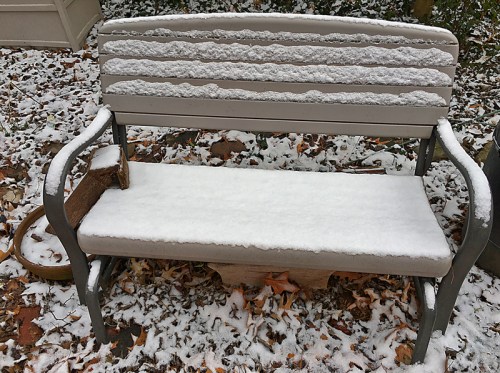
First snow

First snow

First snow came to visit today. /
Did you come from far away? /
Drifting softly from gray clouds, /
Landing where the cold allowed. /
You came to rest upon my glider. /
Was that your plan, your desire? /
How long do you think you will stay? /
Can I touch you, use you like clay? /
Mold a snowball or a snowman, /
I’m not sure yet what is my plan. /
Will more snow be coming soon? /
Falling by the light of the moon. /
Drifting down and all around, /
Landing without making a sound. /
Yes, first snow came today, /
But I know you will not stay. /
The sun too soon will replace the moon /
And sweep you away like a big, yellow broom.

Leave a comment

Filed under 2017, photo by David E. Booker, Photo Finish Friday, poetry by author

Haiku to you Thursday: “Remains”

Between what is said /

and what is done /

is that which remains.

Leave a comment

Filed under 2017, Haiku to You Thursday, poetry by author

Writing tip Wednesday: “New agent to consider”

New Literary Agent Alert: Shana Kelly of Einstein Literary

Source: http://www.writersdigest.com/editor-blogs/guide-to-literary-agents/new-literary-agent-alert-shana-kelly-einstien-literary

Shana Kelly

Shana Kelly

About Shana: Shana started her publishing career in the literary department of the William Morris Agency, where she worked for ten years. She began in foreign rights in the New York office and later worked out of the London office for two years. Shana was the signing agent for many successful authors, including New York Times bestseller Curtis Sittenfeld, author of PREP and ELIGIBLE. For the past eight years, Shana has worked as a freelance editor and publishing consultant.

She is seeking: Shana is looking for novels with great writing and surprising plots; her favorite books fall between commercial and literary. She has a soft spot for well written thrillers and psychological suspense.

How to submit: Please submit a query letter and the first ten double-spaced pages of your manuscript in the body of the e-mail (no attachments) to submissions@einsteinliterary.com Please put Shana’s name in the subject line of your e-mail.

Leave a comment

Filed under 2017, writing tip, Writing Tip Wednesday

cARtOONSdAY: “cASE lOGIC 22: oPEN aND sHUT”

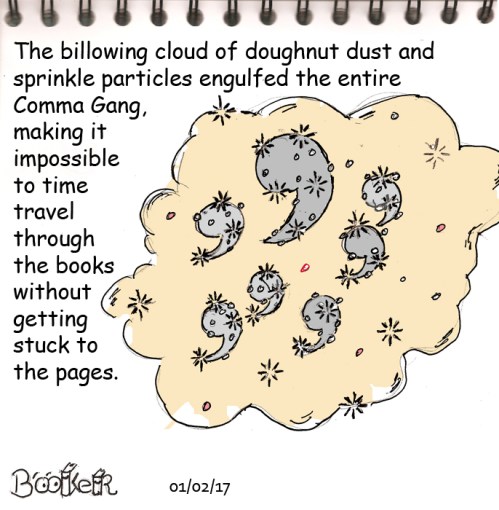
And causing the pages to stick shut. Period.

And causing the pages to stick shut. Period.

Leave a comment

Filed under 2017, cartoon by author, CarToonsday

Monday morning (writing) political joke: “Hot air”

A woman in a hot air balloon realized she was lost. She lowered her altitude and spotted a man in a boat below. She shouted to him:

“Excuse me, can you help me? I promised a friend I would meet him an hour ago, but I don’t know where I am.”

The man consulted his portable GPS and replied, “You’re in a hot air balloon, approximately 30 feet above ground elevation of 2,346 feet above sea level. You are at 31 degrees, 14.97 minutes north latitude and 100 degrees, 49.09 minutes west longitude.

She rolled her eyes and said, “You must be an Obama Democrat.

“I am,” replied the man. “How did you know?”

“Well,” answered the balloonist, “everything you told me is technically correct. But I have no idea what to do with your information, and I’m still lost. Frankly, you’ve not been much help to me.”

The man smiled and responded, “You must be a Republican.”

“I am,” replied the balloonist. “How did you know?”

“Well,” said the man, “you don’t know where you are — or where you are going. You’ve risen to where you are due to a large quantity of hot air. You made a promise you have no idea how to keep, and you expect me to solve your problem. You’re in exactly the same position you were in before we met, but somehow, now it’s my fault.”

Leave a comment

Filed under 2017, Monday morning writing joke, political humor, politics

Harry Potter vs. Huckleberry Finn: Why the British Tell Better Children’s Stories Than Americans – The Atlantic

Their history informs fantastical myths and legends, while American tales tend to focus on moral realism.

Source: Harry Potter vs. Huckleberry Finn: Why the British Tell Better Children’s Stories Than Americans – The Atlantic

[Editor’s note: I found this an interesting article. I don’t agree with every assertion or conclusion in it, but thought it was worth passing along. You decide.]

By Colleen Gillard

If Harry Potter and Huckleberry Finn were each to represent British versus American children’s literature, a curious dynamic would emerge: In a literary duel for the hearts and minds of children, one is a wizard-in-training at a boarding school in the Scottish Highlands, while the other is a barefoot boy drifting down the Mississippi, beset by con artists, slave hunters, and thieves. One defeats evil with a wand, the other takes to a raft to right a social wrong. Both orphans took over the world of English-language children’s literature, but their stories unfold in noticeably different ways.

The small island of Great Britain is an undisputed powerhouse of children’s bestsellers: The Wind in the Willows, Alice in Wonderland, Winnie-the-Pooh, Peter Pan, The Hobbit, James and the Giant Peach, Harry Potter, and The Lion, the Witch, and the Wardrobe. Significantly, all are fantasies. Meanwhile, the United States, also a major player in the field of children’s classics, deals much less in magic. Stories like Little House in the Big Woods, The Call of the Wild, Charlotte’s Web, The Yearling, Little Women, and The Adventures of Tom Sawyer are more notable for their realistic portraits of day-to-day life in the towns and farmlands on the growing frontier. If British children gathered in the glow of the kitchen hearth to hear stories about magic swords and talking bears, American children sat at their mother’s knee listening to tales larded with moral messages about a world where life was hard, obedience emphasized, and Christian morality valued. Each style has its virtues, but the British approach undoubtedly yields the kinds of stories that appeal to the furthest reaches of children’s imagination.

It all goes back to each country’s distinct cultural heritage. For one, the British have always been in touch with their pagan folklore, says Maria Tatar, a Harvard professor of children’s literature and folklore. After all, the country’s very origin story is about a young king tutored by a wizard. Legends have always been embraced as history, from Merlin to Macbeth. “Even as Brits were digging into these enchanted worlds, Americans, much more pragmatic, always viewed their soil as something to exploit,” says Tatar. Americans are defined by a Protestant work ethic that can still be heard in stories like Pollyanna or The Little Engine That Could.

Americans write fantasies too, but nothing like the British, says Jerry Griswold, a San Diego State University emeritus professor of children’s literature. “American stories are rooted in realism; even our fantasies are rooted in realism,” he said, pointing to Dorothy who unmasks the great and powerful Wizard of Oz as a charlatan.

American fantasies differ in another way: They usually end with a moral lesson learned—such as, surprisingly, in the zany works by Dr. Seuss who has Horton the elephant intoning: “A person’s a person no matter how small,” and, “I meant what I said, and I said what I meant. An elephant’s faithful one hundred percent.” Even The Cat in the Hat restores order from chaos just before mother gets home. In Oz, Dorothy’s Technicolor quest ends with the realization: “There’s no place like home.” And Max in Where the Wild Things Are atones for the “wild rumpus” of his temper tantrum by calming down and sailing home.

Landscape matters: Britain’s antique countryside, strewn with moldering castles and cozy farms, lends itself to fairy-tale invention. As Tatar puts it, the British are tuned in to the charm of their pastoral fields: “Think about Beatrix Potter talking to bunnies in the hedgerows, or A.A. Milne’s Winnie-the-Pooh wandering the Hundred Acre Wood.” Not for nothing, J.K. Rowling set Harry Potter’s Hogwarts School of Witchcraft and Wizardry in the spooky wilds of the Scottish Highlands. Lewis Carroll drew on the ancient stonewalled gardens, sleepy rivers, and hidden hallways of Oxford University to breathe life into the whimsical prose of Alice in Wonderland.

America’s mighty vistas, by contrast, are less cozy, less human-scaled, and less haunted. The characters that populate its purple mountain majesties and fruited plains are decidedly real: There’s the burro Brighty of the Grand Canyon, the Boston cop who stops traffic in Make Way for Ducklings, and the mail-order bride in Sarah, Plain and Tall who brings love to lonely children on a Midwestern farm. No dragons, wands, or Mary Poppins umbrellas here.

Popular storytelling in the New World instead tended to celebrate in words and song the larger-than-life exploits of ordinary men and women.

Britain’s pagan religions and the stories that form their liturgy never really disappeared, the literature professor Meg Bateman told me in an interview on the Isle of Skye in the Scottish Highlands. Pagan Britain, Scotland in particular, survived the march of Christianity far longer than the rest of Europe. Monotheism had a harder time making inroads into Great Britain despite how quickly it swept away the continent’s nature religions, says Bateman, whose entire curriculum is taught in Gaelic. Isolated behind Hadrian’s Wall—built by the Romans to stem raids by the Northern barbarian hordes—Scotland endured as a place where pagan beliefs persisted; beliefs brewed from the religious cauldron of folklore donated by successive invasions of Picts, Celts, Romans, Anglo-Saxons, and Vikings.

Even well into the 19th and even 20th centuries, many believed they could be whisked away to a parallel universe. Shape shifters have long haunted the castles of clans claiming seals and bears as ancestors. “Gaelic culture teaches we needn’t fear the dark side,” Bateman says. Death is neither “a portal to heaven nor hell, but instead a continued life on earth where spirits are released to shadow the living.” A tear in this fabric is all it takes for a story to begin. Think Harry Potter, The Chronicles of Narnia, The Dark Is Rising, Peter Pan, The Golden Compass—all of which feature parallel worlds.

These were beliefs the Puritans firmly rejected as they fled Great Britain and religious persecution for the New World’s rocky shores. America is peculiar in its lack of indigenous folklore, Harvard’s Tatar says. Though African slaves brought folktales to Southern plantations, and Native Americans had a long tradition of mythology, little remains today of these rich worlds other than in small collections of Native American stories or the devalued vernacular of Uncle Remus, Uncle Tom, and the slave Jim in Huckleberry Finn.

Popular storytelling in the New World instead tended to celebrate in words and song the larger-than-life exploits of ordinary men and women: Daniel Boone, Davy Crockett, Calamity Jane, even a mule named Sal on the Erie Canal. Out of bragging contests in logging and mining camps came even greater exaggerations—Tall Tales—about the giant lumberjack Paul Bunyan, the twister-riding cowboy Pecos Bill, and that steel-driving man John Henry, who, born a slave, died with a hammer in his hand. All of these characters embodied the American promise: They earned their fame.

British children may read about royal destiny discovered when a young King Arthur pulls a sword from a stone. But immigrants to America who came to escape such unearned birthrights are much more interested in challenges to aristocracy, says Griswold. He points to Mark Twain’s The Prince and the Pauper, which reveals the two boys to be interchangeable: “We question castles here.”

In Scotland, Bateman in turn suggests the difference between the countries may be that Americans “lack the kind of ironic humor needed for questioning the reliability of reality”—very different from the wry, self-deprecating humor of the British. Which means American tales can come off a bit “preachy” to British ears. The award-winning Maurice Sendak-illustrated book of etiquette: What Do You Say, Dear? comes to mind. Even Little Women is described by Bateman as something of a Protestant “parable about doing your best in trying circumstances.”

Maybe a world not fixated on atonement and moral imperatives is more conducive to a rousing tale. In Edinburgh—an old town like Rome built on seven hills, where dark alleys drop from cobbled streets, dive under stone buildings, and descend crooked stairs to make their way to the sea—8-year-old Caleb Sansom is one kid who thinks so. Digging with his mum through the stacks of the downtown library, he said he likes stories with “naughty animals, doing people things.” Like Mr. Toad in The Wind in the Willows “who drives fast, gets in accidents, sings, and goes to jail.” As for American books such as The Little House in the Big Woods: “There’s a bit too much following the rules. ‘Do this. Stop doing that.’ Can get boring.”

Pagan folktales are less about morality and more about characters like the trickster who triumphs through wit and skill: Bilbo Baggins outwits Gollum with a guessing game; the mouse in The Gruffalo avoids being eaten by tricking a hungry owl and fox. Griswold calls tricksters the “Lords of Misrule” who appeal to a child’s natural desire to subvert authority and celebrate naughtiness: “Children embrace a logic more pagan than adult.” And yet Bateman says in pagan myth it’s the young who possess the qualities needed to confront evil. Further, each side has opposing views of naughtiness and children: Pagan babies are born innocent; Christian children are born in sin and need correcting. Like Jody in The Yearling who, forced to kill his pet deer, must understand life’s hard choices before he can forgive his mother and shoulder the responsibility of manhood.

It turns out that fantasy—the established domain of British children’s literature—is critical to childhood development.

Ever since Bruno Bettelheim wrote The Uses of Enchantment about the psychological meaning of fairy tales, child psychologists have looked at storytelling as an important tool children use to work through their anxieties about the adult world. Fairy-tale fantasies are now regarded as almost literal depictions of childhood fears about abandonment, powerlessness, and death.

Most successful children’s books address these common fears through visiting and revisiting the same emotional themes, says Griswold. In his book, Feeling Like a Kid: Childhood and Children’s Literature, he identifies five basic story mechanisms children find particularly compelling—snug spaces, small worlds, scary villains, lightness or flying, as well as animated toys and talking animals—all part of the serious business of make-believe.

“Kids think through their problems by creating fantasy worlds in ways adults don’t,” Griswold says. “Within these parallel universes, things can be solved, shaped and understood.” Just as children learn best through hands-on activities, they tend to process their feelings through metaphorical reenactments. “Stories,” Griswold noted, “serve a purpose beyond pleasure, a purpose encoded in analogies. Story arcs, like dreams, have an almost biological function.”

It turns out that fantasy—the established domain of British children’s literature—is critical to childhood development. With faeries as voices from the earth, from beyond human history, with a different take on the meaning of life and way of understanding death, Bateman says there’s wisdom in recognizing nature as a greater life force. “Pagan folklore keeps us humble by reminding us we are temporary guests on earth—a true parable for our time.”

Today there may be more reason than ever to find solace in fantasy. With post-9/11 terrorism fears and concern about a warming planet, Griswold says American authors are turning increasingly to fantasy of a darker kind—the dystopian fiction of The Hunger Games, The Giver, Divergent, and The Maze Runner. Like the collapse of the Twin Towers, these are sad and disturbing stories of post-apocalyptic worlds falling apart, of brains implanted with computer chips that reflect anxiety about the intrusion of a consumer society aided by social media. This is a future where hope is qualified, and whose deserted worlds are flat and impoverished. But maybe there’s purpose. If children use fairy tales to process their fears, such dystopian fantasies (and their heroes and heroines) may model the hope kids need today to address the scale of the problems ahead.

Source: http://www.theatlantic.com/entertainment/archive/2016/01/why-the-british-tell-better-childrens-stories/422859/

Leave a comment

Filed under 2017, books

The 27 Best Books on Writing

Writing is hard, and defining yourself as a writer can be even harder. Here’s our exhaustive list of the best books on writing when the blank page beckons.

Source: The 27 Best Books on Writing

Writing is, as a general rule, hard. Defining yourself as a writer can be even harder. Sure, there are other difficult practices like law and medicine out there, but a person becomes a lawyer or a doctor when he or she passes a series of exams and graduates from a certain school. Writing doesn’t always work that way. There aren’t tests to study for and facts to memorize. Where are we supposed to learn how to write?

From grammar rules to publishing advice to personal narratives, these books on writing reveal in intimate detail the ins and outs of what it means to call yourself a writer. Sometimes harsh, sometimes funny, but always honest, they can be thought of as a kind of syllabus for writing. Whether you’re an aspiring artist working on your first drafts or a seasoned veteran in the publishing world, these are some of the best books on writing with insight and wisdom that can support you at all stages of your writing process.

Books listed include:

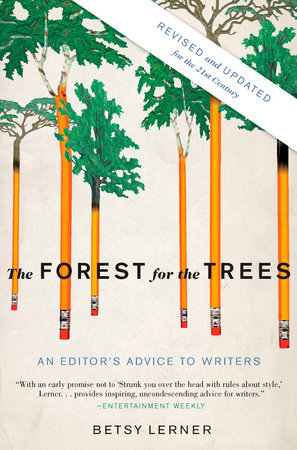
The Forest for the Trees (Revised and Updated)
An Editor’s Advice to Writers

by Betsy Lerner

For both established and prospective authors alike, the publishing house can seem like a jungle. Luckily, Betsy Lerner is here to lead a safari, citing her vast collection of experiences as an editor as her field guide. The Forest for the Trees motivates writers by helping them get over their fear of the unknown. It’s less about taming the wilderness and more about facing the demons of self-doubt and sloth that live in every person’s own mind.

***

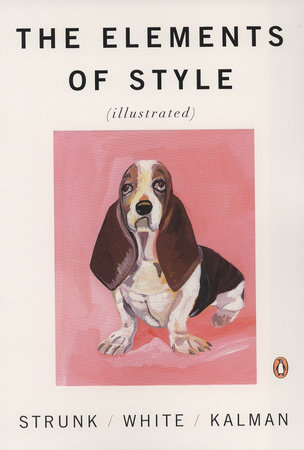
The Elements of Style Illustrated

by Strunk, White, Kalman

William Strunk and E.B. White’s The Elements of Style is so widely known that we’re sure you already have a copy, but of course we had to mention it. The only style guide to ever appear on a bestseller list, this book should be your go-to if your writing is in need of an infusion of clarity. Plus, this particular edition is illustrated by Maira Kalman, adding a visual element of style to the classic.

***

Story Engineering

by Larry Brooks

Larry Books turns a technical eye to the writing process in Story Engineering. If you don’t properly plan out your story prior to setting pen to paper, he argues, your storytelling won’t be as effective as you’d like it to be. To remedy this, he takes readers through six core elements of storytelling: concept, character, theme, story structure, scene construction, and voice.

***

Naked, Drunk, and Writing
Shed Your Inhibitions and Craft a Compelling Memoir or Personal Essay

by Adair Lara

Adair Lara’s Naked, Drunk, and Writing is a must-read for any memoirist or personal essayist. With experience as a teacher, editor, and, of course, writer, Lara’s know-how will help readers through problems like how to face your family after they’ve read your work and how to find an agent who will fight for you. The perfect mix of tough love, comic relief, and passion, Lara’s book is invaluable for anyone who needs a little help telling their story.

***

How to Write a Damn Good Novel

by James N. Frey

James N. Frey’s overarching guide will be of use to both the novice and the seasoned, published writer. He provides advice for how to overcome writer’s block and fear of the blank page, how to turn a critical eye to your own writing, and more. Frey’s book is one to keep within arm’s reach while writing, to grab during those moments when you need to take a step back from your work and get back to basics.

***

On Moral Fiction

by John Gardner

Morality and art have a complicated relationship, but John Gardner faces it fearlessly in this book-length essay. By Gardner’s way of thinking, all real art is moral, but morality doesn’t necessarily have to do with codes of conduct and submission to a Higher Power; it is the ability of art to point to some human value. The harsh lines he draws to distinguish “art” from “not art,” may frustrate some, but even in that case, this book’s ideas stick in the reader’s head.

***

On Writing

by Stephen King

If you’ve ever read a book by renowned American horror novelist Stephen King, you’ve probably wondered just how he comes up with his ideas. For the answer, look no further than On Writing, King’s memoir where he describes his writing process, including anecdotes about how he started some of his most iconic stories. In addition to recounting his personal experiences, he dedicates a whole chapter to grammar and offers his advice on form. It’s a great read for anyone in need of inspiration, and how better to make you pay attention than Mr. King?

***

The Writer’s Journey

by Christopher Vogler

Movie lovers will appreciate this book from Christopher Vogler. He exemplifies his writing tips with movies, a practice that makes this instructional especially helpful for screenwriters. Having received praise from writers and directors such as Darren Aronofsky (Black Swan) and Bruce Joel Rubin (Ghost), The Writer’s Journey can boast its status as an essential to anyone looking to write the next Oscar nominated film. It’s also an excellent field guide for a novelist stuck in a plot maze and desperate to get out.

***

A Poetry Handbook

by Mary Oliver

Imagine if you could get help with the very basics of writing poetry from a Pulitzer Prize-winning poet? Fact is, you can via Mary Oliver’s book A Poetry Handbook. The handbook is written in a way that makes it a perfect resource for both teens and adults as they start on their poetry journey – and is a useful refresher for veteran poets as well.

***

For the full list, with brief descriptions and links to buy them, go to http://www.signature-reads.com/2016/10/the-27-best-books-on-writing/?ref=PRH6E5971A08F&aid=randohouseinc31159-20&linkid=PRH6E5971A08F

Leave a comment

Filed under 2016, advice

Photo finish Friday: “Bone up”

A bone to pick.

A bone to pick.

Some people said their hearts weren’t in this Christmas season. Other said they could not stomach all the commercialism. Maybe what they really meant was they didn’t have the backbone necessary to deal with bickering relatives and pushy strangers. Maybe what they actually needed was a vertebrae or two or three under their Christmas trees.

Leave a comment

Filed under 2016, photo by David E. Booker, Photo Finish Friday

Haiku to you Thursday: “Winter kindness”

Winter’s kindness /

begets Spring’s regret and leaves /

darkness for my love.

Leave a comment

Filed under 2016, Haiku to You Thursday, poetry by author