

At least the commas and periods were in their right places.
At least the commas and periods were in their right places.
Filed under 2017, cartoon by author, CarToonsday
 An unranked, incomplete, utterly biased list of the greatest works of literature ever published. How many have you read?
Source: 80 Best Books of All Time – The Greatest Books Ever Written
Some of the books on the list:
What We Talk About When We Talk About Love, by Raymond Carver
Collected Stories of John Cheever
Deliverance, by James Dickey
The Grapes of Wrath, by John Steinbeck
Blood Meridian, by Cormac McCarthy
The Brothers Karamazov, by Fyodor Dostoevsky
The Known World, by Edward P. Jones
The Good War, by Studs Terkel
American Pastoral, by Philip Roth
One of the few not about Roth. It’s about that guy you idolized in high school. And gloves. And you.
A Good Man Is Hard to Find and Other Stories, by Flannery O’Connor
“She would of been a good woman… if it had been somebody there to shoot her every minute of her life.” Wouldn’t we all.
The Things They Carried, by Tim O’Brien.
No one else has written so beautifully about human remains hanging from tree branches.
A Sport and a Pastime, by James Salter
Remember your college buddy’s girlfriend, the one you were in love with? Because of her.
The Call of the Wild, by Jack London
A book about dogs is equally a book about men.
Time’s Arrow, by Martin Amis
You’ve never seen the Holocaust from this angle and with this much ferocity. Backwards.
A Sense of Where You Are, by John McPhee
It’s about how two men can be made better just by sharing each other’s company.
Hell’s Angels, by Hunter S. Thompson
Because it’s his first book, and because he got his ass kicked for it, and because in the book and the beating were the seeds of all that came after, including the bullet in the head.
Invisible Man, by Ralph Ellison
Born in an epic fist-fight or forgotten in the sewers, no character is as clearly heard as the man who is never really seen by the world around him.
Dubliners, by James Joyce
Plain and simple: “The Dead”
Rabbit, Run, by John Updike
Because it’s one of the few not about Updike. It’s about that guy you idolized in high school. And kitchen gadgets. And you.
The Postman Always Rings Twice, by James M. Cain
Teaches men about women. Also, there’s not a single postman in the book.
Dog Soldiers, by Robert Stone
Begins in Saigon, ends in Death Valley. Somewhere in between you realize that profit is second only to survival.
Winter’s Bone, by Daniel Woodrell
The best book by a modern-day Twain, high on meth, drousy with whiskey.
Legends of the Fall, by Jim Harrison
Because of revenge. Because Harrison is as masculine and raw and unrelenting as they come.
Under the Volcano, by Malcolm Lowry
A terrifying riderless horse, mescaline, and this line: “Somebody threw a dead dog after him down the ravine.”
The Naked and the Dead, by Norman Mailer
His first book turned out to be his best book. The skulls of young men at war.
The Professional, by W.C. Heinz
It’s about fighting, but it’s also about watching and listening, and it’s about patience, and honing, and craft, and sparseness, and beauty, and crushing, awful defeat.
For Whom the Bell Tolls, by Ernest Hemingway
A lesson in manhood: Even when you’re damned, you press on.
Dispatches, by Michael Herr
“Vietnam Vietnam Vietnam, we’ve all been there.” You’ll never forget that line. You won’t forget what precedes it, either.
Tropic of Cancer, by Henry Miller.
Dirty, grotesque. Beautiful.
Revolutionary Road, by Richard Yates
The thousands of little compromises we make every day that eventually add up to the loss of ourselves.
As I Lay Dying, by William Faulkner
Because the man’s cold brilliance enabled him to make the line “My mother is a fish,” into a chapter in itself.
The Killer Angels, by Michael Shaara
Because the Battle of Gettysburg took place in that blue-gray area between black and white.
Slaughterhouse-Five, by Kurt Vonnegut
A mad hatter of an antiwar novel that understands how a smile, shaped like a sickle, can cut deeply. So it goes.
All the King’s Men, by Robert Penn Warren
Crooked judges, concealed paternity, deception, betrayal, and lots of whiskey.
One Flew Over the Cuckoo’s Nest, by Ken Kesey
Because sometimes you have to go crazy to stay sane.
Source: 6 Famous Authors With Shocking Beliefs | Inverse
When we fall in love with a novel, we sometimes believe we come to know its author just by reading the book. From reading the Harry Potter novels one can easily conclude that its author — J.K. Rowling — is intolerant of oppression, politically progressive, a strong believer in diversity, and most certainly, British. All of these things about Rowling are overwhelmingly true, though if we found out she hated children, we’d probably be totally scandalized. (She doesn’t, thankfully).
Similarly, if you read Robert A. Heinlein’s Stranger in a Strange Land you might erroneously assume the author was a free-love hippie, when in fact, Heinlein’s libertarian and conservative views couldn’t be further from the tone of that particular novel. With Robert Heinlein and Stranger in a Strange Land, it’s almost as if the novel’s free-love protagonist offers a mirror image to the novelist — it’s Dr. Jekyll to a Mr. Hyde, say — something that is true of other writers on this list. Here are six super-famous writers with beliefs that are either inversions of their literary reputations, or just straight-up fascinating.
Philip K. Dick Thought He Was a Robot and, Also, the Spirit of Elijah

Okay, so this one isn’t too shocking. In addition to believing he was contacted by intelligences from beyond, the prolific and visionary sci-fi writer Philip K. Dick also toyed with the idea that he may, in fact, have been a robot. While the events of many of his novels (notably Do Androids Dream of Electric Sheep?) certainly check with this passing fancy of Dick’s, he also flirted with the idea that he was possessed by the spirit of the biblical prophet Elijah. So, next time you’re at a Seder, ask if you can leave something out for Philip K. Dick and see if anyone gets it.
Sir Arthur Conan Doyle Believed in Fairies

In Conan Doyle’s short story “The Adventure of the Sussex Vampire” the protagonist — the great Sherlock Holmes — says, “This Agency stands flat-footed upon the ground and there it must remain. The world is big enough for us. No ghost need apply.” Throughout the 56 short stories and four novels chronicling the adventures of Sherlock Holmes, never once does the stoic detective flirt with a belief in the supernatural or paranormal. And yet, late in his life, the creator of the uber-rational Sherlock Holmes, Sir Arthur Conan Doyle himself, asserted frequently that he had seen fairies and other supernatural creatures. Perhaps when Conan Doyle attempted to kill off Sherlock Holmes, he was attempting to destroy his rational side to have more fun with fairy thoughts. Either that, or fairies are totally real.
Anne Rice Found God

The author of Interview With the Vampire briefly became extremely pious, and even authored Christian texts (including her novel Christ the Lord: Out of Egypt). While the steamy and grotesque nature of her vampire books seems to be in stark opposition to traditional Christianity, as of 2010, Anne Rice maintains that she is still “committed to Christ.” But to be clear, Rice did officially leave the Catholic Church because she felt that being a “Christian,” was “quarrelsome” and “hostile.” It’s unclear if there are any parallels between her feelings about quarrelsome religious folks and the frequently quarrelsome vampire, Lestat.
James Joyce Thought Radio Controlled the Weather

In Sylvia Beach’s excellent memoir, Shakespeare and Company, the publisher and proprietor of the famous Parisian bookstore recounts her fascinating dealings with the late author of Ulysses, James Joyce. One interesting tidbit was Joyce’s growing impatience with the rise of radios in culture. Specifically, Joyce thought there was obviously some kind of correlation between the surge of radios use and rainstorms in France. Climate change deniers, take that! Or actually, don’t. Let James Joyce have it.
Hemingway Wanted to Work for the KGB?
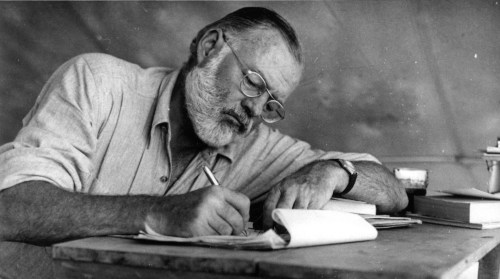
While this one is disputed, there is some indication that Ernest Hemingway was recruited by the KGB in 1941 and that he was a secret agent named “Argo.” The only problem is that apparently Hemingway was really bad at being a double agent — assuming he really wanted to be one — as he never really supplied the KGB with any good intelligence. While we tend to think of Hemingway as an American man of his time (as he’s portrayed in Midnight in Paris), his real-life political leanings were certainly all over the place. While it might be surprising that Hemingway had communist beliefs in the ‘40s, it’s not totally implausible.
Stephen King Hates Adverbs

Stephen King may be the undisputed master of horror, but there’s only one thing truly fears: adverbs. King maintains that adverbs were created with “the timid writer in mind.” He may be an extremely creative guy, but I don’t want to even think about how many grotesque and sickening adverbs I’ve overzealously employed to get my points across throughout the years.
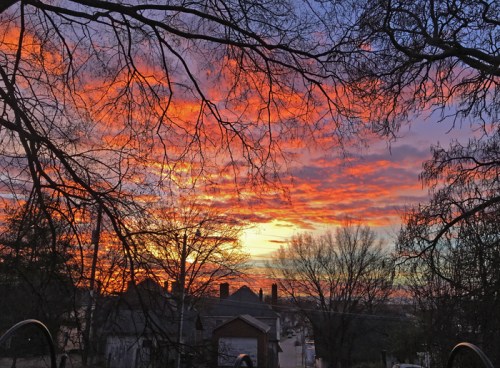
Morning in the neighborhood.
Filed under 2017, photo by David E. Booker, Photo Finish Friday

Waiting
Reaching for the stars /
he found a half moon waiting /
at the bare limb’s edge.
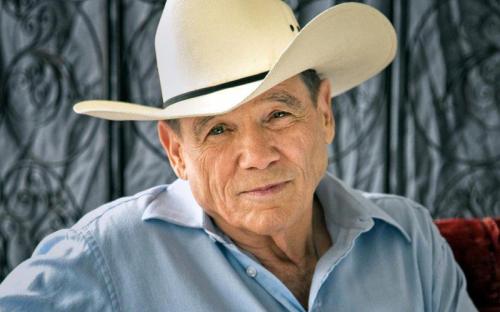 The heavyweight champ returns to conclude his trilogy. Book review by Liz Thomson
Source: James Lee Burke – The Jealous Kind review
In the heat of a Texas summer, Aaron Holland Broussard comes of age. It’s 1952: the two world wars still cast their long shadows and, far away, the Americans are fighting the Russians in a proxy war around the 38th Parallel.
Aaron’s a good guy, an only child in a dysfunctional household – father a drinker, probably suffering what today we’d call post-traumatic stress disorder having gone over the top in the Great War, mother who’s been through the mill with all the grim treatments thrown at depressives back then. Aaron looks after his animals and plays his old Gibson, trying all the while to beat back the fear and anxiety with which he awakens daily. On a Galveston beach following the swim of his young life, he spots Valerie Epstein, beautiful and (as it turns out) brainy, arguing with handsome low-life Grady Harrelson in his pink Cadillac convertible, and falls “joyously, sick-down-in-your-soul in love”. In the blink of an eye as Valerie throws back Grady’s graduation ring and walks away, “like Helen of Troy turning her back on Attica”, Aaron has made himself a whole legion of enemies all of whom he is determined to vanquish in defence of his beloved.
Saber, a kid from the wrong side of the tracks, is Aaron’s best friend from school, a fearless prankster for whom nothing is too much trouble. Soon both boys are embroiled not just with teenage hoodlums but with mobsters, drug dealers and corrupt cops, guns-for-hire who’ll stop at nothing to make their point.
The Jealous Kind concludes the trilogy that began with Wayfaring Stranger and House of the Rising Sun, a story which draws on Burke’s maternal family lore. The author himself was born in Houston and spent his childhood on the Gulf Coast. His daddy worked on “the pipeline” in the days when, if you had a job, you were as they say “in tall cotton” and the American dream was opportunity not fantasy. Burke was born in 1936, so in ’52 he’d have been Aaron’s age. Like the young James, who wrote his first novel in an effort to pay off his college bills, Aaron too is a would-be writer, and like him plays the guitar.
Souped-up old cars, drive-ins and juke joints are the backdrop to a story that’s set in the still-segregated south, blacks and Mexicans outcasts in a society of Mob rule, with torture and beatings, arson and shootings – rough justice casually meted out by those whose machismo has been trampled. His experience in the trenches have made Aaron’s father, an amateur historian, fiercely anti-violence and he expects his only son to be a good guy. The two attend mass together and, like his dad, Aaron holds firm to the Catholic rite and the sanctity of the confessional.
Like all Burke’s books – including the score of novels featuring New Orleans cop Dave Robicheaux – The Jealous Kind is the story of a struggle between good and evil, the rich and the righteous. Fiction, Burke believes, must have a moral line or risk being inconsequential. His characters always indicate that violence is a defeat and if it is committed it is in defence of another. Like so many of Burke’s characters, including Robicheaux, Aaron is essentially the Good Knight, a young man on a pilgrimage toward redemption.
Michael Connelly has called James Lee Burke “the heavy-weight champ” while for Stephen King he’s a “gorgeous prose stylist”. He is both of those things and more, his writing richly expressive and his ear pitch-perfect for the jive talk of the punks and pachucos and the white trash who people his novels. Passing references speak volumes: Grady’s father is reading “a collection of essays by Harry H Laughlin”, America’s leading eugenicist, while Aaron reflects: “The great gift of the government to our generation was the WPA program known simply as the bookmobile. Those of us who loved books didn’t learn to love them at school; we learned a love of literature by reading the adventures of Nancy Drew and the Hardy Boys and Richard Halliburton.”
That’s Burke speaking for sure, the old-fashioned left-wing Catholic who believes that Jesus was a radical egalitarian. Donald Trump will be grist to his literary mill.
Filed under 2017, book review
Paula Munier of Talcott Notch Literary
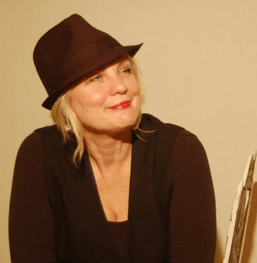 Paula Munier (Talcott Notch Literary)
Notes: “High concept only.”
How to submit: E-query editorial [at] talcottnotch.net with “Query for Paula: [title]” in the subject line.
From their query page http://www.talcottnotch.net/index.php/queries:
What should an ideal query include?
Fiction
Your fiction query should include your genre, such as mystery, science fiction or mainstream, whether the project is for adults or for children, and the length of the complete project in number of words (for example, 86,000 words), not pages. The query should give us a brief overview of the book’s plot and main characters, but does not have to include a complete synopsis. For first-time authors, we do prefer that the project be complete before you query us.
Nonfiction
Your nonfiction query should include your subject area, such as history, biography or business, the main concept of the book, the word count you project the book will be when completed, and your credentials to write the work. Unlike many first novels, many first nonfiction projects do not require that the book be finished before it can be marketed successfully, and we’ll be looking to see that the book proposal and a sample chapter is available here instead. Let us know how long you feel you will take to complete the book. Be realistic with your estimations. It doesn’t matter if you give us an estimate that sounds good if you cannot deliver the book on that date.
Things that Make a Query Stand Out
Hook us in your first paragraph. What’s the most outstanding aspect of your book? Is it your characters’ conflict? Is it your protagonist’s background? Is it the completely surprising revelation you uncovered in your research for your new health book? Don’t assume that you have your entire query to get to your point. If you don’t hook your reader with your opening, your query could get pushed aside.
Show you know your market. Nothing says you haven’t given this a thought better than saying your book is for readers 8-80. But if you say your book is YA and would appeal to readers of two specific writers (particularly if they simply aren’t the two best-known at the moment!) and can even list reasons why, then you’re getting warm.
Don’t forget your ten pages. We ask specifically for the first ten pages of the manuscript and without those, we have to make a decision based solely on the query. Perhaps your query letter isn’t your strongest point, and your voice in your manuscript is amazing? Don’t lose out on the chance to convince us! Just be sure to paste those into the body of the email rather than add them as an attachment.
Things to Avoid In a Query
Don’t stress the fact you are a new writer if you are. Stress your qualifications to write the project and your ability to promote it successfully.
Don’t suggest a book length that is simply not marketable. Research the publishers’ websites, author guidelines and new releases to know what they’re publishing right now.
Don’t quote nice things other people told you when they were turning down your query or book. It might seem like a good idea to tell us that Fabulous Editor X or Amazing Agent Y told you your writing was compelling or your characters were complex, but the next person reading this is going to wonder why that editor or agent didn’t sign the book. In fact, by giving us the quotes from rejections, you’re making the book less appealing, not more.
Avoid insisting the book is going to be a bestseller, even if you feel certain it will be! Let your story and your writing speak for itself.
Filed under 2017, writing tip, Writing Tip Wednesday
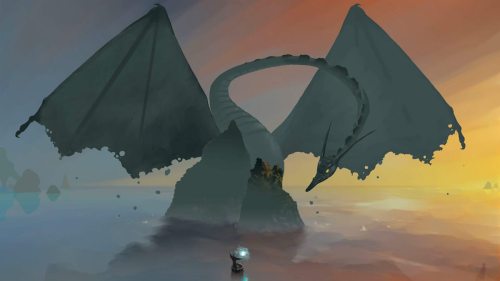 A tale of wizards, dragons and magic by Ursula Le Guin.

Sadly, he found they wouldn’t even refill his doughnut bag.
Filed under 2017, cartoon by author, CarToonsday
Two writers who didn’t like each other met in a bar, as such writers often do. Each claimed it was his favorite bar and each claimed he had found it first. After several months of glowering at each other and bad mouthing each other, they agree to settle the matter with a duel of puns.
Since the short writer won the sixth round (by reason of plagiarism by the tall writer), the tall writer was allowed to go first for round six. A set of cards was placed on the table between them, face down. On each card was a subject. The short writer flipped the card over and the subject was math.
Props were allowed, and for each turn, each writer could make one phone call.
For round seven, the rules of round six were kept in place. For round six and five, the rules had been amended. Each writer had to say his pun and the audience would get to pick which one they preferred. The bartender, a waiter, and a waitress would be the judges as to who got the loudest groan.
After thinking a moment, the tall writer said, “All lives mater.”
This immediately drew a moan from the crowd, and not a kind one.
“Until you multiply yourselves times the speed of light squared. Then you be energy.”
The groans turned to some chuckles and a few laughs.
The short writer waited until things were quiet, then he said, “Two knights walked into a room where there was a round table. The young knight turns to the older one and asks, ‘Who built this fine table?’ The older knight replies, ‘Sir Cumference.’”
The crowd groaned, twice, and somebody laughed.
Round seven was about to go to the short writer. The short writer now had 3 wins, 2 losses, and 2 ties.” The tall writer also had 2 wins, 3 losses, and 2 ties.
Filed under 2017, Monday morning writing joke


 Booker's Blog