Category Archives: 2019

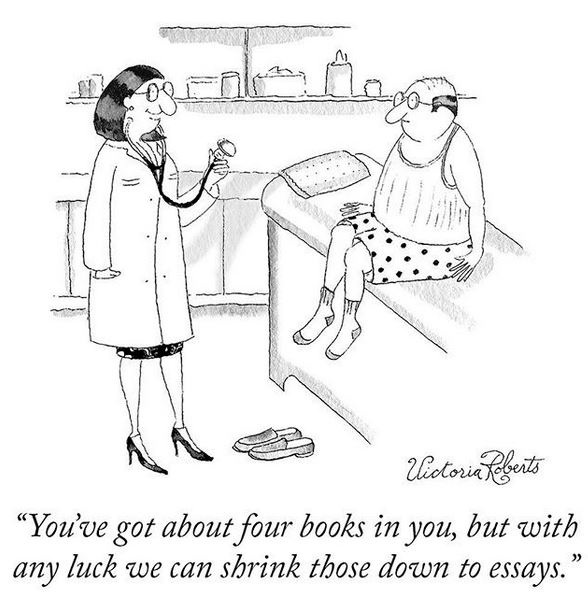
cARtOONSdAY: “mEDICAL eDITING”

"You've got about four books in you, but with any luck we can shrink those down to essays."

Leave a comment

March 5, 2019 · 2:33 am

Monday morning writing joke: “Writer Extraordinaire”

There once was a writer extraordinaire

For the less talented he did not care.

Then one day

His ghost writer gave him away

And credit with his mom he had to share.

Leave a comment

Filed under 2019, Monday morning writing joke, poetry by author

Photo finish (and poem) Friday: “Rain”

Rain and rising water
Photo courtesy of Chris Buice

As I sit out in the rain /

Pondering life all the same /

A pond appeared across the way /

Growing larger and larger throughout the day /

Until the time when night fell /

And I could not tell land from water very well. /

But as the sun rose, I will vouchsafe, /

It’s no fun being in a watery grave.

Leave a comment

Filed under 2019, Photo Finish Friday, poetry by author

Haiku to you Thursday: “Binding”

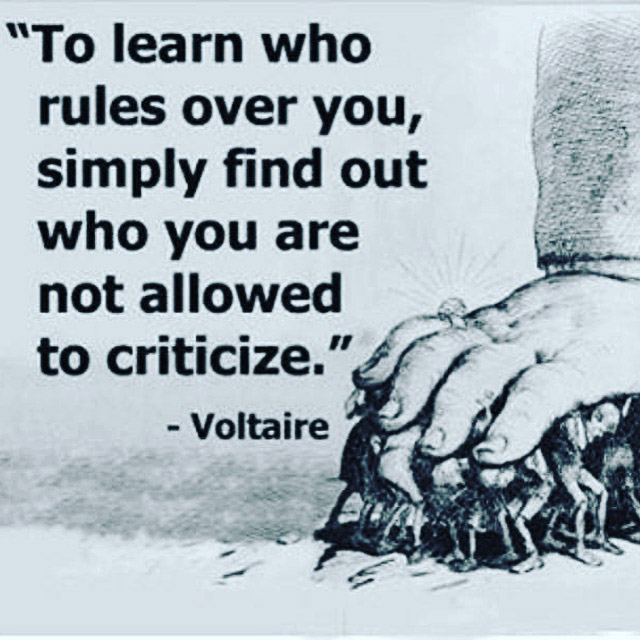
The oppressing hand /

Binds through fear and not respect /

Embraces your hate.

To learn who rules over you, simply find out who you are not allowed to criticize. --Voltaire

Leave a comment

Filed under 2019, Haiku to You Thursday, poetry by author

Replace These Words in Your Writing

Writing is hard, and weird, and in the scheme of human existence pretty new. We’ve been talking for maybe half a million years, writing for just about 5,000. So sometimes we write stuff that we’d never say aloud. We use a complicated or “smart-sounding” word when a simpler word would work better. New York Times editor Dan Saltzstein listed some great examples on Twitter. They pop up in news media, but also in “business speak.” If you’re trying to write effectively, watch out for these:

Source: Replace These Words in Your Writing

Twitter users suggested many more. (The > is a “greater than” sign, not an arrow. The words on the left are better.)

We’d like to add:

  • Name > dub
  • Turn > render
  • Big > massive
  • Maybe > perhaps

These aren’t rules, of course; they’re just suggestions, language is fluid, yadda yadda. Almost all the “lesser” words above have good uses. Save them for those uses. To leverage something is specifically to “use it to its maximum advantage.” Something sprawling is “spreading out over a large area in an untidy or irregular way.” Suits are bespoke, and medieval knights get slain. Okay, you’ve been waiting to add your own—go for it.

There was a problem providing access to protected content.(Error Code: 232403)

How to Make Taco Bell Salt

1/25/19 1:00PM

About the author

Nick Douglas

Staff Writer, Lifehacker | Nick has written for Gawker, the Awl, the Toast, the Daily Dot, Urlesque, and the web series “Jaywalk Cop.” He currently runs the horror-comedy podcast “Roommate From Hell.”

1 Comment

Filed under 2019, Writing Tip Wednesday

Enter an Archive of 6,000 Historical Children’s Books, All Digitized and Free to Read Online | Open Culture

We can learn much about how a historical period viewed the abilities of its children by studying its children’s literature.

Source: Enter an Archive of 6,000 Historical Children’s Books, All Digitized and Free to Read Online | Open Culture

Leave a comment

Filed under 2019, child, literature

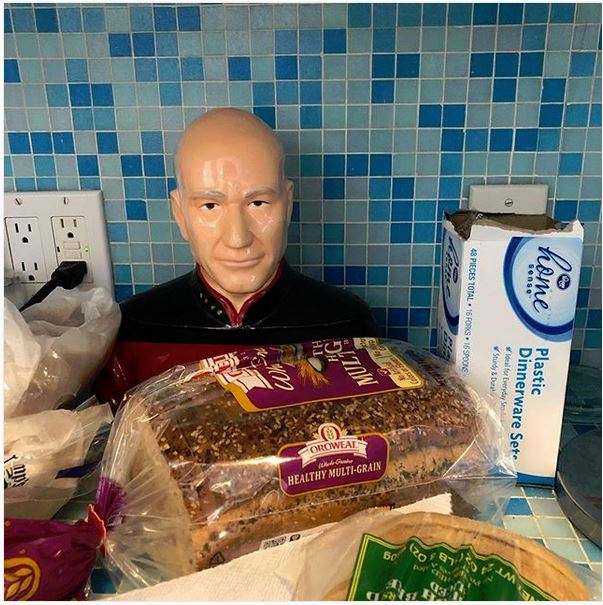
Star Trek: The Next Germination: “The multigrain sandwich and war”

Multigrain for Picard 

Made chewing very hard 

On the bridge to make it so. 

Because of that special dough 

When the Romulans did appear 

The sandwich would not clear

His throat so he could order

“Data, warp 8 to the boarder!”

Now, over 20 years have passed

And his days in Starfleet amassed

In history books where stories are told

Of his feats, both brave and bold.

But there is one footnote aside

About the one mission that was tried.

Enterprise and crew were almost lost

Until Number One grabbed and tossed

The multi-grain demon across the bridge

Striking Worf upon his ridge,

And then he slapped Picard on the back

Which caused the Captain to go “Hack-ack-ack.”

Worf thought that meant aim and fire

Photons and phaser banks entire.

When the weapons were all depleted 

And Picard was finally seated

Worf peeled the sandwich from his head

Took a bite and boldly said,

“Needs mustard.”

Photo used courtesy of Michael Chabon.

Leave a comment

Filed under 2019, poetry by author, Star Trek

Photo finish Friday (and haiku): “Exhausted”

The man on the bus /

Urges me to “Keep it up!” /

But he’s exhausted.

Leave a comment

Filed under 2019, Photo Finish Friday, poetry by author

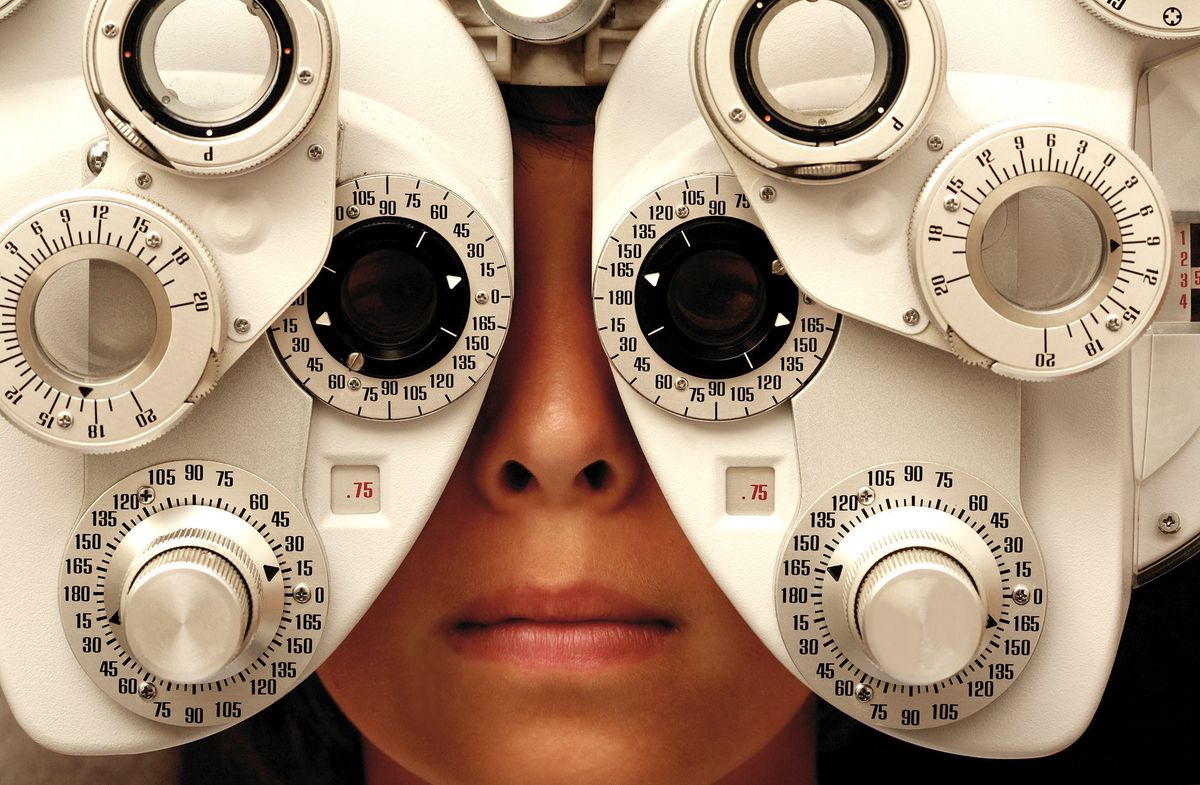
Why are glasses so expensive? The eyewear industry prefers to keep that blurry – Los Angeles Times

Eyewear is a near-monopolistic, $100-billion industry dominated by a single company. That’s why 1,000% markups for frames and lenses are commonplace. (Getty Images)

While not directly related to writing, most writers wind up wearing glasses or contacts, so they are a tool of the trade for most of us, and an expensive one.

Source: Why are glasses so expensive? The eyewear industry prefers to keep that blurry – Los Angeles Times

It’s a question I get asked frequently, most recently by a colleague who was shocked to find that his new pair of prescription eyeglasses cost about $800.

Why are these things so damn expensive?

The answer: Because no one is doing anything to prevent a near-monopolistic, $100-billion industry from shamelessly abusing its market power.

Prescription eyewear represents perhaps the single biggest mass-market consumer ripoff to be found.

The stats tell the whole story.

  • The Vision Council, an optical industry trade group, estimates that about three-quarters of U.S. adults use some sort of vision correction. About two-thirds of that number wear eyeglasses.
  • That’s roughly 126 million people, which represents some pretty significant economies of scale.
  • The average cost of a pair of frames is $231, according to VSP, the leading provider of employer eye care benefits.
  • The average cost of a pair of single-vision lenses is $112. Progressive, no-line lenses can run twice that amount.
  • The true cost of a pair of acetate frames — three pieces of plastic and some bits of metal — is as low as $10, according to some estimates. Check out the prices of Chinese designer knockoffs available online.
  • Lenses require precision work, but they are almost entirely made of plastic and almost all production is automated.

The bottom line: You’re paying a markup on glasses that would make a luxury car dealer blush, with retail costs from start to finish bearing no relation to reality.

Carmen Balber, executive director of Consumer Watchdog, a Santa Monica advocacy group, has worn glasses her entire life. She figures she’s spent thousands of dollars over the years on new frames and lenses.

“Anyone who wears glasses would agree that cost is out of control,” Balber told me.

She said soaring eyeglass costs should be a part of the country’s overall healthcare debate in light of the fact that many people simply couldn’t function without corrective lenses.

“At the very least,” Balber said, “there needs to be some transparency about how much things really cost.”

Good luck with that.

I reached out to the Vision Council for an industry perspective on pricing. The group describes itself as “a nonprofit organization serving as a global voice for eyewear and eyecare.”

But after receiving my email asking why glasses cost so much, Kelly Barry, a spokeswoman for the Vision Council, said the group “is unable to participate in this story at this time.”

I asked why. She said the Vision Council, a global voice for eyewear and eyecare, prefers to focus on “health and fashion trend messaging.”

And because it represents so many different manufacturers and brands, she said, it’s difficult for the association “to make any comments on pricing.”

Which is to say, don’t worry your pretty head.

What the Vision Council probably didn’t want to get into is the fact that for years a single company, Luxottica, has controlled much of the eyewear market. If you wear designer glasses, there’s a very good chance you’re wearing Luxottica frames.

Its owned and licensed brands include Armani, Brooks Brothers, Burberry, Chanel, Coach, DKNY, Dolce & Gabbana, Michael Kors, Oakley, Oliver Peoples, Persol, Polo Ralph Lauren, Ray-Ban, Tiffany, Valentino, Vogue and Versace.

Italy’s Luxottica also runs EyeMed Vision Care, LensCrafters, Pearle Vision, Sears Optical, Sunglass Hut and Target Optical.

Just pause to appreciate the lengthy shadow this one company casts over the vision care market. You go into a LensCrafters retail outlet, where the salesperson shows you Luxottica frames under various names, and then the company pays itself when you use your EyeMed insurance.

A very sweet deal.

And Luxottica is even bigger after merging last fall with France’s Essilor, the world’s leading maker of prescription eyeglass lenses and contact lenses. Do you have Transitions lenses in your frames? You’re an Essilor customer.

The combined entity is called EssilorLuxottica.

I reached out to the parent company as well as the Luxottica and Essilor subsidiaries asking about how frames and lenses are priced. None of them got back to me.

It’s almost as if the last thing they want is to have to explain why consumers are paying 10 to 20 times what frames and lenses actually cost.

I wasn’t able to make any headway even with Warby Parker, the New York-based eyewear company whose whole raison d’etre is to offer fashionable specs at a fraction of the price of other retailers.

Dr. Ranjeet Bajwa, president of the California Optometric Assn., suggested that consumers actually are getting good value for their money.

“We often see low-ball retailers promise price savings but fail to deliver the quality patients expect in terms of fit, comfort, durability and, of critical importance, precision in vision, over one or two years of daily wear,” he said.

“Eyeglass sales are becoming a very competitive market, with frames and lenses available in a range of prices and quality levels,” Bajwa said. “Today’s glasses aren’t the glasses of 20 years ago, and the price can reflect these technological advances.”

Fair enough. But with about 126 million American adults wearing prescription glasses, and many replacing those glasses every few years, you have to assume it doesn’t take long for frame and lens makers to recover any R&D costs.

It’s a dynamic that routinely plays itself out elsewhere in the healthcare field, with new prescription drugs costing patients a fortune as drugmakers insist that they had to spend millions bringing the med to market.

Yet prices of branded drugs seldom go down even years after their R&D costs have been amortized. To cite just one example, insulin costs have tripled in recent years, even as the number of people with diabetes continues to rise, allowing manufacturers to recoup expenses in a relatively short time.

The high cost of frames reflects a market that is woefully lacking in meaningful competition. Warby Parker recognized this as a business opportunity. I’m surprised others haven’t jumped in as well with reasonably priced eyewear.

Lenses are a whole other matter. This is the “healthcare” component of vision correction and as such should be affordable to all. However, as with prescription drugs, government officials are content to pretend that “the market” will protect patients.

It won’t. And the more than 1,000% markup for most vision products proves that.

Why do glasses cost so damn much?

Because this industry has been getting away with fleecing people for decades.

And you don’t have to look hard to see this won’t change any time soon.

Leave a comment

Filed under 2019

Poetry sales soar as political millennials search for clarity | Books | The Guardian

Record £12m sales last year were driven by younger readers, with experts saying hunger for nuance amid conflict and disaster were fuelling the boom

Source: Poetry sales soar as political millennials search for clarity | Books | The Guardian

A passion for politics, particularly among teenagers and young millennials, is fuelling a dramatic growth in the popularity of poetry, with sales of poetry books hitting an all-time high in 2018.

Statistics from UK book sales monitor Nielsen BookScan show that sales grew by just over 12% last year, for the second year in a row. In total, 1.3m volumes of poetry were sold in 2018, adding up to £12.3m in sales, a rise of £1.3m on 2017. Two-thirds of buyers were younger than 34 and 41% were aged 13 to 22, with teenage girls and young women identified as the biggest consumers last year.

Rupi Kaur, a 26-year-old Canadian poet with 3.4 million followers on Instagram, leads the bestsellers list and was responsible for almost £1m of sales. “You tell me to quiet down / cause my opinions make me less beautiful,” she writes in Milk and Honey, the No 1 bestselling collection of 2018, “but I was not made with a fire in my belly / so I could be put out.”

Works by Leonard Cohen, John Cooper Clarke, Seamus Heaney, Carol Ann Duffy and Homer also sold well.

Andre Breedt, for Nielsen, said that sales were booming because in times of political upheaval and uncertainty, people turn to poems to make sense of the world: “Poetry is resonating with people who are looking for understanding. It is a really good way to explore complex, difficult emotions and uncertainty.”

He added that the form’s brevity also meant it could be easily consumed on phones and shared on social media.

In the immediate aftermath of the Manchester bombing, Tony Walsh’s reading of his poem, This Is the Place, at Manchester town hall was shared thousands of times online and became instantly famous worldwide. Ben Okri’s poem Grenfell Tower, June, 2017, written in the aftermath of the fire, followed a similar trajectory.

“At these moments of national crisis, the words that spread and the words that were heard were not the words of politicians, they were the words of poets,” said Susannah Herbert, director of the Forward Arts Foundation, which runs the Forward prizes for poetry and National Poetry Day. “Almost everything a politician says is incredibly forgettable. There is a hunger out there for more nuanced and memorable forms of language.”

People wanted to cut through the verbiage of Brexit to see the bigger picture in 2018, she said: “Language gets stale in politics. Words begin to lose their meaning. Poetry occupies a different space to the humdrum. It is a way of renewing what words actually mean. It offers you a different way of looking at the world.”

A comparable boom in the popularity of poetry was seen during the miners’ strike in the 1980s and during the rise of Chartism in the 19th century, according to Katy Shaw, professor of contemporary writings at Northumbria University.

“To me, it’s no coincidence that poetry as a form is being used to critically discuss events like Grenfell, the Manchester bombing and Brexit as well,” she said. “It’s being repurposed as this really dynamic and vital form that can capture, in a very condensed way, the turbulent nature of contemporary society – and give us the space to struggle with our desire to understand and negotiate a lot of what is going on at the moment.”

Like the miners and Chartists did before them, people are reading and sharing poetry not to passively reflect on what’s going on in society, but as a way of engaging, said Shaw. “Poetry as a form can capture the immediate responses of people to divisive and controversial current events. It questions who has the authority to put their narrative forward, when it is written by people who don’t otherwise hold this power,” she said. “Writing poetry and sharing it in this context is a radical event, an act of resistance to encourage other people to come round to your perspective.”

Social media and technology have made poetry much easier to access and pass along, magnifying its impact, Shaw said: “In the miners’ strike, we had poetry being written on the side of instruction manuals and printed on typewriters, distributed by hand or sent through the post. Similarly, we have evidence of a lot of Chartist poetry being publicly read out and shared between different groups of workers.

“But poetry has a strong oral tradition – it wasn’t always written down, people would learn it and recite it. The one great advantage we have now is the speed at which we can share new work.”

Leave a comment

Filed under 2019, news, poetry