Category Archives: 2019

Gene Wolfe, Acclaimed Science Fiction Writer, Dies at 87 – The New York Times

Gene Wolfe, a prolific science fiction and fantasy writer whose best works, full of inventive language, mysteries and subtly conveyed themes, are considered to be among the genre’s finest, died on Sunday in Peoria, Ill. He was 87.

His daughter Therese Goulding said the cause was heart disease.

Mr. Wolfe broke through in 1972 with “The Fifth Head of Cerberus,” a novella (which he soon expanded to three novellas) whose narrator, an inhabitant of the twin planetary system of St. Croix and St. Anne, tells the story of how he came to kill his father.

His most acclaimed work was the four-novel series “The Book of the New Sun,” published from 1980 to 1983.

“The publication of his brilliant ‘Fifth Head of Cerberus’ in 1972 earned him a place among the small band of accomplished stylists in science fiction, along with Samuel R. Delany, Thomas M. Disch, Joanna Russ and one or two others,” Gerald Jonas wrote in The New York Times when the final book of the series, “The Citadel of the Autarch,” appeared. “The completed ‘Book of the New Sun’ establishes his pre-eminence, pure and simple.”

Mr. Wolfe also wrote numerous short stories and published several collections. The most recent of his 30 or so novels were “The Land Across” (2013), an earthbound story about a travel writer who explores an obscure East European country, and “A Borrowed Man” (2015), a futuristic noir.

Mr. Wolfe was much admired by his fellow writers.

“He’s the finest living male American writer of SF and fantasy — possibly the finest living American writer,” Neil Gaiman wrote in 2011 in The Guardian. “Most people haven’t heard of him. And that doesn’t bother Gene in the slightest. He just gets on with writing the next book.”

Gene Rodman Wolfe was born on May 5, 1931, in Brooklyn. His father, Emerson Leroy Wolfe, was a salesman; after the family moved to Houston in about 1937, he and Mr. Wolfe’s mother, Mary Olivia (Ayers) Wolfe, also ran a diner. In the days before readily available air-conditioning, the Texas heat made an impression on young Gene.

The publication of Mr. Wolfe’s “The Fifth Head of Cerberus” in 1972, one critic wrote, “earned him a place among the small band of accomplished stylists in science fiction.”

The publication of Mr. Wolfe’s “The Fifth Head of Cerberus” in 1972, one critic wrote, “earned him a place among the small band of accomplished stylists in science fiction.”

“I stood and read in front of an electric fan,” Mr. Wolfe told the MIT Technology Review in 2014. “That’s what we kids did in that hot weather.”

After graduating from Lamar High School in Houston, he enrolled at Texas A&M, where he wrote his first short stories while studying engineering. But his grades were poor and he dropped out; he then was drafted into the Army, serving during the Korean War as a combat engineer. He returned from Korea “a mess,” as he put it.

“I’d hit the floor at the slightest noise,” he later recalled. His marriage to Rosemary Dietsch in 1956 helped him find stability, he said.

After graduating from the University of Houston on the G.I. Bill he became an engineer at Procter & Gamble, where his accomplishments included developing the machine used to cook the dough for Pringles potato chips. (“I developed it,” he clarified in an interview in the 2007 book “Shadows of the New Sun: Wolfe on Writing, Writers on Wolfe,” in response to the perception that he had come up with the concept. “I did not invent it. That was done by a German gentleman.”) He started looking for a side income, and resumed what he had done at Texas A&M.

“If you have a wife and four children, as I do,” he told The Washington Post in 1983, “you tend to be scraping around for ways to make a bit of additional income.”

In 1965 he finally sold a story, “The Dead Man,” to “one of those skin magazines, a poor man’s Playboy,” as he put it. His fortunes began to improve when the science fiction writer and magazine editor Damon Knight began buying his work.

His first novel, “Operation Ares,” appeared in 1970. “The Fifth Head of Cerberus” appeared two years later and was nominated for both a Nebula and a Hugo, the top awards in the genre. (He lost out on the Nebula to Arthur C. Clarke and on the Hugo to Ursula K. Le Guin.)

Despite the acclaim and more novels — “Peace” in 1975, “The Devil in a Forest” in 1976 and “The Shadow of the Torturer” (the first of the “New Sun” series) in 1980 — writing remained a sideline. From 1972 to 1984 Mr. Wolfe was an editor for Plant Engineering, a trade journal.

“We had a staff of 24, and all of us had several jobs,” he said. “It seemed to me that I had more than most. I was the robot editor; I was the screws editor, the glue editor, the welding editor. I was in charge of power transmission belts, and gears, and bearings, and shafts, and all sorts of stuff like that.”

“The Citadel of the Autarch” was the fourth and final book of the series “The Book of the New Sun,” Mr. Wolfe’s most acclaimed work, published from 1980 to 1983.

“The Citadel of the Autarch” was the fourth and final book of the series “The Book of the New Sun,” Mr. Wolfe’s most acclaimed work, published from 1980 to 1983.

With the success of the “New Sun” series, he became a full-time writer. The series, set in the distant future, involves the journeys of Severian, an apprentice torturer who as the saga begins violates code by showing mercy to a prisoner. He then proceeds to wander the land, encountering giants, cults and more.

“A wise reader will keep a dictionary nearby, but it won’t always prove useful,” The New Yorker said of the series in a 2015 article about Mr. Wolfe. “Though Wolfe relies merely on the strangeness of English — rather than creating a new language, like Elven or Klingon — he nonetheless dredges up some truly obscure words: cataphract, fuligin, metamynodon, cacogens.”

Mr. Wolfe liked to employ the unreliable-narrator technique, keeping readers guessing about what was true and what wasn’t. His stories could be bleak, but they also had dashes of comedy.

“I have been told often enough that I have a sense of humor that makes strong men faint and women reach for weapons,” he said in the introduction to “Castle of Days,” a 1995 story collection.

He returned to the “New Sun” universe with two later series, but he also kept exploring. “The Wizard Knight,” a two-book series published in 2004, had a medieval-inspired setting. “The Land Across,” his recent book about a travel writer, explored a fictional land that, as Alan Cheuse put it in a review for NPR, “appears to have more affinity with Kafka country than any other.”

Mr. Wolfe won numerous awards, including two Nebulas, and in 2013 he was named a Science Fiction and Fantasy Writers of America grand master, one of the field’s most prestigious titles.

His wife died in 2013, and a son, Roy, died in 2017. In addition to Ms. Goulding, he is survived by another daughter, Madeleine Fellers; a son, Matthew; and three granddaughters.

In a 1988 interview with the literary critic Larry McCaffery, Mr. Wolfe talked about the genesis of his often intricate stories, how ideas would knock around inside his head and eventually gel into something.

“There’s a wonderful ‘Peanuts’ cartoon that pretty much describes what I’m talking about,” he said. “Snoopy is on the top of his doghouse and he writes something like: ‘A frigate appeared on the edge of the horizon. The king’s extravagances were bankrupting the people. A shot rang out. The dulcet voice of a guitar sounded at the window.’ Then he turns and looks at the reader and says, ‘In the last chapter I’m going to pull all this together!’ ”
Leave a comment

Filed under 2019, author tribute

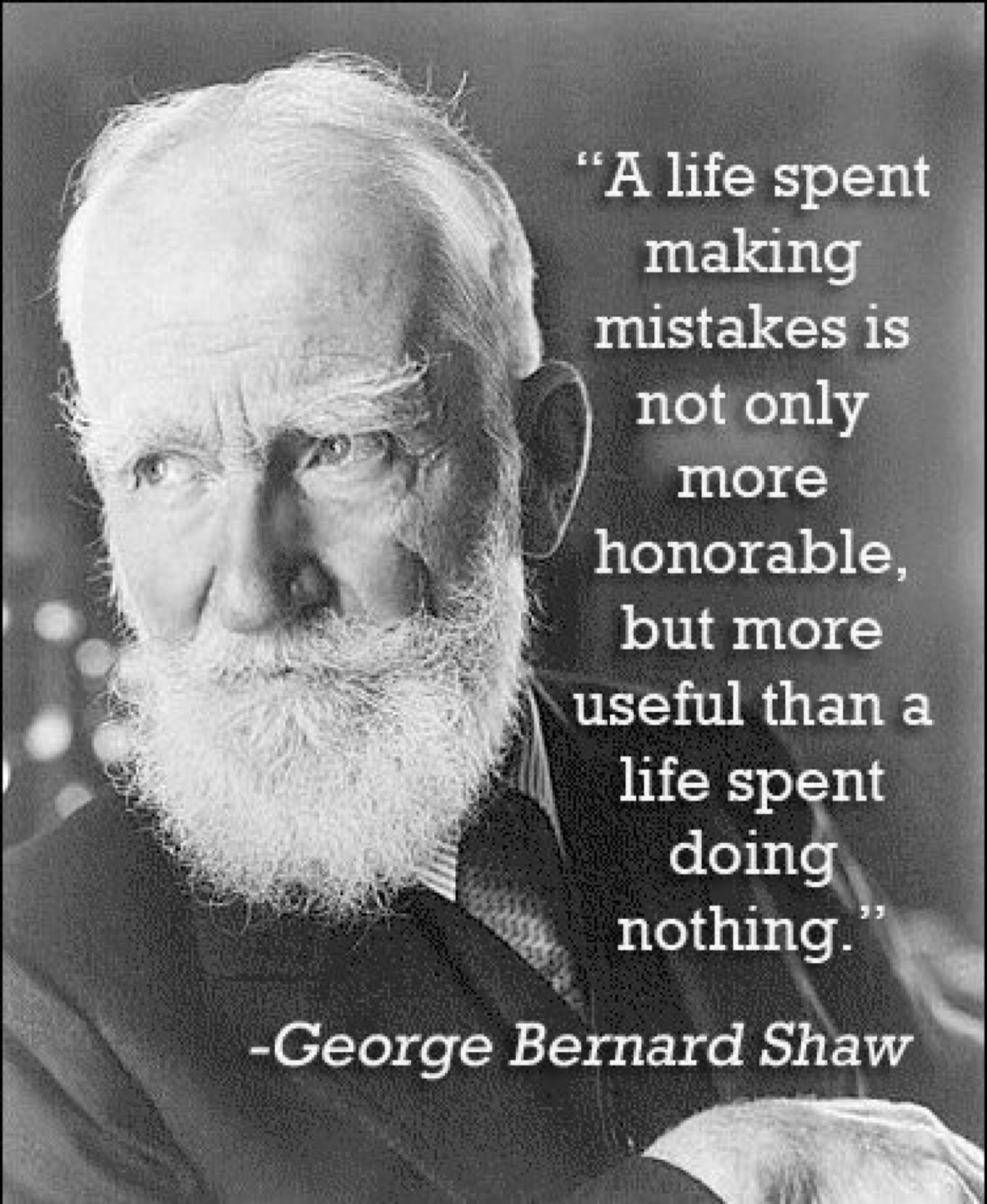
Writing tip Wednesday: “Too much head”

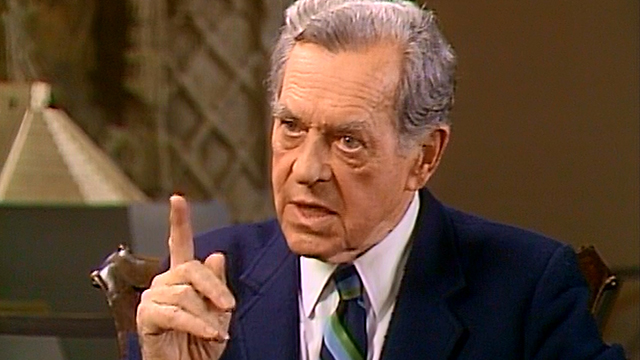
Writer’s block results from too much head. Cut off your head. Pegasus, poetry, was born of Medusa when her head was cut off. You have to be reckless when writing. Be as crazy as your conscience allows.
JOSEPH CAMPBELL

Joseph Campbell
Joseph Campbell, The Power of Myth

Leave a comment

Filed under 2019, writing tip, Writing Tip Wednesday

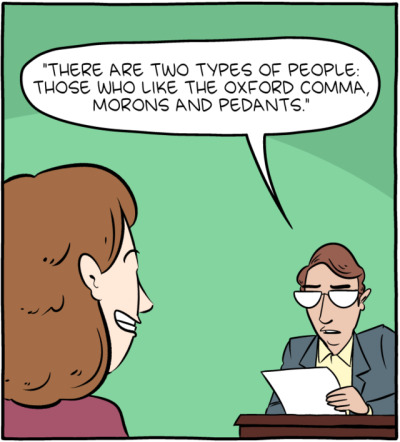
cARtOONSdAY: “oXFORD”

The Oxford Comma

Leave a comment

April 16, 2019 · 3:17 am

Monday morning writing joke: “Write it off”

There once was a writer from St. Paul

Who was sure he could write it all:

Poetry or prose,

Essays about his toes.

But his tax checks always had a shortfall.

Leave a comment

Filed under 2019, Monday morning writing joke, poetry by author

cARtOONSdAY: “tHE sTORY pOLICE”

Good cop, Hollywood cop

Leave a comment

April 9, 2019 · 3:13 am

Monday morning writing joke: “Shaggy Dog Story”

There once was a dog who could write.

She did so most every night.

The shaggy dog stories she told

Were not very bold

And didn’t have much of a bite.

Leave a comment

Filed under 2019, Monday morning writing joke, poetry by author

The Month’s Best New Crime Fiction: April 2019 | CrimeReads

Source: The Month’s Best New Crime Fiction: April 2019 | CrimeReads

At the start of every month, CrimeReads staff members look over all the great crime novels and mysteries coming out in the weeks ahead and make recommendations based on what they’re reading and what they can’t wait to read. Check back over the course of the month for more suggestions for feeding your crime habit.

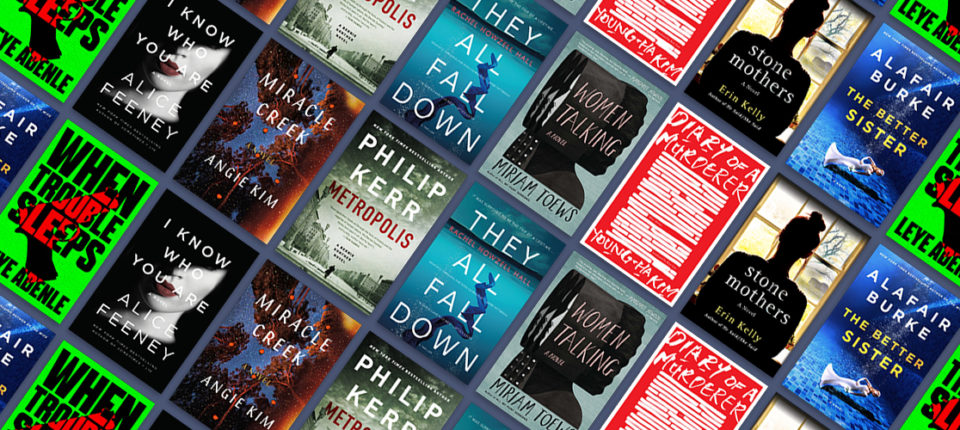
Philip Kerr, Metropolis (Putnam)

It’s a bittersweet pleasure to dive into the last Bernie Gunther mystery. After Kerr’s untimely death last year, it was announced that one more book would be released in the series: Metropolis, which takes us back to Bernie Gunther’s early days on the job, and concludes a 14-book-dive into the worst parts of 20th century history. I’m planning to savor this 1928-set investigation, which promises to be a fitting conclusion to an epic series. (Molly Odintz, CrimeReads associate editor)

Alice Feeney, I Know Who You Are (Flatiron)

Aimee Sinclair is a not quite A-list actress—her face is more familiar than her name. Yet there is one person from Aimee’s strange and upsetting past who keeps interfering in her present-day business. First, her husband goes missing after a particularly nasty fight. Then her bank tells her nearly all of her money has been withdrawn–and it wasn’t her husband who closed the account, it was Aimee. I Know Who You Are is a tense, almost nasty thriller, in which the past recurs in the most dramatic way. (Lisa Levy, CrimeReads contributing editor)

Young-ha Kim, Diary of a Murderer (HMH)

Unreliable memories are a trope in contemporary crime fiction, but Young-ha Kim’s title story from his new collection takes a novel twist when it comes to memory, as a serial killer with Alzheimer’s begins to forget the details of his own crimes while attempting to protect his adopted daughter, whom he suspects to be a target of a different killer in the same town. With Diary of a Murderer, Young-ha Kim joins a new wave of Korean crime writers making their mark on the psychological thriller. (MO)

Rachel Howzell Hall, They All Fall Down (Forge)

If there’s one thing I love in mystery, it’s when a bunch of strangers get summoned to an island. Rachel Howzell Hall’s latest thriller takes that classic scenario straight out of the Agatha Christie playbook and gives it a modern, subversive twist, as seven strangers answer an invitation to a few nights at a private estate on a lush, remote spit of land off the coast of Mexico. The clash of personalities and secrets is immediate, as the guests discover that their weekend getaway isn’t quite so tranquil as they’d hoped. Howzell Hall has spent the last few years establishing herself as one of the most promising voices in detective fiction with her Elouise Norton series. Here she proves that she knows her way around a traditional mystery scenario, with a few thriller twists for good measure. (Dwyer Murphy, CrimeReads managing editor)

Angie Kim, Miracle Creek (FSG)

In a rural Virginia town called Miracle Creek, Korean immigrants Young and Pak Yoo run an experimental medical treatment chamber believed to cure a broad range of issues, mental and physical. The treatment—pure, pressurized oxygen—fills the struggling residents of Miracle Creek with hope, and in turn, the Yoos, who followed hope to America. But when the tank explodes one night and two people are killed, a murder trial grips the town; Kim’s taut emotional thriller unfolds in the courtroom, where the events of that fatal night begin to illuminate the deep secrets and desperation of families fighting to survive. (Camille LeBlanc, CrimeReads editorial fellow)

Miriam Toews, Women Talking (Bloomsbury)

Miriam Toews comes from a Mennonite background herself. As this moving New Yorker profile recounts, she felt a need to reckon with her own past and the patriarchal institutions of Mennonite society after learning of the terrible happenings in a Mennonite village in Bolivia; over a 100 women and girls were raped over a substantial period of time by a group of men using livestock tranquilizers to knock out their nightly targets. In her new book Women Talking, based on this real life story, Toews puts us in the center of a meeting of Mennonite women. They have two days before the men in the village return from bailing out their arrested attackers, and they must decide whether they will fight, flee, or do nothing. (MO)

Alafair Burke, The Better Sister (Harper)

This enthralling domestic thriller finds Burke at her best, diving deep into character and probing the nature of sisterhood—the envy, the competition, the lifelong bond. Chloe Taylor is the editor-in-chief of a magazine and an icon in the #MeToo movement. Her husband, Adam, is a successful corporate lawyer, and Ethan—her teenage stepson—is the biological son of her less-successful, emotionally unstable sister—Adam’s ex. When Adam is murdered, the two long-estranged sisters find themselves in a strained alliance as they fight to exonerate the primary suspect: Ethan. The twists stun as the sisters are forced to confront their history of sacrifice and betrayal. (CL)

Erin Kelly, Stone Mothers (Minotaur)

Marianne Thackeray grew up in Nussted, a town noted for its looming asylum, the Nazareth Mental Hospital. She had planned on never living there again. But time changes things: the asylum has been converted to shiny renovated flats, and Marianne’s husband bought them one. She can’t explain to him that the asylum has negative associations for her which harken back to an incident involving herself, an ex, and a dangerous enemy. The truth will come out, somehow, and Marianne has to prepare for it. (LL)

Leye Adenle, When Trouble Sleeps (Cassava Republic)

Amaka returns! Leye Adenle burst onto the international crime scene with his debut Easy Motion Tourist, an intricate, fast-paced thriller that takes us through the underworld of Lagos as a British tourist teams up with a human rights attorney named Amaka to get the bottom of a wave of violence targeting sex workers in the Nigerian capital. In the second installment of the series, When Trouble Sleeps, Adenle picks up just where he left off, as Amaka continues to investigate and bring down those who would threaten Lagos’ most vulnerable population; this time, however, Adenle ups the stakes with a complex political subplot that dovetails perfectly with the main mystery for a stunning conclusion. (MO)

Ilaria Tuti, Flowers Over the Inferno (Soho)

This Italian debut introduces us to a formidable heroine, seasoned detective and criminal profiler Teresa Battaglia, when she is called to the small alpine village of Traveni to investigate a murder. The body was found naked with its eyes gouged out, and Teresa senses a killer who likes to play sick games and who will strike again if she can’t figure out his riddles. Of course she is paired with a hot-tempered young detective, and they keep investigating violent attacks. But the locals don’t believe this killer can be among them, and Teresa is sure he is.

Leave a comment

Filed under 2019, new fiction

Writing tip Wednesday: “Success”

Leave a comment

Filed under 2019, writing tip, Writing Tip Wednesday

Next time

Leave a comment

Filed under 2019, humor

cARtOONSdAY: “cARElESS”

New Yorker cartoon on publishing

Leave a comment

April 2, 2019 · 7:08 pm