Category Archives: 2017

My Top Tips For Writing a Time Slip Novel By Kim Fleet


My Top Tips For Writing a Time Slip Novel By Kim Fleet

Source: My Top Tips For Writing a Time Slip Novel By Kim Fleet

A time-slip novel contains two or more stories, each set in a different time period, told in parallel with each other. In my latest novel, Holy Blood, one story line is in contemporary Cheltenham, the other in the Elizabethan Cotswolds. Writing time-slip brings its own joys (exploring new characters and situations) and challenges (double the research), so here are some tips to keep you time travelling painlessly.


Decide which is the main story: it helps you to plan your story arc and focus on the main themes of the novel. It also helps to keep characters under control – especially the bolshy ones who think it’s all about them.

Question everything. First ideas aren’t always best, and I rely on my secret weapon, the question, ‘What if?’ when I’m planning and writing a book to ensure I’ve explored all possibilities and chosen the ones that I think will work best. I ask myself, ‘What if this was set in the war? What if this character was a girl, not a boy?’

Use at least three sources for your research. I use the internet for initial research, but I always cross-check using reputable books. It’s a great excuse to get absorbed in the past. Visiting locations can help you pick up details you wouldn’t get from books.

Don’t overdo the historical details by shoehorning everything you’ve researched into the book as it makes the narrative stodgy. If you can keep the sense of the time in your mind while you write, somehow it comes out on the page.

Ensure the stories in the two time periods link up by having situations, objects or places that appear in each. Ideally, both story lines should resolve each other, even better!

Mind your language. Slightly more formal speech and the occasional thee or thou is enough to remind the reader we’re in the past. Under no circumstances use ‘Hey nonny’.

Avoid anachronisms by checking your facts rigorously and remember that not everyone uses an invention the moment it comes out. Words change their meaning, fall out of fashion, and new words come in.

Use coloured pens and index cards, allocating one card for each scene in the book, and different colours to indicate time periods. When you set them out in order you can easily see where you spend too long in one time period and need to break things up.

Use cliff hangers. One of the joys of writing time-slip is that you get a double whammy by ending a chapter on a cliff hanger and by changing time period. It makes the pace very fast.

Get your crayons out and map the connections between all your characters. A character with only one link needs to be given more to do, or be amalgamated with another ‘thin’ character. The density of connections shows where you need an extra sub-plot.

 

Leave a comment

Filed under 2017, writing tip, Writing Tip Wednesday

Monday morning writing joke: “Stop it”

Writer one: “Did you hear about the play about the writer of run-on sentences who committed suicide?”

Writer two: “No.”

Writer one: “It’s a period piece.”


Leave a comment

Filed under 2017, joke by author, Monday morning writing joke

New words to live by: “White liners”

Time, once again, for New words to live by. This is a word or phrase not currently in use in the U.S. English lexicon, but might need to be considered. Other words, such as obsurd, crumpify, subsus, flib, congressed, and others, can be found by clicking on the tags below. Today’s New Word is created by taking an adjective and a noun and creating a compound word. Without further waiting, white liner.

OLD WORD
White, adj. Reflecting nearly all the rays of sunlight or a similar light. For example, new snow. The margins of many printed pages.

Line, n. A mark or stroke ling in proportion to its breadth, often made with a pen, crayon, marker, pencil, or other tool on a surface. For example, the white lines on a highway dividing two lanes.

NEW WORD
White liner, n. 1. Any person or thing that crowds the margins or marked edges or lanes of a highway. For example, a person who rides the white center lines of a highway. Or, somebody who parks right on the line of a parking space.

Leave a comment

Filed under 2017, new word, New words to live by

The Devil’s Dictionary: “Egotist”

A young Ambrose Bierce

In our continuing quest to revisit a classic, or even a curiosity from the past and see how relevant it is, we continue with The Devil’s Dictionary by Ambrose Bierce. Originally published in newspaper installments from 1881 until 1906. You might be surprised how current many of the entries are.

For example, here is a definition for the word Egotist. The Old definitions are Bierce’s. The New definition is mine. From time to time, just as it was originally published, we will come back to The Devil’s Dictionary, for a look at it then and how it applies today. Click on Devil’s Dictionary in the tags below to bring up the other entries.

OLD DEFINITION
Egotist, n. A person of low taste, more interested in himself than in me.

Megaceph, chosen to serve the State
In the halls of legislative debate,
One day with all his credentials came
To the capitol’s door and announced his name.
The doorkeeper looked, with a comical twist
Of the face, at the eminent egotist,
And said: “Go away, for we settle here
All manner of questions, knotty and queer,
And we cannot have, when the speaker demands
To be told how every member stands,
A man who to all things under the sky
Assents by eternally voting ‘I’.”


NEW DEFINITION
Egotist, n. A person of low taste, more interested in himself than in me. See, Donald J. Trump

Donald, chose to run for president
Saying only he could truly represent
The interest of those who had been ignored
Or in some other way had been deplored.
He marched into office, saying hugely
It was and always about yours truly.
What some still fail to understand
Is that “yours truly” is about the man
And not a form of salutation
Meant for the greater good of the nation.
It has always been about him:
The hymn of him, of him the hymn.

2 Comments

Filed under 2017, Ambrose Bierce, Devil's Dictionary

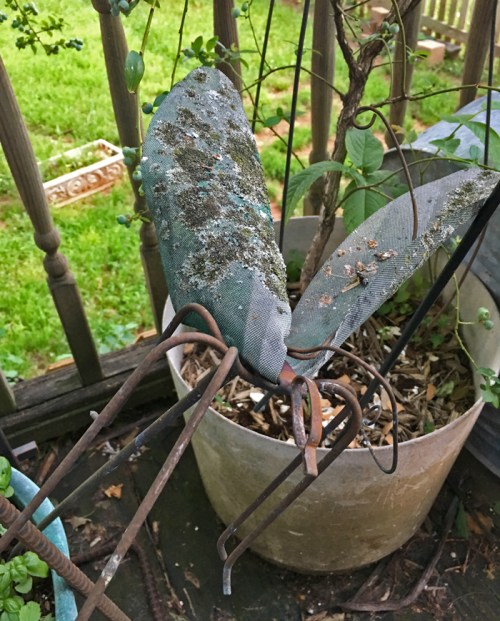
Photo finish Friday: “Wing tip”

Oftentimes the biggest thing holding you down is the crap from above that lands on your wings.

Save

Leave a comment

Filed under 2017, photo by David E. Booker, Photo Finish Friday

Haiku to you Thursday: “Love is…”

Purple Iris after a rain.


Love is a flower. /

Often too short a time /

but always a wonder.

Leave a comment

Filed under 2017, Haiku to You Thursday, photo by David E. Booker, poetry by author

Guidelines | Ploughshares

Ploughshares logo


Emerging Writer’s Contest

Deadline is May 22, 2017

The Emerging Writer’s Contest is open to writers of fiction, nonfiction, and poetry who have yet to publish or self-publish a book. The winner in each genre will be awarded $2,000. Read past winners of the contest here. To submit to the Emerging Writer’s Contest, please visit our submission manager.

The 2017 contest judges are Garth Greenwell (fiction), Meghan Daum (nonfiction), and Natalie Diaz (poetry).

Publication
The winning story, essay, and poems from the 2017 contest will be published in the Winter 2017-18 issue of Ploughshares, and each writer will receive $2,000 and two copies of the issue in which their work appears.

Eligibility
You are eligible if you:

  • Have yet to publish a book (including chapbooks, eBooks, translations, books in other languages/countries, and self-published works).
  • Have no book forthcoming before April 15, 2018.
  • Are not affiliated with Ploughshares or Emerson College as a contributing author, volunteer screener, blogger, intern, student, staff member, or faculty member.
  • Will not have a relationship with Emerson before April 15, 2018 (example: if there is a chance you will attend the Emerson MFA program in the coming year or if your work has been accepted for publication for an upcoming issue).

Submitting
The contest opens March 1, 2017 at noon EST and has been extended to May 22, 2017 at noon EST. We will announce winners in mid-September, 2017.

Fiction and Nonfiction: Under 6,000 words
Poetry: 3-5 pages

Submit one entry per year via our online submission manager.

  • No entries via email or mail will be considered for the contest.
  • Submitted work must be original and previously unpublished in any form.
  • For poetry, we will be reading both for the strongest individual poem and the general level of work, and may choose to publish one, some, or all of the winner’s submitted poems.
  • Cover letters are not necessary. All identifying information will be removed from submissions.

Entry Fee
Entry to the contest requires a $24 fee, which is waived if the submitter is a current subscriber. The fee is:

  • Payable by Visa or MasterCard through the online submission system.
  • Includes a 1-year subscription to Ploughshares (beginning with the Spring 2017 issue and ending with the Winter 2017-18 issue).
  • Includes free submissions to the 2017 reading period

Current subscribers—through the Winter 2017-18 issue—may submit for free.*

*If you are a current subscriber, you will still be prompted to checkout, but you will not be required to enter your credit card information and will not be charged.

To submit to the Emerging Writer’s Contest, please visit our submission manager.

Source: Guidelines | Ploughshares

Leave a comment

Filed under 2017, contest, writing tip, Writing Tip Wednesday

cARtOONSdAY: “nOVEL iDEA”

Dear Muse, is it okay if I write this novel in memo form instead of regular chapters?

Leave a comment

Filed under 2017, CarToonsday

Monday (morning) writing joke: “Faking it”

There once was a writer ignorant of history, /

For whom dates and names were a mystery. /

Did it happen there? /

Did anyone really care? /

It let him tell the story so simplistically.

Leave a comment

Filed under 2017, Monday morning writing joke, poetry by author

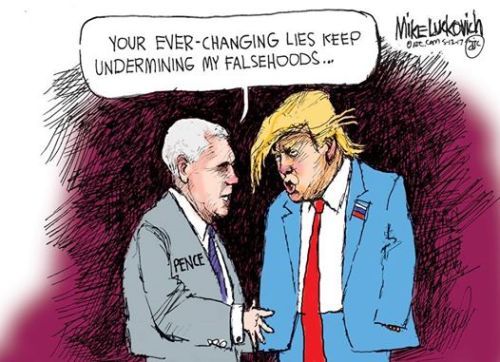
The pot and the kettle

Letting off steam.


The pot and the kettle

The pot and the kettle /

made of weak metal /

are less than fundamental: /

They’re not right./


They put on displays /

In fundamental ways /

Undermining mainstays /

And creating only blight./


“My lies can’t compete /

With falsehoods you repeat./

Put down your tweet /

And tell me what to say.”/


But the pot said to the kettle:/

“You’ve got to keep your mettle/

Because I won’t settle/

For nothing less today./


“We remain on course/

In all our discourse/

There will be no divorce/

From my lies that are true.”/


Said the kettle to the pot:/

“You have said a lot/

Some of which has begot/

Us in a trouble or two.”/


“That doesn’t matter.”/

The pot said like a mad hatter./

“All the facts are but chatter/

That will go away./


“We must all remember/

The role of a dissembler/

Is not in any way render/

Anything that will stay./


“A lie we tell here/

We tell it loud and clear/

But we do not ever steer/

As if those words are right./


“We will lie as we must/

As on and on they discuss/

That in us they cannot trust/

And in that is our might.”/


“We start at the beginning/

And blame them for our sinning/

Grafting and grinning/

Together all the way./


“For the true believer/

Has a different receiver/

And it matters not which lever/

We jerk down today.”/


The pot and the kettle /

made of weak metal /

are less than fundamental: /

They’re not right./


They put on displays /

In fundamental ways /

Undermining mainstays /

Creating death and blight./


–by David E. Booker


Save

1 Comment

Filed under 2017, poetry by author