Tag Archives: writing

Stephen Baxter interview: why science fiction is like therapy

The bestselling SF writer talks about the rush to finish the Long Earth series, being the order to Terry Pratchett’s chaos and how maths helps him write

by Alison Flood

Source: http://www.theguardian.com/books/2015/jul/25/stephen-baxter-interview-why-science-fiction-is-like-therapy

In the summer of 2013, Stephen Baxter and Terry Pratchett published The Long War, the second volume of their Long Earth science-fiction series, about parallel worlds that can be “stepped” into. By the end of that year, the two authors – both prolific by any standards – had completed drafts of the remaining three novels in the series. It was an astonishing rate of work, but there was a deadline that needed to be met: Pratchett had announced his diagnosis with a rare form of early onset Alzheimer’s in 2007. By the summer of 2014, he would pull out of a Discworld convention, citing “The Embuggerance”, which was “finally catching up with me”. He died in March this year.

Stephen Baxter

Stephen Baxter

“I think Terry was aware he was running out of time, and he wanted to do other things as well,” Baxter says. “So we rushed through it a little bit. Terry’s basic vision was the first step, but he also wanted to have a huge cosmic climax at the end, which would be book five … We had no idea how to get there but we knew where we were going.”

The Long Utopia, the fourth in the series, sees settlers on an Earth more than “a million steps” west of ours stumble across a disturbing, insectile form of alien life. Like its predecessors, the novel is compelling not only for its central storyline of exploration and danger and humans doing foolishly human things – and in this case a particularly cataclysmic finale – but also for its slow, unhurried laying out of the minute differences between these empty-of-humanity Earths.

The concept of a chain of parallel worlds, each a little different from its neighbour, was one Pratchett originally had, and set aside, in the 1980s. He told Baxter, a long-time friend and one of the UK’s most respected science-fiction authors, about it over dinner one night, and they decided to collaborate.

“It was a great idea but Terry’s strength did not lie in landscapes and things,” Baxter says. “He’d get a story by having a basic idea, get two people in a room talking and see where it went from there.”

This is not how Baxter works. His fiction, whether about the colonising mission sent to a planet orbiting a nearby red dwarf star, in Proxima, or the exploration of different evolutions of humanity in the Destiny’s Children series, is meticulously planned and pinned down, rooted in the scientific background from which he comes. He has a degree in maths from Cambridge and a PhD in aeronautical engineering; he is a fellow of the British Interplanetary Society and applied for a guest spot on the Mir space station in 1989, making it through a number of stages on his quest to be a cosmonaut but eventually missing out because of his lack of foreign languages.

Whether Baxter decides to submerge the world (Flood), or make humanity live in the centre of a neutron star (Flux), or keep the sea off Doggerland in an alternative prehistory (Stone Spring), there’s always a hook into something real. “I try to get it right. If you can get the maths right, I figure you’re most of the way there,” he says.

Baxter is fiercely intelligent, in a generous way, sharing his enthusiasms and knowledge on everything from recently discovered exoplanets to the Mars project (he’s not hopeful, because he doesn’t think enough has been done on long-term life support systems). At the British Interplanetary Society, he’s been part of study projects on everything from designing star ships to extraterrestrial liberty, an issue explored in Ark, his follow-up to Flood, in which the scraps of humanity flee their devastated planet in “generation ships” for an uncertain future outside the solar system.

“It’s all very well to plan a five-generation mission to Alpha Centauri, but if you’re one of the middle generations, you live out your life with very little room for manoeuvre,” he says. “So what right do you have to submit your children and grandchildren to a life of slavery like that? You get some interesting ethical issues – do you have rights over people who don’t yet exist, do they have rights?”

Rest of the article: http://www.theguardian.com/books/2015/jul/25/stephen-baxter-interview-why-science-fiction-is-like-therapy

Leave a comment

Filed under 2015, author interview

Writing tip Wednesday: “10 Poignant Practices for Every Writer”

Here are 10 smart, yet simple ways for every writer—from novelists to journalists to poets—to enrich his or her mind and become better at cultivating ideas and putting them to the page.

Source: http://www.writersdigest.com/online-editor/10-poignant-practices-for-every-writer?et_mid=752210&rid=239626420

by MELISSA CLARK

1. Travel the world
Old, young, rich, poor, there are many ways to see the world, soak up other cultures, see examples of creativity in art, food, music, architecture. Lately, I’ve been applying to and attending artist residencies to work on my writing in other countries including Spain, Portugal and Mexico. Even if you’re only able to take a day trip, take it! Soak up any experience you can get that lives outside your day-to-day life.

2. Journal
Not just the “My boyfriend broke up with me” kind. (Though that’s fine, too.) Write down your thoughts, ideas, memories, draw pictures, and record dreams. There are many ways to journal including blogs, Pinterest, and various apps. Who knows what ideas the younger you has in store for the older you. You’ll never know if you don’t record them.

3. Be a student throughout your life
So many colleges and universities offer extension courses. I like taking classes outside of my writing interest and have taken Nude Figure Drawing, Ceramics, Anger Management and Stand-Up Comedy, among others. Ultimately, anything you learn can be useful to your writing.

4. Also be a teacher
I grew up in a family that supported my creativity, but many people don’t and they need a mentor to help them navigate the waters. I not only teach in colleges, but at unexpected places, too, like spas and retreats. I love meeting and being inspired by different types of students all over the country. Why not volunteer your time teaching writing to kids or the elderly? Everyone has a story. How wonderful if you’re able to help someone express theirs.

5. Realize that no idea is too big/small/silly/crazy
One afternoon at lunch with a friend I ate too much (as usual). When I lifted my shirt to show him my bloated belly, he said, “Are you sure you’re not pregnant?” and I said, “Yeah, right, from a lazy sperm!” This off-the-cuff comment inspired my first novel, “Swimming Upstream, Slowly,” about a woman who becomes pregnant from a lazy sperm. Silly? Absolutely! Published novel? That’s right! What ideas are you preventing from being realized because you think they are too big/small/silly/crazy?

Other tips include:

6. When you hear “no” do it anyway

7. Accept your shadow side

8. Invest in a good therapist

9. Forgive yourself

10. Practice gratitude

About Melissa Clark: Clark is an author, television writer and college instructor. She is the author of the novels, Bear Witness, Swimming Upstream, Slowly, and Imperfect. Her essay, “Rachael Ray Saved My Life” is included in the anthology The Cassoulet Saved Our Marriage.

She is also the creator of the animated television series, “Braceface,” starring the voice of Alicia Silverstone which aired on the ABC Family Channel. She has written scripts for “Rolie Polie Olie,” “Totally Spies,” “Sweet Valley High,” among others. Melissa teaches creative writing and literature courses both privately.

Complete entry at: http://www.writersdigest.com/online-editor/10-poignant-practices-for-every-writer?et_mid=752210&rid=239626420

1 Comment

Filed under 2015, Writing Tip Wednesday, writing tips

Writing tip Wednesday: “Glimmer Train contest for New Writers”

SHORT STORY AWARD for NEW WRITERS guidelines

Glimmer Train

Glimmer Train

Open only to writers whose fiction has not appeared, nor is scheduled to appear, in any print publication with a circulation over 5,000. (Entries must not have appeared in any print publication.)

Most entries run from 1,500 – 6,000 words, but any lengths up to 12,000 words are welcome.

Held quarterly. Open to submissions in FEBRUARY, MAY, AUGUST, and NOVEMBER. Next deadline: November 30. *

Winners are announced in the May 1, August 1, November 1, and February 1 bulletins, respectively, and contacted directly one week earlier.

  • This category is open only to emerging writers whose fiction has not appeared in any print publication with a circulation over 5000. (Seven of the last eight 1st place New Writer winners have been those authors’ first print publications.)
  • Second- and 3rd-place winners receive $500/$300, respectively, or, if accepted for publication, $700. Winners and finalists will be announced in the February 1 bulletin, and contacted directly the previous week.
  • Most submissions run 1,500 – 6,000 words, but can be as long as 12,000. Reading fee is $15 per story. Please, no more than three submissions per category.

To submit: http://www.glimmertrainpress.com/writer/html/index2.asp

1 Comment

Filed under 2015, writing tip, Writing Tip Wednesday

Writing tip Wednesday: “Squaw Valley Workshops”

Poetry and Writing Workshops in June and July 2015.

Poetry and Writing Workshops in June and July 2015.

Details of the workshops and where to get more information.

Details of the workshops and where to get more information.

Leave a comment

Filed under 2015, writing tip, Writing Tip Wednesday

Looking out as a way of looking in

Creation writing: is sci-fi a 21st-century religion?

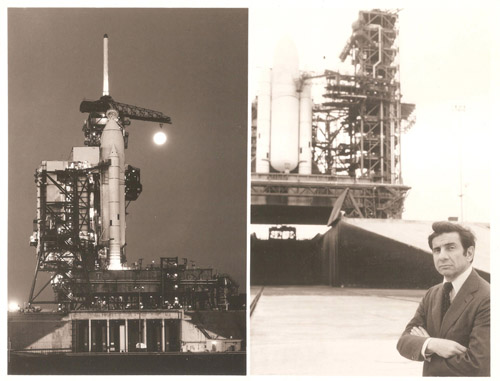
Space shuttle during the early years.

Space shuttle during the early years.

Source: http://www.theguardian.com/books/booksblog/2015/jan/16/sci-fi-21st-century-religion-universe-hubble

Ever since mankind began to count, the uncountable stars have been filling us with awe. But the splendour revealed by a cloudless night reveals only a fraction of the universe’s truly awe-inspiring scale. The Hubble space telescope reveals a tiny smudge in the sky such as Andromeda to be a galaxy vaster than our own, teeming with a trillion stars, one of a hundred million other galaxies spread across the heavens.

Science today shows us a very different universe than the clockwork model imagined by Isaac Newton in his description of gravity. Jules Verne could imagine shooting a rocket from the Earth to the moon in 1865, but could not have imagined the vastness even of our solar system’s Kuiper belt. It was only when Edwin Hubble identified the first star beyond the Milky Way, and only when the telescope that bore his name photographed 3,000 galaxies in a single patch of “empty” space, that the human eye could glimpse the near infinite depths of space.

The work of the most ambitious SF authors like Iain M Banks, Vernor Vinge and David Brin manages to capture the true scale of the universe in fiction. And even then SF can detail only the tiniest portion of a cosmos some 93bn light years wide (and expanding ever more quickly), shaped by the unifying force of gravity, where the elements of life are created in supernova explosions and destroyed in black holes. The scientific model of the universe begins to look eerily like that expressed by Hindu astronomers over 3,000 years ago, in which the cycles of the universe are measured in aeons 1.28tn years long, reality is maintained by the force of Vishnu, and all things are created by Brahma and destroyed by Shiva.

Perhaps it’s these mythic resonances that have seen science fiction trend more and more towards religious zeal in recent years. The Singularity, a point in the near future when technology evolves so fast that it allows life to transcend all physical boundaries, is now a common idea in SF, explored by writers from Damien Broderick to Charlie Stross. Its believers style themselves as singulatarians and transhumanists, but their rhetoric of life after death in silicon virtual realities so deeply echoes fundamentalist Christianity that no one is joking when they call it the Rapture of the Nerds.

More at: http://www.theguardian.com/books/booksblog/2015/jan/16/sci-fi-21st-century-religion-universe-hubble

Leave a comment

Filed under science fiction

Writing tip Wednesday: “Inside, outside, roundabout side”

Three categories to better characters

Sometimes, when creating a character, it is good to break the characteristics of character into three general categories: Inside, outside, and roundabout side. In reality as in your characters, you will probably find that these categories overlap, bump up against each other, maybe even at times clash. Sometimes a good character, like a real person, can be his or her own worst enemy.

Use this below as a starting point. You can add your own questions or prompts. And you can use this for all the major characters, including the protagonist and antagonist. It could even help with some of the minor characters, too.

With the following categories in mind, reread your manuscript with an eye toward making your characters as compelling as possible: both the good guys and the bad ones.

1. Looking in or sometimes called motivation

  • What does your character want?
  • What does your character need?
  • Can you create a situation in which the need and the want come into conflict with each other?
  • Did your character have a happy or unhappy childhood and why?
  • What is your character obsessed with?
  • What is your character’s biggest fear?
  • What is your character’s biggest secret?
  • What is the best thing that has happened to your character? The worst?
  • What are your character’s past and present relationships? With parents? With friends? With enemies? With co-workers?
  • What does your character care about?

2. Looking out or sometimes called appearance, aesthetics, maybe even Mirror, mirror on the wall

  • What sex is your character?
  • How old is your character?
  • How tall is your character?
  • Hair color? Eye color? Skin color?
  • How many eyes, fingers, toes, etc. does your character have, or does your character have only some or none of these?
  • Does your character have an odd-shaped nose or other physical trait? Is this trait lifelong or recently acquired?
  • Does your character dress in the latest fashion with new clothes, in hand-me-downs, second-hand shop clothes, bargain basement buys?
  • Does your character practice regular hygiene? Bath/shower regularly? Smell if he or she doesn’t?
  • What would another character say about this character’s overall appearance?

3. Looking round about or sometimes called quirkiness, idiosyncrasy, or sometimes just plain weird
Please note, that a character’s quirkiness can often arise out of the looking in or looking out categories, and sometimes when one meets the other.

For example, the character could wear a fedora, may even have several for different occasions, and will wear nothing else on his / her head.

A small fear can be an idiosyncrasy. Your character could be afraid of spiders or the number 13.

  • Does your character always were the same color?
  • Does your character have a favorite number?
  • Does your character always count up the change in his / her pocket the same way? Pennies first, then nickels, then dimes, etc.?
  • Does your character have a nickname? If so, what is it and how does it relate to the character?
  • What is the one word that would best describe your character?

–David E. Booker

1 Comment

Filed under writing tip, Writing Tip Wednesday

Writing tip Wednesday: “Those Moral Delimma Hooks”

5 Moral Dilemmas That Make Characters (& Stories) Better

Details at: http://www.writersdigest.com/online-editor/5-moral-dilemmas-that-make-characters-stories-better?et_mid=694352&rid=239626420

Readers can’t resist turning pages when characters are facing tough choices. Use these 5 keys to weave moral dilemmas into your stories—and watch your fiction climb to new heights.

By Steven James

Key #1: Give Your Character Dueling Desires
Before our characters can face difficult moral decisions, we need to give them beliefs that matter: The assassin has his own moral code not to harm women or children, the missionary would rather die than renounce his faith, the father would sacrifice everything to pay the ransom to save his daughter.

A character without an attitude, without a spine, without convictions, is one who will be hard for readers to cheer for and easy for them to forget.

So, to create an intriguing character facing meaningful and difficult choices, give her two equally strong convictions that can be placed in opposition to each other.

For example: A woman wants (1) peace in her home and (2) openness between her and her husband. So, when she begins to suspect that he’s cheating on her, she’ll struggle with trying to decide whether or not to confront him about it. If she only wanted peace she could ignore the problem; if she only wanted openness she would bring it up regardless of the results. But her dueling desires won’t allow her such a simple solution.

That creates tension.

And tension drives a story forward.

So, find two things that your character is dedicated to and then make him choose between them. Look for ways to use his two desires to force him into doing something he doesn’t want to do.

Key #2: Put Your Character’s Convictions to the Test
We don’t usually think of it this way, but in a very real sense, to bribe someone is to pay him to go against his beliefs; to extort someone is to threaten him unless he goes against them.
For example:

  • How much would you have to pay the vegan animal rights activist to eat a steak (bribery)? Or, how would you need to threaten her in order to coerce her into doing it (extortion)?
  • What would it cost to get the loving, dedicated couple to agree never to see each other again (bribery)? Or, how would you need to threaten them to get them to do so (extortion)?
  • What would you need to pay the pregnant teenage Catholic girl to convince her to have an abortion (bribery)? What threat could you use to get her to do it (extortion)?

Look for ways to bribe and extort your characters. Don’t be easy on them. As writers we sometimes care about our characters so much that we don’t want them to suffer. As a result we might shy away from putting them into difficult situations.

Guess what?

Spin your protagonist's moral compass around and make him doubt his belief that pigs can't fly.

Spin your protagonist’s moral compass around and make him doubt his belief that pigs can’t fly.

That’s the exact opposite of what needs to happen in order for our fiction to be compelling.

What’s the worst thing you can think of happening to your character, contextually, within this story? Now, challenge yourself—try to think of something else just as bad, and force your character to decide between the two.

Plumb the depths of your character’s convictions by asking, “How far will s/he go to … ?” and “What would it take for … ?”

Key #3: Force Your Character Into a Corner
Don’t give him an easy out. Don’t give him any wiggle room. Force him to make a choice, to act. He cannot abstain. Take him through the process of dilemma, choice, action and consequence:

  1. Something that matters must be at stake.
  2. There’s no easy solution, no easy way out.
  3. Your character must make a choice. He must act.
  4. That choice deepens the tension and propels the story forward.
  5. The character must live with the consequences of his decisions and actions.

If there’s an easy solution there’s no true moral dilemma. Don’t make one of the choices “the lesser of two evils”; after all, if one is lesser, it makes the decision easier.

For example, say you’ve taken the suggestion in the first key above and forced your character to choose between honoring equal obligations. He could be caught between loyalty to two parties, or perhaps be torn between his family obligations and his job responsibilities. Now, raise the stakes—his marriage is at risk and so is his job, but he can’t save them both. What does he do?

The more imminent you make the choice and the higher the stakes that decision carries, the sharper the dramatic tension and the greater your readers’ emotional engagement. To achieve this, ask “What if?” and the questions that naturally follow:

  • What if she knows that being with the man she loves will cause him to lose his career? How much of her lover’s happiness would she be willing to sacrifice to be with him?
  • What if an attorney finds herself defending someone she knows is guilty? What does she do? What if that person is her best friend?
  • What if your character has to choose between killing himself or being forced to watch a friend die?

Again, make your character reevaluate his beliefs, question his assumptions and justify his choices. Ask yourself: How is he going to get out of this? What will he have to give up (something precious) or take upon himself (something painful) in the process?

Explore those slippery slopes. Delve into those gray areas. Avoid questions that elicit a yes or no answer, such as: “Is killing the innocent ever justified?” Instead, frame the question in a way that forces you to take things deeper: “When is killing the innocent justified?” Rather than, “Does the end justify the means?” ask, “When does the end justify the means?”

The other two items are:

  • Key #4: Let the Dilemmas Grow From the Genre
  • Key #5: Look for the Third Way.

For information on these steps and the a little more about the other three, go to http://www.writersdigest.com/online-editor/5-moral-dilemmas-that-make-characters-stories-better?et_mid=694352&rid=239626420

Leave a comment

Filed under writing tip, Writing Tip Wednesday, writing tips

Writing tip Wednesday: “Hero’s Adventure”

HOW TO MAP OUT YOUR HERO’S ADVENTURE IN YOUR MANUSCRIPT

Source: http://www.writersdigest.com/online-editor/how-to-map-out-your-heros-adventure-in-your-manuscript?et_mid=688770&rid=239626420

How do the most successful authors of our time construct their stories? If you read them, and if you also read some ancient myths, you will begin to see parallels. You will feel smacked upside the head with parallels. You’ll realize that the top authors of today use storytelling techniques that writers used back when plans were being drawn up for the pyramids.

An excellent book about ancient myths is The Hero With a Thousand Faces by Joseph Campbell. The title says it all. Across cultures and generations, some variation of a hero figures into every beloved story. And the typical story is about an individual who goes on a quest or a journey. By the end, the individual becomes a hero. This is called the Hero’s Adventure.

The Hero’s Adventure is the most archetypal story of all because it’s the basis for more novels than any other kind of story. Novels of all different genres, from romances to thrillers to sci-fi, are based on the Hero’s Adventure.

So what is the Hero’s Adventure? You know it already, and you may even have elements of it in the story you’re working on. But I suspect you haven’t yet methodically and thoroughly appropriated it for yourself.

The Hero’s Adventure Basic Recipe

Joseph Campbell

Joseph Campbell

Here is a basic recipe to demonstrate how the Hero’s Adventure plays out. This is a template you can apply to your own work-in-progress—you might be surprised by how closely it matches elements you already have in play.

  1. A messenger comes. The messenger might be human, or a message might come from an experience—like a brush with death or a dream. At any rate, something has gone wrong; the natural order of the world has been disturbed.
  2. A problem is presented. Perhaps something has been taken away from the tribe, or some misfortune or malfeasance has occurred.
  3. Someone is marked out as the person to solve this problem. She is chosen according to some past deed of her parents or by her own reputation or happenstance. This person, of course, emerges as the hero at the end.
  4. A challenge takes shape. The challenge may be refused, at first. “No way, I’m not going to risk my neck for that!”
  5. A refusal, often. But eventually the hero decides to accept the challenge. She might even be forced to accept it by circumstances.
  6. The challenge is accepted. The adventure begins.
  7. The hero leaves the familiar world. And she sets off into another world. It’s dangerous. The hero could use some help, and very often …
  8. Helpers materialize. A helper might have special skills the hero doesn’t have, or he might have special insights or wisdom, in which case he takes the form of a mentor.
  9. Setbacks occur. The hero is tested, she makes gains, she endures setbacks, she fights for what is right, she resists evil. The going’s tough!
  10. The hero regroups and gains some ground again. Maybe she needs another visit to a mentor, or maybe she makes a personal breakthrough and overcomes a great inner obstacle, perhaps her own fear.
  11. The foe is vanquished or the elixir is seized. Eventually she defeats the foe or comes into possession of something that will restore the natural order—a cure, or new knowledge that will bring justice or the return of prosperity.
  12. The hero returns to the familiar world. And the problem is fixed, or justice is done. The natural order is restored.

The person who accepts the challenge and prevails is elevated to a special position, somewhere above human, somewhere below god. She is the hero.

For examples of this in literature: http://www.writersdigest.com/online-editor/how-to-map-out-your-heros-adventure-in-your-manuscript?et_mid=688770&rid=239626420

Leave a comment

Filed under writing tip, Writing Tip Wednesday, writing tips

Tampa crime author sings praises of jazz great | TBO.com, The Tampa Tribune and The Tampa Times

Tampa crime author sings praises of jazz great | TBO.com, The Tampa Tribune and The Tampa Times.

TAMPA — Michael Connelly is no stranger to crime.

After all, he is the bestselling author of 27 crime fiction books that have sold 58 million copies worldwide, most featuring detective Harry Bosch or defense attorney Mickey Haller.

A television series “Bosch” is under production by Amazon Studios, and Matthew McConaughey played Haller in the 2011 film “The Lincoln Lawyer.”

Once upon a time, Connelly also covered the crime beat for the Los Angeles Times.

Yet even Connelly admits he was uncomfortable attending a jazz concert in California’s San Quentin prison in 2012.

“Everyone in that audience was pretty much a murderer,” said Connelly, who has lived in Tampa since 2001. “The night before the concert a sergeant from the prison spoke to us about precautions and how there is a no-hostage policy.”

But once the music started, Connelly noticed a change in the room full of hardened criminals.

“You saw it in their faces — how the music affected them,” he said. “It showed that there was still humanity in them, and where there is humanity there is a possibility for redemption.”

The concert, in fact, was filmed and now is featured in the documentary “Sound of Redemption: The Frank Morgan Story.”

Connelly is executive producer.

The name Frank Morgan may ring a bell to fans of the Bosch series. His real music emerges as a character in the books, bringing solace to the troubled fictional detective.

The film tells the story of the man behind that music.

To read the rest of the article: http://tbo.com/arts_music/tampa-author-sings-praises-of-jazz-great-20140726/

1 Comment

Filed under music, writing

Rough Stuff: In Which I Discuss Being Accused of Having a Sordid Mind

Rough Stuff: In Which I Discuss Being Accused of Having a Sordid Mind.

This is probably one of those blogs I shouldn’t write, but impulsivity and I are old, old friends. (Remember that time I decided to wear only clothes from Wal-Mart for a year? Yeah.)

I get a lot of very generous feedback about my writing. Some of it in the form of reviews, some of it direct to my inbox. It’s the kind of feedback that keeps me going, writing the next book or story. It helps me put out the flames of self-doubt when they come shooting out of my brain, obliterating the words before they can take shape on the page. I won’t say that I can’t live without it, but it surely makes my work easier to put out there. You know. Welcoming arms and all.

I’ve never addressed a reviewer directly, and I won’t do it now. But there’s a thread that runs through some of the uglier criticism of my novels and stories that I think is worth mentioning and examining.

Vulgar is a word that’s commonly used. Lurid as well (though it was used in conjunction with entertainingly, which I rather liked). My favorite and most recent hint that all is not hunky dory in my world is the observation that I must have a sordid mind.

It does make me think. It makes me wonder if,

To read the rest of the essay: http://www.laurabenedict.com/rough-stuff-in-which-i-discuss-being-accused-of-having-a-sordid-mind/

Leave a comment

Filed under Writers on writing