Tag Archives: writing

Monday morning writing joke: “It ain’t write, I tell you”

Two writers went to the same doctor’s office on the same day. She told each one he didn’t have long to live.

“It’s awful,” said the first writer. “I’m right in the middle of a novel and she’s only given me six months to live. I’ll never get it finished. What about you?”

“It’s awful for me, too,” said the second writer. “She gave me three years to live.”

“Three years!” the first writer said. “Three years! What’s so awful about that?”

“I write short stories,” the second writer said. “And I’m fresh out of ideas.”

Leave a comment

Filed under 2020, joke by author, Monday morning writing joke

The Single Reason Why People Can’t Write, According to a Harvard Psychologist

https://getpocket.com/explore/item/the-single-reason-why-people-can-t-write-according-to-a-harvard-psychologist?utm_source=pocket-newtab

“Why is so much writing so hard to understand? Why must a typical reader struggle to follow an academic article, the fine print on a tax return, or the instructions for setting up a wireless home network?”

These are questions Harvard psychologist Steven Pinker asks in his book, The Sense of Style: The Thinking Person’s Guide to Writing in the 21st Century. They’re questions I’ve often encountered –and attempted to tackle– throughout my career as a business writer and editor. Whenever I see writing that is loaded with jargon, clichés, technical terms, and abbreviations, two questions come immediately to mind. First, what is the writer trying to say, exactly? And second, how can the writer convey her ideas more clearly, without having to lean on language that confuses the reader?

For Pinker, the root cause of so much bad writing is what he calls “the Curse of Knowledge”, which he defines as “a difficulty in imagining what it is like for someone else not to know something that you know. The curse of knowledge is the single best explanation I know of why good people write bad prose.”

“Every human pastime –music, cooking, sports, art, theoretical physics –develops an argot to spare its enthusiasts from having to say or type a long-winded description every time they refer to a familiar concept in each other’s company. The problem is that as we become proficient at our job or hobby we come to use these catchwords so often that they flow out of our fingers automatically, and we forget that our readers may not be members of the clubhouse in which we learned them.”

People in business seem particularly prone to this “affliction.” You could argue that business has developed its own entirely unique dialect of English. People are exposed to an alphabet soup of terms and acronyms at business school, which they then put into use in their day-to-day interactions once they enter the working world.

And what starts out as a means of facilitating verbal communication between people becomes the primary mode with which people communicate their ideas in writing, from email to chat apps to business proposals and presentations.

“How can we lift the curse of knowledge?” asks Pinker. “A considerate writer will…cultivate the habit of adding a few words of explanation to common technical terms, as in ‘Arabidopsis, a flowering mustard plant,’ rather than the bare ‘Arabidopsis.’ It’s not just an act of magnanimity: A writer who explains technical terms can multiply her readership a thousandfold at the cost of a handful of characters, the literary equivalent of picking up hundred-dollar bills on the sidewalk.”

“Readers will also thank a writer for the copious use of for example, as in, and such as, because an explanation without an example is little better than no explanation at all.”

Whenever I write a sentence that makes me pause and wonder about what it means, I assume that other readers might react in the same way. If a sentence is not clear to me, it might not be clear to others. It’s an approach that I recommend to anyone who is trying to improve his own writing.

Before hitting publish and sending your writing out to the world, it’s better to be honest with yourself about how much your reader is likely to understand a given passage or sentence. Before you commit your writing to print– or to the internet– take a few moments to make sure that what you write is clear and understandable by as many of your intended readers as possible.

As Richard Feynman, the Nobel prize-winning physicist, once wrote, “If you ever hear yourself saying, ‘I think I understand this,’ that means you don’t.”

Leave a comment

Filed under 2020, writing

Haiku to you Thursday: “Last”

If I were the last /

Would morning dew still matter? /

Asked the blade of grass.

Leave a comment

Filed under 2020, Haiku to You Thursday, Poetry by David E. Booker

These 13 Books Will Make You a Better Writer in 2019 | Inc.com

One of the best ways to improve your writing is to read about the craft.

Source: These 13 Books Will Make You a Better Writer in 2019 | Inc.com

  1. Ernest Hemingway on Writing, edited by Larry W. Phillips

Ernest Hemingway never codified his insights on writing into a book, but he did share his thinking on the topic in commissioned articles; letters to his agents, publishers, and friends; and through his novels. Ernest Hemingway on Writing is a collection of his insights on the craft of writing, and includes several practical and inspiring tips.

  1. Zen in the Art of Writing, by Ray Bradbury

The prolific science-fiction author Ray Bradbury collected the lessons he had learned about the craft during his long and successful career in Zen in the Art of Writing.

  1. Nobody Wants to Read Your Sh*t: Why That Is and What You Can Do About It, by Steven Pressfield

Steven Pressfield recently returned to writing about writing with a brand-new book, Nobody Wants to Read Your Sh*t. It’s a no-nonsense guide to writing stories that people will want to read. While the bulk of the book addresses how to write fiction, Pressfield shows how the same principles of writing good stories can apply to writing nonfiction.

  1. The Artist’s Way: A Spiritual Path to Higher Creativity, by Julia Cameron

The Artist’s Way: A Spiritual Path to Higher Creativity is the classic book by author and creativity coach Julia Cameron in which she introduces what she calls “morning pages.” Morning pages is a powerful stream of consciousness writing exercise that is not intended to yield publishable material, but which can help you get your pen moving and your thoughts flowing–even if you never intend to share them with the rest of the world.

  1. Turning Pro: Tap Your Inner Power and Create Your Life’s Work, by Steven Pressfield

Ever since reading his classic book, The War of Art, I’ve read every book about writing by Steven Pressfield (and I will continue to read every one he writes, including the one he’s publishing soon, which he’s generously serializing on his blog). In that book he gave a name to what every writer grapples with. He called it Resistance.

To fight the Resistance, writers (and other artists, for he was addressing artists broadly in that book) need to give up their amateur mindsets and habits and “turn pro.” In Turning Pro, his follow-up to The War of Art, Pressfield fleshes out what he means exactly when he tells writers to “turn pro.”

  1. On Writing Well: The Classic Guide to Writing Nonfiction, by William Zinsser

William Zinsser was a journalist, author, and writing instructor at Yale. His book On Writing Well is a classic among writers and has sold nearly 1.5 million copies in the 40 years since it was published. It’s one of the first books I recommend to anyone seeking to improve their writing.

  1. On Writing: A Memoir of the Craft, by Stephen King

Fifteen years ago, mega-best-selling author Stephen King wrote a book about the craft of writing that became an instant bestseller: On Writing: A Memoir of the Craft. After telling the story of how he became the writer he is today, King devotes the second half of the book to sharing his writing strategies, like his suggestion that you should write for your “Ideal Reader.”

  1. Process: The Writing Lives of Great Authors, by Sarah Stodola

This book looks at the techniques, inspirations, and daily routines of 18 iconic authors of the 20th century, including Franz Kafka, Ernest Hemingway, Virginia Woolf, David Foster Wallace, Toni Morrison, and Margaret Atwood.

After profiling so many successful authors, what did Stodola learn about their writing process? “Genius, I have concluded, is the presence of not one ability but several that work together in tandem. Genius is far more tedious, far less romantic, far more rote, far less effortless, than we imagine it.”

  1. The War of Art: Break Through the Blocks and Win Your Inner Creative Battles, by Steven Pressfield, edited by Shawn Coyne

All writers struggle with writer’s block in one form or another, but Steven Pressfield named the enemy and outlined a strategy for conquering it in The War of Art, the perennially best-selling guide for writers and other creative professionals. In the first part of the book he introduces what he calls Resistance – the force within us that conspires to prevent us from fulfilling our creative pursuits – and then spends the next two sections sharing his solutions for overcoming it.

  1. The Art of Nonfiction, by Ayn Rand

As the late novelist and philosopher Ayn Rand describes in The Art of Nonfiction, an edited collection of lectures she gave on the craft of writing, part of the reason why it took so long to finish her second novel is because she often suffered from severe bouts of writer’s block.

  1. Lifelong Writing Habit: The Secret to Writing Every Day, by Chris Fox.

In Lifelong Writing Habit: The Secret to Writing Every Day, Chris Fox describes the 12-step process he created that has allowed him to make the transition from part-time writer to full-time author of several best-selling thriller novels and nonfiction writing guides.

At the beginning of the book, Chris describes what a habit is, and explains how you can reprogram your brain just like a computer to install new habits. Habits live in a part of the brain called the basal ganglia, and they consist of three parts: The trigger, the routine, and the reward. The key to changing your habits is to identify which ones are good for you, which ones are bad, and then “flip” the bad ones to good ones.

  1. 8-Minute Writing Habit: Create a Consistent Writing Habit That Works With Your Busy Lifestyle, by Monica Leonelle

Monica Leonelle, a novelist and author of several books about writing, has written a book that speaks directly to those of us who struggle to get our writing done while balancing other commitments at work and home.

In the first part of The 8 Minute Writing Habit: Create a Consistent Writing Habit that Works With Your Busy Lifestyle, Leonelle describes several “blockers” that get in the way of our writing, thoughts like “writing might not pay off,” “I’m not good enough to be a writer,” and “I’m stuck in the planning/writing/editing phase.” For each blocker, she offers several practical tips for overcoming them. In the second part of the book, she shares nine strategies the pros use to write consistently.

  1. Several Short Sentences About Writing, by Verlyn Klinkenborg

Verlyn Klinkenborg is an author and creative writing instructor at Yale. In the preface to Several Short Sentences About Writing, he argues that “most of the received wisdom about how writing works is not only wrong but harmful,” and then devotes the rest of the book to smashing assumptions and correcting misconceptions about the craft.

Leave a comment

Filed under 2019, book list, writing, writing tip

cARtOONSdAY: “wRITE AS rAIN”

Man who has written two chapters, but can't remember what the third one should be.
And the story goes…

Leave a comment

Filed under 2019, CarToonsday

12 Books That Will Improve Your Self-Knowledge – Darius Foroux – Pocket

Being yourself starts with knowing yourself.

Source: 12 Books That Will Improve Your Self-Knowledge – Darius Foroux – Pocket

Every piece of personal or professional growth you achieve in life starts with one thing: Self-knowledge.

Lao Tzu, the ancient Chinese philosopher, who lived in the 6th century BC, put it best:

“He who knows others is wise; he who knows himself is enlightened.”

Whether you want to make a million bucks, build a strong relationship with your partner, or get in the best shape of your life — you can’t improve yourself without knowing yourself.

Self-knowledge is a skill, not a trait, talent, or divine insight. I used to live my life without one bit of introspection. Naturally, I had no idea who I was. Now, I’m getting better at it with practice. And the impact on my life has been huge.

I believe that knowing yourself is the key skill that predicts happiness and success in life. 

So I’ve made a list of 12 books that have helped me to know myself. I hope they will serve you too.

  1. HBR’s 10 Must Reads on Managing Yourself

The book’s description starts with, “The path to your professional success starts with a critical look in the mirror.” I can’t agree more.

This HBR collection also includes one of my all time favorite pieces on self-awareness, Managing Oneself by Peter Drucker. It also includes another article that I’ve found very useful: “How Will You Measure Your Life?” by Clayton M. Christensen.

This collection does not disappoint. Every piece will make you think more about your mission, vision, strengths, weaknesses, and how you can advance your career.

  1. Emotional Intelligence by Daniel Goleman

In today’s world, it’s probably not you IQ that’s going to make you successful — it’s your EQ. Daniel Goleman is the key expert when it comes to emotional intelligence.

Most people think emotional intelligence is about managing other people’s emotions.

Well, there’s something that’s more important: Identifying and managing your own emotions. I believe that you can’t be an effective leader without EQ. This book helps you to get better at it.

  1. Ego Is The Enemy by Ryan Holiday

This is one of my favorite books of the past year. No other person could have written this book better than Ryan Holiday.

He has an impressive career. And a lot of bragging rights. But if you follow his work (which I’ve been doing for three years), you can tell he is a humble person who lets his work speak for him.

To me, that’s the perfect example of someone who has his ego in check. Because we have to be real, everyone has an ego. The question is: How do you manage it? Ego Is The Enemy helps you to do that.

  1. Become What You Are by Alan Watts

A collection of 20 essays by Alan Watts. His work was greatly inspired by Zen. And I think that Zen is a great source of internal knowledge.

I’ve tried reading different things about Zen. Watt’s writing is clear, practical, and beautiful. That makes it easier to read and think about. When you apply all the advice in this book, you’ll learn more about yourself and others.

  1. I Like Myself! by Karen Beaumont

I usually stick to books for grown-ups. But I just couldn’t resist mentioning this book here. One of my friends bought this book for his daughter a while back. And he loved the book as much as his daughter did.

I checked it out and it’s actually really fun. I can imagine that kids would love it too. It’s a great way to teach kids self-awareness.

I wish I had this book by Karen Beaumont as a child. So if you have kids, buy this book. And if you don’t have kids, get it for your family or friends who do.

  1. The Gifts of Imperfection by Brené Brown

I only recently read Brené Brown’s book. I’d seen some of her videos and interviews and always appreciated her calm approach.

This book is exactly that. The Gifts of Imperfection helps you to understand that you’re good enough. We’re often too hard on ourselves. And that’s detrimental for our self-awareness.

When you learn that you have nothing to prove, you actually start living.

  1. Grinding It Out by Ray Kroc

Do you feel bad that you haven’t caught your big break yet? If so, read this book. You’ll feel different about it. Ray Kroc, who turned McDonald’s into a billion-dollar business, had to wait until his fifties to find some form of success.

It’s not only an inspirational story. It also helps you to put things in perspective. That’s a key aspect of self-awareness. It’s also good to read the perspective of a businessman. You can’t make a living by meditating all day.

  1. The Effective Executive by Peter Drucker

It’s no secret I’m a fan of Drucker. This book provides a practical perspective on productivity that I think every knowledge worker should read.

The most important lessons I’ve learned about work is this: It’s not about what you do, it’s about the results you get. That’s the difference between efficiency and effectiveness.

Sending 100 emails per hour might be very efficient use of your time. But what results does it bring you? That’s what matters the most.

  1. What They Don’t Teach You at Harvard Business School by Mark H. McCormack

Even though I like scientific research, there are things science can’t teach you.

In this book, McCormack shares everything that people in business schools or companies will never tell you. He talks office politics, standing up for yourself, getting results, job-boredom, and making things happen.

The best thing? McCormack is street smart. His knowledge came from experience. And it’s still relevant.

  1. Notes To Myself by Hugh Prather

This book was recommended to me last year by a reader. Prather was a minister. When I first learned about that, I didn’t think I could relate to the book. But I gave it a try, and I really enjoyed it.

Notes To Myself is a good example of the fact that people are all the same internally. You might be from Japan, Chile, Portugal, Canada, Vietnam — you name it. At the end of the day, we face the same internal struggles.

  1. Mastery by George Leonard

Like Watts, George Leonard was also inspired by Zen. And his approach to life, learning, and mastery, is one that I’ve learned to appreciate a lot recently.

To me, it’s never about external things like praise, likes, sales, views, etc. Self-awareness has no end-destination. It’s about the process.

  1. What I Talk About When I Talk About Running by Haruki Murakami

You might think, “what does a book about running have to do with self-awareness?” To that, I say: Read this book.

It’s difficult to summarize What I Talk About When I Talk About Running other than that it’s a look inside the mind of a human being. It’s worth reading even if you don’t like running or Murakami. This is one of my all-time favorite books because it’s the most honest book I’ve read.

As you can see, there are no books about self-knowledge or self-awareness on this list. The best way to develop self-knowledge is to look inwardly. Do that enough, and you’ll know yourself better.

Yes, you can read about the thoughts of other people for inspiration. But remember they are NOT YOU.

To know yourself, you must follow that little voice inside of you. You might not hear it yet, but it’s definitely there.

You just have to find it. Within.

Leave a comment

Filed under 2019, Writing Tip Wednesday, writing tips

Photo finish (and poem) Friday: “Rain”

Rain and rising water
Photo courtesy of Chris Buice

As I sit out in the rain /

Pondering life all the same /

A pond appeared across the way /

Growing larger and larger throughout the day /

Until the time when night fell /

And I could not tell land from water very well. /

But as the sun rose, I will vouchsafe, /

It’s no fun being in a watery grave.

Leave a comment

Filed under 2019, Photo Finish Friday, poetry by author

Haiku to you Thursday: “Binding”

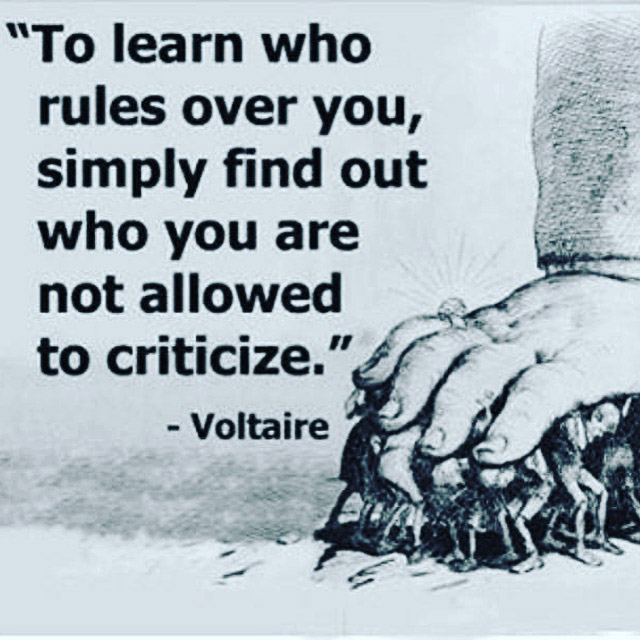
The oppressing hand /

Binds through fear and not respect /

Embraces your hate.

To learn who rules over you, simply find out who you are not allowed to criticize. --Voltaire

Leave a comment

Filed under 2019, Haiku to You Thursday, poetry by author

Replace These Words in Your Writing

Writing is hard, and weird, and in the scheme of human existence pretty new. We’ve been talking for maybe half a million years, writing for just about 5,000. So sometimes we write stuff that we’d never say aloud. We use a complicated or “smart-sounding” word when a simpler word would work better. New York Times editor Dan Saltzstein listed some great examples on Twitter. They pop up in news media, but also in “business speak.” If you’re trying to write effectively, watch out for these:

Source: Replace These Words in Your Writing

Twitter users suggested many more. (The > is a “greater than” sign, not an arrow. The words on the left are better.)

We’d like to add:

  • Name > dub
  • Turn > render
  • Big > massive
  • Maybe > perhaps

These aren’t rules, of course; they’re just suggestions, language is fluid, yadda yadda. Almost all the “lesser” words above have good uses. Save them for those uses. To leverage something is specifically to “use it to its maximum advantage.” Something sprawling is “spreading out over a large area in an untidy or irregular way.” Suits are bespoke, and medieval knights get slain. Okay, you’ve been waiting to add your own—go for it.

There was a problem providing access to protected content.(Error Code: 232403)

How to Make Taco Bell Salt

1/25/19 1:00PM

About the author

Nick Douglas

Staff Writer, Lifehacker | Nick has written for Gawker, the Awl, the Toast, the Daily Dot, Urlesque, and the web series “Jaywalk Cop.” He currently runs the horror-comedy podcast “Roommate From Hell.”

1 Comment

Filed under 2019, Writing Tip Wednesday

Writing tip Wednesday: “Flush with success”

A simple writing tip to start the New Year. /
I will say it once, so gather round here. /
Whatever you may do about beginnings and ends /
When sitting on the throne do not hours spend. /
Your poem you will not complete before other deeds are done. /
And your legs and your feet will be the slumbering ones. /
Your audience, too, may have abandoned you. /
They may find what you have done not the best you can doo-doo.

Simple tip to start out the New Year. Do not write a completed poem while sitting on the commode. Before you’re finished, your legs — if not your audience — will be numb and asleep.

Leave a comment

Filed under 2019, Writing Tip Wednesday, writing tips