Tag Archives: writing

The Devil’s Dictionary: Poetry

Every now and then, it is good to revisit a classic, or even a curiosity from the past. The Devil’s Dictionary by Ambrose Bierce was originally published in newspaper installments from 1881 until 1906. You might be surprised how current many of the entries are.

For example, since April is poetry month, here is a definition for the words poetry and blank verse. The Old definition is Bierce’s. The New definition or comment are mine (and in this case a few other folks, too. Sometimes, you need help).

From time to time, just as it was originally published, we will come back to The Devil’s Dictionary, for a look at it then and how it applies today. Click on Devil’s Dictionary in the tags below to bring up the other entries.

OLD DEFINITIONS:
Poetry, n. A form of expression peculiar to the Land beyond the Magazines.

Blank verse, n. Unrhymed iambic pentameters — the most difficult kind of English verse to writer acceptably; a kind, therefore, much affected by those who cannot acceptably write any kind.

NEW DEFINITIONS:
Poetry, n. In this age of digital publishing, to say that poetry is peculiar to the Land beyond the Magazines is more prescient than sarcastic. Maybe I will call upon some other folks give a modern perspective, if not definition of poetry:

Poetry and consumption are the most flattering of diseases. –William Shenstone
(If I have to choose, I’ll take poetry, though I would probably be better at consumption.)

Poetry is nobody’s business except the poet’s, and everybody else can f*&k off. –Philip Larkin
(If true, no wonder poets feel misunderstood, unappreciated, and beyond the Land of Magazines.)

I know that poetry is indispensable, but to what I could not say. –Jean Cocteau
(Probably more indispensable than this blog.)

I think that one possible definition of our modern culture is that it is one in which nine-tenths of our intellectuals can’t read any poetry. –Randall Jarrell
(And what is the percentage of the non-intellectuals?)

Free verse, n. Free verse is like free love; it is a contradiction in terms. –G.K. Chesterton
(Yeah, but paid love is illegal in most states.)

2 Comments

Filed under Ambrose Bierce, definitions, Devil's Dictionary, poetry

I’m a writer and I don’t get no respect

Writer don't get no respect

She threw the book at me!

I’m a writer and I don’t get no respect. Just the other day I hired an editor to help me with my manuscript, and the first thing she did was throw the book at me! The unabridged book at me. The one that defines words. You know it. D-i-k something something something.

Leave a comment

Filed under Cartoon, cartoon by author, no respect, writing

Building a better story: three elements to character building

You can’t always get what you want
But if you try sometimes you just might find
You just might find
You get what you need

So goes the chorus from The Rolling Stones song, “You Can’t Always Get What You Want.”

Those are perfect lyrics in which to briefly discuss the three elements that can help a writer build a character.

When creating a main character, ask yourself three questions:
1) What does your main character (protagonist) want?
2) What does your character need?
3) How can these two things be brought into conflict?

Despite what advertising might try to convince about having hunger pangs that only a certain hamburger can cure, there is a difference. Hunger is a need. The body needs food to live. The hamburger (Or whatever other food you wish to insert) is a want. Hunger can be alleviated by a wide range of foods, not just the one being advertised at the moment you feel hunger.

Dear Dorothy

What a character needs is often more important than what she wants.

You can also think of this way: want is often an external thing; need an internal thing. The hamburger is an external manifestation of something that is an internal need: hunger. They come into conflict when you find out you don’t have enough money for that hamburger, or if having that hamburger will cause you to break out in hives, due to an allergic reaction you may have recently developed to ground beef.

The same is also often true of your story’s main character. There is something he wants. There is something he needs. The want and the need to come into conflict.

Take for example, Huckleberry Finn in Mark Twain’s The Adventures of Huckleberry Finn.

What is it wants: to escape his alcoholic father who has kidnapped him and locked him in an old cabin in the woods, because the father wants the money that Huck is entitled to. He escapes from his dad and hides out on an island as part of his plan to keep from being kidnapped again. What he needs, though he is not willing to even admit it to himself, is an adult who will accept him for how he is (and won’t try to civilize him), but still be willing to take care of him, even guide if not raise him, and love him. Huck finds that in the runaway slave Jim, and at the point of the novel where Huck should turn Jim in as runaway slave, Huck decides not to do what society wants him to do, he sides with Jim because Jim is somebody whom Huck needs, and who also needs Huck. Much of the rest of the novel from that point on is about handling the consequences of that decision and the temptations to still turn Jim in.

There are many other examples in fiction and in film, on the stage and even sometimes in long story poems.

You can have your protagonist side with what he wants over what he needs. This often leads to more trouble or even tragedy. You can have you protagonist win by losing. He loses what he wants, but wins what he needs and is the better for it. He can find a way to make the two work together, with the want being a true outward manifestation of the inward need.

So, decide what it is your character wants (that job promotion, the girl next door, the pot of gold) and what he needs (validation of his self-worth, love, money to buy the thing he always wanted), and then bring those two into conflict.

[Editor’s update/note: click on “building a better story” in the Category listings to find several other blog pieces of information I have put together from classes, books, and other sources (including my own experiences).]

2 Comments

Filed under building a better story, cartoon by author, character, writing tip

Brush with success

Brush with success

Corner in a corner of his mind

He painted himself in a corner in a corner of his mind. His first brush with “success.”

Leave a comment

Filed under absurdity, humor, puns, word play

Rain / blooms

Rain reaches down. Sky /
lightens up. In between hopes /
my umbrella blooms.

Leave a comment

Filed under haiku, poem, poetry, rain

Writing Tip: Plotting backwards

[Editor’s note: the essay below is taken from an e-mail newsletter sent out by the writer Bruce Hale. you can find his web site at: http://www.brucehalewritingtips.com/. You can also sign up for his e-newsletter at that site. Each electronic newsletter comes with other information, including a writing joke.]

WHY BACKWARDS IS BEST WHEN PLOTTING A MYSTERY

By BRUCE HALE

When I wrote my first mystery, I hadn’t a clue. I tried writing it straight through, plotting as I went, and ended up falling flat on my face. Why? I hadn’t yet learned that backwards is best.

You see, contrary to the way most fiction is mapped out, mysteries are backwards creatures. They’re easiest to write when plotted backwards from the ending, rather than forward from the beginning. Mysteries, by their nature, are a complex tangle, and if you’re not careful, you’ll get stuck in it.

As I learned the hard way, if you write from the beginning, you’ll be left flatfooted with your detective, trying to figure out how to solve the mystery.

Better to go the easy way: work from the solution. Start from the ultimate revelation of whodunit and work your way backwards to mystery writing success. Here’s how:

– DECIDE WHODUNIT, WHY, AND HOW
First, pick the crime to be solved and the culprit. Suss out why they committed the crime – and the less obvious the reason, the better. Your villain (or clues from him) should be part of the story from fairly early on, but his motives and actions must remain hidden until the twist reveals them. Hide your villain in plain
sight – heck, you could even go so far as to make them a seeming ally of your hero.

– PLAN YOUR TWIST
This is the dramatic reveal, the “It’s not Snape, it’s Quirrell!” moment. (Sorry if I spoiled Harry Potter I for you.) The twist should occur at the least convenient moment, preferably when the hero is most vulnerable. Usually the twist occurs at or just before the climax.

To make the twist work, you need to come up with at least one or two plausible culprits, then show why they didn’t commit the crime.

– LAY OUT YOUR RED HERRINGS
These are the likely culprits, the leads your detective follows that turn out to be dead ends. Be sure the herrings are motivated as well, and if you can disguise their motivations or make them ambiguous, so much the better. Anything to make them *more* plausible, and your true villain *less* plausible.

– SCATTER YOUR CLUES
What tips your hero off to the fact that the villain is guilty? A latticework of little clues (usually connected much too late). You must always play fair with the reader, so be sure the clues are there, even if the detective and her trusty assistant initially dismiss them.

The key with clues is to use misdirection — have them seem insignificant, or be misinterpreted. You can’t make it too easy for the detective, or the reader!

– START WITH A BANG
And last, but not least, come up with a grabber of an opening that plunges us right into the heart of the mystery. Ideally, it should contain some small clue that points us toward the true culprit.

With all that in place, now you’re ready to write your first words. Happy mystery writing, and may the spirit of Chandler and Hammett be with you!

2 Comments

Filed under Bruce Hale, plot, writer, writing, writing blog, writing tip

The pen is mighter than the sword

“The pen is mightier than the sword, and considerably easier to write with.”

— Marty Feldman

Marty Feldman

Marty Feldman, comedian, writer, actor

http://en.wikipedia.org/wiki/Marty_Feldman

2 Comments

Filed under humor, no respect, pen, sword, wit, writing

Empty: Full

Open and empty
heart with a full measure of
empathy and love.

Leave a comment

Filed under haiku, heart, poem, poetry, words, writing

Touching Nature

Touch Nature

Top of young tree broken by human hand just leaves are budding out.

Touch Nature’s beauty;
even the hand that twists the
tree free of its growth.

Leave a comment

Filed under haiku, poem, poetry, tree, words, writing

I’m a writer and I don’t get no respect

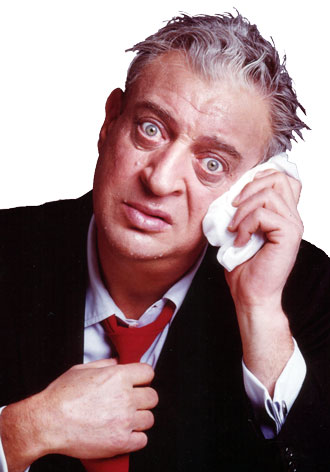
[Editor’s note: I believe it was the late Rodney Dangerfield who had a comedy routine based on “I don’t get no respect.” The lack of respect could come from anybody, anywhere, including his wife. Below is a playwright Rodney could empathize with. He writes to Dear Abby, and she responds. I have known one or two other writers in the same situation. Maybe you, do, too.]

Rodney Dangerfield

Sometimes respect is hard to come by for a writer, or a comic. Just ask Rodney Dangerfield.

DEAR ABBY: I am an amateur playwright. Our local theater sponsors an annual playwriting contest. The prize isn’t monetary, but something far more important to an author – full scale production of the play.

I have won this prize four times – more than any other writer in the history of the contest. But is my family impressed? Not at all! My wife told me she thinks I write everything the same way and have simply repeated myself four times.

I am up in years. It’s unlikely I will ever again win this prize. So how do I respond to such indifference? What do you do when you feel you have accomplished something important and the response is, “so what else is new?”

–Looking for Validation in Florida

DEAR LOOKING FOR VALIDATION: My hat’s off to you. That you have won this prize more than any other writer in the history of the contest is a notable achievement. Attend the production, take your well-earned bow in the spotlight, and accept that the less you look to your wife for validation, the happier your life will be.

Leave a comment

Filed under advice, Dear Abby, humor, respect, Rodney Dangerfield, writer, writing