Tag Archives: writing tips

Writing tip Wednesday: “8 Rules of Writing Historical Fiction Research”

After researching and writing my novel Orphan #8—which was published by William Morrow in 2015 and is the August Target Club Pick and an Indie Next Great Read—I put together this list of eight rules for historical fiction research. For each I’ll give you an example of how I applied that rule of research to writing my novel.

By Kim van Alkemade

Source: http://www.writersdigest.com/online-editor/8-rules-of-writing-historical-fiction-research?et_mid=785611&rid=239626420

1. Take bad notes.
In 2007, I took some brief notes about a woman doctor who X-rayed eight children at a Jewish orphanage. I didn’t even write down her name. Yet these bad notes inspired me to write my first historical novel, Orphan #8. Only after the novel was finished, sold, and rewritten did I go back to this archive to consult the source of my notes. There, I learned the real name of this doctor, Elsie Fox, and with a little more research I learned she had been born in Austria, educated at Cornell, conducted X-ray research at the Home for Hebrew Infants, and founded a school for radiology in the Bronx. The character I created from my bad notes is named Mildred Solomon. She was born in the United States, went to medical school in New York, conducted X-ray research at the fictional Hebrew Infant Home, and went on to have a career in radiology at a hospital. The parallels are spooky, but I’m glad my bad notes allowed my imagination free reign to create a character who is entirely my own.

2. Use archives.
You don’t have to be an academic or a librarian to use archival materials. Archives are maintained for the purpose of preserving and sharing documents. Find an archive that relates to your period and subject. I did most of my archival research at the Center for Jewish History in New York where the American Jewish Historical Society has the archives of the Hebrew Orphan Asylum. I found amazing information at the New York Academy of Medicine Library, and they later invited me to write a blog post about my research for the novel. But I’ve also used both paper and digital collections at the New York Pubic Library and materials from the Lesbian Herstory Archives in Brooklyn. When you use archival materials, look for quirky details and be open to inspiration.

3. Study old pictures.
Evocative historical writing is made up of more than facts and figures. By examining old pictures—either paintings or photographs—you can glean impressions that inspire your imagination and details that populate your descriptions. Many digital archives are now coming online, making this aspect of historical research easier than every before. I relied on the New York Public Library’s Old New York collection, where you can see a photograph of the Hebrew Orphan Asylum. I also used the Beck Archives Photograph Collection at the University of Denver, where I saw a photograph that informed my description of heliotherapy (a real treatment for tuberculosis) and inspired my fictional Hospital for Consumptive Hebrews. The photograph below of a dormitory at the Hebrew Orphan Asylum was crucial for the setting of several important scenes in the novel.

4. Go on location.

Sometimes you have to go away from your desk and out of your house to get first-hand experience of your setting. I made two trips to Colorado while researching Orphan #8 and the descriptions based on those visits are more sensory than anything I could have gotten from a book or photograph. Your artistic impression of a place is crucial to creating an historical world that rings true for you as a writer. Landscapes may be the same as they were centuries ago; some city neighborhoods haven’t changed in a hundred years; ancient ruins can still be inspiring. If possible, talk to people while you are on location; their memories and impressions can yield invaluable details. I learned so much from Hy Bogan, who I interviewed at the location of the Hebrew Orphan Asylum.

5. Read old books.
6. Visit museums.
7. Use the Internet.
8. Stop researching, start writing.

Details: http://www.writersdigest.com/online-editor/8-rules-of-writing-historical-fiction-research?et_mid=785611&rid=239626420

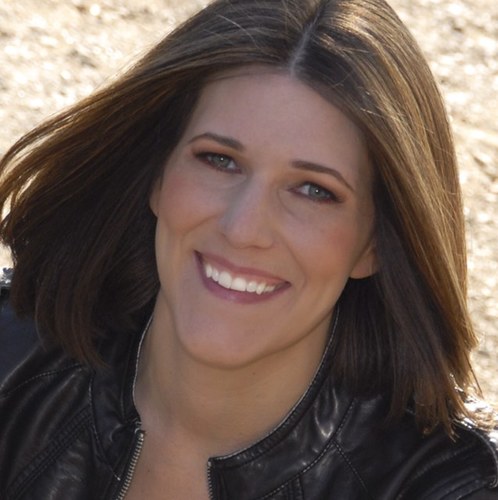
Kim van Alkemade

Kim van Alkemade

Kim van Alkemade: Van Alkemade is the author of the historical fiction novel Orphan #8 (William Morrow). Her creative nonfiction essays have appeared in literary journals including Alaska Quarterly Review, CutBank, and So To Speak. Born in New York, NY, she earned a BA in English and History from the University of Wisconsin-Parkside and an MA and PhD in English from the University of Wisconsin-Milwaukee. She is a Professor in the English Department at Shippensburg University of Pennsylvania where she teaches writing. She lives in Carlisle, Pennsylvania. Connect with Van Alkemade on Facebook/KimvanAlkemade, Twitter @KimvanAlkemade, Instagram kimvanalkemade and KimvanAlkemade.com.

Leave a comment

Filed under 2015, writing tip, Writing Tip Wednesday

Writing tip Wednesday: “Dear Struggling Writer”

4 Pieces of Advice for Struggling Writers

by Jenny Martin

http://www.writersdigest.com/editor-blogs/guide-to-literary-agents/4-pieces-of-advice-for-struggling-writers?et_mid=781061&rid=239626420

Jenny Martin

Jenny Martin

My debut novel, Tracked, recently hit shelves, and I’m often asked for advice about the publication process. How long did it take you to sell your book? Should I shelve this project? Should I keep going? Did you ever feel like giving up?

And so often, buried in these questions, there’s a palpable tremor of defeat. Of desperation and indecision and uncertainty. I hear it the writer’s voice. I read it in their words.

And it makes my heart clench. Every time.

Because I’ve been there. I’m still there, half the year. Yes, I’ve got a permanent sub-lease on that same space, a precarious little acreage between Epic Fail Valley and the Cliffs of Insanity. Maybe you’ve heard of the place, and season there, too?

If so, don’t fret. There’s hope, struggling writer. And while I may not always have the right answers to your questions, I can give some encouragement. So here it is—my advice to you:

1. If you’re struggling to succeed, you’re in good company.
Almost every single author I know has their own unique (yet somehow familiar) story of crushing heartbreak, setback, and rejection. I’m no exception. My agent was not my first agent. Tracked was not my first book. Tracked wasn’t even my first (or even second!) book on submission. What’s more, it almost didn’t sell. Then it almost didn’t make it through revisions. And to be painfully honest, every now and then, it’s still almost impossible to fight off the hydra-head monsters of fear and self-doubt. And if you’re battling those monsters, too, it just means you’re on the right path. Those tricky beasts only show up when you’re self-aware enough to grow as an artist. They smell your hunger for improvement, and they know exactly when you’re primed to level up. Yep. Naturally, that’s when they attack. So be aware, and embrace the fight. Push past it. You can do it. I’m rooting for you.

2. If you’re struggling to succeed, write the next book.
Or paint the next picture. Or sing the next song. The only way you’re ever going to move forward is to stop holding onto everything that’s rooted in yesterday’s ground. If a book isn’t working … if it’s getting rejected all over town, it might just be an eighty-thousand word clog in your creative drainpipe. It might be stoppering up the masterpiece you’re supposed to be starting right now. That book or whatever-whatchamacallit you’ve got now? It might be the project you need to set aside and revisit later, with new skills and new eyes. But of course, you’ll never know, unless you choose to start something new. Trust me. Begin again and rescue your tomorrow.

3. If you’re struggling to succeed, you need to get back up.
It’s normal to get knocked to the mat. It’s okay to get knocked to the mat. Pretty much everyone who’s ever tried anything has been knocked to the mat. More specifically, pretty much everyone who’s ever tried something great has been knocked to the mat at least a hundred times. And the people who achieve greatness? They’re the ones who kept getting back up, again and again. So if you’re there—right now, this second—give yourself a moment. Catch a breath and recover. Reassess and dust off your dreams. But then come up swinging. Scrap your way back onto your feet. Listen, you. You’re halfway to something great, just by answering the bell.

4. If you’re struggling to succeed, you’ll be prepared, when you do succeed.
All the rejections, all the tears, all the heartbreaking close calls … they will season you for the next challenge, the next goal, the next victory. Everything you’ve already faced, and will face … it all makes you tougher and fiercer and stronger. And oh, how you will cherish the victories, when they come. Each and every setback will sweeten them tenfold, while increasing your capacity for gratitude, compassion, and humility. And those victories will come. They are waiting for you, ahead.

So just keep going. I promise. You’ll see.

About Jenny Martin: author of debut novel TRACKED (May 2015, Dial/Penguin Random-House). Her book was praised by Publishers Weekly, Kirkus Reviews, and Bustle. Jenny is an author, librarian, and an experienced speaker, panelist and presenter who’s appeared at many conferences, events and festivals. She lives in the Dallas-Fort Worth area, with her husband and son, where she hoards books and writes fiction. And yes, she’s still on a quest for the perfect pancake.

Source: http://www.writersdigest.com/editor-blogs/guide-to-literary-agents/4-pieces-of-advice-for-struggling-writers?et_mid=781061&rid=239626420

Leave a comment

Filed under 2015, writing tip, Writing Tip Wednesday

Writing tip Wednesday: “Rules from Rule”

Breaking Into True Crime: Ann Rule’s 9 Tips for Studying Courtroom Trials

by Zachary Petit

Source: http://www.writersdigest.com/online-editor/ann-rule-on-breaking-into-true-crime?et_mid=772391&rid=239626420

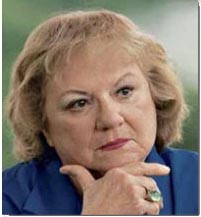
Ann Rule

Ann Rule

Bestseller Ann Rule had a heck of a journey to becoming a writer—something she never really wanted to be in the first place. “All I ever wanted to be was a police officer,” she told the crowd in her ThrillerFest session “How to Stalk a Serial Killer and Tell the Gruesome Tale: All You Need to Know to Write Great True Crime.” “The one thing I knew I didn’t want to be was a writer.” Rule thought it was all too hard—heck, you’d have to rewrite what you already wrote.

As a kid, she would visit her grandpa, who was a sheriff, but to see him she’d have to go to the jail. There, she was given the job of bringing prisoners their meals. From an early age, she was fascinated by crime—not the how, but the why.

“I think that we come to our genre naturally,” she said.

Following her passions over the years, she took any ridealong with law enforcement she could get. Attended classes. Got an associate’s degree in criminal science.

***

“You can’t let the naysayers make think you can’t make it, because you can,” she said.

If you want to be a true crime writer, Rule said the best thing you can be is immensely curious. And, you should go to trials—something anyone can do. From a life spent in courtrooms, here are Rule’s tips and etiquette for doing just that.

  1. You can usually get a press pass, but there’s often a deluge of writers trying to obtain one. Rule calls the prosecutor’s assistant.
  2. Study the witnesses, watch the jury, and soak up the entire experience.
  3. Try to obtain the court documents from the court reporter or the prosecutor, or purchase them.
  4. Observe the other reporters in the room, and analyze what they’re doing.
  5. If you’re sitting out in the hall with potential witnesses, don’t ask them about anything. You can comment on the weather or the courtroom benches being hard, but “Keep your eyes and ears open and your mouth pretty shut.”
  6. Don’t take newspapers into the courtroom.
  7. Know what you’re getting yourself into. “You don’t want to start a nonfiction unless you’re really in love with it, and usually you want a go-ahead from an editor.”
  8. Absorb detail. “When I’m writing a true-crime book I want the reader to walk along with me.” Rule describes the temperature, how the air feels—“I think it’s very important to set the scene.” As far as the writing, you can novelize, but keep all of your facts straight.
  9. Don’t use the real name of a rape or sexual crime victim in your writing. (Though Rule has written about a few who have asked to have their names included.) As Rule said of her subjects at large, “I always care about my people. And if I didn’t, I wouldn’t be doing what I’m doing.”

Complete article: http://www.writersdigest.com/online-editor/ann-rule-on-breaking-into-true-crime?et_mid=772391&rid=239626420

Leave a comment

Filed under 2015, writing tip, Writing Tip Wednesday

Writing tip Wednesday: “Enemy Mine”

HOW TO COMBAT A WRITER’S WORST ENEMY

by Bruce Hale

source: http://www.brucehalewritingtips.com/

Bruce Hale

Bruce Hale

Nearly every writer has felt it — that deep inner conviction that even though you should be writing your latest story, the most important thing for you to do right now, this very instant, is trim those blasted toenails.

Or feed the cat. Or sort that box of old photos. Or clean the oven. Or check to see if anything has magically materialized in the fridge since you last checked it half an hour ago.

Ah, the siren song of procrastination! We know we want to write. We love writing (or at least we love the feeling of having written). And yet, when it’s time to apply the “bum glue,” we find reasons to wander. So many wise writers in so many different ways have said, “writing = derriere + chair.”

Still, we avoid, we dilly-dally, we find any and all reasons not to sit down and work. Are writers just a masochistic lot? Do we get some payoff from punishing ourselves?

Don’t ask me. I’m just as blind as the next writer. The last week or so, as I’ve been starting my latest book, I’ve noticed some strange occurrences. Time and time again, I sit down in my lovely, comfy, ergonomic chair to write. And then, an hour later, I find myself in the living room with no idea how I got there.

Alien abduction, perhaps?

Or I wake to find I’ve spent an hour futzing about with e-mail or surfing the Net. It’s frustrating, especially when I’ve set myself a minimum page goal for the day.

Am I just your basic psycho?

I don’t think so. (At least, not for those reasons.) Lately I’ve begun to look at this whole approach-avoidance thing as part of my process. Maybe this is just how my muse operates.

True, it’s not the tidy, organized method I’d prefer. But the creative process is a strange and amazing thing.

As anyone who’s ever tried to push a stalled car can tell you, it takes a lot of effort to overcome inertia. So maybe that’s what this behavior is — part of the push to overcome inertia and get the story going.

I’m finding that if I cut myself a little slack, it helps. Not let myself off the hook, exactly — I still have to show up everyday and make the effort. But I’m working on not beating myself up when at day’s end I’ve only produced one page instead of three.

After all, progress is progress. And I look at it this way: Hey, at least I’ve gotten my nails trimmed.

1 Comment

Filed under 2015, writing tip, Writing Tip Wednesday

Writing tip Wednesday: “As bad as cliches”

Tip once, tip often.

Tip once, tip often.

Leave a comment

Filed under 2015, writing tip, Writing Tip Wednesday

Writing tip Wednesday: “First Novel Tricks”

9 Practical Tricks for Writing Your First Novel

by JAN ELLISON

Source: http://www.writersdigest.com/online-editor/9-practical-tricks-for-writing-your-first-novel?et_mid=773300&rid=239626420

1. Get to the end of the story
One of the biggest mistakes I made writing my first novel was spending too much time polishing the language before I understood the story’s arc. I didn’t know if the words and sentences I was massaging supported the story, because I had no idea how it ended. I finally made a huge poster that read: “GET TO THE END OF THE STORY” and taped it to the wall behind my computer. This simple trick helped me push forward to the end.

2. Put the manuscript away for awhile and write something else
After five and a half years of steady work on my novel, I inadvertently set it aside for eighteen months to write 600 pages of material for a second novel. I thought my first novel was dead. Then I opened the file one day and started reading it from the beginning. What I discovered was that the time away allowed me to experience the manuscript as a reader instead of a writer. Not only did I find I liked what I’d written, I saw where the holes were, and how it might end. Ten months after its rediscovery, it was sold overnight to Random House.

3. Set a timer for forty-five minutes, then take a fifteen minute break
This is a trick that emerged out of creativity research, and that I first heard about from another writer, Ellen Sussman. When you sit down to write, set a timer for forty-five minutes. Force yourself to begin putting words on the page immediately, and don’t stop until the timer goes off, even if you have to write about the weather. Then reset the timer for a fifteen minute break. During the break, don’t check email; do something mindless like dishes or jumping jacks or cartwheels. This trick frees your subconscious to tackle bigger issues in the manuscript. You’ll find that when you sit down again for another forty-five minute session, you’ll have made breakthroughs without even trying.

4. Only set writing goals that are completely within your control
Some writers set daily word count or page goals; I find it simpler to commit to the amount of time I spend writing every day. If I get interrupted by my kids, I can always make the hours up at night when they’re asleep. I set a goal of three writing hours (45 minutes on, 15 minutes off) per day, five days a week. I keep track of the hours on a log next to my desk, and when I reach fifteen, I’ve met my goal.

Other tips include:

5. Keep a poem in progress on your desktop

6. Organize a self-styled writing retreat

7. Read other novels, not short stories

8. Write 1,200 pages to get 300

9. Find three trusted readers, not just one

Details at: http://www.writersdigest.com/online-editor/9-practical-tricks-for-writing-your-first-novel?et_mid=773300&rid=239626420

Jan Ellison

Jan Ellison

About Jan Ellison: Ellison is the bestselling author of the debut novel, A Small Indiscretion (Random House 2015) which was both an Oprah Editor’s Pick and a San Francisco Chronicle Book Club Pick. Jan’s essays and stories have appeared in The New York Times, The Wall Street Journal, Narrative Magazine and elsewhere, and she received an O. Henry Prize for her first short story to appear in print. She was raised in Los Angeles and lives in the San Francisco Bay Area with her husband of twenty years and their four children. Visit janellison.com, follow her here on Facebook and on Twitter @janellison.

Leave a comment

Filed under 2015, writing tip, Writing Tip Wednesday

Writing tip Wednesday: “Two new agents to consider”

Amanda O’Connor of Trident Media

Source: http://www.writersdigest.com/editor-blogs/guide-to-literary-agents/new-literary-agent-alert-amanda-oconnor-of-trident-media?et_mid=768246&rid=239626420

Amanda O'Connor

Amanda O’Connor

Amanda O’Connor joined Trident Media Group from Penguin Random House where she worked as an editor. Previously, she had been a bookseller, ghostwriter, assistant, and volunteer, happily taking on many roles within the publishing industry. Her breadth of experience has proven invaluable to her work as an agent, supporting authors through every step from proposal to publication and beyond. She holds a B.F.A. Writing, Literature, & Publishing with a concentration in poetry from Emerson College. Visit her agent profile here: http://www.tridentmediagroup.com/agents/amanda-oconnor

Amanda is continuously building her client list in general-interest and upmarket nonfiction, spirituality and wellness, and literary fiction. She looks for the “wisdom factor” across genres and disciplines, especially authors who have an expertise they are eager to share with the world. Her favored subjects include (but are not limited to) history, religion, popular science, sociology, culinary arts, and creativity. In spirituality, Amanda’s approach is truly ecumenical, seeking leaders of all faith communities from Catholic nuns to Sikh entrepreneurs, from practical self-help to inspirational memoir. Literary fiction is a pursuit of passion. She gravitates towards works that address timeless concerns of the soul through the lens of modern life. Above all else, Amanda loves a well-crafted sentence.

Please submit through Trident’s online form here: http://www.tridentmediagroup.com/contact-us, directing its attention to Amanda O’Connor. Unsolicited queries should include a paragraph about yourself, a concise and thoughtful summary of the proposal, and your contact information. Please do not send a manuscript or proposal until you have been requested to do so.

+++

Mallory C. Brown of TriadaUS

Source: http://www.writersdigest.com/editor-blogs/guide-to-literary-agents/new-literary-agent-alert-mallory-c-brown-of-triadaus?et_mid=768246&rid=239626420

Mallory C. Brown

Mallory C. Brown

Literary agent Mallory C. Brown is with TriadaUS. Some of Mallory’s favorite books at the moment are: A Series of Unfortunate Events, Gone Girl, Outlander, and To All the Boys I’ve Loved Before.

She is seeking: young adult, new adult, women’s fiction, and nonfiction. She is especially drawn to pieces with strong character-driven plots and witty humor. She loves contemporary fiction, low fantasy, and romance. Mallory also appreciates a well-placed comma and hopes you do, too.

How to submit: E-query mallory [at] triadaus.com. When querying, please include the first ten ms pages in the body of the e-mail after your query.

Leave a comment

Filed under 2015, writing tip, Writing Tip Wednesday

6 Scientifically-Proven Ways To Boost Creativity

by Carina Wolff

Ever notice how some days you’re brimming with ideas, while others you’re staring at a blank canvas or computer screen and wondering how you ever found inspiration in the first place? Unfortunately, a creative block can happen to the best of us, and it can strike at any time. Feeling unmotivated and uninspired can be a frustrating feeling, but just because you’re feeling stuck in the moment doesn’t mean you’re doomed to unoriginality forever.

When these debilitating moments strike, you can sit and stare aimlessly at the computer until your eyes hurt, or you can figure out a way to kickstart your mind and get those creative juices flowing. If you find yourself at a loss for good ideas, or just need an extra boost of creativity in your life, try the following six strategies that have been proven to help stimulate your thinking.

Source: http://www.simplemost.com/6-scientifically-proven-ways-boost-creativity/

Take a walk
Studies have found that walking, whether indoors or outdoors, increases creative thinking in the moment as well as the moments after. Even mild exercise can have a positive effect on cognition, so next time you feel yourself in a rut, consider taking even a brief stroll.

Daydream
Though it may seem counterintuitive, allowing your mind to wander actually boosts your creativity, and it can even help your working memory. Next time you’re feeling stuck, you may be better off letting yourself space out than trying to force yourself to focus, as studies have found that daydreaming does enhance your creative problem solving skills rather than hinder you.

Drink a little
Whip out that glass of wine! Turns out, having a drink or two can help loosen your mind and spark creativity. Researchers have found that having a blood alcohol level of just under the legal limit of .08 helps you perform creative tasks better, likely because it allows your mind to wander to solutions you may have never considered before.

Play some music
Many studies have found that listening to any type of music that you like helps your creative thinking and improves cognitive functioning. It doesn’t have to be just Mozart; as long as you enjoy what’s playing, the song will put you in a positive mood and increase arousal, both factors in how you perform creatively.

Doodle
Now you won’t have to feel so guilty about covering that work memo in smiley faces and flowers during a meeting. Doodling helps stimulate visual thinking, which helps bring you out of one brain mode and into another. It also frees up working memory space, allowing your mind to wander and access new ideas.

Take a power nap
Not only can a quick 20 minute nap refresh and restore you, but it can also help increase activity in the right side of the brain, which is generally associated with creative thinking and problem-solving tasks. As long as you slip into REM (rapid eye movement) sleep, your nap can help boost your cognitive thinking, improve memory, and enhance your problem solving skills.

More ideas at: http://www.simplemost.com/6-scientifically-proven-ways-boost-creativity/

Leave a comment

Filed under 2015, writing tip, Writing Tip Wednesday

Writing tip Wednesday: 5 secrets from Hollywood

How to Improve Your Writing: 5 Secrets From Hollywood

by ERIC BARKER

Source: http://time.com/3955361/improve-writing-hollywood-secrets/

  1. Structure lets readers know they’re in good hands. And finishing a draft is just the start. Writing is rewriting.
  2. Surprise comes from knowing the expectations of your audience — and then turning them on their head.
  3. The best writers know how to balance the negativity of perfectionism with the optimism that keeps them going. Making sure you have “small wins” can help.
  4. Collaboration is about suspending your ego. Stop thinking about yourself and focus on what would objectively make the piece better.
  5. Making a reader feel something is about honesty. You don’t have to come from the future to write science fiction but there does have to be something of yourself in the story for that emotion to show through.

Read the full article: http://time.com/3955361/improve-writing-hollywood-secrets/

1 Comment

Filed under 2015, writing tip, Writing Tip Wednesday

Writing tip Wednesday: “Missing comma kills parking ticket”

Ohio appeals court ruling is a victory for punctuation, sanity

by SARAH LARIMER

Source: https://www.washingtonpost.com/news/post-nation/wp/2015/07/01/ohio-appeals-court-ruling-is-a-victory-for-punctuation-sanity/?tid=sm_fb

Look, I know you’re all busy, but let’s just take a minute today and celebrate Judge Robert A. Hendrickson and the 12th District Court of Appeals in Ohio.

These defenders of punctuation.

These champions of copy editors everywhere.

That one court that totally called out a village ordinance for its comma-related failings.

(I know!!!)

(Pretty great, right?)

Here’s what happened, according to court documents. Back in February 2014, Andrea Cammelleri was cited for a violation when she left her pickup truck parked on a street in West Jefferson, Ohio.

That was because an ordinance in the village stated it was illegal to park “any motor vehicle camper, trailer, farm implement and/or non-motorized vehicle” on a street for more than 24 hours.

At a bench trial, Cammelleri argued that “the ordinance did not apply because the language prohibits a motor vehicle camper from being parked on the street for an extended period of time.”

That’s: Motor vehicle camper.

Not: Motor vehicle, camper.

“The trial court held that when reading the ordinance in context, it unambiguously applied to motor vehicles and ‘anybody reading [the ordinance] would understand that it is just missing a comma,’” court documents state.

Cammelleri was initially convicted, according to the Columbus Dispatch, but filed an appeal.

The Dispatch reports:

She pointed out that the ordinance prohibited “any motor vehicle camper, trailer, farm implement and/or non-motorized vehicle” from daylong parking and argued that her truck is not a “motor vehicle camper.”

The village argued that the lack of a comma separating motor vehicle from camper was a typo and did not invalidate her violation. But the court sided with Cammelleri. Grammar counts, the judges said.

“By utilizing rules of grammar and employing the common meaning of terms, ‘motor vehicle camper’ has a clear definition that does not produce an absurd result,” Hendrickson wrote in his ruling. “If the village desires a different reading, it should amend the ordinance and insert a comma between the phrase ‘motor vehicle’ and the word ‘camper.’”

Additional details: https://www.washingtonpost.com/news/post-nation/wp/2015/07/01/ohio-appeals-court-ruling-is-a-victory-for-punctuation-sanity/?tid=sm_fb

Leave a comment

Filed under 2015, writing tip, Writing Tip Wednesday