Tag Archives: writing tips

Writing tip Wednesday: “Don’t say this at home”

"Said" or "asked" is usually enough. As in Mike said or Beth asked.

“Said” or “asked” is usually enough. As in Mike said or Beth asked.

Leave a comment

Filed under writing tip, Writing Tip Wednesday

Stephen King on writing

Stephen King Used These 8 Writing Strategies to Sell 350 Million Books
The best-selling novelist shares his secrets to selling so many books.

by Glenn Leibowitz

Source: http://www.inc.com/glenn-leibowitz/8-simple-writing-strategies-that-helped-stephen-king-sell-350-million-books.html

Stephen King is one of the most prolific and commercially successful authors of the past half century, with more than 70 books of horror, science fiction, and fantasy to his name. Estimates put the total sales of his books at between 300 and 350 million copies.

Stephen King

Author offers advice.

16 years ago, King shared everything he knows about writing in a book that instantly became a bestseller: On Writing: A Memoir of the Craft. Part memoir, part codification of his best writing strategies, the book has become a classic among writers.

I discovered – and devoured – it a dozen years ago, when I was trying to take my writing to the next level. I recommend it to all of my writer friends.

You don’t have to be a fan of King’s writing to appreciate the wisdom within the pages of this book. Nor do you have to be a novelist: The book has highly practical strategies that writers of nonfiction can immediately apply to their writing.

Here are eight writing strategies King shares that have helped him sell 350 million books:

1. Tell the truth.

“Now comes the big question: What are you going to write about? And the equally big answer: Anything you damn well want. Anything at all… as long as you tell the truth… Write what you like, then imbue it with life and make it unique by blending in your own personal knowledge of life, friendship, relationships, sex, and work… What you know makes you unique in some other way. Be brave.”

2. Don’t use big words when small ones work.

“One of the really bad things you can do to your writing is to dress up the vocabulary, looking for long words because you’re maybe a little bit ashamed of your short ones. This is like dressing up your household pet in evening clothes.”

3. Use single-sentence paragraphs.

“The object of fiction isn’t grammatical correctness but to make the reader welcome and then tell a story… to make him/her forget, whenever possible, that he/she is reading a story at all.

The single-sentence paragraph more closely resembles talk than writing, and that’s good. Writing is seduction. Good talk is part of seduction. If not so, why do so many couples who start the evening at dinner wind up in bed?”

4. Write for your Ideal Reader.

“Someone – I can’t remember who, for the life of me – once wrote that all novels are really letters aimed at one person. As it happens, I believe this.

I think that every novelist has a single ideal reader; that at various points during the composition of a story, the writer is thinking, ‘I wonder what he/she will think when he/she reads this part?’ For me that first reader is my wife, Tabitha… Call that one person you write for Ideal Reader.”

5. Read a lot.

“Reading is the creative center of a writer’s life. I take a book with me everywhere I go, and find there are all sorts of opportunities to dip in. The trick is to teach yourself to read in small sips as well as in long swallows. Waiting rooms were made for books – of course! But so are theater lobbies before the show, long and boring checkout lines, and everyone’s favorite, the john.”

6. Write one word at a time.

“In an early interview (this was to promote Carrie, I think), a radio talk-show host asked me how I wrote. My reply – ’One word at a time’– seemingly left him without a reply. I think he was trying to decide whether or not I was joking. I wasn’t. In the end, it’s always that simple.”

7. Write every day.

“The truth is that when I’m writing, I write every day, workaholic dweeb or not. That includes Christmas, the Fourth, and my birthday (at my age you try to ignore your goddam birthday anyway)… When I’m writing, it’s all the playground, and the worst three hours I ever spent there were still pretty damned good.”

8. Write for the joy of it.

“Yes, I’ve made a great deal of dough from my fiction, but I never set a single word down on paper with the thought of being paid for it… Maybe it paid off the mortgage on the house and got the kids through college, but those things were on the side – I did it for the buzz. I did it for the pure joy of the thing. And if you can do it for joy, you can do it forever.”


Leave a comment

Filed under 2016, Uncategorized, writing tip, Writing Tip Wednesday

Writing tip Wednesday: “Six the hard way”

6 Hard Truths Every Writer Should Accept

by Dana Elmendorf

Source: http://www.writersdigest.com/editor-blogs/guide-to-literary-agents/6-hard-truths-every-writer-should-accept

1. It won’t be your first novel.

Dana Elmendorf

Dana Elmendorf

Go ahead, list all the examples of authors who debuted with their first novel. Yep, that’s quite the list. Now put them on the scales of justice and compare them to all the authors who did not. Clunk goes the weight to one side. It’s a desire we all hope for but the truth is, the odds are not in your favor. Be at peace with your first novel sitting in the cobwebs of your computer, and know it’s just one step of many toward getting published.

2. First drafts always suck.

There’s no getting around it. It’s a part of the process we must all accept to make the improvements our manuscripts need. The first words you put on paper will not sparkle like shimmering diamonds. Geological fact, diamonds look like cloudy, dirty rocks until somebody cuts and polishes them. Don’t fight it. Let the suckage happen. It’s a healthy part of growing as a writer. But I’ll tell you a little secret, each first draft sucks a little less than its predecessor.

3. Your husband, mother, sister, best friend, coworker or the neighbor who is a high school English teacher does not qualify as a critique partner.

It doesn’t matter how “honest” they are with you. The truth of the mater is, only another writer can give you what you really need. They understand voice, character development, pacing, story arc, plot points, sub plots, inciting incidents, reversals, character growth, and about six hundred other things that go into writing a book. It doesn’t matter that your bestie reads a hundred books a year. Reading books is only a fraction of what it takes to be a writer. Passion for reading does not equal qualified critique partner. Beta reader, maybe. Critique partner, no. Do your writing a favor and find yourself several qualified critique partners. It’ll be the best decision you ever made for your career.

4. Your journey will not be the same journey as your peer’s journey.

This is where I’m supposed to tell you not to compare yourself to others. But we both know that’s pointless. You’ll do it anyway. We all do. If you’re comparing yourself it’s probably because you’re feeling like you’re not where you’d like to be in your career. Which will most likely result in finding inadequacies within yourself. Instead, when you do compare yourself, be realistic. Realize there aren’t any measurable factors to compare yourself despite how similar your life is to another writer. Because when it comes down to it, some things you just can’t assign a value, like natural talent, motivation, passion, doubt, and many more intangible factors. At the end of the day, it’s the writer who perseveres that will become published.

5. Being good isn’t good enough.

This factor was the hardest for me to accept. It implies that a positive word like “good” only equates to “competent.” There is a sea of talented writers out there. What you need to be to stand out varies. Maybe you need to be different, refreshing, clever, timeless, re-inventive, unique, or my personal favorite…sparkly. The only way to be better than good is through hard work and perseverance. Which leads me to the last point…

6. Pay your dues.

There isn’t any secret advice to getting published. There are no short cuts in this business. Nothing comes easy in this industry. You want to get published? Then put in the time, blood, sweat, and tears that it takes to get you there. Sure some authors make it look easy, but don’t be fooled. They walked that same long road just like the rest of us.

These hard truths aren’t here to disappoint you. They’re here to help you focus on what’s important, your writing. Set your sights on your goal and don’t let these small things trip you up along the way.


Column by Dana Elmendorf, author of SOUTH OF SUNSHINE (April 1, 2016, Albert Whitman and Company). Dana lives in southern California with her husband, two boys and her tiny dog Sookie. When she isn’t exercising, she can be found geeking out with Mother Nature or scouring the internet for foreign indie bands.You can also find her dreaming up contemporary YA romances with plenty of kissing. Follow her on Twitter or Facebook.

Leave a comment

Filed under 2016, writing tip, Writing Tip Wednesday

Writing tip Wednesday: “Watch you language”

Why Your Story is Getting Rejected: Language

by Chelsea Henshey

Source: http://www.writersdigest.com/uncategorized/why-your-story-is-getting-rejected-language?platform=hootsuite

Getting to the heart of the matter.

Getting to the heart of the matter.

As a former reader for a literary journal, I first learned to watch for language. I looked for creative, rhythmic prose that engaged the senses and provided a clear voice. But it took time to recognize and appreciate these qualities, and even longer to apply them in my own work.

Now, as an editor, writer, and reader, I’m constantly on the lookout for crafted prose that’s evident from paragraph one. Crafted prose means the writer isn’t simply moving characters from point A to point B, but arranging images and syntax to create rhythm and evoke emotion.

While all levels of a story must be effective for publication, stilted language can stop an editor in her tracks before your plot even begins. To refine your own language, remember the following tips:

Choose Your Style

When I use the term style, I’m referring to minimalist, maximalist, or somewhere in between. Notice the difference between the passages from Raymond Carver’s “Cathedral” and Cormac McCarthy’s Child of God.

This blind man, an old friend of my wife’s, he was on his way to spend the night. His wife had died. So he was visiting the dead wife’s relatives in Connecticut. He called my wife from his in-law’s. Arrangements were made. He would come by train, a five-hour trip, and my wife would meet him at the station. She hadn’t seen him since she worked for him one summer in Seattle ten years ago.

They came like a caravan of carnival folk up through the swales of broomstraw and across the hill in the morning sun, the truck rocking and pitching the ruts and the musicians on the chairs in the truckbed teetering and tuning their instruments, the fat man with guitar grinning and gesturing to others in a car behind and bending to give a note to the fiddler who turned a fiddlepeg and listened with a wrinkled face.

Much of your style has to do with instinct. Do you cringe at the thought of sprawling descriptions, or could you describe a scene for pages? Whatever you choose, stay consistent. Don’t be minimalist on page one and switch to a maximalist style on page three.

Avoid Abstraction

Many writers rely on abstractions in their descriptions. The issue with abstractions is they do not ground your reader. When you say something is beautiful, hideous, terrible, amazing, etc. it doesn’t provide a concrete image the reader can see. Instead, abstractions remain different for everyone, with one person’s view of beauty drastically different from the author’s. If you don’t explain what beautiful looks like, your reader is lost, and your description has no effect.
Avoid Abstraction

Many writers rely on abstractions in their descriptions. The issue with abstractions is they do not ground your reader. When you say something is beautiful, hideous, terrible, amazing, etc. it doesn’t provide a concrete image the reader can see. Instead, abstractions remain different for everyone, with one person’s view of beauty drastically different from the author’s. If you don’t explain what beautiful looks like, your reader is lost, and your description has no effect.

Be Creative

When you meet a new person, how do you describe him to someone else? Do you say he’s 6-feet tall with blue eyes, brown hair, and a beard, or are you more likely to explain unique things about him? The same goes for setting. Are the mountains tall? Is the sky blue? Does the dining room have a table? As you write, move beyond the obvious and into the memorable.

But Watch for Runaway Similes and Metaphors

Runaway similes and metaphors are tricky. I can see the writer has good intentions, but the image has backfired. These comparisons are so unrelated, they depart from what they’re describing. For example, if you compare your character stretching his legs out to unrolling a sleeping bag, notice what happens: You’re going to jump to the sleeping bag and leave the character behind. I’ve written many metaphors like this in the past, and it usually takes a trusted reader to point them out. If you’re feeling particularly proud of an out-of-the-box image, use caution, and test it on a reader.

Other things to consider:

Listen to your writing

Eliminate Repetition

Proofread

Rest of the article: http://www.writersdigest.com/uncategorized/why-your-story-is-getting-rejected-language?platform=hootsuite

Leave a comment

Filed under 2016, writing tip, Writing Tip Wednesday

Writing tip Wednesday: “Avoiding pitfalls on the way to publication”

Mistakes Writers Make When Submitting to Literary Magazines

by Eva Langston

Source: http://www.aerogrammestudio.com/2016/02/03/mistakes-writers-make-when-submitting-to-literary-magazines/

1. Not reading literary magazines
This seems obvious, but if you want to get published in a journal, it’s helpful to read the types of pieces they publish. Most literary magazines suggest you read a few back issues first to get a sense of their aesthetic. In an ideal world, you should do this, but chances are you don’t have time to read multiple back issues of every single journal you’re going to submit to. Instead, make it your goal to simply read more literary magazines than you currently do. Subscribe to a few each year. Get your friends to subscribe to different publications and then trade. And of course, take advantage of free online journals, such as Carve. Read a story whenever you have a spare moment, even if it’s on your phone while waiting in line at the grocery store.

2. Not submitting your best workWillWriteforFood2_100dpi_4x6_bw copy
Instead of finishing a story and submitting it immediately, let your piece rest for a few months then go back and revise. Workshop it, or let a trusted writer friend read it and give feedback. Print it out and triple-check for grammatical and spelling errors. Read your piece out loud at least once. Only submit when you think the piece is the best it can possibly be.

3. Not following guidelines
Double check all guidelines before submitting to a magazine. Is there a word count requirement? Should your name be removed from the piece? Should your document be in Word, PDF, or rich text format? If it’s an email submission, do they want the document attached, or pasted into the body of the email? Do they accept simultaneous submissions? Don’t risk getting your piece being tossed out because you didn’t follow the rules.

4. Making simultaneous submission goofs
Speaking of simultaneous submissions, if a journal says they don’t accept them you should respect that, or risk making an editor annoyed. Fortunately, a lot of magazines do accept simultaneous submissions, and if they don’t say either way, you can safely assume that they do. This is good because it means you can send the same story to multiple journals at the same time and increase your chances of getting an acceptance letter. But if your piece gets picked up by a journal, you must alert the other journals you submitted it to. If a reading committee debates over your story for a long time, decides to accept it, and then finds out it’s been published elsewhere, your name will be mud in the world of literary magazines.

5. Not keeping track of submissions
Use a spreadsheet or some other organizational method to keep track of your submissions (what you sent, to which journals, when, and the responses). Not only will this help with simultaneous submissions in case your piece is accepted (see No. 4), but it will also keep you from submitting the same piece to a magazine that has already rejected it, or not yet responded to your last submission. The online submission manager Duotrope offers this type of “tracker” as a feature for their paid subscribers.

Other tips include:
6. Making cover letter goofs

7. Not doing enough research

8. Ignoring online journals

9. Taking rejections too personally and not submitting enough

10. Not thanking the editor

For details, go to: http://www.aerogrammestudio.com/2016/02/03/mistakes-writers-make-when-submitting-to-literary-magazines/

Leave a comment

Filed under 2016, writing tip, Writing Tip Wednesday

Writing tip Wednesday: “New agent to consider”

New Literary Agent Alert: Eve Porinchak of Jill Corcoran Literary

Source: http://www.writersdigest.com/editor-blogs/guide-to-literary-agents/new-literary-agent-alert-eve-porinchak-of-jill-corcoran-literary

Eve Porinchak

Eve Porinchak

Eve Porinchak graduated from UCLA with a Bachelor’s degree in Psycho-Biology. She has a degree in Early Childhood Education from Colby-Sawyer College and attended medical school at the University of New England. Eve has always worked with children in some capacity. She has taught Pre-K through First Grade, with a specialty in reading, formerly worked as a state foster care case manager, currently teaches creative writing to incarcerated teens, and serves as an aid worker in Tijuana orphanages. An active member of SCBWI for 15 years, Eve interned at the Jill Corcoran Literary Agency where she was recently promoted to Junior Agent.

She is seeking: Eve has eclectic literary tastes and is open to everything from picture books to adult novels. Specifically looking for edgy, psychological thrillers, gang-lit, realistic contemporary. Some of Eve’s favorite books are: True Notebooks by Mark Salzman, Monster by Walter Dean Myers, Gone Girl by Gillian Flynn, You Shall Know Our Velocity by Dave Eggers, The Psychopath Test by Jon Ronson, This Is For The Mara Salvatrucha, Inside The MS-13 by Samuel Logan.

Eve is not a fan of high fantasy; however, she loves the Hunger Games and Science Fiction. Also a huge fan of true crime, and loved NPR’s SERIAL. If your story reads like a Tuesday night episode of “Dateline,” send Eve your pages!

How to submit: Please send a query letter with a synopsis and the first ten pages of your work (or entire picture book manuscript) to eve [at] jillcorcoranliteraryagency.com . Please include your submission text within your e-mail. Attachments will not be opened.

1 Comment

Filed under 2016, agents, writing tip, Writing Tip Wednesday

Writing tip Wednesday: “Hands-on Research”

7 Tips for Using Hands-On Research to Enrich Your Writing

by Delilah S. Dawson

Delilah S. Dawson

Delilah S. Dawson

They say, “Write what you know,” which is why my next book is about killing monsters in 1800s Texas. Not that I’ve ever killed anything bigger than a wolf spider, but I know what it’s like to spend a long, painful day in the saddle. When you’re writing about a new world, your readers will have an easier time making the jump from reality to fantasy if you can use telling details to win their trust. And that means that you should travel to new places and seek experiences and local culture that will enrich your writing. The key? Using all your senses.

Source: http://www.writersdigest.com/editor-blogs/guide-to-literary-agents/7-tips-for-using-hands-on-research-to-enrich-your-writing?utm_source=newsletter&utm_campaign=wd-bak-nl-161119&utm_content=813973_WDE160119&utm_medium=email

1. See the place.

Traveling allows you to soak up the visual backdrop of a new place. If you grew up in the country, it’ll be hard to write a big city since you’ve never looked up at a looming skyscraper. Visiting the place you’re writing about will inform you of what the people wear, what they hang on the walls, what sidewalk vendors sell, what colors the mountains are in the distance. I’m from Georgia, and I’ll never forget what it felt like to see the Alps for the first time, to climb the stairs of the Duomo in Milan, or to take a ferry to Santorini. Mountains are so much bigger than I’d imagined, and the Mediterranean is such a specific crystal blue. The mental photographs you’ll take while traveling will make your descriptions richer and more specific.

2. Taste the food.

Even if you’re not writing Game of Thrones-style banquet orgies, place-specific food still plays a big part in any story. If you’ve never tried to make coffee by a campfire or roast meat on a stick, you’re going to have trouble describing the process your character goes through and how satisfying their end result is. I’ll never forget what a wakeup call it was the first time I had breakfast in France— baguette with Nutella and hot chocolate. Or that summer in Greece, when we had fresh cherries over ice. Or a bag of hot chestnuts in Florence in January. Wherever you go, find out what the locals eat and try it with an open mind.

3. Feel the experience.

Thanks to TripAdvisor and Yelp, it’s easy to find place-specific activities that can inform your writing. Go ziplining over the jungle, go for a ride with a cop, watch an autopsy, try spinning wool or dipping candles. Take a horseback riding lesson or a short trip in a hot air balloon. Save up to go on a safari or just ride the camel at the zoo for six dollars. For almost any activity you’re going to use in your book, there’s a way to experience it yourself for under a hundred dollars.

That goes for clothes, too. Personally, I feel like you shouldn’t write about corsets until you’ve spent a day wearing one. Try dancing in a ball gown or tying a cravat. Go to the RenFaire and try chainmail. Clothes affect how you move, what you do with your time, where you sit, and how you feel overall. Visit the dealer room of any Comic Con to try costume pieces that translate to your work.

4. Feel the discomfort.

I once threw a Romance novel across the room because the pampered main character lost her virginity in a filthy, abandoned hovel on a bed of loose straw. Have you felt real straw? So not sexy.

Discomfort is part of life—now, in the far less hygienic past, and even in space in the future. If your character spends all day sweating in a saddle in too-small boots, they’re going to have a hard time walking, much less killing vampires. If your character gets in a fight, they’re going to have bruises. And shouldn’t James Bond have jet lag basically all the time? Capturing an experience means paying homage to the good and the bad with careful attention to the realistic consequences of their physical experience.

5. Listen to crowds, listen to the silence.

It makes a big difference if you’re awakened by barking dogs, a crowing rooster, Big Ben, songbirds, or a blaring alarm. The sounds of a city are entirely different from the sounds of a mountain cabin. Even the birds sing differently in different places. Is your character in a city that never sleeps or on a spaceship so quiet that she’s going mad? Adding place-specific sounds to your story help us feel what your character is feeling and give us a flavor for the culture and setting.

6. Smell the air.

Whether you’re describing the hot garbage smell of New York in August or the clean pine smell of the mountains in autumn, your descriptions of scent will add one more facet to your character’s experience. It’s hard to describe the scent of a desert or ocean if you’ve never been there. The smell of horses is entirely different from the scent of cows, pigs, camels, or elephants. Rain smells different when it hits hot concrete at night as compared to an aluminum roof on a cool morning. If you have a difficult time describing scents, I would recommend taking a wine tasting class, which really helps tease apart different notes in a way that translates to the world of smell.

7. Learn the lingo.

Without googling, can you name the device used to move yarn through the warp and weft of a loom? Can you identify the parts of a saddle? Do you know the parts of a gun? Using the right words—not necessarily the proper words—helps convince your readers that you’re enough of an expert to write about a topic. And the best way to learn the right lingo is to experience it for yourself and ask the true expert tons of questions. Wikipedia is great but not always accurate, and absorbing word choice from other books won’t always guide you in the right direction. There’s simply no better source than firsthand knowledge.

And the other good news? If you have income from your writing, trips and adventures used as research are considered tax deductible. Win-win!

***
Delilah S. Dawson, author of WAKE OF VULTURES (Oct. 2015, Orbit), written as Lila Bowen. Delilah is the author of the Blud series, SERVANTS OF THE STORM, HIT, and STAR WARS: THE PERFECT WEAPON. She teaches writing classes at LitReactor and has received the Steampunk Book of the Year and May Seal of Excellence for 2013 for WICKED AS SHE WANTS. Find her online at www.whimsydark.com

***

Source: http://www.writersdigest.com/editor-blogs/guide-to-literary-agents/7-tips-for-using-hands-on-research-to-enrich-your-writing?utm_source=newsletter&utm_campaign=wd-bak-nl-161119&utm_content=813973_WDE160119&utm_medium=email

Leave a comment

Filed under 2016, writing tip, Writing Tip Wednesday

Writing tip Wednesday: “Breaking ‘rules'”

10 Writing “Rules” We Wish More Science Fiction and Fantasy Authors Would Break

by Charlie Jane Anders

Source: http://io9.gizmodo.com/5879434/10-writing-rules-we-wish-more-science-fiction-and-fantasy-authors-would-break

Science fiction and fantasy are genres where almost anything can happen — as long as the author can make it seem plausible, and as long as it’s part of a good story. But that doesn’t mean there are no rules. If anything, the fact that these genres are so wide open mean that there are tons of rules out there, some unspoken and some written in black and white.

And sometimes, breaking the rules is the only way to tell a really fascinating story. Here are 10 rules of SF and fantasy that more authors should consider breaking from time to time.

Note: We’re not saying you must break any of the rules below. You can craft a brilliant work of fiction while still following all of the rules below. And most of these rules exist for a reason — because if you break them without knowing what you’re doing, you can screw up horrendously. Some of the rules below represent things that may have been done to death in the past, so it’s best to make sure you have a fresh spin. But at the same time, too many rules can be a creativity-killer, and sometimes it’s good to bust out some illegal moves.

Getting to the heart of the matter.

Getting to the heart of the matter.

Third-person omniscient used to be the default mode for a lot of novelists — a lot of the classics of literary fiction as well as science fiction are written in third person omniscient. This means, in a nutshell, that the narrator can see what’s going through any character’s head, and can flit around as the story requires. But in recent years, fiction writers have opted for first person or limited third — in which only one person at a time gets to be a viewpoint character. The thing is, though, when you have tight third person with multiple viewpoint characters, it often feels like an omniscient narrator who’s choosing to play games.

1) No third-person omniscient

An actual third-person omniscient can be fantastic — you need look no further than Douglas Adams’ Hitchhiker’s Guide to the Galaxy, which freely lets you know what Arthur Dent, Ford Prefect and assorted other characters are thinking at any given moment. Or countless classic SF writers, for that matter. But I also want to put in a plea: anyone who’s serious about writing genre fiction should read Henry Fielding, who makes third-person omniscient into an art form. In novels like Joseph Andrews and Tom Jones, Fielding draws these brilliant tableaux where he pauses to show what everyone’s thinking, and how much at cross-purposes everyone is. It helps him be a keen observer of people, and also creates these beautifully funny set pieces.

2) No prologues

This is one I’ve been hearing for years — some agents and editors say they stop reading immediately if they see that a book has a prologue. But prologues have their uses, especially if you want to set a mood or establish some crucial backstory before you start introducing your main characters. Like most of the other things on this list, prologues can be done well, or they can be done horrendously. Luckily, we don’t have to reach far to think of an example of prologues done well — George R.R. Martin starts every one of the Song of Ice and Fire books with one, and it’s clear why these prologues are there. They help set up the conflicts of each book, via the experiences of a throw-away character. (Literally, in fact.)

3) Avoid infodumps

Like its cousin, “show don’t tell,” this injunction can be a great idea but can also get you into trouble. Sometimes an infodump can be a horrendous load of backstory or technical schematics, rammed down your poor reader’s throat. But at other times, authors can go to huge, insane lengths to avoid having to come out and explain something. Like having contrived conversations, or weird “teachable moments” to convey a basic bit of worldbuilding to the reader, with the effect that the story grinds to a halt. We posted a collection of 20 well-done infodumps a while back, just to prove it can be done well. Perdido Street Station art by Les Daniels.

And you may have noticed that whenever literary writers tackle science fiction or fantasy, they include tons of infodumps? Maybe this is one of those instances where they’re not as familiar with the genre conventions, and thus fall into habits that many “real” SF and fantasy authors would avoid — but in this instance, they may just be right. Sometimes you just have to explain something, as painlessly as you can.

4) Fantasy novels have to be series instead of standalones

We love a good epic trilogy (or decalogy) as much as the next fantasy addict. But sometimes a nice done-in-one story is also exceedingly welcome. And this is one area where science fiction seems to have a slight advantage over fantasy — both genres have tons of sprawling series, but science fiction at least sometimes spawns one-off novels. And there’s something to be said for getting a satisfying story in one volume, without a cliffhanger or any loose ends afterwards. And sometimes, characters can actually be developed more fully if the author doesn’t have to hold anything back for future books. A character who gets a full arc in one book can be a richer character.

5) No portal fantasy

The “portal fantasy” is a mainstay in both science fiction and fantasy, even though it’s mostly used in the latter. (You could argue that Hitchhiker’s Guide is a “portal fantasy.”) In this type of book, someone from our world discovers a pathway to another world, where he or she is our relatable everyhuman explorer, and we discover this new world through his or her eyes. It’s a tried and true notion, and Lev Grossman gets a lot of mileage out of it in The Magicians — both Brakebills and Fillory, in different ways, are strange worlds that Quentin visits from the “real” world, and there’s a lot of portaling. But we’ve heard many people say that “portal fantasy” is over, and so is the neophyte who learns about the magical world over the course of a book. Now, everybody wants stories where the main character is already steeped in the magical (or science-fictional) world as the story begins.

But as we argued a while back, there’s still a lot of awesomeness lurking in the concept of an ordinary person traveling to a strange world. There are so many ways to tell that story, and so many metaphors buried in the notion of someone being thrust into a weird new world. Isn’t that what we all do when we start exploring genre fiction? I think to some extent, this is something that die-hard genre fans have seen too much of, but these sorts of stories could still have a lot of appeal to mainstream and newbie readers.

6) No FTL

Yes, our current understanding of physics tends to frown upon faster-than-light space travel — no matter what a few weird neutrinos may or may not have done. And there’s definitely a place for totally rigid, scientifically plausible fiction in which the very real difficulties of exploring our own solar system are explored. But then again, there’s something undeniably awesome about being able to jump to hyperspace, or warp speed, or whatever. And maybe a little bit less realism is needed sometimes, to amp up the excitement of space travel. Most of us grew up on big, bold space operas in which interstellar travel was unrealistically, thrillingly fast — and that’s still the portrayal of space that resonates with many people. Plus, FTL makes all sorts of other stuff possible, including space warfare and lots more first contact.

Additional rules are:

7) Women can’t write “hard” science fiction.

8) Magic has to be just a minor part of a fantasy world

9) No present tense

10) No “unsympathetic” characters

Details at: http://io9.gizmodo.com/5879434/10-writing-rules-we-wish-more-science-fiction-and-fantasy-authors-would-break

***

Charlie Jane Anders is the author of All The Birds in the Sky, coming in January from Tor Books.

Leave a comment

Filed under 2016, writing tip, Writing Tip Wednesday

Writing tip Wednesday: “Flexibility”

7 Steps to Creating a Flexible Outline for Any Story

by K.M. Weiland

Source: http://www.writersdigest.com/online-editor/7-steps-to-creating-a-flexible-outline-for-any-story?utm_source=newsletter&utm_campaign=wds-bak-nl-160112&utm_content=812469_WDE160112&utm_medium=email

Mention the word outline in a room full of writers, and you’re sure to ignite a firestorm of passionate debate. Writers either love outlines, or they hate them. We either find them liberating, or we can’t stand how confining they are.

K.M. Weiland

K.M. Weiland

My experience has been that more often than not, those who swear they dislike outlines are thinking of them in the wrong ways. Outlines are not meant to trap you into preset ideas or sap your creativity before you start the first draft. Outlines are also definitely not meant to be lifeless Roman-numeral lists.

To imbue your writing with the full power of outlining, you need to approach the process from a mindset of flexibility and discovery. When you do this, you’ll end up with a road map to storytelling success. Road maps are there to show you the fastest and surest way to reach your destination, but they certainly don’t prevent you from finding exciting off-road adventures and scenic drives along the way.

At their best, outlines can help you flesh out your most promising story ideas, avoid dead-end plot twists and pursue proper structure. And the greatest part? They save you time and prevent frustration. Sketching out your plot and characters in your first draft can take months of trial and error. Figuring out those same elements in an outline requires a fraction of the time—and then allows you to let loose and have fun in your first draft.

Let’s take a look at how to get the most out of the outlining process, beginning with the shaping of your premise and working all the way through to a complete list of scenes. (Note: Although this outlining method is one I use myself and highly recommend, keep in mind that there is no right or wrong way to outline a story. The only requirement is that you find the groove that works for you. If you start outlining and begin to feel the technique isn’t working for you, rather than denouncing outlines entirely, consider how you might adjust the process to better suit your personality and creative style.)

1. Craft your premise.

Your premise is the basic idea for your story. But it’s not enough to just have an idea. “Guy saves girl in an intergalactic setting” is a premise, but it’s also far too vague to offer much solid story guidance.

This is why your outline needs to begin with a tightly crafted premise sentence that can answer the following questions:

  • Who is the protagonist?
  • What is the situation? What is the hero’s personal condition at the beginning? How will that condition be changed, for better or worse, by the hero himself or by the antagonistic force?
  • What is the protagonist’s objective? At the beginning, what does the hero want? What moral (or immoral) choices will she have to make in her attempt to gain that objective?
  • Who is the opponent? Who or what stands in the way of the hero achieving his objective?
  • What will be the disaster? What misfortune will befall the hero as the result of her attempts to achieve her objective?
  • What’s the conflict? What conflict will result from the hero’s reaction to the disaster? And what is the logical flow of cause and effect that will allow this conflict to continue throughout the story?

Once you’ve answered these questions, combine them into one or two sentences:

Restless farm boy (situation) Luke Skywalker (protagonist) wants nothing more than to leave home and become a starfighter pilot, so he can live up to his mysterious father (objective). But when his aunt and uncle are murdered (disaster) after purchasing renegade droids, Luke must free the droids’ beautiful owner and discover a way to stop (conflict) the evil Empire (opponent) and its apocalyptic Death Star.

2. Roughly sketch scene ideas.

Armed with a solid premise, you can now begin sketching your ideas for this story. Write a list of everything you already know about your story. You’ll probably come to this step with a handful of scenes already in mind. Even if you have no idea how these scenes will play out in the story, go ahead and add them to the list. At this point, your primary goal is to remember and record every idea you’ve had in relation to this story.

Once you’ve finished, take a moment to review your list. Whenever you encounter an idea that raises questions, highlight it. If you don’t know why your character is fighting a duel in one scene, highlight it. If you don’t know how two scenes will connect, highlight them. If you can’t picture the setting for one of the scenes, highlight that, too. By pausing to identify possible plot holes now, you’ll be able to save yourself a ton of rewriting later on.

Your next step is to address each of the highlighted portions, one by one. Write out your ideas and let your thoughts flow without censoring yourself. Because this is the most unstructured step of your outline, this will be your best opportunity to unleash your creativity and plumb the depths of your story’s potential. Ask yourself questions on the page. Talk to yourself without worrying about punctuation or spelling.

Every time you think you’ve come up with a good idea, take a moment to ask yourself, “Will the reader expect this?” If the answer is yes, write a list of alternatives your readers won’t expect.

3. Interview your characters.

In order to craft a cast of characters that can help your plot reach its utmost potential, you’ll need to discover crucial details about them, not necessarily at the beginning of their lives but at the beginning of the story.

To do this for your protagonist, work backward from the moment in which he will become engaged in your plot (the “disaster” in your premise sentence). What events in your protagonist’s life have led him to this moment? Did something in his past cause the disaster? What events have shaped him to make him respond to the disaster in the way he does? What unresolved issues from his past can further complicate the plot’s spiral of events?

Once you have a basic idea of how your character will be invested in the main story, you can start unearthing the nitty-gritty details of his life with a character interview. You may choose to follow a preset list of questions (you can find a list of more than 100 such questions in my book Outlining Your Novel: Map Your Way to Success), or you may have better luck with a “freehand interview” in which you ask your protagonist a series of questions and allow him to answer in his own words.

4. Explore your settings.

Whether your setting is your childhood neighborhood or the seventh moon of Barsoom, you’ll want to enter your first draft with a firm idea of where your prominent scenes will be taking place.

Don’t choose a setting just because it sounds cool or because you’re familiar with it. Look for settings that will be inherent to your plot. Can you change your story’s primary locale without any significant alterations to the plot? If so, dig a little deeper to find a setting better suited to your plot, theme and characters.

Based on the scenes you’re already aware of, list the settings you think you’ll need. Can you reduce this list by combining or eliminating settings? Nothing wrong with a sprawling story locale, but extraneous settings should be eliminated just as assiduously as unnecessary characters.

5. Write your complete outline.

You’re finally ready to outline your story in full. This is where you will begin plotting in earnest. In Step 2, you solidified the big picture of your story by identifying the scenes you were already aware of and figuring out how they might fit together. Now, you will work through your story linearly, scene by scene, numbering each one as you go. Unlike the “sketches” in Step 2, in which your primary focus was on brainstorming and exploring possibilities, you will now be concentrating on molding your existing ideas into a solid structure.

How comprehensive you want to be is up to you. You may choose to write a single sentence for each scene (“Dana meets Joe at the café to discuss their impending nuptials”), or you may choose to flesh out more details (“Joe is sitting by himself in a booth when Dana arrives; Dana orders coffee and a muffin; they fight about the invitation list”). Either way, focus on identifying and strengthening the key components of each scene’s structure. Who will be your narrating character? What is his goal? What obstacle will arise to obstruct that goal and create conflict? What will be the outcome, and how will your character react to the resulting dilemma? What decision will he reach that will fuel the next scene’s goal?

Work to create a linear, well-structured plot with no gaps in the story (see the checklist on the opposite page). If you can get this foundation right in your outline, you’ll later be free to apply all your focus and imagination to the first draft and bring your story to life.

As you mentally work through each scene, watch for possible lapses of logic or blank areas in how one event builds to another. Take the time to think through these potential problems so they won’t trip you up later. If you get stuck, try jumping ahead to the next scene you know, and then working backward. For instance, if you know where you want your characters to end up, but not how they’ll get there, start at the ending point and then see if you can figure out what has to happen in the preceding events to make it plausible.

6. Condense your outline.

Once you’ve finished your extended outline, you may want to condense the most pertinent points into an abbreviated version. Doing so allows you to weed out extraneous thoughts and summarize the entire outline into a scannable list for easier reference. Because your full outline may contain a fair amount of rambling and thinking out loud on the page, you’re likely to end up with a lot of notes to review (I often have nearly three notebooks of material). Rather than having to wade through the bulk of your notes every time you sit down to work on your first draft, you can save yourself time in the long run by doing a little organizing now.

You may choose to create your abbreviated outline in a Word document, write out your scenes on index cards, or use a software program such as the free Scrivener alternative yWriter.

7. Put your outline into action.

By now, you’ll be feeling prepared and eager to get going on your first draft. Each time you sit down to work on your manuscript, begin by reviewing your outline. Read the notes for your current scene and the scene to follow. Before you start writing, work through any remaining potential problems in your head or on paper. If the time comes (and it will come) when you’re struck with a better idea than what you had planned in your outline, don’t hesitate to go off-road. These ventures into unknown territory can result in some of the most surprising and intriguing parts of your story.

An outline will offer you invaluable structure and guidance as you write your first draft, but never be afraid to explore new ideas as they occur. Remember, your outline is a map showing you the route to your destination, but that doesn’t mean it is the only route.

***

K.M. Weiland is the IPPY and NIEA Award-winning and internationally published author of the Amazon bestsellers Outlining Your Novel and Structuring Your Novel, as well as Jane Eyre: The Writer’s Digest Annotated Classic, the western A Man Called Outlaw, the medieval epic Behold the Dawn, the portal fantasy Dreamlander, and the historical/dieselpunk adventure Storming. When she’s not making things up, she’s busy mentoring other authors on her award-winning blog Helping Writers Become Authors. She makes her home in western Nebraska.

Leave a comment

Filed under 2016, writing tip, Writing Tip Wednesday

Writing tip Wednesday: “Stop the stall”

9 Ways to Stop Your Novel from Stalling

by Tracey Barnes Priestley

Source: http://www.writersdigest.com/online-editor/9-ways-to-stop-your-novel-from-stalling?utm_source=wir&utm_campaign=wds-bak-wir-160107&utm_content=811333_WDE160107&utm_medium=email

I would be willing to wager that most writers have made New Year’s resolutions regarding their writing practices. I know I have.
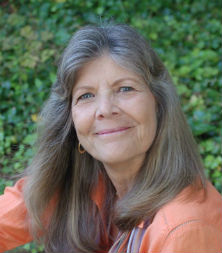
Tracey Barnes Priestley

Tracey Barnes Priestley

Curious about this, I canvassed a few of my writer friends. Sure enough, many of them had frequently participated in this annual tradition that dates all the way back to the Babylonians. Each writer had faced January with a deep commitment and heartfelt enthusiasm for those resolutions. One promised herself she’d “finish the first draft” of her novel. Another told me she had written on her dry-erase board, in big, bold letters, “I will clean up the dialogue mess that’s drowning this book.” The least experienced of them, an as yet unpublished young man full of enthusiasm for his craft, swore he would “silence my inner critic and keep writing, no matter what.”

I followed up by asking them how successful they had been in keeping those resolutions. Unfortunately, all had experienced the same thing: disappointment. No matter how hard they tried, they had ultimately been unable to make good on what they had resolved to do.

I knew exactly what they were talking about. I gave up creating New Year’s resolutions about my writing years ago when I found myself at the end of yet another cold January, with nothing more to show for all of my efforts than an exercise in futility. I was left feeling a range of emotions, from guilty to downright silly.

It’s actually quite comical just how few of us keep our New Year’s resolutions. It’s estimated only 45 percent of the population even tries to resolve making changes in the New Year. Of these brave souls, a mere 8 percent are successful.

Yet I’ve wondered if writers might be even more inclined than the general public to approach the New Year with a list of things we want to change, accomplish or do differently. We seem ripe for this kind of experience. As creative thinkers, we face a unique set of circumstances when it comes to producing our work. Alone in whatever space we can manage for our writing, we pound away at the keyboard, with our thoughts, our characters, our struggles and the never-ending reality that we aspire to a tough, highly competitive profession. Why wouldn’t we try to capitalize on the fresh start, the clean slate that January offers us? Magical thinking is right up our alley!

Why Our Writing Can Stall

In my work as a life coach, I’ve come to believe that our writing can be derailed because of two fundamental processes. The first, naturally, is the very nature of our craft, the writing process itself—think plotting, character development, etc. Unfortunately, this intrinsic set of challenges dwells right alongside our individual writing processes—complete with procrastination, destructive thought patterns, negative experiences, ambiguous motivation, unrealistic expectations, etc. And we wonder why we can’t keep our writing resolutions.

By now you’re probably ready to chuck your computer out the window. Don’t! Think of these two processes as valuable tools. Once you understand how they may be driving your inability to meet your writing resolutions, you will be poised to utilize effective strategies that support you and your writing every step of the way.

What’s Holding You Back?

Let’s begin by identifying the warning signs that your writing may be about to stall out. Consider current or previous writing resolutions you failed to keep. Ask yourself if you have experienced any of the following: lack of initiative; inability to prioritize writing tasks; frequent distraction; failure to establish a consistent writing pace/routine; inner dialogue that is one negative message after another; finding yourself simply “too busy” to get anything done. This is hardly an exhaustive list. Reasons writers stall can be varied and unique. Your task is to be as exact—and as honest with yourself—as you can in identifying what gets in the way of your ability to make progress on your projects. Make a list.

Next, evaluate this list from the perspective of the work-in-progress itself. As an example, let’s use my writer friend’s resolution to finish her first draft.

Every time she sat down at her computer, this writer felt lost about where the story should go next, and unclear about the relationship between her two main characters. She found herself thinking, This is useless, and, It’s not a strong enough idea for an entire book—maybe I should ditch the entire thing.

First, she tried to address the problems in the work itself. She sought craft and technique help with her plot and eventually resolved some backstory problems that had delayed the action and confused things between her characters. But the problems with her own lack of clarity persisted. Now she was fairly certain that the problem was within her writing process.

That meant facing off with her inner critic, which is always the most efficient place to begin. She looked her frustration in the eye and began to unravel the negative messages ricocheting around inside her head. Why exactly was this project “useless”? After some contemplation, she surprised herself with her answer: “Because I don’t have the patience for anything but short stories—certainly not a full-length novel.” This statement got her wheels turning in a new direction. She rethought her word choice (she is, after all, a writer) and decided it wasn’t really a lack of patience—this gifted writer was actually lacking confidence. She found herself wondering:
I’ve had some success with short stories, so why am I risking my time and energy on something I don’t know much about? She realized she’d been rationalizing away the entire project, even though writing a novel really was something she wanted to try.

Once you are able to identify what is really preventing you from pushing ahead, you’ll be freed up to construct writing goals that will actually yield productive results. For my friend, this meant not just correcting her self-defeating thoughts, but lifting the expectations she was unconsciously placing on her unwritten manuscript. It didn’t have to be a “success,” as her published short stories had been, to be worth her while—or at least, she needed to redefine what success meant to her. Once you decide that writing something you want to write is never a waste of time, regardless of whether or not it’s published in the end, you might just find that those negative voices quiet down on their own.

Let’s consider another example, the young writer who swore he would “silence my inner critic and keep writing, no matter what.”

When he viewed his writing from the perspective of each of these two processes, he discovered some distinct problems. He admitted to himself that he felt foolish in the eyes of others for turning his back on the profession he had trained for—engineering—and that he felt like a fraud because he had not been formally trained to be a writer. Those were demons he had to face if he ever wanted to get past Chapter 1.

Next, from the perspective of the writing process, he realized that while writing a novel was on his bucket list, he had not really worked out enough of a story idea to be able to take action on the page.

If you’re intimidated by the prospect of writing an entire novel (and who isn’t?), why not set a goal of writing, say, three chapters? By the time you meet that smaller, more achievable goal, you might just find you have an idea for Chapter 4. When it comes to writing, the laws of momentum apply—it’s infinitely easier to move toward something when you’re already in motion than it is to start from a dead stop.

How to Avoid Stalling: 9 Ways

Now that you’ve seen how fundamentals that have very little to do with actual words on a page can derail a writer’s progress, let’s take a look at what else we can to do make sure we keep moving.

1. Ditch the word resolution entirely.

It’s a setup, one that has been riding on the backs of people for thousands of years. Instead, set a goal, objective or even intention.

2. Understand what truly motivates you.

For some writers, identifying a positive outcome and working toward it is the most effective form of motivation. Conversely, other writers are spurred on by a degree of unrest, even fear.

Write down exactly what is motivating you to meet your writing goal. Is it a good fit? Does it ring true? If not, identify a more appropriate motivation. When finished, post it where you can see it when you are writing.

3. Break it down.

It can be quite worthwhile, exciting even, to set large goal. “Yes, I will finish my novel this year!” But make sure it’s specific—which usually means breaking it down into smaller goals you can cross off along the way. Remember my friend’s resolution, “I will clean up the dialogue mess that’s drowning this book”? It would have been more attainable to separate this vague notion into three separate goals: (1) When I hear myself saying negative things like “I’m drowning this book,” I will stop, write the negative message down, put it into my complaint box and get back to work (a good practice for anyone working toward any goal, by the way); (2) Over the next two weeks I will identify the dialogue passages that are giving me grief; and (3) By the end of January, I will have rewritten at least one scene that includes dialogue. Note that the goals are not just well defined, but action oriented, and that the second and third goals include a targeted time frame. Most of us will be more successful if we give ourselves reasonable deadlines.

4. Be realistic.

Changing behaviors, attitudes and habits is a process. Rarely does change occur because of one event or a date on the calendar. (Curious to know more about why this is? Do some research on the neuroscience of change—you will be astounded by what is required for our poor brains to shift into a new mode.)

5. If you feel frustrated, pick a single task—the smaller the better.

It should be related to your work-in-progress, but it doesn’t have to be what chronologically comes next in your manuscript’s progression. It does, however, need to be so simple you can’t possibly fail. For example, it may seem like rewriting one page should be easy enough to accomplish, but if you’re not succeeding, the task is too big. Instead, aim to rewrite one paragraph or even just one sentence. When you are finished, move onto the next small task. This approach fights frustrations with success, and builds forward progress into your writing practice.

6. Pair up.

Ask another writer to join you in working toward your individual goals in the months ahead. You’ll both benefit from being accountable to one another, and the mutual support will motivate you to follow through.

7. When all else fails, take a break.

It can be as simple as getting up from your computer and walking around the house, or as significant as putting your project on hold for a month. Stepping away from the source of our frustration can give us a fresh perspective and renewed momentum. But be sure to designate an end point to this refueling period to ensure that it is in fact a break—and not an excuse not to get up from that chair and never sit back down.

8. Realize that setbacks are part of the process.

Every writer’s road is full of tight curves, jarring potholes and unexpected bumps. Accept this inevitability, and you won’t be as surprised when you slam into something that brings you to a screeching halt. By eliminating the element of surprise, you minimize disappointment, which will help you to recover and get moving again.

9. Above all, be patient!

Meeting your writing goals takes time and effort. When you throw out that laundry list of resolutions and focus your attention on just one or two well-crafted objectives, you’re already one step ahead of where you were last year. Remember that 12 months is plenty of time to accomplish your writing goals if you approach them with understanding, clarity and objectivity. Here’s wishing you every success in 2015. Happy New Year!

About the author: Tracey Barnes Priestley is a columnist, blogger and novelist. She is the author of the novel Duck Pond Epiphany as well as a life coach who teaches writers organization, communication and stress management skills useful for today’s publishing world. Contact her at tracey@thesecondhalfonline.com

Leave a comment

Filed under 2016, writing tip, Writing Tip Wednesday