Tag Archives: writing tips

Writing tip Wednesday: “Advice on Short Story”

Kurt Vonnegut’s Advice on Short Stories

  1. Use the time of a total stranger in such a way that he or she will not feel the time was wasted.
  2. Give the reader at least one character he or she can root for.
  3. Kurt Vonnegut
    (1922 – 2007)

    Every character should want something, even if it is only a glass of water.

  4. Every sentence must do one of two things—reveal character or advance the action.
  5. Start as close to the end as possible.
  6. Be a sadist. No matter how sweet and innocent your leading characters, make awful things happen to them—in order that the reader may see what they are made of.
  7. Write to please just one person. If you open a window and make love to the world, so to speak, your story will get pneumonia.
  8. Give your readers as much information as possible as soon as possible. To heck with suspense. Readers should have such complete understanding of what is going on, where and why, that they could finish the story themselves, should cockroaches eat the last few pages.

The greatest American short story writer of my generation was Flannery O’Connor (1925-1964). She broke practically every one of my rules but the first. Great writers tend to do that.

Leave a comment

Filed under 2017, writing tip, Writing Tip Wednesday

Author Padgett Powell offers writing tips

For Padgett Powell, the Word of South literary festival was something of a homecoming.

Source: Author Padgett Powell offers writing tips

For Padgett Powell, the Word of South literary festival was something of a homecoming.

The award-winning novelist and author grew up in the capital city.

“I went to Hartsfield Elementary. We lived on Gadsden Street and then we moved over to Indian Head Acres,“ he said.

Before his reading Sunday, Powell trekked through his old neighborhoods.

“Nothing’s changed in the Wahalaw Nene house… It’s got some siding on it. You know, it looks crappy…Nothing’s changed,” he said.

After the personal journey, he unintentionally inspired the crowd at the literary festival at Cascades Park.

It is unintentional because he does not view himself as anything but a man set on making sense.

He has taught writing for 34 years at the University of Florida. On April 9, he read to an audience of about thirty hosted by the Midtown Reader.

There was continuous laughter throughout the reading.

“It should not be an ordeal. It shouldn’t be painful. It should be fun,” Powell said afterward. “What it comes down to is this: make up some good s—. You just write a sentence and another one.”

From his decades of teaching, Powell said his chief lesson can be summed up in two words on a blackboard: “Make sense.”

“That’ll do it. That’s it.”

But his students don’t always believe it’s that simple.

“They don’t think that’s really what happens. Or, they don’t think that’s really what’s supposed to happen. ‘The sense I have to make isn’t very good, so I can make it better if people don’t grasp it, if people don’t understand it.’ The mystery of nonsense.”

He is careful about what kind of autobiographical information he includes in his work.

“Mistakes are made using too much biography,” he warned. “You don’t write your life and change some names. For several reasons, one of which is it’s impossible to actually get it right. You’d kill yourself trying to get it right. How your heart actually got broken, you’re not going to be able to explain that to someone by reconstructing what happened.”

Leave a comment

Filed under 2017, writing tip, Writing Tip Wednesday

7 Strategies for Revising Your Novel | WritersDigest.com

7 Strategies for Revising Your Novel

Source: 7 Strategies for Revising Your Novel | WritersDigest.com

You’ve done it: typed The End. Those two wonderful words mark your graduation from always-wanted-to-write-a-novel to someone-who-did. Congratulations. Other ideas might be cooking away in the back of your brain, making you eager to start a new project. Often, this is where the spirit wanes as new writers lose momentum for the old manuscript. Because, you didn’t finish, did you? You only finished the draft. Now you have to focus on revising your novel.

Here’s the bad news (and there’s no good news): The rewrite is tougher than the draft. The draft is infatuation. The right rewrite strengthens your fiction into something that lasts to publication and gains a significant readership.

You know this task needs triage, so you won’t copyedit too soon. You line edit for tone, consistency and language, but you want more ways to improve.

Boost your novel-polishing skills with these seven strategies.

  1. Embrace the doubt.

Those murky feelings that cloud your mind when contemplating the massive task of revision? Welcome those doubts, that hesitation. A skeptical eye confers an appropriate attitude for rewriting. Every word in every sentence must carry its weight, either revealing character or advancing the story. Now be brave enough to cut or improve weak writing.

  1. Go back-to-front when possible.

Let’s say your plan for one brief session is a specific checkpoint. You’re verifying that sensory detail engages every scene, or perhaps you just want to note how many pages are in each chapter to ensure there aren’t twenty-five chapters of about fifteen pages while one chapter sprawls to thirty-five pages. If the revision item does not have to be done starting on page one and working to the last page, flip it and work backwards. This strategy prevents paging through in a direction that can distract you into an unintended sentence-by-sentence reread. The danger of that accidental read is that it risks dulling your reaction to the prose and worse, lets you fall in love with some passages while neglecting others.

  1. Structure your novel.

It’s not too late. Whether you’re a pantser, pantser-outliner hybrid, or an outliner, your finished draft can benefit from a new, careful outline. Note what questions and stakes the protagonist faces. How does he change in the end? What about the secondary cast?

Off the top of your head, do you know how many chapters are in your book? How does each chapter start and end? Where are the key actions and turning points found? How many scenes shape each chapter? Bracket each scene on a hard copy to reveal whether too much exposition lurks between the scenes. Is the climax close enough to the end that the bulk of the tale is composed of an uphill climb? Is the denouement placed to allow a satisfying, thoughtful resolution?

Gleaning the structure is a terrific exercise in critical examination. Graph and bullet point the features as though deconstructing someone else’s novel. This is not a time for emotional attachment to the piece; just factually note everything that displays the arc of the story, then see what surprises you or doesn’t fit.

  1. Revisit characterization.

With an accurate structure in hand, revisit your character construction while remembering the point of every passage. Did you use particularity in their descriptions? Is the reader shown what motivates every main character?

Crack open the draft to any chunk of dialogue. How obvious is it which of your well-crafted characters is speaking based on the sentences within the quotes? (Ah, yes, that’s just how a pilot/mad scientist/cowgirl would say such a thing.)

Perhaps your setting approaches the standing of character. Lovely, but don’t let the prose get flabby or insignificant—this is an opportunity for imaginative choices.

  1. Task your computer.

Various software programs highlight potential weak spots such as poor grammar and punctuation, or an overuse of modifiers, but any word processing program can be employed to help electronically. Do you have a pet phrase? Use the search function to find those repeats, then fix them. If you gave a person a verbal tic (perhaps she says “Nah” instead of “No”), do a quick find for the special term to ensure it’s not overused. And if another character displays the same tic, make it intentional, not an author slip.

When creating another hard copy to hand edit, select a different font for the second printing. Because of the different spacing, switching from Times New Roman to Courier can help freshen your eyes to the words.

  1. Listen to it.

Hopefully, you read aloud when revising, but you can do more. When my publisher sent author copies of my debut novel’s audio version, I reveled in that first experience of listening to a voice-acting pro read Orchids and Stone. However, I had heard it before, read by my computer.

There are good programs available—I use Natural Reader, which offers a free trial—that lets you listen to any document. This computer-generated reading will be flat, but the robotic affect is a good thing, because your writing must stand on its own, without inflection to carry the drama and dialogue. Chances are you’ll keep putting the program on pause and clicking back to the document to make edits.

Unintended alliterations, assonance and consonance borne in every sentence and surrounding paragraph are much more apparent when voiced. You might marvel over having missed some of these now-obvious editorial problems in print or on the monitor. You’ll hear repetitions that you didn’t see.

Good reading programs allow you to select the speed and gender of the speaker. After a significant rewrite, choose the other gender for the computer’s reading voice, then listen to the entire manuscript a second time. Chances are, you’ll still discover small improvements to make.

  1. Continue to study the craft.

While your polished draft gets some drawer time or is out with beta readers, reread diverse books on writing, studying instruction on revision. Let Robert Olen Butler admonish you to avoid abstraction, interpretation and izing (don’t generalize, summarize or analyze). Pay attention when David Morrell asks if you really want to publish that sentence in that form. Listen to Sol Stein’s warning about tunnel revision—the mistake of only tweaking small ticket items on a rewriting pass while missing the big picture and exposing your pages to excessive front-to-back reading, which makes your editing eye grow cold.

Improving your knowledge of the craft will improve your rewriting skills.

Here’s the deal: new writers often mire themselves and their work in the world of the unpublished due to a lack of self-editing their way to a polished manuscript. The only hope your draft has of becoming a well-read novel is you, and how much effort you put into the rewrite. Go all in.

***

Lisa Preston. Preston is the author of Orchids and Stone as well as several nonfiction books on animal care. Her experiences as a mountain climber, fire-department paramedic, and police sergeant are channeled into fiction that is suspenseful, fast paced, and well acquainted with human drama. She has lived in Arizona, California, and Alaska and now makes her home in western Washington. Visit her at lisapreston.com and on Facebook at facebook.com/lisa.preston.3152.

Leave a comment

Filed under 2017, writing tip, Writing Tip Wednesday

J.K. Rowling Just Gave The Best Advice Any Aspiring Writer Will Ever Receive

“Just because it didn’t find an audience, that doesn’t mean it’s bad work.”

Source: J.K. Rowling Just Gave The Best Advice Any Aspiring Writer Will Ever Receive

She went on to explain that, even if a particular piece of work doesn’t find an audience, the things you learn while creating it will be invaluable to you in the future.

***

And that just because something doesn’t find commercial (or critical) success, that doesn’t mean you shouldn’t be proud of it!

***

“Once you’ve done it, you’ll know you can do it again,” she wrote. “So do not ever quit out of fear of rejection.”

Leave a comment

Filed under 2017, writing tip, Writing Tip Wednesday

Top 7 Ways Authors Are Using Instagram – The Book Designer

Follow Other Authors Especially if you are a new author, following more experienced authors certainly can’t hurt. Even the most experienced author is not exempt from gaining insight from other authors. Networking with other authors as a new or previously unpublished author can be eye-opening and present you with opportunities you may not have otherwise come across.Instagram is one of the best social apps you can use as an author, because not only does it give us a rest from all those words, but it can be used in so many ways—personally or professionally. You just have start thinking less in words and more in pictures.

Source: Top 7 Ways Authors Are Using Instagram – The Book Designer

By Adrienne Erin (@adrienneerin)

I don’t know about you, but I’ve often wondered if the very popular but visually-oriented social media sites like Instagram are a good place to market books (over 300 million visitors a month, more than 70% of them from outside the U.S.). After all, books are words, not pictures (usually). Adrienne Erin knows that authors can get a lot of attention they might not otherwise get for their books with some savvy tactics in hand. Here’s her report.

Words are for us as writers what computers are to office workers. They are the lifeline to pretty much every facet of our work. Not only do we use them to communicate our art form, but we obsess, play, hate, love and need them in order to do what we do. Sometimes we need a rest from all the word playing—and hating.

Where can we find that rest without cutting ourselves off even further from social exchange, but also without having to use even more words? It can be done—with Instagram. Not only can you use Instagram, but as an author, you should be using Instagram. For more than one or two reasons.

Why You Should Use Instagram as an Author

There are a lot of authors who use Instagram in ways that may be entertaining. It’s entertaining in the same way the crazy lady in the grocery store is who pulls out every gallon of milk from the dairy cooler in order to get the one that has the furthest date of expiration. Yeah, it’s weird and maybe a little funny, but mostly kind of pathetic.

There are plenty of famous authors who evoke that kind of reaction on Instagram. Don’t be one of those authors. Instead, consider some of the following rational ways to use Instagram to help further your author name and influence.

  1. To Follow Bloggers Who Review Books
    This reason really shouldn’t have to be explained. I mean, duh – if you follow enough book-bloggers, you increase the chance that one or more of them will review your book, which is read by said blogger’s audience. Whether that audience is 100 or 100,000 – isn’t it worth it to reach that amount of potential buyers of your book for free?
  2. For Self-Promotion and Marketing
    Instagram can be used for promoting your name or your newest book. You can host a contest with a free copy of your book as the prize. You can ask for photo submissions that revolve around the theme of your book or you can just use photos to connect to your fans and readers. As BuzzFeed’s article on book covers altered to include James Franco shows us, humor can be a great marketing strategy.
  3. Inspire Yourself and Your Fans
    Visual imagery can be the source of inspiration on a daily basis. All you need to do is catalogue it and you have your own visual diary for defeating the worst case of writer’s block. Not only can these photos inspire you, but they may equally inspire your readers and fans, who will in turn, recommend their network to follow you as well. Many writers use inspirational tweets and Facebook posts to reach their readers. Your followers will respond well to inspirational messages that reaffirm their beliefs.
  4. Collaborate with Your Fans
    This could be a marketing project or it could be research for a new novel. Projects can range from social research to just-for-fun, to things like #100HappyDays, which seems to be a combination of both. 100HappyDays is inspirational, fun, challenging and engaging. Hosting a project like this could provide you with tons of material for your next book, or it could simply attract a ton of followers — aka, readers.
  5. Cover Art Photos = Free Book Promotion
    What better place to advertise your stunning new book cover than Instagram? Book covers are certainly one of the most powerful tools you have in your arsenal for attracting a new reader. I don’t know about you, but if I come across an author I’ve never heard of, but they write in a genre I like to read and they have a fantastically interesting book cover – I am much more likely to purchase that book. By the way, this is also another reason to never cut any corners on your cover art.
  6. Give Fans/Readers an Inside Look at Your Life
    You don’t have to reveal all the skeletons in your closet, but a few pictures of your most recent vacation, your adorable pets, a weekend trip to the harbor and a ride on a boat will get you noticed — people love this kind of stuff. The more you draw in your readers and fans by showing that you’re just like them, the more they will be inclined to follow you and interact with your more professional work.
  7. Follow Other Authors
    Especially if you are a new author, following more experienced authors certainly can’t hurt. Even the most experienced author is not exempt from gaining insight from other authors. Networking with other authors as a new or previously unpublished author can be eye-opening and present you with opportunities you may not have otherwise come across.


Instagram is one of the best social apps you can use as an author, because not only does it give us a rest from all those words, but it can be used in so many ways—personally or professionally. You just have start thinking less in words and more in pictures.

Leave a comment

Filed under 2017, Writing Tip Wednesday, writing tips

Writing tip Wednesday: “10 Things I Learned About Writing and Publishing From Managing a Porn Store” | LitReactor

Source: 10 Things I Learned About Writing and Publishing From Managing a Porn Store | LitReactor

By Christoph Paul

I used to manage a porn store in northeast D.C. I worked there for two years and it was the best writer job I ever had. There were whole blocks of time where I could read and write while I sat behind the counter. It was a blessing to get paid to practice my craft. All the hours added up and I became a better writer, but managing the porn store also taught me certain skills that I use on a daily basis in my writing and publishing career.

Covers and Titles

The first thing I learned was that we had to buy and sell lots of rentals on our new releases to stay afloat. If I picked a lot of bad movies for the new release wall that didn’t get bought or rented within the first month, my boss would be pissed. The customers also got pissed, and then I would have to deal with a lot of bullshit instead of focusing on writing or reading. The only real work I had besides putting movies back on their shelves was picking the weekly new releases. With the goal of having my boss stay off my back, I made sure to kill it each week with my new release section. I learned what sold and what type of titled stood out. I use that same skill when writing or publishing a new book. Whether it be porn or fiction, the cover and title has to show the readers and viewers that they will enjoy the product. The cover must at least peak curiosity and satisfy something a reader or porn watcher is wanting. Bad covers, whether on a porno or on a novel, are easy to spot and will always stay on the shelf.

Dialogue

My shift was eight hours a day, five days a week. Though I would have loved to spend every hour reading and writing, I had to interact with the customers. There were a lot of regulars who wanted to talk about politics, sports, their personal lives, their kinks, and their jobs. They would not hold back, and almost treated me like a priest. I heard some hardcore confessions. When I am figuring out how a certain character would sound, I have a ton of examples from the porn store. I can use their quirks and speech patterns to inject more realism and humor into my dialogue. Whether it be someone in the closet renting gay porn or a person explaining why they don’t want to have sex with their significant other anymore, I heard people speaking their truths. This gave me an ear for both inner and outer dialogue. There are things that a character reveals in more subtle and nuanced ways, through their rhythms, vocabulary, and even through the things they pointedly leave out.

Writing Through Chaos and Distractions

You can write anywhere. That is what I learned those years behind the porn store counter. I’d have homeless people come in, zoning law inspectors, gang bang recruiters (seriously), cops coming in to shoot the shit, the boss stopping by to complain, and customers looking for very specific fetishes. I learned to stop and deal with who or whatever I had to attend to, and then get back to writing. While there, I finished the second draft of a literary novel, some short stories, and read a ton. I learned there is no perfect place to read and write, and that even through the most awkward disruptions you can still find time to be creative.

Con Selling

If you can sell a $29.95 DVD with ‘anal’, ‘cuckold’, and/or ‘big cocks’ in the title, you can sell a book you have edited or written to a stranger. I picked up some practical sales skills at the porn store. My constant goal was to keep enough money coming in so my boss never suspected I was writing on the job. Though selling shitty porno movies and fake penis growth pills felt disenchanting at times, it taught me how to interact with strangers. When I started doing book festivals and conferences three years ago, they were a joy, because I actually believed in my books and understood how to communicate each book’s value. While penis enlargement pills are bullshit, I actually believe in what I sell. That combination of enthusiasm and sales skills has helped me finish in the black for almost every con/festival I have attended.

Character Studies

It wasn’t just dialogue I learned from the porn patrons. It was crafting real characters with real quirks and commonalities. Listening and talking to the porn store patrons was as good as reading any craft book on creating realized and memorable characters. After working the store for a year, I could usually tell a lot about a person within the first minute of talking to them. I noticed the physical: body language, the sound of their voice, build, did they look me in the eyes or not; sociological: how well read or educated they were, where they worked, what kind of money they made, religion, nationality; and emotional: were they stable, lonely and needing to connect, fake happy, assertive or aggressive, timid. All of these characteristics combined into making them who they were. I could use this skill to build real characters in my fiction. I could take physical, sociological, and emotional attributes and combine them into a unique human being. I would sometimes compare them to real individuals I met at the porn store to see if they felt ‘real.’

Genre Expectations and Surpassing Them

Different fetishes and types of porn are really just different genres. The videos that end up getting rented and bought the most not only meet ‘genre expectation,’’ they also add something special. While I don’t want to get super graphic here, it usually involves something memorable in the video—a scene, a style, and many times, a certain actress. I learned from the popular porno videos that when writing in a certain genre you have to make those genre fans happy, but also give them something unique. It can be your style of language, it can be taking a new approach on a familiar trope, and most importantly giving the reader an outstanding character. When you meet the expectations of genre and create something memorable in your story, your books will sell as good as porn.

Talking Books

On very slow days I would sit behind the register and read. A lot of customers didn’t want to interact and I would just look up, put in my bookmark, and get them their movie. This was pretty standard, but sometimes the porn patrons would be curious about what I was reading. Many of these guys were proud non-readers. I took this as a challenge to infuse the porn store with at least a little literary curiosity. To do this I had to tell them why the book was enjoyable and get them interested enough to want to hear more. I was very proud when I was able to get 4 men excited about the story of one of my favorite novels, Anna Karenina. Experiences like that have made it a lot easier for me to write the back copy of my own as well as other writers’ books.

Vibrator Editor 

Until I got the hang of it, selling and recommending vibrators was a challenge. Though white male privilege exists, it doesn’t come in handy when talking to a woman about what vibrator she should buy. At first it was very awkward and I didn’t sell many vibrators, but I learned that I had to help the female customer feel comfortable. I also needed to be knowledgeable and a little humorous, as well as respectful. When I took this approach I easily sold vibrators and learned better communication skills. These skills help me so much when editing other people’s work. Communication and making artists feel comfortable is important. Sex toys, someone’s story, they both involve vulnerability, but if you communicate the right way, a writer will be able to access the right technique and tool for the job.

Storytelling

When it was cold, the porn sales always rose. Wintertime was the most popular time in the store. Not just for rentals and purchases, but for guys just wanting to hang out. The porn store would feel a lot like a barbershop. There were guys who proudly didn’t read and didn’t even like watching movies or TV. They only liked sports, but some of these guys would come up with the funniest stories I have ever heard. There were always men wanting to talk, but if you couldn’t tell a good story or keep people’s interest, they wouldn’t give you a chance to be heard. I saw that being a great storyteller had nothing to do with being a great writer. Storytelling was a separate skill, and there were some guys who might not have ever picked up a book but could tell a great story. I started listening to these guys and dissecting their stories. I realized they were using many of the techniques I read about in the craft books about great storytelling.

Snobbery

I started the porn store job a good 7 years ago. At the time, I was a big literary snob. I believed that only the serious literary novel is what people should read, and even though I was selling porno, I thought erotica and romance writers were total hacks. After two years of working there my mind really opened, and I saw that whether it be porn, erotica, or romance, they were art forms and audiences enjoyed the fantasy and desire that they provided. I lost my snobbery, seeing that any kind of storytelling takes skill. A few years later I would take what I learned at the porn store and write erotica under a pen name. The erotica I have created is still the most successful work I have published. If I hadn’t worked at the porn store, I would be just another bitter failed literary novelist complaining about Chuck Tingle.

Leave a comment

Filed under 2017, Writing Tip Wednesday

5 Ways to Combat Author Anxiety | WritersDigest.com

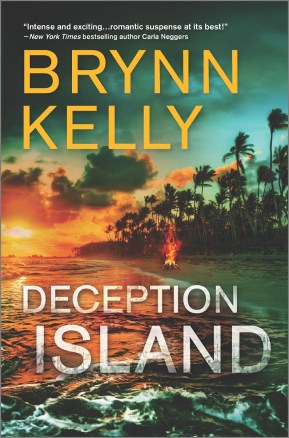
Brynn Kelly, author of DECEPTION ISLAND (June 2016, HQN Books), shares 5 tips for moving past Author Anxiety and to keep writing.

Source: 5 Ways to Combat Author Anxiety | WritersDigest.com

It turns out Author Anxiety is a Thing. It’s not just me.

I discovered this on the eve of publication of my debut novel, DECEPTION ISLAND, when I was silly enough to Google my shiny new title. Up popped a Netgalley reviewer live-tweeting as she read it. Only she was hating it—pulling it apart chapter by chapter.

I’d had loads of great reviews—in Publishers Weekly, Booklist, Library Journal, RT Book Reviews, on dozens of blogs—but this one hobby reviewer withered my fragile confidence. It was the intimacy of it. I could see what she looked like, I could see what page she was reading, I could certainly see exactly what she thought of the story. And I couldn’t stop refreshing. Because I’m an idiot.

I’ve been a journalist for two decades and I’ve published a bunch of nonfiction books, so public criticism is nothing new. Why, then, did this rattle me?

I did what any 21st century dweller does when faced with a 21st century dilemma. I Googled. And I discovered I wasn’t alone. Not only is Author Anxiety a Thing, but it’s such a Thing that, yes, it deserves initial caps. I set out to find a remedy before this vile feeling paralyzed me from writing another fictional word. In the interests of author solidarity, I’m sharing five of my best cures.

1. Find perspective
Many years ago, to finance my journalism degree, I worked as a TV publicist. A fun job but intensely shallow. (Ask me anything about “Beverly Hills 90210” and “Melrose Place.”) Even so, like all jobs, sometimes it got stressful. The most important lesson I learned from that two years was from a boss who was fond of saying, “It’s entertainment. It’s not f***ing brain surgery.” Same goes for my novel. It’s a romantic thriller. It’s not important. My bad day at work is when a reader isn’t entertained or moved and I lose that reader. I’m not a doctor who has lost a patient or an air-traffic controller who’s lost a plane. The worst-case scenario? This novel tanks, everyone forgets about it, and I write another one.

2. Embrace imperfection
Don’t tell my publisher this, but DECEPTION ISLAND isn’t perfect. There, I’ve said it. What a relief. I could have spent three decades rewriting it and it still wouldn’t be perfect. There’s no such thing as perfection in creative endeavor. At some point—usually when a deadline hits—you must step away from your manuscript and say, “There, it’s done. It’s the best I can do right now.” That book has become your past, not your future. It’s not even your present, anymore. The only thing that remains wholly in your control is your next book.

3. Get productive
If I read a bad review, suddenly I don’t feel like writing. But you know what? A good writing day blows away my doubt and fear. And studies into motivation have found that the muse kicks in after you begin a task, not before. Don’t feel like writing because someone just told the (virtual) world that you suck? Open your WIP and start somewhere, anywhere. Tinker with a paragraph you wrote a year ago, write a random exchange of dialogue, change the font. Just. Start. Your brain will light up, the motivation will come and the angst will evaporate.

4. Log out
Only one thing will make you a successful novelist: writing novels. Let the virtual world live without you—especially if it drags you down. Forget the rules that you must regularly post on social media and engage online. If bad reviews on Goodreads or Amazon discourage you, don’t read them. If you can’t help flicking onto them—because validation is addictive— but you hate yourself for it, get a productivity app and block those sites, and any others that routinely make your heart soar and sink. (If a review falls in a forest…) Ray Bradbury once said: “You have to know how to accept rejection and reject acceptance.” And if you just want the boost without the pain? Ask a friend to email you only the great reviews, in a monthly digest. It’s not a cop-out. It’s sensible.

5. Escape
If that sniping little head of yours is not a pleasant place to hang out, get out of it. Do something immersive: play a card game with your kid, see a movie, whack a tennis ball around a court. When you return, you should find your mind is a more agreeable—and productive—environment. Keep it that way by throwing a little love into the world to offset the negativity. Tweet an author about how much you enjoyed her book—because she may be feeling Author Anxiety today, too.

Leave a comment

Filed under 2017, writing tip, Writing Tip Wednesday

Writing tip Wednesday: “New Agency to Consider”

New Agency to consider

kt literary

From their website: Books aren’t just what we do, they’re who we are. We become the sum total of our reading experiences – the romance, the adventures, the coming-of-age, the fantasy, the dare-to-believe. At kt literary, we want to be more.

It's not too late to start your novel.

It’s not too late to start your novel.

Madeleine L’Engle once said, “You have to write whichever book it is that wants to be written. And then, if it’s going to be too difficult for grown-ups, you write it for children.” Write for children. Write for adults. Write for yourself. And then, when you’re ready to find a literary agent to take your work to the next level, think of us.

kt literary is a full-service literary agency operating out of Highlands Ranch, in the suburbs of Denver, Colorado, where every major publishing house is merely an email or phone call away. We believe in the power of new technology to connect writers to readers, and authors to editors. We bring over a decade of experience in the New York publishing scene, an extensive list of contacts, and a lifetime love of reading to the foothills of the Rocky Mountains.

And did we mention our boundless optimism?

Source: http://ktliterary.com/

Agents and what they are looking for:
We’re thrilled to be actively seeking new clients with great writing, unique stories, and complex characters, for middle grade, young adult, and adult.

Kate is looking only at young adult and middle grade fiction and selective nonfiction.

Sara seeks authors in middle grade, young adult, and adult romance, erotica, science fiction, and fantasy.

Renee is looking for young adult and middle grade fiction only.

Hannah is interested in speculative fiction in young adult, middle grade, and adult.

To query us, please select one of the agents at kt literary at a time. If we pass, you can feel free to submit to another. Please email your query letter and the first three pages of your manuscript in the body of the email to either Kate at katequery@ktliterary.com, Sara at saraquery@ktliterary.com, Renee at reneequery@ktliterary.com, or Hannah at hannahquery@ktliterary.com.

The subject line of your email should include the word “Query” along with the title of your manuscript. Queries should not contain attachments. Attachments will not be read, and queries containing attachments WILL be deleted unread. We aim to reply to all queries within two weeks of receipt. For examples of query letters, please feel free to browse the About My Query archives on this site.

In addition, if you’re an author who is sending a new query, but who previously submitted a novel to us for which we requested chapters but ultimately declined, please do say so in your query letter.

If we like your query, we’ll ask for the first five chapters and a complete synopsis. For our purposes, the synopsis should include the full plot of the book including the conclusion. Don’t tease us. Thanks!

We are not accepting snail mail queries at this time. If you have an aversion to email, perhaps we’re not the best agency for you. We also do not accept pitches on social media.

Source: http://ktliterary.com/submissions/

Leave a comment

Filed under 2017, writing tip, Writing Tip Wednesday

Writing tip Wednesday: “Healthy writing”

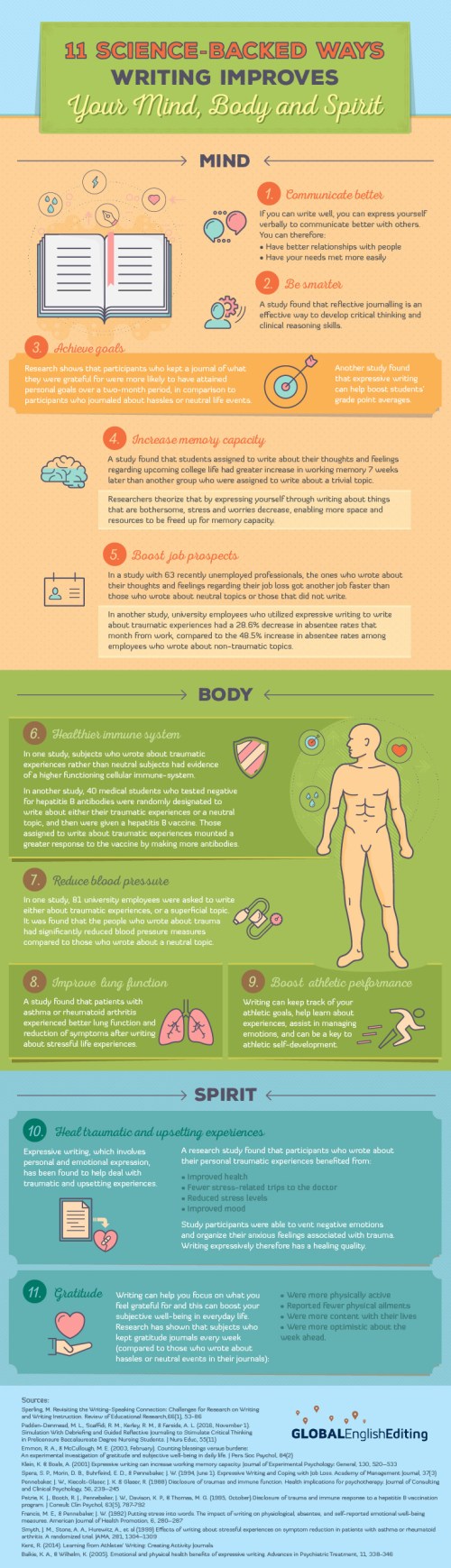
11-reasons-writing-is-good-for-your-health

Source: http://www.writersdigest.com/editor-blogs/there-are-no-rules/11-reasons-writing-good-health?utm_source=wir&utm_campaign=wir-bak-nl-170214&utm_content=921445_WDE170214&utm_medium=email

Leave a comment

February 15, 2017 · 11:56 am

Writing tip Wednesday: “Write better Villains”

How to Write Better Villains: 5 Ways to Get Into the Mind of a Psychopath

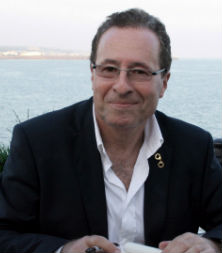
By Peter James

http://www.writersdigest.com/online-editor/write-better-villains-5-ways-get-mind-psychopath?utm_source=wir&utm_campaign=wir-bak-170124&utm_content=915933_WDE170124&utm_medium=email

1. Where to find a psychopath who will talk to you – the importance of meeting your monster.
Over my years of research for my Roy Grace mystery novels I’ve given many talks in prisons for the charity, The Reading Agency, which encourages literacy in UK prisons, as it gives me the opportunity to meet many different kinds of criminal face to face.

I had been wanting to write about a female “black widow” character for some time, and had been studying past cases, and thinking hard about creating a convincing character. Three years ago I was talking in a women’s prison and there was a well-spoken middle-aged woman in the audience who was asking particularly smart questions about literature. She fascinated me, being clearly well educated and I wondered what crime she had committed. Perhaps she killed someone drunk driving, or something like that, I wondered?
steve-james-featuredOne big perk of my talks is that I get to mingle with the prisoners after and chat to them one-on-one. I made a beeline for her. I never ask a prisoner outright what they have done – it’s not proper etiquette! So as an icebreaker I said, ‘How much longer do you have to serve?’

She replied, in a booming voice, ‘Nine and a half more bloody years – and it’s just not fair! A woman did exactly what I did, in London, and she’s only got six more years to go.’

‘So, what brought you in here?’ I asked, somewhat startled.

‘I poisoned my mother-in-law, the old bag!’

‘OK,’ I replied, somewhat astonished. Then she went on.
‘The thing was, she went into hospital to die, so I embezzled her bank account. Then the bloody woman didn’t die – she came home. I realized she would find out so I had to poison her. Then I realized my husband would find out so I had to poison him, too. And it’s just not fair – this woman in London did exactly what I did and she’s only got six more years!’

As I was being taken back out by a prison officer I said to him, ‘Is this woman for real?’

‘Oh yes sir, he replied. ‘Her husband was three months on life support and he has permanent brain damage – and she’s just angry about the length of her sentence…’

I knew at once I had found my character for Love You Dead!

2. Make your monsters lovable.

If you think about the most endearing – and enduring – characters in the history of literature they are the ones that are not simply portrayed as black and white evil, but with shades of coloring. Think about Dracula – he is a monster but he has huge charisma and charm. Frankenstein’s monster turns to his creator, Dr Frankenstein and tells him he never wanted to be born. Hannibal Lecter, perhaps the most success monster in all of modern literature, is enormously charming, charismatic, he has style and people find themselves rooting for him, despite knowing just how utterly evil he really is.

3. Avoid stereotypes. A psychopath isn’t always a man in black in a dark alley with a sharp knife.

It may be a surprise to some people, but yes, there really are good psychopaths as well as bad ones. Or perhaps, paraphrasing from George Orwell’s Animal Farm, puts it into better perspective: Some psychopaths are less evil than others. He could be a past or a President of the United States? The CEO of a Fortune 100 company? Being a psychopath is the best qualification to get you to the top of a chosen path in life, but the worst to have once you are there: The reason most serial killers get away with it so long is that they are bright and cunning – and often total chameleons, able to blend into society. Ted Bundy, America’s worst to date is a classic example. A good-looking, charismatic former law student, estimated to have killed and raped over 100 young women. But it’s not just a good qualification if you want to be a serial killer, it’s a great one if you want to become a captain of industry or a top politician. The combination of charm, intelligence and utter ruthlessness is potent. The psychopath is capable of saying anything just to get to the top – how many politicians do we all know who’ve said totally opposing things many times during their climb up the greasy pole. But ultimately it is hubris that can be their downfall because their lack of empathy means they fail to read the warning signs. President Richard Nixon is a classic; Idi Amin; Saddam Hussein; Gadhafi. And how many CEOs of major companies, like Bernie Madoff and the late Robert Maxwell?

4. How to come up with a well-developed backstory for your psychopathic character.

Some years ago I spent a day at Broadmoor, the UK’s premier high-security psychiatric hospital. It took me a year before my request was accepted, but it was worthwhile because what I saw and learned there has helped me with so many subsequent characters. The qualification for admission to Broadmoor is, essentially, to be violently criminally insane. I asked the resident chaplain if he felt that there were some people who were born evil, or did something happen in their lives to turn them that way?

He replied that the inmates were divided roughly 50/50 into schizophrenics and psychopaths. Schizophrenia was a chemically treatable mental illness, and provided they took their medication, around 70% of the inmates in this category could eventually go back into the world and live ordinary lives. But for the psychopaths, it was very different.

He explained a psychopath is likely to first present symptoms at around the age of four. The majority is male but there are female ones also – as we will see. The earliest signs are likely to be a lack of empathy and no real sense of a moral code of right or wrong. A boy steals his best friend’s favourite toy – with absolutely zero guilt. He will also from an early age be an accomplished liar – and rarely found out.

The psychopath brought up in a loving, stable family may well go on to become a hugely successful businessman or politician. But the one brought up in a broken home, or a violent, abusive situation, is likely to become dangerously warped. Many serial killers come from such latter backgrounds, as did Adolf Hitler who had a bullying father who would not let him pursue the career as a painter he wanted in life.

5. Talk through any major villain you are creating with a forensic psychiatrist or psychologist.

I was chatting at lunch with former armed serial bank robber, and self-confessed psychopath, Steve Tulley. As a teenager in prison, for his first robbery, he met criminal legend Reggie Kray, and persuaded him to let him be his pupil and teach him everything he knew. At 58, broke, Tulley is living in a bedsit in Brighton and has spent more of his life in jail than free. I asked him what was the largest sum he had ever got away with. He told me it was £50k in a bank job. So what did he do with the money? He replied, excitedly that he’d rented a suite in Brighton’s Metropole Hotel and, in his words, ‘Larged it for six months until it was all gone.”

I asked Steve if he had the chance to live his life over again would he have done it differently? ‘No,’ he replied with a gleam in his eyes. ‘I’d do it all again. It’s the adrenaline, you see!’

From subsequently talking to forensic psychiatrists and psychologists, I’ve learned that this “adrenaline” buzz that Steve talks of goes hand-in-hand, with some criminals, with the ruthless, chaotic, hand-to-mouth existence they lead. One of the most chilling things I ever saw was the police video of Dennis Rader – the BTK Strangler– confessing. When asked why he had bound, tortured and killed – horrifically – his victims he replied, simply and matter-of-factly, ‘It was erotic, I got a buzz from it.”


Leave a comment

Filed under 2017, writing tip, Writing Tip Wednesday, writing tips