Tag Archives: writing tips

Writing tip Wednesday: “The End”

Dos and Don’ts for the Last 10,000 Words of Your Story

By James V. Smith Jr.

DON’T INTRODUCE ANY NEW CHARACTERS OR SUBPLOTS.
Don’t introduce anything new. Any appearances within the last fifty pages should have been foreshadowed earlier, even if mysteriously. What this means: If you bring in a new character this late, your audience will feel cheated, as if you’ve been holding back important information for a cheap surprise. They want clues throughout the novel so that way, even if they couldn’t solve it early, they can look back and say “Oh yeah, now that makes sense.”

DON’T DESCRIBE, MUSE, EXPLAIN, OR PHILOSOPHIZE.
In other words, keep the author out of the story, and don’t let it drag. By this point in the story, setup is done, complication is wrapping up, and resolution should be entirely uncluttered so you and the reader can make an unimpeded dash to the finish line. Keep description to a minimum, action and conflict to the max.

What this means: No long details about the setting or sudden dishing about backstory. This is what your story is all about. Your protagonist has sacrificed and made wrong turns to get to this moment. Make these pages as face-paced as possible.

DO CREATE THAT SENSE OF OH, WOW!
Once or twice on every page, if possible, more frequently.

What this means: Stories that play out “Then this happened. Then this happened. Then this happened.” in the final moments aren’t memorable. It’s better to put in an “But unexpectedly …” as the final chapters close up your story, especially if it ties up moments you’ve foreshadowed earlier in your novel.

DO ENMESH YOUR READER DEEPLY IN THE OUTCOME OF YOUR STORY.
Make her unable to put down your novel to go to bed, to work, or even to the bathroom until she sees how it turns out.

What this means: Like in sports, the most captivating part is the final minutes or innings of a close game. You can’t take your eyes off of it because you not only want to know the outcome, you feel like you need to know the outcome—and you need to know it immediately. Think of your ending in those terms.

To learn more, go to: http://www.writersdigest.com/how-to-improve-your-writing-skills-the-last-10000-words?et_mid=656501&rid=239626420

Leave a comment

Filed under writing tip, Writing Tip Wednesday

Never Put Two Spaces After A Period – Business Insider

Never Put Two Spaces After A Period – Business Insider.

Can I let you in on a secret? Typing two spaces after a period is totally, completely, utterly, and inarguably wrong.

And yet people who use two spaces are everywhere, their ugly error crossing every social boundary of class, education, and taste.

You’d expect, for instance, that anyone savvy enough to read Slate would know the proper rules of typing, but you’d be wrong; every third e-mail I get from readers includes the two-space error. (In editing letters for “Dear Farhad,” my occasional tech-advice column, I’ve removed enough extra spaces to fill my forthcoming volume of melancholy epic poetry, The Emptiness Within.)

The public relations profession is similarly ignorant; I’ve received press releases and correspondence from the biggest companies in the world that are riddled with extra spaces. Some of my best friends are irredeemable two spacers, too, and even my wife has been known to use an unnecessary extra space every now and then (though she points out that she does so only when writing to other two-spacers, just to make them happy).

What galls me about two-spacers isn’t just their numbers. It’s their certainty that they’re right. Over Thanksgiving dinner last year, I asked people what they considered to be the “correct” number of spaces between sentences. The diners included doctors, computer programmers, and other highly accomplished professionals.

Everyone—everyone!—said it was proper to use two spaces. Some people admitted to slipping sometimes and using a single space—but when writing something formal, they were always careful to use two. Others explained they mostly used a single space but felt guilty for violating the two-space “rule.” Still others said they used two spaces all the time, and they were thrilled to be so proper.

Read more: http://www.slate.com/articles/technology/technology/2011/01/space_invaders.2.html#ixzz2sjI4n4vN

7 Comments

Filed under writing tip

Writing tip Wednesday: “Raise the stakes, honey!”

By Kathi Appelt

I have been a writer my whole life long, beginning with writing on walls as a toddler to writing professionally as an adult. In that life-long career, I have written articles, picture books, non-fiction, poetry, essays, short stories, a memoir, and even a song or two.

But for years and years the novel was a form that absolutely eluded me.

NOVEL PROBLEMS
For a long time, I told myself that I didn’t need to write a novel. After all, I had plenty of published work to stand on, and I had plenty of ideas for new works.

But I was kidding myself, because in my heart of hearts, it was a novel that I wanted to write. So, I took courses, I bought how-to books, I went to workshops. I did all of the required groundwork. Why couldn’t I crack this genre?

In the meantime, I had drawer after drawer, boxes stacked upon boxes, of half-finished novels that were just that: half-finished.

It seemed like I could create wonderful characters, interesting landscapes, and great, colorful details. My characters, despite their goals, just didn’t seem to make much progress. I’d get about half way through and then my story would lose steam and whimper into oblivion.

It wasn’t until I took an on-line course with master teacher Dennis Foley that I realized that the essential element missing from my work was tension.

GETTING TENSE
Now, plots are plots. I knew how to create plots. They involve a character who is moving toward a goal. And as Dennis so aptly puts it: “a goal is nothing more than whatever your character is trying to achieve, overcome or acquire.” Easy peasy.

Yeah, right!

How could it be that I could have a character, in search of a goal, with all of the other elements in place, but still come up short?

As it turns out, in order for a reader to care about your story, the stakes have to be raised. You can have a character overcome incredible odds and obstacles, but if there’s nothing at stake, then there’s no reason to pull for that same character.

Let’s consider an example. Say we have a great guy named Phillip who is a cross-country racer and whose goal is to win the regional track meet. We’ll put Phillip at the starting line and pull the trigger on the starting pistol. Kapow! Off he goes.

If we use a basic plot, with three obstacles of increasing difficulty, we can first have Phillip develop an annoying blister on his heel. But because Phillip is tough, he runs through the pain. Next, it starts to snow. Now Phillip is having trouble seeing the track because of the snow, and his blister is getting worse, so the odds against his winning are increasing. Finally, he stumbles and turns his ankle. The entire pack is well ahead of him and Phillip is trailing badly.

WHY DOES IT MATTER?
We’ll leave it there. Whether Phillip wins or not doesn’t really matter. But what is missing from this story is the why of it. Why is it so important that Phillip win this race?

You see, there’s nothing wrong with this plot, nothing wrong with the obstacles, nothing wrong with the character. But we have no idea what the stakes are and why it matters so much to Phillip to win that race. Is a college scholarship at stake? Is he racing to prove something to his family, something
about honor, about perseverance, about stamina? Is he racing to win enough money to buy medicine for his little daughter?

What will be irrevocably lost if he doesn’t win? Why is it so important to Phillip?

And that’s the key word – important. The stakes have to be so important to the main character that if they don’t achieve, acquire or overcome their goal, we the reader will care. If not, then it’s just a race.

Winning or losing doesn’t matter unless the stakes are high.

Raise ’em, honey. Otherwise, nobody will care.

___

Kathi Appelt

Kathi Appelt

Kathi Appelt is a National Book Award finalist (for THE UNDERNEATH), and the author of over 20 books for kids and teens. Her tales havewon numerous national and state awards, and she serves on the faculty of the Vermont College of Fine Arts’ MFA in Children’s Writing program. Catch up with her online at: www.kathiappelt.com

Leave a comment

Filed under Writing Tip Wednesday

Writing tip Wednesday: “Pitching, 7 tips”

By Peggy Eddleman

Full column at: http://www.writersdigest.com/editor-blogs/guide-to-literary-agents/7-tips-for-pitching-to-an-agent-or-editor-at-a-conference?et_mid=658011&rid=239626420

Note: There is also a giveaway you can be eligible for if you go to the link above and post a comment.

Tip #1: If you can get a pitch session with an agent/editor, do it!
Agents get tons of queries every single day, and a good 90% of them come from people who haven’t worked very hard to perfect their craft. Agents know that if you go to conferences, you’re likely in the 10% who have. If you go to a conference and pitch, you’re likely a top 10% writer who has a book close to being worthy of representation. It also gives both of you a chance to meet each other, and that’s invaluable.

Tip #2: If you don’t register in time to schedule a pitch session, get on a waiting list.
Pitch sessions fill up quickly. People get nervous, though, or don’t get their book ready in time, so they cancel often. They shouldn’t, but they do, and this is good for anyone who is on the waiting list.

Tip #3: Figure out what you want to cover during your pitch session.
Don’t memorize a script, but do memorize the points you want to cover. Then you can talk like a normal person about it. And definitely practice talking like a normal person about it to everyone who will listen. The more comfortable you feel when talking about your book, the better your pitch session will go.

Tip #4: Go with other questions in mind.
I speed-talked my way through my first pitch session, because when I’m nervous I don’t ramble– I leave things out. So my pitch was done in less than 30 seconds. After asking me a few questions, the agent requested my full. Then she said, “Do you have any questions for me?” I hadn’t thought about questions for her! I sat there, feeling awkward, said, “Um…. Nope?” then shook her hand and left, with seven minutes of our meeting unused.

Don’t do what I did! Use that time to ask about their agenting style. Ask about the industry. Ask about the process. Ask about craft. Ask questions about your plot. Ask about anything writing related. Chat. See how your personalities mesh. Just don’t leave seven minutes early. You paid for that time– use it.

Tips 5, 6, and 7 available at http://www.writersdigest.com/editor-blogs/guide-to-literary-agents/7-tips-for-pitching-to-an-agent-or-editor-at-a-conference?et_mid=658011&rid=239626420

Leave a comment

Filed under Writing Tip Wednesday

The 16 Habits of Exuberant Human Beings, by Kate Bratskeir

The 16 Habits of Exuberant Human Beings, by Kate Bratskeir.

Sample of article:

Martin Seligman, the father of positive psychology, theorizes that while 60 percent of happiness is determined by our genetics and environment, the remaining 40 percent is up to us.

In his 2004 Ted Talk, Seligman describes three different kinds of happy lives: The pleasant life, in which you fill your life with as many pleasures as you can, the life of engagement, where you find a life in your work, parenting, love and leisure and the meaningful life, which “consists of knowing what your highest strengths are, and using them to belong to and in the service of something larger than you are.”

After exploring what accounts for ultimate satisfaction, Seligman says he was surprised. The pursuit of pleasure, research determined, has hardly any contribution to a lasting fulfillment. Instead, pleasure is “the whipped cream and the cherry” that adds a certain sweetness to satisfactory lives founded by the simultaneous pursuit of meaning and engagement.

****

While not directly a writing tip, a more positive frame of mind might just help with writing, especially when few others seem interested in what you are doing.

Leave a comment

Filed under Writing Tip Wednesday

Writing tip Wednesday: The Daily Routines of Famous Writers | Brain Pickings

The Daily Routines of Famous Writers | Brain Pickings.

Happy 2014!

Leave a comment

Filed under Writers on writing, Writing Tip Wednesday

Writing tip Wednesday: “Discipline”

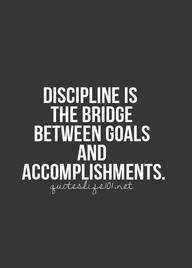
Discipline_bridge

Writing regularly; reading often; re-writing diligently. These three things will help you improve more than any others. And like exercise or playing a musical instrument, doing it on a schedule, even if for only for a brief time every day will do you more good than picking a spot here or there, now and then, or sometime soon. Here and now is the place and time to begin, and a little discipline will make all the there’s here and all the then’s now, and do so sooner than you realize.

Leave a comment

Filed under Writing Tip Wednesday

Writing tip Wednesday: “Big Bang”

START YOUR STORY WITH A BANG!

By Alan Sitomer

If your novel doesn’t pass the bang test, chances are high it will fail. Are you familiar with the, “Start with a BANG!” theory of authorship in modern times? If not, stop and pay heed.

Why “Start with a BANG!”? Because these days very few readers will give a book 30 pages to “let things develop.” Scores of publishing industry professionals are so, so busy (and so, so swamped, more than even the rest of us) that even if you can get them to consider your work – and it’s no easy task to get an agent or editor to read anything these days – the unspoken truth is that if they are not feeling the love by page 25 of your work, there are too many other things they need to/want to read.

Objective number one has to be to prevent the following sentiment from floating through the mind of the reader at all costs: “Sorry Charlie… I gave ya a shot but my time with you is done and I’m gone-zo! Good luck in the future.”

TRUMPED BY TMZ.COM?
Let’s be honest for a sec, do you give new books more than 25 pages to prove themselves any longer? If your “I am thinking about ditching this book” antennae are up by page 10, and you are still skeptical by page 15, we all know the writer will be lucky for any of us to make it to page 20.

In truth, by this point of any book, something better have “wowed” us cause life’s too short and who doesn’t have things like Twitter, FB, email, the Huffington Post, and TMZ.com to go check?

Ugly truth for all of us: celebrity gossip that took five minutes to invent will trump literary prose that took hours and hours to craft, 9 ¾ out of 10 times.

THAT READING FEELING
On the other hand, there’s good news! Is there a “reading feeling” anyone likes better than hitting page 20 of a book and thinking to
yourself, “Holy Shy-skee, this thing is so good!” You don’t want readers merely turning to page 21 of your novel; you want readers
hungering for page 21.

This is why you want to make sure your books start with a bang. Set the bar high and then ascend. You can backfill backstory later on. (Most writers do.) But make no mistake, everything we are talking about is conceptualized as a page 1 experience.

Consider your own reading experience. By the time you are on page 2, ya better have felt, you ought to have felt, you need to have felt, (and you deserve to have felt) something. If it’s a comedy, you better have laughed. If it’s a thriller, you better have had your pulse quicken.

Maybe it’s a punch in the mouth, maybe it’s total immersion in a dynamic new world which bubbles with life, energy and action, but if you pick up a book, that author better have conscientiously worked towards making sure that the reader is getting something wonderful from the text immediately. It can be exciting, threatening, tantalizing, humorous, or whatever but it better happen right out of the gate.

My advice: Launch your book with a BANG! If it ain’t there by page 5, no one might ever see page 6. (And yes, that’s regardless of how awesome page 184 truly is.)

_____

Adam Sitomer

Adam Sitomer

Alan Sitomer is a California Teacher of the Year award winner who’s authored 16 published books for biggies like Disney, Scholastic, Penguin and so on. In addition to being the founder of The Writer’s Success Academy (http://writersuccess.com/) he’s also a nationally acclaimed keynote speaker specializing in the field of middle/high school literacy. Hit him up on TW@alansitomer.

Leave a comment

Filed under Writing Tip Wednesday

Writing tip Wednesday: “Lumps”

ARE EXPOSITORY LUMPS CLOGGING YOUR STORY?

By Kirby Larson

Did you know that until about 1910, before bridges and train tubes, the only way to get to the Big Apple from most of the continental United States was via ferry? I didn’t either until I was digging around in history for my latest work-in-progress. Duh, Kirby: Manhattan ISLAND! (Never pick me for your team if geography is involved).

Captivated by this notion, I mulled over old photos of the ferries, and the dashingly suited men and glorious hatted women riding them.
My imagination had a field day. Just think of chugging across the North River (now Hudson River), all the while watching the Hoboken Terminal loom larger and larger into view.

I was so taken with this notion that, the next thing I knew, I wrote a ferry scene in my WIP (work in progress). I even tapped into all the five senses! Gosh, it was fun.

Until Story tapped me on the shoulder, rubbing its head. “Excuse me,” it said. “I was traipsing along my arc at a pretty good clip and suddenly I crashed into this.” Story pointed at an inky block of text. The ferry section. “Do you know where in the heck it came from?”

I blushed, shrugged. “I might have an idea how it got there,” I said.

“You put there?” Story asked, rubbing a goose egg on its forehead. “Right in my way?”

“But it’s fascinating,” I said. “Think about it: People couldn’t reach one of the biggest cities in the world without crossing a river!”

“And?” Story pressed.

“Well, think of the color. The smell of the river. The chug of the ferry engine. The grime of the coal powered steam engines.” I tried not to sound too defensive. “It’s part of history. Facts are good.”

“Okay. Sure. I’ll grant you that.” Story nodded. “Maybe I should’ve seen it coming. It’s not like this is the first time something like this has happened when you’re writing. But, to be perfectly honest, I’m having a hard time figuring out how this whole ferry scenario fits in.”

I stared at the keyboard, pondering my reply. I glanced back up at the monitor and re-read the ferry scene. Story was right. Simply because this fact about ferry travel to New York City was fascinating, it wasn’t fair of me to shoehorn it in. To put it right in Story’s way. “Can I leave it, just for a while longer?” I asked. I cringed at how whiny my voice sounded. “Maybe I can find a way to work it in so you won’t even know it’s there. This is only a first draft. Let me see what I can do.”

Long-suffering Story sighed. “I guess I don’t have any choice,” Story said. “Could you do me one favor though?”

“Anything.”

“I could really use an aspirin.” Story rubbed its head again. “And maybe a helmet. I know how you are with those fascinating facts.”

____

Kirby Larson

Kirby Larson

This true story is brought to you by Kirby Larson, author of Hattie Big Sky, Hattie Ever After, The Fences Between Us, The Friendship Doll and Duke. Kirby is a founding member of the Just Say No to Expository Lumps Society. She may have once written an entire chapter about baking bread in a wood stove. (Thank goodness for critique groups and editors.) http://www.kirbylarson.com/

2 Comments

Filed under Writing Tip Wednesday

Writing tip Wednesday: “Giving the Bad Guys Their Due”

6 Ways to Write Better Bad Guys

by Laura Disilverio

http://www.writersdigest.com/online-editor/6-ways-to-write-better-bad-guys?et_mid=636328&rid=239626420

Luckily, transforming your antagonist from a one-dimensional paper doll into a force to be reckoned with—and remembered—is completely possible if you implement a few simple but powerful methods for creating antagonists and expanding their roles. You can build a worthy adversary during the outlining process or beef one up when you revise your already completed draft. It’s never too late.

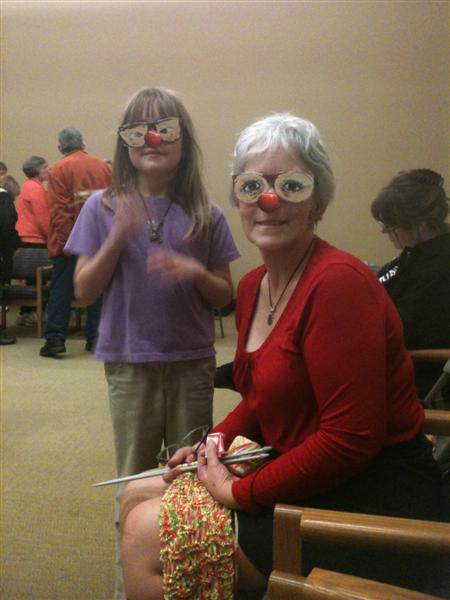
Mother and dauther in special glasses

Make your antagonists as interesting as your protagonists.

The antagonist is, quite simply, the person who acts to keep your protagonist from achieving his goals. Note the key words person and acts. I’m using person here as a catchall for a sentient being or creation of any kind that is capable of emotion and has the intellectual ability to plot against your protagonist. Thus, a personified car (as in Stephen King’s Christine) could be an effective antagonist, but an abstraction such as “society” or “Big Pharma” cannot. (More on this later.)

The antagonist must act to prevent your heroine from achieving her goals, whether that action is whispering reminders that she’s totally useless, plunging a knife into her back or anything in between. The type of action your antagonist takes will depend on his nature and the kind of story you’re writing. But your story must have an antagonist. (In some stories—Dr. Jekyll and Mr. Hyde comes to mind—the protagonist is actually his own antagonist.) Without an active antagonist, your hero could take a leisurely Sunday stroll toward his goal. Lacking the obstacles a worthy antagonist would provide, he would also lack the opportunity for growth or the necessity to change, and his character arc would flatline (as would your sales).

With the following tips in mind, reread your manuscript with an eye toward making your antagonist as compelling as your protagonist. Some effort on your part could even put your villain in the heady company of Professor Moriarty, the White Witch, Simon Legree and Nurse Ratched.

1. Remember that Antagonists are people, too.
I stop reading novels in which the antagonist is obviously nothing more than a device to move the plot in a certain direction. If I can’t empathize with the antagonist, believe in her motives or understand why she’s dishing out evil, I put the book aside. Flesh out your antagonist. Give us an origin story (how she became the way she is) or show that she regrets something and might change if given a chance.

If working with a nonhuman antagonist, personify him at least a little bit. Think of Frankenstein’s loneliness, HAL’s (the computer in 2001: A Space Odyssey) jealousy or Shere Khan’s hatred of the “man cub” (The Jungle Book). Show the antagonist doing something nice. Even villains love their mothers or cockapoos, volunteer at soup kitchens or help snow-stuck motorists push their cars out of intersections. Do this early on. Give him believable, even laudable, motives.

Inspector Javert from Victor Hugo’s Les Misérables is a strong antagonist because his obsession with finding Valjean stems from his belief that stealing is wrong. How many readers would disagree with that? Javert’s insistence that theft is always, without exception, wrong, however, turns his crusade into persecution. His inability to believe that good and evil can coexist in a single man leads him to suicide. His death is one of the story’s tragedies because he has been so thoroughly developed as a character and because we have, from the beginning, understood his motives and his flaws.

Other was include:
2. Eschew the totally evil antagonist (except, possibly, in some horror or monster stories).

3. If you’re tempted to say your antagonist is a corporation, disease or war—don’t.

4. Make your antagonist at least as smart, strong and capable as the protagonist.

5. Keep the tension strong when the antagonist is a friend, ally or loved one.

6. If your antagonist remains hidden for much of the story (as in a mystery), give him proxies or let him work behind the scenes.

For more on these other steps, go to http://www.writersdigest.com/online-editor/6-ways-to-write-better-bad-guys?et_mid=636328&rid=239626420

Leave a comment

Filed under Photo by author, Writing Tip Wednesday