Tag Archives: writing tip

Writing tip Wednesday: “Try this at home”

Unable to get started writing. Try this suggestion from well-known writer William F. Nolan:

You sit frozen at the keys. Just can’t begin writing, How to break free again, start the words flowing? You need something to ignite the creative spark. Well, people, I have one sure solution to your problem. Get up. Go to a bookshelf, take out a collection of stories’ pick one — and read the first half of a chosen story. Stop. Then write your own end half, using elements from the printed first half. Then go back to the first half of the printed story, and write your own version of the first half. Presto! You have a brand new tale! Sure, you can’t sell it since it has the plot and characters from the original printed story, but it got you going again, right? Got the creative juices flowing. Now you’ll be able to take off on a story of your own. Works every time.

William F. Nolan

Leave a comment

Filed under 2016, writing tip, Writing Tip Wednesday

Writing tip Wednesday: “Agent to consider”

New Literary Agent Alert: Amanda Jain of Inklings Literary

http://www.writersdigest.com/editor-blogs/guide-to-literary-agents/new-literary-agent-alert-amanda-jain-of-inklings-literary?utm_source=newsletter&utm_campaign=wds-csa-nl-160421&utm_content=838292_GLA160421&utm_medium=email

Amanda Jain

Amanda Jain

About Amanda: After earning a BA in English, Amanda worked in the trade department at W.W. Norton for seven years before leaving to pursue graduate studies. She graduated in 2011 with a MA in the history of decorative arts. Amanda then joined Inklings Literary in 2014, first as Michelle’s assistant. She is now building her client list. Find her on Twitter.

She is seeking: historical fiction (in all genres), women’s / book club / upmarket fiction, romance (particularly historical, suspenseful, or with a comedic bent), mysteries (particularly historical or cozy, or historical cozies), and narrative nonfiction in the areas of social history, archaeology, art history, material culture, etc. She is also interested in select young adult and middle grade projects with unique hooks and a strong voice.

In all cases, what Amanda is most looking for is a story that completely immerses the reader in the world of the book. She wants to feel the sun on her shoulders, smell the smoke of the battlefield, and hear the horses galloping in the distance. Amanda is NOT the agent to query with picture books, memoirs, self-help, poetry, erotica, science fiction and fantasy, horror, or inspirational fiction.

How to submit: To e-query, type “Query (Agent Name): (Book Title)” in the subject line to query(at)inklingsliterary(dot)com. No attachments. In the body of the email, send a query letter that includes :the title, genre, and word count of your project, a brief blurb about the story, a brief bio including any publishing credits, the first 10 pages of your manuscript, and a brief synopsis (1-2 pages). “Our response time varies for queries, but the general response time is within 3 months for queries, and 4 months for manuscripts. If you have not received an answer for your query after 3 months,” the agency is not interested in the project.

Leave a comment

Filed under 2016, writing tip, Writing Tip Wednesday

Writing tip Wednesday: “Agent to consider”

New Literary Agent Alert: Kelly Peterson of Corvisiero Literary

Source: http://www.writersdigest.com/editor-blogs/guide-to-literary-agents/new-literary-agent-alert-kelly-peterson-of-corvisiero-literary?utm_source=newsletter&utm_campaign=wds-csa-nl-160421&utm_content=838292_GLA160421&utm_medium=email

Kelly Peterson

Kelly Peterson

About Kelly: Kelly is a junior agent at Corvisiero Literary. Kelly has spent her whole life with a book in her hands. Whether it’s from reading, writing, or day dreaming, her mind has always been up in the clouds wishing her fantasy stories would come true. Down on earth, somewhere between reading during science class, writing while she should be sleeping, and spending her social hours pretending she wasn’t actually a closet nerd, she finally realized that her life would be a lot happier if she just accepted her love of books. A graduate of West Chester University, she earned her B.S.Ed. in English and went to pursue a career in teaching. Little did she know that despite all of her hard work, the environment she ended up in would be one she disliked. After taking a step back and reassessing her life, she realized that maybe she should have focused on the world of literary agents and publishing a long time ago.

She is seeking:

  • Middle Grade: Fantasy, Paranormal, Sci-fi.
  • Young Adult: Fantasy (all sub genres of fantasy accepted), Steampunk, Sci-Fi, Paranormal, Historical (19th century and earlier with strong heroines), Dystopian (hold the cyborgs, the scorch, and diseases, please), Sword and Sorcery, a very selective few for Contemporary Romance, and any combination of the above with strong, female main characters.
  • New Adult: Fantasy, Paranormal, Romance (Cowboys, anyone? Sexy and somewhat geeky entrepreneur? Celebrity? Yes?), Historical Romance, or any combination of the above.
  • Adult Fiction: Fantasy, Romance.

Her truest passion is for YA Fantasy. More recently, Steampunk has quickly crept up the charts in her heart as well.

With books, there’s just something about strong female main characters holding their own against the world, in an environment that Kelly could never, in her wildest dreams, find herself living within. It tears at her heart and pulls at her soul, especially when the main character finds that she never needed another to complete her in the first place.

She is not seeking Nonfiction, Emotional Turmoil, Mystery/Crime, Children’s Picture Books.

How to submit: query [at] corvisieroagency.com. Then address your Query to a specific agent, using the phrase “Query for [Agent Name]: [Name of Submission]” in the Subject Line. “For fiction, we require a query letter pasted into the body of your email along with a 1-2 page synopsis (that includes spoilers and the ending) and the first 5 pages of your manuscript either attached as 2 separate Word .doc files or pasted into the Query email.” There are more guidelines here.

Leave a comment

Filed under 2016, writing tip, Writing Tip Wednesday

Writing tip Wednesday: “Conflict”

Conflict is the difference between expectation and result.

Conflict is the difference between expectation and result.

Leave a comment

Filed under 2016, writing tip, Writing Tip Wednesday

Writing tip Wednesday: “Don’t say this at home”

"Said" or "asked" is usually enough. As in Mike said or Beth asked.

“Said” or “asked” is usually enough. As in Mike said or Beth asked.

Leave a comment

Filed under writing tip, Writing Tip Wednesday

Stephen King on writing

Stephen King Used These 8 Writing Strategies to Sell 350 Million Books
The best-selling novelist shares his secrets to selling so many books.

by Glenn Leibowitz

Source: http://www.inc.com/glenn-leibowitz/8-simple-writing-strategies-that-helped-stephen-king-sell-350-million-books.html

Stephen King is one of the most prolific and commercially successful authors of the past half century, with more than 70 books of horror, science fiction, and fantasy to his name. Estimates put the total sales of his books at between 300 and 350 million copies.
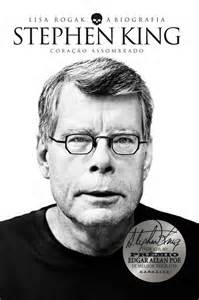
Stephen King

Author offers advice.

16 years ago, King shared everything he knows about writing in a book that instantly became a bestseller: On Writing: A Memoir of the Craft. Part memoir, part codification of his best writing strategies, the book has become a classic among writers.

I discovered – and devoured – it a dozen years ago, when I was trying to take my writing to the next level. I recommend it to all of my writer friends.

You don’t have to be a fan of King’s writing to appreciate the wisdom within the pages of this book. Nor do you have to be a novelist: The book has highly practical strategies that writers of nonfiction can immediately apply to their writing.

Here are eight writing strategies King shares that have helped him sell 350 million books:

1. Tell the truth.

“Now comes the big question: What are you going to write about? And the equally big answer: Anything you damn well want. Anything at all… as long as you tell the truth… Write what you like, then imbue it with life and make it unique by blending in your own personal knowledge of life, friendship, relationships, sex, and work… What you know makes you unique in some other way. Be brave.”

2. Don’t use big words when small ones work.

“One of the really bad things you can do to your writing is to dress up the vocabulary, looking for long words because you’re maybe a little bit ashamed of your short ones. This is like dressing up your household pet in evening clothes.”

3. Use single-sentence paragraphs.

“The object of fiction isn’t grammatical correctness but to make the reader welcome and then tell a story… to make him/her forget, whenever possible, that he/she is reading a story at all.

The single-sentence paragraph more closely resembles talk than writing, and that’s good. Writing is seduction. Good talk is part of seduction. If not so, why do so many couples who start the evening at dinner wind up in bed?”

4. Write for your Ideal Reader.

“Someone – I can’t remember who, for the life of me – once wrote that all novels are really letters aimed at one person. As it happens, I believe this.

I think that every novelist has a single ideal reader; that at various points during the composition of a story, the writer is thinking, ‘I wonder what he/she will think when he/she reads this part?’ For me that first reader is my wife, Tabitha… Call that one person you write for Ideal Reader.”

5. Read a lot.

“Reading is the creative center of a writer’s life. I take a book with me everywhere I go, and find there are all sorts of opportunities to dip in. The trick is to teach yourself to read in small sips as well as in long swallows. Waiting rooms were made for books – of course! But so are theater lobbies before the show, long and boring checkout lines, and everyone’s favorite, the john.”

6. Write one word at a time.

“In an early interview (this was to promote Carrie, I think), a radio talk-show host asked me how I wrote. My reply – ’One word at a time’– seemingly left him without a reply. I think he was trying to decide whether or not I was joking. I wasn’t. In the end, it’s always that simple.”

7. Write every day.

“The truth is that when I’m writing, I write every day, workaholic dweeb or not. That includes Christmas, the Fourth, and my birthday (at my age you try to ignore your goddam birthday anyway)… When I’m writing, it’s all the playground, and the worst three hours I ever spent there were still pretty damned good.”

8. Write for the joy of it.

“Yes, I’ve made a great deal of dough from my fiction, but I never set a single word down on paper with the thought of being paid for it… Maybe it paid off the mortgage on the house and got the kids through college, but those things were on the side – I did it for the buzz. I did it for the pure joy of the thing. And if you can do it for joy, you can do it forever.”


Leave a comment

Filed under 2016, Uncategorized, writing tip, Writing Tip Wednesday

How to write for the American Theater

In keeping with the theater them of the Shakespeare's words and phrases (posted earlier), follow the flow chart. (Click on it a couple of times to enlarge to readable size.)

In keeping with the theater them of the Shakespeare’s words and phrases (posted earlier), follow the flow chart. (Click on it a couple of times to enlarge to readable size.)

Leave a comment

Filed under 2016, writing

Writing tip Wednesday: “Six the hard way”

6 Hard Truths Every Writer Should Accept

by Dana Elmendorf

Source: http://www.writersdigest.com/editor-blogs/guide-to-literary-agents/6-hard-truths-every-writer-should-accept

1. It won’t be your first novel.

Dana Elmendorf

Dana Elmendorf

Go ahead, list all the examples of authors who debuted with their first novel. Yep, that’s quite the list. Now put them on the scales of justice and compare them to all the authors who did not. Clunk goes the weight to one side. It’s a desire we all hope for but the truth is, the odds are not in your favor. Be at peace with your first novel sitting in the cobwebs of your computer, and know it’s just one step of many toward getting published.

2. First drafts always suck.

There’s no getting around it. It’s a part of the process we must all accept to make the improvements our manuscripts need. The first words you put on paper will not sparkle like shimmering diamonds. Geological fact, diamonds look like cloudy, dirty rocks until somebody cuts and polishes them. Don’t fight it. Let the suckage happen. It’s a healthy part of growing as a writer. But I’ll tell you a little secret, each first draft sucks a little less than its predecessor.

3. Your husband, mother, sister, best friend, coworker or the neighbor who is a high school English teacher does not qualify as a critique partner.

It doesn’t matter how “honest” they are with you. The truth of the mater is, only another writer can give you what you really need. They understand voice, character development, pacing, story arc, plot points, sub plots, inciting incidents, reversals, character growth, and about six hundred other things that go into writing a book. It doesn’t matter that your bestie reads a hundred books a year. Reading books is only a fraction of what it takes to be a writer. Passion for reading does not equal qualified critique partner. Beta reader, maybe. Critique partner, no. Do your writing a favor and find yourself several qualified critique partners. It’ll be the best decision you ever made for your career.

4. Your journey will not be the same journey as your peer’s journey.

This is where I’m supposed to tell you not to compare yourself to others. But we both know that’s pointless. You’ll do it anyway. We all do. If you’re comparing yourself it’s probably because you’re feeling like you’re not where you’d like to be in your career. Which will most likely result in finding inadequacies within yourself. Instead, when you do compare yourself, be realistic. Realize there aren’t any measurable factors to compare yourself despite how similar your life is to another writer. Because when it comes down to it, some things you just can’t assign a value, like natural talent, motivation, passion, doubt, and many more intangible factors. At the end of the day, it’s the writer who perseveres that will become published.

5. Being good isn’t good enough.

This factor was the hardest for me to accept. It implies that a positive word like “good” only equates to “competent.” There is a sea of talented writers out there. What you need to be to stand out varies. Maybe you need to be different, refreshing, clever, timeless, re-inventive, unique, or my personal favorite…sparkly. The only way to be better than good is through hard work and perseverance. Which leads me to the last point…

6. Pay your dues.

There isn’t any secret advice to getting published. There are no short cuts in this business. Nothing comes easy in this industry. You want to get published? Then put in the time, blood, sweat, and tears that it takes to get you there. Sure some authors make it look easy, but don’t be fooled. They walked that same long road just like the rest of us.

These hard truths aren’t here to disappoint you. They’re here to help you focus on what’s important, your writing. Set your sights on your goal and don’t let these small things trip you up along the way.


Column by Dana Elmendorf, author of SOUTH OF SUNSHINE (April 1, 2016, Albert Whitman and Company). Dana lives in southern California with her husband, two boys and her tiny dog Sookie. When she isn’t exercising, she can be found geeking out with Mother Nature or scouring the internet for foreign indie bands.You can also find her dreaming up contemporary YA romances with plenty of kissing. Follow her on Twitter or Facebook.

Leave a comment

Filed under 2016, writing tip, Writing Tip Wednesday

Writing tip Wednesday: “Agent to consider”

New Literary Agent Alert: Elise Erickson of Harold Ober Associates

Source: http://www.writersdigest.com/editor-blogs/guide-to-literary-agents/new-literary-agent-alert-elise-erickson-of-harold-ober-associates

Elise Erickson

Elise Erickson of Harold Ober Associates (http://www.haroldober.com/) graduated from St. Olaf College and the NYU Summer Publishing Institute in 2014, and spent several months interning at Penguin’s New American Library imprint, Folio Literary Management, and Susanna Lea Associates before taking on her current position at Harold Ober Associates. She grew up in both Florida and Minnesota, but is quickly learning to love city life in NYC. Elise is passionate about the role and responsibility of the literary agent, especially being an advocate for authors. In addition to working with books, she currently assists in selling Harold Ober’s TV, film, and subsidiary rights, and is actively building a client list of her own.

Interests: Romance and all of its subgenres, women’s fiction, paranormal, mystery including clever cozy mysteries, thrillers, historical fiction, commercial literary fiction, and some YA. She is particularly drawn to stories that contain a strong sense of place, and female protagonists with unique, compelling voices.

Not Looking For: Poetry, Screenplays, Picture Books, Horror, Self-help.

How to Query: Please email the first 15-20 pages of your manuscript, a concise query letter, and a detailed synopsis to
elise [at] haroldober.com
.

Leave a comment

Filed under 2016, writing tip, Writing Tip Wednesday

Writing tip Wednesday: “Watch you language”

Why Your Story is Getting Rejected: Language

by Chelsea Henshey

Source: http://www.writersdigest.com/uncategorized/why-your-story-is-getting-rejected-language?platform=hootsuite

Getting to the heart of the matter.

Getting to the heart of the matter.

As a former reader for a literary journal, I first learned to watch for language. I looked for creative, rhythmic prose that engaged the senses and provided a clear voice. But it took time to recognize and appreciate these qualities, and even longer to apply them in my own work.

Now, as an editor, writer, and reader, I’m constantly on the lookout for crafted prose that’s evident from paragraph one. Crafted prose means the writer isn’t simply moving characters from point A to point B, but arranging images and syntax to create rhythm and evoke emotion.

While all levels of a story must be effective for publication, stilted language can stop an editor in her tracks before your plot even begins. To refine your own language, remember the following tips:

Choose Your Style

When I use the term style, I’m referring to minimalist, maximalist, or somewhere in between. Notice the difference between the passages from Raymond Carver’s “Cathedral” and Cormac McCarthy’s Child of God.

This blind man, an old friend of my wife’s, he was on his way to spend the night. His wife had died. So he was visiting the dead wife’s relatives in Connecticut. He called my wife from his in-law’s. Arrangements were made. He would come by train, a five-hour trip, and my wife would meet him at the station. She hadn’t seen him since she worked for him one summer in Seattle ten years ago.

They came like a caravan of carnival folk up through the swales of broomstraw and across the hill in the morning sun, the truck rocking and pitching the ruts and the musicians on the chairs in the truckbed teetering and tuning their instruments, the fat man with guitar grinning and gesturing to others in a car behind and bending to give a note to the fiddler who turned a fiddlepeg and listened with a wrinkled face.

Much of your style has to do with instinct. Do you cringe at the thought of sprawling descriptions, or could you describe a scene for pages? Whatever you choose, stay consistent. Don’t be minimalist on page one and switch to a maximalist style on page three.

Avoid Abstraction

Many writers rely on abstractions in their descriptions. The issue with abstractions is they do not ground your reader. When you say something is beautiful, hideous, terrible, amazing, etc. it doesn’t provide a concrete image the reader can see. Instead, abstractions remain different for everyone, with one person’s view of beauty drastically different from the author’s. If you don’t explain what beautiful looks like, your reader is lost, and your description has no effect.
Avoid Abstraction

Many writers rely on abstractions in their descriptions. The issue with abstractions is they do not ground your reader. When you say something is beautiful, hideous, terrible, amazing, etc. it doesn’t provide a concrete image the reader can see. Instead, abstractions remain different for everyone, with one person’s view of beauty drastically different from the author’s. If you don’t explain what beautiful looks like, your reader is lost, and your description has no effect.

Be Creative

When you meet a new person, how do you describe him to someone else? Do you say he’s 6-feet tall with blue eyes, brown hair, and a beard, or are you more likely to explain unique things about him? The same goes for setting. Are the mountains tall? Is the sky blue? Does the dining room have a table? As you write, move beyond the obvious and into the memorable.

But Watch for Runaway Similes and Metaphors

Runaway similes and metaphors are tricky. I can see the writer has good intentions, but the image has backfired. These comparisons are so unrelated, they depart from what they’re describing. For example, if you compare your character stretching his legs out to unrolling a sleeping bag, notice what happens: You’re going to jump to the sleeping bag and leave the character behind. I’ve written many metaphors like this in the past, and it usually takes a trusted reader to point them out. If you’re feeling particularly proud of an out-of-the-box image, use caution, and test it on a reader.

Other things to consider:

Listen to your writing

Eliminate Repetition

Proofread

Rest of the article: http://www.writersdigest.com/uncategorized/why-your-story-is-getting-rejected-language?platform=hootsuite

Leave a comment

Filed under 2016, writing tip, Writing Tip Wednesday