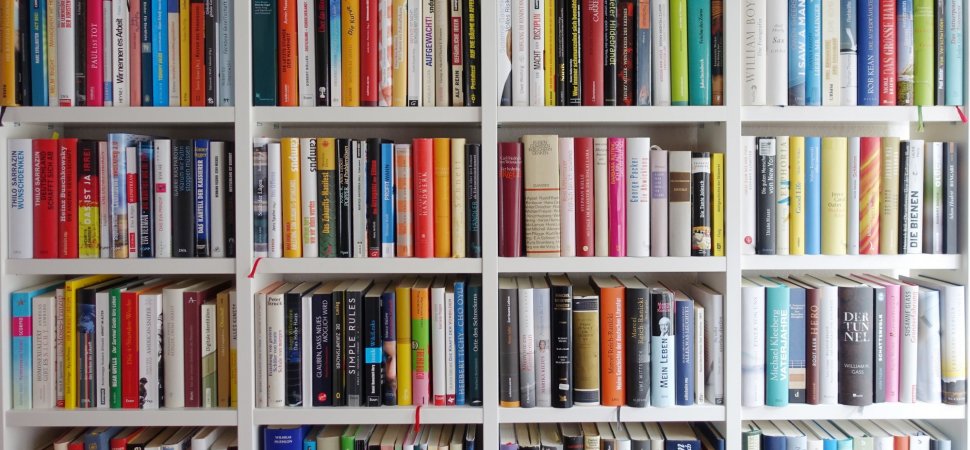
The list of favorite books on writing can be very different from one author to another. I’ve scoured 10 “top” lists to see which titles spanned the gamut.
What are your favorite books on writing? Do you have a large collection? How do you expand your corpus when you feel like reading another? Which would you recommend?
There are a huge number of books on writing and if you want to pick the absolute “best,” you have two choices. The first is to pick books that the most people have read and enjoyed. The second is to admit that the best books for each writer will be different. If you are a poet, nonfiction writer, or romance aspirant, you might want specialist advice and information.
Popularity contest
To find the books that are most popular, I looked at the intersection of lists of favorites — and I found an interesting pattern. If you combine the top books on Amazon and the picks found in a range of “top book” articles (Steven Spatz‘ 5 favorites, Shaunta Grimes‘ top 10, Jerry Jenkins’ “12 best,” Jeff Goin‘s “best books,” SmartBlogger‘s “9 Essentials,” The Write Life‘s “9 of the best,” Barnes & Noble‘s “6 best,” and Paste‘s “10 best”) we see some perennial favorites, but overall, surprisingly little overlap.
A few classics appear repeatedly, but most of the recommended books on writing only appear once. This is because excellent, but specialist, books fall down the ranks. The perfect book for you might never rank a “top 10” list of general writing books.
Most at the rarefied top of the normative lists have some good years on them. Remember the classics now “too old” to rank on such modern lists. This includes Joseph Campbell’s The Hero With a Thousand Faces which describes the hero’s journey that inspired Star Wars, Aristotle’s Poetics (which comes in various translations and interpretations from modern authors), and John Gardner’s The Art of Fiction: Notes on Craft for Young Writers.
Just look at this list by Booker prize-winning author DBC Pierre in The Guardian to see how different and unique a personal choice list can be. It includes The Prince by Niccolò Machiavelli to “discover what villains are born knowing.”
The best books to add to your collection fill the biggest gaps in your knowledge or provide the most inspiration. This could mean getting a tip from a colleague or mentor or scrolling curated lists to seek out something that matches your interests. Book Riot has a list of “100 Must-read, Best Books On Writing And The Writer’s Life.”
The choices might seem overwhelming, but it helps that you can download opening chapters for free on Kindle to have a look at style and content.
How many have you read? Which should you read next? In the end, pick to match your tastes and needs. The absolute best are the ones that help you most.
We are committed to researching, testing, and recommending the best products. We may receive commissions from purchases made after visiting links within our content. Learn more about our review process.
Making money as a writer is not an easy task. Depending on your goals it can feel downright impossible. Being a successful writer has nothing to do with luck, and everything to do with hard work, dedication and perseverance. Overcoming challenges like writer’s block and finding a publisher can be excruciating. The best thing you can do is continue self-education. Most people know reading more can make you a better writer. Reading the proper book at the right time can make all the difference. If you are looking to make things easier on yourself and make the best of your writing, you are in the right place. Take a look at the best books for writers beginning with tools for becoming a better writer and ending with getting your writing out to the masses.
Best for Fiction Writers: How to Write a Novel Using the Snowflake Method
There are many different ways to approach writing a fiction novel. The Snowflake Method is a popular method of writing and the author, Randy Ingermanson, lays it out in a unique book where the technique is explained in a story. He uses the fairy tale characters, Goldilocks and the Three Bears with a murder mystery theme, and walks you through the process of using the Snowflake method. It makes it fun and easy to understand. If you have never heard of the Snowflake Method, it begins with a simple idea then develops and adds more intricate details along the way. It is a little different than laying out a rigid outline or just making it up as you go along. It is most helpful for writers who prefer to write as they go but often get stuck somewhere in the middle. The Snowflake method can help even a seasoned writer complete a novel with excitement.
Best for Improving Your Writing Skills: The Only Grammar Book You’ll Ever Need
One skill that can not be overlooked as a writer is grammar. Having a resource you can depend on and refer to as needed is an absolute must. The Only Grammar Book You Will Ever Need is the one stop shop for your grammar needs. It is less than 200 pages and has a quick reference guide. Proper grammar is not always intuitive. Common misspelled words can leave a reader running or clicking away from your content in a heartbeat. Get expert tips for writing clearly and directly. Learn the parts of speech and elements of a sentence. Figure out how to avoid the most common grammar and punctuation mistakes, and finally get the right punctuation in every sentence. This is an excellent book for helping writers create professional documents, writing A+ school papers or writing effective personal letters. It is very likely your writing will improve rapidly after reading this book. Even though there is a lot of software available to correct writing errors, it is great to learn the why behind grammar errors. You will write more efficiently and will have a more cohesive end product.
Best for Freelance Writers: The Essential Guide to Freelance Writing
The life of a freelance writer has its perks, but it has its challenges, too! If you have been looking to earn extra income, or if you are ready to kick the 9- to-5 day job completely, freelance writing is ripe with opportunities. It is a great way to enter the writing world and hone your writing skills. Freelance writing can help you gain experience, so you are more skilled and confident to write more elaborate pieces such as a novel. The Essential Guide to Freelance Writing will help you reach your goals, whatever they may be, faster. Learn how to write and structure different styles of articles. Get tips on how to dream up the perfect article idea. Explore various aspects of being a freelance writer you may never have considered before. The author Zachary Petit has a lot of expertise in the writing, which includes being the longtime managing editor of Writer’s Digest magazine. He sprinkles in humorous antidotes and makes this an easy read. If you are serious about becoming a freelance writer, this is the book that can help you make it happen.
There is one common goal nearly every writer works towards in their writing career, to write content your readers will love and come back to again and again. The publishing world has changed dramatically in recent years. Publishing options have exploded. However, it can be overwhelming to learn about all the different options and how to be successful in reaching your ideal reader. Write. Publish. Repeat. is written by a collaboration of successful Indie authors and is written in a conversation style. They make it clear it takes hard work to be successful at self-publishing; however, they provide invaluable insight on how to make it work without relying on luck. Expect to learn a little bit about everything, including building a story, understanding your market, tips for creating book covers, titles, formatting, pricing, getting your content on multiple platforms and more. Aspiring writers will learn a lot from this book. You will be motivated to continue and know there is proven success.
Securing a deal with a traditional publisher might be the most laborious task of any new writer. Some publishers are willing to take on the work of a writer without an agent, so check Writer’s Market books that contain publishers of all kinds. It is in the Writer’s Market books that you will find the majority of prominent publishers that want you to have an agent. The book Get a Literary Agent will help you figure out how to research agents and target the best ones for your work. It will teach you the ins and outs of the submission process. It delivers fantastic pointers on writing the perfect query letter and pitch. It also provides pro tips on assembling a book proposal, and how to form a healthy relationship with your agent. If you are still not sure an agent is needed, this book also dives into what a literary agent does and how they can benefit you. Getting your book on the Best Seller’s list is not an easy task. You will be happy you learned what to expect when getting a literary agent before spending tons of time trying to figure it out on your own.
Best Children’s Book Writing Resource: Children’s Writer’s Word Book
Writing for children is a little different than writing for adults. If you are used to freelance writing for adults readers, there are a few things you need to consider when you change gears. The Children’s Writer’s Word Book written by Alijandra Mogilner will help you recognize some of the differences and make writing more natural for this target reader. You will need to pay attention to the reading level of the words you use. This book provides a list of specific words ranked by grades kindergarten through sixth. It also includes a thesaurus of those words and guidelines for sentence length. It has a useful introduction to each grade level and provides an overview of what the age group traditionally studies. Every children’s book writer will find this to be an essential handbook.
Best Writing Strategies Book: The Element of Style
Do you want to learn how to write well? The Element of Style written by William Strunk is considered being one of the most concise yet all-inclusive writer’s handbooks despite being nearly 100 years old. It has almost every grammatical concept you might need to know. It is easy to find what you are looking for and can be used as a quick reference. The best part is its size. It is small enough to fit in your back pocket or backpack. Most writing guides are enormous textbooks nobody wants to read. This one answers most style questions in around 100 pages.
Best for Writer’s Block: The Miracle Morning for Writers
Writer’s block can happen to anyone. Words are not flowing, and you are not sure what to do next. Creating good habits in your morning routine might be what you need. The Miracle Morning for Writers written initially by Hal Elrod has been described as the most life-altering book ever written. It has sold over 750,000 copies and has several different variations available. This edition, co-written by Steve Scott, pinpoints the specific habits you need to work into your morning routine to become a better writer than you ever thought imaginable. Learn how to overcome limiting beliefs and how to enter the “flow state” ending writer’s block once and for all.
What’s the number one thing you can do to improve your writing?
Read. A lot.
Read anything and everything you can find, and you’ll become a better writer.
Read your favorite genre, whether that’s historical fiction, creative non-fiction or personal essays. Read books that are similar to what you like to write. And when you’re in the mood to learn about craft, read books on writing.
The titles below will help you with all aspects of your writing, from learning to write better to finding inspiration to figuring out where to pitch your ideas. We’ve even included some books about how to make money writing.
Part memoir, part guidebook, Stephen King’s classic will appeal even to those who avoid King’s renowned horror-packed tales. In this book, King discusses how he came to be the writer we know today.
Bird by Bird is an essential part of any writer’s toolbox. In this work, Lamott shares herself and her craft with readers, including anecdotes that tie the pieces together into all-around great writing.
Writer’s Market helps aspiring writers become published. Its listings contain hundreds of pages of suggested markets for nonfiction writers, as well as those looking to sell short stories, including details for how to pitch your work.
This classic book targets nonfiction writers and includes writing tips, as well as the fundamentals of craft. Zinsser discusses many forms of writing, from interviewing and telling stories about people to writing about travel.
For years, writing teachers have assigned The Elements of Style to their students. Brushing up on the basics from time to time is critical for continually developing your skills, and this book contains simple truths that every writer needs to know.
AP Style is known by many as the “go-to” writing style for journalists and public relations pros. The Associated Press Stylebook contains more than 3,000 entries detailing rules on grammar, spelling, punctuation, capitalization, abbreviation and word and numeral usage to help you master news writing.
While many books on this list are aimed at nonfiction writers, this one is for those who dream up their own stories to tell. If anyone is qualified to tell people how to write bestselling fiction, it’s prolific author Dean Koontz, who’s sold more 450 million copies of his books. This book was written in 1981 and is out of print, but has valuable insight for writers who manage to snag a copy (check the library!). It’s one of the best books on writing fiction.
Goldberg’s book examines the craft of writing including how to start brainstorming, the importance of learning how to listen, the vital role verbs play in writing, and even how to find an inspiring place to write.
Aimed at fiction writers, this book tackles everything from models to help with story structure to a variety of techniques to help with crafting great stories from start to finish. You’ll even find tips on creating plotting diagrams. and tools to overcome various plot problems that can arise.
The author of Pilgrim at Tinker Creek shares words of wisdom in this handy book where she discusses the difficulties of writing. She writes about how hard it is to write and how sometimes it is necessary to destroy paragraphs, phrases and words to re-form them as something even better.
From time to time, every writer suffers from burnout or writer’s block. Julia Cameron’s book focuses on the craft of writing and training yourself to be even more creative.
She offers valuable techniques like starting each morning with a free-writing exercise, and exploring one subject per week that you find fascinating. Her tips for reinvigorating the creative juices could be of help to any kind of writer.
Word Work is packed with practical advice for overcoming procrastination, finding happiness in writing and even conquering writer’s block via useful exercises. It also covers how to handle rejection and success.
This book focuses on how to be a happy and successful writer throughout your career. It covers everything from finding joy as a writer to avoiding burnout and the all-important challenge of balancing writing with a busy life. It also discusses how to fine-tune your craft, get in touch with your creative flow, revise your work, find critiques, and learn how to be resilient.
Published in 2012, this book helps writers and creators of all kinds overcome the biggest obstacle of all: our inner naysayer. The Amazon description says this book is “tough love…for yourself.” If something inside of you is keeping you from your biggest accomplishments, this is the right book to pick up.
This book contains columns from a decade of The Washington Post’s “Writing Life” column, with contributors as diverse as Jimmy Carter, Joyce Carol Oates and Carl Sagan. Essays are paired along with biographical information about each author, helping readers learn more about these skilled contributors and their ideas on writing.
The Paris Review offers in-depth interviews with some of the leading names in the literature world, from novelists to playwrights and poets. This series of books features a collection of interviews with past and present writing superstars including Ernest Hemingway, T.S. Eliot, Kurt Vonnegut, Toni Morrison, among many other famous names.
This book reflects on the artistic side of being a writer. Making art is no easy feat, and Bayles and Orlando — both artists themselves — explore the challenges of making art and the arious obstacles that can discourage people along the way.
Originally published in 1994, Art & Fear is now an underground classic, dishing out relatable, valuable advice.
Steven Pinker offers a new take on some of the classic writing manuals. Inside The Sense of Style, he analyzes examples modern prose, pointing out fantastic writing and offering tips to spruce up lackluster work.
World-renowned Irish author Frank O’Connor takes on the short story in this favorite book on writing. Short stories are challenging, but O’Connor shares tips and tactics for mastering the art of the short story that can help any writer begin to feel more confident about crafting their own works. This is one of the best books on writing short stories.
Attorney and self-published author Helen Sedwick uses her 30+ years of legal experience to help aspiring self-publishers navigate the business side of writing. This first-of-its-kind guidebook covers everything from business set up to spotting scams to help keep writers at their desks and out of court.
Joanna Penn’s How to Make a Living With Your Writing and her companion workbook can help any writer examine their current writing situation and make a plan for the future. Penn discusses her multiple income streams and shares the breakdown of her six-figure writing income, which includes book sales, affiliate marketing commissions, a series of courses she offers and speaking fees.
Divided into five sections James-Enger discusses everything from when it makes sense to ignore per-word rates, how to ask for more money, how to set goals and even how to fire troublesome clients. This book is a valuable read when working towards a sustainable career as a full-time freelance writer.
The Write Life’s own contributor Nicole Dieker has a book out about writing and money. The book focuses on setting goals for each phase of a writer’s career, including getting rid of lower paying jobs to make way for better work and higher-paying clients.
In her new anthology, Martin includes a series of essays from well-known literary icons such as Cheryl Strayed, Jennifer Weiner, and Nick Hornby where they discuss the intersection of writing and money in essays and interviews.
This content-creation book, Everybody Writes: Your Go-To Guide to Creating Ridiculously Good Content, drives home the point that anyone with a web site or social media channels is a writer.
It focuses on how to craft quality writing that boosts business and helps find and retain customers, including writing tips, content help, grammar rules, and more.
Confined in the dark, narrow cage of our own making that we take for the whole universe, very few of us imagine another dimension of mind. There once was an old frog who lived all his life in a dank well. One day, a frog from the sea fell into his world.
“Where did you come from?” asked the frog in the well.
“From the great ocean,” the visiting frog said.
“How large is your ocean?”
“It’s gigantic.”
“A quarter of the size of my well here?” the old frog asked.
“Larger.”
“Larger? You mean half as large?”
“Even larger.”
“As large as my world?”
“There’s no comparison,” the visiting frog said.
“That’s impossible! I’ve got to see this for myself.”
The two frogs set off together. When the old frog from the well saw the ocean, it was such a shock that his head just exploded into pieces.
Moral: be willing to drop into your reader’s life and in some way “blow” your reader’s mind, to enlarge his or her world in some way. You might even enlarge yours along the way.
Reading fiction can help you be more open-minded and creative
According to research conducted at the University of Toronto, study participants who read short-story fiction experienced far less need for “cognitive closure” compared with counterparts who read nonfiction essays. Essentially, they tested as more open-minded, compared with the readers of essays. “Although nonfiction reading allows students to learn the subject matter, it may not always help them in thinking about it,” the authors write. “A physician may have an encyclopedic knowledge of his or her subject, but this may not prevent the physician from seizing and freezing on a diagnosis, when additional symptoms point to a different malady.”
People who read books live longer
That’s according to Yale researchers who studied 3,635 people older than 50 and found that those who read books for 30 minutes daily lived an average of 23 months longer than nonreaders or magazine readers. Apparently, the practice of reading books creates cognitive engagement that improves lots of things, including vocabulary, thinking skills, and concentration. It also can affect empathy, social perception, and emotional intelligence, the sum of which helps people stay on the planet longer.
Reading 50 books a year is something you can actually accomplish
While about a book a week might sound daunting, it’s probably doable by even the busiest of people. Writer Stephanie Huston says her thinking that she didn’t have enough time turned out to be a lame excuse. Now that she has made a goal to read 50 books in a year, she says that she has traded wasted time on her phone for flipping pages in bed, on trains, during meal breaks, and while waiting in line. Two months into her challenge, she reports having more peace and satisfaction and improved sleep, while learning more than she thought possible.
Successful people are readers
It’s because high achievers are keen on self-improvement. Hundreds of successful executives have shared with me the books that have helped them get where they are today. Need ideas on where to start? Titles that have repeatedly made their lists include: The Hard Thing About Hard Things by Ben Horowitz; Shoe Dog by Phil Knight; Good to Great by Jim Collins; and Losing My Virginity by Richard Branson.
If you’re familiar with contemporary definitions of mindfulness, you’ve probably heard something along the lines of not getting too attached to our thoughts, but letting them arise and subside of their own accord, like clouds. Our job is just to witness them, non-judgmentally, and let them fade away.
Although this is pretty good advice, there’s a nuance to it, which isn’t always included: We have to inspect our thoughts a little bit, so that their frequency will diminish over time. We can’t just twiddle our thumbs till a negative thought goes away—that’s not so therapeutic in the long-run. And this is where clinical psychology and Buddhism have dovetailed: They both acknowledge that negative thoughts are really just a part of being human, and if we push them away or repress them, or even just wait for them to go, they’ll get worse. Rather, inspecting them just a bit, to understand their origins, is a more productive way of dealing with them.
Shannon Kolakowski, PsyD, a psychologist in the Sarasota area and author of When Depression Hurts Your Relationship, points out that we tend to avoid negative thoughts because we fear them. “In other areas of our life, such as seeing a dangerous driver on the road, we avoid things to stay safe,” she says. “So when we have a thought we don’t like, such as, ‘I’m going to be alone forever,’ it feels scary and we might try to avoid it. The problem is, it doesn’t work. The thought may even become stronger or more convincing because you’re dreading it so much, as if you’re running from a scary truth.”
The better way is to reconfigure your relationship to your thoughts, she says, by using a method like Acceptance and Commitment Therapy (ACT), which helps us “defuse” our thoughts, in part by recognizing that thoughts do come and go, but also by exploring them to get a bit of a handle on them.
“Defusion is the process of noticing your negative or anxious thoughts, such as ‘I’m going to be alone forever,’ and then responding to it with openness and curiosity as a distant observer,” says Kolakowski. “Rather than accept your thought as the ultimate truth, you recognize that thoughts will come and go, but you don’t have to believe them or act on them. You become an observer, saying to yourself ‘I’m having the thought that I’m going to be alone forever,’ and then try to explore that thought with curiosity. ‘Because I’m going through a divorce right now, it’s understandable I’m having a hard time thinking positively about being in a relationship again. But that doesn’t mean it’s true that I’ll be alone forever. There are lots of reasons to think I’ll find a partner when I’m more ready if that’s what I want.’”
The interesting thing about ACT is that it acknowledges that our natural state will include some negativity. It doesn’t try to get rid of the negative thinking, just change how we react to it.
“Creating a new relationship with your thoughts is freeing,” says Kolakowski. “You may not be able to control what thoughts pop up, but you can control how you respond to them. And you can control what action you take. For example, the thought of being alone forever doesn’t have to lead you to give up on dating or stay in an unhappy relationship. It’s just a thought, and you get to decide how to live your life according to what you value.”
And this idea has been around for a very long time. Ajahn Amaro, a Theravada Buddhist monk and abbot at the Amaravati Buddhist Monastery just north of London, has a similar take. He points out that reframing our relationship to our thoughts has existed for thousands of years, in Buddhism, and modern psychology has built on many of these tenets in practices like Mindfulness-Based Cognitive Therapy (MBCT), a variation of the gold-standard CBT.
“We tend to think that our thoughts are oppressive,” says Amaro, “and that therefore we should make them go away…Oftentimes meditation instruction is about stopping your thinking, as if thoughts are a kind of brain disease, an infection, an intruder. But the very act of pushing them away, and adopting the sense that they’re intrinsically intrusive, actually makes them more powerful. Rather than relating to them in that way, there’s another attitude we can have toward them—not taking them personally.”
He adds that the vast majority of our thoughts are, at best, random, and at worst, destructive. “One of the first things I emphasize when teaching,” he says, “is that 5% of our thoughts are actually meaningful and relevant, and 95% are replaying movies, music, and recollecting. It’s mostly just debris. I often encourage people to look at it like listening to neighbor’s radio–you understand the content, you can hear the words; you might sometimes get excited about an ad, or a talk show. But you don’t really care on a personal level. You relate to your neighbor’s radio in a non-personal way—we can have the same relationship to activity of the mind. It doesn’t have to make a big story around the thoughts. It’s an attitudinal shift.”
Like psychology suggests, we should first notice our thoughts and, rather than just waiting for them to go away, investigate them just a bit—especially the negative ones—to understand why a certain thought might pop up, especially repeatedly. “In terms of meditation, it’s not just waiting for thoughts to end,” says Amaro, “but reflecting, ‘I’m thinking this because I heard that tune earlier,’ or whatever it may be. You can do a small amount of investigation…. This helps difficult or oppressive patterns of thinking lose their power and go away.”
Again, realizing that negative thoughts are just a part of how the mind works can help relieve us of the idea that every thought means something deeper or tells some deep truth about ourselves. “Recognizing that this is just a part of nature,” he says, “helps us shift from a self-centered view to one of nature. At this moment it’s exactly this way. When the heart opens and we say: ‘This feeling is this way’; in a strange manner, by fully accepting it, it loses its power to convince.”
Finally, it’s worth pointing out that this method works not just for individual negative thoughts, but for depression itself, which isn’t always a matter of discrete thoughts, but more often, a dull sensation of pain or despair.
“Again,” says Amaro, “the idea is not to say, ‘boy, this is a horrible feeling,’ and waiting for it to be over. If in depression, your body feels like lead weight, heavy and dull, or you have tightness across shoulders. There’s a physicality to the dark ache of depression. You can meditate with kindness toward it–‘this is the lead-weight feeling.’ A kind of chemistry is then going on, so that which knows heaviness isn’t heavy; that which knows tightness is not tight; that which knows agitation isn’t agitated.”
And all of this intersects really neatly with what we know about the brain—the more practice we have shifting attention and changing our thought patterns with methods like MBCT, CBT, ACT, or mindfulness meditation, the more we lay down different (better) neural tracks over time.
“The Buddha described how he divided his thoughts into two different categories; on the one hand wholesome thoughts, which lead to happiness and peacefulness, and on the other those that lead to harm or confusion or stress,” says Amaro. “He observed that that which the mind dwells upon conditions the tendencies of the mind in the future–in other words, each type of thought makes a track, a rut in the brain. So, if we want to experience peace and happiness, we should follow the thoughts that conduce to those qualities, and leave the others aside. And, amazingly, modern neuroscientific studies on the brain’s plasticity have confirmed this.”
“One can never be alone enough to write,”Susan Sontag observed. Solitude, in fact, seems central to many great writers’ daily routines — so much so, it appears, that part of the writer’s curse might be the ineffable struggle to submit to the spell of solitude and escape the grip of loneliness at the same time.
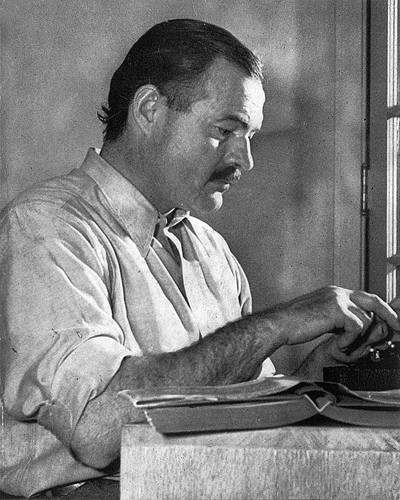
Ernest Hemingway
In October of 1954, Ernest Hemingway was awarded the Nobel
Prize in Literature. But he didn’t exactly live every writer’s
dream: First, he told the press that Carl Sandburg, Isak Dinesen and Bernard
Berenson were far more worthy of the honor, but he could use the prize money;
then, depressed and recovering from two consecutive plane crashes that had
nearly killed him, he decided against traveling to Sweden altogether. Choosing
not to attend the Nobel Banquet at the City Hall in Stockholm on December 10,
1954, Hemingway asked John C. Cabot, the United States Ambassador to Sweden at
the time, to read his Nobel acceptance speech, found in the 1972 biography Hemingway: The Writer as Artist (public library). At a later date, Hemingway
recorded the speech in his own voice. Hear an excerpt, then read the transcript
of the complete speech below:
Having no facility for speech-making and no command of oratory nor any
domination of rhetoric, I wish to thank the administrators of the generosity of
Alfred Nobel for this Prize.
No writer who knows the great writers who did not receive the Prize can
accept it other than with humility. There is no need to list these writers.
Everyone here may make his own list according to his knowledge and his
conscience.
It would be impossible for me to ask the Ambassador of my country to read a
speech in which a writer said all of the things which are in his heart. Things
may not be immediately discernible in what a man writes, and in this sometimes
he is fortunate; but eventually they are quite clear and by these and the
degree of alchemy that he possesses he will endure or be forgotten.
Writing, at its best, is a lonely life. Organizations for writers palliate
the writer’s loneliness but I doubt if they improve his writing. He grows in
public stature as he sheds his loneliness and often his work deteriorates. For
he does his work alone and if he is a good enough writer he must face eternity,
or the lack of it, each day.
For a true writer each book should be a new beginning where he tries again
for something that is beyond attainment. He should always try for something
that has never been done or that others have tried and failed. Then sometimes,
with great luck, he will succeed.
How simple the writing of literature would be if it were only necessary to
write in another way what has been well written. It is because we have had such
great writers in the past that a writer is driven far out past where he can go,
out to where no one can help him.
I have spoken too long for a writer. A writer should write what he has to say
and not speak it. Again I thank you.
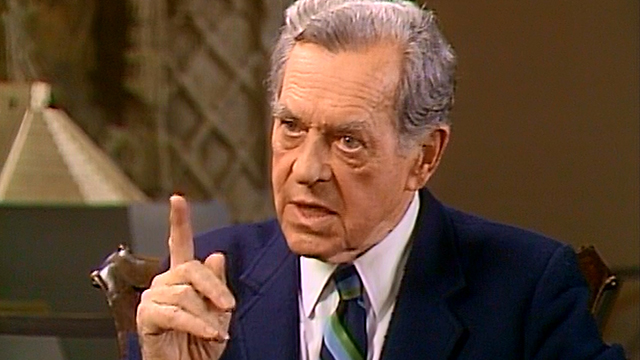
Writer’s block results from too much head. Cut off your head. Pegasus, poetry, was born of Medusa when her head was cut off. You have to be reckless when writing. Be as crazy as your conscience allows. JOSEPH CAMPBELL
“One can never be alone enough to write,”Susan Sontag observed. Solitude, in fact, seems central to many great writers’ daily routines — so much so, it appears, that part of the writer’s curse might be the ineffable struggle to submit to the spell of solitude and escape the grip of loneliness at the same time.
In October of 1954, Ernest Hemingway was awarded the Nobel
Prize in Literature. But he didn’t exactly live every writer’s dream:
First, he told the press that Carl Sandburg, Isak Dinesen and Bernard Berenson
were far more worthy of the honor, but he could use the prize money; then,
depressed and recovering from two consecutive plane crashes that had nearly
killed him, he decided against traveling to Sweden altogether. Choosing not to
attend the Nobel Banquet at the City Hall in Stockholm on December 10, 1954,
Hemingway asked John C. Cabot, the United States Ambassador to Sweden at the
time, to read his Nobel acceptance speech, found in the 1972 biography Hemingway: The Writer as Artist (public library). At a later date, Hemingway
recorded the speech in his own voice. Hear an excerpt, then read the transcript
of the complete speech below:
Having no facility for speech-making and no command of oratory nor any
domination of rhetoric, I wish to thank the administrators of the generosity of
Alfred Nobel for this Prize.
No writer who knows the great writers who did not receive the Prize can
accept it other than with humility. There is no need to list these writers.
Everyone here may make his own list according to his knowledge and his
conscience.
It would be impossible for me to ask the Ambassador of my country to read a
speech in which a writer said all of the things which are in his heart. Things
may not be immediately discernible in what a man writes, and in this sometimes
he is fortunate; but eventually they are quite clear and by these and the
degree of alchemy that he possesses he will endure or be forgotten.
Writing, at its best, is a lonely life. Organizations for writers palliate
the writer’s loneliness but I doubt if they improve his writing. He grows in
public stature as he sheds his loneliness and often his work deteriorates. For
he does his work alone and if he is a good enough writer he must face eternity,
or the lack of it, each day.
For a true writer each book should be a new beginning where he tries again
for something that is beyond attainment. He should always try for something
that has never been done or that others have tried and failed. Then sometimes,
with great luck, he will succeed.
How simple the writing of literature would be if it were only necessary to
write in another way what has been well written. It is because we have had such
great writers in the past that a writer is driven far out past where he can go,
out to where no one can help him.
I have spoken too long for a writer. A writer should write what he has to
say and not speak it. Again I thank you.

 The list of favorite books on writing can be very different from one author to another. I’ve scoured 10 “top” lists to see which titles spanned the gamut.




 Booker's Blog