Tag Archives: writing tip

Words to be Wary of

In an effort to help those who may have been hit by the onslaught of marketing slurry that passes through the English language, every now and then, I will post some words or phrases that are absurd, unless you are in marketing, sales, or some other line of work where junking up the language is simply a way of life. To start, I submit two:

Free Gift. By its definition, a gift is free, at least to the recipient. If somebody gives you a gift that’s not free, then it is not a gift.

Truly Unique. Can something be falsely unique? Unique means one of a kind. Doesn’t matter if it is a good one of a kind, or a bad one of a kind, it is a one of a kind. If it is unique, by its definition it is true to itself because it is one of a kind.

Leave a comment

Filed under absurdity, English, language, words, writer, writing, writing tip

Writing Tip: Drama is conflict

My writing is distinctly middle brow. Just ask anybody who has suffered through it. Still, I like to think that even in my middling way, I can offer some helpful advice when I stumble across it. Therefore, from time to time, I will post some writing advice, but not from me. The advice will come from established sources. I will endeavor not to make it overlong or overreaching, and sometimes it will simply be reminders of what we all probably already know, but it will be some tips I have picked up from reading, from attending writing conferences, or it may even come from you.

Writing with paperclips in ears and nose

Darma is conflict, sometimes even self-inflicted

The first bit of advice comes from a writing course the Knoxville Writers’ Guild sponsored way back in 1993. The teacher was Joseph Gunnels and the cost was $75. It was two-day event, May 15 and 16, and we spent part of a pleasant afternoon sitting on the grass outside the Candy Factory, on The 1982 World’s Fair site. I took over 30 pages of notes, but rather than bore you with details, here is the essence of what I took away from the seminar:

Drama is conflict;
Without conflict no action;
Without action no character;
Without character no story;
Without story, who cares?

In a future entry, I’ll give you a short, crisp definition for conflict that I learned at a more recent one-day writing seminar. It comes from a very highly regarded script doctor in Hollywood, but applies just as well to other forms of fiction writing. Stay turned.

Leave a comment

Filed under advice, building a better story, character, conflict, drama, story, tension, words, writing, writing conference, writing tip

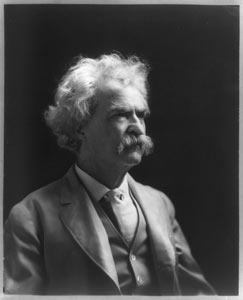
Mark Twain quote on writing

Mark Twain photo

photo of Mark Twain

“The time to begin writing an article is when you have finished it to your satisfaction. By that time you begin to clearly and logically perceive what it is you really want to say.” —Mark Twain

And somehow, if you don’t know who Mark Twain is, here’s where you can get a clue: Mark Twain.

Leave a comment

Filed under advice, humor, Mark Twain, quote, Quote of the day, words, writer, writing, writing tip

Writing quote for the day

There’s nothing to writing. All you do is sit down at a typewriter and open a vein. –Walter Wellesley “Red” Smith

Leave a comment

Filed under quote, words, writer, writing

Four Clues to Writing a Mystery

[This is taken from an e-newsletter sent out by the writer Bruce Hale. You can find more information at Bruce Hale Writing Tips.]

When I wrote my first mystery, I had no idea how to do it. I
actually had characters tell my detective riddles that would lead
him to the next thing he needed to discover. To be honest, I had
no clue how to construct a clue.

But after you write a few of these things, you start to see how the
mystery is made. Herewith, four helpful hints on writing a mystery:

1. Play fair with the reader
Mystery readers hope that you’ll surprise them, but that surprise
must be a fair one. You can’t tease readers with three suspects
throughout your story, and then suddenly reveal that a character
they’ve never met is responsible. That’s not playing fair.

A Typewriter

Don't forget the unwritten rule: write!

Many mystery readers try to figure things out as they go along. To
play fair with these people, you need to plant a clue or two that
points toward your real culprit. Make it subtle, a throwaway line
perhaps, but make sure it’s there.

2. Keep your reader’s age in mind
Obviously, the mystery in a Cam Jansen chapter book is going to be
just a tad simpler than that in a Raymond Chandler tale. You want
to keep your reader guessing, but you don’t want things to be so
convoluted that he or she gets completely lost — especially in a
children’s book.

Your story should be just a little trickier than readers think they
can handle. If you have any doubts, ask a reader in your target
age range to take a look at the story. If your story leaves her
completely clueless, it’s time to simplify.

3. Merrily misdirect
One of the keys to successful mystery writing is misdirection.
Your readers should suspect every possible culprit but the real
one.

How do you do this? Make your clues point strongly toward one
character, then show that he’s innocent. Make your suspects take
actions that can have two interpretations, and let the reader and
detective erroneously assume the worst.

4. Write from the ending
Most mystery writers I talk with say that they figure out the
ending first — what’s the crime, who’s the culprit, why’d they do
it? — before plotting the rest of the book. Once you’ve got that
sorted out, it’s a matter of concealing it.

You’ll want your detective to take a circuitous route, often
running into brick walls. You’ll want her to think she’s got it
all solved, only to have the rug pulled out from under her.

Mysteries are all about the progressive unraveling of the unknown.
But it’s the *way* you unravel it — using misdirection, considering
your reader, and playing fair — that makes for a satisfying read.

Leave a comment

Filed under mystery, mystery writing, words, writer, writing, writing tip

Writing Quote for the Day

“Don’t get it right, just get it written.” —James Thurber

And if you don’t know who James Thurber is, I suggest starting here: The Thurber House.

Leave a comment

Filed under advice, humor, James Thurber, words, writer, writing, writing tip

Humor and the art of capitalization

In this world of hi-tech, I have noticed that many who text message and email, have forgotten the “art” of capitalization. Those of you who fall into this world, please take note of the following statement.

I cannot stress enough that capitalization is important.

Capitalization is the difference between…
… helping your Uncle Jack off a horse.
or
… helping your uncle jack off a horse.

End of lesson

1 Comment

Filed under absurdity, capitalization, humor, words, writing, writing tip

So, you want to be a writer? Watch and learn

Leave a comment

Filed under agents, editor, humor, novel, Perils of writing, pitches, publishers, Random Access Thoughts, words, writing, writing tip

Pictures at an exhibition

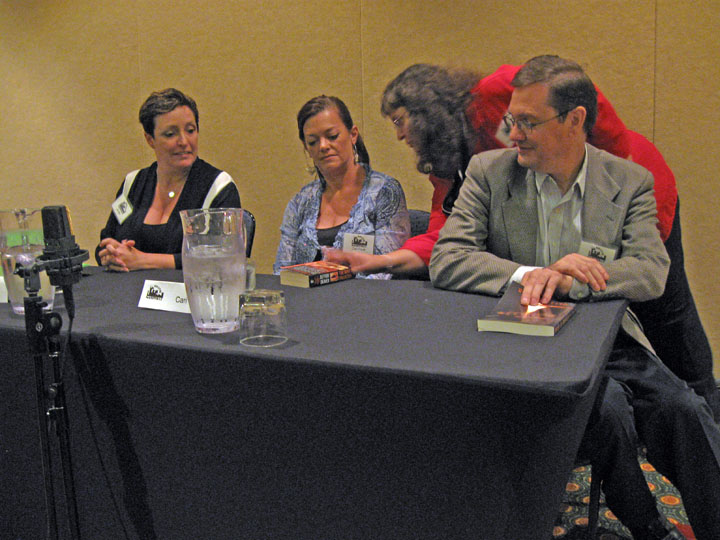
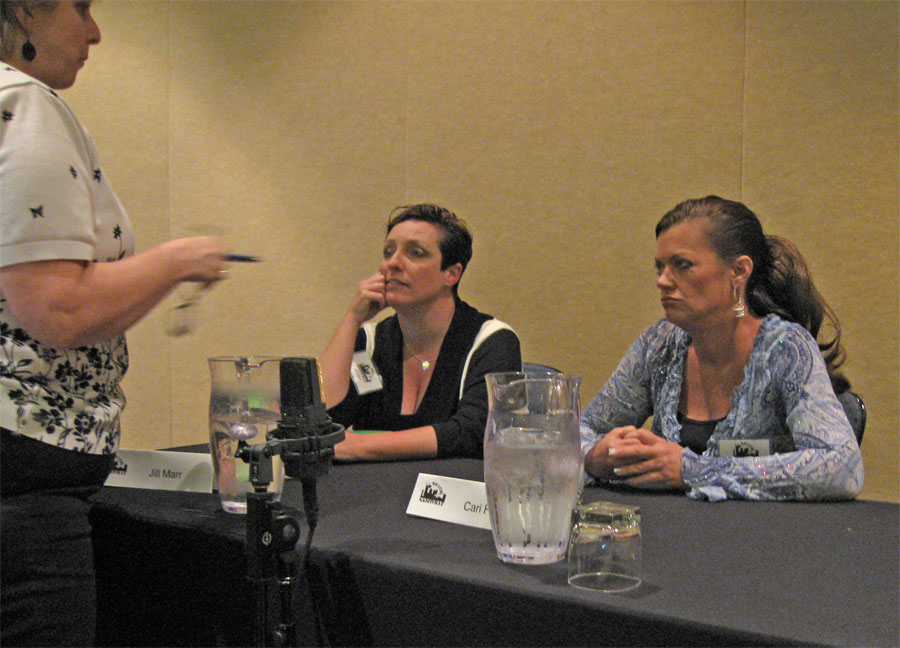
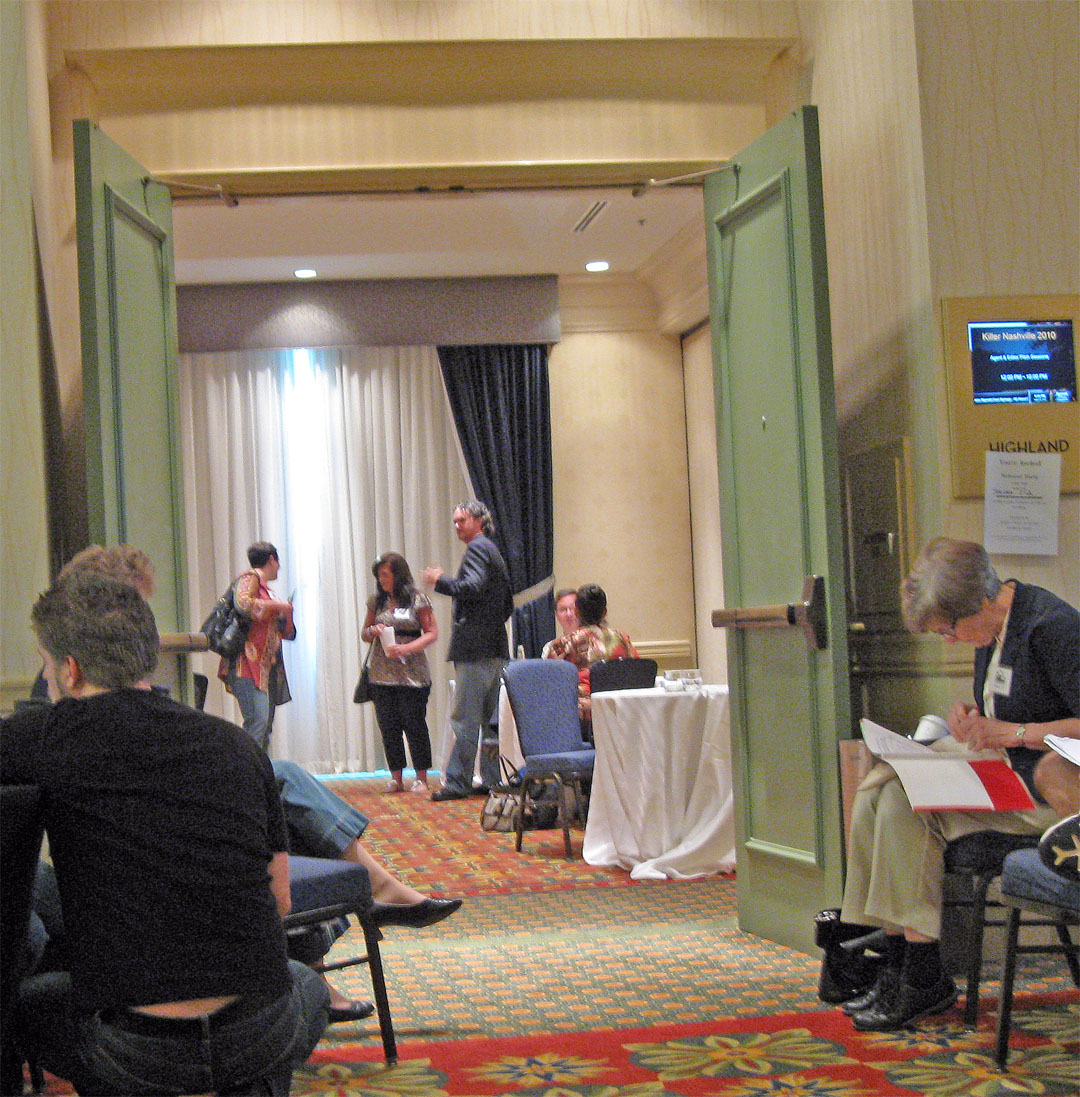
Below are a few photos of agents and editors taken while at Killer Nashville this past August 20 – 22, 2010. Consider this visual reference for the names of people mentioned in some of my earlier posts on pitching your novel to editors or agents.

From left, agents Jill Marr, Cari Foulk, and Jeff Gerecke. Beth Terrell, author and Killer Nashville Executive Driector, leaning over behind them.

Jill Marr (seated left) and Cari Foulk listening to a question at Killer Nashville 2010.

Jill Marr (seated left) and Cari Foulk listening to a question at Killer Nashville 2010.

Agents Jill Marr (left) and Cari Foulk standing for a few moments after listening to pitches.

Agents Jill Marr (left) and Cari Foulk standing for a few moments after listening to pitches.

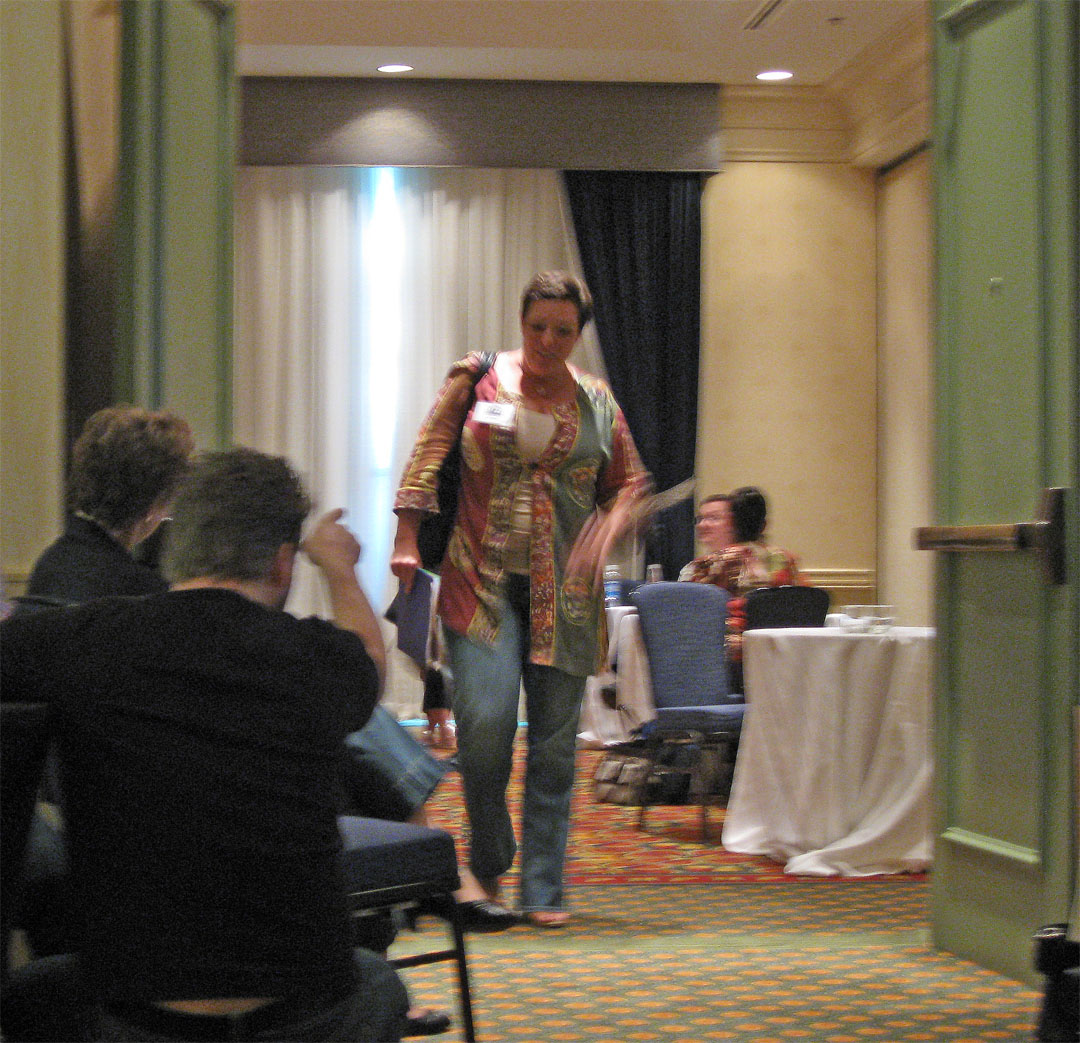
Agent Jill Marr walking out of the Pitch Room.

Agent Jill Marr walking out of the Pitch Room at Killer Nashville 2010.

Leave a comment

Filed under agents, editor, Killer Nashville, Perils of writing, publishers, Random Access Thoughts, the perils of writing, writing, writing conference, writing tip

The pitches

Killer Nashville badge

Killer Nashville badge

Below are two of my pitches. I used the The Painted Beast pitch on all the agents and editors I talked with at Killer Nashville. I was able to use The Small Resurrection pitch once or twice.

Two pieces of advice, one I have said before: Practice the pitch and make it as natural as you can. Two: Think of a pitch as a spoken version of the back-cover blurb you read on many paperback books.

The Painted Beast

Ex-cop Stephen York was once a hero. Decorated and lionized from uncovering corruption in the police department and bringing down a criminal enterprise, he now works two or three menial jobs in order to hold body and soul together, not only for himself but also his thirteen-year-old step-daughter and eight-year-old daughter. One night his ex-wife, who has escaped from prison, returns home and terrorizes him. He escapes from her and she from him, but shortly thereafter she kidnaps their daughters. In order to save them, Stephen has to kill her, which puts him under suspicion for murder and under the thumb of a police detective who has personal as well as professional reasons for wanting to grind Stephen down further. In addition, his step-daughter’s biological father steps forward to kidnap her with the intention of leading her into a life of child pornography and prostitution in order to get money to help re-establish the criminal empire that Stephen had helped take down. This time, in order to save his step-daughter, Stephen, who has not been a particularly good father, has to offer his life in order to save his step-daughter’s. In so doing, he learns another definition of hero. At its core this novel’s theme asks and answers the question: Can a fallen hero be a hero again?

Limerick version:
There once was an ex-cop who did poorly
At being a father and what’s more he
Killed his ex-wife,
Then offered up his life
To save his daughter from a life in pornography.

***

A Small Resurrection

Is believing in what you see the same thing as seeing what you believe in?

Knoxville, Tennessee, is the last place T. Xavier Gabriel wants to be. But the director of the 8th highest grossing film in Hollywood has come to town to ask his ex-wife for forbearance in paying the large alimony and possibly also for a loan to help restart his fallen career. She, however, has other plans. She wants him to

Pitching your novel

Use conversational voice when talking about your novel

rescue their 22-year-old daughter from the undue influences of a 24-year-old evangelical preacher. Gabriel wants nothing to do with that, having already admitted to be a failure once as a father, he doesn’t want a second bite of the apple. But when he finds his daughter keeping company with a resurrected Rod Serling, he sees a chance to use this Serling look-alike to resurrect his own career. But getting Serling away from his daughter puts her in jeopardy, and Gabriel must decide if he is going to save her or save his career. To save her, he must enlist the aid of Serling, who is not quite sure who he is or why he has been resurrected, and in saving her he puts an end ever resurrecting his career.

Limerick version:
There once was a director named Gabriel
Whose life was a broken down fable
Then along came Rod Serling
And an offer so sterling
That it could save Gabe if he was able.

Two final notes:
1) The limerick versions were not something I pitched, though I thought about it. It was my way of have a pitch that could be done in 15 seconds or less.

2) Some pitch advice says you need to have antecedents as part of your pitch. Antecedents are novels that are like yours. Something similar to your novel. This is supposed to show that you know about your novel’s market and where it might fit. While I had that prepared for The Painted Beast, it did not seem to be something those I pitched to at Killer Nashville were interested in. That could have been a mistake on my part. But I had the feeling that these agents wanted to be the ones to decide where it belongs.

Leave a comment

Filed under advice, agents, characters, Killer Nashville, limerick, Perils of writing, pitches, publishers, story, the perils of writing, words, writing, writing conference, writing tip