
Writer’s Block, n.: The place where a writer lives with his/her imaginary friends. Something like the neighborhood of make believe.
Tag Archives: writing tip
Best writing advice you’ve received?
Below is some writing advice gathered by Chip MacGregor of MacGregor Literary. The listing below is from his blog. Website for the agency is http://macgregorliterary.com/.
http://chipmacgregor.typepad.com/main/2011/12/whats-the-best-writing-advice-you-ever-got-.html
December 30, 2011
What’s the best writing advice you ever got?
I’ve had several people write to share the best writing advice they’ve ever received.
Vince Zandri, who has done numerous novels and sold more than a quarter million books, wrote to me and said, “The best writing advice I ever got came from Ernest Hemingway in the form of his memoir, A Moveable Feast. If writers are worried about one thing, it’s the ability to keep a story moving from day to day. To avoid the ‘block,’ as some people call it. Papa wrote slowly and methodically in the early morning hours, and trained himself to stop at a point where he knew what was going to happen next. That way he could be sure of getting started the next day — and it left him the afternoons to play, exercise, fish, drink, or do whatever he wanted.”
Successful nonfiction writer Mel Lawrenz wrote to say, “The best advice? Take the long view. See the long process of publishing as an advantage — the stages of writing, editing, rewriting, and revising make for a more refined end product. Don’t miss the opportunity to rethink what you originally wrote.”
Harlequin author Dana Mentink sent this: “The best writing advice I got as a pre-pubbed author was that I should act like a professional. My mentor encouraged me to treat my writing like a business, not a hobby. Put in the hours, describe yourself to others as a writer, and really put yourself into the mindset of a professional. She explained to me that there’s a big difference between ‘I want to write a book’ and ‘I want to be an author.’ The latter requires professional dedication.”
Children’s author Kayleen Reusser noted, “Believe in yourself, even if no one else does. At my beginning I was the only one who believed I could write and get published. Even my mother told me I could not write — no money, no time, three small children to care for. But I swore I would die trying. (Thank goodness it has not come to that.)”
And novelist Dianne Price wrote to say, “Know your characters. LIve with them. Talk to them. Listen to their words and the cadence of their speech. Make them your constant companions. Argue with them. Commiserate with them. Ask them questions. You must know them to make them believable.”
What about you? What’s the best writing advice you’ve ever heard?
Filed under advice, agents, writing, writing tip
Literary resolutions
I pass these along, found on line in an article at the LA Times web site. I don’t generally make resolutions. In fact, the last resolution I made was to not make any resolutions, and thus far I have managed to keep that one. But for those who do, you might find some inspiration here.

Counting down the minutes to a new year of resolutions
Pen up.
Keyboards clacking.
Steady as she goes.
Happy New Year.
http://latimesblogs.latimes.com/jacketcopy/2011/12/25-literary-resolutions-for-2012.html
When 2012 arrives this weekend, there will be resolutions aplenty. Diets! Exercise! Get organized! Figure out Google+! Quit smoking! Jacket Copy asked
writers, editors and publishers what their literary resolutions will be. Join them and tell us yours.
Ben Ehrenreich, author of the novel “Ether” and winner of a 2011 National Magazine Award for his article “The End”: That’s an easy one: write, write, write and write some more.
Richard Lange, author of the 2013 novel “Gather Darkness” (Mulholland): I’m going to reread “Moby-Dick,” “Crime & Punishment,” and “The Scarlet Letter.” Every time I go back to books that I loved as a kid, I learn more about myself as a writer now.
Dana Spiotta, author of the novel “Stone Arabia”: I have many books I want to read this year. For example, I have this inviting stack of Hollywood biographies and memoirs: “Rosebud” by David Thomson, “Frank: The Voice” by James Kaplan, “Run-through” by John Houseman, “Memo” by David O. Selznick, “A Girl Like I” by Anita Loos, and “Vanity Will Get You Somewhere: An Autobiography” by Joseph Cotten.
Antoine Wilson, author of the 2012 novel “Panorama City” (Houghton Mifflin Harcourt): For 2012, I expect to be doing more interacting with strangers, thanks to the new book coming out, so my resolution is simple: To be able to clearly and concisely answer the following question: “What are you reading?” Jervey Tervalon, author of “Serving Monster” and founder of Literature for Life: Start working on a new novel that will amuse and consume me; and I will not allow myself, not even for a second, to dwell on the bleakness of the publishing industry.
Elizabeth Crane, author of the 2012 novel “We Only Know So Much” (HarperPerennial): I don’t know if this is exactly literary, but the only real resolution I’m considering, which I haven’t etched in stone yet, is to give up watching entertainment shows (ET, etc). This might or might not help my writing, if only insofar as it will free up an hour of my life every day, but the hope is that it will help my celebrities-and-celebrity-news-makes-me-want-to-pull-my-hair-out problem.
Rachel Kushner, author “Telex from Cuba,” a National Book Award finalist: This year I am inspired by my friend Marisa Silver’s resolution from last year, which was no internet (except e-mail and occasionally facebook). My resolution is exactly that. Perhaps that’s bookish, in that it might create more time in which actual books can be read. I feel better already, sensing the loss of this convenient form of self-sabotage–of time. Time is of a premium. I don’t want to waste any. I have a feeling I will miss out on very little without the internet. Whatever it is, if it’s important enough it will find me.
Marisa Silver, author of the short story collection “Alone With You”: Read more poetry. Use fewer commas.
Evan Ratliff, founding editor of the multimedia iPad magazine The Atavist: I’m not a big resolution maker, but I would say on the literary front mine is pretty simple and obvious. It’s building on something I started late this year, which is to carve out specific, disconnected, undistracted time to read every day. Sometimes it’s sitting outside with a paperback, having left the phone and all other devices back at the office. Sometimes it’s actually reading a book on the phone (as you might imagine, I’m a big fan of reading books on the phone!), but having turned off all the phone’s connections. It’s like exercise, for me: The whole day gets better if I set aside the time for it. And as much as I love reading digital texts, it’s not the same if I stop three times in the middle to deal with some seemingly-urgent-but-not-really email.
Elissa Schappell, author of the short story collection “Blueprints for Building Better Girls”: It’s the Russians. It’s always the Russians. Oh yes, I’ll read the Russians in the summer months. Two summers ago, I developed such a bad case of Tolstoy’s elbow from hauling around “War and Peace” I could barely flip through a magazine. The summer before “Crime and Punishment” doubled as a drinks tray at a lawn party, and when I got spooked staying alone at a friend’s summer house, I kept it by the door as a weapon. This year, however I’m more hopeful–I’m starting, more appropriately, in winter. Beginning tomorrow I’m going to make “Anna Karenina” my new BFF.
James Hannaham, author of the novel “God Says No”: This year I want to figure out why, when an author says the phrase “working on a story collection,” as in “I’m working on a story collection,” everyone in publishing reacts as if they have instead heard the phrase “molesting several children.” And I will continue to pray for the demise of e-books, or at least the demise of the stupid fear that they will replace printed books.
Ben Greenman, author of the short story collection “What He’s Poised to Do”: I want to reread all the Emily Dickinson poems, in order, at a slow enough rate that I understand them but a fast enough rate to keep it exciting. It’s not as easy at it sounds. And I also plan to think about why, in a time of reduced attention spans, short stories aren’t getting more traction.
Mark Haskell Smith, author of the 2012 nonfiction book “Heart of Dankness: Underground Botanists, Outlaw Farmers, and the Race to the Cannibas Cup” (Broadway): For 2012 I owe my editor a novel, so I’ll be working on that.
Patrick deWitt, author of the novel “The Sisters Brothers,” a 2011 Booker Prize finalist: My resolution is to further distance myself from the internet, and to use the time I would have spent re-re-rewatching that “screwing/puking dogs” GIF reading and writing.
Rob Spillman, editor of the literary magazine Tin House: Since I read contemporary work constantly for work, my resolution is to continue my recent streak of reading great older work that I missed or glossed over in my youth. I’m about to finish “House of Mirth,” which I can’t believe I never read before. Next up is “Moby-Dick,” which I half-read when I was twenty. On the horizon Waugh and more Wharton.
Janelle Brown, author of the novel “This is Where We Live”: Write a rough draft of a new novel. No pressure.
Johnny Temple, publisher of Akashic Books: 2012 marks the 50-year anniversary of the independence of both Jamaica and Trinidad & Tobago (both former British colonies), so my resolution for the coming year is to celebrate Caribbean-inspired independence.
Emma Straub, bookseller and author of the short-story collection “Other People We Married”: I think 2012 is going to be my year for one of the giant masterpieces: Anthony Powell’s “Dance to the Music of Time,” maybe, or Proust. Also, since no one answered my call for help and bought me all the NYRB classics in 2011, that resolution will have to shift onto the coming year.
Laila Lalami, author of the novel “Secret Son”: For the last couple of years, I’ve been working on my new novel and have been reading almost exclusively fiction and nonfiction that’s relevant to it in in some way. In 2012, I’d like to read some new fiction!
Chad Post, editor of Open Letter Books: In 2012, I’m going to read a ton of really long books. I’m going to start with Murakami’s “1Q84,” but also want to read Nadas’ “Parallel Lives,” the new translation of “War and Peace,” the whole Javier Marias “Your Face Tomorrow” trilogy, maybe “Bleak House” in honor of Dickens’ 200th birthday, and Pynchon’s “Against the Day” (the only book of his I have yet to finish). I feel like I’ve been putting off so many of these books for so long, because they’ll “take too long” to read. That’s ridiculous, and in a way, I think this little project will be a nice antidote to my normal state of being all ADD and jumping from one article or novella to the next.
Ned Vizzini, television writer and author of the young adult novel “It’s Kind of a Funny Story”: For 2012 I resolve to read 10 books for no other reason than because I want to — books (1) by people I don’t know (2) that I am not reviewing (3) that do not have any potential for film or TV.
Pamela Ribon, screenwriter and author of the 2012 novel “You Take It From Here” (Gallery Books): In 2012I resolve to get new curtains, because I believe my neighbors (and various passersby on the street) are watching me whenever I’m playing my XBox Kinect workout. The other day I’m pretty sure I saw one of them with a bowl of popcorn.
Tod Goldberg, director of the creative writing MFA program at UC Riverside, Palm Desert, and author of the short-story collection “Where You Lived,” resolved: My only real literary resolution for 2012 is to finish my new novel, which I then hope Salman Rushdie will read, on his Kindle.
Saïd Sayrafiezadeh, author of the memoir “When Skateboards Will Be Free”: Stop looking at so much porn.
Colin Robinson, co-publisher OR Books, which has just published “Occupying Wall Street: The Inside Story of an Action That Changed America”: My resolution for 2012 is for OR Books to develop further direct relationships with those who want to read our titles so as to bypass corporate retailers whose only significant role in the publishing process is taking all the money. Oh, and also to publish some great books.
Filed under 2012, literary, literary resolutions, resolution, writing, writing tip
The price creep of e-books
This is an interesting companion piece to the one on self-publishing that I posted earlier. If interested in writing, this is also a good blog to follow. Tom Dupree has many years experience as an editor, and it would be worth your time to tap into that knowledge.
http://tomdup.wordpress.com/2011/12/15/e-customers-creeped-out-by-price-creep/
E-Customers Creeped Out By Price Creep
By Tom Dupree
There’s a piece on page 1 of today’s Wall Street Journal about e-book sticker shock, another good job by the Journal’s book-beat reporter Jeff Trachtenberg. I’ve been railing about this issue ever since Apple persuaded the six major publishers to disallow any discounting by retailers on e-books. As Mr. Trachtenberg points out, this restriction doesn’t apply to print books, so you have the increasingly common phenomenon of e-editions equaling, and even surpassing, the discounted print edition at retailers like Amazon.com. In at least one instance (emphasis on “at least”), Ken Follett’s doorstop FALL OF GIANTS, the publisher’s e-book price is $18.99 – but the paperback edition can be bought new for $16.50.
Let’s re-emphasize what’s actually going on here. The major players in an industry which faces massive headwinds, book publishing, is deliberately overpricing its most promising and fastest-growing revenue stream, specifically to dampen e-demand and reduce “cannibalization” of “higher-margin” hardcover and trade paperback editions. Mr. Trachtenberg points out that under the “retail model,” by which Amazon was charging $9.99 for new bestsellers, it was the retailer who took the loss; the author and publisher still received roughly half of the full retail price. But under the current “agency model,” the publisher retains 70%, and the retailer gets the rest. No more “loss leaders,” and essentially no more $9.99 bestsellers.
But look closer at the Follett. Dutton’s suggested retail price for this 985-page tome in hardcover is $36. Under the “retail model,” it collected $18 per e-copy, just as it did for a hardcover, and Amazon could give it away if they liked. Of course, that’s no way to run a business: “How do we do it? Volume!” What Amazon was trying to do was to jump-start a nonexistent e-book market and worry about coaxing it into profitability later; they’ve always been forward-thinking in that way. But under the “agency model,” Dutton gets 70% of $18.99, the highest price I’ve encountered for a commercial trade e-book, which is $13.30 per e-copy, and all retailers receive the same $5.70 (I rounded both numbers to the next penny). $13.30 — and remember, this is the absolute Beluga of e-pricing — is $4.70 less than $18. But who’s counting?
My point exactly.
Now let’s consider Apple’s motives. It’s a wonderful company, but it’s no less ruthless just because its antagonizer-in-chief has passed away. When Apple was the “first mover” in digital music, it used the leverage of its huge installed iPod base to oppose the big record labels by dampening the retail price from $15-$16 for a whole CD to 99 cents for an individual song (boy, that price rings a bell. And it’s increased since then, too). But in e-books, Apple found itself, uncharacteristically, in Amazon’s wake (Steve Jobs had infamously sniffed at the Kindle’s launch: “People don’t read any more”). So now what it had to do was eliminate Amazon’s price advantage – and, amazingly, in a reversal of its effect on the music business, it succeeded in propping up the retail price of e-books! Justice is now looking into whether preventing discounting constitutes illegal collusion among the major publishers (as are European authorities), and I don’t know much about the law so can’t speculate, but it does sound fishy, and it protects retailers (guaranteed profit) at the expense of consumers (higher prices).
I have some friends in the book biz who’ve read my previous musings and have some pretty good arguments that nobody seems to be considering. For example, it’s an age-old fact that for big bestselling authors like Mr. Follett, or Stephen King or John Grisham or Danielle Steel or Nora Roberts, publishers pay way too much up front as an “advance,” otherwise known as a “guarantee against royalties.” First, it’s necessary because everybody else is waving huge paychecks around, and you have to be there to compete. Second, a major author can be a tentpole for the rest of your list: if you, Ms. Retailer, want the new Grisham, you’ll have to hear about all the other great stuff we have. Third, there’s the intangible prestige factor, as authors and agents want to be with the house that publishes XXX. But these millions represent a nonrefundable guarantee which has to “earn out” before a book realizes its true potential for perennial profit down the road. (I’ve heard that Mr. King has a deal which plays down the guarantee in favor of a larger participation on the back end, like major movie stars sometimes do.) A surprise hit like THE HELP is very profitable immediately, but big bestsellers from well-known authors always start out deep in the red, and I’d love to know what Kathryn Stockett’s agent has in mind for her next contract.
That means you have to scramble for every penny you can find during the hot new-release period with the ads and the DAILY SHOW spots, very much like movie studios do. My question is: why aren’t the big publishers doing so?
Mr. Trachtenberg quotes a publisher as saying people are realizing the advantages of e-books and are willing to pay a premium for them. I’ve heard that too from some consumers. But $18.99? (P.S.: Book prices never go anywhere but up.) He shares more ominous quotes from others. A reader says it’s hard to justify a $10-$15 e-book when you can pick up a used print copy for $2 or $3 on Amazon. If that was the Ken Follett, the author and publisher made no money on the used-copy resale, when they could have received $18 for a “retail-priced” e-book. Also, the ability to self-publish and shop online is hitting the major publishers from the low end. As an industry consultant says, some e-buyers may opt for “five-star-reviewed” self-published mysteries or romances which are going for $2.99 or $3.99. Plus, if it’s digital it’s stealable, and remember that millions of otherwise law-abiding kids believed downloading from Napster was justifiable because CD prices were too high.
I think it’s fair to say that most e-reading devices have been purchased since “agency pricing” went into effect about two years ago, so possibly it’s only the early adopters like me who recoil against $12.99 and $14.99 books, or e-editions which cost more than paperbacks. Most new e-reader owners may think that’s the going rate you pay for not having to lug the physical book around, being able to read it on damn near every mobile device there is, etc. Yet as a “veteran,” I’d still be willing to wait, even a whole year, so the publishers have time to sell every hardcover they possibly can, if they’d only then give me a fairly-priced e-edition so I could fairly pay the author and publisher instead of ignoring them.
As it is, I have a list of saved backlist books that I’ll never buy in print editions; I just want to read them once. Every month or so I check on them, and every so often a publisher will experiment with a temporary lower price (this is why the publishers will probably survive any accusation of price-fixing; each one is free to charge anything it likes). I will either get the price I want, or the publisher will lose a sale which I would guess is sorely needed. It’s as simple as that.
Filed under e-book, publishers, publishing, Tom Dupree, writing, writing tip
Ten reasons to consider self-publishing
I pass this along as information. I enjoy entries posted on the Kill Zone blog, and would suggest writers of almost any genre to at least stop by on occasion. All the authors who contribute are published writers many times over, often making their living writing. Such is the case for James Scott Bell.
http://killzoneauthors.blogspot.com/2011/12/10-reasons-why-i-am-self-publishing.html
10 Reasons Why I Am Self Publishing
We had quite a dust up this week over the self-publishing revolution, beginning with my thoughts on agents, followed by Clare’s post on reasons NOT to self-publish. As I have just released a new story for Kindle (more on that below), I reflected on the reasons I choose to self-publish alongside my traditionally published work.
1. It’s real money
I write for a living. Self-publishing increases my income substantially, and pays off monthly. I’m sort of old school on this. The pulp guys who wrote during the Depression were, first of all, trying to put food on the table. Writing is my job, and if I can up the income at my job, why would I not do that?
2. It’s not either/or
I don’t have to choose self-publishing to the exclusion of traditional publishing. I do both. The nice thing is I can make sound business decisions with more options and information than ever before.
3. It’s not about hate
One thing I didn’t understand about the original reasons-not-to-self-publish post was the point about not being a “hater.” Yes, I know there is some vitriol out there about trad publishing from authors who have been burned by it. But hate is a personal invective and traditional publishing is not a person. It’s a business. One should simply make clear-headed business decisions, with self-publishing as one of the options on the table.
4. It’s what I love to do
I love to write and have people read what I write. Self-publishing lets me get more of my work to more readers. This is why traditional publishers should not fret over authors self-publishing non-competing work (and should take a liberal stance on what constitutes “competing”). An author who makes more readers helps the traditional publisher sell more of that author’s books.
5. It lets me try different things
I am free to write what I want and put it out there in the marketplace. I can stretch my muscles, try new styles. My latest story, described below, is an example. This is major.
6. It’s a market for shorter works
I love the novella, novelette (10 – 20k words) and short story forms. This market was pretty much dead until the self-publishing revolution. Now you can actually make a buck off this type of material.
7. It’s fun
Traditionally published authors always love the day a box of their new book arrives from the publisher. You take out a fresh copy, smell it, admire the cover, riffle the pages. Well, it’s just as much fun to see your book become available online, even more fun when people start buying it.
8. It’s empowering
Writers have never had the power they have now to reach readers. It used to be there was only one way to do it, and that was through the largesse of a difficult-to-reach Kingdom called the publishing establishment. I like having more power. But with power comes responsibility, and it’s up to me to make sure my writing is the best it can be. I like having that power, too.
9. It’s a free market
It’s nice that the market — the readers themselves — get to decide how much reward an author gets. That’s as it should be. The more an author writes and publishes and pleases readers, the more the market will reward said author.
10. It’s fast
This may be my favorite reason of all. I don’t have to wait a year or 18 months to see something I wrote go out for sale.
As an example of all the above, let me tell you how my latest offering came to be:
A few months ago I purchased the Kindle edition of the Robert E. Howard Omnibus. Howard was one of the most prolific pulp writers of the 30s, best known for creating Conan the Barbarian. He wrote in several genres, including the Steve Costigan boxing stories.
I liked the style of these stories because I’m a boxing fan (old school, that is, from Jack Johnson to Muhammad Ali), so about six weeks ago I found myself tapping out a first person narrated boxing tale. I called my character Irish Jimmy Gallagher and set the story in 1955 Los Angeles. Pretty soon I had about 6000 words in a voice I really liked.
I rewrote the story then sent it out to a group of beta readers, who I told to be “brutally honest” with me. I really didn’t know what I had. The feedback was 100% positive, with a few suggestions and typo snags. So I took their notes and made some changes and then did the following:
* I created a cover to suggest the pulp-style boxing stories of yore. I purchased a license for a pen-and-ink boxing picture from iStockphoto and designed a template (I’ll change colors for future stories) in Pages for Mac. Total cost to me: $45 and a couple hours of time.
* I wrote the marketing copy for the story, which is a crucial link in the self-publishing chain, but I enjoy that process, too. Fifteen minutes.
* I converted the story to .mobi format using Calibre software. For a novel with a TOC, I would probably hire this step out. But I wanted to see if I could do it with a simple short story, and I could. A few hours to learn the program and mess with it.
* I uploaded the story to Amazon on Monday morning (ten minutes to fill out the info on their publishing page) and it went live later that day.
From the finishing of the story to getting it vetted by beta readers, doing the formatting and design and placing it online, it was about a week. That absolutely rocks.
So now I have a boxing story for sale. If I had sold it to a pulp magazine in 1935, I might have been paid $100 for it as a one-time fee. Now I will make royalty income off it for the rest of my life. While one 99¢ story is not going to buy a new car, it is certainly going to be substantially more over the long term than our forefathers of the pulp days ever saw. So I will be writing more stories in this series, and start other series as well.
This is a good thing. No, a great thing for writers.
So those are ten of my reasons for self-publishing. And now it’s my pleasure to introduce you to Irish Jimmy Gallagher, who checks in at 6’3″ and 225 pounds. A boxer with dancing green eyes and a wit born of the Blarney Stone, Jimmy is a hell of a fella, quick with a laugh and quicker with the jab.
But if you foul him, stand back.
Available for 99¢ exclusively on Kindle.
Filed under James Scott Bell, Kill Zone blog, self-publishing, writing blog, writing tip
Building a better story: Tension
In the last installment, I said there was a difference between conflict and tension. Conflict, as Bob McKey pointed out, is the gap between expectation and result. The gap can be small, such as being overcharged a dime or great, such as losing a loved one when you thought he would survive.
The best way to explain tension is to refer to a small book on writing by the writer and editor Algis Budrys, Lithuanian for “Gordon John Sentry, more or less.” His book, Writing to The Point: A complete guide to selling fiction is only 64 pages long, and may be hard to get. But this Strunk and White-sized guide to writing is worth your time (and it even covers manuscript formatting).
For Gordon John Sentry, more or less, a story consists of seven parts: 1) a character 2) in a context with a 3) problem, who 4) makes an intelligent attempt to solve the problem and 5) fails, tries a second time and fails, tries a third time and finally 6) succeeds or completely fails, and whose actions are then 7) validated by another character in the story.
Sounds simple, doesn’t it? That is the allure of telling a good story. But the execution is often more difficult, for writer as well as story character. Step 4 – 6 above is where in a story you find tension. The key is that the character makes an intelligent attempt and fails. With increased knowledge, he or she tries again, and fails. The increased knowledge increases the stakes in the attempt and thus increases the tension. After all, it should succeed, right? Then there is a third and final attempt. This is, in essence, all or nothing, so the tension should be at its highest here.

Tension, while often confused with conflict, is not the same thing.
Filed under advice, Algis Budrys, building a better story, tension, words, writer, writing, writing tip
Writing Tip: Conflict
In the last installment of this feature, I put forth a little paradigm about writing that started off with “Drama is conflict….” But what is conflict? Is it open hostilities between two armies? It can be. It is the harsh words a husband has for a wife? It can be that, too. It is dealing with opposing desires or wants, such as deciding between love and honor? Yes, it can be that as well.
But all three examples listed above and in a host of others there is a common thread, something unspoken, and as important as words are, it is often the unspoken or unwritten element that defines a scene in a story and sometimes the story itself.
As I said in the previous article, I learned the paradigm that begins “Drama is conflict …” in 1993. Some twelve years later, and even though I wasn’t looking, I learned from author, screen writer, and teacher Steven Womack a definition of conflict that adds depth and, dare I say, meaning to the word conflict and the entire paradigm. He credits learning it from Bob McKey, a script doctor. McKey has made a living and a small fortune fixing other people’s scripts though he often doesn’t get screen credit for it. All scripts need conflict; conflict drives the story forward. How will the protagonist react? What will she do? But conflict is not car chases, gun battles, or galaxies spiraling out of control. Conflict, McKey said, is the gap between expectation and result. That’s it.
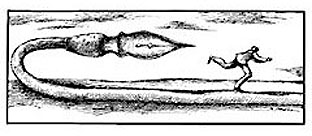
Conflict can be a small thing, or a large one, real or imagined.
Filed under advice, Bob McKey, building a better story, novel, Steven Womack, tension, words, writer, writing, writing tip
Some writing advice to consider
Here are three writing places you can go to get some advice. I sure there are others, but these three stops could be helpful:
http://janeyolen.com/the-alphabetics-of-story/
From A to Z, literally in alphabetical order prolific author Jane Yolen discusses almost every aspect of story writing, from architecture to endings. None of the entries are long, so it is not as if you have to spend hours with your eyeballs glued to the screen. But hey, if you write, you’re probably already doing that anyway.
http://blogs.plos.org/neurotribes/2011/06/02/practical-tips-on-writing-a-book-from-22-brilliant-authors/
If you are more into writing non-fiction, then this list of practical tips from twenty-two authors could be of help for you. But there are nuggets of information for any writer, such as being willing to delete entire chapters and favorite passages. Not all the recommendations are so painful, but it takes more than fast fingers and a fluid imagination to make your writing work.
http://blog.nathanbransford.com/
A former agent turned author, Nathan Bransford covers a wide variety of topics dealing with writing, including poles where he asks his readers to offer their opinions. He has entries for subjects such as How to find an agent and How to write a synopsis or query letter, all under a heading called Publishing Essentials.
Filed under advice, blog, fiction, Jane Yolen, Nathan Brandsford, non-fiction, publishing, Steve Silberman, words, writer, writing, writing blog, writing tip
You have your book written — what now?
If anyone is interested in publishing a book — fiction or nonfiction — the Knoxville Writers’ Guild has a great workshop this Saturday.
Chris Hebert is an acquisitions editor at the University of Michigan Press. He’s the guy at the receiving end of author query letters and can provide invaluable advice on what works and what doesn’t. He also knows what it’s like from the author’s end: HarperCollins is publishing his first novel, The Boiling Season, next year. (His wife has also published a novel with Simon & Schuster).
This is a rare chance to talk at length with a publishing insider about selling a book.
The workshop will be held from 1 to 3:30 p.m. on Saturday, June 4 at the Redeemer Church, 1642 Highland Ave., Knoxville, TN. Cost is $20 for members and $25 for nonmembers. To register, go to http://www.knoxvillewritersguild.org/orderpaypal.htm
Filed under editor, Knoxville Writers' Guild, publishers, publishing, writer, writing, writing tip
Guest Blogger Mark Twain on Words to be Wary of
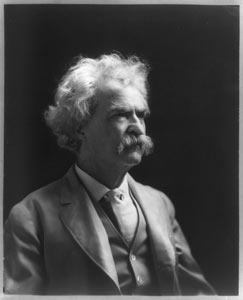
photo of Mark Twain
Unfortunately, there are fewer editors around these days, the victims of corporate downsizing many of them, so you will probably have to do this yourself, but it might just work. Every time you want to write “very,” write “damn” instead, then read the story out loud. Just don’t do it at an open mike night.
To learn more about Mark Twain: Mark Twain.
Filed under advice, editor, humor, Mark Twain, words, words to be wary of, writer, writing, writing tip


 Booker's Blog