Tag Archives: writing tip

Want to ‘Train Your Brain’? Forget Apps, Learn a Musical Instrument

Musical training can have a dramatic impact on your brain’s structure, enhancing your memory, spatial reasoning, and language skills.

The Guardian |

  • Mo Costandi

https://getpocket.com/explore/item/want-to-train-your-brain-forget-apps-learn-a-musical-instrument?utm_source=pocket-newtab

The multimillion dollar brain training industry is under attack. In October 2014, a group of over 100 eminent neuroscientists and psychologists wrote an open letter warning that “claims promoting brain games are frequently exaggerated and at times misleading.” In 2016, industry giant Lumosity was fined $2m, and ordered to refund thousands of customers who were duped by false claims that the company’s products improve general mental abilities and slow the progression of age-related decline in mental abilities. And a recent review examining studies purporting to show the benefits of such products found “little evidence … that training improves improves everyday cognitive performance.”

While brain training games and apps may not live up to their hype, it is well established that certain other activities and lifestyle choices can have neurological benefits that promote overall brain health and may help to keep the mind sharp as we get older. One of these is musical training. Research shows that learning to play a musical instrument is beneficial for children and adults alike, and may even be helpful to patients recovering from brain injuries.

“Music probably does something unique,” explains neuropsychologist Catherine Loveday of the University of Westminster. “It stimulates the brain in a very powerful way, because of our emotional connection with it.”

Playing a musical instrument is a rich and complex experience that involves integrating information from the senses of vision, hearing, and touch, as well as fine movements, and learning to do so can induce long-lasting changes in the brain. Professional musicians are highly skilled performers who spend years training, and they provide a natural laboratory in which neuroscientists can study how such changes – referred to as experience-dependent plasticity – occur across their lifespan.

Changes in brain structure

Early brain scanning studies revealed significant differences in brain structure between musicians and non-musicians of the same age. For example, the corpus callosum, a massive bundle of nerve fibres connecting the two sides of the brain, is significantly larger in musicians. The brain areas involved in movement, hearing, and visuo-spatial abilities also appear to be larger in professional keyboard players. And, the area devoted to processing touch sensations from the left hand is increased in violinists.

These studies compared data from different groups of people at one point in time. As such, they could not determine whether the observed differences were actually caused by musical training, or if existing anatomical differences predispose some to become musicians. But later, longitudinal studies that track people over time have shown that young children who do 14 months of musical training exhibit significant structural (pdf) and functional brain changes (pdf) compared to those who do not.

Together, these studies show that learning to play a musical instrument not only increases grey matter volume in various brain regions, but can also strengthen the long-range connections between them. Other research shows that musical training also enhances verbal memory, spatial reasoning, and literacy skills, such that professional musicians usually outperform non-musicians on these abilities.

Long-lasting benefits for musicians

Importantly, the brain scanning studies show that the extent of anatomical change in musicians’ brains is closely related to the age at which musical training began, and the intensity of training. Those who started training at the youngest age showed the largest changes when compared to non-musicians.

Even short periods of musical training in early childhood can have long-lasting benefits. In one 2013 study, for example, researchers recruited 44 older adults and divided them into three groups based on the level of formal musical training they had received as children. Participants in one group had received no training at all; those in the second had done a little training, defined as between one and three years of lessons; and those in the third had received moderate levels of training (four to 14 years).

The researchers played recordings of complex speech sounds to the participants, and used scalp electrodes to measure the timing of neural responses in a part of the auditory brainstem. As we age, the precision of this timing deteriorates, making it difficult to understand speech, especially in environments with a lot of background noise. Participants who had received moderate amounts of musical training exhibited the fastest neural responses, suggesting that even limited training in childhood can preserve sharp processing of speech sounds and increase resilience to age-related decline in hearing.

More recently, it has become clear that musical training facilitates the rehabilitation of patients recovering from stroke and other forms of brain damage, and some researchers now argue that it might also boost speech processing and learning in children with dyslexia and other language impairments. What’s more, the benefits of musical training seem to persist for many years, or even decades, and the picture that emerges from this all evidence is that learning to play a musical instrument in childhood protects the brain against the development of cognitive impairment and dementia.

Unlike commercial brain training products, which only improve performance on the skills involved, musical training has what psychologists refer to as transfer effects – in other words, learning to play a musical instrument seems to have a far broader effect on the brain and mental function, and improves other abilities that are seemingly unrelated.

“Music reaches parts of the brain that other things can’t,” says Loveday. “It’s a strong cognitive stimulus that grows the brain in a way that nothing else does, and the evidence that musical training enhances things like working memory and language is very robust.”

Learning to play a musical instrument, then, seems to be one of the most effective forms of brain training there is. Musical training can induce various structural and functional changes in the brain, depending on which instrument is being learned, and the intensity of the training regime. It’s an example of how dramatically life-long experience can alter the brain so that it becomes adapted to the idiosyncrasies of its owner’s lifestyle.


Leave a comment

Filed under 2020, writing tip, Writing Tip Wednesday

How To Wake Up And Not Feel Like Going Right Back To Bed

Fitness gurus share their morning routines.

NYLON |

  • Molly Hurford

https://getpocket.com/explore/item/how-to-wake-up-and-not-feel-like-going-right-back-to-bed?utm_source=pocket-newtab

How do some people manage to look so darn perky as they sip coffee and smoothies in their Instagram stories in the morning? It all comes down to establishing a winning routine, one that’s easy for you to do every day and leaves you feeling awake, alert, and inspired. You don’t have to steal an entire routine from these fitness and wellness experts, but they have some pretty great suggestions of places to start.

Once you begin to develop a routine of your own, optimize it to your specific needs. Meditation for 20 minutes might not work for you, but maybe you can handle five minutes. Yoga might not be your jam, but what about a few basic stretches instead? And journaling can feel a little cliche, but what about a Google Doc where you list one thing daily that you’re grateful for? We don’t all need to be fitness and wellness junkies, but we can all get a little bit better at managing our mornings and crushing the rest of our day. 

Stay Offline

“I’d say my number one tip is to get ready for your day, whether that be breakfast, journaling, meditation, or working out before looking at your phone,” Sophie Gray of WayofGray.com says. “I recommend being off of your phone for at least 30 to 60 minutes in the morning! I like to do this because I can check in with myself first, before checking in with others.”  

Productivity gurus and the authors of Peak Performance, Brad Stulberg and Steve Magness, also back this one up. The more time you can stay off your phone and not be distracted, the better. Getting your primary workout for the day done before the flood of emails, Instagrams, and text is going to make the day feel a lot smoother. 

“This year has officially been the year of slowing down and learning to give myself what I need in order to thrive throughout the day with sustained energy and inspiration,” adds The Balance Blonde blogger Jordan Younger. “You could say I am a notorious overcommitter and a workaholic-slash-iPhone-aholic—who isn’t?—so I decided to get serious with my morning routine, to start to cultivate more peace and serenity in my daily life. I start each day with a digital detox where I do not look at my phone until I feel ready to be on and communicate with the world!”

Get Some Sun

“Working from home can sometimes mean there’s no need for you to leave the house, but, for me, getting outdoors every day for fresh air, a sense of vitality, and vitamin D is so important,” says Melissa Hemsley of the Hemsley Sisters. “Daylight helps to reset your internal body clock, also known as the circadian rhythm, leading to better sleep and allowing your body to tune into what it needs. I’ve got a staffy called Nelly who I take for runs around my local park, so it’s a non-negotiable for me!”

Studies bear this out: We need vitamin D to stay happy and energized. One such study even linked vitamin D deficiency in young women with depression. You don’t need to start supplementing to get it. Just getting sunlight should do the trick. And if, like Melissa, you work at home, a walk outside can give you the divide between “you time” and working hours.

Add a Yoga Flow

It’s no shock that Strala Yoga creator Tara Stiles starts every morning with a yoga flow, though as a new mom, her routine varies daily depending on what she needs and how she feels. And that’s a good thing! Even if you’re not nursing a newborn, switching up your yoga flow makes the morning a bit more exciting. Strala Yoga has a ton of quick and simple morning flows that Stiles created, and most of them run between seven and 12 minutes. Check out this one and this one if you prefer to have a video to flow with, or just do a few sun salutations and poses that make you feel particularly good. 

A regular yoga practice—10 minutes a day is over an hour a week!—can increase strength, balance, and flexibility, calm the mind, and reduce stress, according to the American College of Sports Medicine. It can even help battle things like lower back pain, according to a recent study

Scrape Your Tongue (or Whatever)

“Tongue scraping with a copper or stainless steel tongue scraper removes the toxins that brushing and flossing your teeth doesn’t,” says the other Hemsley sister, Jasmine. “Quite frankly, I’d rather forget to brush my teeth!” If tongue scraping isn’t for you, that’s fine, too, but having a morning beauty/cleansing routine can go a long way toward making you feel more awake and alert if you’re having a tough time crawling out of bed and perking up. 

Meditate

“I wake up, make a matcha tea or coffee in my kitchen, stretch on my yoga mat, and do a mindfulness meditation practice,” says Younger. “I have also gotten very into crystals, sage, essential oils, and palo santo. The morning is my ‘me time’ to play around with all of my yogi, kundalini grounding practices and also get some reading or journaling in. Then I head off to teach yoga down the street and feel like a new human! Also breathing. It sounds simple, but it’s been a game changer to really focus on my breath.” 

Meditation also makes you more creative, according to one study. And another championed morning meditation because that’s when we’re at our most spiritually aware.

It’s not just the yogis who are doing morning meditation, fitness junkies are into it, too. “Everyday is different for me, but no matter where I am, I make sure to spend a few moments alone setting my intention and purpose for the day through meditation,” says Karena Dawn of ToneItUp.com. It really helps me stay centered and focused.  After that, I head out for my workout. If I don’t workout in the morning, it usually won’t happen.” 

Get in a Quick Workout

Dawn also digs a morning workout to get the blood pumping. If you’re an early riser and can sneak in a quick run or strength workout, it’s a great way to kick off the day. And bonus, if you do a low-key workout before you eat breakfast; you’ll reap the benefits of fasted state training and gain extra strength and aerobic capacity in the process. Bonus: You can burn almost 20 percent more fat if you exercise pre-breakfast, according to one study. Plus, let’s be honest, breakfast will taste a whole lot better when you’ve really worked for it. 

Leave a comment

Filed under 2020, writing tip

The Single Reason Why People Can’t Write, According to a Harvard Psychologist

This common affliction is behind so much unclear and confusing writing in the world today.

Steven Pinker

Author and psychologist Steven Pinker. Getty Images

https://getpocket.com/explore/item/the-single-reason-why-people-can-t-write-according-to-a-harvard-psychologist?utm_source=pocket-newtab

“Why is so much writing so hard to understand? Why must a typical reader struggle to follow an academic article, the fine print on a tax return, or the instructions for setting up a wireless home network?”

These are questions Harvard psychologist Steven Pinker asks in his book, The Sense of Style: The Thinking Person’s Guide to Writing in the 21st Century. They’re questions I’ve often encountered –and attempted to tackle– throughout my career as a business writer and editor. Whenever I see writing that is loaded with jargon, clichés, technical terms, and abbreviations, two questions come immediately to mind. First, what is the writer trying to say, exactly? And second, how can the writer convey her ideas more clearly, without having to lean on language that confuses the reader?

For Pinker, the root cause of so much bad writing is what he calls “the Curse of Knowledge”, which he defines as “a difficulty in imagining what it is like for someone else not to know something that you know. The curse of knowledge is the single best explanation I know of why good people write bad prose.”

“Every human pastime –music, cooking, sports, art, theoretical physics –develops an argot to spare its enthusiasts from having to say or type a long-winded description every time they refer to a familiar concept in each other’s company. The problem is that as we become proficient at our job or hobby we come to use these catchwords so often that they flow out of our fingers automatically, and we forget that our readers may not be members of the clubhouse in which we learned them.”

People in business seem particularly prone to this “affliction.” You could argue that business has developed its own entirely unique dialect of English. People are exposed to an alphabet soup of terms and acronyms at business school, which they then put into use in their day-to-day interactions once they enter the working world.

And what starts out as a means of facilitating verbal communication between people becomes the primary mode with which people communicate their ideas in writing, from email to chat apps to business proposals and presentations.

“How can we lift the curse of knowledge?” asks Pinker. “A considerate writer will…cultivate the habit of adding a few words of explanation to common technical terms, as in ‘Arabidopsis, a flowering mustard plant,’ rather than the bare ‘Arabidopsis.’ It’s not just an act of magnanimity: A writer who explains technical terms can multiply her readership a thousandfold at the cost of a handful of characters, the literary equivalent of picking up hundred-dollar bills on the sidewalk.”

“Readers will also thank a writer for the copious use of for example, as in, and such as, because an explanation without an example is little better than no explanation at all.”

Whenever I write a sentence that makes me pause and wonder about what it means, I assume that other readers might react in the same way. If a sentence is not clear to me, it might not be clear to others. It’s an approach that I recommend to anyone who is trying to improve his own writing.

Before hitting publish and sending your writing out to the world, it’s better to be honest with yourself about how much your reader is likely to understand a given passage or sentence. Before you commit your writing to print– or to the internet– take a few moments to make sure that what you write is clear and understandable by as many of your intended readers as possible.

As Richard Feynman, the Nobel prize-winning physicist, once wrote, “If you ever hear yourself saying, ‘I think I understand this,’ that means you don’t.”

Glenn Leibowitz

Leave a comment

Filed under 2020, writing tip, Writing Tip Wednesday

How To Actually Concentrate

It’s not easy, but you can do it.

https://getpocket.com/explore/item/how-to-actually-concentrate?utm_source=pocket-newtab

NYLON |

  • Carolyn Yates

Ever have those trains of thought that just… wait, what were we talking about, again? Staying focused can be hard, especially in an age when there are tons of distractions around you. So, whether it’s something you don’t really want to have to pay attention to—like work; or something you do—like talking to a friend in a crowded bar—sometimes it’s just plain hard to concentrate on what’s happening right in front of you.

Jumping to other stimuli—like someone looking at you, or your phone buzzing—can give you a dopamine push, which is one reason it can be so appealing. But another is that, when multitasking is the norm, it’s hard to stop doing it. “We have trained ourselves to be constantly distracted and multitasking, so even though we may have a project in front of us, or we may be talking to someone, our minds have been trained to look to other things,” says Natalie Bell, a mindfulness coach based in Los Angeles.

Distractibility can run deeper than habit. “You might be distracted because you have sensory problems or visual processing problems or slow processing or memory problems, and you can also have biochemical problems,” says Kelly Dorfman, a clinical nutritionist. “If your chemistry is out of balance, then your brain doesn’t work.” What you’re eating and when can impact that chemistry. Skipping meals, eating irritants, and not eating nutrient-rich foods can make it harder to concentrate. 

What’s going on around you and where you are right now as a person also matter. You might be more distracted in some environments, and less distracted in others. Or while working on certain tasks. Or while talking to different people. “It might have to do with something as simple as how much sleep you got, or what else is going on in your life. There are a lot of different factors. But being tuned into what your tendency is and what your current state of being is can go a long way to helping you make the adjustments you need to be able to focus on the things that are important,” says Natalie Houston, a productivity coach in the Boston area.

But it is possible to change your attention span. To get better at concentrating, start small.”Choose one point of focus or one task. Just choose one, putting all others to the side or shutting them down,” says Bell. If you’re working on one project, clear away materials that don’t have anything to do with it, like closing tabs, moving papers off of your desk, and putting down your phone. “A sense of more calm in the immediate visual environment helps you focus better,” says Houston.

Look at the rest of your environment, too: Does silence help you more? Or do you work better with ambient noise? Or maybe white noise? Or even music? How comfortable is your chair? Are you better at doing certain tasks in certain places? 

You can also train yourself to be more mindful by focusing on your breath in your body. Set a timer for three minutes and keep your attention on your breath as it goes in and out, and bring your mind back to your breath when it inevitably wanders. “Learning to refocus attention by using that kind of mindfulness technique can really help you to train your attention back to focus on one thing,” says Bell.

If focusing on your breath doesn’t work, try turning your awareness to the soles of your feet where they touch the floor. Or to the sensations of where you’re sitting. Or to your hands, as they rest against each other. “Try to use a sensory experience to help focus attention while you’re in the middle of something,” says Bell. “Any sensation can help you ground yourself.”

Being compassionate with yourself helps, too. If you’re distracted because of something going on internally or something bigger happening in your life, be kind to yourself and remind yourself that’s what’s going on. “There’s a saying in mindfulness, name it to tame it. If you can name a difficult experience, your brain can begin to regulate that feeling in your body,” says Bell. Share with someone around you if that’s an option, but if it’s not, talk to yourself like you’re your own supportive friend. Or put a hand over your heart or give yourself a hug. “Be there for yourself. Physical soothing touch releases oxytocin and other opiates in your bloodstream to counteract stress. So this is really powerful neuroscience,” says Bell.

If you’re distracted because you’re just really busy right now, keep a notepad nearby to jot down thoughts, so your brain doesn’t have to worry about remembering them. That way, “your brain can just relax, instead of tapping you on the shoulder every 10 minutes saying, ‘Don’t forget,’” says Houston. 

And don’t be afraid of getting distracted—because you’re going to get distracted. When that happens, notice it and gently bring your attention back. Remember, once you get used to mindfulness, it becomes way easier to practice it anywhere. “The more you do these practices, the more you train yourself to have that response. You need to remember that you can do these things,” says Bell.

But total mindfulness and balance are lies we tell ourselves in order to live. “It’s really important as an idea, and it’s also in some ways a fiction,” says Houston. Instead, “allowing for seasonal shifts helps us relax about the idea of feeling insufficient if we’re not living up to some kind of fictitious ideal of work-life balance that very few people really enact.” 

After all, distraction is a capitalist construct. “We live in a world where the financial interests of large corporations put a lot of effort into keeping us distracted. When we’re distracted, we spend more time online, we spend more time in front of advertisements, we spend more time in various states of trance, meaning eating, drinking, shopping, consuming our ways into distracting ourselves from the harder questions in our lives,” says Houston.

Break out of that by finding joy in smaller moments of focus, and then building. “We need to recondition ourselves to find a certain pleasure in focused attention. Which actually there is,” says Bell. “What we get from focusing our attention is a sense of calm in our mind and body.”

This article was originally published on August 16, 2017, by NYLON.

Leave a comment

Filed under 2020, concentration

Emotional Intelligence: The Social Skills You Weren’t Taught in School

https://getpocket.com/explore/item/emotional-intelligence-the-social-skills-you-weren-t-taught-in-school?utm_source=pocket-newtab

You’re taught about history, science, and math when you’re growing up. Most of us, however, aren’t taught how to identify or deal with our own emotions, or the emotions of others. These skills can be valuable, but you’ll never get them in a classroom.

Emotional intelligence is a shorthand that psychological researchers use to describe how well individuals can manage their own emotions and react to the emotions of others. People who exhibit emotional intelligence have the less obvious skills necessary to get ahead in life, such as managing conflict resolution, reading and responding to the needs of others, and keeping their own emotions from overflowing and disrupting their lives. In this guide, we’ll look at what emotional intelligence is, and how to develop your own.

What Is Emotional Intelligence?

Measuring emotional intelligence is relatively new in the field of psychology, only first being explored in the mid-80s. Several models are currently being developed, but for our purposes, we’ll examine what’s known as the “mixed model,” developed by psychologist Daniel Goleman. The mixed model has five key areas:

  • Self-awareness: Self-awareness involves knowing your own feelings. This includes having an accurate assessment of what you’re capable of, when you need help, and what your emotional triggers are.
  • Self-management: This involves being able to keep your emotions in check when they become disruptive. Self-management involves being able to control outbursts, calmly discussing disagreements, and avoiding activities that undermine you like extended self-pity or panic.
  • Motivation: Everyone is motivated to action by rewards like money or status. Goleman’s model, however, refers to motivation for the sake of personal joy, curiosity, or the satisfaction of being productive.
  • Empathy: While the three previous categories refer to a person’s internal emotions, this one deals with the emotions of others. Empathy is the skill and practice of reading the emotions of others and responding appropriately.
  • Social skills: This category involves the application of empathy as well as negotiating the needs of others with your own. This can include finding common ground with others, managing others in a work environment, and being persuasive.

You can read a bit more about these different categories here. The order of these emotional competencies isn’t all that relevant, as we all learn many of these skills simultaneously as we grow. It’s also important to note that, for our purposes, we’ll only be using this as a guide. Emotional intelligence isn’t an area that most people receive formal training in. We’ll let psychologists argue over the jargon and models, but for now let’s explore what each of these mean and how to improve them in your own life.

Self-Awareness

Before you can do anything else here, you have to know what your emotions are. Improving your self-awareness is the first step to identifying any problem area you’re facing. Here are some ways to improve your self-awareness:

  • Keep a journal: Career skill blog recommends starting by keeping a journal of your emotions . At the end of every day, write down what happened to you, how you felt, and how you dealt with it. Periodically, look back over your journal and take note of any trends, or any time you overreacted to something.
  • Ask for input from others: As we’ve talked about before when dealing with your self-perception, input from others can be invaluable . Try to ask multiple people who know you well where your strengths and weaknesses lie. Write down what they say, compare what they say to each other and, again, look for patterns. Most importantly, don’t argue with them. They don’t have to be correct. You’re just trying to gauge your perception from another’s point of view.
  • Slow down (or meditate): Emotions have a habit of getting the most out of control when we don’t have time to slow down or process them . The next time you have an emotional reaction to something, try to pause before you react (something the internet makes easier than ever, if you’re communicating online). You can also try meditating to slow your brain down and give your emotional state room to breathe.

If you’ve never practiced intentional self-awareness, these tips should give you a practical head start. One strategy I personally use is to go on long walks or have conversations with myself discussing what’s bothering me. Often, I’ll find that the things I say to the imaginary other end of the conversation can give me some insight into what’s really bugging me. The important aspect is to look inwards, rather than focusing solely on external factors.

Self-Management

Once you know how your emotions work, you can start figuring out how to handle them. Proper self-management means controlling your outbursts, distinguishing between external triggers and internal over-reactions, and doing what’s best for your needs.

One key way to manage your emotions is to change your sensory input. You’ve probably heard the old advice to count to ten and breathe when you’re angry. Speaking as someone who’s had plenty of overwhelming issues with depression and anger, this advice is usually crap (though if it works for you, more power to you). However, giving your physical body a jolt can break the cycle. If you’re feeling lethargic, do some exercise. If you’re stuck in an emotional loop, give yourself a “snap out of it” slap. Anything that can give a slight shock to your system or break the existing routine can help.

Lifehacker alum Adam Dachis also recommends funneling emotional energy into something productive. It’s alright to let overwhelming emotions stew inside you for a moment, if it’s not an appropriate time to let them out. However, when you do, rather than vent it on something futile, turn it into motivation instead:

I recently started playing tennis for fun, knowing that I’d never become exceptional because I began too late in life. I’ve become better and have a very minor talent for the game, so when I play poorly I now know and I get down on myself. When up against an opponent with far more skill I find it hard to do much else than get angry. Rather than let that anger out, I take note of it and use it to fuel my desire to practice more. Whether in sports, work, or everyday life, we can get complacent with our skill and forget that we always have some room for improvement. When you start to get mad, get better instead.

You can’t always control what makes you feel a certain way, but you can always control how you react. If you have some impulse control problems, find ways to get help when you’re feeling calm. Not all emotions can be vented away. My struggle with depression taught me that some emotions persist long after the overflow. However, there’s always a moment when those feelings feel a little less intense. Use those moments to seek help.

Motivation

We talk about motivation a lot . When we’re talking about motivation as it relates to emotional intelligence, however, we don’t just mean getting up the energy to go to work. We’re talking about your inner drive to accomplish something. That drive isn’t just some feel-goody nonsense, either. As Psychology today explains, there’s a section of your prefrontal cortex that lights up at the mere thought of achieving a meaningful goal.

Whether your goal is building a career, raising a family, or creating some kind of art, everyone has something they want to do with their life.When your motivation is working for you, it connects with reality in tangible ways. Want to start a family? Motivated people will start dating. Want to improve your career? Motivated people will educate themselves, apply for new jobs, or angle for a promotion.

Daniel Goleman suggests that in order to start making use of that motivation, you first need to identify your own values. Many of us are so busy that we don’t take the time to examine what our values really are. Or worse, we’ll do work that directly contradicts what we value for so long that we lose that motivation entirely.

Unfortunately, we can’t give you the answer for what it is you want in life, but there are lots of strategies you can try . Use your journal to find times when you’ve felt fulfilled. Create a list of things you value. Most of all, accept the uncertainty in life and just build something. Fitness instructor Michael Mantell, Ph.D suggests that using lesser successes you know you can accomplish. Remember, everyone who’s accomplished something you want to achieve did it slowly, over time.

Empathy

Your emotions are only one half of all your relationships. It’s the half you focus on the most, sure, but that’s only because you hang out with yourself every day. All the other people that matter to you have their own set of feelings, desires, triggers, and fears. Empathy is your most important skill for navigating your relationships . Empathy is a life-long skill, but here are some tips you can use to practice empathy:

  • Shut up and listen: We’re gonna start with the hardest one here, because it’s the most important. You can’t experience everyone else’s lives to fully understand them, but you can listen. Listening involves letting someone else talk and then not countering what they say. It means putting aside your preconceptions or skepticism for a bit and allowing the person you’re talking to a chance to explain how they feel. Empathy is hard, but virtually every relationship you have can be improved at least marginally by waiting at least an extra ten seconds before you retake the conversation.
  • Take up a contrary position to your own: One of the quickest ways to solidify an opinion in your mind is to argue in favor of it. To counter this, take up a contrary position. If you think your boss is being unreasonable, try defending their actions in your head. Would you find their actions reasonable if you were in their shoes? Even asking the questions of yourself can be enough to start empathizing with another’s point of view (though, of course, getting real answers from others can always help).
  • Don’t just know, try to understand: Understanding is key to having empathy. As we’ve discussed before, understanding is the difference between knowing something and truly empathizing with it. If you catch yourself saying, “I know, but,” a lot, take that as an indicator that you should pause a bit more. When someone tells you about an experience that’s not your own, take some time to mull over how your life might be different if you experienced that on a daily basis. Read about it until it clicks. It’s okay if you don’t spend all your time devoted to someone else’s life, but putting in just some time—even if it’s idle thought time while you work—can be beneficial.

By definition , empathy means getting in the emotional dirt with someone else. Allowing their experiences to resonate with your own and responding appropriately. It’s okay to offer advice or optimism, but empathy also requires that you wait for the right space to do that. If someone’s on the verge of tears, or sharing some deep pain, don’t make light of it and don’t try to minimize the hurt. Be mindful of how they must feel and allow them space to feel it.

Social Skills

Summing up all social skills in one section of an article would do about as much justice to the topic as if we snuck in a brief explainer on astrophysics. However, the tools you develop in the other four areas will help you resolve a lot of social problems that many adults still wrestle with. As Goleman explains, your social skills affect everything from your work performance to your romantic life:

Social competence takes many forms – it’s more than just being chatty. These abilities range from being able to tune into another person’s feelings and understand how they think about things, to being a great collaborator and team player, to expertise at negotiation. All these skills are learned in life. We can improve on any of them we care about, but it takes time, effort, and perseverance. It helps to have a model, someone who embodies the skill we want to improve. But we also need to practice whenever a naturally occurring opportunity arises – and it may be listening to a teenager, not just a moment at work.

You can start with the most common form of social problems: resolving a disagreement. This is where you get to put all your skills to the test in a real-world environment. We’ve gone into this subject in-depth here , but we can summarize the basic steps:

  • Identify and deal with your emotions: Whenever you have an argument with someone else, things can get heated. If someone involved is emotionally worked up, deal with that problem first. Take time apart to vent, blow off steam on your own, then return to the problem. In a work environment, this may just mean complaining to a friend before you email your boss back. In a romantic relationship, remind your partner that you care about them before criticizing.
  • Address legitimate problems once you’re both calm: Once you’re in your right headspace, identify what the conflict is. Before you jump to solutions, make sure you and the other person agree on what the problems really are . Propose solutions that are mutually beneficial and be sympathetic to any concessions the other person may be unwilling to make (but be sure to stand firm on your own).
  • End on a cooperative note: Whether in business or pleasure, relationships work best when everyone involved knows that they’re on the same page. Even if you can’t end on a positive note, make sure that the last intention you communicate is a cooperative one. Let your boss/coworker/significant other know that you want to work towards the same goal, even if you have different views.

Not every type of interaction with another person will be a conflict, of course. Some social skills just involve meeting new people , socializing with people of different mindsets , or just playing games . However, resolving conflict can be one of the best ways to learn how to apply your emotional skills. Disputes are best resolved when you know what you want, can communicate it clearly, understand what someone else wants, and come to favorable terms for everyone. If you’ve been paying attention, you’ll notice that this involves every other area of the emotional intelligence model.

Leave a comment

Filed under 2020, advice

7 Morning Habits That Can Affect Your Entire Day

It can be easy to fall into a morning routine without considering how it impacts you later in the day.

Source: 7 Morning Habits That Can Affect Your Entire Day

While not directly related to writing, I thought I would pass along. I don’t endorse any of these suggestions, and some I don’t agree with, such as coffee. Some or all might work for you.

Your morning routine is like setting up a string of dominoes: You line everything up for success, but one false move can cause it all to come tumbling down. In order to set the right tone for the rest of your day, experts say you should adjust the following seven habits.

  1. Hitting the Snooze Button

It’s tempting to steal a few more minutes of sleep, but hitting snooze has a negative impact on your physical and emotional well-being, says Joanna Kleinman, owner of The Center for Extraordinary Relationships. “Physically, hitting the snooze button actually sets you up to be groggy and less productive because you are repeatedly waking yourself out of a deep sleep,” Kleinman says. “Emotionally, you set yourself up to be late, rushed, and stressed in the morning.”

The obvious solution, Kleinman says, is getting out of bed right away (even if it seems impossible). “If we listen to our minds telling us what we feel like doing, we will never be able to make the positive changes we need to,” Kleinman says.

  1. Checking Your Phone

Doing this first thing in the morning stimulates self-criticism and judgments in your mind, Kleinman says. “Your emails and texts are all about things to do, things to buy, things to add to your to-do list,” she says. “This amounts to either the stuff that other people want you to be paying attention to, or what your mind says you should be paying attention to.”

Even if you leave your inbox alone and stick to Instagram, you can do harm to your psyche because social media causes you to compare yourself to other people. Bottom line: Checking your phone first thing can awaken your inner critic. To stop yourself from opening Twitter immediately after turning off your alarm, charge your phone in another room. Begin your day instead with a self-affirming habit like journaling or meditation.

  1. Planning Your Day

If you wake up and have no idea what’s on your schedule, where you have to be, or what you’re going to wear, then your day is already off to a frantic start. Psychologist and Certified Master Coach Joel Ingersoll recommends organizing your day the night before. This way, you’ll feel refreshed and ready to go in the morning.

  1. Drinking Water…

You may be craving a cup of coffee as soon as your feet hit the floor, but what your body really needs is a glass of water, Ingersoll says. Since you haven’t had any liquids in your system for at least six (or hopefully eight) hours, your body is dehydrated. You can have the coffee (see below), but your body will function better—you’ll have fewer headaches, less fatigue, and smaller bags under your eyes—if you down a glass of water first, Ingersoll says.

  1. …and Coffee

Don’t feel guilty about reaching for the coffee pot after you’ve had your water—it is actually good for your body, too, says Ilyse Schapiro, a Registered Dietitian and Certified Dietitian/Nutritionist. “Coffee is a great source of antioxidants, and it can increase energy as well as help to stabilize our moods,” Schapiro says. “It can also help keep our brains healthier and our minds sharper.”

Too much coffee isn’t going to do you any favors, though. Stick with one or two cups a day, and be consistent with how much you drink, or else you’ll start getting headaches and withdrawal symptoms.

  1. Skipping Breakfast

Have you been told to eat a good breakfast before? That’s because it’s important, says Bruno LoGreco, life coach and author of Stop Sabotaging Your Life. “Eating a healthy breakfast consisting of nuts, fruits, and oats will satisfy your brain to get you through a tough day at the office,” LoGreco says. It’s best to skip the doughnuts and croissants, though, as these will give you a sugar high and set you up for a crash just as you reach your desk.

  1. Rising Early

A study published by the American Psychological Association found that early risers are happier and more successful than those who go to bed late. They tend to be more proactive, get better grades, and better anticipate and minimize problems.

Danielle Braff is a freelance writer in Chicago. Her work has appeared in the Chicago Tribune, Crain’s Chicago Business, Women’s Health, Self and Marie Claire, among others. She lives with her husband, their two daughters, two cats and a dog. Check out her other work at Daniellebraff.com.

Leave a comment

Filed under 2020, writing tip, Writing Tip Wednesday

21 Rhetorical Devices Explained

Photo by Mark Metcalfe/Getty Images

Source: 21 Rhetorical Devices Explained

Rhetoric is often defined as “the art of language.” That might sound like a bit of a cliché (which it is), but it’s actually quite a nice way of saying that rhetorical devices and figures of speech can transform an ordinary piece of writing or an everyday conversation into something much more memorable, evocative, and enjoyable. Hundreds of different rhetorical techniques and turns of phrase have been identified and described over the centuries—of which the 21 listed here are only a fraction—but they’re all just as effective and just as useful when employed successfully.

  1. Adynaton

You’ll no doubt have heard of hyperbole, in which an over-exaggeration is used for rhetorical effect, like, “he’s as old as the hills,” “we died laughing,” or “hyperbole is the best thing ever.” But adynaton is a particular form of hyperbole in which an exaggeration is taken to a ridiculous and literally impossible extreme, like “when pigs fly!” or “when Hell freezes over!”

  1. Anacoluthon

Often used in literature to create a stream-of-consciousness style in which a character’s thoughts flit from one idea to the next, anacoluthon describes a sudden and unexpected break in a sentence that leads to it being concluded in a different way than might have been expected. Although it can sometimes be due to nothing more than a speaker losing their train of thought, in practice anacoluthon can also be OH MY GOD I’VE LEFT THE GAS ON.

  1. Anadiplosis

Anadiplosis is an ingenious and memorable rhetorical device in which a repeated word or phrase is used both at the end of one sentence or clause and at the beginning of the next. As with practically all rhetorical devices, William Shakespeare liked using it (“She being none of your flesh and blood, your flesh and blood has not offended the king”), but you can thank George Lucas for what is now probably the best-known example: “Fear leads to anger. Anger leads to hate. Hate leads to suffering.”

  1. Anthypophora

You know when you pose a question for dramatic effect and then immediately answer it yourself? That’s anthypophora.

  1. Antimeria

If you’ve ever friended or texted someone, emailed or DMed something, tabled a meeting or motorwayed your way across country, then you’ll be familiar with antimeria, a rhetorical device in which an existing word is used as if it were a different part of speech. More often than not this involves using a noun as if it were a verb, a semantic process better known as “verbing” (which is actually a perfect example of itself). Slang (and modern English in general, for that matter) loves antimeria, but it is Shakespeare who remains the undisputed master of it. Cake, drug, kitchen, squabble, ghost, blanket, graze, elbow, and crank were all only ever used as nouns before he got hold of them.

  1. Antiprosopopoeia

Prosopopoeia is just a more formal name for personification, in which inanimate objects are either described in human terms or given human characteristics. The opposite of that is antiprosopopoeia, a figure of speech in which a person is compared to an inanimate object. That might sound odd, but it’s actually a very effective form of metaphor able to confer a great deal of detail or information in a clever and often witty way—think about what it means to call someone a doormat, a tank, a firecracker, a mattress, or a garbage disposal and you’ll see precisely how effective it can be.

  1. Antonomasia

The Bard. The Iron Lady. The King. Ol’ Blue Eyes. When you substitute a proper name for an epithet or a nickname, that’s antonomasia.

  1. Aposiopesis

In Act 2 of King Lear, the eponymous king rages against two of his daughters in a disjointed speech that ends with the famous lines, “I will have such revenges on you both that all the world shall—I will do such things—what they are yet, I know not, but they shall be the terrors of the earth!” The point at which Lear’s threat of revenge trails off, restarts, and trails off again is a perfect example of aposiopesis, a rhetorical ploy in which an idea is left unsaid or a sentence is left incomplete purely for emphatic effect. Why I oughta…

  1. Asterismos

Right. Okay. Here goes. Asterismos is the use of a seemingly unnecessary word or phrase to introduce what you’re about to say. Semantically it’s fairly pointless to say something like “listen!” before you start talking to someone, because they are (or at least should be) already listening. Rhetorically, however, asterismos is a seriously clever way of subconsciously drawing attention to what you’re about to say.

  1. Asyndeton

“We got there, the weather was bad, we didn’t stay long, we got back in the car, we came home, end of story.” When you deliberately miss out the conjunctions between successive clauses, you’re left with a choppy and abrupt series of phrases that energetically push things forward, an effect properly known as asyndeton. The opposite is called polysyndeton, when you add more conjunctions to a phrase or clause than are strictly necessary, often with the effect of intentionally dragging it out: “We ate and drank and talked and laughed and talked and laughed and ate some more.”

  1. Chiasmus

Apart from the fact that it’s part of a great speech, one of the reasons why John F. Kennedy’s famous “ask not what your country can do for you, ask what you can do for your country” line is so striking is that is a fine example of chiasmus, a clever rhetorical formation in which the order of a pair of words or phrases in one clause (your country, you) is inverted in the next (you, your country). This gives a rhythmic and instantly memorable criss-cross pattern, AB-BA, which appropriately enough takes its name from the X-shaped Greek letter chi.

  1. Congery

Congery is a form of tautology, the rhetorical use of repetition. It refers to a writer or speaker using a number of different and successive words or phrases that all effectively mean the same thing, purely to emphasise the point. That’s it. That’s all. Done. Finished. Finito.

  1. Dialogismus

In a dialogismus, a speaker either imagines what someone or something else might be thinking (“I bet that guy’s thinking, ‘what am I doing here?’”), or else paraphrases someone’s earlier words (“‘Don’t worry!’ she told me. ‘Everything will be fine!’”). In either case, the speaker ends up talking not as themselves just for rhetorical effect.

  1. Dysphemism

If a euphemism is a nicer turn of phrase used in place of a more offensive or embarrassing one (like “call of nature” or “bought the farm”), then a dysphemism is an offensive or detrimental phrase deliberately used in place of a nicer one. This applies to everything from using an insult instead of someone’s name, to phrases like frankenfood and junk food that try to influence what we should think of genetically modified crops and take-out restaurants with just a few choice words.

  1. Eutrepismus

First, we need to explain what this is. Second, we need to show how it works. And third, we need to explain what it achieves. Eutrepismus is the numbering or ordering of a series of phrases that are all under consideration, and it’s used to structure arguments and speeches more clearly, making them easier for an audience to take in and follow your train of thought.

  1. Expeditio

An expeditio is that instantly recognisable figure of speech in which you list a number of alternatives, and then proceed to eliminate all but one of them. “We can go for Italian, Mexican, or Chinese. But I had Chinese last night and you hate garlic, so it’s going to have to be Mexican.”

  1. Hypocatastasis

When you say that something is like something else (“as busy as a bee”), that’s a simile. When you say that something actually is something else (“a heart of stone”) that’s a metaphor. But when you just go all out and label something as something that it actually isn’t (“You chicken!”), that’s a hypocatastasis.

  1. Pleonasm

When you use more words than are in actual fact absolutely really strictly necessary in order to communicate and make your point effectively and efficiently, that’s a pleonasm. It needn’t be as clumsy and as long-winded as that, of course, and more often than not the term pleonasm is used to apply to what is otherwise called “semantic redundancy,” in which extra qualifying words are used to force a point home—like “empty space,” “boiling hot,” or “totally unique.”

  1. Synecdoche

A synecdoche is a figure of speech in which a part or component of something is used to represent that whole—like calling a car your “wheels,” the staff of a company the “hands,” or the film industry as a whole “Hollywood.”

  1. Tmesis

Tmesis is the proper name for that fan-bloody-tastic technique of splitting a word in half by inserting another word inside it. More often than not, the word being inserted in the other is a swearword (you can provide your own examples for that), but it needn’t always be—tmesis can be used any-old-how you like.

  1. Zeugma

There are several different forms and definitions of precisely what a zeugma is, but in basic terms it describes a figure of speech in which one word (usually, but not always, a verb) governs or is directly related to two or more other words in the same sentence. So you can run out of time, and out of the room. You can have a go, and a laugh. And, to paraphrase Charles Dickens, you can go home in floods of tears and a sedan-chair.

Paul Anthony Jones is a writer and musician from Newcastle upon Tyne. He is the author of word origins guide Haggard Hawks and Paltry Poltroons, and runs its tie-in Twitter account @HaggardHawks.

Leave a comment

Filed under 2020, writing tip, Writing Tip Wednesday

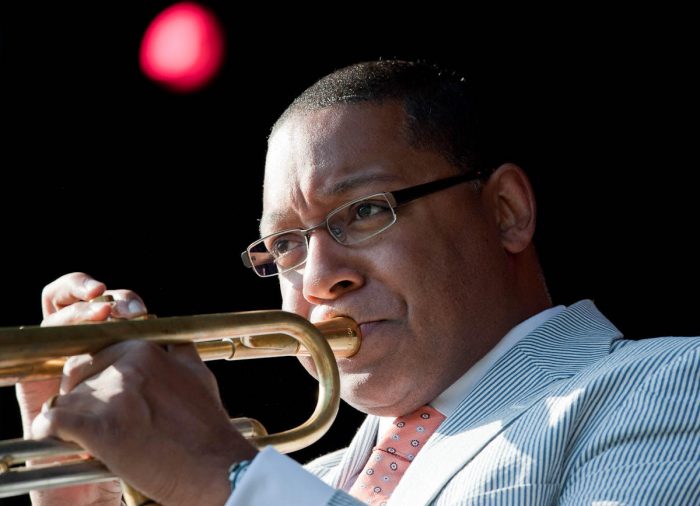
Wynton Marsalis Gives 12 Tips on How to Practice: For Musicians, Athletes, or Anyone Who Wants to Learn Something New | Open Culture

Practicing for countless hours before we can be good at something seems burdensome and boring. Maybe that’s why we’re drawn to stories of instant achievement.

Source: Wynton Marsalis Gives 12 Tips on How to Practice: For Musicians, Athletes, or Anyone Who Wants to Learn Something New | Open Culture

Practicing for countless hours before we can be good at something seems burdensome and boring. Maybe that’s why we’re drawn to stories of instant achievement. The monk realizes satori (and Neo learns kung fu); the superhero acquires great power out of the blue; Robert Johnson trades for genius at the crossroads. At the same time, we teach children they can’t master a skill without discipline and diligence. We repeat pop psych theories that specify the exact number hours required for excellence. The number may be arbitrary, but it comforts us to believe that practice might, eventually, make perfect. Because in truth we know there is no way around it. As Wynton Marsalis writes in “Wynton’s Twelve Ways to Practice: From Music to Schoolwork,” “practice is essential to learning music—and anything else, for that matter.”

For jazz musicians, the time spent learning theory and refining technique finds eloquent expression in the concept of woodshedding, a “humbling but necessary chore,” writes Paul Klemperer at Big Apple Jazz, “like chopping wood before you can start the fire.”

Yet retiring to the woodshed “means more than just practicing…. You have to dig deep into yourself, discipline yourself, become focused on the music and your instrument.” As beginners, we tend to look at practice only as a chore. The best jazz musicians know there’s also “something philosophical, almost religious” about it. John Coltrane, for example, practiced ceaselessly, consciously defining his music as a spiritual and contemplative discipline.

Marsalis also implies a religious aspect in his short article: “when you practice, it means you are willing to sacrifice to sound good… I like to say that the time spent practicing is the true sign of virtue in a musician.” Maybe this piety is intended to dispel the myth of quick and easy deals with infernal entities. But most of Marsalis’ “twelve ways to practice” are as pragmatic as they come, and “will work,” he promises “for almost every activity—from music to schoolwork to sports.” Find his abridged list below, and read his full commentary at “the trumpeter’s bible,” Arban’s Method.

  1. Seek out instruction: A good teacher will help you understand the purpose of practicing and can teach you ways to make practicing easier and more productive.
  2. Write out a schedule: A schedule helps you organize your time. Be sure to allow time to review the fundamentals because they are the foundation of all the complicated things that come later.
  3. Set goals: Like a schedule, goals help you organize your time and chart your progress…. If a certain task turns out to be really difficult, relax your goals: practice doesnʼt have to be painful to achieve results.
  4. Concentrate: You can do more in 10 minutes of focused practice than in an hour of sighing and moaning. This means no video games, no television, no radio, just sitting still and working…. Concentrated effort takes practice too, especially for young people.
  5. Relax and practice slowly: Take your time; donʼt rush through things. Whenever you set out to learn something new – practicing scales, multiplication tables, verb tenses in Spanish – you need to start slowly and build up speed.
  6. Practice hard things longer: Donʼt be afraid of confronting your inadequacies; spend more time practicing what you canʼt do…. Successful practice means coming face to face with your shortcomings. Donʼt be discouraged; youʼll get it eventually.
  7. Practice with expression: Every day you walk around making yourself into “you,” so do everything with the proper attitude…. Express your “style” through how you do what you do.
  8. Learn from your mistakes: None of us are perfect, but donʼt be too hard on yourself. If you drop a touchdown pass, or strike out to end the game, itʼs not the end of the world. Pick yourself up, analyze what went wrong and keep going….
  9. Donʼt show off: Itʼs hard to resist showing off when you can do something well…. But my father told me, “Son, those who play for applause, thatʼs all they get.” When you get caught up in doing the tricky stuff, youʼre just cheating yourself and your audience.
  10. Think for yourself: Your success or failure at anything ultimately depends on your ability to solve problems, so donʼt become a robot…. Thinking for yourself helps develop your powers of judgment.
  11. Be optimistic: Optimism helps you get over your mistakes and go on to do better. It also gives you endurance because having a positive attitude makes you feel that something great is always about to happen.
  12. Look for connections: If you develop the discipline it takes to become good at something, that discipline will help you in whatever else you do…. The more you discover the relationships between things that at first seem different, the larger your world becomes. In other words, the woodshed can open up a whole world of possibilities.

You’ll note in even a cursory scan of Marsalis’ prescriptions that they begin with the imminently practical—the “chores” we can find tedious—and move further into the intangibles: developing creativity, humility, optimism, and, eventually, maybe, a gradual kind of enlightenment. You’ll notice on a closer read that the consciousness-raising and the mundane daily tasks go hand-in-hand.

While this may be all well and good for jazz musicians, students, athletes, or chess players, we may have reason for skepticism about success through practice more generally. Researchers at Princeton have found, for example, that the effectiveness of practice is “domain dependent.” In games, music, and sports, practice accounts for a good deal of improvement. In certain other “less stable” fields driven by celebrity and networking, for example, success can seem more dependent on personality or privileged access.

But it’s probably safe to assume that if you’re reading this post, you’re interested in mastering a skill, not cultivating a brand. Whether you want to play Carnegie Hall or “learn a language, cook good meals or get along well with people,” practice is essential, Marsalis argues, and practicing well is just as important as practicing often. For a look at how practice changes our brains, creating what we colloquially call “muscle memory,” see the TED-Ed video just above.

Leave a comment

Filed under 2019, writing tip, Writing Tip Wednesday

cARtOONdAY: “vARIATIONS ON A tHEME”

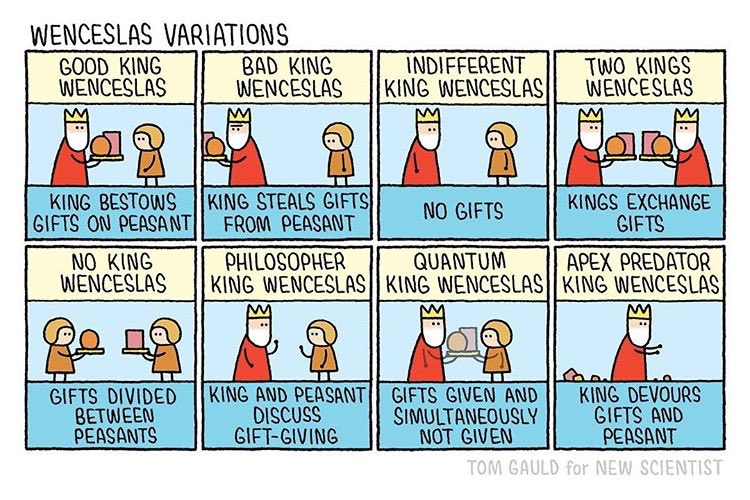
cartoon: wenceslas variations
Writing can be about taking an old story and giving it a new twist. Call it a variation. It all depends on what you want your story to be about.

Leave a comment

Filed under 2019, CarToonsday

These 13 Books Will Make You a Better Writer in 2019 | Inc.com

One of the best ways to improve your writing is to read about the craft.

Source: These 13 Books Will Make You a Better Writer in 2019 | Inc.com

  1. Ernest Hemingway on Writing, edited by Larry W. Phillips

Ernest Hemingway never codified his insights on writing into a book, but he did share his thinking on the topic in commissioned articles; letters to his agents, publishers, and friends; and through his novels. Ernest Hemingway on Writing is a collection of his insights on the craft of writing, and includes several practical and inspiring tips.

  1. Zen in the Art of Writing, by Ray Bradbury

The prolific science-fiction author Ray Bradbury collected the lessons he had learned about the craft during his long and successful career in Zen in the Art of Writing.

  1. Nobody Wants to Read Your Sh*t: Why That Is and What You Can Do About It, by Steven Pressfield

Steven Pressfield recently returned to writing about writing with a brand-new book, Nobody Wants to Read Your Sh*t. It’s a no-nonsense guide to writing stories that people will want to read. While the bulk of the book addresses how to write fiction, Pressfield shows how the same principles of writing good stories can apply to writing nonfiction.

  1. The Artist’s Way: A Spiritual Path to Higher Creativity, by Julia Cameron

The Artist’s Way: A Spiritual Path to Higher Creativity is the classic book by author and creativity coach Julia Cameron in which she introduces what she calls “morning pages.” Morning pages is a powerful stream of consciousness writing exercise that is not intended to yield publishable material, but which can help you get your pen moving and your thoughts flowing–even if you never intend to share them with the rest of the world.

  1. Turning Pro: Tap Your Inner Power and Create Your Life’s Work, by Steven Pressfield

Ever since reading his classic book, The War of Art, I’ve read every book about writing by Steven Pressfield (and I will continue to read every one he writes, including the one he’s publishing soon, which he’s generously serializing on his blog). In that book he gave a name to what every writer grapples with. He called it Resistance.

To fight the Resistance, writers (and other artists, for he was addressing artists broadly in that book) need to give up their amateur mindsets and habits and “turn pro.” In Turning Pro, his follow-up to The War of Art, Pressfield fleshes out what he means exactly when he tells writers to “turn pro.”

  1. On Writing Well: The Classic Guide to Writing Nonfiction, by William Zinsser

William Zinsser was a journalist, author, and writing instructor at Yale. His book On Writing Well is a classic among writers and has sold nearly 1.5 million copies in the 40 years since it was published. It’s one of the first books I recommend to anyone seeking to improve their writing.

  1. On Writing: A Memoir of the Craft, by Stephen King

Fifteen years ago, mega-best-selling author Stephen King wrote a book about the craft of writing that became an instant bestseller: On Writing: A Memoir of the Craft. After telling the story of how he became the writer he is today, King devotes the second half of the book to sharing his writing strategies, like his suggestion that you should write for your “Ideal Reader.”

  1. Process: The Writing Lives of Great Authors, by Sarah Stodola

This book looks at the techniques, inspirations, and daily routines of 18 iconic authors of the 20th century, including Franz Kafka, Ernest Hemingway, Virginia Woolf, David Foster Wallace, Toni Morrison, and Margaret Atwood.

After profiling so many successful authors, what did Stodola learn about their writing process? “Genius, I have concluded, is the presence of not one ability but several that work together in tandem. Genius is far more tedious, far less romantic, far more rote, far less effortless, than we imagine it.”

  1. The War of Art: Break Through the Blocks and Win Your Inner Creative Battles, by Steven Pressfield, edited by Shawn Coyne

All writers struggle with writer’s block in one form or another, but Steven Pressfield named the enemy and outlined a strategy for conquering it in The War of Art, the perennially best-selling guide for writers and other creative professionals. In the first part of the book he introduces what he calls Resistance – the force within us that conspires to prevent us from fulfilling our creative pursuits – and then spends the next two sections sharing his solutions for overcoming it.

  1. The Art of Nonfiction, by Ayn Rand

As the late novelist and philosopher Ayn Rand describes in The Art of Nonfiction, an edited collection of lectures she gave on the craft of writing, part of the reason why it took so long to finish her second novel is because she often suffered from severe bouts of writer’s block.

  1. Lifelong Writing Habit: The Secret to Writing Every Day, by Chris Fox.

In Lifelong Writing Habit: The Secret to Writing Every Day, Chris Fox describes the 12-step process he created that has allowed him to make the transition from part-time writer to full-time author of several best-selling thriller novels and nonfiction writing guides.

At the beginning of the book, Chris describes what a habit is, and explains how you can reprogram your brain just like a computer to install new habits. Habits live in a part of the brain called the basal ganglia, and they consist of three parts: The trigger, the routine, and the reward. The key to changing your habits is to identify which ones are good for you, which ones are bad, and then “flip” the bad ones to good ones.

  1. 8-Minute Writing Habit: Create a Consistent Writing Habit That Works With Your Busy Lifestyle, by Monica Leonelle

Monica Leonelle, a novelist and author of several books about writing, has written a book that speaks directly to those of us who struggle to get our writing done while balancing other commitments at work and home.

In the first part of The 8 Minute Writing Habit: Create a Consistent Writing Habit that Works With Your Busy Lifestyle, Leonelle describes several “blockers” that get in the way of our writing, thoughts like “writing might not pay off,” “I’m not good enough to be a writer,” and “I’m stuck in the planning/writing/editing phase.” For each blocker, she offers several practical tips for overcoming them. In the second part of the book, she shares nine strategies the pros use to write consistently.

  1. Several Short Sentences About Writing, by Verlyn Klinkenborg

Verlyn Klinkenborg is an author and creative writing instructor at Yale. In the preface to Several Short Sentences About Writing, he argues that “most of the received wisdom about how writing works is not only wrong but harmful,” and then devotes the rest of the book to smashing assumptions and correcting misconceptions about the craft.

Leave a comment

Filed under 2019, book list, writing, writing tip