Tag Archives: writing tip

Writing tip Wednesday: “Glimmer Train, very short fiction contest”

VERY SHORT FICTION guidelines

Details at: http://www.glimmertrain.com/veryshort.html

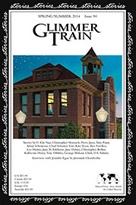
Glimmer Train

Glimmer Train

Open to all writers, this category welcomes stories that have not appeared in any print publication.

Maximum length: 3,000 words.

Held quarterly. Open to submissions in JANUARY, APRIL, JULY, and OCTOBER.
Next deadline: October 31.

Winners are announced in the April 1, July 1, October 1, and January bulletins, respectively, and contacted directly one week earlier.

Reading fee: $15 per story. Please, no more than three submissions per contest.

Prizes:

  • 1st place wins $1,500, publication in Glimmer Train Stories, and 20 copies of that issue.
  • 2nd place wins $500 (or, if accepted for publication, $700 and 10 copies).
  • 3rd place wins $300 (or, if accepted for publication, $700 and 10 copies).

Only stories sent in online are considered.

To apply, go to https://www.glimmertrainpress.com/writer/html/index2.asp

1 Comment

Filed under writing tip, Writing Tip Wednesday, writing tips

Writing tip Wednesday: “MG vs YA”

The Key Differences Between Middle Grade vs Young Adult

Source: http://www.writersdigest.com/online-editor/the-key-differences-between-middle-grade-vs-young-adult?et_mid=685611&rid=239626420

by Marie Lamba (marielamba.com)
author of the YA novels What I Meant…, Over My Head and Drawn. She’s also associate literary agent at The Jennifer De Chiara Literary Agency (jdlit.com)

OK, class. What sets a middle-grade novel apart from a young adult novel? If you said MG is for readers ages 8–12, and YA is for readers ages 13–18, then give yourself a check plus. But if you’re writing for the juvenile market and that’s all you know about these two categories, then I’m afraid you still need to stick around for the rest of this class. A book that doesn’t fit within the parameters of either age category is a book you won’t be able to sell.

In my work with The Jennifer De Chiara Literary Agency, I see my inbox flooded every day with queries for manuscripts that suffer from an MG/YA identity crisis. Like when a query says, “I’ve written a 100,000-word MG novel about a seventh-grader who falls in love and has sex for the first time.” Or when one states, “In my 20,000-word YA novel, a 14-year-old holds her first sleepover and learns the meaning of true friendship.” Both queries would earn a swift rejection, based on both inappropriate manuscript lengths and on content that’s either too mature or too young for the audience they’re targeting. Sadly, by not understanding what makes a book a true MG or a solid YA, these writers have hamstrung their chances for success, regardless of how well written their stories may be. It’s like they showed up to a final exam without ever cracking a book.

One difference between middle grade and young adult is the age of your protagonist. But it is not the only one.

One difference between middle grade and young adult is the age of your protagonist. But it is not the only one.

On the bright side, writers who study up on the many key differences between MG and YA will be able to craft the kind of well-targeted manuscript that will make both agents and editors take notice. Pay attention, because someday your manuscript will be tested.

Mg At A Glance
Age of readers: 8–12.

Length: Generally 30,000–50,000 words (although fantasy can run longer to allow for more complex world-building).
Content restrictions: No profanity, graphic violence or sexuality (romance, if any, is limited to a crush or a first kiss).
Age of protagonist: Typically age 10 for a younger MG novel, and up to age 13 for older, more complex books.
Mind-set: Focus on friends, family and the character’s immediate world and relationship to it; characters react to what happens to them, with minimal self-reflection.

Voice: Often third person.

Ya At A Glance
Age of readers: 13–18.

Length: Generally 50,000–75,000 words (although there’s also a length allowance for fantasy).
Content restrictions: Profanity, graphic violence, romance and sexuality (except for eroticism) are all allowable (though not required).

Age of protagonist: Ages 14–15 for a younger YA with cleaner content aimed at the middle-school crowd; for older and more edgy YA, characters can be up to 18 (but not in college).

Mind-set: YA heroes discover how they fit in the world beyond their friends and family; they spend more time reflecting on what happens and analyzing the meaning of things.

Voice: Often first person.

MG vs. YA Characters
When picking your hero’s age, remember that kids “read up,” which means they want to read about characters who are older than they are. So an 8-year-old protagonist won’t fly for the MG category, though it’d be OK for a younger chapter book or easy reader. For the widest audience, you’ll generally want your protagonist to be on the oldest side of your readership that your plot will allow. That means a 12- or even 13-year-old hero for MG, and a 17- or 18-year-old for YA (just remember your hero can’t be in college yet—that would push it into the “new adult” category).

MG vs. YA Readers
Middle-grade is not synonymous with middle school. Books for the middle-school audience tend to be divided between the MG and YA shelves. So which shelf do those readers go to? While there is no such thing as a ’tween category in bookstores, there are degrees of maturity in both MG and YA novels that’ll appeal to the younger and older sides of the middle-school crowd. A longer, more complex MG novel with characters who are 13 could take place in middle school and be considered an “upper-MG novel.” But the material can’t be too mature. It’s still an MG novel, after all, and most readers will be younger. Writing a sweeter, more innocent YA? Then it’s pretty likely that your readers will be ’tweens, that your characters should be around 15 years old, and that your book will be marketed as a “young YA.”

While it’s useful for you to understand these nuances as you craft your story and relate to your true audience, when it comes time to submit, don’t go so far as to define your novel as upper MG or younger YA in your query. That’s already pointing to a more limited readership. Instead, just stick to calling it either MG or YA when you submit, and let an interested agent draw conclusions about nuances from there.

MG vs. YA Content and Voice
What’s cool to a fourth-grader differs from what a 10th-grader will idolize. Same goes for the way they speak and the way they view the world. Which is why if romance appears in an MG novel, it’s limited to a crush and maybe an innocent kiss, as it is in Shugby Jenny Han. A YA could involve deep, true love as well as sexuality, as in The Fault in Our Stars by John Green. Another key difference? Overall, MG novels end on a hopeful note, while YA novels could have less optimistic endings, as in Green’s tearful story. You could say that that’s youth vs. experience coming into play.

The rest of the article at: http://www.writersdigest.com/online-editor/the-key-differences-between-middle-grade-vs-young-adult?et_mid=685611&rid=239626420

1 Comment

Filed under photo by David E. Booker, writing tip, Writing Tip Wednesday, writing tips

Writing tip Wednesday: “Those Moral Delimma Hooks”

5 Moral Dilemmas That Make Characters (& Stories) Better

Details at: http://www.writersdigest.com/online-editor/5-moral-dilemmas-that-make-characters-stories-better?et_mid=694352&rid=239626420

Readers can’t resist turning pages when characters are facing tough choices. Use these 5 keys to weave moral dilemmas into your stories—and watch your fiction climb to new heights.

By Steven James

Key #1: Give Your Character Dueling Desires
Before our characters can face difficult moral decisions, we need to give them beliefs that matter: The assassin has his own moral code not to harm women or children, the missionary would rather die than renounce his faith, the father would sacrifice everything to pay the ransom to save his daughter.

A character without an attitude, without a spine, without convictions, is one who will be hard for readers to cheer for and easy for them to forget.

So, to create an intriguing character facing meaningful and difficult choices, give her two equally strong convictions that can be placed in opposition to each other.

For example: A woman wants (1) peace in her home and (2) openness between her and her husband. So, when she begins to suspect that he’s cheating on her, she’ll struggle with trying to decide whether or not to confront him about it. If she only wanted peace she could ignore the problem; if she only wanted openness she would bring it up regardless of the results. But her dueling desires won’t allow her such a simple solution.

That creates tension.

And tension drives a story forward.

So, find two things that your character is dedicated to and then make him choose between them. Look for ways to use his two desires to force him into doing something he doesn’t want to do.

Key #2: Put Your Character’s Convictions to the Test
We don’t usually think of it this way, but in a very real sense, to bribe someone is to pay him to go against his beliefs; to extort someone is to threaten him unless he goes against them.
For example:

  • How much would you have to pay the vegan animal rights activist to eat a steak (bribery)? Or, how would you need to threaten her in order to coerce her into doing it (extortion)?
  • What would it cost to get the loving, dedicated couple to agree never to see each other again (bribery)? Or, how would you need to threaten them to get them to do so (extortion)?
  • What would you need to pay the pregnant teenage Catholic girl to convince her to have an abortion (bribery)? What threat could you use to get her to do it (extortion)?

Look for ways to bribe and extort your characters. Don’t be easy on them. As writers we sometimes care about our characters so much that we don’t want them to suffer. As a result we might shy away from putting them into difficult situations.

Guess what?

Spin your protagonist's moral compass around and make him doubt his belief that pigs can't fly.

Spin your protagonist’s moral compass around and make him doubt his belief that pigs can’t fly.

That’s the exact opposite of what needs to happen in order for our fiction to be compelling.

What’s the worst thing you can think of happening to your character, contextually, within this story? Now, challenge yourself—try to think of something else just as bad, and force your character to decide between the two.

Plumb the depths of your character’s convictions by asking, “How far will s/he go to … ?” and “What would it take for … ?”

Key #3: Force Your Character Into a Corner
Don’t give him an easy out. Don’t give him any wiggle room. Force him to make a choice, to act. He cannot abstain. Take him through the process of dilemma, choice, action and consequence:

  1. Something that matters must be at stake.
  2. There’s no easy solution, no easy way out.
  3. Your character must make a choice. He must act.
  4. That choice deepens the tension and propels the story forward.
  5. The character must live with the consequences of his decisions and actions.

If there’s an easy solution there’s no true moral dilemma. Don’t make one of the choices “the lesser of two evils”; after all, if one is lesser, it makes the decision easier.

For example, say you’ve taken the suggestion in the first key above and forced your character to choose between honoring equal obligations. He could be caught between loyalty to two parties, or perhaps be torn between his family obligations and his job responsibilities. Now, raise the stakes—his marriage is at risk and so is his job, but he can’t save them both. What does he do?

The more imminent you make the choice and the higher the stakes that decision carries, the sharper the dramatic tension and the greater your readers’ emotional engagement. To achieve this, ask “What if?” and the questions that naturally follow:

  • What if she knows that being with the man she loves will cause him to lose his career? How much of her lover’s happiness would she be willing to sacrifice to be with him?
  • What if an attorney finds herself defending someone she knows is guilty? What does she do? What if that person is her best friend?
  • What if your character has to choose between killing himself or being forced to watch a friend die?

Again, make your character reevaluate his beliefs, question his assumptions and justify his choices. Ask yourself: How is he going to get out of this? What will he have to give up (something precious) or take upon himself (something painful) in the process?

Explore those slippery slopes. Delve into those gray areas. Avoid questions that elicit a yes or no answer, such as: “Is killing the innocent ever justified?” Instead, frame the question in a way that forces you to take things deeper: “When is killing the innocent justified?” Rather than, “Does the end justify the means?” ask, “When does the end justify the means?”

The other two items are:

  • Key #4: Let the Dilemmas Grow From the Genre
  • Key #5: Look for the Third Way.

For information on these steps and the a little more about the other three, go to http://www.writersdigest.com/online-editor/5-moral-dilemmas-that-make-characters-stories-better?et_mid=694352&rid=239626420

Leave a comment

Filed under writing tip, Writing Tip Wednesday, writing tips

Writing tip Wednesday: “Agent hunting”

11 Steps to Finding the Agent Who’ll Love Your Book

Source: http://www.writersdigest.com/editor-blogs/guide-to-literary-agents/11-steps-to-finding-the-agent-wholl-love-your-book?et_mid=683644&rid=239626420

By Lori Rader-Day, author of The Black Hour

I was ready. I had an edited manuscript. I had a tiered list of agents. I had a spreadsheet. I’d read every scrap of information about getting an agent, and I was prepared, at last, to submit my novel. The process could take months, maybe years, I’d heard. I was in for the long haul, baby. The good news is it didn’t take years to get an offer of representation. The even better news: That offer came in the form of four magic words, words I’d been told to wait for by all the experts: I love your book.

Lori Rader-Day

Lori Rader-Day

Not just a Facebook-worthy thumbs up, not a “I think I can sell this.” Love. The reason you wait for true love in publishing is because publishing requires it, and not just from the author. Remember the feverish crush that helped fuel your first draft? Your agent needs that same big-eyed reverence for your book to take it out to editors, hoping for another love connection.

So how do you snag one of these lovey-doveys for yourself?

Revise
You’re not ready until you can bounce a quarter off your manuscript. You’ve already revised, I know. Leave it alone for a month, then go back. Make sure your pages say precisely what you meant. Make your sentences sing.

Read
Meanwhile, the best way to see how it’s done is to read. Read widely. When you don’t like something, figure out why. Apply everything you learn to your draft until further ideas ping off it.

Research
Gather your intelligence. Which books are like yours, not just in subject but in tone and style? Who agented them? Read the Writer’s Digest archives. Use online resources to sort through the known universe of agent submissions. Learn as much as you can, and start a list. Rank agents in order of likelihood of love match.

Package
Learn to write a query letter. Write a synopsis. What’s a log line? Get one. If at any one of these steps you find something lacking in your story, don’t ignore the problem. Every step of this process is a chance to get it right before someone else can tell you you’re getting it wrong. Go back over your draft until your product is perfectly packaged for sale. Did your eye just twitch? Get used to thinking of your baby, your life’s creative work, as a prototype that might yet be tinkered with by other people.

Network
Time for some allies. If you have a writers’ group, they should have already had a swipe at your pages, but having a writing network isn’t just about first readers. What you want is a group of people who can tell you how the road ahead looks. Research writers’ associations in your genre and beyond. Ask at your local library, bookstores, or universities for writing groups or workshops.

Read again
The guidelines, in this case. This is your last chance before you click send to take a look at your list of agents and take note of what they want from your initial query. Getting through the front door is often about playing by the rules. Don’t send anything less—or more—than each agent has asked for.

The other tips include:

  • Submit
  • Write
  • Track
  • Submit again
  • Commit.

Details on these at: http://www.writersdigest.com/editor-blogs/guide-to-literary-agents/11-steps-to-finding-the-agent-wholl-love-your-book?et_mid=683644&rid=239626420

Leave a comment

Filed under writing tip, Writing Tip Wednesday, writing tips

Writing tip Wednesday: “Getting in the suspense of things”

5 TIPS FOR WRITING SUSPENSE

by Kira Peikoff

Full article at: http://www.writersdigest.com/editor-blogs/guide-to-literary-agents/5-tips-for-writing-suspense?et_mid=693701&rid=239626420

I am a traditionally published thriller author. My latest book No Time to Die just hit shelves this week. When I first started writing suspense fiction, though, I had very little idea what I was doing. It took a humble amount of trial and error to get in a groove and overcome basic rookie errors. Now, seven years later, I like to think I’ve figured out some tricks of the trade. I’ve also been extremely lucky to receive the support and mentorship of some of the top names in the biz, like Jack Reacher’s creator Lee Child and the late Michael Palmer. So without further ado, here are some tips for budding thriller writers that I wish I’d known from day one…

1) Structure Scenes like Mini-Novels: Each one should contain its own narrative arc, with rising action and a climactic moment that signals the end of the chapter. It’s good form to finish most chapters on a cliffhanger—especially the first one. A major dramatic question should be raised in the opening scene, and then resolved in an unexpected or unfavorable way to hurl the main character further into the conflict (and thus drag your readers into the story). Get your protagonist in trouble as soon as possible and never let her get too comfortable or too safe. As far as chapter length, I’ve found that an average of five pages (double-spaced, size 12) works well for keeping up the pace.

2) Plot Strategically to Avoid the Sagging Middle: This rookie error is one I had the misfortune of making early on: I wrote the beginning of a book and then abruptly ran out of steam about sixty pages in. When you’re staring down 240 blank pages without a plan, it’s easy to freeze up. Now I have a method. Once I have the main cast of characters and their conflicts, I conceive a new book in four sections. At the end of each section, I devise a major twist to launch into the next section and keep up the narrative momentum. Once I’ve figured out my four big plot points, I go deeper into plotting the concretes of each individual section, dropping red herrings and hints about the twists to come so that they will be logical without being predictable. This is the most challenging part of the process for me and is apt to change when I actually get to writing. I think of the outline like a highway: you can go off-roading from time to time but you get back on the highway to get to your final destination.

The other three tips are:

3) Alternate Character POVs (Point of Views).

4) Obscure POV when useful.

5) Raise questions and delay the answers.

For details and a chance to win a copy of Kira Peikoff’s book No Time to Die, go to: http://www.writersdigest.com/editor-blogs/guide-to-literary-agents/5-tips-for-writing-suspense?et_mid=693701&rid=239626420

Leave a comment

Filed under writing tip, Writing Tip Wednesday, writing tips

Writing tip Wednesday: interview with Ursula K. LeGuin

The otherworldly and utterly Portland Ursula K. Le Guin

by Sue Zalokar

“Well, imagination is based on experience. The way everything in the world is made out of the elements combined in endless ways, everything in the mind is made out of bits of experienced reality combined in endless ways. So a child’s imagination deepens with living, with wider experience of reality. And so does a writer’s.”
–Ursula K. LeGuin

Source: http://news.streetroots.org/2014/08/14/otherworldly-and-utterly-portland-ursula-k-le-guin

Ursula K. Le Guin started writing when she was five and has been publishing her work since the 1960s. Throughout her career, she has delved into some of the most insightful, political, ecological and socially important topics of our time. She has created utopian worlds and utopian societies. She boldly challenged gender barriers by simply doing what she was born to do: write.

Her first major work of science fiction, “The Left Hand of Darkness,” is considered epoch-making in the field for its radical investigation of gender roles and its moral and literary complexity. At a time when women were barely represented in the writing world, specifically in the genre of Science Fiction, Le Guin was taking top honors for her novels. Three of Le Guin’s books have been finalists for the American Book Award and the Pulitzer Prize, and among the many honors she has earned, her writing has received a National Book Award, five Hugo Awards and five Nebula Awards.

In Paris in 1953 she married Charles A. Le Guin, a historian, and since 1958 they have lived in Portland. They have three children and four grandchildren.

After some correspondence, Le Guin invited me to her home to talk. I arrived bearing fresh-picked berries from Sauvie Island. She took me into her study and showed me the view she had of the eruption of Mt. St. Helens in 1980.

Ursula K. LeGuin

Ursula K. LeGuin

Urusula K. Le Guin: It was the biggest thing I’ve ever seen and I don’t want to see anything that big again. It was just inconceivable. It was kind of overcast in the morning, after the eruption, but (before that) the clouds were burned off and there was this pillar of – it looked like smoke – but it was really mostly dirt being blown upward by the heat of the eruption. I think it was 80,000 feet. It was awful and beautiful and it went on and on. The column, it moved very slowly. You could see it sort of swirling and there was lightning in it, striking all of the time. It was something else.

Sue Zalokar: I can only imagine. I don’t know much about the history of the eruption. Did you have much warning?

U.K.L.: There was lots of warning. The mountain had been rumbling and shaking and dumping black matter on her snow all spring. It was really bad luck. They thought she’d gone into a sort of a quiet phase and so they told people they could go that weekend to their cabins, run in and get their belongings out. Well, that was the weekend she blew. So that’s why there were 60 to 70 people killed. You can’t predict a volcano.

I got really fascinated with the volcano. About a year and few months after the eruption, the whole mountain was called “The Red Zone.” You could go part way up and then above that, you had to have a permit to go in and the only people that were going in were loggers dragging dead trees out. The roads were destroyed, there were just logging roads. Me, a photographer and an artist, got a permit to go in (to the Red Zone) as a poet, a photographer and an artist.

S.Z.: Awesome.

U.K.L.: How about that? I hardly ever pull strings, but we pulled a few and we got a day pass into the Red Zone. We drove around in this awful, unspeakable landscape of ash. Nothing but ash and dead trees. And the trees, just like grey corpses, all pointing the same direction where the blast of the eruption blew them down.

Well, imagination is based on experience. The way everything in the world is made out of the elements combined in endless ways, everything in the mind is made out of bits of experienced reality combined in endless ways. So a child’s imagination deepens with living, with wider experience of reality. And so does a writer’s.Twenty-five years later, a few years ago, I went back to that same area, which they thought would take at least 100 years to come back and regrow. It’s all green. There are trees coming up and flowers blooming like mad, birds, deer, elk. That mountain, she makes herself over and over. It’s quite a story.

S.Z.: Was there a specific piece of writing that came out of that experience in the Red Zone?

U.K.L.: Yes. I wrote poems called “In the Red Zone” and I wrote a piece with the same title.

S.Z.: What distinguishes experience from imagination in writing and is one more essential to the process of writing than the other?

The rest of the interview at: http://news.streetroots.org/2014/08/14/otherworldly-and-utterly-portland-ursula-k-le-guin

Leave a comment

Filed under Writing Tip Wednesday

Writing Quotes from Hemingway

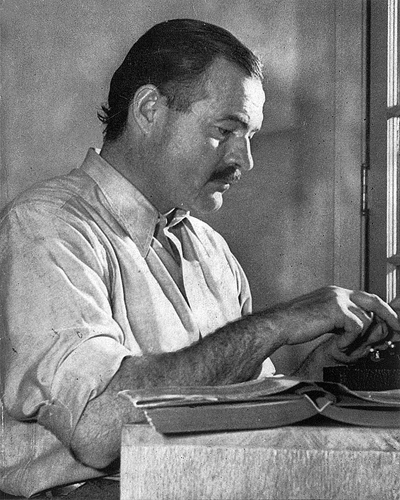
Ernest Hemingway at typewriter

Ernest Hemingway at typewriter

  1. If a writer knows enough about what he is writing about, he may omit things that he knows. The dignity of movement of an iceberg is due to only one ninth of it being above water.
  2. That is what we are supposed to do when we are at our best – make it all up – but make it up so truly that later it will happen that way.
  3. When writing a novel a writer should create living people; people not characters. A character is a caricature.
  4. All you have to do is write one true sentence. Write the truest sentence that you know.
  5. To F. Scott Fitzgerald: “Write the best story that you can and write it as straight as you can.”
  6. To an aspiring writer: “You shouldn’t write if you can’t write.”

Leave a comment

Filed under writing quotes, writing tip, writing tips

Writing tip Wednesday: “Flexible outline”

7 STEPS TO CREATING A FLEXIBLE OUTLINE FOR ANY STORY

Source: http://www.writersdigest.com/online-editor/7-steps-to-creating-a-flexible-outline-for-any-story?et_mid=682609&rid=239626420

The seven steps involve:
1. Craft your premise
2. Roughly sketch scene ideas
3. Interview your characters
4. Explore your settings
5. Write your complete outline
6. Condense your outline
7. Put your outline into action.

1. Craft your premise.

Your premise is the basic idea for your story. But it’s not enough to just have an idea. “Guy saves girl in an intergalactic setting” is a premise, but it’s also far too vague to offer much solid story guidance.

This is why your outline needs to begin with a tightly crafted premise sentence that can answer the following questions:

  • Who is the protagonist?
  • What is the situation? What is the hero’s personal condition at the beginning? How will that condition be changed, for better or worse, by the hero himself or by the antagonistic force?
  • What is the protagonist’s objective? At the beginning, what does the hero want? What moral (or immoral) choices will she have to make in her attempt to gain that objective?
  • Who is the opponent? Who or what stands in the way of the hero achieving his objective?
  • What will be the disaster? What misfortune will befall the hero as the result of her attempts to achieve her objective?
  • What’s the conflict? What conflict will result from the hero’s reaction to the disaster? And what is the logical flow of cause and effect that will allow this conflict to continue throughout the story?

Once you’ve answered these questions, combine them into one or two sentences:

Restless farm boy (situation) Luke Skywalker (protagonist) wants nothing more than to leave home and become a starfighter pilot, so he can live up to his mysterious father (objective). But when his aunt and uncle are murdered (disaster) after purchasing renegade droids, Luke must free the droids’ beautiful owner and discover a way to stop (conflict) the evil Empire (opponent) and its apocalyptic Death Star.

2. Roughly sketch scene ideas.

Armed with a solid premise, you can now begin sketching your ideas for this story. Write a list of everything you already know about your story. You’ll probably come to this step with a handful of scenes already in mind. Even if you have no idea how these scenes will play out in the story, go ahead and add them to the list. At this point, your primary goal is to remember and record every idea you’ve had in relation to this story.

Once you’ve finished, take a moment to review your list. Whenever you encounter an idea that raises questions, highlight it. If you don’t know why your character is fighting a duel in one scene, highlight it. If you don’t know how two scenes will connect, highlight them. If you can’t picture the setting for one of the scenes, highlight that, too. By pausing to identify possible plot holes now, you’ll be able to save yourself a ton of rewriting later on.

Your next step is to address each of the highlighted portions, one by one. Write out your ideas and let your thoughts flow without censoring yourself. Because this is the most unstructured step of your outline, this will be your best opportunity to unleash your creativity and plumb the depths of your story’s potential. Ask yourself questions on the page. Talk to yourself without worrying about punctuation or spelling.

Every time you think you’ve come up with a good idea, take a moment to ask yourself, “Will the reader expect this?” If the answer is yes, write a list of alternatives your readers won’t expect.

3. Interview your characters.

In order to craft a cast of characters that can help your plot reach its utmost potential, you’ll need to discover crucial details about them, not necessarily at the beginning of their lives but at the beginning of the story.

To do this for your protagonist, work backward from the moment in which he will become engaged in your plot (the “disaster” in your premise sentence). What events in your protagonist’s life have led him to this moment? Did something in his past cause the disaster? What events have shaped him to make him respond to the disaster in the way he does? What unresolved issues from his past can further complicate the plot’s spiral of events?

Once you have a basic idea of how your character will be invested in the main story, you can start unearthing the nitty-gritty details of his life with a character interview. You may choose to follow a preset list of questions (you can find a list of more than 100 such questions in my book Outlining Your Novel: Map Your Way to Success), or you may have better luck with a “freehand interview” in which you ask your protagonist a series of questions and allow him to answer in his own words.

For the rest, go to http://www.writersdigest.com/online-editor/7-steps-to-creating-a-flexible-outline-for-any-story?et_mid=682609&rid=239626420

Historical and speculative novelist K.M. Weiland writes the award-winning blog Helping Writers Become Authors (helping writersbecomeauthors.com). She is the author of Outlining Your Novel and Structuring Your Novel

1 Comment

Filed under writing tip, Writing Tip Wednesday, writing tips

Writing tip Wednesday: “Hero’s Adventure”

HOW TO MAP OUT YOUR HERO’S ADVENTURE IN YOUR MANUSCRIPT

Source: http://www.writersdigest.com/online-editor/how-to-map-out-your-heros-adventure-in-your-manuscript?et_mid=688770&rid=239626420

How do the most successful authors of our time construct their stories? If you read them, and if you also read some ancient myths, you will begin to see parallels. You will feel smacked upside the head with parallels. You’ll realize that the top authors of today use storytelling techniques that writers used back when plans were being drawn up for the pyramids.

An excellent book about ancient myths is The Hero With a Thousand Faces by Joseph Campbell. The title says it all. Across cultures and generations, some variation of a hero figures into every beloved story. And the typical story is about an individual who goes on a quest or a journey. By the end, the individual becomes a hero. This is called the Hero’s Adventure.

The Hero’s Adventure is the most archetypal story of all because it’s the basis for more novels than any other kind of story. Novels of all different genres, from romances to thrillers to sci-fi, are based on the Hero’s Adventure.

So what is the Hero’s Adventure? You know it already, and you may even have elements of it in the story you’re working on. But I suspect you haven’t yet methodically and thoroughly appropriated it for yourself.

The Hero’s Adventure Basic Recipe

Joseph Campbell

Joseph Campbell

Here is a basic recipe to demonstrate how the Hero’s Adventure plays out. This is a template you can apply to your own work-in-progress—you might be surprised by how closely it matches elements you already have in play.

  1. A messenger comes. The messenger might be human, or a message might come from an experience—like a brush with death or a dream. At any rate, something has gone wrong; the natural order of the world has been disturbed.
  2. A problem is presented. Perhaps something has been taken away from the tribe, or some misfortune or malfeasance has occurred.
  3. Someone is marked out as the person to solve this problem. She is chosen according to some past deed of her parents or by her own reputation or happenstance. This person, of course, emerges as the hero at the end.
  4. A challenge takes shape. The challenge may be refused, at first. “No way, I’m not going to risk my neck for that!”
  5. A refusal, often. But eventually the hero decides to accept the challenge. She might even be forced to accept it by circumstances.
  6. The challenge is accepted. The adventure begins.
  7. The hero leaves the familiar world. And she sets off into another world. It’s dangerous. The hero could use some help, and very often …
  8. Helpers materialize. A helper might have special skills the hero doesn’t have, or he might have special insights or wisdom, in which case he takes the form of a mentor.
  9. Setbacks occur. The hero is tested, she makes gains, she endures setbacks, she fights for what is right, she resists evil. The going’s tough!
  10. The hero regroups and gains some ground again. Maybe she needs another visit to a mentor, or maybe she makes a personal breakthrough and overcomes a great inner obstacle, perhaps her own fear.
  11. The foe is vanquished or the elixir is seized. Eventually she defeats the foe or comes into possession of something that will restore the natural order—a cure, or new knowledge that will bring justice or the return of prosperity.
  12. The hero returns to the familiar world. And the problem is fixed, or justice is done. The natural order is restored.

The person who accepts the challenge and prevails is elevated to a special position, somewhere above human, somewhere below god. She is the hero.

For examples of this in literature: http://www.writersdigest.com/online-editor/how-to-map-out-your-heros-adventure-in-your-manuscript?et_mid=688770&rid=239626420

Leave a comment

Filed under writing tip, Writing Tip Wednesday, writing tips

Writing tip Wednesday: “Two more agents to consider”

Catherine Luttinger

Catherine Luttinger

Catherine Luttinger of Darhansoff & Verrill. Catherine recently rejoined the agency and is looking for clients now. Catherine is primarily interested in science fiction and fantasy. To her, that includes anything that could even remotely be labeled as such. Viable submission material includes everything from classic space operas to the apocalypse; alternative universes, dystopias, and eco-thrillers—as well as the paranormal, horror, zombies, plagues, and time travel. She is also willing to look at historical fiction, mythology re-told, YA, thrillers and mysteries. You may also pitch her pop-science nonfiction.

Details and how to contact at: http://www.writersdigest.com/editor-blogs/guide-to-literary-agents/literary-agent-spotlight-catherine-luttinger-of-darhansoff-verrill

///

Stacy Testa

Stacy Testa

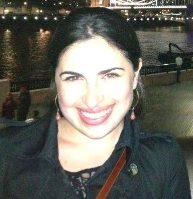
Stacy Testa joined Writers House in 2011 as an assistant to senior agent Susan Ginsburg and has been actively building her own client list since 2013. Previously, she interned at Farrar, Straus & Giroux and Whimsy Literary. Stacy graduated cum laude with a BA in English from Princeton University. Follow her on Twitter: @stacy_testa.

Stacy is looking for literary fiction and upmarket commercial women’s fiction, particularly character-driven stories with an international setting, historical bent, or focus on a unique subculture. She also represents realistic young adult (no dystopian or paranormal, please!). For nonfiction, she is particularly interested in young “millennial” voices with a great sense of humor and a strong platform, startling and unique memoirs, and voice-driven narratives about little-known historical moments.

Details and how to contact at: http://www.writersdigest.com/editor-blogs/guide-to-literary-agents/new-literary-agent-alert-stacy-testa-of-writers-house

1 Comment

Filed under writing tip, Writing Tip Wednesday