Tag Archives: writing tip

Writing tip Wednesday: “Short, short story contest”

SSS-Header

We’ll keep this short.

Enter the Writer’s Digest Short Short Story Competition for a chance at $3,000 and a trip to the 2016 Writer’s Digest Conference, PLUS national exposure for your story! Click here to see the full prize list.

Here’s the bottom line.

Keep your story under 1,500 words to qualify, and be sure to get your work to us by December 14.

One First Place Winner will receive:

  • $3,000 in cash
  • Their short story title published in Writer’s Digest magazine’s July/August 2016 issue
  • A paid trip to the ever-popular Writer’s Digest Conference!
  • A copy of the 16th Annual Writer’s Digest Short Short Story Competition Collection
  • A copy of the 2016 Novel & Short Story Writer’s Market
  • A copy of the 2016 Guide to Literary Agents.

Other prizes and how to enter: http://www.writersdigest.com/writers-digest-competitions/short-short-story-competition?utm_source=competition&utm_campaign=wd-tjo-comp-161125&utm_content=801449_WC151125&utm_medium=email

Deadline: December 14, 2015

1 Comment

Filed under 2015, writing tip, Writing Tip Wednesday

Writing tip Wednesday: “New Writer Award”

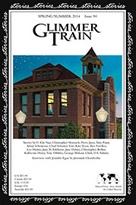
Glimmer Train Press: New Writer Award: 1st place $1,500 and publication in Issue 98. Deadline: 11/30.

Glimmer Train

Glimmer Train

  • This category is open only to emerging writers whose fiction has not appeared in any print publication with a circulation over 5000.
  • NOTE: 11 of the last 12 first-place winners have been those authors’ first print publications!
  • The 1st-place winner will be published in Issue 98 and will receive 10 copies of that issue. Second- and 3rd-place win $500/$300, respectively, or, if accepted for publication, $700.
  • Winners and finalists will be announced in the February 1 bulletin, and contacted directly the previous week.
  • Most submissions run 1,500 – 6,000 words, but stories as long as 12,000 words are fine.

Writing Guidelines: http://www.glimmertrain.com/pages/guidelines/short_story_award_for_new_writers_guidelines.php

2 Comments

Filed under 2015, writing contest, writing tip, Writing Tip Wednesday

Writing tip Wednesday: “New Millennium Writings”

New Millennium Writings contests

nmw-logo2

Details at: http://submit.newmillenniumwritings.org/

To apply online, follow these guidelines:

  • $1,000 Award plus publication for each category – $4,000 total awards.
  • November 15, 2015, Midnight (all U.S. time zones) – Fiction, Nonfiction, Short-Short Fiction, Poetry deadline.
  • Payment is $20 per submission and includes your free copy of the anthology.
  • Pay by credit card, debit card, or echeck with PayPal (following Upload).
  • We accept the following formats: Microsoft Word (.doc), Adobe Acrobat (.pdf), Rich Text Format (.rtf), and Plain Text (.txt). Please note that the Word format (.docx) is not accepted at this time, so if using Word, please save your file in the (.doc) format, also called Word 97-2003 Document under “Save As” options.
  • No restrictions as to style or subject matter. (except for Love Wins essays)
  • Multiple and simultaneous submissions are welcome.
  • Fiction pieces must be 6,000 words or less.
  • Nonfiction(all types welcome) pieces must be 6,000 words or less.
  • Short-Short Fiction must be 1,000 words or less.
  • Each Poetry entry may include three poems, up to five pages total. Poetry Honorable Mentions will be published.
  • Paypal provides contact information with each entry, so cover letters are not necessary. If you wish to include a cover letter, please include it on a separate page in your file. The NMW screening process is blind, so please be sure that no identifying information is displayed anywhere else in the file.
  • Entrant retains copyright of his/her Entry.
  • Mailing addresses outside the U.S./Canada may require additional postage fee to receive anthology.

Additional information: http://submit.newmillenniumwritings.org/

Leave a comment

Filed under 2015, writing tip, Writing Tip Wednesday

Writing Tip Wednesday: “NaNoWriMo”

National Novel Writing Month Rules 2015: 10 Tips For A Successful NaNoWriMo

Started in 1999 in San Francisco Bay area by Chris Baty. It’s not too late for you to start.

by Christina Silva

Source: http://www.ibtimes.com/national-novel-writing-month-rules-2015-10-tips-successful-nanowrimo-2164339

That novel you’ve been talking about writing for years? It’s time to just do it. November is National Novel Writing Month, an annual challenge where writers put together 50,000-word novels between Nov. 1 and midnight on Nov. 30.

It's not too late to start your novel.

It’s not too late to start your novel.

Chris Baty founded NaNoWriMo in 1999 in the San Francisco Bay Area with only 21 participants. Only six of those 21 participants completed the challenge. By 2001, 5,000 people signed up for the challenge. In 2014, 175,002 people participated, with 40,325 meeting the goal.

The rules of NaNoWriMo are simple. Just write until you finish, and then if you finish early, keep going. From the website: “National Novel Writing Month is a fun, seat-of-your-pants approach to creative writing. On November 1, participants begin working towards the goal of writing a 50,000-word novel by 11:59 PM on November 30. Valuing enthusiasm, determination, and a deadline, NaNoWriMo is for anyone who has ever thought fleetingly about writing a novel.”

Participants can earn badges on the website when they meet word counts, share their progress with the #NaNoWriMo hashtag and share the experience with other writers. Novels of 50,000 words include “Of Mice and Men,” by John Steinbeck, and “The Notebook,” by Nicholas Sparks.

Below are 10 tips to have a successful NaNoWriMo:

  1. Just focus on writing a draft, not a literary classic.
  2. Come up with a plan. Do you want to create a plot first or just write whatever comes out? It’s called plotting versus pantsing.
  3. Make the challenge a priority. Ignore Netflix. Stop hanging out with friends if need be. Just get it done.
  4. Decide on a daily writing goal. You could aim for 1,667 words a day, or write more on the weekends and take it easy during the workweek.
  5. Create a writing schedule. Will you hit your daily word count in the mornings or at night?
  6. Figure out where to keep your writing. Google Docs seems easy. Or will you email yourself a draft or use a storage site like Dropbox?
  7. Don’t worry about writing a book that will get published or that people will buy. The goal is just to get into the habit of writing.
  8. Ignore any doubt. Just keep going.
  9. Edit sober.
  10. Drink wine. Wine loves writers.

Source: http://www.ibtimes.com/national-novel-writing-month-rules-2015-10-tips-successful-nanowrimo-2164339

1 Comment

Filed under 2015, writing tip, Writing Tip Wednesday

Writing tip Wednesday: “Writer’s Digest Poetry Contest”

Source: http://www.writersdigest.com/writers-digest-competitions/poetry-awards?et_mid=793214&rid=239626420

This way to the contest.

This way to the contest.

Deadline: October 30, 2015

Calling all poets! We’re on the look out for poems of all styles–rhyming, free verse, haiku, and more–for the 9th Annual Writer’s Digest Poetry Awards! This is the only Writer’s Digest competition exclusively for poets. Enter any poem 32 lines or less for your chance to win $1,000 in cash.

Prizes

One First Place Winner will receive:

  • $1,000 in cash
  • Their poem published in Writer’s Digest magazine’s July/August 2016 issue
  • A copy of the 2016 Poet’s Market
  • Promotion on writersdigest.com.

The Second Place Winner will receive:

  • $250 in cash
  • Their poem’s title published in Writer’s Digest magazine’s July/August 2016 issue
  • A copy of the 2016 Poet’s Market
  • Promotion on writersdigest.com.

The Third Place Winner will receive:

  • $100 in cash
  • Their poem’s title published in Writer’s Digest magazine’s July/August 2016 issue
  • A copy of the 2016 Poet’s Market
  • Promotion on writersdigest.com.

Fourth through Tenth Place Winners will receive:

  • $100 off a purchase from the Writer’s Digest Shop
  • Their poem’s title published in Writer’s Digest magazine’s July/August 2016 issue
  • A copy of the 2016 Poet’s Market
  • Promotion on writersdigest.com.

How to Enter

Register online: https://app.wizehive.com/apps/WDPoetry2015

  • Enter online or submit your entry via regular mail. Offline entries must be accompanied by an Entry Form, and the required entry fee (credit card information, check or money order made payable to F+W Media, Inc.). If you are entering more than one poem, you may mail all entries in the same envelope and write one check for the total entry fee. You may enter online even if you are paying with a check. All checks will be cashed within 60 days of the competition final deadline. Entry fees are non-refundable.
  • Your entry must be original, in English, unpublished and unproduced, not accepted by any other publisher or producer at the time of submission. Writer’s Digest retains one-time nonexclusive publication rights to the winning entries to be published in a Writer’s Digest publication. Any piece posted anywhere online is considered published.
  • If you are submitting your entry via regular mail (NOT using the online entry form), the entry must be typed on one side of 8-1/2 x 11 or A4 white paper. Poems may be single or double-spaced. Your name, address, email and phone number must appear in the upper left-hand corner of the first page —otherwise your entry is disqualified. Entries submitted online do not need name, address, email and phone number in the upper left-hand corner of the first page since that information is collected on the form.
  • BE SURE OF YOUR LINE COUNT! Entries exceeding the line limits will be disqualified. Type the exact line count (counting every single line, except the title and contact information) at the top of the manuscript.

Additional information: http://www.writersdigest.com/writers-digest-competitions/poetry-awards?et_mid=793214&rid=239626420

1 Comment

Filed under 2015, writing tip, Writing Tip Wednesday

Writing tip Wednesday: “Tips for getting it write”

Are you one of those people who says ‘I’d love to write a book one day, but I don’t have the time’?

by Rhoda Baxter

Source: http://www.beverleyguardian.co.uk/news/local/opinion-tips-for-getting-it-write-1-7503688

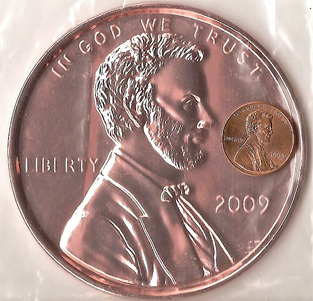
Good writing advice can be like pennies from heaven. Just don't get rained on by too many at once.

Good writing advice can be like pennies from heaven. Just don’t get rained on by too many at once.

I have a day job and I have two small children. If I can find the time to write novels, so can you.

First, let’s break down the task. Most novels are about 70,000 words long. That’s a lot of words.

It would be almost impossible to write that in one day. You could dedicate a week to it and get it done, but we’ve already established that time is a limiting factor. So, let’s spread it over more days. 70,000 is 70 days of writing 1,000 words a day.

Or 140 days of 500 words a day. Or even 280 days writing 250 words a day. Two hundred and fifty words is easy, right?

After all, I’ve written over 100 just to get to this point. So you can write 250 words a day. Now that we’ve agreed on 250 words, we need to find an hour or so to get those words down.

The good news is that you can easily write more 250 words in an hour. The bad news is that you’ll probably have to write about 1,500 words to make sure you have 250 usable ones.

So what next? Well, just make sure you do you 250 words every day. If you can’t manage every day, try four days a week. Any less than that, and you risk straying off and not finishing the book. You don’t have an hour each day? Here are 10 ways how to make time:

1. Make writing a priority
When you say you don’t have time to write – you actually mean ‘I have other things I’d rather do with my time than write’. Making the mental shift to believe that writing is important is a major step towards finding more time.

2. Stop watching TV
I don’t mean stop watching it entirely. There are, after all, essentials – The Big Bang Theory and Dr Who for me. Everything else will have to wait until it comes out on DVD.

If you have young children who distract you, wait until they’re watching something and use that time to write. You know you won’t be disturbed for 30 minutes. That’s gold dust.

3. Get up earlier
This is a trick that emerged out of creativity research, and that I first heard about from another I’m told this works. I’ve never tried it because I have trouble with anything earlier than 6am. Early morning people also claim that creativity flows better early in the morning.

4. Go to bed later
As above, but at the other end of the day. I do this. If you fall asleep, just delete all the bits that say fffow;elklrkje;lja before you start writing the next day!

5) Turn off the internet
Wait, wait. Calm down. Breathe. I don’t mean permanently. Just for an hour or so during you “writing time.” It’s amazing how much you can get done if you don’t have the excuse of ”research” or “just quickly checking my email.”

6) Make up an hour, 15 minutes at a time
This is something I was taught by my old Physics teacher. He suggested that a full hour was hard to find, but four lots of 15 minutes wasn’t. This is also a good way of getting pesky things that you have been putting off done. Set a timer for 15 minutes, then get that editing done.

Other tips:
7) Steal time from your social life

8) Do your preparation beforehand

9) Put your phone on answerphone

10) This one’s my dream – go on a writing retreat (cue inspirational music).

Source: http://www.beverleyguardian.co.uk/news/local/opinion-tips-for-getting-it-write-1-7503688

Brief Bio: Rhoda writes smart contemporary romantic comedy for Choc Lit Ltd. She likes to write about people who make her laugh.
Her latest book Please Release Me was published by Choc Lit in September. Rhoda will donate 50% of the royalties from Please Release Me to Martin House Children’s Hospice.

Find out more on www.rhodabaxter.com or get in touch via Twitter @rhodabaxter

Leave a comment

Filed under 2015, Writers on writing, writing tip, Writing Tip Wednesday

Writing tip Wednesday: “Star Trek Strange New Worlds story contest”

Kirk (left) and Spock (right).

Kirk (left) and Spock (right).

The deadline for entry is 11:59 PM EST January 15, 2016.

In celebration of Star Trek’s 50th anniversary in 2016, publisher Simon & Schuster is bringing back the popular fan fiction writing contest, Strange New Worlds! Here is your unique opportunity to present to this world and beyond that special Star Trek story that has never been told.

Ten winning selections will be published as part of an all-new official anthology, coming from Simon & Schuster in 2016. Plus, two first prize winners will receive a free, self-publishing package from Archway Publishing!

Editorial Guidelines

Stories must focus on past and present Star Trek main characters or familiar guest characters from the live-action TV series or the first ten feature films released prior to 2009.

  • Stories must be between 7,500 and 10,000 words.
  • Stories must contain no explicit sexual activity or graphic depictions of violence or sadism.
  • Stories may not contain the previously unestablished death of a Star Trek character or make significant changes in the life of a major character.
  • No illustrated or graphic submissions will be accepted.
  • The Submission must be an original story based on the established Star Trek universe and or characters from the following Television series or Motion Pictures:

    Television
    The Original Series, Seasons 1-3
    The Next Generation, Seasons 1-7
    Deep Space Nine, Seasons 1-7
    Voyager, Seasons 1-7
    Enterprise, Seasons 1-4

    Motion Pictures
    The Motion Picture (1979)
    The Wrath of Khan (1982)
    The Search for Spock (1984)
    The Voyage Home (1986)
    The Final Frontier (1989)
    The Undiscovered Country (1991)
    Generations (1994)
    First Contact (1996)
    Insurrection (1998)
    Nemesis (2002)

  • See complete list of story qualifications/disqualifications in the Rules at http://www.startrekbooks.com/contest_rules.

1 Comment

Filed under 2015, contest, writing tip, Writing Tip Wednesday

Writing tip Wednesday: An agent to consider

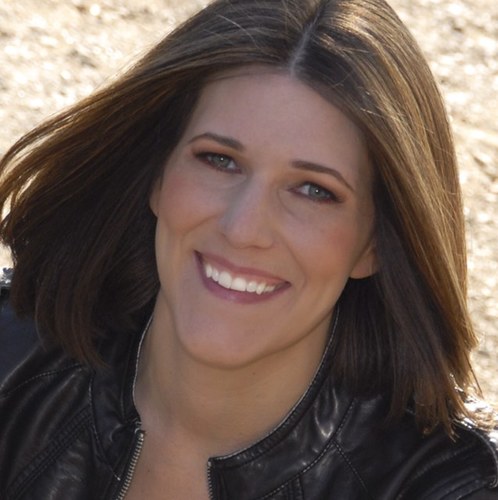
Danielle Burby
dburby@hsgagency.com

Source: http://hsgagency.com/

Danielle Burdy

Danielle Burdy

Danielle graduated from Hamilton College with honors and a double major in Creative Writing and Women’s Studies. Before finding her home at HSG, she interned at Writers House, Clarion Books, Faye Bender Literary Agency, Dunow Carlson and Lerner, John Wiley and Sons, and SquareOne Publishers (along with stints as a waitress and a farmers’ market vendor).

Her passion lies in YA, Women’s Fiction, and mysteries. She gravitates toward stories with a strong voice and particularly enjoys complex female characters, narratives that explore social issues, and coming-of-age stories. Genres that appeal to her include contemporary YA, medieval fantasy, historical fiction, cozy mysteries, and upmarket Women’s Fiction. She finds it hard to resist gorgeous writing and is a sucker for romantic plotlines that are an element of the narrative, but don’t dominate it.

Danielle was involved in way too many singing groups in college and is always up for karaoke. She also enjoys both tea and coffee, managing to defy the naysayers who claim they’re an either-or thing. She is, however, distinctly a chocolate person. You can follow her on twitter at @danielleburby.

Leave a comment

Filed under 2015, writing tip, Writing Tip Wednesday

Writing tip Wednesday: “8 Rules of Writing Historical Fiction Research”

After researching and writing my novel Orphan #8—which was published by William Morrow in 2015 and is the August Target Club Pick and an Indie Next Great Read—I put together this list of eight rules for historical fiction research. For each I’ll give you an example of how I applied that rule of research to writing my novel.

By Kim van Alkemade

Source: http://www.writersdigest.com/online-editor/8-rules-of-writing-historical-fiction-research?et_mid=785611&rid=239626420

1. Take bad notes.
In 2007, I took some brief notes about a woman doctor who X-rayed eight children at a Jewish orphanage. I didn’t even write down her name. Yet these bad notes inspired me to write my first historical novel, Orphan #8. Only after the novel was finished, sold, and rewritten did I go back to this archive to consult the source of my notes. There, I learned the real name of this doctor, Elsie Fox, and with a little more research I learned she had been born in Austria, educated at Cornell, conducted X-ray research at the Home for Hebrew Infants, and founded a school for radiology in the Bronx. The character I created from my bad notes is named Mildred Solomon. She was born in the United States, went to medical school in New York, conducted X-ray research at the fictional Hebrew Infant Home, and went on to have a career in radiology at a hospital. The parallels are spooky, but I’m glad my bad notes allowed my imagination free reign to create a character who is entirely my own.

2. Use archives.
You don’t have to be an academic or a librarian to use archival materials. Archives are maintained for the purpose of preserving and sharing documents. Find an archive that relates to your period and subject. I did most of my archival research at the Center for Jewish History in New York where the American Jewish Historical Society has the archives of the Hebrew Orphan Asylum. I found amazing information at the New York Academy of Medicine Library, and they later invited me to write a blog post about my research for the novel. But I’ve also used both paper and digital collections at the New York Pubic Library and materials from the Lesbian Herstory Archives in Brooklyn. When you use archival materials, look for quirky details and be open to inspiration.

3. Study old pictures.
Evocative historical writing is made up of more than facts and figures. By examining old pictures—either paintings or photographs—you can glean impressions that inspire your imagination and details that populate your descriptions. Many digital archives are now coming online, making this aspect of historical research easier than every before. I relied on the New York Public Library’s Old New York collection, where you can see a photograph of the Hebrew Orphan Asylum. I also used the Beck Archives Photograph Collection at the University of Denver, where I saw a photograph that informed my description of heliotherapy (a real treatment for tuberculosis) and inspired my fictional Hospital for Consumptive Hebrews. The photograph below of a dormitory at the Hebrew Orphan Asylum was crucial for the setting of several important scenes in the novel.

4. Go on location.

Sometimes you have to go away from your desk and out of your house to get first-hand experience of your setting. I made two trips to Colorado while researching Orphan #8 and the descriptions based on those visits are more sensory than anything I could have gotten from a book or photograph. Your artistic impression of a place is crucial to creating an historical world that rings true for you as a writer. Landscapes may be the same as they were centuries ago; some city neighborhoods haven’t changed in a hundred years; ancient ruins can still be inspiring. If possible, talk to people while you are on location; their memories and impressions can yield invaluable details. I learned so much from Hy Bogan, who I interviewed at the location of the Hebrew Orphan Asylum.

5. Read old books.
6. Visit museums.
7. Use the Internet.
8. Stop researching, start writing.

Details: http://www.writersdigest.com/online-editor/8-rules-of-writing-historical-fiction-research?et_mid=785611&rid=239626420

Kim van Alkemade

Kim van Alkemade

Kim van Alkemade: Van Alkemade is the author of the historical fiction novel Orphan #8 (William Morrow). Her creative nonfiction essays have appeared in literary journals including Alaska Quarterly Review, CutBank, and So To Speak. Born in New York, NY, she earned a BA in English and History from the University of Wisconsin-Parkside and an MA and PhD in English from the University of Wisconsin-Milwaukee. She is a Professor in the English Department at Shippensburg University of Pennsylvania where she teaches writing. She lives in Carlisle, Pennsylvania. Connect with Van Alkemade on Facebook/KimvanAlkemade, Twitter @KimvanAlkemade, Instagram kimvanalkemade and KimvanAlkemade.com.

Leave a comment

Filed under 2015, writing tip, Writing Tip Wednesday

Writing tip Wednesday: “Dear Struggling Writer”

4 Pieces of Advice for Struggling Writers

by Jenny Martin

http://www.writersdigest.com/editor-blogs/guide-to-literary-agents/4-pieces-of-advice-for-struggling-writers?et_mid=781061&rid=239626420
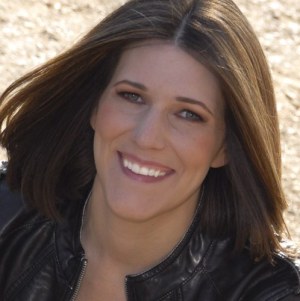
Jenny Martin

Jenny Martin

My debut novel, Tracked, recently hit shelves, and I’m often asked for advice about the publication process. How long did it take you to sell your book? Should I shelve this project? Should I keep going? Did you ever feel like giving up?

And so often, buried in these questions, there’s a palpable tremor of defeat. Of desperation and indecision and uncertainty. I hear it the writer’s voice. I read it in their words.

And it makes my heart clench. Every time.

Because I’ve been there. I’m still there, half the year. Yes, I’ve got a permanent sub-lease on that same space, a precarious little acreage between Epic Fail Valley and the Cliffs of Insanity. Maybe you’ve heard of the place, and season there, too?

If so, don’t fret. There’s hope, struggling writer. And while I may not always have the right answers to your questions, I can give some encouragement. So here it is—my advice to you:

1. If you’re struggling to succeed, you’re in good company.
Almost every single author I know has their own unique (yet somehow familiar) story of crushing heartbreak, setback, and rejection. I’m no exception. My agent was not my first agent. Tracked was not my first book. Tracked wasn’t even my first (or even second!) book on submission. What’s more, it almost didn’t sell. Then it almost didn’t make it through revisions. And to be painfully honest, every now and then, it’s still almost impossible to fight off the hydra-head monsters of fear and self-doubt. And if you’re battling those monsters, too, it just means you’re on the right path. Those tricky beasts only show up when you’re self-aware enough to grow as an artist. They smell your hunger for improvement, and they know exactly when you’re primed to level up. Yep. Naturally, that’s when they attack. So be aware, and embrace the fight. Push past it. You can do it. I’m rooting for you.

2. If you’re struggling to succeed, write the next book.
Or paint the next picture. Or sing the next song. The only way you’re ever going to move forward is to stop holding onto everything that’s rooted in yesterday’s ground. If a book isn’t working … if it’s getting rejected all over town, it might just be an eighty-thousand word clog in your creative drainpipe. It might be stoppering up the masterpiece you’re supposed to be starting right now. That book or whatever-whatchamacallit you’ve got now? It might be the project you need to set aside and revisit later, with new skills and new eyes. But of course, you’ll never know, unless you choose to start something new. Trust me. Begin again and rescue your tomorrow.

3. If you’re struggling to succeed, you need to get back up.
It’s normal to get knocked to the mat. It’s okay to get knocked to the mat. Pretty much everyone who’s ever tried anything has been knocked to the mat. More specifically, pretty much everyone who’s ever tried something great has been knocked to the mat at least a hundred times. And the people who achieve greatness? They’re the ones who kept getting back up, again and again. So if you’re there—right now, this second—give yourself a moment. Catch a breath and recover. Reassess and dust off your dreams. But then come up swinging. Scrap your way back onto your feet. Listen, you. You’re halfway to something great, just by answering the bell.

4. If you’re struggling to succeed, you’ll be prepared, when you do succeed.
All the rejections, all the tears, all the heartbreaking close calls … they will season you for the next challenge, the next goal, the next victory. Everything you’ve already faced, and will face … it all makes you tougher and fiercer and stronger. And oh, how you will cherish the victories, when they come. Each and every setback will sweeten them tenfold, while increasing your capacity for gratitude, compassion, and humility. And those victories will come. They are waiting for you, ahead.

So just keep going. I promise. You’ll see.

About Jenny Martin: author of debut novel TRACKED (May 2015, Dial/Penguin Random-House). Her book was praised by Publishers Weekly, Kirkus Reviews, and Bustle. Jenny is an author, librarian, and an experienced speaker, panelist and presenter who’s appeared at many conferences, events and festivals. She lives in the Dallas-Fort Worth area, with her husband and son, where she hoards books and writes fiction. And yes, she’s still on a quest for the perfect pancake.

Source: http://www.writersdigest.com/editor-blogs/guide-to-literary-agents/4-pieces-of-advice-for-struggling-writers?et_mid=781061&rid=239626420

Leave a comment

Filed under 2015, writing tip, Writing Tip Wednesday