

Sometimes
Sometimes, you beat the /
Tire with the typewriter to /
Get the words to come.
.
.
#haiku #poem #poetry #words #writing #writer #march #wednesday #2020 #tire #typewriter #typewriterpoetry #manuallabor #030420
Sometimes
Sometimes, you beat the /
Tire with the typewriter to /
Get the words to come.
.
.
#haiku #poem #poetry #words #writing #writer #march #wednesday #2020 #tire #typewriter #typewriterpoetry #manuallabor #030420
Filed under 2020, haiku, photo, poetry, poetry by author, Poetry by David E. Booker

Key
Ideas clattered /
Words against the emptiness /
Beating back decline.
.
.
#haiku #poem #poetry #poet #writing #writer #davidebooker #typewriter #key #february #monday #2020 #words #ideas #decline #emptiness #022420
Filed under 2020, haiku, photo, poem, poetry, poetry by author, Poetry by David E. Booker

Benched
Cane at a park bench. /
Borrowed book and found cap. /
Cold weather, warm words.
.
.
#haiku #poem #poetry #writing #writer #february #friday #2020 #davidebooker #park #bench #oldnorthknoxville #book #cane #knoxville #tennessee #oldnorthknoxvillepark #words #weather #020720

Haiku in the fall
Haiku in the fall. /
Stripped of ornamentation, /
words live sparingly.
.
.
#words #fall #live #haiku #ornamentation #poem #poetry #photo #davidebooker #oldnorthknoxville #november #friday #2021 #111221

Wings
Wings turned to the sun, /
spreading gentle hymns to the light. /
Spring songs without words.
.
.
#haiku #poem #poetry #sunlight #wings #hymn #light #song #sun #old north Knoxville #davidebooker #april #satuday #2021
Filed under 2021, haiku, photo by David E. Booker, Poetry by David E. Booker
From gigil to wabi-sabi and tarab, there are many foreign emotion words with no English equivalent. Learning to identify and cultivate these experiences could give you a richer and more successful life.
By David Robson / BBC Future
https://getpocket.com/explore/item/the-untranslatable-emotions-you-never-knew-you-had
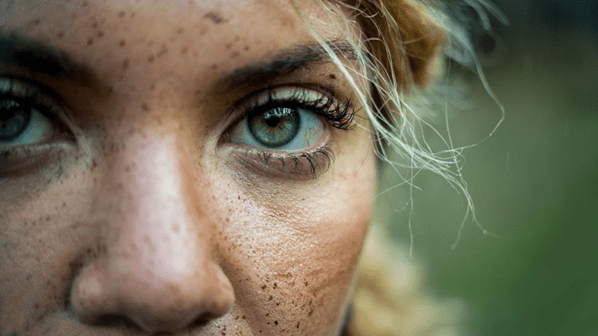
Have you ever felt a little mbuki-mvuki – the irresistible urge to “shuck off your clothes as you dance”? Perhaps a little kilig – the jittery fluttering feeling as you talk to someone you fancy? How about uitwaaien – which encapsulates the revitalising effects of taking a walk in the wind?
These words – taken from Bantu, Tagalog, and Dutch – have no direct English equivalent, but they represent very precise emotional experiences that are neglected in our language. And if Tim Lomas at the University of East London has his way, they might soon become much more familiar.
Lomas’s Positive Lexicography Project aims to capture the many flavours of good feelings (some of which are distinctly bittersweet) found across the world, in the hope that we might start to incorporate them all into our daily lives. We have already borrowed many emotion words from other languages, after all – think “frisson”, from French, or “schadenfreude”, from German – but there are many more that have not yet wormed their way into our vocabulary. Lomas has found hundreds of these “untranslatable” experiences so far – and he’s only just begun.
Learning these words, he hopes, will offer us all a richer and more nuanced understanding of ourselves. “They offer a very different way of seeing the world.”
Lomas says he was first inspired after hearing a talk on the Finnish concept of sisu, which is a sort of “extraordinary determination in the face of adversity”. According to Finnish speakers, the English ideas of “grit”, “perseverance” or “resilience” do not come close to describing the inner strength encapsulated in their native term. It was “untranslatable” in the sense that there was no direct or easy equivalent encoded within the English vocabulary that could capture that deep resonance.
Intrigued, he began to hunt for further examples, scouring the academic literature and asking every foreign acquaintance for their own suggestions. The first results of this project were published in the Journal of Positive Psychology last year.
Many of the terms referred to highly specific positive feelings, which often depend on very particular circumstances:
But others represented more complex and bittersweet experiences, which could be crucial to our growth and overall flourishing.
In addition to these emotions, Lomas’s lexicography also charted the personal characteristics and behaviours that might determine our long-term well-being and the ways we interact with other people.
You can view many more examples on his website, where there is also the opportunity to submit your own. Lomas readily admits that many of the descriptions he has offered so far are only an approximation of the term’s true meaning. “The whole project is a work in progress, and I’m continually aiming to refine the definitions of the words in the list,” he says. “I definitely welcome people’s feedback and suggestions in that regard.”
In the future, Lomas hopes that other psychologists may begin to explore the causes and consequences of these experiences – to extend our understanding of emotion beyond the English concepts that have dominated research so far.
But studying these terms will not just be of scientific interest; Lomas suspects that familiarising ourselves with the words might actually change the way we feel ourselves, by drawing our attention to fleeting sensations we had long ignored.
“In our stream of consciousness – that wash of different sensations feelings and emotions – there’s so much to process that a lot passes us by,” Lomas says. “The feelings we have learned to recognise and label are the ones we notice – but there’s a lot more that we may not be aware of. And so I think if we are given these new words, they can help us articulate whole areas of experience we’ve only dimly noticed.”
As evidence, Lomas points to the work of Lisa Feldman Barrett at Northeastern University, who has shown that our abilities to identify and label our emotions can have far-reaching effects.
Her research was inspired by the observation that certain people use different emotion words interchangeably, while others are highly precise in their descriptions. “Some people use words like anxious, afraid, angry, disgusted to refer to a general affective state of feeling bad,” she explains. “For them, they are synonyms, whereas for other people they are distinctive feelings with distinctive actions associated with them.”
This is called “emotion granularity” and she usually measures this by asking the participants to rate their feelings on each day over the period of a few weeks, before she calculates the variation and nuances within their reports: whether the same old terms always coincide, for instance.
Importantly, she has found that this then determines how well we cope with life. If you are better able to pin down whether you are feeling despair or anxiety, for instance, you might be better able to decide how to remedy those feelings: whether to talk to a friend, or watch a funny film. Or being able to identify your hope in the face of disappointment might help you to look for new solutions to your problem.
In this way, emotion vocabulary is a bit like a directory, allowing you to call up a greater number of strategies to cope with life. Sure enough, people who score highly on emotion granularity are better able to recover more quickly from stress and are less likely to drink alcohol as a way of recovering from bad news. It can even improve your academic success. Marc Brackett at Yale University has found that teaching 10 and 11-year-old children a richer emotional vocabulary improved their end-of-year grades, and promoted better behaviour in the classroom. “The more granular our experience of emotion is, the more capable we are to make sense of our inner lives,” he says.
Both Brackett and Barrett agree that Lomas’s “positive lexicography” could be a good prompt to start identifying the subtler contours of our emotional landscape. “I think it is useful – you can think of the words and the concepts they are associated with as tools for living,” says Barrett. They might even inspire us to try new experiences, or appreciate old ones in a new light.
It’s a direction of research that Lomas would like to explore in the future. In the meantime, Lomas is still continuing to build his lexicography – which has grown to nearly a thousand terms. Of all the words he has found so far, Lomas says that he most often finds himself pondering Japanese concepts such as wabi-sabi (that “dark, desolate sublimity” involving transience and imperfection). “It speaks to this idea of finding beauty in phenomena that are aged and imperfect,” he says. “If we saw the world through those eyes, it could be a different way of engaging in life.”
David Robson is BBC Future’s feature writer. He is @d_a_robson on Twitter.
 We all know people who talk with their hands. Turns out there’s quite a bit of research around the relationship between language and gestures.
Source: Why Do We Gesture When We Talk?
In the early 1970s, David McNeill, a psychology professor at the University of Chicago, was giving a talk in a Paris lecture hall when something odd caught his eye. There was a woman in the back of the room moving her arms in a way that seemed to convey exactly what he was saying. It took him a moment to realize that she was speaking, too, and another to realize that she was an interpreter, translating his words into French. For McNeill, that moment of confusion sparked an insight that would lead to a lifetime of research: Gesture and speech are not as separate as they seem.
Gesture researchers have spent the past 40+ years uncovering how movements (like a cupped hand rotating in space or a finger tracing a path through the air) are intimately tied to speech. Regardless of their spoken language or culture, humans gesture when they talk. They gesture even if they have never seen gestures before—people who have been blind since birth do it—and they gesture even if they’re talking to someone on the phone and know no one can see them. When speech is disrupted—by stuttering, for example—so is gesture.
In fact, gesture is so tightly bound to language that differences between languages show up as subtle differences in gesture. Whether a language puts information on the verb (“He flies out” in English), or on a particle outside the verb (“He exits flying,” in Spanish) will affect where the gesture for “flying” appears. In English, it will last only for the duration of the spoken verb: flies. But in Spanish, it will spread over the whole sentence, or even multiple sentences. In other words, the way you package your thoughts into speech is also how you package them into movement.
Researchers are especially interested in the times when gestures don’t match speech. The mismatch can be a valuable window to what’s going on in the mind. Susan Goldin-Meadow, another University of Chicago psychologist, has led a decades-long investigation of so-called speech-gesture mismatches. For example, until about 7 years of age, children don’t understand that if you pour a tall glass of water into a shorter, wider glass, the amount of water stays the same. They think the shorter glass contains less water. When asked to explain their reasoning, some children will say, “This one is shorter,” while gesturing that the glass is wider. That discrepancy shows they subconsciously grasp that both dimensions are important. Teachers who can spot these mismatches can tell when a student is ready to understand the relationship between height, width, and volume.
When we speak, we put our thoughts into words, and when we gesture, we put our thoughts into our hands. But gestures don’t just show what we’re thinking—they actually help us think. Toddlers who are encouraged to gesture tend to start producing more words. Adults involved in various problem-solving tasks do better when they are encouraged to gesture. There is something about putting ideas into motions that brings us closer to grasping what we need to grasp. In a way, what really caught McNeill’s attention in that Paris auditorium was a sideways glimpse, filtered through another language and another mind, of his very own thoughts.
Arika Okrent is a linguist, and author of In the Land of Invented Languages. She is living in Chicago, doing her part to fight off the cot-caught merger and keep “gym shoes” alive.



 Booker's Blog