
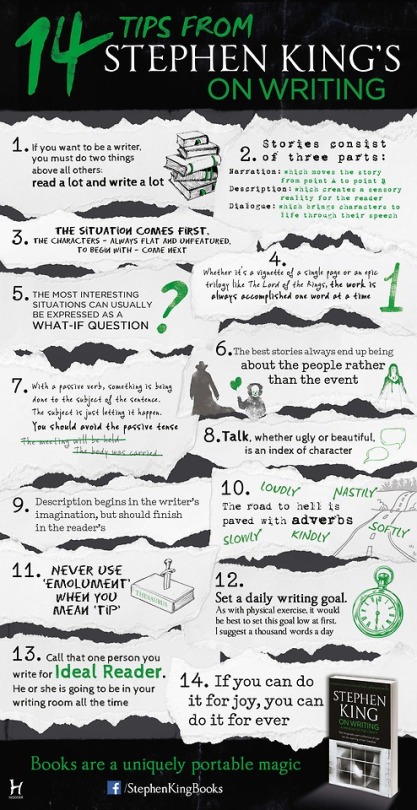
Don’t expect it to be easy and sometimes it won’t be fun, but it is largely up to you how far you go and how well you do, and most of the tools are easily obtainable. Don’t forget to stretch your back while stretching your mind.
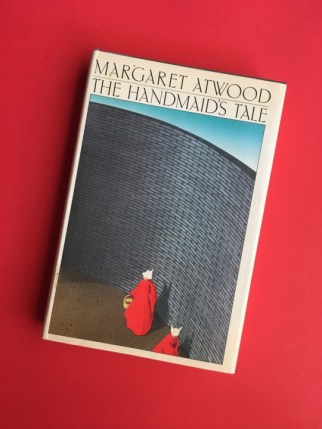 take two pencils.
Filed under 2018, writing tip, Writing Tip Wednesday


Date: June 10 -15, 2018 at Hollins University in Roanoke, VA. Details at www.hollins.edu/tmww.
From novice to advanced. Since 2005, Tinker Mountain Writers has been nuturing and empowering writers though workshops in poetry, fiction, and nonfiction.
Filed under 2018, writing tip, Writing Tip Wednesday
Wergle Flomp Humor Poetry Contest (no fee)Ends on April 1, 2018Submit one humor poem, up to 250 lines. First prize of $1,000 and second prize of $250. Ten Honorable Mentions will receive $100 each. The top 12 entries will be published online. There is no fee to enter. Judge: Jendi Reiter, assisted by Lauren Singer. In addition to English, your poem may contain inspired gibberish. You may submit published or unpublished work. Please omit your name from your entries. We prefer 12-point type or larger. Please avoid fancy, hard-to-read fonts.Please submit only one poem to this contest.
Source: Winning Writers Submission Manager – Wergle Flomp Humor Poetry Contest (no fee)
Ends on April 1, 2018
In addition to English, your poem may contain inspired gibberish. You may submit published or unpublished work. Please omit your name from your entries. We prefer 12-point type or larger. Please avoid fancy, hard-to-read fonts.
Please submit only one poem to this contest.
Filed under 2018, Writing Tip Wednesday
Cat in the shadows, /
deciding friend or foe. /
Will she feed me?
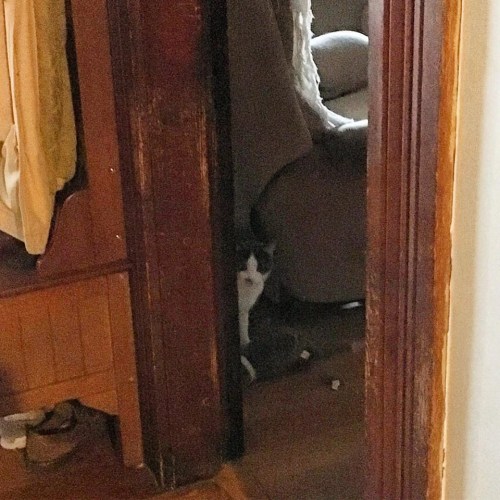
Filed under 2018, photo by David E. Booker, poetry by author
Made a New Year resolution to start writing that novel? Take some writing tips from Leo Tolstoy, Muriel Spark, John Steinbeck and other famous authors
Source: Buy a cat, stay up late, don’t drink: top 10 writers’ tips on writing | Books | The Guardian

Made a New Year resolution to start writing that novel? Take some writing tips from Leo Tolstoy, Muriel Spark, John Steinbeck and other famous authors
Source: Buy a cat, stay up late, don’t drink: top 10 writers’ tips on writing | Books | The Guardian
Over the past year, Helen Gordon and I have been putting together Being a Writer, a collection of musings, tips and essays from some of our favourite authors about the business of writing, ranging from the time of Samuel Johnson and Grub Street, to the age of Silicon Roundabout and Lorrie Moore.
Researching the book, it quickly became obvious that there isn’t a correct way to set about writing creatively, which is a liberating thought. For every novelist who needs to isolate themselves in a quiet office (Jonathan Franzen), there’s another who works best at the local coffee shop (Rivka Galchen) or who struggles to snatch an hour between chores and children (a young Alice Munro).
Conversely, it also became apparent that alongside all this variety of approach, there are certain ideas and pieces of advice that many writers hold in common. In an 1866 letter to Mrs Brookfield, Charles Dickens suggests that: “You constantly hurry your narrative … by telling it, in a sort of impetuous breathless way, in your own person, when the people [characters] should tell it and act it for themselves.” Basically: SHOW DON’T TELL. Three words that will be familiar to anyone who has sat in a 21st-century creative writing class.
Our book therefore contains a lot of writing advice, ranging from the sternly practical to the gloriously idiosyncratic. We have writers talking about what went wrong, as well as what went right. They discuss failing to finish a manuscript, failing to find a publisher, badly realised characters and tortuous, unwieldy plots. Here are a just few of our favourite tips, which we believe any aspiring writer should take to heart.

Or stay up late as HP Lovecraft did: “At night, when the objective world has slunk back into its cavern and left dreamers to their own, there come inspirations and capabilities impossible at any less magical and quiet hour. No one knows whether or not he is a writer unless he has tried writing at night.”
Filed under 2018, writing tip, Writing Tip Wednesday

Wergle Flomp Humor Poetry Contest (no fee)
Ends on April 1, 2018
Submit one humor poem, up to 250 lines. First prize of $1,000 and second prize of $250. Ten Honorable Mentions will receive $100 each. The top 12 entries will be published online. There is no fee to enter. Judge: Jendi Reiter, assisted by Lauren Singer.
In addition to English, your poem may contain inspired gibberish. You may submit published or unpublished work. Please omit your name from your entries. We prefer 12-point type or larger. Please avoid fancy, hard-to-read fonts.
Please submit only one poem to this contest.
Source and further details: https://winningwriters.submittable.com/submit/58279/wergle-flomp-humor-poetry-contest-no-fee
Filed under 2017, contest, writing tip, Writing Tip Wednesday
by Lisa Lepki
 Writers must write every day. That’s the mantra. Authors ranging from Ray Bradbury to Ernest Hemingway to Doris Lessing all propound the necessity of writing daily. But the thing is, writers are also humans, and many humans have an irksome desire to procreate. And those tiny humans that arrive into the writer’s well-constructed, disciplined, every day writing routine are selfishly indifferent to this mantra. Indeed, they sometimes seem to be doing everything they can to sabotage your great writing effort. So, here are 6 ways to keep your baby brain from turning to mush when you are sleep deprived and elbow-deep in poopy diapers.
This exhaustion and constant state of panic won’t go on forever – I promise. There will come a time when you are once again able to sit down and write. Until then, get planning. I’m sure you have some ideas floating around in your head that you have never given your full attention. Remember that novel about the perfect crime that you always wanted to write? Even if the words aren’t flowing, you can still be thinking about the elements of the story and how they work together. Apps like Scrivener and The Novel Factory have cork boards where you can jot down notes about your plot or your characters so that when you go back to them, lots of the puzzle pieces will already be in place.
OK, I know that all the parenting books tell mothers to sleep when their babies sleep. But we are writers. And sometimes writing feels more important than sleep (not always, believe me!). J.K. Rowling once said “Sometimes you have to get your writing done in spare moments here and there.” Yes! And sometimes you get lucky. My first baby slept for about 2 hours every morning (Lucky cow, I hear you saying. Don’t worry. Karma got me back with my sleep-hating baby number two). There was always a ton of boring baby admin to be done—laundry, sterilizing, food prep, etc.—but I decided I would always allow myself a few minutes of writing even if it meant some things didn’t get done. Sometimes a glorious hour or more! I had to fight the guilt that came along with my partner coming home to a messy house or an uncooked dinner, but I knew that I needed those moments for myself and my writing. The mantra “happy wife equals happy life” was one I clung on to. So although it may be unrealistic to write for the full amount of time your baby sleeps, allow yourself some of it, as often as you need it.
Sometimes the pressure of trying to think creatively feels like too much when you have been up all night with a screamer. When I was too tired to come up with a single original thought, I dug out some of my writing from the past few years and revisited it. Everyone has those stories that just kind of petered out. Going back, I was amazed to find some gems among the (mostly) tedious pieces. Now that I had some distance, I could see the elements that needed to be cut. I could see inconsistencies where I hadn’t before. ProWritingAid would highlight my ridiculously long, overcomplicated sentences and I would easily be able to fix them when they had confounded me before. Weirdly, I was quite a good editor in my sleep-deprived state, even if I had trouble creating anything new.
My second baby didn’t sleep during the day unless we were walking her around in her stroller. This meant that I spent hours each week wandering the streets and parks of my neighbourhood. Not so conducive to writing. So, instead I tried to keep my brain alive by listening to audio books. There are so many amazing audio books out there and some books are even better that way. Autobiographies, for example. A huge number of inspirational people read their own autobiographies now and it can feel like listening to a friend reminiscing about their own life.
There are a bunch of great apps that take dictation while you are on the move. This, again, is great when you are mandated by your small dictator to spend hours a day walking with a stroller. These days, all kinds of people walk in headphones talking into their phones, so you don’t even look like a crazy person as you talk to yourself in public. I found it really useful to flesh out characters’ back stories or build timelines. The apps didn’t always get my words completely right, but at least I had a record of my thoughts and could build on that.
For every baby issue, there are 5 different opinions on how to make it better. And when you are in the thick of it, it feels like your decision about which sleep technique to embrace will affect you and your child’s well-being FOREVER! (It won’t, by the way. It’s just one of a thousand factors in your child’s upbringing, so don’t castigate yourself unduly over it.) I was completely overwhelmed with information, most of which completely contradicted each other. It was only when I sat down and wrote about my confusion that I managed to make sense of it all. This is a great skill that we have as writers. We can take mushy ideas from in our heads and get them into some kind of comprehensible form on the page. Use that skill. It helps make these decisions easier and it exercises your writing muscles so that they don’t atrophy completely.
These days, my kids are aged 3 and 5, and we all sleep like normal human beings. Mostly. I still don’t have much spare time, but Peppa Pig allows me to have at least a few minutes during the days when I’m not at work (thanks, Peppa!) and, after the kids are tucked away in bed, my brain is well-rested enough to do some proper writing in the evenings. I’m not quite back to my full every day routine, but I can see a light at the end of the tunnel. So don’t get discouraged if you aren’t managing to write every day. It doesn’t have to be all or nothing. Figure out what works for you right now and embrace it.
___
Lisa Lepki. When she is not chasing her two noise-machines around the house, Lepki is a communications consultant and indie author. A word nerd, she loves the technical elements of writing almost as much as the writing itself. Currently she is helping other writers embrace the editing process through her work with prowritingaid.com.
Her writing can also be found on bookbaby.com, The Write Life, and DIYAuthor.
Filed under 2017, writing tip, Writing Tip Wednesday
 Discovering the best in fiction, essays, and poetry
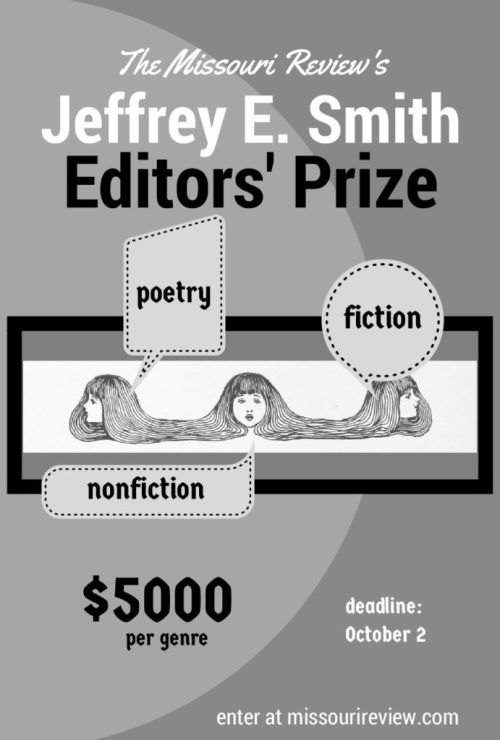
Source: The Missouri Review » Jeffrey E. Smith Editors’ Prize
DEADLINE: October 2, 2017
Winners receive publication, invitation to a reception and reading in their honor, and a cash prize.

Winners will be announced in early 2018.
Questions? E-mail contest_question@moreview.com.
Read a prizewinning story by Melissa Yancy, an essay by Peter Selgin, and a selection from poetry winners Katie Bickham, Kai Carlson-Wee, and Alexandra Teague.
27th Annual Jeffrey E. Smith Editors’ Prize$5,000 Fiction | $5,000 Nonfiction | $5,000 Poetry DEADLINE: October 2, 2017Winners receive publication, invitation to a reception and reading in their honor, and a cash prize.Guidelines Submit one piece of fiction or nonfiction up to 8,500 words or any number of poems up to 10 pages. Please double-space fiction and nonfiction entries. Multiple submissions and simultaneous submissions are welcome, but you must pay a separate fee for each entry and withdraw the piece immediately if accepted elsewhere. Entries must be previously unpublished. Entry fee: $22 Each entrant receives a one-year subscription to the Missouri Review in digital format (normal price $24) and a paperback copy of the first title of our new imprint, Missouri Review Books, The Trail of the Demon by Jane Gillette (normal price $14.95).Eligibility Previous winners of the Editors’ Prize and current University of Missouri students and faculty are ineligible. Previous Editors’ Prize finalists are welcome to enter again.Submit Online By mailWinners will be announced in early 2018.Questions? E-mail contest_question@moreview.com.Read a prizewinning story by Melissa Yancy, an essay by Peter Selgin, and a selection from poetry winners Katie Bickham, Kai Carlson-Wee, and Alexandra Teague.
Source: The Missouri Review » Jeffrey E. Smith Editors’ Prize
Filed under 2017, contest, Writing Tip Wednesday


 Booker's Blog