I rarely give a book five stars, because that would mean it is perfect. While this book is not perfect, it deserves its high rating because of the focus, the breath, and the aim of the book. Part social history. part commentary. This review of American exceptionalism (in both senses of the word) is based around the concept of what Andersen refers to as the Fantasy Industrial Complex, and how for both good and ill, that complex has shaped America, and how, at present, it is undoing America. The style of the book is readable. It is far from a “dry tome.” It goes back as far as the Puritans and comes up to the present and the election of the Fools Gold president currently occupying the Oval Office. A book worth your time.
The multimillion dollar brain training industry is under attack. In October 2014, a group of over 100 eminent neuroscientists and psychologists wrote an open letter warning that “claims promoting brain games are frequently exaggerated and at times misleading.” In 2016, industry giant Lumosity was fined $2m, and ordered to refund thousands of customers who were duped by false claims that the company’s products improve general mental abilities and slow the progression of age-related decline in mental abilities. And a recent review examining studies purporting to show the benefits of such products found “little evidence … that training improves improves everyday cognitive performance.”
While brain training games and apps may not live up to their hype, it is well established that certain other activities and lifestyle choices can have neurological benefits that promote overall brain health and may help to keep the mind sharp as we get older. One of these is musical training. Research shows that learning to play a musical instrument is beneficial for children and adults alike, and may even be helpful to patients recovering from brain injuries.
“Music probably does something unique,” explains neuropsychologist Catherine Loveday of the University of Westminster. “It stimulates the brain in a very powerful way, because of our emotional connection with it.”
Playing a musical instrument is a rich and complex experience that involves integrating information from the senses of vision, hearing, and touch, as well as fine movements, and learning to do so can induce long-lasting changes in the brain. Professional musicians are highly skilled performers who spend years training, and they provide a natural laboratory in which neuroscientists can study how such changes – referred to as experience-dependent plasticity – occur across their lifespan.
Changes in brain structure
Early brain scanning studies revealed significant differences in brain structure between musicians and non-musicians of the same age. For example, the corpus callosum, a massive bundle of nerve fibres connecting the two sides of the brain, is significantly larger in musicians. The brain areas involved in movement, hearing, and visuo-spatial abilities also appear to be larger in professional keyboard players. And, the area devoted to processing touch sensations from the left hand is increased in violinists.
These studies compared data from different groups of people at one point in time. As such, they could not determine whether the observed differences were actually caused by musical training, or if existing anatomical differences predispose some to become musicians. But later, longitudinal studies that track people over time have shown that young children who do 14 months of musical training exhibit significant structural (pdf) and functional brain changes (pdf) compared to those who do not.
Together, these studies show that learning to play a musical instrument not only increases grey matter volume in various brain regions, but can also strengthen the long-range connections between them. Other research shows that musical training also enhances verbal memory, spatial reasoning, and literacy skills, such that professional musicians usually outperform non-musicians on these abilities.
Long-lasting benefits for musicians
Importantly, the brain scanning studies show that the extent of anatomical change in musicians’ brains is closely related to the age at which musical training began, and the intensity of training. Those who started training at the youngest age showed the largest changes when compared to non-musicians.
Even short periods of musical training in early childhood can have long-lasting benefits. In one 2013 study, for example, researchers recruited 44 older adults and divided them into three groups based on the level of formal musical training they had received as children. Participants in one group had received no training at all; those in the second had done a little training, defined as between one and three years of lessons; and those in the third had received moderate levels of training (four to 14 years).
The researchers played recordings of complex speech sounds to the participants, and used scalp electrodes to measure the timing of neural responses in a part of the auditory brainstem. As we age, the precision of this timing deteriorates, making it difficult to understand speech, especially in environments with a lot of background noise. Participants who had received moderate amounts of musical training exhibited the fastest neural responses, suggesting that even limited training in childhood can preserve sharp processing of speech sounds and increase resilience to age-related decline in hearing.
Unlike commercial brain training products, which only improve performance on the skills involved, musical training has what psychologists refer to as transfer effects – in other words, learning to play a musical instrument seems to have a far broader effect on the brain and mental function, and improves other abilities that are seemingly unrelated.
“Music reaches parts of the brain that other things can’t,” says Loveday. “It’s a strong cognitive stimulus that grows the brain in a way that nothing else does, and the evidence that musical training enhances things like working memory and language is very robust.”
Learning to play a musical instrument, then, seems to be one of the most effective forms of brain training there is. Musical training can induce various structural and functional changes in the brain, depending on which instrument is being learned, and the intensity of the training regime. It’s an example of how dramatically life-long experience can alter the brain so that it becomes adapted to the idiosyncrasies of its owner’s lifestyle.
“Why is so much writing so hard to understand? Why must a typical reader struggle to follow an academic article, the fine print on a tax return, or the instructions for setting up a wireless home network?”
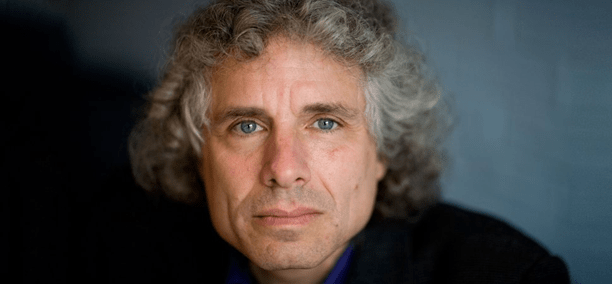
These are questions Harvard psychologist Steven Pinker asks in his book, The Sense of Style: The Thinking Person’s Guide to Writing in the 21st Century. They’re questions I’ve often encountered –and attempted to tackle– throughout my career as a business writer and editor. Whenever I see writing that is loaded with jargon, clichés, technical terms, and abbreviations, two questions come immediately to mind. First, what is the writer trying to say, exactly? And second, how can the writer convey her ideas more clearly, without having to lean on language that confuses the reader?
For Pinker, the root cause of so much bad writing is what he calls “the Curse of Knowledge”, which he defines as “a difficulty in imagining what it is like for someone else not to know something that you know. The curse of knowledge is the single best explanation I know of why good people write bad prose.”
“Every human pastime –music, cooking, sports, art, theoretical physics –develops an argot to spare its enthusiasts from having to say or type a long-winded description every time they refer to a familiar concept in each other’s company. The problem is that as we become proficient at our job or hobby we come to use these catchwords so often that they flow out of our fingers automatically, and we forget that our readers may not be members of the clubhouse in which we learned them.”
People in business seem particularly prone to this “affliction.” You could argue that business has developed its own entirely unique dialect of English. People are exposed to an alphabet soup of terms and acronyms at business school, which they then put into use in their day-to-day interactions once they enter the working world.
And what starts out as a means of facilitating verbal communication between people becomes the primary mode with which people communicate their ideas in writing, from email to chat apps to business proposals and presentations.
“How can we lift the curse of knowledge?” asks Pinker. “A considerate writer will…cultivate the habit of adding a few words of explanation to common technical terms, as in ‘Arabidopsis, a flowering mustard plant,’ rather than the bare ‘Arabidopsis.’ It’s not just an act of magnanimity: A writer who explains technical terms can multiply her readership a thousandfold at the cost of a handful of characters, the literary equivalent of picking up hundred-dollar bills on the sidewalk.”
“Readers will also thank a writer for the copious use of for example, as in, and such as, because an explanation without an example is little better than no explanation at all.”
Whenever I write a sentence that makes me pause and wonder about what it means, I assume that other readers might react in the same way. If a sentence is not clear to me, it might not be clear to others. It’s an approach that I recommend to anyone who is trying to improve his own writing.
Before hitting publish and sending your writing out to the world, it’s better to be honest with yourself about how much your reader is likely to understand a given passage or sentence. Before you commit your writing to print– or to the internet– take a few moments to make sure that what you write is clear and understandable by as many of your intended readers as possible.
As Richard Feynman, the Nobel prize-winning physicist, once wrote, “If you ever hear yourself saying, ‘I think I understand this,’ that means you don’t.”
You wouldn’t think a slim volume with eye-catching illustrations would wait on the shelf so long before being read, but that’s what happened. This mostly picture book has a simple message: that if we acted more in the manner of the best qualities of our dogs, the world would be a better place. Kindness, concern, and service to others. A good book for young readers and older ones as well to take to heart.
While not directly related to writing, I thought I would pass along. I don’t endorse any of these suggestions, and some I don’t agree with, such as coffee. Some or all might work for you.
Your morning routine is like setting up a string of dominoes: You line everything up for success, but one false move can cause it all to come tumbling down. In order to set the right tone for the rest of your day, experts say you should adjust the following seven habits.
Hitting the Snooze Button
It’s tempting to steal a few more minutes of sleep, but hitting snooze has a negative impact on your physical and emotional well-being, says Joanna Kleinman, owner of The Center for Extraordinary Relationships. “Physically, hitting the snooze button actually sets you up to be groggy and less productive because you are repeatedly waking yourself out of a deep sleep,” Kleinman says. “Emotionally, you set yourself up to be late, rushed, and stressed in the morning.”
The obvious solution, Kleinman says, is getting out of bed right away (even if it seems impossible). “If we listen to our minds telling us what we feel like doing, we will never be able to make the positive changes we need to,” Kleinman says.
Checking Your Phone
Doing this first thing in the morning stimulates self-criticism and judgments in your mind, Kleinman says. “Your emails and texts are all about things to do, things to buy, things to add to your to-do list,” she says. “This amounts to either the stuff that other people want you to be paying attention to, or what your mind says you should be paying attention to.”
Even if you leave your inbox alone and stick to Instagram, you can do harm to your psyche because social media causes you to compare yourself to other people. Bottom line: Checking your phone first thing can awaken your inner critic. To stop yourself from opening Twitter immediately after turning off your alarm, charge your phone in another room. Begin your day instead with a self-affirming habit like journaling or meditation.
Planning Your Day
If you wake up and have no idea what’s on your schedule, where you have to be, or what you’re going to wear, then your day is already off to a frantic start. Psychologist and Certified Master Coach Joel Ingersoll recommends organizing your day the night before. This way, you’ll feel refreshed and ready to go in the morning.
Drinking Water…
You may be craving a cup of coffee as soon as your feet hit the floor, but what your body really needs is a glass of water, Ingersoll says. Since you haven’t had any liquids in your system for at least six (or hopefully eight) hours, your body is dehydrated. You can have the coffee (see below), but your body will function better—you’ll have fewer headaches, less fatigue, and smaller bags under your eyes—if you down a glass of water first, Ingersoll says.
…and Coffee
Don’t feel guilty about reaching for the coffee pot after you’ve had your water—it is actually good for your body, too, says Ilyse Schapiro, a Registered Dietitian and Certified Dietitian/Nutritionist. “Coffee is a great source of antioxidants, and it can increase energy as well as help to stabilize our moods,” Schapiro says. “It can also help keep our brains healthier and our minds sharper.”
Too much coffee isn’t going to do you any favors, though. Stick with one or two cups a day, and be consistent with how much you drink, or else you’ll start getting headaches and withdrawal symptoms.
Skipping Breakfast
Have you been told to eat a good breakfast before? That’s because it’s important, says Bruno LoGreco, life coach and author of Stop Sabotaging Your Life. “Eating a healthy breakfast consisting of nuts, fruits, and oats will satisfy your brain to get you through a tough day at the office,” LoGreco says. It’s best to skip the doughnuts and croissants, though, as these will give you a sugar high and set you up for a crash just as you reach your desk.
Rising Early
A study published by the American Psychological Association found that early risers are happier and more successful than those who go to bed late. They tend to be more proactive, get better grades, and better anticipate and minimize problems.
Danielle Braff is a freelance writer in Chicago. Her work has appeared in the Chicago Tribune, Crain’s Chicago Business, Women’s Health, Self and Marie Claire, among others. She lives with her husband, their two daughters, two cats and a dog. Check out her other work at Daniellebraff.com.
Rhetoric is often defined as “the art of language.” That might sound like a bit of a cliché (which it is), but it’s actually quite a nice way of saying that rhetorical devices and figures of speech can transform an ordinary piece of writing or an everyday conversation into something much more memorable, evocative, and enjoyable. Hundreds of different rhetorical techniques and turns of phrase have been identified and described over the centuries—of which the 21 listed here are only a fraction—but they’re all just as effective and just as useful when employed successfully.
Adynaton
You’ll no doubt have heard of hyperbole, in which an over-exaggeration is used for rhetorical effect, like, “he’s as old as the hills,” “we died laughing,” or “hyperbole is the best thing ever.” But adynaton is a particular form of hyperbole in which an exaggeration is taken to a ridiculous and literally impossible extreme, like “when pigs fly!” or “when Hell freezes over!”
Anacoluthon
Often used in literature to create a stream-of-consciousness style in which a character’s thoughts flit from one idea to the next, anacoluthon describes a sudden and unexpected break in a sentence that leads to it being concluded in a different way than might have been expected. Although it can sometimes be due to nothing more than a speaker losing their train of thought, in practice anacoluthon can also be OH MY GOD I’VE LEFT THE GAS ON.
Anadiplosis
Anadiplosis is an ingenious and memorable rhetorical device in which a repeated word or phrase is used both at the end of one sentence or clause and at the beginning of the next. As with practically all rhetorical devices, William Shakespeare liked using it (“She being none of your flesh and blood, your flesh and blood has not offended the king”), but you can thank George Lucas for what is now probably the best-known example: “Fear leads to anger. Anger leads to hate. Hate leads to suffering.”
Anthypophora
You know when you pose a question for dramatic effect and then immediately answer it yourself? That’s anthypophora.
Antimeria
If you’ve ever friended or texted someone, emailed or DMed something, tabled a meeting or motorwayed your way across country, then you’ll be familiar with antimeria, a rhetorical device in which an existing word is used as if it were a different part of speech. More often than not this involves using a noun as if it were a verb, a semantic process better known as “verbing” (which is actually a perfect example of itself). Slang (and modern English in general, for that matter) loves antimeria, but it is Shakespeare who remains the undisputed master of it. Cake, drug, kitchen, squabble, ghost, blanket, graze, elbow, and crank were all only ever used as nouns before he got hold of them.
Antiprosopopoeia
Prosopopoeia is just a more formal name for personification, in which inanimate objects are either described in human terms or given human characteristics. The opposite of that is antiprosopopoeia, a figure of speech in which a person is compared to an inanimate object. That might sound odd, but it’s actually a very effective form of metaphor able to confer a great deal of detail or information in a clever and often witty way—think about what it means to call someone a doormat, a tank, a firecracker, a mattress, or a garbage disposal and you’ll see precisely how effective it can be.
Antonomasia
The Bard. The Iron Lady. The King. Ol’ Blue Eyes. When you substitute a proper name for an epithet or a nickname, that’s antonomasia.
Aposiopesis
In Act 2 of King Lear, the eponymous king rages against two of his daughters in a disjointed speech that ends with the famous lines, “I will have such revenges on you both that all the world shall—I will do such things—what they are yet, I know not, but they shall be the terrors of the earth!” The point at which Lear’s threat of revenge trails off, restarts, and trails off again is a perfect example of aposiopesis, a rhetorical ploy in which an idea is left unsaid or a sentence is left incomplete purely for emphatic effect. Why I oughta…
Asterismos
Right. Okay. Here goes. Asterismos is the use of a seemingly unnecessary word or phrase to introduce what you’re about to say. Semantically it’s fairly pointless to say something like “listen!” before you start talking to someone, because they are (or at least should be) already listening. Rhetorically, however, asterismos is a seriously clever way of subconsciously drawing attention to what you’re about to say.
Asyndeton
“We got there, the weather was bad, we didn’t stay long, we got back in the car, we came home, end of story.” When you deliberately miss out the conjunctions between successive clauses, you’re left with a choppy and abrupt series of phrases that energetically push things forward, an effect properly known as asyndeton. The opposite is called polysyndeton, when you add more conjunctions to a phrase or clause than are strictly necessary, often with the effect of intentionally dragging it out: “We ate and drank and talked and laughed and talked and laughed and ate some more.”
Chiasmus
Apart from the fact that it’s part of a great speech, one of the reasons why John F. Kennedy’s famous “ask not what your country can do for you, ask what you can do for your country” line is so striking is that is a fine example of chiasmus, a clever rhetorical formation in which the order of a pair of words or phrases in one clause (your country, you) is inverted in the next (you, your country). This gives a rhythmic and instantly memorable criss-cross pattern, AB-BA, which appropriately enough takes its name from the X-shaped Greek letter chi.
Congery
Congery is a form of tautology, the rhetorical use of repetition. It refers to a writer or speaker using a number of different and successive words or phrases that all effectively mean the same thing, purely to emphasise the point. That’s it. That’s all. Done. Finished. Finito.
Dialogismus
In a dialogismus, a speaker either imagines what someone or something else might be thinking (“I bet that guy’s thinking, ‘what am I doing here?’”), or else paraphrases someone’s earlier words (“‘Don’t worry!’ she told me. ‘Everything will be fine!’”). In either case, the speaker ends up talking not as themselves just for rhetorical effect.
Dysphemism
If a euphemism is a nicer turn of phrase used in place of a more offensive or embarrassing one (like “call of nature” or “bought the farm”), then a dysphemism is an offensive or detrimental phrase deliberately used in place of a nicer one. This applies to everything from using an insult instead of someone’s name, to phrases like frankenfood and junk food that try to influence what we should think of genetically modified crops and take-out restaurants with just a few choice words.
Eutrepismus
First, we need to explain what this is. Second, we need to show how it works. And third, we need to explain what it achieves. Eutrepismus is the numbering or ordering of a series of phrases that are all under consideration, and it’s used to structure arguments and speeches more clearly, making them easier for an audience to take in and follow your train of thought.
Expeditio
An expeditio is that instantly recognisable figure of speech in which you list a number of alternatives, and then proceed to eliminate all but one of them. “We can go for Italian, Mexican, or Chinese. But I had Chinese last night and you hate garlic, so it’s going to have to be Mexican.”
Hypocatastasis
When you say that something is like something else (“as busy as a bee”), that’s a simile. When you say that something actually is something else (“a heart of stone”) that’s a metaphor. But when you just go all out and label something as something that it actually isn’t (“You chicken!”), that’s a hypocatastasis.
Pleonasm
When you use more words than are in actual fact absolutely really strictly necessary in order to communicate and make your point effectively and efficiently, that’s a pleonasm. It needn’t be as clumsy and as long-winded as that, of course, and more often than not the term pleonasm is used to apply to what is otherwise called “semantic redundancy,” in which extra qualifying words are used to force a point home—like “empty space,” “boiling hot,” or “totally unique.”
Synecdoche
A synecdoche is a figure of speech in which a part or component of something is used to represent that whole—like calling a car your “wheels,” the staff of a company the “hands,” or the film industry as a whole “Hollywood.”
Tmesis
Tmesis is the proper name for that fan-bloody-tastic technique of splitting a word in half by inserting another word inside it. More often than not, the word being inserted in the other is a swearword (you can provide your own examples for that), but it needn’t always be—tmesis can be used any-old-how you like.
Zeugma
There are several different forms and definitions of precisely what a zeugma is, but in basic terms it describes a figure of speech in which one word (usually, but not always, a verb) governs or is directly related to two or more other words in the same sentence. So you can run out of time, and out of the room. You can have a go, and a laugh. And, to paraphrase Charles Dickens, you can go home in floods of tears and a sedan-chair.
Paul Anthony Jones is a writer and musician from Newcastle upon Tyne. He is the author of word origins guide Haggard Hawks and Paltry Poltroons, and runs its tie-in Twitter account @HaggardHawks.
Practicing for countless hours before we can be good at something seems burdensome and boring. Maybe that’s why we’re drawn to stories of instant achievement.
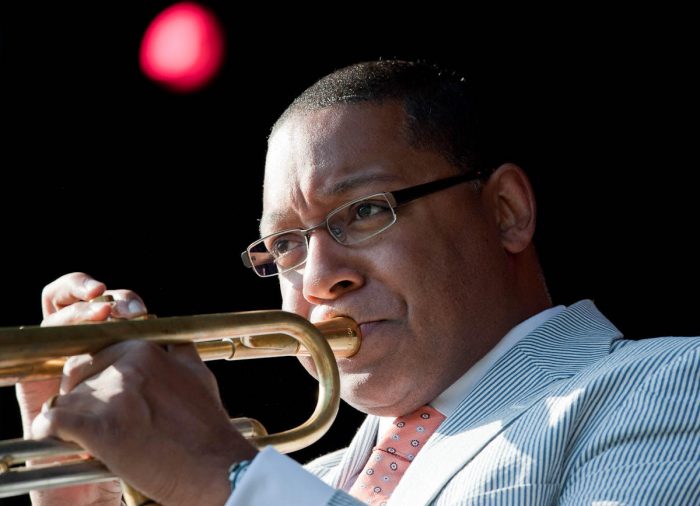
Practicing for countless hours before we can be good at something seems burdensome and boring. Maybe that’s why we’re drawn to stories of instant achievement. The monk realizes satori (and Neo learns kung fu); the superhero acquires great power out of the blue; Robert Johnson trades for genius at the crossroads. At the same time, we teach children they can’t master a skill without discipline and diligence. We repeat pop psych theories that specify the exact number hours required for excellence. The number may be arbitrary, but it comforts us to believe that practice might, eventually, make perfect. Because in truth we know there is no way around it. As Wynton Marsalis writes in “Wynton’s Twelve Ways to Practice: From Music to Schoolwork,” “practice is essential to learning music—and anything else, for that matter.”
For jazz musicians, the time spent learning theory and refining technique finds eloquent expression in the concept of woodshedding, a “humbling but necessary chore,” writes Paul Klemperer at Big Apple Jazz, “like chopping wood before you can start the fire.”
Yet retiring to the woodshed “means more than just practicing…. You have to dig deep into yourself, discipline yourself, become focused on the music and your instrument.” As beginners, we tend to look at practice only as a chore. The best jazz musicians know there’s also “something philosophical, almost religious” about it. John Coltrane, for example, practiced ceaselessly, consciously defining his music as a spiritual and contemplative discipline.
Marsalis also implies a religious aspect in his short article: “when you practice, it means you are willing to sacrifice to sound good… I like to say that the time spent practicing is the true sign of virtue in a musician.” Maybe this piety is intended to dispel the myth of quick and easy deals with infernal entities. But most of Marsalis’ “twelve ways to practice” are as pragmatic as they come, and “will work,” he promises “for almost every activity—from music to schoolwork to sports.” Find his abridged list below, and read his full commentary at “the trumpeter’s bible,” Arban’s Method.
Seek out instruction: A good teacher will help you understand the purpose of practicing and can teach you ways to make practicing easier and more productive.
Write out a schedule: A schedule helps you organize your time. Be sure to allow time to review the fundamentals because they are the foundation of all the complicated things that come later.
Set goals: Like a schedule, goals help you organize your time and chart your progress…. If a certain task turns out to be really difficult, relax your goals: practice doesnʼt have to be painful to achieve results.
Concentrate: You can do more in 10 minutes of focused practice than in an hour of sighing and moaning. This means no video games, no television, no radio, just sitting still and working…. Concentrated effort takes practice too, especially for young people.
Relax and practice slowly: Take your time; donʼt rush through things. Whenever you set out to learn something new – practicing scales, multiplication tables, verb tenses in Spanish – you need to start slowly and build up speed.
Practice hard things longer: Donʼt be afraid of confronting your inadequacies; spend more time practicing what you canʼt do…. Successful practice means coming face to face with your shortcomings. Donʼt be discouraged; youʼll get it eventually.
Practice with expression: Every day you walk around making yourself into “you,” so do everything with the proper attitude…. Express your “style” through how you do what you do.
Learn from your mistakes: None of us are perfect, but donʼt be too hard on yourself. If you drop a touchdown pass, or strike out to end the game, itʼs not the end of the world. Pick yourself up, analyze what went wrong and keep going….
Donʼt show off: Itʼs hard to resist showing off when you can do something well…. But my father told me, “Son, those who play for applause, thatʼs all they get.” When you get caught up in doing the tricky stuff, youʼre just cheating yourself and your audience.
Think for yourself: Your success or failure at anything ultimately depends on your ability to solve problems, so donʼt become a robot…. Thinking for yourself helps develop your powers of judgment.
Be optimistic: Optimism helps you get over your mistakes and go on to do better. It also gives you endurance because having a positive attitude makes you feel that something great is always about to happen.
Look for connections: If you develop the discipline it takes to become good at something, that discipline will help you in whatever else you do…. The more you discover the relationships between things that at first seem different, the larger your world becomes. In other words, the woodshed can open up a whole world of possibilities.
You’ll note in even a cursory scan of Marsalis’ prescriptions that they begin with the imminently practical—the “chores” we can find tedious—and move further into the intangibles: developing creativity, humility, optimism, and, eventually, maybe, a gradual kind of enlightenment. You’ll notice on a closer read that the consciousness-raising and the mundane daily tasks go hand-in-hand.
While this may be all well and good for jazz musicians, students, athletes, or chess players, we may have reason for skepticism about success through practice more generally. Researchers at Princeton have found, for example, that the effectiveness of practice is “domain dependent.” In games, music, and sports, practice accounts for a good deal of improvement. In certain other “less stable” fields driven by celebrity and networking, for example, success can seem more dependent on personality or privileged access.
But it’s probably safe to assume that if you’re reading this post, you’re interested in mastering a skill, not cultivating a brand. Whether you want to play Carnegie Hall or “learn a language, cook good meals or get along well with people,” practice is essential, Marsalis argues, and practicing well is just as important as practicing often. For a look at how practice changes our brains, creating what we colloquially call “muscle memory,” see the TED-Ed video just above.
The list of favorite books on writing can be very different from one author to another. I’ve scoured 10 “top” lists to see which titles spanned the gamut.
What are your favorite books on writing? Do you have a large collection? How do you expand your corpus when you feel like reading another? Which would you recommend?
There are a huge number of books on writing and if you want to pick the absolute “best,” you have two choices. The first is to pick books that the most people have read and enjoyed. The second is to admit that the best books for each writer will be different. If you are a poet, nonfiction writer, or romance aspirant, you might want specialist advice and information.
Popularity contest
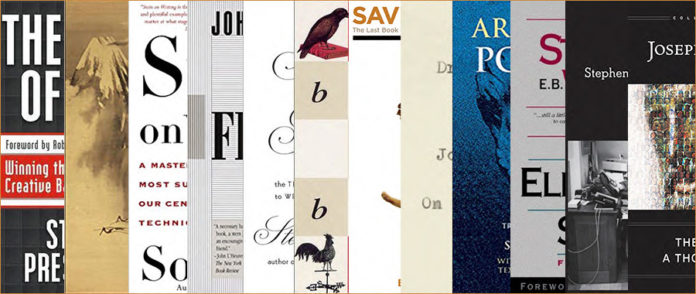
To find the books that are most popular, I looked at the intersection of lists of favorites — and I found an interesting pattern. If you combine the top books on Amazon and the picks found in a range of “top book” articles (Steven Spatz‘ 5 favorites, Shaunta Grimes‘ top 10, Jerry Jenkins’ “12 best,” Jeff Goin‘s “best books,” SmartBlogger‘s “9 Essentials,” The Write Life‘s “9 of the best,” Barnes & Noble‘s “6 best,” and Paste‘s “10 best”) we see some perennial favorites, but overall, surprisingly little overlap.
A few classics appear repeatedly, but most of the recommended books on writing only appear once. This is because excellent, but specialist, books fall down the ranks. The perfect book for you might never rank a “top 10” list of general writing books.
Most at the rarefied top of the normative lists have some good years on them. Remember the classics now “too old” to rank on such modern lists. This includes Joseph Campbell’s The Hero With a Thousand Faces which describes the hero’s journey that inspired Star Wars, Aristotle’s Poetics (which comes in various translations and interpretations from modern authors), and John Gardner’s The Art of Fiction: Notes on Craft for Young Writers.
Just look at this list by Booker prize-winning author DBC Pierre in The Guardian to see how different and unique a personal choice list can be. It includes The Prince by Niccolò Machiavelli to “discover what villains are born knowing.”
The best books to add to your collection fill the biggest gaps in your knowledge or provide the most inspiration. This could mean getting a tip from a colleague or mentor or scrolling curated lists to seek out something that matches your interests. Book Riot has a list of “100 Must-read, Best Books On Writing And The Writer’s Life.”
The choices might seem overwhelming, but it helps that you can download opening chapters for free on Kindle to have a look at style and content.
How many have you read? Which should you read next? In the end, pick to match your tastes and needs. The absolute best are the ones that help you most.
What’s the number one thing you can do to improve your writing?
Read. A lot.
Read anything and everything you can find, and you’ll become a better writer.
Read your favorite genre, whether that’s historical fiction, creative non-fiction or personal essays. Read books that are similar to what you like to write. And when you’re in the mood to learn about craft, read books on writing.
The titles below will help you with all aspects of your writing, from learning to write better to finding inspiration to figuring out where to pitch your ideas. We’ve even included some books about how to make money writing.
Part memoir, part guidebook, Stephen King’s classic will appeal even to those who avoid King’s renowned horror-packed tales. In this book, King discusses how he came to be the writer we know today.
Bird by Bird is an essential part of any writer’s toolbox. In this work, Lamott shares herself and her craft with readers, including anecdotes that tie the pieces together into all-around great writing.
Writer’s Market helps aspiring writers become published. Its listings contain hundreds of pages of suggested markets for nonfiction writers, as well as those looking to sell short stories, including details for how to pitch your work.
This classic book targets nonfiction writers and includes writing tips, as well as the fundamentals of craft. Zinsser discusses many forms of writing, from interviewing and telling stories about people to writing about travel.
For years, writing teachers have assigned The Elements of Style to their students. Brushing up on the basics from time to time is critical for continually developing your skills, and this book contains simple truths that every writer needs to know.
AP Style is known by many as the “go-to” writing style for journalists and public relations pros. The Associated Press Stylebook contains more than 3,000 entries detailing rules on grammar, spelling, punctuation, capitalization, abbreviation and word and numeral usage to help you master news writing.
While many books on this list are aimed at nonfiction writers, this one is for those who dream up their own stories to tell. If anyone is qualified to tell people how to write bestselling fiction, it’s prolific author Dean Koontz, who’s sold more 450 million copies of his books. This book was written in 1981 and is out of print, but has valuable insight for writers who manage to snag a copy (check the library!). It’s one of the best books on writing fiction.
Goldberg’s book examines the craft of writing including how to start brainstorming, the importance of learning how to listen, the vital role verbs play in writing, and even how to find an inspiring place to write.
Aimed at fiction writers, this book tackles everything from models to help with story structure to a variety of techniques to help with crafting great stories from start to finish. You’ll even find tips on creating plotting diagrams. and tools to overcome various plot problems that can arise.
The author of Pilgrim at Tinker Creek shares words of wisdom in this handy book where she discusses the difficulties of writing. She writes about how hard it is to write and how sometimes it is necessary to destroy paragraphs, phrases and words to re-form them as something even better.
From time to time, every writer suffers from burnout or writer’s block. Julia Cameron’s book focuses on the craft of writing and training yourself to be even more creative.
She offers valuable techniques like starting each morning with a free-writing exercise, and exploring one subject per week that you find fascinating. Her tips for reinvigorating the creative juices could be of help to any kind of writer.
Word Work is packed with practical advice for overcoming procrastination, finding happiness in writing and even conquering writer’s block via useful exercises. It also covers how to handle rejection and success.
This book focuses on how to be a happy and successful writer throughout your career. It covers everything from finding joy as a writer to avoiding burnout and the all-important challenge of balancing writing with a busy life. It also discusses how to fine-tune your craft, get in touch with your creative flow, revise your work, find critiques, and learn how to be resilient.
Published in 2012, this book helps writers and creators of all kinds overcome the biggest obstacle of all: our inner naysayer. The Amazon description says this book is “tough love…for yourself.” If something inside of you is keeping you from your biggest accomplishments, this is the right book to pick up.
This book contains columns from a decade of The Washington Post’s “Writing Life” column, with contributors as diverse as Jimmy Carter, Joyce Carol Oates and Carl Sagan. Essays are paired along with biographical information about each author, helping readers learn more about these skilled contributors and their ideas on writing.
The Paris Review offers in-depth interviews with some of the leading names in the literature world, from novelists to playwrights and poets. This series of books features a collection of interviews with past and present writing superstars including Ernest Hemingway, T.S. Eliot, Kurt Vonnegut, Toni Morrison, among many other famous names.
This book reflects on the artistic side of being a writer. Making art is no easy feat, and Bayles and Orlando — both artists themselves — explore the challenges of making art and the arious obstacles that can discourage people along the way.
Originally published in 1994, Art & Fear is now an underground classic, dishing out relatable, valuable advice.
Steven Pinker offers a new take on some of the classic writing manuals. Inside The Sense of Style, he analyzes examples modern prose, pointing out fantastic writing and offering tips to spruce up lackluster work.
World-renowned Irish author Frank O’Connor takes on the short story in this favorite book on writing. Short stories are challenging, but O’Connor shares tips and tactics for mastering the art of the short story that can help any writer begin to feel more confident about crafting their own works. This is one of the best books on writing short stories.
Attorney and self-published author Helen Sedwick uses her 30+ years of legal experience to help aspiring self-publishers navigate the business side of writing. This first-of-its-kind guidebook covers everything from business set up to spotting scams to help keep writers at their desks and out of court.
Joanna Penn’s How to Make a Living With Your Writing and her companion workbook can help any writer examine their current writing situation and make a plan for the future. Penn discusses her multiple income streams and shares the breakdown of her six-figure writing income, which includes book sales, affiliate marketing commissions, a series of courses she offers and speaking fees.
Divided into five sections James-Enger discusses everything from when it makes sense to ignore per-word rates, how to ask for more money, how to set goals and even how to fire troublesome clients. This book is a valuable read when working towards a sustainable career as a full-time freelance writer.
The Write Life’s own contributor Nicole Dieker has a book out about writing and money. The book focuses on setting goals for each phase of a writer’s career, including getting rid of lower paying jobs to make way for better work and higher-paying clients.
In her new anthology, Martin includes a series of essays from well-known literary icons such as Cheryl Strayed, Jennifer Weiner, and Nick Hornby where they discuss the intersection of writing and money in essays and interviews.
This content-creation book, Everybody Writes: Your Go-To Guide to Creating Ridiculously Good Content, drives home the point that anyone with a web site or social media channels is a writer.
It focuses on how to craft quality writing that boosts business and helps find and retain customers, including writing tips, content help, grammar rules, and more.
Confined in the dark, narrow cage of our own making that we take for the whole universe, very few of us imagine another dimension of mind. There once was an old frog who lived all his life in a dank well. One day, a frog from the sea fell into his world.
“Where did you come from?” asked the frog in the well.
“From the great ocean,” the visiting frog said.
“How large is your ocean?”
“It’s gigantic.”
“A quarter of the size of my well here?” the old frog asked.
“Larger.”
“Larger? You mean half as large?”
“Even larger.”
“As large as my world?”
“There’s no comparison,” the visiting frog said.
“That’s impossible! I’ve got to see this for myself.”
The two frogs set off together. When the old frog from the well saw the ocean, it was such a shock that his head just exploded into pieces.
Moral: be willing to drop into your reader’s life and in some way “blow” your reader’s mind, to enlarge his or her world in some way. You might even enlarge yours along the way.






 Booker's Blog