Tag Archives: The Guardian

Some current mysteries to consider

The best recent crime novels – review roundup

by Laura Wilson

Source: http://www.theguardian.com/books/2016/feb/19/the-best-recent-crime-novels-review-roundup?CMP=share_btn_fb

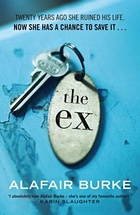
The Ex book coverA pleasingly suspenseful mixture of legal thriller and whodunnit, Alafair Burke’s latest novel, The Ex (Faber, £12.99), introduces us to lippy, take-no‑prisoners New York City district attorney Olivia Randall, who receives a panicky phone call from the teenage daughter of her former fiance, Jack Harris, begging for help. Harris, whose wife was killed in a mass shooting three years earlier, has been charged with triple homicide, which the police are treating as a revenge attack because one of the victims is the father of the boy who shot his wife. For Olivia, representing Jack is a way to make up for the hurt she caused him in the past, but his alibi is flimsy and there is corroborating evidence, and she begins to wonder if he may, after all, be guilty. Burke’s writing has always been intelligent and often funny, and her female protagonists sharp and engaging – The Ex is her best yet.

Other books in the round-up include:

Icelandic author Ragnar Jonasson’s excellent debut novel, Snowblind, was widely praised for its distinctive blend of Nordic noir and golden age detective fiction. Nightblind (translated by Quentin Bates, Orenda Books, £8.99), also featuring police officer Ari Thor Arason and set in Siglufjörður, an isolated fishing village hard by the Arctic Circle, certainly lives up to the promise of its predecessor.

A Masterpiece of Corruption (Constable, £19.99) is the second of LC Tyler’s novels set during the Interregnum and featuring law student John Grey. The year is 1657, and a case of mistaken identity results in Grey, who has republican sympathies, finding himself in the middle of a plot by the Sealed Knot, a secret royalist association, to assassinate Oliver Cromwell in order that Charles Stuart may return from exile to take his place on the throne.

To see these and the other books being offered, go to http://www.theguardian.com/books/2016/feb/19/the-best-recent-crime-novels-review-roundup?CMP=share_btn_fb

Leave a comment

Filed under 2016, books

Shelf catering: tourists offered chance to run a bookshop on holiday

For £150 a week, AirBnB users are invited to live in – and run – The Open Book store in Wigtown, Scotland

The Open Book in Wigtown, Scotland

The Open Book in Wigtown, Scotland

by Allison Flood

Source: http://www.theguardian.com/books/2015/aug/21/tourists-offered-chance-to-run-a-bookshop-on-holiday-wigtown

For all those who agree with Neil Gaiman’s maxim in American Gods that “a town isn’t a town without a bookstore”, and who yearn to spend their days amongst the pristine spines and glossy covers of a small bookshop, what might be the perfect holiday retreat has just been listed on AirBnB: the opportunity to become a bookseller for a week or two.

For the sum of £150 a week, guests at The Open Book in Wigtown, Scotland’s national book town, will be expected to sell books for 40 hours a week while living in the flat above the shop. Given training in bookselling from Wigtown’s community of booksellers, they will also have the opportunity to put their “own stamp” on the store while they’re there. “The bookshop residency’s aim is to celebrate bookshops, encourage education in running independent bookshops and welcome people around the world to Scotland’s national book town,” says the AirBnB listing.

The Open Book is leased by the Wigtown book festival from a local family. Organisers have been letting paying volunteers run the shop for a week or two at a time since the start of the year, but opened the experience up to the world at large this week when they launched what they are calling “the first ever bookshop holiday experience” on AirBnB.

“I wouldn’t call it a working holiday,” said Adrian Turpin, director of the Wigtown book festival. “It’s a particular kind of holiday [for people] who don’t feel that running a bookshop is work. It’s not about cheap labour – it’s about offering people an experience … It’s one of those great fantasies.”

The money is “just essentially to cover our costs”, said Turpin, admitting that “it can be a hard life, selling books in a small town, so it’s not a holiday for everybody”.

“I suspect [the shop] would have closed, without this,” he said. “Wigtown is Scotland’s national book town, but it’s quite a long way from anywhere. So part of the idea was to get new people in – people who would hopefully end up having a good time and a long-standing relationship with the town. And also to keep the bookshop afloat. It might otherwise have shut down.”

The rest of the article: http://www.theguardian.com/books/2015/aug/21/tourists-offered-chance-to-run-a-bookshop-on-holiday-wigtown

Leave a comment

Filed under 2015, bookshop, bookstore

The best recent science fiction – review roundup

Eric Brown on Chris Beckett’s Mother of Eden; Becky Chambers’s The Long Way to a Small, Angry Planet; Stephen Palmer’s Beautiful Intelligence; Ian Sales’s All That Outer Space Allows; SL Grey’s Under Ground; Alex Lamb’s Roboteer

by Eric Brown

Source: http://www.theguardian.com/books/2015/jul/31/science-fiction-roundup?CMP=twt_books*gdnbooks

Chris Beckett won the 2013 Arthur C Clarke award for his novel Dark Eden, about the survival and adaptation of human colonists on a world without light. The sequel, Mother of Eden (Corvus, £17.99), begins generations later, charting the growth and political divisions between the colonists. It follows the rise of Starlight Brooking, a humble fishergirl, and her quest to bring equality and revolution to Edenheart, a settlement ruled by a conservative patriarchy. Beckett doesn’t do traditional heroes and villains: Starlight Brooking is contradictory and flawed, at once brave and vulnerable, and likewise his villains are portrayed with sympathy and understanding. He also eschews easy answers and formulaic plotting; where a hundred other writers would have Starlight triumph over her enemies, her victories are on a more profound and personal level, and not without tragedy. Mother of Eden is a masterpiece.

When the captain of the Wayfarer starship is offered a job travelling to a faraway planet that could make him and his crew financially secure, he agrees despite the dangers involved.Such a precis might suggest that Becky Chambers’s first novel, The Long Way to a Small, Angry Planet (Hodder & Stoughton, £18.99), originally self‑published and shortlisted for the Kitschies awards, is an action-adventure space opera. But this is a slow, discursive novel of character as the motivations of the diverse and likable crew, comprising humans and aliens, are laid bare for the reader’s delight. It is a quietly profound, humane tour de force that tackles politics and gender issues with refreshing optimism.

Stephen Palmer’s marvellous ninth novel, Beautiful Intelligence (Infinity Plus, £8.99), posits a beleaguered 22nd century in which oil has run out, water is scarce, and in a neat inversion of the contemporary world order, Europe is an economic ruin and Africa the promised land. Two techno wizards abscond from a Japanese laboratory, each attempting to develop artificial intelligence according to their own philosophies – one based on the social intelligence theory of consciousness, the other on a linguistic approach – but billionaire tech-mogul Aritomo Ichikawa will stop at nothing to get them back. What follows is a thrilling chase across a ravaged Europe, a burgeoning North Africa and balkanised US, interleaving excellent action set-pieces with fascinating philosophising on the nature of consciousness. A gripping read to the poignant last line.

More at: http://www.theguardian.com/books/2015/jul/31/science-fiction-roundup?CMP=twt_books*gdnbooks

Leave a comment

Filed under 2015, book review, books

Stephen Baxter interview: why science fiction is like therapy

The bestselling SF writer talks about the rush to finish the Long Earth series, being the order to Terry Pratchett’s chaos and how maths helps him write

by Alison Flood

Source: http://www.theguardian.com/books/2015/jul/25/stephen-baxter-interview-why-science-fiction-is-like-therapy

In the summer of 2013, Stephen Baxter and Terry Pratchett published The Long War, the second volume of their Long Earth science-fiction series, about parallel worlds that can be “stepped” into. By the end of that year, the two authors – both prolific by any standards – had completed drafts of the remaining three novels in the series. It was an astonishing rate of work, but there was a deadline that needed to be met: Pratchett had announced his diagnosis with a rare form of early onset Alzheimer’s in 2007. By the summer of 2014, he would pull out of a Discworld convention, citing “The Embuggerance”, which was “finally catching up with me”. He died in March this year.

Stephen Baxter

Stephen Baxter

“I think Terry was aware he was running out of time, and he wanted to do other things as well,” Baxter says. “So we rushed through it a little bit. Terry’s basic vision was the first step, but he also wanted to have a huge cosmic climax at the end, which would be book five … We had no idea how to get there but we knew where we were going.”

The Long Utopia, the fourth in the series, sees settlers on an Earth more than “a million steps” west of ours stumble across a disturbing, insectile form of alien life. Like its predecessors, the novel is compelling not only for its central storyline of exploration and danger and humans doing foolishly human things – and in this case a particularly cataclysmic finale – but also for its slow, unhurried laying out of the minute differences between these empty-of-humanity Earths.

The concept of a chain of parallel worlds, each a little different from its neighbour, was one Pratchett originally had, and set aside, in the 1980s. He told Baxter, a long-time friend and one of the UK’s most respected science-fiction authors, about it over dinner one night, and they decided to collaborate.

“It was a great idea but Terry’s strength did not lie in landscapes and things,” Baxter says. “He’d get a story by having a basic idea, get two people in a room talking and see where it went from there.”

This is not how Baxter works. His fiction, whether about the colonising mission sent to a planet orbiting a nearby red dwarf star, in Proxima, or the exploration of different evolutions of humanity in the Destiny’s Children series, is meticulously planned and pinned down, rooted in the scientific background from which he comes. He has a degree in maths from Cambridge and a PhD in aeronautical engineering; he is a fellow of the British Interplanetary Society and applied for a guest spot on the Mir space station in 1989, making it through a number of stages on his quest to be a cosmonaut but eventually missing out because of his lack of foreign languages.

Whether Baxter decides to submerge the world (Flood), or make humanity live in the centre of a neutron star (Flux), or keep the sea off Doggerland in an alternative prehistory (Stone Spring), there’s always a hook into something real. “I try to get it right. If you can get the maths right, I figure you’re most of the way there,” he says.

Baxter is fiercely intelligent, in a generous way, sharing his enthusiasms and knowledge on everything from recently discovered exoplanets to the Mars project (he’s not hopeful, because he doesn’t think enough has been done on long-term life support systems). At the British Interplanetary Society, he’s been part of study projects on everything from designing star ships to extraterrestrial liberty, an issue explored in Ark, his follow-up to Flood, in which the scraps of humanity flee their devastated planet in “generation ships” for an uncertain future outside the solar system.

“It’s all very well to plan a five-generation mission to Alpha Centauri, but if you’re one of the middle generations, you live out your life with very little room for manoeuvre,” he says. “So what right do you have to submit your children and grandchildren to a life of slavery like that? You get some interesting ethical issues – do you have rights over people who don’t yet exist, do they have rights?”

Rest of the article: http://www.theguardian.com/books/2015/jul/25/stephen-baxter-interview-why-science-fiction-is-like-therapy

Leave a comment

Filed under 2015, author interview

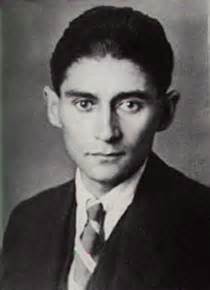
Kafka’s Metamorphosis: 100 thoughts for 100 years

Kafka’s tale of a man who wakes to find he has changed into a giant insect still has the power to shock and delight a century after it was first published. Many regard it as the greatest short story in all literary fiction.

by RICHARD T. KELLY

Source: http://www.theguardian.com/books/2015/jul/18/franz-kafka-metamorphosis-100-thoughts-100-years

  1. What need a modern reader know of Franz Kafka’s Metamorphosis (Die Verwandlung) – arguably the most famous, also greatest, short story in the history of literary fiction?
  2. Franz Kafka

    Franz Kafka

  3. Of its stature, for example, Elias Canetti wrote that the story was something Kafka “could never surpass, because there is nothing which Metamorphosis could be surpassed by”. As endorsements go, the bar could not be set higher.
  4. Kafka’s place in the literary pantheon has been assured for some time, most pleasingly expressed by George Steiner’s suggestion that he is the only author of whom it may be said that he made his own a letter of the alphabet – K.
  5. Here, though, is a little novelty: in 2015, Metamorphosis is 100 years old. At least, 1915 is when the story was published, which is to say “finished”; and Kafka, famously, didn’t finish very much.
  6. Kafka worked on Metamorphosis through the autumn of 1912 and completed a version on 7 December that year. But negotiations with publishers were complicated, and circumstances – the first world war, among other things – intervened.
  7. Finally Metamorphosis was set before readers in October 1915, in the avant-garde monthly Die Weissen Blätter, then put between covers that December.
  8. A century on, why does Metamorphosis still attract readers? One reason is that it’s a horror story of sorts. Its premise – a man awakens in the body of an insect – exerts a ghastly fascination beyond anything in even the consummate short works of Chekhov or Joyce or Alice Munro.
  9. Another is that it is, amid its pathos, awfully funny. Gregor Samsa wakes to discover he has six legs and a shell, yet for some pages he thinks that what ails him might just be the kind of throat complaint that is “the occupational malady of travellers”. What can you do but laugh?
  10. And there’s more. As Gregor struggles to crawl off his bed, a clerk from his company calls at the Samsa apartment. As Vladimir Nabokov commented: “This grim speed in checking a remiss employee has all the qualities of a bad dream.” But it is also farce: a personal embarrassment raised to a debacle by multiple easily shocked persons arriving on the scene to witness it.
  11. Metamorphosis exemplifies the world Kafka invented on paper – recognisable but not quite real, precisely detailed and yet dreamlike.
  12. We call this world “Kafkaesque”, of course, while keeping mindful of Italo Calvino’s lament that one hears that term “every quarter of an hour, applied indiscriminately”.
  13. I’ll venture we mean “Kafkaesque” to denote a sense of suddenly inhabiting a world in which one’s customary habits of thought and behaviour are confounded and made hopeless.
  14. To dig a little deeper, the term evokes an individual’s sense of finding himself victimised by large impersonal forces, feeling after a while that he can’t but take it personally – and feeling haunted, too, by the sense that maybe, after all, he deserves it.
  15. If you grant the preceding, then Metamorphosis is perhaps the quintessential Kafka story.
  16. Given how well the story has aged, it is telling that Kafka at first didn’t wholly delight in his handiwork. Even as he inspected the proofs he was unpersuaded. (“Unreadable ending. Imperfect almost to its very marrow.”)
  17. But the very fact that Metamorphosis was read, chuckled over and frowned on while Kafka was alive may bear repeating; for the myth rather persists that Kafka was unknown and unpublished in his lifetime.
  18. Though his great fame was posthumous, he did have a reputation to speak of while he was alive. If a minor figure, he nonetheless had a better class of admirer (e.g., Robert Musil).
  19. In 1915 the dramatist Carl Sternheim, winner of the prestigious Theodor Fontane prize, bestowed his prize money on Kafka as a mark of writer-to-writer respect.
  20. (Can you imagine the Man Booker prizewinner of 2015 declaring from the dais that s/he plans to hand over the £50,000 to a rival novelist whose stuff s/he considers so much better?)
  21. Legendarily, though, Kafka had no bigger fan than his university friend Max Brod, who decided early on that Kafka was a genius, and duly ended up saving his works from incineration.

For the rest of the 100 thoughts, go to: http://www.theguardian.com/books/2015/jul/18/franz-kafka-metamorphosis-100-thoughts-100-years

Leave a comment

Filed under 2015, Metamophosis

Books about women less likely to win prizes, study finds

Study of six major awards in the last 15 years shows male subjects the predominant focus of winning novels.

by ALISON FLOOD

Source: http://www.theguardian.com/books/2015/jun/01/books-about-women-less-likely-to-win-prizes-study-finds

Analysis of the last 15 years of winners of six major literary awards by the critically acclaimed author Nicola Griffith has found that a novel is more likely to land a prize if the focus of the narrative is male.

Griffith looked at the winners of the Pulitzer, Man Booker, National Book award, National Book Critics’ Circle award, Hugo and Newbery medal winners over the last 15 years. She collated the gender of the winners, and that of their protagonists, finding that for the Pulitzer, for example, “women wrote zero out of 15 prize-winning books wholly from the point of view of a woman or girl”.

The Man Booker, between 2000 and 2014, was won by nine books by men about men or boys, three books by women about men or boys, two books by women about women or girls, and one book by a woman writer about both. The US National Book award over the same period, found Griffith, was won by eight novels by men about men, two books by women about men, one book by a man about both, three books by a woman about both, and two books by women about women.

“It’s hard to escape the conclusion that, when it comes to literary prizes, the more prestigious, influential and financially remunerative the award, the less likely the winner is to write about grown women. Either this means that women writers are self-censoring, or those who judge literary worthiness find women frightening, distasteful, or boring. Certainly the results argue for women’s perspectives being considered uninteresting or unworthy. Women seem to have literary cooties,” wrote Griffith in a piece laying out her analysis in a series of pie charts.

“The literary establishment doesn’t like books about women. Why?” she asked. “The answer matters. Women’s voices are not being heard. Women are more than half our culture. If half the adults in our culture have no voice, half the world’s experience is not being attended to, learnt from or built upon. Humanity is only half what we could be.”

Her analysis came as the summer issue of Mslexia, the magazine for women writers, explores the the “silent takeover by men of the top jobs” in British publishing. Industry expert Danuta Kean laid out how, since 2008, the “women at the top of the three biggest corporate publishing houses have stepped aside – in each case to be replaced by men”.

Penguin managing director Helen Fraser retired in 2009, pointed out Kean, Random House chair and chief executive Gail Rebuck stepped down from the day-to-day running of the company in July 2013, and Victoria Barnsley has been replaced at HarperCollins by Charlie Redmayne. Little, Brown chief executive Ursula Mackenzie has also recently announced she would be stepping down from her position in July, replaced by David Shelley.

Rest of the article: http://www.theguardian.com/books/2015/jun/01/books-about-women-less-likely-to-win-prizes-study-finds

Leave a comment

Filed under 2015, literary awards, study

A brief survey of the short story: David Foster Wallace

For all its elaborate formal tricks, Wallace’s work is marked by a deep desire for authentic connection, to his subjects and to his readers

By CHRIS POWER

Source: http://www.theguardian.com/books/booksblog/2015/may/25/a-brief-survey-of-the-short-story-david-foster-wallace

David Foster Wallace was a maximalist. His masterpiece, Infinite Jest, is a 1,000-page, polyphonic epic about addiction and obsession in millennial America. His journalism and essays, about television and tennis, sea cruises and grammar, always swelled far beyond their allotted word counts (cut for publication, he restored many of them to their full length when they were collected in book form). In a letter sent to a friend from a porn convention in Las Vegas, Wallace exclaimed that, “writing about real-life stuff is next to impossible, simply because there’s so much!” It might seem surprising that a writer like this could or should want to function within the confines of the short story, yet besides Infinite Jest it is arguably his three story collections that represent the most important part of his work.

That said, many of Wallace’s short stories aren’t all that short, and often test the limits of traditional conceptions of story. As he told Larry McCaffery in 1993: “I have a problem sometimes with concision, communicating only what needs to be said in a brisk efficient way that doesn’t call attention to itself.” In fact, Wallace’s later works would rewire this statement: in order to say what needed to be said, he found his writing had no option but to call attention to itself. To experience a Wallace story is often also to experience someone making an agonised attempt to write a story. This was nothing new, of course: the postmodernists of the 1960s were committed to metafiction, the literary technique of self-consciousness that puts the lie to realism, making the audience constantly aware that what they are reading is an artificial construct.

This approach appealed to the young Wallace, who once remarked that Donald Barthelme’s short story The Balloon was the first work of fiction to “ring my cherries”, and who subsequently found a deep affinity with the work of Thomas Pynchon. Yet by the time of his first collection, 1989’s Girl With Curious Hair, and despite the significant debts individual stories owe to postmodern writers (John Billy is a tribute to Omensetter’s Luck by William Gass, while the political epic-in-miniature Lyndon takes its lead from Robert Coover’s A Public Burning), Wallace’s relationship with postmodernism had grown more complicated. He believed that a movement that had taken shape to unmask the hypocrisies of mass culture had come to lend them an insidious power: once advertising became knowing and ironic, the postmodernist game was up. Wallace began attempting to move beyond irony towards a new sincerity, although he struggled with how to achieve this.

The novella that ends the collection, Westward the Course of Empire Takes Its Way, is a tortuously long assault on postmodernism that paradoxically satirises the strategies of metafiction by employing an encyclopaedic array of metafictional strategies – skilfully enough that it could easily be taken for a piece of metafiction itself. It is illustrative of the struggle Wallace had throughout his career with the shape and content of his fiction, that after several years of considering the story to be by far the most important thing he had written, he then disowned it: “In Westward I got trapped one time just trying to expose the illusions of metafiction the same way metafiction had tried to expose the illusions of the pseudo-unmediated realist fiction that came before it. It was a horror show. The stuff’s a permanent migraine”.

Rest of the article: http://www.theguardian.com/books/booksblog/2015/may/25/a-brief-survey-of-the-short-story-david-foster-wallace

Leave a comment

Filed under 2015, writers

Crime fiction vs. thriller: left wing vs. right wing?

Why crime fiction is leftwing and thrillers are rightwing

Today’s crime novels are overtly critical of the status quo, while the thriller explores the danger of the world turned upside down. And with trust in politicians nonexistent, writers are being listened to as rarely before

Source: http://www.theguardian.com/books/booksblog/2015/apr/01/why-crime-fiction-is-leftwing-and-thrillers-are-rightwing?CMP=share_btn_fb

by Val McDermid

I spent the weekend in Lyon, at a crime writing festival that feted writers from all over the world in exchange for us engaging in panel discussions about thought-provoking and wide-ranging topics. They take crime fiction seriously in France – I was asked questions about geopolitics, and the function of fear. I found myself saying things like “escaping the hegemony of the metropolis” in relation to British crime writing in the 1980s.

What they are also deeply interested in is the place of politics in literature. Over the weekend, there were local elections in France, and a thin murmur of unease ran through many of the off-stage conversations with my French friends and colleagues. They were anxious about the renaissance of the right, of the return of Nicolas Sarkozy, the failure of the left and the creeping rise of the Front National.

As my compatriot Ian Rankin pointed out, the current preoccupations of the crime novel, the roman noir, the krimi lean to the left. It’s critical of the status quo, sometimes overtly, sometimes more subtly. It often gives a voice to characters who are not comfortably established in the world – immigrants, sex workers, the poor, the old. The dispossessed and the people who don’t vote.

The thriller, on the other hand, tends towards the conservative, probably because the threat implicit in the thriller is the world turned upside down, the idea of being stripped of what matters to you. And as Bob Dylan reminds us, “When you ain’t got nothing, you got nothing to lose.”

Of course, these positions don’t usually hit the reader over the head like a party political broadcast. If it is not subtle, all you succeed in doing is turning off readers in their droves. Our views generally slip into our work precisely because they are our views, because they inform our perspective and because they’re how we interpret the world, not because we have any desire to convert our readership to our perspective.

Except, of course, that sometimes we do.

Rest of the article: http://www.theguardian.com/books/booksblog/2015/apr/01/why-crime-fiction-is-leftwing-and-thrillers-are-rightwing?CMP=share_btn_fb

=8888=

A counterpoint:

Thrillers are politically conservative? That’s not right

Val McDermid says that while crime fiction is naturally of the left, thrillers are on the side of the status quo. Jonathan Freedland votes against this reading

Source: http://www.theguardian.com/books/booksblog/2015/apr/03/thrillers-politically-conservative-val-mcdermid-crime-fiction-jonathan-freedland

by Jonathan Freedland

Quickfire quiz. Identify the following as left or right. Big business? On the right, obviously. Trade unions? Left, of course. The one per cent? That’d be the right. Nicola Sturgeon? Clearly, on the left. If those are too easy, try this literary variant. Crime novels: right or left? And what about thrillers: where on the political spectrum do those belong?

Val McDermid, undisputed maestro of crime, reckons she knows the answer. Writing earlier this week, she argued that her own genre was rooted firmly on the left: “It’s critical of the status quo, sometimes overtly, sometimes more subtly. It often gives a voice to characters who are not comfortably established in the world – immigrants, sex workers, the poor, the old. The dispossessed and the people who don’t vote.”. Thrillers, by contrast, are inherently conservative, “probably because the threat implicit in the thriller is the world turned upside down, the idea of being stripped of what matters to you.”

I understand the logic. You can see how McDermid’s own novels, like those of, say, Ian Rankin – another giant in the field, whom she cited as an ally in this new left/right branding exercise – do indeed offer a glimpse into the lives of those too often consigned to the margins, those power would prefer to ignore. But does that really go for all crime writing, always? If it does, someone forgot to tell Miss Marple.

Still, my quibble is not really with McDermid’s claim that the crime novel leans leftward. I want to object to the other half of her case: that the thriller tilts inevitably towards the right. As someone who is both a card-carrying Guardian columnist and a writer of political thrillers, I feel compelled to denounce the very idea.

Sure, there are individual stars of the genre who sit on the right. Tom Clancy was an outspoken Republican (though even his most famous creation, Jack Ryan, was ready to rebel against a bellicose US president for meddling in Latin America). But Clancy’s conservatism is more the exception than the rule.

Consider the supreme master of the spy thriller, John le Carré. His cold war novels stood against the mindless jingoism of the period, resisting the Manichean equation of east-west with evil-good. In the last decade, Le Carré has mercilessly exposed the follies of the war on terror, probing deep into the web of connections that ties together finance, politics and the deep state. The older he gets, the more Le Carré seems to be tearing away at the establishment and its secret, complacently amoral ways.

Rest of the article: http://www.theguardian.com/books/booksblog/2015/apr/03/thrillers-politically-conservative-val-mcdermid-crime-fiction-jonathan-freedland

Leave a comment

Filed under 2015, writers on politics, Writers on writing