Tag Archives: The Atlantic

The ‘Sunday Scaries’ and the Anxiety of Modern Work – The Atlantic


https://www.theatlantic.com/family/archive/2020/02/sunday-scaries-anxiety-workweek/606289/?utm_source=pocket-newtab

To Alec Burks, a 30-year-old project manager at a construction company in Seattle, Sunday evenings feel like “the end of freedom,” a dreadful period when time feels like it’s quickly disappearing, and, all of a sudden, “in 12 hours, I’m going to be back at my desk.” It’s not that Burks doesn’t like his job—he does. But one thing that contributes to the feeling, he told me, is that “you almost have to shrink who you are a little bit sometimes to fit into that mold of your job description.” The weekend, by contrast, doesn’t require any such shrinking.

The not-exactly-clinical diagnosis for this late-weekend malaise is the Sunday scaries, a term that has risen to prominence in the past decade or so. It is not altogether surprising that the transition from weekend to workweek is, and likely has always been, unpleasant. But despite the fact that the contours of the standard workweek haven’t changed for the better part of a century, there is something distinctly modern about the queasiness so many people feel on Sunday nights about returning to the grind of work or school.

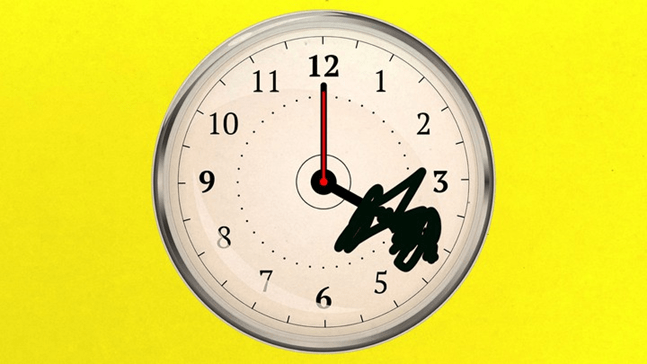
Regardless of whether people call this experience the Sunday scaries (Sunday evening feeling and Sunday syndrome are two alternatives), a lot of them undergo some variation of it. A 2018 survey commissioned by LinkedIn found that 80 percent of working American adults worry about the upcoming workweek on Sundays. Another survey by a home-goods brand found that the Sunday scaries’ average time of arrival is 3:58 p.m., though they seem to set in later than that for many people. (A cousin of the Sunday scaries is the returning-from-vacation scaries, which can fall on any day of the week.)

Read: Workism is making Americans miserable

“This feeling, whether we call it anxiety, worry, stress, fear, whatever, it’s all really the same thing,” says Jonathan Abramowitz, a clinical psychologist and professor at the University of North Carolina at Chapel Hill. “Psychologically, it’s a response to the perception of some sort of threat.” The perceived threat varies—it might be getting up early, or being busy and “on” for several days in a row—but the commonality, Abramowitz says, is that “we jump to conclusions” and “underestimate our ability to cope.” For most people, he reckons, the stress of Sunday is uncomfortable but ultimately manageable—and they end up coping just fine. (And just as with other forms of anxiety, some people don’t feel the Sunday scaries at all.)

“Low-grade existential dread” is how Erin Thibeau, a 28-year-old who works in marketing at a design firm in Brooklyn, describes the feeling she gets on Sunday afternoons and evenings. For her, the end of a weekend presents stressful questions about whether she has taken full advantage of having two days off. Those questions fall under two categories that seem to be in tension: “It’s a mix of ‘Have I been productive enough?’ and ‘Have I relaxed enough?’” she told me.

“In 19—whatever—52, some people hated their jobs and didn’t want to go back to work, but I don’t think this is about hating your job,” says Anne Helen Petersen, a senior culture writer at BuzzFeed and the author of the forthcoming book Can’t Even: How Millennials Became the Burnout Generation. “I think the Sunday scaries are about feeling an overwhelming sense of pressure”—to perform well at work and thus pursue or maintain financial stability, as well as to keep up other everyday responsibilities, like cooking or child care.

“I don’t think there’s anything that’s timeless about [the Sunday scaries],” Petersen told me. “Burnout and the anxiety that accompanies it are so much about living under our current iteration of capitalism and about class insecurity.” From roughly the end of World War II to 1970—a period that’s often called the Golden Age of American capitalism—Petersen says, “there were a ton of jobs that weren’t great, but the difference was that people were more secure in their class position … [Now] it’s this huge combination of not only ‘How am I going to do in my job?,’ but all these other things that I’m anxious about—‘If I lose my job, then I’m not going to have medical insurance.’” This goes some way toward explaining the need to make weekends both productive and relaxing—workers need to both get stuff done and also make sure that they’ve sufficiently recharged to get more stuff done during the week.

Read: ‘Ugh, I’m so busy,’ a status symbol for our time

Work has changed, and so have Sundays themselves. One analysis of Canadian time-use data from 1981 to 2005 that tracked paid work, chores, shopping, and child care found that “Sundays became busier and behaviorally closer to weekdays than they were at the beginning of the 1980s.” “This change would probably become even more obvious,” the study’s author speculated, “if one were to go back to the older data sets, such as [one 1968 data set] from Washington, D.C., where Sunday meals at home occupied more than 90 minutes and shopping only 8 minutes.”

Given how work (side gigs included) has, for many people, bled into nights and weekends, Petersen says, “Two days is not enough—it’s just not … For people I know, myself included, Saturday is a catch-up day, and then Sunday is the only real day of leisure. So people, as soon as they start, they’re like, ‘It’s about to end!’ You’re so conscious of the fact that it’s so short.”

This is the economic milieu from which the Sunday scaries have emerged. It is responsible for the Sunday scaries–branded vegan CBD gummies, the how-to videos outlining “productive” Sunday routines for preparing for the workweek, and—perhaps most troublingly—the tweets from brands such as Starbucks, Mary Kay, and Malibu Rum about warding off the Sunday scaries.

The phrase itself hasn’t been around for very long. Kory Stamper, a lexicographer and author, told me that the first written usage of Sunday scaries she could find after searching around was in a hangover-inspired entry from 2009 on the website Urban Dictionary. Over the course of the 2010s, though, the scaries became less about the consequences of partying than the anticipation of the week ahead. A spokesperson for Twitter told me that use of the phrase has been “growing steadily” on its platform since early 2016, and that 90 percent of tweets that mention it come from people in the U.S.

One advantage of the term is that it is immediately graspable, but at the same time it is almost gratingly infantilizing, expressing genuinely uncomfortable emotions in the language of toddlers. (Multiple people I interviewed for this story disliked the term on these grounds, even as they noted its usefulness.)

“For some reason, we have a great whack of words that sound silly but describe unpleasant feelings or negative emotions: the heebie-jeebies, the screaming meemies, the collywobbles, the jitters, the creeps, a case of the Mondays, boo-hoo,” Stamper says. She notes that some of these terms are playful and sonically repetitive, and wondered if “we like these ameliorating terms because their humor makes it easier to talk about something we would rather not talk about at all.”

The phrase seems even more modern, and even more childish, considering the dangerous outcomes that many American workers used to fear on the job. “There are lots of stories, almost 100 years ago, of people dreading going back to the factory, whether it’s injuries or being yelled at,” says Nelson Lichtenstein, a professor of history at the University of California at Santa Barbara. “It was said that at the Ford Motor Company, the foreman knew how to shout ‘Speed up!’ in 15 languages.” Scaries doesn’t quite do justice to the awful work experiences that many people had back then, and still have today.

Whatever this feeling is called, and whatever economic conditions may be in place right now, people have probably been mourning the end of weekends in one way or another for as long as days off have existed. In the mid-19th century, when Sunday was workers’ only official full day off in England, many of them extended their break by skipping work on Monday, “whether to relax, to recover from drunkenness, or both,” explained Witold Rybczynski in The Atlantic in 1991. This habit, which scans as a symptom of a Sunday scaries–like feeling, was effectively formalized in some industries and was referred to as “keeping Saint Monday.”

Precursors to the modern Sunday scaries were detectable as long as 30 years ago. In 1991, The New York Times published an analysis of “the Sunday blues,” and while economic precarity was listed among the potential causes, the article presented a host of other possible explanations: an interruption of the internal biological clock’s usual weekday sleep cycles, caffeine withdrawal, hangovers, and, of course, a simple dislike of work (or school, or housework).

The proposed cures for this unease range from the micro to the macro. Some of the people I interviewed who experience the Sunday scaries have been implementing plans to thwart them. Erin Thibeau finds some success with what she calls her “Sunday Funday initiative”—a program that aims to “extend the feeling of the weekend” by strategically scheduling movies, museum visits, and walks in the park when the scaries typically set in. Maggie Lofboom, a 36-year-old who works in landscape design and as an opera singer in Minneapolis, says she cross-stitches and takes baths to keep the scaries at bay.

Sarah Savoy, a 35-year-old who works at a think tank in Washington, D.C., stumbled on an unexpected antidote: having young children. She used to get the Sunday scaries in her 20s, but they’ve since subsided. “Our older daughter is a terrible napper, so [on Sundays] from 2 o’clock on it’s survival parenting, just trying to get to the end of the day,” she told me. “One of the things I look forward to about the week is that we have a pretty set routine, which can fall apart on a weekend.” Of course, this pattern has produced its own weekly emotional cycle, with a feeling of stress that crests on Saturday mornings, when Savoy makes a household to-do list for the weekend.

Jonathan Abramowitz, the psychology professor, says that the most reliable way to banish the Sunday scaries, especially if they have escalated to the point of being debilitating, is to practice cognitive behavioral therapy, a means of revising mental and behavioral patterns that can be learned from a therapist, an app, or a workbook. “In the short term,” he says, “exercising, taking a walk, or doing some activity that you really enjoy on Sunday can take your mind off the scaries temporarily.”

When I asked Anne Helen Petersen what would cure the Sunday scaries, she laughed and gave a two-word answer: “Fix capitalism.” “You have to get rid of the conditions that are creating precarity,” she says. “People wouldn’t think that universal health care has anything to do with the Sunday scaries, but it absolutely does … Creating a slightly different Sunday routine isn’t going to change the massive structural problems.”

One potential system-wide change she has researched—smaller than implementing universal health care, but still big—is a switch to a four-day workweek. “When people had that one more day of leisure, it opened up so many different possibilities to do the things you actually want to do and to actually feel restored,” she says.

As a haver of the Sunday scaries myself, I would like to live in a world where there’s less to fear about Monday. At the same time, I suspect that there is an element of tragedy inextricable from the basic nature of weekends, which (not to get too glum about it) are like lives in miniature: That approaching expanse of leisure that one can survey on Friday evenings, no matter how well used, is followed within 48 hours by the distressing realization that the end of it is inevitable, and that what once seemed like so much time has been used up. On Sundays, we each reckon with the passing of time and die a small death. And that’s scary.

Leave a comment

Filed under 2020

The Unlikely Success of ‘One Hundred Years of Solitude’ – The Atlantic

When Gabriel García Márquez’s most famous novel was published 50 years ago, it faced a difficult publishing climate and baffled reviews.

Source: The Unlikely Success of ‘One Hundred Years of Solitude’ – The Atlantic

In 1967, Sudamericana Press published One Hundred Years of Solitude (Cien años de soledad), a novel written by a little known Colombian author named Gabriel García Márquez. Neither the writer nor the publisher expected much of the book. They knew, as the publishing giant Alfred A. Knopf once put it, that “many a novel is dead the day it is published.” Unexpectedly, One Hundred Years of Solitude went on to sell over 45 million copies, solidified its stature as a literary classic, and garnered García Márquez fame and acclaim as one of the greatest Spanish-language writers in history.

Fifty years after the book’s publication, it may be tempting to believe its success was as inevitable as the fate of the Buendía family at the story’s center. Over the course of a century, their town of Macondo was the scene of natural catastrophes, civil wars, and magical events; it was ultimately destroyed after the last Buendía was born with a pig’s tail, as prophesied by a manuscript that generations of Buendías tried to decipher. But in the 1960s, One Hundred Years of Solitude was not immediately recognized as the Bible of the style now known as magical realism, which presents fantastic events as mundane situations. Nor did critics agree that the story was really groundbreaking. To fully appreciate the novel’s longevity, artistry, and global resonance, it is essential to examine the unlikely confluence of factors that helped it overcome a difficult publishing climate and the author’s relative anonymity at the time.

* * *

In 1965, the Argentine Sudamericana Press was a leading publisher of contemporary Latin American literature. Its acquisitions editor, in search of new talent, cold-called García Márquez to publish some of his work. The writer replied with enthusiasm that he was working on One Hundred Years of Solitude, “a very long and very complex novel in which I have placed my best illusions.” Two and a half months before the novel’s release in 1967, García Márquez’s enthusiasm turned into fear. After mistaking an episode of nervous arrhythmia for a heart attack, he confessed in a letter to a friend, “I am very scared.” What troubled him was the fate of his novel; he knew it could die upon its release. His fear was based on a harsh reality of the publishing industry for rising authors: poor sales. García Márquez’s previous four books had sold fewer than 2,500 copies in total.

The best that could happen to One Hundred Years of Solitude was to follow a path similar to the books released in the 1960s as part of the literary movement known as la nueva novela latinoamericana. Success as a new Latin American novel would mean selling its modest first edition of 8,000 copies in a region with 250 million people. Good regional sales would attract a mainstream publisher in Spain that would then import and publish the novel. International recognition would follow with translations into English, French, German, and Italian. To hit the jackpot in 1967 was to also receive one of the coveted literary awards of the Spanish language: the Biblioteca Breve, Rómulo Gallegos, Casa de las Américas, and Formentor.

This was the path taken by new Latin American novels of the 1960s such as Explosion in a Cathedral by Alejo Carpentier, The Time of the Hero by Mario Vargas Llosa, Hopscotch by Julio Cortázar, and The Death of Artemio Cruz by Carlos Fuentes. One Hundred Years of Solitude, of course, eclipsed these works on multiple fronts. Published in 44 languages, it remains the most translated literary work in Spanish after Don Quixote, and a survey among international writers ranks it as the novel that has most shaped world literature over the past three decades.

And yet it would be wrong to credit One Hundred Years of Solitude with starting a literary revolution in Latin America and beyond. Sudamericana published it when the new Latin American novel, by then popularly called the boom latinoamericano, had reached its peak in worldwide sales and influence. From 1961 onward, like a revived Homer, the almost blind Argentine writer Jorge Luis Borges toured the planet as a literary celebrity. Following in his footsteps were rising stars like José Donoso, Cortázar, Vargas Llosa, and Fuentes. The international triumph of the Latin American Boom came when the Nobel Prize in Literature was awarded to Miguel Ángel Asturias in 1967. One Hundred Years of Solitude could not have been published in a better year for the new Latin American novel. Until then, García Márquez and his work were practically invisible.

* * *

In the decades before it reached its zenith, the new Latin American novel vied for attention alongside other literary trends in the region, Spain, and internationally. Its primary competition in Latin America was indigenismo, which wanted to give voice to indigenous peoples and was supported by many writers from the 1920s onward, including a young Asturias and José María Arguedas, who wrote in Spanish and Quechua, a native language of the Andes.

In Spain during the 1950s and 1960s, writers embraced social realism, a style characterized by terse stories of tragic characters at the mercy of dire social conditions. Camilo José Cela and Miguel Delibes were among its key proponents. Latin Americans wanting a literary career in Spain had to comply with this style, one example being a young Vargas Llosa living in Madrid, where he first wrote social-realist short stories.

Internationally, Latin American writers saw themselves competing with the French nouveau roman or “new novel.” Supporters, including Jean-Paul Sartre, praised it as the “anti-novel.” For them, the goal of literature was not narrative storytelling, but to serve as a laboratory for stylistic experiments. The most astonishing of such experiments was George Perec’s 1969 novel A Void, written without ever using the letter “e,” the most common in the French language.

In 1967, the book market was finally ready, it seemed, for One Hundred Years of Solitude. By then, mainstream Latin American writers had grown tired of indigenismo, a style used by “provincials of folk obedience,” as Cortázar scoffed. A young generation of authors in Spain belittled the stories in social-realist novels as predictable and technically unoriginal. And in France, emerging writers (such as Michel Tournier in his 1967 novel Vendredi) called for a return to narrative storytelling as the appeal of the noveau roman waned.

Between 1967 and 1969, reviewers argued that One Hundred Years of Solitude overcame the limitations of these styles. Contrary to the localism of indigenismo, reviewers saw One Hundred Years of Solitude as a cosmopolitan story, one that “could correct the path of the modern novel,” according to the Latin American literary critic Ángel Rama. Unlike the succinct language of social realism, the prose of García Márquez was an “atmospheric purifier,” full of poetic and flamboyant language, as the Spanish writer Luis Izquierdo argued. And contrary to the formal experiments of the nouveau roman, his novel returned to “the narrative of imagination,” as the Catalan poet Pere Gimferrer explained. Upon the book’s translation to major languages, international reviewers acknowledged this, too. The Italian writer Natalia Ginzburg forcefully called One Hundred Years of Solitude “an alive novel,” assuaging contemporary fears that the form was in crisis.

And yet these and other reviewers also remarked that One Hundred Years of Solitude was not a revolutionary work, but an anachronistic and traditionalist one, whose opening sentence resembled the “Once upon a time” formula of folk tales. And rather than a serious novel, it was a “comic masterpiece,” as an anonymous Times Literary Supplement reviewer wrote in 1967. Early views on this novel were indeed different from the ones that followed. In 1989, Yale literary scholar Harold Bloom solemnly called it “the new Don Quixote” and the writer Francine Prose confessed in 2013 that “One Hundred Years of Solitude convinced me to drop out of Harvard graduate school.”

Nowadays scholars, critics, and general readers mainly praise the novel as “the best expression of magical realism.” By 1995, magical realism was seen as making its way into the works of major English-language authors such John Updike and Salman Rushdie and moreover presented as “an inextricable, ineluctable element of human existence,” according to the New York Times literary critic Michiko Kakutani. But in 1967, the term magical realism was uncommon, even in scholarly circles. During One Hundred Years of Solitude’s first decade or so, to make sense of this “unclassifiable work,” as a reviewer put it, readers opted for labeling it as a mixture of “fantasy and reality,” “a realist novel full of imagination,” “a curious case of mythical realism,” “suprarrealism,”or, as a critic for Le Monde called it, “the marvelous symbolic.”

Now seen as a story that speaks to readers around the world, One Hundred Years of Solitude was originally received as a story about Latin America. The Harvard scholar Robert Kiely called it “a South American Genesis” in his review for the New York Times. Over the years, the novel grew to have “a texture of its own,” to use Updike’s words, and it became less a story about Latin America and more about mankind at large. William Kennedy wrote for the National Observer that it is “the first piece of literature since the Book of Genesis that should be required reading for the entire human race.” (Kennedy also interviewed García Márquez for a feature story, “The Yellow Trolley Car in Barcelona, and Other Visions,” published in The Atlantic in 1973.)

Perhaps even more surprisingly, respected writers and publishers were among the many and powerful detractors of this novel. Asturias declared that the text of One Hundred Years of Solitude plagiarized Balzac’s 1834 novel The Quest of the Absolute. The Mexican poet and Nobel recipient, Octavio Paz, called it “watery poetry.” The English writer Anthony Burgess claimed it could not be “compared with the genuinely literary explorations of Borges and [Vladimir] Nabokov.” Spain’s most influential literary publisher in the 1960s, Carlos Barral, not only refused to import the novel for publication, but he also later wrote “it was not the best novel of its time.” Indeed, entrenched criticism helps to make a literary work like One Hundred Years of Solitude more visible to new generations of readers and eventually contributes to its consecration.

With the help of its detractors, too, 50 years later the novel has fully entered popular culture. It continues to be read around the world, by celebrities such as Oprah Winfrey and Shakira, and by politicians such as Presidents Bill Clinton and Barack Obama, who called the book “one of my favorites from the time I was young.”

More recently, with the aid of ecologically minded readers and scholars, One Hundred Years of Solitude has unexpectedly gained renewed significance as awareness of climate change increases. After the explosion of the BP drilling rig Deepwater Horizon in 2010 in the Gulf of Mexico (one of the worst accidental environmental catastrophes in history), an environmental-policy advocate referred to the blowout as “tragic realism” and a U.S. journalist called it the “pig’s tail of the Petro-World.” What was the connection with One Hundred Years of Solitude? The explosion occurred at an oil and gas prospect named Macondo by a group of BP engineers two years earlier, so when Deepwater Horizon blew up, reality caught up with fiction. Some readers and scholars started to claim the spill revealed a prophecy similar to the one hidden in the Buendías manuscript:  a warning about the dangers of humans’ destruction of nature.

García Márquez lived to see the name of Macondo become part of a significant, if horrifying, part of earth’s geological history, but not to celebrate the 50th anniversary of his masterpiece: He passed away in 2014. But the anniversary of his best known novel will be celebrated globally. As part of the commemoration, the Harry Ransom Center in Austin, Texas, where García Márquez’s archives have been kept since 2015, has opened an online exhibit of unique materials. Among the contents will be the original typescript of the “very long and very complex novel” that did not die but attained immortality the day it was published.

We want to hear what you think about this article. Submit a letter to the editor or write to letters@theatlantic.com.

Alvaro Santana-Acuña is an assistant professor of sociology at Whitman College. He is the author of the forthcoming book Ascent to Glory: The Transformation of One Hundred Years of Solitude Into a Global Classic.

Leave a comment

Filed under 2020, author, author tribute

Fairy tales and long ago

The Fairy Tales That Predate Christianity

Using techniques from evolutionary biology, scientists have traced folk stories back to the Bronze Age.

by Ed Yong

Source: http://www.theatlantic.com/science/archive/2016/01/on-the-origin-of-stories/424629/?utm_source=SFFB

Some days, each word can feel like a year.

Some days, each word can feel like a year.

Stories evolve. As they are told and retold to new audiences, they accumulate changes in plot, characters, and settings. They behave a lot like living organisms, which build up mutations in the genes that they pass to successive generations.

This is more than a metaphor. It means that scientists can reconstruct the relationships between versions of a story using the same tools that evolutionary biologists use to study species. They can compare different versions of the same tale and draw family trees—phylogenies—that unite them. They can even reconstruct the last common ancestor of a group of stories.

In 2013, Jamie Tehrani from Durham University did this for Little Red Riding Hood, charting the relationships between 58 different versions of the tale. In some, a huntsman rescues the girl; in others, she does it herself. But all these iterations could be traced back to a single origin, 2,000 years ago, somewhere between Europe and the Middle East. And East Asian versions (with several girls, and a tiger or leopard in lieu of wolf) probably derived from these European ancestors.

That project stoked Tehrani’s interest, and so he teamed up with Sara Graça da Silva, who studies intersections between evolution and literature, to piece together the origins of a wider corpus of folktales. The duo relied on the Aarne Thompson Uther Index—an immense catalogue that classifies folktales into over 2,000 tiered categories. (For example, Tales of Magic (300-749) contains Supernatural Adversaries (300-399), which contains Little Red Riding Hood (333), Rapunzel (310), and more amusing titles like Godfather Death (332) and Magnet Mountain Attracts Everything (322).

Tehrani and da Silva recorded the presence of each Tales of Magic to 50 Indo-European populations, and used these maps to reconstruct the stories’ evolutionary relationships. They were successful for 76 of the 275 tales, tracing their ancestries back by hundreds or thousands of years. These results vindicate a view espoused by no less a teller of stories than Wilhelm Grimm—half of the fraternal duo whose names are almost synonymous with fairy tales. He and his brother Jacob were assembling German peasant tales at a time of great advances in linguistics. Researchers were unmasking the commonalities between Indo-European languages (which include English, Spanish, Hindi, Russian, and German), and positing that those tongues shared a common ancestor. In 1884, the Grimms suggested that the same applied to oral traditions like folktales. Those they compiled were part of a grand cultural tradition that stretched from Scandinavia to South Asia, and many were probably thousands of years old.

Many folklorists disagreed. Some have claimed that many classic fairy tales are recent inventions that followed the advent of mass-printed literature. Others noted that human stories, unlike human genes, aren’t just passed down vertically through generations, but horizontally within generations. “They’re passed across societies through trade, exchange, migration, and conquest,” says Tehrani. “The consensus was that these processes would have destroyed any deep signatures of descent from ancient ancestral populations.”

Multilingual Folk Tale Database: http://www.mftd.org/index.php?action=atu

Not so. Tehrani and da Silva found that although neighboring cultures can easily exchange stories, they also often reject the tales of their neighbors. Several stories were less likely to appear in one population if they were told within an adjacent one.

Meanwhile, a quarter of the Tales of Magic showed clear signatures of shared descent from ancient ancestors. “Most people would assume that folktales are rapidly changing and easily exchanged between social groups,” says Simon Greenhill from the Australian National University. “But this shows that many tales are actually surprisingly stable over time and seem to track population history well.” Similarly, a recent study found that flood “myths” among Aboriginal Australians can be traced back to real sea level rises 7,000 years ago.

Many of the Tales of Magic were similarly ancient, as the Grimms suggested. Beauty and the Beast and Rumpelstiltskin were first written down in the 17th and 18th centuries respectively, but they are actually between 2,500 and 6,000 years old—not quite tales as old as time, but perhaps as old as wheels and writing.

The Smith and the Devil is probably 6,000 years old, too. In this story, a crafty blacksmith sells his soul to an evil supernatural entity in exchange for awesome smithing powers, which he then uses to leash the entity to an immovable object. The basic tale has been adapted in everything from Faust to blues lore, but the most ancient version, involving the blacksmith, comes from the Bronze Age! It predates the last common ancestor of all Indo-European languages. “It’s constantly being updated and recycled, but it’s older than Christianity,” says Tehrani.

This result might help to settle a debate about the origins of Indo-European languages. It rules out the idea that these tongues originated among Neolithic farmers, who lived 9,000 years ago in what is now modern Turkey. After all, how could these people, who hadn’t invented metallurgy, have concocted a story where the hero is a blacksmith? A rival hypothesis becomes far more likely: Indo-European languages emerged 5,000 to 6,000 years ago among pastoralists from the Russian steppes, who knew how to work metal.

“We think this is the start of a much bigger project using oral traditions and storytelling as windows into the lives of our ancestors,” says Tehrani.

He now wants to understand why some tales track well with human history but others don’t. Are some plot elements or motifs more stable than others? “There wasn’t anything obvious, no religious or supernatural dimension that stood out, and no gender norms or aspects that might be particular to particular societies,” he says. “But it needs a much more detailed analysis, bringing in historians, ethnographers, and other scholars.”

“Folktales are often disregarded as lesser forms of literature, but they’re valuable sources of information on cultural history,” adds da Silva. “Despite being fictitious, they work as simulations of reality.”

In other words, by understanding our stories, we understand ourselves.

Source: http://www.theatlantic.com/science/archive/2016/01/on-the-origin-of-stories/424629/?utm_source=SFFB

Leave a comment

Filed under 2016, fairy tales