Tag Archives: Sunday

English in 100 years

Hear What Scholars Think English Will Sound Like In 100 Years

Today’s English is the result of hundreds of years of evolution, so why would we not expect it to keep changing? Here’s what it might become by the 22nd century.

http://audiblerange.com/categories/voice/hear-what-scholars-think-english-will-sound-like-in-100-years/

By Michael Erard

You might think of English, which is spoken by the largest number of people on the planet, as a mighty, never-ending river, full of life and always churning and changing. If you speak the language, it’s natural to wonder where this river is headed. And who will shape the sounds that bubble out of it in the future — 20, 50, or even 100 years from now?

Feeding the river are two tributaries that determine its direction. One of these carries the influence of the estimated two billion people who speak English as a non-native language. They are influential not just because of their number but also because the majority of interactions in English in the world occur between non-native speakers — as many as 80 percent, according to linguists. This is English playing its role as a global lingua franca, helping speakers of other languages connect with each other.

The other tributary carries the changes that English has been undergoing for hundreds of years. Between the 12th and 16th centuries, for example, English underwent the “great vowel shift,” which shortened some vowels, like “ee” to “aye,” and pushed others up and to the front of the mouth, so that the Middle English vowel pronounced “oh” is now pronounced “oo,” as in “boot.”
What will this sound like once I am done?

What will this sound like once I am done?

In the mid-20th century, linguist and English historian at the University of Michigan Albert Marckwardt argued that English wasn’t done changing and that the momentum of the past would carry on into the future. It’s true that some vowels seem durable; the pronunciation of “ship,” “bet,” “ox,” and “full” have been the same for centuries. But Marckwardt argued that some vowels are still going to shift. For example, the word “home” — pronounced “heim” in Germanic, “hahm” in Old English, and “hawm” in Middle English — might someday be “hoom.”

On the other hand, he predicted that English consonants would remain largely the same, although some have already changed. For instance, the “k” in “knife” was once pronounced, “nature” was “natoor,” and “special” was “spe-see-al.” But for the most part, Marckwardt said, we shouldn’t expect to see much change in English consonants.

The success of English — especially the fact that it is used by many non-native English speakers — means, among other things, that the history of the language is no longer a reliable map about how its pronunciation might change. Consider, for instance, that a number of distinct regional variations of English are emerging around the world.

While all of this research gives us some tantalizing ideas about how English might sound in the future, it doesn’t tell us very much about when we might expect those changes. It could happen within a generation, but it could take another century. It mostly depends on which regional version of English becomes dominant, says Jennifer Jenkins. “Beyond that, I’d need a crystal ball to be able to say more.”

All this assumes that English will remain as predominant as it has been, even as it diverges into multiple Englishes, each one carving its own meandering path toward the sea.

One of them is in Southeast Asia. More than 10 years ago, linguist David Deterding recorded English teachers from Singapore, Vietnam, Laos, and Myanmar in order to identify notable features of their English. The first sound from the word “thing” was a popping “t,” “maybe” sounded like “mebbe,” and “place” became “pless.” Deterding also noticed that speakers laid more stress at the end of sentences (in the UK and U.S., such heavy stress marks new information in a sentence).

These sound changes were influenced by those teachers’ mother tongues. To some people’s ears, particularly those who speak British or American English, these pronunciations might sound wrong, as if the speakers had simply not worked hard enough to get rid of their accents. However, as Deterding pointed out, the teachers could still understand each other. So in what sense are these non-native accents a problem, especially if the speakers are mainly going to be talking to other non-native speakers?

All over the world, this question is something that teachers of English are working out for themselves. Is it better practice to promote intelligibility or should learners reproduce American- or British-accented English? The direction that is taken will determine how the English of the future sounds.

Interestingly, where Albert Marckwardt predicted that English vowels would see the biggest changes, others think it will be certain consonants that are drastically altered.

Jennifer Jenkins, a linguist at Southhampton University in the UK, has studied the communication breakdown between non-native speakers of English to see what pronunciations they stumble over. These provide a clue as to how English may change. The aspects of English pronunciation that promote intelligibility would tend to spread, she has said, while those that promote misunderstanding would wither away.

In contrast to Marckwardt, Jenkins’ findings suggest some severe changes ahead for consonants. For instance, she says the “th” of “thus” and “thin” are often dropped and replaced with either “s” and “z” or “t” and “d.” (In Europe, it’s looking like the “s” and “z” may win out.) Another consonant that causes problems is the “l” of “hotel” and “rail,” which speakers replace with a vowel or what’s known as a “clear l,” as in “lady.” (This is a pronunciation change that Chinese speakers of English often make.)

Jenkins also predicts that some clusters of consonants will simplify. At the beginning of words, they will survive, but at the end of words they may vanish. This means you may hear “bess” for “best” and “assep” for “accept.”

In the short term, these new pronunciations could become part of how English sounds on the tongues of people who use it as a lingua franca. But in the long term, they could filter into standard English in other parts of the world — even its homelands — if the innovations seem worth adopting.

Barbara Seidlhofer, a linguist at the University of Vienna in Austria who studies verbal interactions between non-native English speakers, has made some predictions about how words formed in these regional English varieties will affect how they sound. She has noted that non-native speakers do not distinguish between mass and count nouns, so someday we might talk about “informations” and “furnitures.”

Also, the third person singular (such as “she runs” or “he writes”) is the only English verb form with an “s” at the end. Seidlhofer has found non-native speakers drop this. They also simplify verb phrases, saying “I look forward to see you tomorrow” instead of “I am looking forward to seeing you tomorrow.”

Leave a comment

Filed under 2016, language

19 Beautiful Bookstores You Need To Visit In America

Bookshop road trip, anyone?

Source: 19 Beautiful Bookstores You Need To Visit In America

The real question is: Can you ever have too many beautiful bookstores in your life? Yelp identified the best bookstores in the country by looking at both the number of reviews and the star-rating, then hand-selected the most dazzling stores from that list.

So here are 19 incredible bookstores you need to see for yourself, as told by the Yelp users who love books and ambiance just as much as the rest of us.

Leave a comment

Filed under 2016, bookstore

“Airship” for literature

Czech center builds giant ‘airship’ for literature

http://www.knoxnews.com/news/394430431.xhtml

 Leos Valka, a co-creator, sits on a rooftop overlooking a giant object resembling a zeppelin airship at an arts center in Prague, Czech Republic. The 42-meter long and 10-meter wide ship is planned to seat some 120 people on its cascade steps. It will be used for authors' reading and debates about literature to complement exhibitions at the DOX Centre for Contemporary Art, one of the most innovative and challenging galleries in the Czech capital. (AP Photo/Petr David Josek)

Leos Valka, a co-creator, sits on a rooftop overlooking a giant object resembling a zeppelin airship at an arts center in Prague, Czech Republic. The 42-meter long and 10-meter wide ship is planned to seat some 120 people on its cascade steps. It will be used for authors’ reading and debates about literature to complement exhibitions at the DOX Centre for Contemporary Art, one of the most innovative and challenging galleries in the Czech capital. (AP Photo/Petr David Josek)

By Karel Janicek, The Associated Press

PRAGUE (AP) – Is that a zeppelin on the roof?

The huge object appears to have landed on the roof of the DOX Centre for Contemporary Art in the Czech capital.

The wooden and metal structure, envisioned as a home for literature, is another project of the center known for its challenging exhibitions and installations.

The center’s founder and director, Leos Valka, joined forces with architect Martin Rajnis, who won the 2014 Global Award for Sustainable Architecture, to give the gallery another dimension.

“Our aim for the world of contemporary art is to spread and get partially interconnected with the world of literature,” Valka said at a preview this week.

The 42-meter (138-feet) long and 10-meter (33-feet) wide ship is planned to seat 120 people on its cascade steps inside for authors’ readings, performances, workshops and public debates to complement the exhibitions.

That’s all to be in line with the gallery’s mission “to create a space for research, presentation, and debate on important social issues, where visual arts, literature, performing arts, and other disciplines encourage a critical view of the so-called reality of today’s world.”

Numerous obstacles had to be overcome to get approval from authorities for the 55-metric-ton (60-ton) project.

The ship was finally qualified as a “watchtower” – a bit of absurdity which Prague native Franz Kafka might have appreciated.

The airship is named Gulliver, the hero of Jonathan Swift’s classic, who visited a flying island of Laputa during his adventurous travels.

“It’s a world of pure imagination,” Valka said about the project. “A children’s world.”

“You should get an impression that some 10-12-years-old boys escaped from the houses of parents to board their makeshift aircraft and by accident crash-landed in Holesovice,” the Prague district where the center is located.

“It’s an elegant intruder,” Valka said. “It’s a concrete, fully authentic, giant object whose message is that things can be done differently.”

The literature space is scheduled to open in late November or early December.

Leave a comment

Filed under 2016, books, literature

New words to live by: “Freeman’s palate”

It is time, once again, for New words to live by. This is a word or phrase not currently in use in the U.S. English lexicon, but might need to be considered. Other words, such as obsurd, crumpify, subsus, flib, congressed, and others, can be found by clicking on the tags below. Today’s New Word might be considered a portmanteau word. It is created by combing a proper man and a noun. Without further waiting, Freeman palate.

OLD WORDS
Freeman, n. 1. Proper name.

palate, n. 1. Roof of the mouth (both hard and soft palate), separating the oral cavity from nasal cavity. 2. A sense of taste. 3. Mental appreciation, aesthetic or intellectual taste

NEW WORD
Freeman’s palate, n. 1. To be out at a restaurant and want what your lunch or dinner partner ordered once it has arrived over what you have ordered. It comes from Mark Freeman often hearing that from his lunch partner. That is, “Yours looks good. I should have ordered that instead of what I ordered.”

2. Can also be used in an aesthetic or intellectual sense as well. (“If he only had Freeman’s palate, he would have chosen a better dinner companion.”)

Leave a comment

Filed under 2016, new word, New words to live by

Science Fiction Books For People Who Don’t Read Science Fiction

In case you thought the genre wasn’t for you.

By Tobias Carroll

Source: http://www.readitforward.com/bookshelf/science-fiction-books-people-dont-read-science-fiction/

Science fiction can be an acquired taste. Some readers grew up on it; others never quite saw the appeal of stories involving time travel, alien contact, space exploration, or the ways in which these concepts can be used to explore moral and intellectual debates. But if you’re a reader who’d like to ease their way into the genre, there are a few great places to begin. Some provide a well-written introduction to key science fictional tropes and concepts, while others juxtapose intensely human stories with headier conceptual elements. Here’s a look at fourteen books that introduce big ideas in accessible ways and present readers with a host of directions they can go from there.

Example:

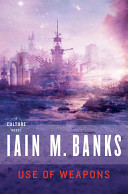
Use of Weapons

IainBanks UseofWeaponsMuch of Iain M. Banks’s science fiction was set in the world of The Culture, a utopian society that encompasses massive amounts of space, and includes artificial intelligence, alien species, simulated afterlives, and more. But for all of that, Banks is also adept at writing memorable characters, and at the center of Use of Weapons, readers will find exactly that, in the person of the memorably-named Cheradenine Zakalwe—along with a structurally innovative method of telling the story.

Other books include:

  • The Water Knife by Paolo Bacigalupi
  • The Book of Strange New Things by Michel Faber
  • Bloodchild and Other Stories by Octavia E. Butler
  • Embassytown by China Miéville
  • Elvissey by Jack Womack
  • Definitely Maybe by Arkady Strugatsky & Strugatsky Boris
  • Midnight Robber by Nalo Hopkinson
  • Oryx and Crake by Margaret Atwood
  • The Einstein Intersection by Samuel R. Delany.

Details: http://www.readitforward.com/bookshelf/science-fiction-books-people-dont-read-science-fiction/

Leave a comment

Filed under 2016, books

Turned the page?

Bookstore Sales Up 6.1% In First Half of 2016

by Jim Milliot

Source: http://www.publishersweekly.com/pw/by-topic/industry-news/bookselling/article/71190-bookstore-sales-up-6-1-in-first-half-of-2016.html?utm_source=Publishers+Weekly&utm_campaign=f50a3e33e6-UA-15906914-1&utm_medium=email&utm_term=0_0bb2959cbb-f50a3e33e6-305883061

For the first half of the year, bookstore sales were 6.1% ahead of the comparable period in 2015. According to estimates released by the U.S. Census Bureau, bookstores totaled $5.44 billion in the January-June 2016 span, up from $5.13 billion a year ago.

Bookstore sales in 2016 rose every month compared to 2015, including in June when sales increased 5.0% to $770 million.

The bookstore sector performed better than the entire retail segment. Sales for all of retail rose 3.3% in June over the comparable month in 2015 and were up 3.1% for the first half of 2016.

The solid bookstore performance in the first six months of 2016 follows a 2.5% increase for all of 2015, the first time bookstore sales posted an annual gain since 2007.

Leave a comment

Filed under 2016, bookstore

New words to live by: “Sniglet”

It is time, once again, for New words to live by. This is a word or phrase not currently in use in the U.S. English lexicon, but might need to be considered. Other words, such as obsurd, crumpify, subsus, flib, congressed, and others, can be found by clicking on the tags below. Today’s New Word is a compounding of sniggle an obsolete form of snicker and the suffix -let, meaning a small version of, such as booklet being a small book.

OLD WORD
There is no old word, unless you count sniggle, an obsolete form of snicker, meaning to laugh is a half-suppressed, usually indecorous way. Snicker can be both a verb and a noun.

NEW WORD
Sniglet, n. any word coined for something that has no specific name. In short, any of the words in New words to live by.

Sniglet was first coined in the 1980s and has been around since then.

Leave a comment

Filed under 2016, new words, New words to live by

“Holly’s Corner,” part 13

[Writer’s note: What began as a writing prompt — photo and first paragraph — has become at least the start of a story. I will endeavor to add short sections to it, at lest as long as there is some interest. It might be a little rough in parts, but that’s because it is coming “hot off the press,” which could be part of the fun of it. In the meantime, you are free to jump off from any part of this story thus far and write your own version. Click Holly’s Corner below to get Parts 1 – 12.]

by David E. Booker

“Tricia’s mom suspected my father of sleeping with a neighbor lady and one day while Dad and the woman were away, she broke into the woman’s house looking for evidence. She didn’t find any, but she found this recipe. According to the story Tricia’s mom told me once, this recipe was out on the counter and just for spite, she stole it. She didn’t even know what it was. She was just angry and looking for some way to let this woman know that if she was going to steal from her, she was going to steal from this neighbor lady.”

It was a cool, rainy day down at Holly's Corner.

It was a cool, rainy day down at Holly’s Corner.

“Does this neighbor lady have a name?”

Rachel shook her head. “She does, but I don’t remember it. ‘Neighbor lady’ was all my step-mom ever called her. I guess that’s all that stuck. Is it important?”

I shrugged. “Better to know than not.”

She smiled. “You sound like my dad, except he wasn’t saying it about knowledge, if you know what I mean.”

“Is your dad still living?”

Rachel shook her head. “He died in the arms of another woman, you might say.”
“Another woman he was have an affair with?”

“You could say that. Except this woman was a man … in woman’s clothing. He was one of those shemales, I guess they’re called. Disgusting is what they are. This one even had the gall to come to the funeral. Best fucking dressed bitch at the viewing. Had men slobbering after her until somebody pointed out the bump in the front of the skirt.”

“I bet that was you,” I said.

Rachel blushed slightly. It took the edge off her indignation and made her appear almost childlike – as if she’d been caught doing something she shouldn’t have, and while embarrassed, not fully repentant.

“Sure caused a titter or two at Dad’s send off.” She then started giggling. It was almost infectious. Even I smiled, but resisted the urge to join along.

“Would this transsexual have anything to do with the recipe?”

“Fuck no.”

I raised a hand. “Just thought I’d ask.”

“Though the bitch did try to get a piece of the pie, if you will, after Daddy died, claiming that he’d promised this he-thing several thousand dollars toward some final surgery.”

I wasn’t sure where to go. This still seemed more like some intra-family feud, and not one that would put food on my table.

“I think a family councilor would help you all better than a private cop.”
Rachel stared at me, and then nodded. “You’re probably right.” She gathered up her purse and her money, and then stood up from the booth. “Thank you for your time.”

She turned and marched out the front door of The Time Warp Tea Room. In the background, on the big TV screen, a black-and-white western played. A man dressed in a white hat and light-colored clothes was facing down a group of dark-dressed, black-hatted guys.

Bang, bang, you’re broke.

#

“A string of fools does not a strand of pearls make.”

I looked up from one of my bills and saw Father Brown standing across the desk from me. He had moved so quietly, I had not heard him.

“Some Bible passage I missed?” I asked.

Brown chuckled briefly. It was almost more of a snort. “I dare say not.”
“Not even ‘The Bible according to Father Brown’?”

“To do such a thing would be blasphemy.”

“Many of your brethren, especially on TV on Sunday mornings would disagree.”

“Barbarians and charlatans.”

“And for a modest donation, you, too, can receive this soiled section of cloth that I have put to my forehead as I prayed to God over your situation. He has shown me the truth and for only a few dollars more—”

“They wouldn’t use the word ‘soiled’ or the phrase ‘for only a few dollars more,” Brown said. “They wouldn’t be so crass.”

“But the intent would be just the same,” I said. “For a few dollars more, take you to the point of taking a few dollars more.”

“You are a cynical man,” Brown said. “I shall pray for the deliverance of your immortal soul.”

“While you’re at it, pray from some daily bread. If I don’t find paying work soon, your God may get his soul back sooner than he planned.”

“God is never surprised,” Brown said.

“Pity him.”

Brown smiled, and then shook his head. “If you don’t believe, then why’d you take me in?”

“Maybe I’m hedging my bets. Or maybe I like pissing off my neighbors.”

“I shall leave you to your ponderings.”

“And my immortal soul?”

“I shall leave you with that, too. At least for now.”

I thought about asking if it had any market value, but wasn’t sure I was ready to make any Faustian bargains with something I didn’t think I had.

Then my cell phone buzzed in its holster and I didn’t have to think about it any longer. “Gumshoe Detective Agency. We pound the pavement so you don’t have to.”

“You think you’re funny with that line? ‘We pound the pavement so you don’t have to.’” The guy’s falsetto wasn’t too grating, but I didn’t care of the mocking tone that went along with it. “I outa come over there and knock your block off.”

I hadn’t heard that phrase in a while. Nobody ever dictated that threats had to original. They might be more fun if they were.

“Come on over,” I said. “I’ll wait.”

There was silence on the wavelength. I don’t think he was expecting that. Maybe that was the reason he hung up … and then called back. I didn’t bother with my opening spiel. I already knew how he felt about that.

“You’re a real piece of work, you know that, refusing to take my wife’s case.”

“Which wife is that?” I was only half-joking. I didn’t know if Rachel was married and I didn’t know if Tricia was, either. Neither one had said and I hadn’t asked.

“Rachel, you jackass.”

“Whoever you are, if you are the husband, I think you should look after your wife, because she’ll probably have one hell of a headache. And tempting as it was to take the money she was flashing around like loose feathers from a down comforter, I try not to take money from drunk people wanting to hire me. They usually sober up and regret it.”

“She’s sobering up now, and she still wants you to take the case.” Then he said in a lower voice, “And if you don’t, I won’t hear the end of it.”

It may be sexist to say I felt sorry for the man when I heard him say it, but I did. I had spent a little time with Rachel and I could see how he might not hear the end of it. I took his address and told him I would be there in thirty minutes.

He hung up without saying thanks and that annoyed me. Manners have disappeared from the face of civility, leaving this unkempt mess of rules and political correctness. You fart in public now and you don’t say excuse me. Instead you fart and then you condescendingly sneer at anyone who looks your way as if to say, “How do you like me now, baby?”

(To be continued.)

Leave a comment

Filed under 2016, photo by David E. Booker, Story by author

Ring leader

Ring leader

Phone, phone has rung, /
but you were not among /
those who heard the sound /
as from the phone it bound /
searching for your ear /
but, alas, it is clear /
you were not here to hear /
oh, dear, oh, dear, oh dear.

Leave a comment

Filed under 2016, poetry by author

X-rays reveal 1,300-year-old writings inside later bookbindings

The words of the 8th-century Saint Bede are among those that have been found by detecting iron, copper and zinc – constituents of medieval ink

By Dalya Alberge

Source: https://www.theguardian.com/books/2016/jun/04/x-rays-reveal-medieval-manuscripts

Ancient book reveraled 100dpi_6x4_4c

Medieval manuscripts that have been hidden from view for centuries could reveal their secrets for the first time, thanks to new technology.

Dutch scientists and other academics are using an x-ray technique to read fragments of manuscripts that have been reused as bookbindings and which cannot be deciphered with the naked eye. After the middle ages manuscripts were recycled, with pages pasted inside bindings to strengthen them. Those fragments may be the unique remains of certain works.

Dr Erik Kwakkel, a medieval book historian at Leiden University, told the Observer: “It’s really like a treasure trove. It’s extremely exciting.”
Professor Joris Dik, of the Delft University of Technology, described the potential for finding new material with clues to the past as “massive”. The technology does not just make hidden texts visible, but legible.

Access to such “hidden libraries” has been made possible by macro x-ray fluorescence spectrometry (MA-XRF), which allows pages to be read without removing the bookbinding.

Bindings made between the 15th and 18th centuries often contain hidden manuscript fragments that can be much older. Bookbinders used to cut up and recycle handwritten books from the middle ages, which had become old-fashioned following the invention of printing. These fragments, described by Kwakkel as “stowaways from a distant past”, are within as many as one in five early modern age printed books.

Kwakkel added: “Much of what we’re finding is 15th or 14th century, but it would be really nice to have Carolingian material, so from the ninth century or even older. It would be great to find a fragment of a very old copy of a Bible, the most important text in the middle ages. Every library has thousands of these bindings, especially the larger collections. If you go to the British Library or the Bodleian [in Oxford], they will have thousands of these bindings. So you can see how that adds up to a huge potential.”

Experiments have found a fragment from a 12th-century manuscript that includes excerpts from the work of Bede, the 8th-century monk and scholar. The researchers were even able to disassemble multiple pages that had been pasted on to one another, making the text legible. In one case, they could read each of three medieval pages that had been glued together. Elsewhere, they found two fragments stuck together underneath the cover of a 16th-century binding.

Dik’s team originally developed the technology, in collaboration with others, to “visualise” hidden layers in Old Master paintings. In 2011, for example, they discovered a previously unknown self-portrait by Rembrandt beneath another work. Although faint and unfinished, it dispelled doubts about the surface picture’s attribution to the 17th-century Dutch master, to the excitement of art historians.

Now the technology has proved to be “equally efficient in the visualisation of hidden medieval inks,” he said. “A thin beam of x-rays is used to scan the object, charting the presence and abundance of various elements below the surface. That is how iron, copper and zinc, the main element constituents of medieval inks, could be viewed, even when covered by a layer of paper or parchment.”

The problem, though, is that the current methodology is painfully slow, with scans sometimes taking more than 24 hours. Faster techniques are being explored. Dik said: “Right now, we’ve shown that it works.”

The research has been subsidised by the Young Academy, a branch of the Royal Netherlands Academy of Arts and Sciences.

Last year it emerged that techniques had been developed to decipher ancient papyrus scrolls that were burned black and buried in ash when Mount Vesuvius erupted 2,000 years ago. Vito Mocella, a scientist in Naples, found that they could read some of the scrolls without unravelling them by peering inside with x-rays.

Referring to Mocella’s technology, Dik said: “It’s different. The papyrus texts are hidden inside papyrus. We’re looking at stuff that is covered by something that is much thicker. Parchment and papyrus are quite different. Parchment is a much thicker, denser material.”

Leave a comment

Filed under 2016, books