The novelist reveals how the store she co-owns in Nashville is making, and remaking, plans to get books to readers who want them more than ever.
We closed Parnassus Books, the bookstore I co-own in Nashville, on the same day all the stores around us closed. I can’t tell you when that was because I no longer have a relationship with my calendar.
All the days are now officially the same. My business partner Karen and I talked to the staff and told them if they didn’t feel comfortable coming in that was fine. We would continue to pay them for as long as we could. But if they were OK to work in an empty bookstore, we were going to try to keep shipping books.
In the first week we did kerbside delivery, which meant a customer could call the store and tell us what they wanted. We would take their credit card information over the phone and then run the books out to the parking lot and sling them into the open car window. Kerbside delivery seemed like a good idea but the problem was, so many people were calling that the staff wound up clustered around the cash registers, ringing up orders. No good. We reassessed and decided that all books would have to be mailed, even the books that were just going down the street.
We make our plans. We change our plans. We make other plans. This is the new world order.
Our bookstore is spacious and tidy, with rolling ladders to reach the highest shelves, a long leather sofa, and a cheerful children’s section with a colourful mural featuring a frog telling a story to a rapt pack of assorted animals. The backroom is the polar opposite, a barely contained bedlam jammed with desks, towering flats of broken down boxes, boxes full of new releases, boxes of books to be returned. There are Christmas decorations, abandoned spinner displays, dog beds, day-old doughnuts. We are squashed in there together, forced to listen to one another’s private phone conversations and sniff one another’s perfume.
It is not the landscape of social distancing.
But in the absence of customers coming to browse, the backroom folks have moved to the capacious store front, setting up folding tables far away from each other to make our private spaces. We crank up the music. We pull books off the shelves. The floor is a sea of cardboard boxes – orders completed, orders still waiting on one more book. We make no attempt to straighten anything up before leaving at night. We have neither the impetus nor the energy. There are bigger fish to fry. Orders are coming in as fast as we can fill them.
I think of how I used to talk in the pre-pandemic world, going on about the importance of reading and shopping local and supporting independent bookstores. These days I realise the extent to which it’s true – I understand now that we’re a part of our community as never before, and that our community is the world. When a friend of mine, stuck in his tiny New York apartment, told me he dreamed of being able to read the new Louise Erdrich book, I made that dream come true. I can solve nothing, I can save no one, but dammit, I can mail Patrick a copy of The Night Watchman.
At least for now. We’re part of a supply chain that relies on publishers to publish the books and distributors to ship the books and the postal service to pick up the boxes and take them away. We rely on our noble booksellers filling the boxes to stay healthy and stay away from each other. So far this fragile ecosystem is holding, though I understand that in the distance between my writing this piece and your reading it, it could fall apart. Today is what we’ve got, this quiet day in which finally there is time to read again. So call your local bookstore and see if they’re still shipping. It turns out the community of readers and books is the community we needed in the good old days, and it’s the community we need in hard times, and it’s the community we’ll want to be there when this whole thing is over.
“The only problem she had was men, who constantly bothered her”: this might be the motto of Jami Attenberg’s latest novel. The line is uttered by Twyla, the daughter-in-law of a dying misogynist gangster named Victor Tuchman. She’s not alone in feeling this way about men in general, and Victor in particular. His wife, Barbra, and his daughter, Alex, have also gathered to see whether the man who made their lives miserable will die, and to figure out how much they really care. This story is about them.
The bulk of the novel takes place over a single day, just after Victor has been for a heart attack. The setting is present-day New Orleans, where Victor and Barbra have moved after a long, mansion-bound life in Connecticut, ostensibly to be near their son, Gary, and his wife and daughter, Twyla and Avery. But Victor is a deceptive man, even to his children. He is also a bad man.
Though we’re never given the exact nature of his crimes, we learn that he was a New Jersey gangster, more or less of the Sopranos variety. He was also an abusive husband and father, a philanderer and a tyrant and likely a rapist. Whatever the details of his life, their implications have long been clear to Alex: “Her gut told her he should be in jail right now.”
It is the women around Victor – Barbra, Alex and Twyla – who must endure the hurricane of his life, who must try to love him, to make him happy, to cover up for him, and who are all upbraided and assaulted by him. Much like Attenberg’s 2012 book The Middlesteins, this novel is uncompromising in its penetrating treatment of the ties that bind a family together.
Attenberg weaves her narrative with a scintillating and often wry prose; her love for her characters, and her keen interest in their joys and longings, never fails to shine through. Often she sets scenes with the terseness of a screenplay, but periodically she plunges into rich description, as when Twyla, crying, looks in the mirror and notices “lips in distress, cracked at the edges, only half the color left behind, the other half disappeared, god knows where, absorbed into skin, into air, into grief”.
These tears are not just for Victor’s victims. Alex must plead with her ex-husband, Bobby, not to expose their daughter to his compulsive lechery. Twyla has lived the bulk of her life trying not to wither beneath the male gaze, and now finds herself more distanced from Gary than ever. Barbra struggles to understand why she still loves her husband, after all this time. And all of them live under the shadow of another, casually destructive man: as Alex thinks every day, “our president [is] a moron and the world [is] falling apart”. The varied experiences of these characters make it clear that the bad man is not an exception to the rule of manhood; he merely defines its borders.
Jami Attenberg
The novel is not only concerned with gender politics: it also frequently returns to questions of socioeconomic class. And yet, it is weaker on this topic. We get cursory moments of virtue-signalling, when the narrative pauses briefly on working people – a cashier, a waitress, a tram driver – to tell us about the second job they’re forced to hold, or about how much they hate privileged tourists. The novel tells us about mass graves for the indigent, and gives us 30 pages with Sharon, a black woman only tangentially related to the plot, who lifts up her neighbourhood while suffering the effects of white gentrification.
But none of these people is a protagonist, none of their lives is centred. The novel points to them, wants them to be recognised; but it refuses to perform that recognition itself. “Whatever we do tonight, let’s not talk about politics,” Alex says to a man she meets at a bar, just after an altercation with a homeless man on the street. Despite the book’s signals to the contrary, this might be its other motto.
• All This Could Be Yours is published by Serpent’s Tail.
Published in 1980, parts of the book take place in 2020, so it was interesting to see what Dr. Forward thought of the 2020. There was no virus running rampant, no nut in the White House, and in many ways a saner world than this 2020. Is it too late to change?
Anyway, this is what would be called a hard science fiction book. The human race in 2020 discovers a traveling neutron star passing though the solar system. In 2050, a group of humans find a way to orbit the star to study it. While studying it they discover there is a race of beings that lives on the star that has a gravity of 67 billion g’s. That means whatever something weigh on Earth, it would weigh 67 billion times that on Dragon’s Egg — the name of the neutron star.
The novel is about how the microscopically sized race of beings — the cheela — develop on Dragon’s Egg, before, during, and after human contact. There is no interstellar war, no invasion of Earth, no plaque vested one species by another. It is a story of how a race advances from infancy to maturity, eventually outpacing its teachers — the humans. This happens in part because time passes faster for the cheela than humans. Consequently, the humans seem slow to the cheela and the cheela come and go quickly to the humans.
This is not a perfect book. The humans are father flat, while the physically flat cheela and more well rounded. Also, the idea that humans rather easily share all the knowledge they have with the cheela. Nobody objects to this and nobody has to check back with Earth, which I don’t think would happen in real life. Also, once the cheela surpass the humans, they share many parts of their beyond-human knowledge and send other parts in code that the cheela say the humans will decipher eventually. No explanation for this cloaking of knowledge is given and it strikes as bit of a plot device than an organic part of the story.
Overall, an interesting read, especially if hard science fiction is you interest.
Bertrand Russell (May 18, 1872–February 2, 1970) endures as one of humanity’s most lucid and luminous minds — an oracle of timeless wisdom on everything from what “the good life” really means to why “fruitful monotony” is essential for happiness to love, sex, and our moral superstitions. In 1950, he was awarded the Nobel Prize in Literature for “his varied and significant writings in which he champions humanitarian ideals and freedom of thought.” On December 11 of that year, 78-year-old Russell took the podium in Stockholm to receive the grand accolade.
Russell begins by considering the central motive driving human behavior:
All human activity is prompted by desire. There is a wholly fallacious theory advanced by some earnest moralists to the effect that it is possible to resist desire in the interests of duty and moral principle. I say this is fallacious, not because no man ever acts from a sense of duty, but because duty has no hold on him unless he desires to be dutiful. If you wish to know what men will do, you must know not only, or principally, their material circumstances, but rather the whole system of their desires with their relative strengths.
[…]
Man differs from other animals in one very important respect, and that is that he has some desires which are, so to speak, infinite, which can never be fully gratified, and which would keep him restless even in Paradise. The boa constrictor, when he has had an adequate meal, goes to sleep, and does not wake until he needs another meal. Human beings, for the most part, are not like this.
Russell points to four such infinite desires — acquisitiveness, rivalry, vanity, and love of power — and examines them in order:
Acquisitiveness — the wish to possess as much as possible of goods, or the title to goods — is a motive which, I suppose, has its origin in a combination of fear with the desire for necessaries. I once befriended two little girls from Estonia, who had narrowly escaped death from starvation in a famine. They lived in my family, and of course had plenty to eat. But they spent all their leisure visiting neighbouring farms and stealing potatoes, which they hoarded. Rockefeller, who in his infancy had experienced great poverty, spent his adult life in a similar manner.
[…]
However much you may acquire, you will always wish to acquire more; satiety is a dream which will always elude you.
In 1938, Henry Miller also articulated this fundamental driver in his brilliant meditation on how money became a human fixation. Decades later, modern psychologists would term this notion “the hedonic treadmill.” But for Russell, this elemental driver is eclipsed by an even stronger one — our propensity for rivalry:
The world would be a happier place than it is if acquisitiveness were always stronger than rivalry. But in fact, a great many men will cheerfully face impoverishment if they can thereby secure complete ruin for their rivals. Hence the present level of taxation.
Rivalry, he argues, is in turn upstaged by human narcissism. In a sentiment doubly poignant in the context of today’s social media, he observes:
Vanity is a motive of immense potency. Anyone who has much to do with children knows how they are constantly performing some antic, and saying “Look at me.” “Look at me” is one of the most fundamental desires of the human heart. It can take innumerable forms, from buffoonery to the pursuit of posthumous fame.
[…]
It is scarcely possible to exaggerate the influence of vanity throughout the range of human life, from the child of three to the potentate at whose frown the world trembles.
But the most potent of the four impulses, Russell argues, is the love of power:
Love of power is closely akin to vanity, but it is not by any means the same thing. What vanity needs for its satisfaction is glory, and it is easy to have glory without power… Many people prefer glory to power, but on the whole these people have less effect upon the course of events than those who prefer power to glory… Power, like vanity, is insatiable. Nothing short of omnipotence could satisfy it completely. And as it is especially the vice of energetic men, the causal efficacy of love of power is out of all proportion to its frequency. It is, indeed, by far the strongest motive in the lives of important men.
[…]
Love of power is greatly increased by the experience of power, and this applies to petty power as well as to that of potentates.
Anyone who has ever agonized in the hands of a petty bureaucrat — something Hannah Arendt unforgettably censured as a special kind of violence — can attest to the veracity of this sentiment. Russell adds:
In any autocratic regime, the holders of power become increasingly tyrannical with experience of the delights that power can afford. Since power over human beings is shown in making them do what they would rather not do, the man who is actuated by love of power is more apt to inflict pain than to permit pleasure.
But Russell, a thinker of exceptional sensitivity to nuance and to the dualities of which life is woven, cautions against dismissing the love of power as a wholesale negative driver — from the impulse to dominate the unknown, he points out, spring such desirables as the pursuit of knowledge and all scientific progress. He considers its fruitful manifestations:
It would be a complete mistake to decry love of power altogether as a motive. Whether you will be led by this motive to actions which are useful, or to actions which are pernicious, depends upon the social system, and upon your capacities. If your capacities are theoretical or technical, you will contribute to knowledge or technique, and, as a rule, your activity will be useful. If you are a politician you may be actuated by love of power, but as a rule this motive will join itself on to the desire to see some state of affairs realized which, for some reason, you prefer to the status quo.
Human beings show their superiority to the brutes by their capacity for boredom, though I have sometimes thought, in examining the apes at the zoo, that they, perhaps, have the rudiments of this tiresome emotion. However that may be, experience shows that escape from boredom is one of the really powerful desires of almost all human beings.
He argues that this intoxicating love of excitement is only amplified by the sedentary nature of modern life, which has fractured the natural bond between body and mind. A century after Thoreau made his exquisite case against the sedentary lifestyle, Russell writes:
Our mental make-up is suited to a life of very severe physical labor. I used, when I was younger, to take my holidays walking. I would cover twenty-five miles a day, and when the evening came I had no need of anything to keep me from boredom, since the delight of sitting amply sufficed. But modern life cannot be conducted on these physically strenuous principles. A great deal of work is sedentary, and most manual work exercises only a few specialized muscles. When crowds assemble in Trafalgar Square to cheer to the echo an announcement that the government has decided to have them killed, they would not do so if they had all walked twenty-five miles that day. This cure for bellicosity is, however, impracticable, and if the human race is to survive — a thing which is, perhaps, undesirable — other means must be found for securing an innocent outlet for the unused physical energy that produces love of excitement… I have never heard of a war that proceeded from dance halls.
[…]
Civilized life has grown altogether too tame, and, if it is to be stable, it must provide harmless outlets for the impulses which our remote ancestors satisfied in hunting… I think every big town should contain artificial waterfalls that people could descend in very fragile canoes, and they should contain bathing pools full of mechanical sharks. Any person found advocating a preventive war should be condemned to two hours a day with these ingenious monsters. More seriously, pains should be taken to provide constructive outlets for the love of excitement. Nothing in the world is more exciting than a moment of sudden discovery or invention, and many more people are capable of experiencing such moments than is sometimes thought.
From gigil to wabi-sabi and tarab, there are many foreign emotion words with no English equivalent. Learning to identify and cultivate these experiences could give you a richer and more successful life.
Have you ever felt a little mbuki-mvuki – the irresistible urge to “shuck off your clothes as you dance”? Perhaps a little kilig – the jittery fluttering feeling as you talk to someone you fancy? How about uitwaaien – which encapsulates the revitalising effects of taking a walk in the wind?
These words – taken from Bantu, Tagalog, and Dutch – have no direct English equivalent, but they represent very precise emotional experiences that are neglected in our language. And if Tim Lomas at the University of East London has his way, they might soon become much more familiar.
Lomas’s Positive Lexicography Project aims to capture the many flavours of good feelings (some of which are distinctly bittersweet) found across the world, in the hope that we might start to incorporate them all into our daily lives. We have already borrowed many emotion words from other languages, after all – think “frisson”, from French, or “schadenfreude”, from German – but there are many more that have not yet wormed their way into our vocabulary. Lomas has found hundreds of these “untranslatable” experiences so far – and he’s only just begun.
Learning these words, he hopes, will offer us all a richer and more nuanced understanding of ourselves. “They offer a very different way of seeing the world.”
Lomas says he was first inspired after hearing a talk on the Finnish concept of sisu, which is a sort of “extraordinary determination in the face of adversity”. According to Finnish speakers, the English ideas of “grit”, “perseverance” or “resilience” do not come close to describing the inner strength encapsulated in their native term. It was “untranslatable” in the sense that there was no direct or easy equivalent encoded within the English vocabulary that could capture that deep resonance.
Intrigued, he began to hunt for further examples, scouring the academic literature and asking every foreign acquaintance for their own suggestions. The first results of this project were published in the Journal of Positive Psychology last year.
Many of the terms referred to highly specific positive feelings, which often depend on very particular circumstances:
Desbundar (Portuguese) – to shed one’s inhibitions in having fun
Tarab (Arabic) – a musically induced state of ecstasy or enchantment
Shinrin-yoku (Japanese) – the relaxation gained from bathing in the forest, figuratively or literally
Gigil (Tagalog) – the irresistible urge to pinch or squeeze someone because they are loved or cherished
Yuan bei (Chinese) – a sense of complete and perfect accomplishment
Iktsuarpok (Inuit) – the anticipation one feels when waiting for someone, whereby one keeps going outside to check if they have arrived
But others represented more complex and bittersweet experiences, which could be crucial to our growth and overall flourishing.
Natsukashii (Japanese) – a nostalgic longing for the past, with happiness for the fond memory, yet sadness that it is no longer
Wabi-sabi (Japanese) – a “dark, desolate sublimity” centred on transience and imperfection in beauty
Saudade (Portuguese) – a melancholic longing or nostalgia for a person, place or thing that is far away either spatially or in time – a vague, dreaming wistfulness for phenomena that may not even exist
Sehnsucht (German) – “life-longings”, an intense desire for alternative states and realisations of life, even if they are unattainable
In addition to these emotions, Lomas’s lexicography also charted the personal characteristics and behaviours that might determine our long-term well-being and the ways we interact with other people.
Dadirri (Australian aboriginal) term – a deep, spiritual act of reflective and respectful listening
Pihentagyú (Hungarian) – literally meaning “with a relaxed brain”, it describes quick-witted people who can come up with sophisticated jokes or solutions
Desenrascanço (Portuguese) – to artfully disentangle oneself from a troublesome situation
Sukha (Sanskrit) – genuine lasting happiness independent of circumstances
Orenda (Huron) – the power of the human will to change the world in the face of powerful forces such as fate
You can view many more examples on his website, where there is also the opportunity to submit your own. Lomas readily admits that many of the descriptions he has offered so far are only an approximation of the term’s true meaning. “The whole project is a work in progress, and I’m continually aiming to refine the definitions of the words in the list,” he says. “I definitely welcome people’s feedback and suggestions in that regard.”
In the future, Lomas hopes that other psychologists may begin to explore the causes and consequences of these experiences – to extend our understanding of emotion beyond the English concepts that have dominated research so far.
But studying these terms will not just be of scientific interest; Lomas suspects that familiarising ourselves with the words might actually change the way we feel ourselves, by drawing our attention to fleeting sensations we had long ignored.
“In our stream of consciousness – that wash of different sensations feelings and emotions – there’s so much to process that a lot passes us by,” Lomas says. “The feelings we have learned to recognise and label are the ones we notice – but there’s a lot more that we may not be aware of. And so I think if we are given these new words, they can help us articulate whole areas of experience we’ve only dimly noticed.”
As evidence, Lomas points to the work of Lisa Feldman Barrett at Northeastern University, who has shown that our abilities to identify and label our emotions can have far-reaching effects.
Her research was inspired by the observation that certain people use different emotion words interchangeably, while others are highly precise in their descriptions. “Some people use words like anxious, afraid, angry, disgusted to refer to a general affective state of feeling bad,” she explains. “For them, they are synonyms, whereas for other people they are distinctive feelings with distinctive actions associated with them.”
This is called “emotion granularity” and she usually measures this by asking the participants to rate their feelings on each day over the period of a few weeks, before she calculates the variation and nuances within their reports: whether the same old terms always coincide, for instance.
Importantly, she has found that this then determines how well we cope with life. If you are better able to pin down whether you are feeling despair or anxiety, for instance, you might be better able to decide how to remedy those feelings: whether to talk to a friend, or watch a funny film. Or being able to identify your hope in the face of disappointment might help you to look for new solutions to your problem.
In this way, emotion vocabulary is a bit like a directory, allowing you to call up a greater number of strategies to cope with life. Sure enough, people who score highly on emotion granularity are better able to recover more quickly from stress and are less likely to drink alcohol as a way of recovering from bad news. It can even improve your academic success. Marc Brackett at Yale University has found that teaching 10 and 11-year-old children a richer emotional vocabulary improved their end-of-year grades, and promoted better behaviour in the classroom. “The more granular our experience of emotion is, the more capable we are to make sense of our inner lives,” he says.
Both Brackett and Barrett agree that Lomas’s “positive lexicography” could be a good prompt to start identifying the subtler contours of our emotional landscape. “I think it is useful – you can think of the words and the concepts they are associated with as tools for living,” says Barrett. They might even inspire us to try new experiences, or appreciate old ones in a new light.
It’s a direction of research that Lomas would like to explore in the future. In the meantime, Lomas is still continuing to build his lexicography – which has grown to nearly a thousand terms. Of all the words he has found so far, Lomas says that he most often finds himself pondering Japanese concepts such as wabi-sabi (that “dark, desolate sublimity” involving transience and imperfection). “It speaks to this idea of finding beauty in phenomena that are aged and imperfect,” he says. “If we saw the world through those eyes, it could be a different way of engaging in life.”
David Robson is BBC Future’s feature writer. He is @d_a_robson on Twitter.
‘Like most other American systems and professions, delusions around meritocracy continue to pervade the writing world. ‘ Illustration: Julien Posture/The Guardian
There is nothing more sustaining to long-term creative work than time and space – and these things cost money
Let’s start with me: I’m not sure how or if I’d still be a writer without the help of other people’s money. I have zero undergrad debt. Of my three years of grad school, two of them were funded through a teaching fellowship; my parents helped pay for the first. The last two years my stipend barely covered the childcare I needed to travel uptown three days a week to teach and go to class and my husband’s job is what kept us afloat.
I got connections from that program. I got my agent through the recommendation of a professor. Nearly every year since I graduated from that program, I have been employed by them. The thing I’m most sure I had though, that was a direct result of my extraordinary privilege, is the blindness with which I bounded toward this profession, the not knowing, because I had never felt, until I was a grownup, the very real and bone-deep fear of not knowing how you’ll live from month to month. Other versions of this story that I know from other people: a down payment from a grandpa on a brownstone; monthly parental stipends; a partner who works at a startup; a partner who’s a corporate lawyer; a wealthy former boss who got attached and agreed to pay their grad school off.
Once, before a debut novelist panel geared specifically to aspiring writers, one of the novelists with whom I was set to speak mentioned to me that they’d hired a private publicist to promote their book. They told me it cost nearly their whole advance but was worth it, they said, because this private publicist got them on a widely watched talkshow. During this panel, this writer mentioned to the crowd at one point that they “wrote and taught exclusively”, and I kept my eyes on my hands folded in my lap. I knew this writer did much of the same teaching I did, gig work, often for between $1,500-$3,000 for a six to eight-week course; nowhere near enough to sustain one’s self in New York. I knew their whole advance was gone, and that, if the publicist did pay off, it would be months before they might accrue returns.
I did not know what this writer, who I thought was single, paid in rent, or all the other ways that they might have been able to cut corners, that I, a mother of two, could not cut, but even then, it felt impossible to me that this writer was sustaining themselves in any legitimate way without some outside help. I thought, maybe, when they said “write” they might be including copywriting or tech, as some others that I know support themselves.
I knew all these aspiring writers, though, heard this person say this and assumed that there was a way to make a living as a writer, that they thought this person was “making it” in ways they hoped one day to be. I don’t know this writer and don’t know how, actually, they lived. What I do know is, when the panel was over, I wanted to take the microphone back and say loudly to the students that what this writer said was, at least in part, a lie.
On Instagram and Twitter there are writers who “write full time” also. They post pictures of their desk or their pens and talk about “process”. Maybe, two years ago, they sold a quiet literary novel to an independent press. For my students, for all the people I see out there, trying to break in or through and watching, envious, I want to attach to these statements and these Instagram posts, a caveat that says the writing isn’t what is keeping this person safe and clothed and fed.
According to a 2018 Author’s Guild Study the median income of all published authors for all writing related activity was $6,080 in 2017, down from $10,500 in 2009; while the median income for all published authors based solely on book-related activities went from $3,900 to $3,100, down 21%. Roughly 25% of authors earned $0 in income in 2017.
I would argue that there is nothing more sustaining to long-term creative work than time and space – these things cost money – and the fact that some people have access to it for reasons that are often outside of their control continues to create an ecosystem in which the tenor of the voices that we hear from most often remains similar. It is no wonder, I say often to students, that so much of the canon is about rich white people. Who else, after all, has the time and space to finish a book. Who else, after all, as the book is coming out, has the time and space and money to promote and publicize that book?The median income of all published authors for all writing related activity was $6,080 in 2017
There are ramifications, I think, of no one mentioning the source of this freedom when they have it. There is the perpetuation of an illusion that makes an unsustainable life choice appear sustainable, that makes the specific achievements of particular individuals seem more remunerative than they actually are. There is the feeling that the choices that we’ve made outside of writing: who we married, whether or not we had children, the families we were born to, will forever hinder our ability to make good work.
When students ask me for advice with regard to how to “make it as a writer”, I tell them to get a job that also gives them time and space somehow to write; I tell them find a job that, if they still have it 10 years from now, it wouldn’t make them sad. I worry often that they think this means I don’t think their work is worthy; that I don’t believe they’ll make it in the way that they imagine making it, but this advice is me trying help them sustain themselves enough to make the work I know they can.
Like most other American systems and professions, delusions around meritocracy continue to pervade the writing world. Those of us who are not bolstered by outside sources, those of us who are but still struggle, and say it out loud, often run the risk of seeming whiny or ungrateful; maybe we worry we will just be thought not good enough. To be a writer is a choice, after all, and I continue to make it. But perpetuating the delusion that the choice is not impossibly risky, precarity-inducing, only hurts the participants’ ability to reconsider the various shapes their lives might take in service of sustaining it and them.
It allows a system that cannot sustain most of the producers of its products to continue to pretend it can.
Lynn Steger Strong is the author of the novel Want, to be released in July 2020
Ever have those trains of thought that just… wait, what were we talking about, again? Staying focused can be hard, especially in an age when there are tons of distractions around you. So, whether it’s something you don’t really want to have to pay attention to—like work; or something you do—like talking to a friend in a crowded bar—sometimes it’s just plain hard to concentrate on what’s happening right in front of you.
Jumping to other stimuli—like someone looking at you, or your phone buzzing—can give you a dopamine push, which is one reason it can be so appealing. But another is that, when multitasking is the norm, it’s hard to stop doing it. “We have trained ourselves to be constantly distracted and multitasking, so even though we may have a project in front of us, or we may be talking to someone, our minds have been trained to look to other things,” says Natalie Bell, a mindfulness coach based in Los Angeles.
Distractibility can run deeper than habit. “You might be distracted because you have sensory problems or visual processing problems or slow processing or memory problems, and you can also have biochemical problems,” says Kelly Dorfman, a clinical nutritionist. “If your chemistry is out of balance, then your brain doesn’t work.” What you’re eating and when can impact that chemistry. Skipping meals, eating irritants, and not eating nutrient-rich foods can make it harder to concentrate.
What’s going on around you and where you are right now as a person also matter. You might be more distracted in some environments, and less distracted in others. Or while working on certain tasks. Or while talking to different people. “It might have to do with something as simple as how much sleep you got, or what else is going on in your life. There are a lot of different factors. But being tuned into what your tendency is and what your current state of being is can go a long way to helping you make the adjustments you need to be able to focus on the things that are important,” says Natalie Houston, a productivity coach in the Boston area.
But it is possible to change your attention span. To get better at concentrating, start small.”Choose one point of focus or one task. Just choose one, putting all others to the side or shutting them down,” says Bell. If you’re working on one project, clear away materials that don’t have anything to do with it, like closing tabs, moving papers off of your desk, and putting down your phone. “A sense of more calm in the immediate visual environment helps you focus better,” says Houston.
Look at the rest of your environment, too: Does silence help you more? Or do you work better with ambient noise? Or maybe white noise? Or even music? How comfortable is your chair? Are you better at doing certain tasks in certain places?
You can also train yourself to be more mindful by focusing on your breath in your body. Set a timer for three minutes and keep your attention on your breath as it goes in and out, and bring your mind back to your breath when it inevitably wanders. “Learning to refocus attention by using that kind of mindfulness technique can really help you to train your attention back to focus on one thing,” says Bell.
If focusing on your breath doesn’t work, try turning your awareness to the soles of your feet where they touch the floor. Or to the sensations of where you’re sitting. Or to your hands, as they rest against each other. “Try to use a sensory experience to help focus attention while you’re in the middle of something,” says Bell. “Any sensation can help you ground yourself.”
Being compassionate with yourself helps, too. If you’re distracted because of something going on internally or something bigger happening in your life, be kind to yourself and remind yourself that’s what’s going on. “There’s a saying in mindfulness, name it to tame it. If you can name a difficult experience, your brain can begin to regulate that feeling in your body,” says Bell. Share with someone around you if that’s an option, but if it’s not, talk to yourself like you’re your own supportive friend. Or put a hand over your heart or give yourself a hug. “Be there for yourself. Physical soothing touch releases oxytocin and other opiates in your bloodstream to counteract stress. So this is really powerful neuroscience,” says Bell.
If you’re distracted because you’re just really busy right now, keep a notepad nearby to jot down thoughts, so your brain doesn’t have to worry about remembering them. That way, “your brain can just relax, instead of tapping you on the shoulder every 10 minutes saying, ‘Don’t forget,’” says Houston.
And don’t be afraid of getting distracted—because you’re going to get distracted. When that happens, notice it and gently bring your attention back. Remember, once you get used to mindfulness, it becomes way easier to practice it anywhere. “The more you do these practices, the more you train yourself to have that response. You need to remember that you can do these things,” says Bell.
But total mindfulness and balance are lies we tell ourselves in order to live. “It’s really important as an idea, and it’s also in some ways a fiction,” says Houston. Instead, “allowing for seasonal shifts helps us relax about the idea of feeling insufficient if we’re not living up to some kind of fictitious ideal of work-life balance that very few people really enact.”
After all, distraction is a capitalist construct. “We live in a world where the financial interests of large corporations put a lot of effort into keeping us distracted. When we’re distracted, we spend more time online, we spend more time in front of advertisements, we spend more time in various states of trance, meaning eating, drinking, shopping, consuming our ways into distracting ourselves from the harder questions in our lives,” says Houston.
Break out of that by finding joy in smaller moments of focus, and then building. “We need to recondition ourselves to find a certain pleasure in focused attention. Which actually there is,” says Bell. “What we get from focusing our attention is a sense of calm in our mind and body.”
This article was originally published on August 16, 2017, by NYLON.
Cost: $6.95 / entry
Start: February 02, 2020
Deadline: May 08, 2020
Prize: Grand prize: $500 cash, one free week of boosts for their winning story, and a gold contest badge. Runner-ups: $100 cash and a silver contest badge.
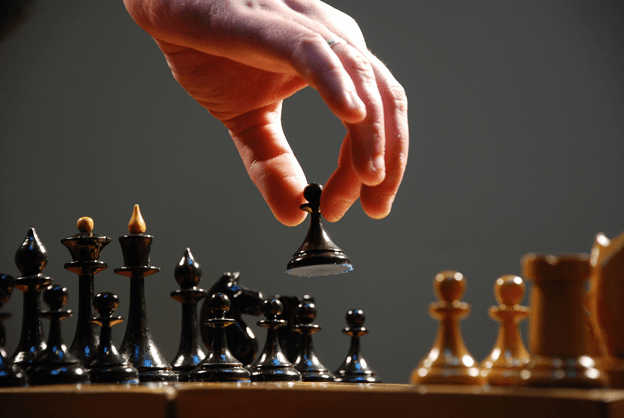
Take a look at the picture above. In 500 words or less, write a story about the image. The challenge of flash fiction is to create a thought-provoking story within the tight word constraints of the writing form. The story can be any genre as long as it is based on the picture. Prizes: One grand-prize winner will receive $500 and receive a gold contest badge. Two runner-ups will receive $100 and receive a silver contest badge. Cost The cost is $6.95/entry. Writers can submit as many entries as they want.
To Alec Burks, a 30-year-old project manager at a construction company in Seattle, Sunday evenings feel like “the end of freedom,” a dreadful period when time feels like it’s quickly disappearing, and, all of a sudden, “in 12 hours, I’m going to be back at my desk.” It’s not that Burks doesn’t like his job—he does. But one thing that contributes to the feeling, he told me, is that “you almost have to shrink who you are a little bit sometimes to fit into that mold of your job description.” The weekend, by contrast, doesn’t require any such shrinking.
The not-exactly-clinical diagnosis for this late-weekend malaise is the Sunday scaries, a term that has risen to prominence in the past decade or so. It is not altogether surprising that the transition from weekend to workweek is, and likely has always been, unpleasant. But despite the fact that the contours of the standard workweek haven’t changed for the better part of a century, there is something distinctly modern about the queasiness so many people feel on Sunday nights about returning to the grind of work or school.
Regardless of whether people call this experience the Sunday scaries (Sunday evening feeling and Sunday syndrome are two alternatives), a lot of them undergo some variation of it. A 2018 survey commissioned by LinkedIn found that 80 percent of working American adults worry about the upcoming workweek on Sundays. Another survey by a home-goods brand found that the Sunday scaries’ average time of arrival is 3:58 p.m., though they seem to set in later than that for many people. (A cousin of the Sunday scaries is the returning-from-vacation scaries, which can fall on any day of the week.)
“This feeling, whether we call it anxiety, worry, stress, fear, whatever, it’s all really the same thing,” says Jonathan Abramowitz, a clinical psychologist and professor at the University of North Carolina at Chapel Hill. “Psychologically, it’s a response to the perception of some sort of threat.” The perceived threat varies—it might be getting up early, or being busy and “on” for several days in a row—but the commonality, Abramowitz says, is that “we jump to conclusions” and “underestimate our ability to cope.” For most people, he reckons, the stress of Sunday is uncomfortable but ultimately manageable—and they end up coping just fine. (And just as with other forms of anxiety, some people don’t feel the Sunday scaries at all.)
“Low-grade existential dread” is how Erin Thibeau, a 28-year-old who works in marketing at a design firm in Brooklyn, describes the feeling she gets on Sunday afternoons and evenings. For her, the end of a weekend presents stressful questions about whether she has taken full advantage of having two days off. Those questions fall under two categories that seem to be in tension: “It’s a mix of ‘Have I been productive enough?’ and ‘Have I relaxed enough?’” she told me.
“In 19—whatever—52, some people hated their jobs and didn’t want to go back to work, but I don’t think this is about hating your job,” says Anne Helen Petersen, a senior culture writer at BuzzFeed and the author of the forthcoming book Can’t Even: How Millennials Became the Burnout Generation. “I think the Sunday scaries are about feeling an overwhelming sense of pressure”—to perform well at work and thus pursue or maintain financial stability, as well as to keep up other everyday responsibilities, like cooking or child care.
“I don’t think there’s anything that’s timeless about [the Sunday scaries],” Petersen told me. “Burnout and the anxiety that accompanies it are so much about living under our current iteration of capitalism and about class insecurity.” From roughly the end of World War II to 1970—a period that’s often called the Golden Ageof American capitalism—Petersen says, “there were a ton of jobs that weren’t great, but the difference was that people were more secure in their class position … [Now] it’s this huge combination of not only ‘How am I going to do in my job?,’ but all these other things that I’m anxious about—‘If I lose my job, then I’m not going to have medical insurance.’” This goes some way toward explaining the need to make weekends both productive and relaxing—workers need to both get stuff done and also make sure that they’ve sufficiently recharged to get more stuff done during the week.
Work has changed, and so have Sundays themselves. One analysis of Canadian time-use data from 1981 to 2005 that tracked paid work, chores, shopping, and child care found that “Sundays became busier and behaviorally closer to weekdays than they were at the beginning of the 1980s.” “This change would probably become even more obvious,” the study’s author speculated, “if one were to go back to the older data sets, such as [one 1968 data set] from Washington, D.C., where Sunday meals at home occupied more than 90 minutes and shopping only 8 minutes.”
Given how work (side gigs included) has, for many people, bled into nights and weekends, Petersen says, “Two days is not enough—it’s just not … For people I know, myself included, Saturday is a catch-up day, and then Sunday is the only real day of leisure. So people, as soon as they start, they’re like, ‘It’s about to end!’ You’re so conscious of the fact that it’s so short.”
This is the economic milieu from which the Sunday scaries have emerged. It is responsible for the Sunday scaries–branded vegan CBD gummies, the how-to videos outlining “productive” Sunday routines for preparing for the workweek, and—perhaps most troublingly—the tweets from brands such as Starbucks, Mary Kay, and Malibu Rum about warding off the Sunday scaries.
The phrase itself hasn’t been around for very long. Kory Stamper, a lexicographer and author, told me that the first written usage of Sunday scaries she could find after searching around was in a hangover-inspired entry from 2009 on the website Urban Dictionary. Over the course of the 2010s, though, the scaries became less about the consequences of partying than the anticipation of the week ahead. A spokesperson for Twitter told me that use of the phrase has been “growing steadily” on its platform since early 2016, and that 90 percent of tweets that mention it come from people in the U.S.
One advantage of the term is that it is immediately graspable, but at the same time it is almost gratingly infantilizing, expressing genuinely uncomfortable emotions in the language of toddlers. (Multiple people I interviewed for this story disliked the term on these grounds, even as they noted its usefulness.)
“For some reason, we have a great whack of words that sound silly but describe unpleasant feelings or negative emotions: the heebie-jeebies, the screaming meemies, the collywobbles, the jitters, the creeps, a case of the Mondays, boo-hoo,” Stamper says. She notes that some of these terms are playful and sonically repetitive, and wondered if “we like these ameliorating terms because their humor makes it easier to talk about something we would rather not talk about at all.”
The phrase seems even more modern, and even more childish, considering the dangerous outcomes that many American workers used to fear on the job. “There are lots of stories, almost 100 years ago, of people dreading going back to the factory, whether it’s injuries or being yelled at,” says Nelson Lichtenstein, a professor of history at the University of California at Santa Barbara. “It was said that at the Ford Motor Company, the foreman knew how to shout ‘Speed up!’ in 15 languages.” Scaries doesn’t quite do justice to the awful work experiences that many people had back then, and still have today.
Whatever this feeling is called, and whatever economic conditions may be in place right now, people have probably been mourning the end of weekends in one way or another for as long as days off have existed. In the mid-19th century, when Sunday was workers’ only official full day off in England, many of them extended their break by skipping work on Monday, “whether to relax, to recover from drunkenness, or both,” explained Witold Rybczynski in The Atlantic in 1991. This habit, which scans as a symptom of a Sunday scaries–like feeling, was effectively formalized in some industries and was referred to as “keeping Saint Monday.”
Precursors to the modern Sunday scaries were detectable as long as 30 years ago. In 1991, The New York Times published an analysis of “the Sunday blues,” and while economic precarity was listed among the potential causes, the article presented a host of other possible explanations: an interruption of the internal biological clock’s usual weekday sleep cycles, caffeine withdrawal, hangovers, and, of course, a simple dislike of work (or school, or housework).
The proposed cures for this unease range from the micro to the macro. Some of the people I interviewed who experience the Sunday scaries have been implementing plans to thwart them. Erin Thibeau finds some success with what she calls her “Sunday Funday initiative”—a program that aims to “extend the feeling of the weekend” by strategically scheduling movies, museum visits, and walks in the park when the scaries typically set in. Maggie Lofboom, a 36-year-old who works in landscape design and as an opera singer in Minneapolis, says she cross-stitches and takes baths to keep the scaries at bay.
Sarah Savoy, a 35-year-old who works at a think tank in Washington, D.C., stumbled on an unexpected antidote: having young children. She used to get the Sunday scaries in her 20s, but they’ve since subsided. “Our older daughter is a terrible napper, so [on Sundays] from 2 o’clock on it’s survival parenting, just trying to get to the end of the day,” she told me. “One of the things I look forward to about the week is that we have a pretty set routine, which can fall apart on a weekend.” Of course, this pattern has produced its own weekly emotional cycle, with a feeling of stress that crests on Saturday mornings, when Savoy makes a household to-do list for the weekend.
Jonathan Abramowitz, the psychology professor, says that the most reliable way to banish the Sunday scaries, especially if they have escalated to the point of being debilitating, is to practice cognitive behavioral therapy, a means of revising mental and behavioral patterns that can be learned from a therapist, an app, or a workbook. “In the short term,” he says, “exercising, taking a walk, or doing some activity that you really enjoy on Sunday can take your mind off the scaries temporarily.”
When I asked Anne Helen Petersen what would cure the Sunday scaries, she laughed and gave a two-word answer: “Fix capitalism.” “You have to get rid of the conditions that are creating precarity,” she says. “People wouldn’t think that universal health care has anything to do with the Sunday scaries, but it absolutely does … Creating a slightly different Sunday routine isn’t going to change the massive structural problems.”
One potential system-wide change she has researched—smaller than implementing universal health care, but still big—is a switch to a four-day workweek. “When people had that one more day of leisure, it opened up so many different possibilities to do the things you actually want to do and to actually feel restored,” she says.
As a haver of the Sunday scaries myself, I would like to live in a world where there’s less to fear about Monday. At the same time, I suspect that there is an element of tragedy inextricable from the basic nature of weekends, which (not to get too glum about it) are like lives in miniature: That approaching expanse of leisure that one can survey on Friday evenings, no matter how well used, is followed within 48 hours by the distressing realization that the end of it is inevitable, and that what once seemed like so much time has been used up. On Sundays, we each reckon with the passing of time and die a small death. And that’s scary.
Trying to fill in my mystery history education, I finally read this novel. My tardiness is not a reflection on the novel, which I enjoyed. If you like private detective novels and the noir slice of life that it can portray, read this book. You may wind up feeling like the pink bug found on the 18th floor of LA police headquarters that Marlowe captures and sets free, or maybe you won’t, but you have to admire the use of telling details throughout the novel to help convey the story. There are a few things that were a bit overdone for me, and really it should 4.5 stars, but half stars aren’t allowed. For me, the use of metaphors was a bit heavy in the first half of the book. Their use settled down — at least so it seemed to me — in the second half. But, overall, the novel is good example of an author striving to bring his best skill and talent to a genre that at the time it was published (1940) that was considered by many to be less than a noble or worthy pursuit. I hope you read and enjoy the novel, too.







 Booker's Blog