

SciFi Sautéed
They came from beyond /
Giants with cooking tools /
Meant to serve mankind.
.
.
#haiku #poem #poetry #giants #cooking #scifi #humor #sciencefiction #sf #sauté #davidebooker #mankind #august #2018
081418
SciFi Sautéed
They came from beyond /
Giants with cooking tools /
Meant to serve mankind.
.
.
#haiku #poem #poetry #giants #cooking #scifi #humor #sciencefiction #sf #sauté #davidebooker #mankind #august #2018
081418
Filed under 2018, haiku, photo, Poetry by David E. Booker, science fiction, Silly Saturday
 From not-so-super heroes to socially-anxious killer robots, here are seven humorous stories of people who are in over their heads.
Source: 7 Sci-Fi Novels for When You Want to Laugh
When characters discover new worlds, take on galactic invaders, time travel or gain extraordinary powers, it can lead to heroic, epic adventures—or everything going hilariously wrong. Or, even better, some combination of both. So from not-so-super heroes to socially-anxious killer robots, here are seven humorous stories of people who are in over their heads.
Gate Crashers by Patrick S. Tomlinson
When the crew of the exploration vessel Magellan discovers an alien artifact during humanity’s furthest trip into space, they decide to bring it back to Earth so they can study the technology. Unfortunately, the aliens happened to be rather fond of this artifact. As the people of Earth put themselves on a collision course with the rest of the potentially hostile galaxy, they find the only thing as infinite as the universe is humanity’s ability to mess up.
Super Extra Grande by Yoss
Bizarre, hilarious, and a scathing critique of Western politics, Cuban author Yoss’s satire follows Dr. Jan Amos Sangan Dongo, a veterinarian who specializes in treating large alien animals. When Earth faces colonial conflicts with the other intelligent species, Dr. Sangan is forced to embark on a mission to rescue two ambassadors from the belly of an enormous creature. It’s intergalactic road trip meets raunchy satire and you need it in your life.
All Systems Red by Martha Wells
In this first book in the Murderbot Diaries, a self-aware security android hacks its settings and dubs itself “Murderbot”… because it sort of killed several people. Now free of restraints and bugs that might send them on another killing spree, the introverted droid has discovered soap operas and just wants to be left alone. But when something goes wrong on a mission to protect scientists on an alien planet, Murderbot gets strangely attached to their pesky humans and decides to risk discovery to protect them all—even if humans are much more complicated than they look on TV.
Old Man’s War by John Scalzi
The good news is humans have made it to interplanetary space and discovered inhabitable planets. The bad news is that aliens want these planets too, and humans, led by the Colonial Defense Force, will have to fight for them. But the Defense Force doesn’t take young recruits—it enlists the elderly and transfers their experienced minds into younger bodies. John Perry joins the military on his 75th birthday. And while there’s plenty of drama and battle, there’s also a lot of old dudes making fart jokes and getting excited about their new abs. Old Man’s War is another one of the books on this list that show an outer space is full of sarcasm and witty rejoinders.
All Those Explosions Were Someone Else’s Fault by James Alan Gardner
When dark creatures start to offer immortality in exchange for money (and maybe your soul) and magic and science combine to create beings with extraordinary powers, a battle ensues between the Dark and the Light. Caught in the middle of it all are Kim Lam, our snarky, gender-fluid hero, and their three roommates, turned into the super-powered Sparks by a freak accident. Equipped with capes and costumes, the friends use their new-found abilities to seek truth and justice…for the most part. The explosions were definitely someone else’s fault.
To Say Nothing of the Dog by Connie Willis
This Hugo and Locus-award winning comedic novel begins in the year 2057, where they use time machines to study history. Ned Henry, suffering from time-lag due to jumping back and forth to often from the 1940s, is in desperate need of a rest. But when a historian takes something from Victorian times that could upset the results of World War II and destabilize the timeline, Ned is the only available man to go back and set things right. Hijinks, mischievous butlers, boating accidents and social snafus ensue as the historians of Oxford pop back and forth in time and search for a gaudy artifact of dubious proportions.
Hitchhiker’s Guide to the Galaxy by Douglas Adams
A classic when it comes to humorous science fiction, this story follows Arthur Dent and his best friend and actual alien Ford Prefect. They, and of course all the dolphins and mice, survive when Vogons destroy Earth to make way for an intergalactic highway. Joined by a two-headed alien, a human woman, a depressed robot, and a graduate student obsessed with the disappearance of his pens, they begin a journey full of wit and lunacy to discover the answer to some of life’s most important questions.
Filed under 2018, science fiction
 The Color of Paradox by A.M. Dellamonica
Source: The Color of Paradox | Tor.com
“The Color of Paradox,” by A.M. Dellamonica, is a science fiction story about one of a series of time travelers sent back to the past in order to buy more time for the human race, which in the future is on the verge of extinction.
Like some other stories published on Tor.com, “The Color of Paradox” contains scenes and situations some readers will find upsetting and/or repellent. [—The Editors]
This short story was acquired and edited for Tor.com by consulting editor Ellen Datlow.
The last thing they did, before sending me into the past, was shove me to the end of the world.
The Project Mayfly nurse waited as I raised myself onto a wicker table with a surface made of tightly-strung hide, a grid that put me in mind of a tennis racket. The squares of string pressed against the thin fabric of my hospital gown.
As I climbed on, I couldn’t help noticing the drain in the floor. It was a hand’s width away from the letters scratched into the concrete: “16—Hungry.”
There were marks on the wall, too, across from the metal staircase. A timeline, in yellow chalk, running from floor to ceiling, hashed at one-inch intervals. The year 1900 was scrawled at the bottom, the numbers mashed short by the floor. A foot and change upward from that, 1914 and 1916. The nines had a familiar, slightly twisted look to them. They were at once readable and yet not quite perfectly formed. So were the nines in the other chalk digits that followed: 1937 and the current year, 1946.
The nurse dodged the hand I’d put out, just for a last friendly pat, you know. She covered me, toes to chin, with a lead blanket.
“When do you tell me my mission?”
“Willie will send word when you’ve gotten there safe and sound.” The Major’s words came from a speaker in the ceiling. “Good luck, son.”
“Eyes wide, now.” The nurse slid a hand into the seven tons of steel bolted to the ceiling above me, drawing out a pair of rubber cups on a long, noodle-pallid cord. I complied, distorting my view of the chalk timeline on the wall across from me; she popped the cups on my eyes, like contact lenses except they were so thick they braced my eyelids open.
“Bit of discomfort coming,” she said, patting the lead blanket.
Blinded, I felt the vibration of the machine as it lowered from the ceiling, Dr. Frankenstein’s version of an optician’s examining rig. It settled on my body like an automobile laid atop the blanket. I heard clips. The flesh of my rump pressed the rawhide grid below.
“It’s wrong on my nose,” I protested: cold steel was pressing down on my face with bruising force.
“Try to breathe.”
“My nose,” I said again.
All their warnings ran through my mind: If you lied about ever being to Seattle you will die. If there is any metal in your body, you will die.
Who would lie about visiting Seattle?
This is a one-way mission.
Knowing I would survive the press was hardly a comfort.
Seven tons of steel were clamped around me and my nose was going to break, and after telling me to breathe, just breathe, that nurse—she smelled of rosewater, I’ll never forget it—was sliding some kind of leather bit into my mouth. It was enough to make me wish I was at the front, face-to-barrel with one of the new Russo-German repeating rifles.
I heard her retreat to the staircase, locking the lead door. I counted to thirty. What felt like a year passed.
Then I saw the death of the world.
It was hot, but there was no fire. My crushed nose picked up a smell straight out of Dante’s Inferno: charnel and brimstone. I rose above the great American city, above Lake Washington and Puget Sound. Higher, higher.
But something was wrong with the color of the future, seven weeks out. Seattle, below, the sky above, even the air around me . . . it was all splashed with color I’d never seen before. Everything was off the accepted painter’s wheel of red, blue, yellow.
The cries of thousands of living things, dying in agony, merged with my own.
My mind, confronted with the impossible, revolted. Pinned, gagged, and clamped in place, unable to look away, I screamed as the timepress thrust me against the end of everything, as I bounced off that imminent stained future and ricocheted into the past.
A sproing, a sense of strings beneath me popping. I dropped—but struck something soft before I realized I was falling.
It was dark, everything hurt, and I was still screaming.
I fought the howls, eventually compressing them to whimpers, then a voiceless suctioning of air. The cups over my eyes were gone, but I seriously doubted whether I would ever open my eyes again.
. . . color that color that sound that smell . . .
When I did, I saw a square of light above, the doorway at the top of the staircase.
Was I still in the project basement? All the equipment was gone. I lay on a mattress in the middle of the floor, placed where the gurney had been. A bare light bulb hung overhead; the staircase that led up and out was wood, rather than steel, and my chalk timeline, naturally, was gone.
Just within reach was a milk jug full of water. A bucket waited in the corner.
A woman—not the nurse from before—waited at the top of the staircase. She had a blanket in one hand and a pistol in the other.
“How do you feel?” She sounded wary.
I covered my groin with one hand and felt for the bit in my mouth. The handful of leather was almost too much to lift; I was that weak.
I prodded my nose: not quite broken.
She waited.
What I managed was a thready: “Skinned. I feel skinned.”
She nodded, pocketed the weapon, and brought the sheet, restoring my modesty with a brisk snap of linen. Everything it touched ached, as if bruised.
Vanishing upstairs, she returned with a pillow, a proper blanket, and a tray containing broth, aspirin, and a tiny soda biscuit.
“Keep your hands under the bedclothes,” she ordered, feeding me extremely small sips of the soup.
“Who are you?”
“Constance Wills. Willie.”
“You’re Agent Sixteen?”
“Thought I was a chap?” she said. “The Major loves his little joke.”
The Major had told me they’d pressed Willie in 1937, seven weeks before the first time the world ended. Somehow she’d made it back to 1916 and pushed the devastation off nine years. If not for her, I’d have died at age nine.
She was the first of us to survive the timepress.
“Do whatever Willie says,” they told me. “You’ll be fine.”
It was a bit of a dirty trick to be expecting some war-ragged captain and to find, instead, a girl with cornflower eyes, hair the color of a strawberry roan, and delicate, freckled hands. Her face was stronger than I liked, her gaze more direct. No lipstick, either. Pity. I like a girl who tries.
“I’m—” I began, and she dumped lukewarm soup in my mouth.
“I don’t want to know your name unless you make it.”
With the spoon caught between my teeth, I could hardly tell her how I knew I would survive.
It was days before my body agreed, and conceded to feeling as though I might not, as Willie expected, simply die.
I took what she gave me—pills, pale suggestions of food—and shivered on the mattress. The thing I’d seen raked at my dreams, even though I couldn’t properly recall that awful color, or the exact timbre of that chorus of screams.
I dreamed incomprehensible, awful things: men suckling the intestines of disembowelled soldiers, window glass turning to liquid and forcing itself into the ear canals of soft, white-fleeced sheep, a robed worker running a girl’s body through an industrial steam press.
The dark and quiet of the basement were soothing. The walls were close and plain, offering tight, restful concrete horizons. The crawl to the bucket in the corner was as much as I could manage physically, and as far as I wanted to go.
Willie nursed but otherwise ignored me until I finally got bored enough to ask for a newspaper. She brought me the Post-Intelligencer and there was almost more information in it than I could bear: I threw it aside after two pages of Volstead Act enforcement and reminisces of a snowstorm the previous year.
The next day she brought the paper again and the world was easier to face. That afternoon, I was allowed a little more solid food: two bites of chicken and a mash of turnips.
“The paper,” I said. “It’s current?”
She nodded.
“I’ve just had my appendix out—at home, I mean.”
“They press us down into the precise moment when our younger selves are under anesthetic. Doctor Stefoff’s theory is it’s easier to make the transition that way.”
I ran a finger over a week’s worth of beard. “I’d like to shave.”
“You’re not ready.”
“I wish to be presentable.”
“Nobody cares what you look like.”
I tried to summon a shred of charm. “You should be nicer to me, Willie. I’m here to save the world, remember?”
“You can have a mirror and a razor when you come up to your room.” With that, she vanished upstairs.
That gave me pause. The prospect of climbing that staircase filled me with dread, like a child mandated to visit to a malevolent old relative. Some dying grandfather, furious as his body failed, refusing to know his time was coming. Clawlike hands and the smell of dying . . .
Up in the house was sunshine and fresh air and the inevitability of the end.
It took me another day to muster the nerve. I was rubber-legged and sweating before I was halfway up the staircase.
“See here, old man. This isn’t physical.” To prove it to myself, I marched down to the bottom again, one two, one two, setting a slow but steady pace and swearing I wouldn’t break it. When my feet hit the concrete floor I turned on my heel—about face, good soldier!—and maintained my march to the top.
I was trembling with nausea when I reached the door, but I nevertheless forced myself through.
The door led into a closet, filled with men’s clothes. Beyond it was a plain, old-fashioned and distinctly masculine bedroom, with blue bed covers and uninspired wooden furniture. Even that, for a moment, was almost too much color.
A shaving kit taunted me. The water was fresh, steaming; Willie must have heard me dithering on the stair.
“You can do this,” I told myself.
The face in the mirror was thinner, and the bruising on the bridge of my nose was smeared, on one side, into a black eye. I’ve always been on the pale side; now I looked positively bloodless. My hair had turned a brittle white-blond, except at the roots.
I had been convinced I’d see it—the end, that horrible color—brimming from the sockets of my eyes.
I shaved, slowly, taking care not to cut myself. The sight of blood would have sent me quailing back to my sickbed. Putting on a suit from the closet that just about fit, I listened at the door.
Women’s voices and a mutter of teacups: Willie had company. No matter. She couldn’t keep me from my mission forever.
I found her in the kitchen with an older woman and a sickly looking Negro man, the three of them sharing a breakfast of eggs and bacon. The smell was so rich my stomach turned.
The older woman looked at me, eyebrows raised. “Who’s this fellow?”
“My brother.” Willie swallowed a slimy, soft-boiled egg. “Jules Wills the Third.”
The woman turned out to be a housekeeper and cook. Her name was Mrs. Farmer and she seemed a gem: motherly, warm, efficient, everything a matron should be. The old man, Rufus, was nominally a servant. This polite bit of fiction allowed him to live, despite his race, with three other gents Willie was keeping upstairs. I was given to understand she ran a boarding house for convalescent bachelors.
I endured an interminable stretch of pointless chitchat about the stock market and a recent State of the Union address and whether the carrots at market had been overpriced that day. Finally Rufus caned his way out into the hall and Mrs. Farmer took away the dishes, with their intermingling, overstrong smells.
“I could just about do a cup of tea,” I said. “Be a love, will you?”
Willie affected not to have heard, opening a small journal and paging through the opening leaves.
“Why am I appointed your brother?”
“Because you’re a flirt, and I wish to avoid trouble.”
“You said you’d be nicer to me if I survived.”
“Who says you have?”
That took the wind out of my sails. “My strength is—I am recovering.”
“You might yet run mad and cut your throat,” she said, with no apparent interest. “Or need to be shot.”
“You’re not as cold as all that, are you?”
“Would you like to test me?”
I was too irked to tell her that I’d seen proof I was going to make it. “When do I receive my orders?”
She took up a pen, turned to a blank page in her journal, and spoke as she wrote: “February 7th, 1920. My brother Jules has arrived from England and met with a mishap: he’s been robbed of his luggage and caught a fever. I have been nursing him ’round the clock—”
“Ha!” said I.
“—and it begins to look as though he may pull through. Since I saw him last, six years ago, Julie has grown into a reasonably handsome fellow—”
“Faint praise.”
“He has blue eyes, like mine, and hair so dark it might be taken for black.”
“It’s not dark now.”
“It’ll grow in.” Willie continued to narrate: “He has had his appendix removed in childhood and—” She paused. “Other scars?”
“If you’d nursed me as attentively as you claim, you’d know.”
“The project must know which one you are if they’re to send proper identification.”
Which one you are. It raised the hairs on my arms.
“Shall I be forced to describe your personality?” Withering tone there: whatever she said would be unflattering.
“It’s the bottom of my foot. I stepped on a fishing lure.”
She finished the sentence in silence and then added, “Though dear Julie isn’t out of danger yet—”
“I’m not wild about this pet name you’ve given me.”
“—he is restless and eager to be of use.” She looked across the table. “They’ll send something along presently.”
“Just like that?”
We could press things back, never forward. Willie would complete her girlish diary and shelve it somewhere safe: her notes would wait until they reached the project, twenty-six years on, for the Major to read about my arrival.
“What is it?” Willie said.
“I won’t see 1946 again until I’m in my forties.” The thought was staggering.
She frowned. “Your package will arrive downstairs. When you go, bring up the sheets.”
“Would you have me dust while I’m at it? Arrange some flowers?”
“I’m sure, Julie, that I don’t care what you do.” She jotted one last sentence, snapped the journal shut when I tried to see it, and left me tealess and suddenly chilled in the kitchen.
She told them I was insubordinate. My stomach cramped and I was, all at once, brimming with fury. I had an urge to chase her out of the room, to smash her head against the banister until her blood ran between my knuckles. To lick, drink . . . I touched my tongue to the notch between my clenched index and middle fingers, imagining salt, and saw a flash of color . . .
It passed, leaving me dry-mouthed and appalled at myself.
You may yet run mad.
“Maybe Julie isn’t out of the woods yet,” I conceded, and escaped downstairs.
The basement had a sour smell I associated with an animal’s den—my smell, I realized, from days of sickness—overlaid by lubricated machinery. I gathered the bedding, wadding everything into the top sheet, and walked it up to the room with the wardrobe. The stairs were easier the second time.
Between the sheets and the mattress was a stiff black tarpaulin. I folded that, too, finding the mattress beneath pristine, and carried it up.
Returning once more, I strained to tilt the mattress off the floor. There was no drain there yet. The message scratched into the floor, “16—Hungry,” seemed fainter than it had been, a week ago in the future, when I was climbing aboard the gurney.
I let the mattress fall back into position and paced the room. There was nothing down here but cool air, bare walls, soothing quiet. By my time, there would be a trapdoor under the staircase, access to a lower basement. For now, though, the floor was intact: this was the bottom of the hole.
I had never been monstrous. The flash of bloodlust was tied to what I’d seen, seven weeks into my future, at the end of the world. I’d been infected. Some rot was blooming within my mind or soul.
What could I do but fight it?
I should go out, take in a little air, feel the rain on my face. Or eat—Mrs. Farmer would fix me tea, I’d wager, even if Willie had no idea of proper female behavior. I could go upstairs and meet the convalescents.
Instead I sat on the steps in the blessed dim and quiet, trying to still my thoughts.
After about an hour a satchel appeared in mid-air, at waist-height—the height of the gurney. It was scorched. A scrap of strung hide was burning into its bottom.
It flopped onto the mattress, just as I had, and lay there, smoking. I thought of horse droppings, suddenly, steaming on frosty lawns.
Inside the satchel I found bundles of letters and a paper-wrapped package, tied in string and all neatly labelled, like an odd Christmas parcel. Names: mine, hers, someone named Robert Chambers and Kenneth Smith.
I opened a package with “Jules Wills III” on it, and found a wallet containing thirty dollars in American bills. A small fortune.
The brown paper the wallet came in had been inked with facts and figures I was meant to memorize: my birthday in 1898, Willie’s in 1895, our parents’ names. There were notes outlining a sketchy little cover story about growing up on an estate in the West Dorset countryside, and the circumstances that had brought us to America.
The tale was Willie had married a man who’d brought her here. He’d died in the Great War and so she’d set up the convalescent home. Our parents had sent me out to check on her.
“Is the post in?” Her voice at the top of the stair made me jump. “I smell smoke.”
I coughed, stood, passed it up. Her eyes travelled over the basement—she saw the soot-mark from the bag on her virginal mattress and I realized I wasn’t meant to have brought up the tarpaulin.
“You put the mattress there?” I asked suddenly. “You’d have fallen onto—”
I gestured at the floor and wondered if she’d broken anything when she hit the concrete.
She extracted the bundle with her name on it and passed me a bunch of letters. “From Father,” she said. I could sense she was debating her answer.
“Please, Willie. I don’t mean to be beastly. None of this is what I expected.”
She shook her head. “There was no mattress. How could there be?”
“It’s only a yard, I suppose. Were you hurt?”
“Grady and Biggs broke my fall.”
“Who?”
“Agents fourteen and fifteen. What remained of them, anyway.”
I’d have expected her to leave after that grisly revelation—Willie seemed to love a good exit line—but instead she gave my shoulder an absent pat and started opening her letters. “The brown sheets speak plainly—they’re meant to be burned. The letters we can keep. They don’t say anything revealing.”
“Aren’t they afraid we’ll miss one of the brown sheets—fail to burn it?”
“They don’t last. The ink fades and the paper tatters within a month or two.”
The letters from my false parents ordered me to mind my sister, mind my health, and remember the considerable spiritual benefits of prayer and clean living. In other words: obey my C.O., stay physically fit, and try to avoid going mad.
The note from ‘Father’ was written in the Major’s hand. He wanted me to set up a bank account and asked me to make some modest but specific investments. Cash would be provided for further deposits. There was also an allowance: this much for clothes and kit, that much for expenses as I ‘made myself useful.’
Useful. The letter hinted that I might indulge a bit of a carousing and gambling habit, by way of ingratiating myself with local gossips and crooks. This would be funded as long as I wrote home about whatever they told me.
A license to drink and gamble. There were worse things.
“Mother,” whose handwriting I didn’t recognize, said I should see Willie’s doctor and take iodine pills—these they’d enclosed. I was to refrain from smoking while I recovered.
The final wrapped lump with my name on it felt like a book.
I untied the string and then, in the process of extracting the biography of a reporter I’d long admired, I tore the brown paper in half.
My eyes drifted to the mattress in the middle of the floor and I pictured Willie suddenly: young, sick . . .
(helpless, bleeding, delicious)
. . . and dropped on concrete, onto the corpses of two previous agents. Using something—who knew what?—to scratch those words into the floor.
“16—Hungry.” Begging the future for food, because she was too weak to fetch any for herself.
I shook the image away and held two sides of the page together to see what it was I’d been sent back to do.
“Bloody hell!”
Willie looked down, offering an especially masterful performance of her incurious stare. I passed her the torn pages.
She held them up and scanned. “Paperboy with the Seattle Union Record. Name of Peter Rupert, lives near Jackson Street. Ruin, spoil, or if necessary kill.”
“Bloody Peter Rupert.” I waved the biography at her.
“You know him?”
“Don’t you?”
She shook her head. “He wasn’t—in my 1937, he must not have had any significance.”
“Well in my 1937 he’s a bloody hero. Cottoned onto an attack Japan was planning on Hawaii, on the U.S. Fleet. He broke the story and stopped the whole—”
“You have to forget about that,” she said. “It’s going to change. Whatever you remember is already gone. It will all unfold differently after you—”
“Ruin a nine-year-old boy?”
“Or kill him.”
“What kind of a monster are you?”
“If you are so certain that ruining someone is better than killing them outright, you’ve had something of a soft go at life.”
“I’m not killing a child.”
“All right.” She ignored my distress, looking over the book but far off, deep in thought. “If he were disfigured, people mightn’t talk to him. Or if his voice were damaged—did he file dispatches by telephone?”
“Disfigure or cripple a nine-year-old,” I said. “A hero. He reported on the Russian counter-revolution. I dreamed about being like him.”
“No doubt that’s why you were sent. Know thy—”
“Enemy?”
“Target.”
“I have no intention of doing my target the slightest harm,” I said.
She shrugged, passed the book back, and left me in the basement to fume.
Anger drove me out of the house. I went and set up the bank account and investments, paying lip service to the idea of military obedience. I bought myself a new suit and an umbrella. Everyone looked young and hopeful. They were dressed in clothes that reminded me of my childhood. There were almost no automobiles on the streets: trolleys, carts, and pedestrians were everywhere.
In the basement, at Willie’s, I might still have been in 1946. Now it sank in: I was living in my own past.
Up ahead, just decades away, the world was turning to something far worse than ash. Peter Rupert would do something to bring that day closer.
But it was probably one action of his, wasn’t it? Probably the Japan scoop. One single story of the hundreds he filed.
I found myself a street corner that smelled of washed earth—not of horse, not of smoke or fuel. I stood there, snug under my umbrella, and watched the rain pour down as I formulated a plan.
“What if I got close to him?” I said to Willie that night. “The Project must know more about whatever Peter does to . . .”
“To bring on the Souring?” She sat in a rocking chair in the parlor, knitting in front of the fire, playing at being an ordinary woman.
My mouth went dry. “The—”
“Sorry—that’s what I call it. What we saw.”
I swallowed. “It’s apt.”
“It’s useful,” she said. “I use it in the journals. I’ve cultivated a conceit that losing my husband made me a bit odd.”
“Ramblings of a daft young widow?”
She nodded. “Just in case someone unauthorized gets a look.”
“Whatever Peter does to bring on your Souring,” I said, “it’s bound to be one story. They chose him because he’s key, am I right? Because he’s a simple target?”
“So?”
“The Project must tell me which story. If he sees me as a friend, an older brother, or even a father figure—his own father died in the flu epidemic—”
She flinched, for some reason.
“It’s why he’s working as a paperboy, to support his mother. In any case, I’ll keep him off that one story.”
“You’re proposing to chum around with him for years?”
“Why not? I’ll make myself useful meanwhile: keep investing money, reporting gossip, maybe help dig out the next basement . . .”
“Jules.”
“. . . I’d need someone to explain the engineering to me, obviously. How does one secretly dig a second basement in a house that already exists?”
“Jules.”
“I needn’t live here in the house if you don’t want me underfoot.”
She pulled herself upright in her chair, sitting as prim and proper as a schoolteacher. I imagined I heard her sleeve tearing, and thought about running my tongue over the freckles on her arm: how far did they go? She folded her hands, seemed to fight an urge to wring them, and waited for me to run down.
“What is it?”
She said. “The timepress uses a radiant form of energy. It’s what makes us so sick. They told you that, didn’t they?”
“I’m not going to relapse on you. I live, I know it.”
She didn’t smile. “Chances are you will die of cancer within the year.”
“Chances?”
“Rufus has survived almost fifteen months, but…”
She meant the sickly Negro man.
“You have no great span of time in which to befriend Peter Rupert. You can’t jolly him along for a decade and hope to break his leg before he leaves for Japan. You—”
I was across the room before I knew it, grabbing at her, tipping the rocking chair. We ended on the floor, my hand wrapped around her jaw, and again that red desire swam up. To smash, to smash, to taste of her blood on my knuckles.
“You’re. Not. Dead,” I snarled. “It’s been years and you’re not dead.”
A little flicker. Fear? I am ashamed to admit I hoped so. I needed to see something beyond pity or contempt in her.
“Go ahead, then,” she said, and I realized my other hand was resting atop—was squeezing—one of her strangely firm breasts.
Trying to buy her life? Well, she’d all but opened her legs now: I gave her blouse a swift tear as my defeated sanity—the despairing, quashed part of me that knew better—protested.
I found: a padded bodice, formed like a woman’s body.
I pushed it aside, exposing her belly…
…and found nothing but scars.
The slices had been pulled up and then stitched tight. Everything below her collarbones was purple and red, twisting lines of hashed-together tissue.
“About a week after I finished my mission.” Her words were distorted by the grip I had on her—she couldn’t really move her jaw. “I woke up with a terrible feeling. It wasn’t physical—I’d never felt so well.”
“Feeling?” I was staring at her torn-up body; I couldn’t look away.
“Panic, pure and simple. I went to a surgeon and paid him to cut away everything that made me a woman.”
I gagged, released her, and pushed myself back, back, until I was almost in the fireplace. I got entangled with her knitting bag and it came with me, my slippers trailing a half-knit Christmas stocking and strands of red and green wool.
Willie sat up. “This city is full of sweet, bright, talented boys, Jules.”
“But the future won’t have anyone, bright or otherwise, unless I fulfill my mission. Is that what you’re saying?”
She struggled to anchor her bodice over the ruin of flesh under her throat. Those empty scoops. Then she hunted on the carpet for the buttons I’d torn off her dress. She got to her feet, righted the chair, and peered out before creeping off into the house, holding her blouse shut.
I disentangled my feet from the red and green yarn, spilling Willie’s journal in the process. Snatching it up, I fled the house.
The Major had recommended a particular neighborhood speakeasy to me and it was there, with a whiskey in front of me, that I opened up the journal.
I suppose I expected to find an account, cleverly couched, of Willie’s earliest days. Or that first mission of hers.
Who did you ruin, spoil, or kill, Willie?
But that first journal was long since filled, I’m sure, filled and locked away, waiting for the project to discover its secrets. This one had only been on the go for a month or so.
It began with a brief account of the death of one of the gents upstairs, and a note to the effect that she was glad he’d got to see the Great Pyramid on ‘his recent business trip to Egypt.’
They had briefed me on that mission: Smitty had interfered with the mail in the Middle East, stealing correspondence and replacing it with false letters to a number of gentlemen in Jerusalem. This had eased tensions there and thereby delayed the onset of the second Great War until 1936.
All the sick men upstairs in the bedrooms. They’re not tenants, they’re time agents. They’ve served their purpose and now . . .
“What’re you doing, Mac?” A drunk nudged me, apparently hoping I’d stand him a round.
“Reading my sister’s diary,” I said, which got a general laugh.
Ruin, spoil, or kill. The thought crept in, despite my resolve to refuse the mission. Peter Rupert, the reporter, had terrible problems with drink.
I paged ahead, past an account of some Boeing engineer and his odd friendship with Rufus. Beyond that was the account of my arrival Willie had written, just days before. I checked that last line, the one I’d believed was her tale-telling about my intransigence.
She had written: “What’s best about him, so far, is that he’s stubborn.”
There was more about the engineer, and an entry saying someone named Valois had written with an address in France and a request that she forward his mail. He was settling down with a girl in Paris, for ‘however long he had.’
She’d got back to me in her final entry: “Julie has survived his first week in America. His spirits are in turmoil. Homesickness, I expect. Nothing out of the ordinary. He’s wonderfully strong. Father expects rather a lot from him, and he is mulling over how to make the family proud.”
I had one more shot of the bathtub whiskey, then paid for a flask to take away.
On the way back, I passed a school. It was late in the day; the children were gone.
On a whim, I went in and wandered the halls, waiting for someone to challenge me. Nobody did; nobody took notice of me at all.
I stepped into a classroom and found myself contemplating a long ruler and a piece of chalk. The smell of the chalk was like the bare cement walls of the project basement: dust and bone, calm, a scent of earth and eternity.
“Are you here to fill in for our art teacher?”
I turned. The man who’d addressed me was cut from the same pattern as my father: round, pink, affable. He had green eyes, emerald chips, bright and long of lash. His wedding ring was plain and a little too tight for his finger; the valise he clutched was well-worn.
“Veteran?” he said, and I nodded.
“There aren’t enough thanks in all the world, sir, for what you’ve done.”
“I accept pound notes,” I said.
His laugh was like Dad’s, too, a boom that came from the soles of his feet. “Principal’s at the end of the hall, on the left.”
I found Willie tucking her heavy tarpaulin back into place on the mattress in the basement. There was an ugly bruise around her mouth, but when she saw me, her lips twitched. Trying not to laugh?
“Sorry.” What else could I say?
“It’s nothing.”
I lifted the edge of the mattress so she could smooth the tarpaulin under. “What are you doing?”
“Preparing for the next one.” She handed me the sheet.
That should have been my cue to tell her it wouldn’t be necessary to send another man, that I’d take on the mission. But there would be someone else, wouldn’t there?
“Have you got my book, Julie?”
I passed the journal to her. “Lots about Boeing.”
“The airfield’s one reason we’re in Washington. A hint to an engineer here, a line on a blueprint there . . . the planes make an immense difference to how it all plays out.”
“Is that what you did—help make planes?”
“Rufus is the engineer,” she said. “Who would take plane-building notes from a dotty old widow?”
“So your mission: was it ‘ruin, spoil, or kill’ too?”
“Well.” Her voice was dry. “We are siblings.”
I took that as a yes.
She said: “You’ve thought it out, haven’t you?”
I showed her the flask. “Peter Rupert has a compulsion. If I start him drinking early, especially given the poisons they’re putting in alcohol right now . . .”
Willie nodded. “Might be kinder to shoot him.”
“Kinder for him? Or me?”
“You, of course.”
If he became a drunk as a youth, he might yet pull a less illustrious life together later. “It shouldn’t be easy.”
“That’s simply masochism.”
“You’re afraid it won’t work? That I’ll die before he’s—”
She gestured at the mattress. Meaning: if I failed, someone else would come and finish the job.
I took up my ruler and walked to the wall, drawing the line I’d seen there. Working slowly, I made notches at one-inch intervals, and wrote 1900, 1914, and 1916 at the appropriate heights. They looked just as I’d remembered. There’s an odd curl to my nines I never managed, quite, to amend.
I counted forward to 1937, the year they pressed Willie, and wrote an encircled “1” beside it.
“The first Souring?” she said.
“Yes.” I counted forward through the nine years she’d bought us, to my own time, and noted the second.
“They’re learning more with every press,” she said. “Rufus has been doing quite well.”
I nodded, but I wasn’t paying attention. The scent of the chalk had caught me again, along with the odd little miracle of the bright yellow line it made, here on the rough grey wall, and the residue left on my hand. It was the same feeling I’d had when talking to the old teacher, an almost painful awareness of . . . was it beauty?
“Sorry, what?” I said.
She wore, to my shock, a smile. “One of the effects of having been—what was your word? —skinned,” she said. “Little things shine out like that. It’s never the things that are meant to be attractive, I find, but—”
I gave in to the urge to put the chalk under my nose, like a cigar, and inhale. “It’s just that it’s so different. Different from the end.”
“Yes. Solid, somehow. Real. Food’s better too, once you can handle it.”
“Tonight, maybe,” I said, pocketing the chalk and leaving the ruler leaned up against the short stretch of the twentieth century, the scratched out record of the precious years we’d bought so far. “So, Willie, do you want to know my name yet?”
“When you’ve lived, Julie,” she said, and she meant something different by it this time. And what did it matter? I bent to help her with the sheet, smoothing out the mattress to catch the next wretched one of us, whenever he or she might land.
“The Color of Paradox” copyright © 2014 by A.M. Dellamonica
Art copyright © 2014 by Jeffrey Alan Love
Source: http://www.tor.com/2014/06/25/the-color-of-paradox-am-dellamonica/
Filed under 2017, science fiction
Hugo Award-winning author N.K. Jemisin tells us how she builds fantastical worlds and why science fiction is evolving for the better.
Source: The Past, Present And Future Of Sci Fi With N.K. Jemisin | WBEZ
N.K. Jemisin is the author of a number of books, including The Broken Earth trilogy, the first of which won the Hugo Award for best novel in 2016. She spoke with Nerdette’s Greta Johnsen about being the first black person to win a Hugo, how she comes up with her book ideas, and why diversity is essential to the future of science fiction. Here are some highlights from their conversation.
Greta Johnsen: You say you write speculative fiction, not science fiction. For people who don’t know the difference, can you explain what that means?
N.K. Jemisin: Well, there’s a lot of different definitions of speculative fiction. I used it as a catchall for science fiction, fantasy, horror, interstitial and the occasional comic book. A lot of people use “speculative fiction” to specifically delineate that branch of the literary field that’s willing to toss in some unreal or secondary worldish elements in order to test characters in interesting ways. It’s not science fiction; it’s literative stuff that goes “what if?” It speculates.
Johnsen: So what you’re saying is, it’s not necessarily aliens, but things that could potentially, theoretically happen in a world like ours.
Jemisin: In my case, it simply means that I’m not just a fantasy writer. With other people, it can mean different things, too. It’s a term that everyone adapts in their own particular way.
Johnsen: Recently, friends have asked me for recommendations of things to read or watch. They’re like, “I’ll check out anything, except sci fi.” And that drives me crazy. Because to me, that’s like saying, “Oh, I like anything except imagination.” Can you help me make the sell to the haters? Because that’s ridiculous.
Jemisin: It is ridiculous. It’s because science fiction is terrible at marketing, I think. Science fiction has, for years, allowed a fairly vocal subset of its readership to declare that the only true science fiction is stuff that was written 50 or 60 years ago, that the pulps of the ’40s is what the genre is all about. The plain fact of the matter is that it’s an art form like any other. It has evolved. It has grown. It has expanded in ways that I think it hasn’t done the best job of revealing to the mainstream.
So I would test anybody who says they don’t read science fiction or fantasy. I’d say, “OK, what was the last science fiction or fantasy that you read? Where is this coming from? Did you just watch an episode of old school Star Trek and call it a day, or are you doing this with some real information here?”
And then, there’s multiple places that I would direct them. I would take them to the Nebula list and have them look at a few years’ worth of Nebula nominees and novels. I would show them some current science fiction on television, quite a bit of which is getting critical acclaim. I’m very excited that Stranger Things season two is coming. I just watched the first season of Westworld. I had some questions and thoughts, but it’s an example of something that you can shoot to people to say, “Hey, we’ve moved on a little from Star Trek.”
And even in something like Stranger Things, which is recursively looking at the science fiction of the ’80s, you will see some fascinating ways in which it’s playing with the idea of what science fiction has evolved from and is becoming. In the ’80s, you didn’t usually see a girl as the focus of a story about boys. If you did, she was a prize to be won. She wasn’t the protagonist and the person doing the most awesome things in it.
Johnsen: What makes sci fi so remarkable — and what I love about your books as well — is there’s the actual consumption of the thing, which is satisfying in and of itself, but then the conversation that arises around that, and the interaction with people who are also engaging with the same material, is just … it’s just so much more rewarding than, “Wasn’t that book fun?”
Jemisin: I mean, I’m not doing anything that science fiction and fantasy haven’t done in their own ways for decades. It’s simply that because I’m coming from a different perspective and different things interest me, I’m engaging with politics that are not easily camouflaged by the mainstream.
When you’ve got a slew of stories that are set in a version of medieval England that’s curiously devoid of people of color, and poor people, and queer people, and women, you’ve got this strange secondary world where it’s a bunch of white guys running around poking things at each other and having empowerment fantasies, that’s political. That’s communicating a political message. That’s just communicating a political message that’s fairly commonly seen in our society, and which we don’t necessarily think is weird.
There’s nothing wrong with it — the catch is that some of the rest of us like to get out there and have our empowerment fantasies too. We want to poke stuff with sticks. This is really the thing. When you change something as simple as who it is who pokes a stick at things, people get their backs up. I don’t know why, but they do.
Johnsen: I love that that in and of itself is subversive.
Jemisin: It shouldn’t be. And should our society ever become a place where everybody gets to poke a stick at stuff, then it’ll stop being so subversive. If enough people, and enough of a breadth of people, get to explore the speculative what-ifs, then the stuff that I do will stop being novel. At least in the sense of identity.
I sure hope the stories stand the test of time, but I guess we’ll see.
Filed under 2017, author interview
10 Writing “Rules” We Wish More Science Fiction and Fantasy Authors Would Break
by Charlie Jane Anders
Science fiction and fantasy are genres where almost anything can happen — as long as the author can make it seem plausible, and as long as it’s part of a good story. But that doesn’t mean there are no rules. If anything, the fact that these genres are so wide open mean that there are tons of rules out there, some unspoken and some written in black and white.
And sometimes, breaking the rules is the only way to tell a really fascinating story. Here are 10 rules of SF and fantasy that more authors should consider breaking from time to time.
Note: We’re not saying you must break any of the rules below. You can craft a brilliant work of fiction while still following all of the rules below. And most of these rules exist for a reason — because if you break them without knowing what you’re doing, you can screw up horrendously. Some of the rules below represent things that may have been done to death in the past, so it’s best to make sure you have a fresh spin. But at the same time, too many rules can be a creativity-killer, and sometimes it’s good to bust out some illegal moves.

Getting to the heart of the matter.
1) No third-person omniscient
An actual third-person omniscient can be fantastic — you need look no further than Douglas Adams’ Hitchhiker’s Guide to the Galaxy, which freely lets you know what Arthur Dent, Ford Prefect and assorted other characters are thinking at any given moment. Or countless classic SF writers, for that matter. But I also want to put in a plea: anyone who’s serious about writing genre fiction should read Henry Fielding, who makes third-person omniscient into an art form. In novels like Joseph Andrews and Tom Jones, Fielding draws these brilliant tableaux where he pauses to show what everyone’s thinking, and how much at cross-purposes everyone is. It helps him be a keen observer of people, and also creates these beautifully funny set pieces.
2) No prologues
This is one I’ve been hearing for years — some agents and editors say they stop reading immediately if they see that a book has a prologue. But prologues have their uses, especially if you want to set a mood or establish some crucial backstory before you start introducing your main characters. Like most of the other things on this list, prologues can be done well, or they can be done horrendously. Luckily, we don’t have to reach far to think of an example of prologues done well — George R.R. Martin starts every one of the Song of Ice and Fire books with one, and it’s clear why these prologues are there. They help set up the conflicts of each book, via the experiences of a throw-away character. (Literally, in fact.)
3) Avoid infodumps
Like its cousin, “show don’t tell,” this injunction can be a great idea but can also get you into trouble. Sometimes an infodump can be a horrendous load of backstory or technical schematics, rammed down your poor reader’s throat. But at other times, authors can go to huge, insane lengths to avoid having to come out and explain something. Like having contrived conversations, or weird “teachable moments” to convey a basic bit of worldbuilding to the reader, with the effect that the story grinds to a halt. We posted a collection of 20 well-done infodumps a while back, just to prove it can be done well. Perdido Street Station art by Les Daniels.
And you may have noticed that whenever literary writers tackle science fiction or fantasy, they include tons of infodumps? Maybe this is one of those instances where they’re not as familiar with the genre conventions, and thus fall into habits that many “real” SF and fantasy authors would avoid — but in this instance, they may just be right. Sometimes you just have to explain something, as painlessly as you can.
4) Fantasy novels have to be series instead of standalones
We love a good epic trilogy (or decalogy) as much as the next fantasy addict. But sometimes a nice done-in-one story is also exceedingly welcome. And this is one area where science fiction seems to have a slight advantage over fantasy — both genres have tons of sprawling series, but science fiction at least sometimes spawns one-off novels. And there’s something to be said for getting a satisfying story in one volume, without a cliffhanger or any loose ends afterwards. And sometimes, characters can actually be developed more fully if the author doesn’t have to hold anything back for future books. A character who gets a full arc in one book can be a richer character.
5) No portal fantasy
The “portal fantasy” is a mainstay in both science fiction and fantasy, even though it’s mostly used in the latter. (You could argue that Hitchhiker’s Guide is a “portal fantasy.”) In this type of book, someone from our world discovers a pathway to another world, where he or she is our relatable everyhuman explorer, and we discover this new world through his or her eyes. It’s a tried and true notion, and Lev Grossman gets a lot of mileage out of it in The Magicians — both Brakebills and Fillory, in different ways, are strange worlds that Quentin visits from the “real” world, and there’s a lot of portaling. But we’ve heard many people say that “portal fantasy” is over, and so is the neophyte who learns about the magical world over the course of a book. Now, everybody wants stories where the main character is already steeped in the magical (or science-fictional) world as the story begins.
But as we argued a while back, there’s still a lot of awesomeness lurking in the concept of an ordinary person traveling to a strange world. There are so many ways to tell that story, and so many metaphors buried in the notion of someone being thrust into a weird new world. Isn’t that what we all do when we start exploring genre fiction? I think to some extent, this is something that die-hard genre fans have seen too much of, but these sorts of stories could still have a lot of appeal to mainstream and newbie readers.
6) No FTL
Yes, our current understanding of physics tends to frown upon faster-than-light space travel — no matter what a few weird neutrinos may or may not have done. And there’s definitely a place for totally rigid, scientifically plausible fiction in which the very real difficulties of exploring our own solar system are explored. But then again, there’s something undeniably awesome about being able to jump to hyperspace, or warp speed, or whatever. And maybe a little bit less realism is needed sometimes, to amp up the excitement of space travel. Most of us grew up on big, bold space operas in which interstellar travel was unrealistically, thrillingly fast — and that’s still the portrayal of space that resonates with many people. Plus, FTL makes all sorts of other stuff possible, including space warfare and lots more first contact.
Additional rules are:
7) Women can’t write “hard” science fiction.
8) Magic has to be just a minor part of a fantasy world
9) No present tense
10) No “unsympathetic” characters
Details at: http://io9.gizmodo.com/5879434/10-writing-rules-we-wish-more-science-fiction-and-fantasy-authors-would-break
***
Charlie Jane Anders is the author of All The Birds in the Sky, coming in January from Tor Books.
Filed under 2016, writing tip, Writing Tip Wednesday
How Do You Like Your Science Fiction? Ten Authors Weigh In On ‘Hard’ vs. ‘Soft’ SF
by Fran Wilde
With The Martian a big-screen success and Star Wars: The Force Awakens blowing box office doors off their hinges, articles like this one from NPR have begun appearing all over, encouraging SF authors and readers to “Get Real.” Meanwhile, debates about whether one movie or another is scientific enough are cropping up in various corners of the internet. (This, in my view, feels like an odd ranking system—if one movie has a sarlacc pit as an ancestor, and another might be seen as channeling Ghost [1990, the one with Demi Moore] as a way to explain cross-universe communication via physics… it’s pretty cool, yes? It’s fun to let imaginations wander about? Yes. I’ll be seeing you in the comments, yes. Onwards.)

2001: A Space Odyssey, an example of “hard” science fiction.
So is a deeper, harder line being drawn in the sand about “hard” science fiction than usual? Or are we discovering that perhaps there’s a whole lot more sand available with regards to how imaginative and future-looking fiction can develop, and even entertaining the possibility that these developments could become blueprints for future-fact?
I asked ten science fiction authors about their definitions of “hard” and “soft” science fiction, and how they see science fiction (hard, soft, and otherwise) in today’s terms. They returned with ten fascinating—and not surprisingly, entirely different—answers.
Have a read and then maybe jump in the comments to discuss!
Nancy Kress
Nancy Kress’s latest work is The Best of Nancy Kress (Subterranean Press, 2015).
“Hard SF” and “soft SF” are really both misnomers (although useful in their way). Hard SF has several varieties, starting with really hard, which does not deviate in any way from known scientific principles in inventing the future; this is also called by some “mundane SF.” However, even the hardest SF involves some speculation or else it would not be science fiction.
High-viscosity SF takes some guesses about where current science might go IF certain discoveries are made (such as, for instance, identifying exactly which genes control things like intelligence, plus the ability to manipulate them). Or, alternately, it starts with one implausibility but develops everything else realistically from there (as in Andy Weir’s The Martian, with its huge-velocity windstorm on Mars). From there you go along a continuum toward things that, with our current level of knowledge, do not seem possible, such as faster-than-light travel. At some point along that continuum, high-viscosity SF becomes science fantasy, and then fantasy, when magic is involved. But the critical point is that it IS a continuum, and where a given innovation belongs on it is always a matter of dispute. This is good, because otherwise half the panels at SF cons would have nothing to argue about.
I would define “soft SF” as stories in which SF tropes are used as metaphors rather than literals. For example, aliens that don’t differ from us much in what they can breathe, drink, eat, or how their tech functions. They have no delineated alien planet in the story, because they are meant to represent “the other,” not a specific scientifically plausible creature from an exosolar environment. This seems to me a perfectly valid form of science fiction (see my story “People Like Us”), but it is definitely not “hard SF,” no matter how much fanciful handwaving the author does. Nor are clones who are telepathic or evil just because they’re clones (it’s delayed twinning, is all) or nanotech that can create magical effects (as in the dreadful movie Transcendence).
Tade Thompson
Tade Thompson’s Sci-fi novel Rosewater, from Apex Books, will be released in September 2016.
First, a working definition of SF: fiction that has, at its core, at least one science and/or extrapolation of same to what could be possible.
Second, a (messy) working definition of a science: a field of knowledge that has at its core the scientific method, meaning systematic analyses of observed phenomena including objective observations, hypothesis/null hypothesis, statistical analysis, experimentation, peer review with duplication of findings. I am aware that this definition is a mess.
Defining ‘Hard’ SF is a bit difficult. If we use the Millerian definition (scientific or technical accuracy and detail), it won’t hold water. The reason is not all sciences are equal in SF. In my experience, fictional works that focus on physics, astronomy, mathematics, engineering and (to a lesser extent) chemistry tend to be filed as ‘Hard,’ especially if there is an exploratory or militaristic aspect. The further the extrapolation of the science from what is known, the more likely the story will be classed as ‘soft.’ On the other hand, those that Jeff VanderMeer jokingly refers to as ‘squishy’ sciences like botany, mycology, zoology, etc. tend to be classed as soft SF along with the social sciences like anthropology, psychology, etc. Medicine can fall either way, depending on the actual narrative.
That the definitions are problematic becomes obvious immediately. I find the terms intellectually uninteresting because they assume that social sciences use less rigor, which I know to be untrue. My background is in medicine and anthropology, and I have seen both sides.
There may be other elements to the definitions. There may be a pejorative flavor to being designated ‘soft’. There may be some gender bias, although I have seen this in discussions, and not in print. Take a lot of the work of Ursula Le Guin. Many would not class her SF as ‘Hard’ despite her clear understanding of anthropology and psychology. The exploration of cultures should not take a back seat to the exploration of the solar system. Take Frankenstein, which is often regarded as the first science fiction novel. Few would regard it as Hard SF, yet it used contemporary scientific beliefs. At the time the novel was set, galvanism was a big thing. Reanimation was not thought to be impossible. The Royal Humane Society in England started with reanimation of the dead at its core, and its motto is a small spark may perhaps lie hid.
At the root of the Hard-Soft divide is a kind of “I scienced more than you” attitude, which is unnecessary. There are fans of all flavours of SF and the last thing we need is to focus on divisions that were introduced in the late 1950s.
Elizabeth Bear
Elizabeth Bear’s most recent novel is Karen Memory (Tor 2015). You can find her on Twitter.
I feel like the purported hard/soft SF divide is one of those false dichotomies that humans love so much—like white/black, male/female, and so forth. The thing is, it’s really arbitrary. I write everything from fairy tales to fairly crunchy sciency SF, and I think the habit of shoving all of this stuff into increasingly tiny boxes that really amount to marketing categories is kind of a waste of time. There’s no intrinsic moral element that makes a rigorously extrapolated near-future cascading disaster story (like The Martian) “better” than an equally critically hailed and popular sociological extrapolation. Is anybody going to argue, for example, that 1984 or The Handmaid’s Tale aren’t worthy books because they are about societies in crisis rather than technology?
I love hard—or rigorously extrapolated physical—science fiction, for what it’s worth. My list of favorite books includes Peter Watts, Tricia Sullivan, and Robert L. Forward. But it’s not new, and it’s not dying out. It’s always been a percentage of the field (though Analog still has the biggest readership of any English-language SF magazine, I believe) and it’s still a vibrant presence in our midst, given writers like Kim Stanley Robinson and James L. Cambias, for example. It’s hard to write, and hard to write well, mind, and Andy Weir kind of knocked it out of the park.
My own pocket definition of SF is that it’s the literature of testing concepts to destruction: space travel, societies, ideologies. At its best, that’s what science fiction does that most other literary forms do not. (Most of them—the ones with a literary bent, at least–are about testing people (in the form of people-shaped objects called “characters”) to destruction. Science fiction does it on a scale up to and including entire galaxies, which is kind of cool. Drawing little boxes around one bit of it and saying, “This is the real thing here,” is both basically pointless and basically a kind of classism. It’s the Apollonian/Dionysian divide again, just like the obsession of certain aspects of SF with separating the mind from the meat.
(Spoiler: you can’t: you are your mind, and your mind is a bunch of physical and chemical and electrical processes in some meat. You might be able to SIMULATE some of those processes elsewhere, but it seems to me entirely unlikely that anybody will ever “upload a person,” excepting the unlikely proposition that we somehow find an actual soul somewhere and figure out how to stick it in a soul bottle for later use.)
Anyway, I kind of think it’s a boring and contrived argument, is what I’m saying here.
Max Gladstone
Max Gladstone’s latest novel is Last First Snow (Tor, 2015). Find him on Twitter.
Hard SF is, in theory, SF where the math works. Of course, our knowledge of the universe is limited, so hard SF ends up being “SF where the math works, according to our current understanding of math,” or even “according to the author’s understanding of math,” and often ends up feeling weirdly dated over time. In very early SF you see a lot of “sub-ether” devices, from back when we still thought there might be a luminiferous ether; more recent SF that depends on a “Big Crunch” singularity collapse end of the universe seems very unlikely these days, since observations suggest the universe’s expansion is accelerating. Often you find stories in which the orbital dynamics are exactly right, but everyone’s using computers the size of a house, because of course 33rd century computers will still be made with vacuum tubes, or stories that have decent rocketry but a lousy understanding of genetics, or stories that get both rocketry and genetics right, but don’t have a clue how human societies or beings function.
I don’t think there’s a dichotomy, really. “Hardness” is a graph where the X axis starts at zero, and that’s, say, Star Wars—SF that doesn’t even mention math or orbital dynamics, but is still recognizably SF—and proceeds to, say, Apollo 13, which is so hard it’s not even fiction. On the y axis you have “quality.” You can place every SF text somewhere within that space, but no curve exists. Neal Stephenson’s Cryptonomicon is SF so hard that it borders on a technothriller, but that hardness doesn’t determine its quality when set against, say, The Left Hand of Darkness (where the plot hinges on FTL comms), or Childhood’s End (force fields, psychic storm omega point gestalts, etc.).
But if we really want something to pose against “hard,” how about “sharp SF”? Sharp SF acknowledges that our understanding of the universe is a moving target, and believes the point of SF is to show how human beings, relationships, and societies transform or endure under different conditions. Sharp SF takes math, physics, sociology, economics, political science, anthropology, psychology, etc. into account when posing its hypothetical worlds—but cares more about the human consequences of those hypotheticals than it cares about the hypothetical’s underlying architecture. I’d include 1984, The Handmaid’s Tale, Parable of the Sower, Nova, Dune, and Lord of Light as canonical examples of good sharp SF.
Aliette de Bodard
Aliette de Bodard’s latest novel, The House of Shattered Wings, was published by Roc (US)/Gollancz (RoW) in August 2015.
I think they’re labels, and as labels they’re useful because they tell you what kind of story you’re going to get, and what it’s going to focus on (in the case of hard SF, hard sciences such as maths, physics, computer science, and an emphasis on the nitty-gritty of science and engineering as core to the plot. Soft SF is going to focus more on sociology, societies and the interaction between characters). The issue with labels is twofold: first, they can be used dismissively, i.e., “it’s not real SF if it’s not hard SF,” or “hard SF is the best kind of SF and everything else is of little worth,” which is unfortunately something I see happening all too often. And it’s doubly problematic, because this dismissal is disproportionately used to single out women/POCs/marginalised people as not writing “proper SF.” (I should add that I’ve got nothing whatsoever against hard SF and will quite happily enjoy an Alastair Reynolds or a Hannu Rajaniemi when I’m in the mood for it).
The second issue is that like any labels, they can be restrictive: they can create an impression in the author’s mind that “real SF” should have such and such; and particularly the emphasis on the nitty-gritty of science makes a lot of people feel like they shouldn’t be writing hard SF, that you should have several PhDs and degrees and everyday practice of physics, etc., to even consider writing something. It’s not that it doesn’t help (as someone with a degree in science, I can certainly attest that it helps make things go down more smoothly with only minimal amounts of research), but I worry that it raises a barrier to entry that doesn’t really have a reason to be there. My personal testimony is that I held off from writing SF because I didn’t think I had the chops for it (and that’s in spite of the actual maths/computer science degree…); and also that it took me a long time to write what I actually wanted to write because I was afraid that taking bits and pieces from every subgenre I liked was somehow an unspeakable crime…
Walter Jon Williams
Walter Jon Williams’ novella “Impersonations” will appear from Tor.com Publishing in September 2016.
I’d define Hard SF as a subdivision of Geek Fiction. I’m currently at work on a General Theory of Geek Fiction, and while my ideas are still in flux, I can define Geek Fiction as that fiction in which the greatest emphasis is given to process. The story becomes not one of plot or character or setting—although ideally those are present as well—but a story in which the action is broken down into a series of technical problems to be solved.
Thus The Martian is a book about all the technical problems that need to be surmounted in order to survive on Mars. C.S. Forester’s Hornblower books are about the technical issues involved in commanding square-rigged sailing ships in wartime. Police procedurals are about the process of police procedure. These sorts of books can be about other things as well, but if the emphasis isn’t on process, it’s not Geek Fiction.
As for Soft SF, it’s better to define it by what it is instead of by what it isn’t. After all, Soft SF includes space opera, science fantasy, dystopia, near-future works, alternative history, time travel stories, satirical and comic SF, and great big unclassifiable tours-de-force like Dhalgren. Just call the thing what it is.
Ellen Klages
Ellen Klages (and her co-author Andy Duncan) won the 2014 World Fantasy Award for the novella, “Wakulla Springs,” originally published at Tor.com.
Attempting to differentiate hard and soft science fiction implies that “science” has gradations on some sort of undefined, Mohs-like scale. Talc science vs. diamond science. But that seems to me a misunderstanding of what science is. Science is not an established body of knowledge as much as it is an attempt to explain things that we don’t yet know, and to organize what we do know in a systematic way. It is the manual that the world ought to have come with, but was somehow left out of the box.
Things We Don’t Know is a rather large category to begin with, and is also quite fluid, because everything we do know is continually shifting and changing—our understanding of reality is a work in progress. When most people say “this is hard science fiction” they mean the plot depends on demonstrable, provable, known facts about the physical world. Hard, like concrete, not fluid and mutable like water.
I sometimes think they also mean it in the same sense as when Mac users were looked down on by PC users 30 years ago: if you didn’t know how to program your computer, you didn’t really know how to use one. If it’s not hard (as in difficult to do or to understand), it has less value.
Historically, hard science fiction has been more about how inanimate objects work than how human beings live. More about plot than about character. Go figure. Humans—or at the very least, biological beings—are part of any world, and there’s so, so much we don’t know about them. So studying what makes humans tick—the sciences of sociology, economics, linguistics, psychology, etc.—must surely be as much part of that missing world manual as physics and chemistry. A person is more complex than any machine I can think of, and when we start aggregating into groups and societies and nations, that complexity grows exponentially.
I prefer my science fiction to be well-rounded, exploring and explaining the people as well as the furniture and the landscape.
Maurice Broaddus
Maurice Broaddus’ latest story, “Super Duper Fly” appeared in Apex Magazine.
The thing is, my background is as a hard science guy. I have a B.S. in biology and I can still remember the grumbling during our graduation when those who received degrees in psychology were introduced as fellow graduates of the School of Science. Ironically, even after a 20-year career in environmental toxicology, the science of my SF writing tends to lean to the “soft” side of things.
There is an imagined line in the sand that doesn’t need to be there. In fact, hard and soft SF go hand-in-hand. Much of the SF I’m drawn to turns on the soft science of sociology. The impact of technology in a culture’s development, how people organize, and how people interact with the technology and each other because of it. (Think of how prescient 1984 seems now.) And for all of the hard science of The Martian, it would all be science porn if we also didn’t have the soft science of psychology in play also. A story is ultimately driven by the psychology of its characters.
Linda Nagata
Linda Nagata’s novel The Red: First Light was a Publishers Weekly best book of 2015.
My definition of hard SF is pretty simple and inclusive. It’s science fiction that extrapolates future technologies while trying to adhere to rules of known or plausible science. “Plausible,” of course, being a squishy term and subject to opinion. For me, the science and technology, while interesting in itself, is the background. The story comes from the way that technology affects the lives of the characters.
I don’t use the term “soft science fiction.” It’s one of those words whose meaning is hard to pin down, and likely to change with circumstances. Instead I think about science fiction as a continuum between hard science fiction and space fantasy, with no clear dividing line—although when you’ve wandered well into one or the other, you know it. And besides, just because we’ve split out the hard stuff, that doesn’t mean that everything that’s left can be dumped into the same “not hard” category. So there is science fiction, and within it there is hard science fiction, planetary stories, retro science fiction, space opera, military science fiction, and a lot more—but I don’t have an all-encompassing term for the non-hard stuff.
Michael Swanwick
Michael Swanwick’s latest novel is Chasing the Phoenix (Tor, 2015). He’s won many awards.
I go with what Algis Budrys said, that hard science fiction is not a subgenre but a flavor, and that that flavor is toughness. It doesn’t matter how good your science is, if you don’t understand this you’ll never get street cred for your hard SF story. You not only have to have a problem, but your main character must strive to solve it in the right way—with determination, a touch of stoicism, and the consciousness that the universe is not on his or her side. You can throw in a little speech about the universe wanting to kill your protagonist, if you like, but only Larry Niven has been able to pull that off and make the reader like it.
Filed under 2016, authors, science fiction
The award-winning novelist discusses the intersection of race, sexual identity, and science fiction.
by Cecilia D’Anastasio
Source: http://www.thenation.com/article/samuel-r-delany-speaks/
When he was 11, Samuel R. Delany stayed overnight at a Harlem hospital for observation. It was 1953, and nearly a decade before Delany would publish his first science-fiction novel. He had already realized he was gay. With trepidation, he asked the doctor, a white man, how many gays existed in America. The doctor laughed. “[He] told me it was an extremely rare disease,” Delany says. “No more than one out of 5,000 men carried it.” Rest assured, the doctor added, no medical records existed confirming the existence of black homosexuals. “Simply because I was black,” Delany says, “I didn’t need to worry!”

Samuel R. Delany
CD: You have said, “For better or for worse, I am often spoken of as the first African-American science-fiction writer.” What did you mean by that?
SD: What did I mean by “for better or for worse?” It’s a placeholder. It holds a place for ghosts—the ghosts around any such discussion as this, ghosts sometimes useful to evoke in discussions of any practice of narrative writing, science fiction or other.
In my 1998 essay “Racism and Science Fiction” that you quote, I mention some of those ghosts in the paragraphs following my sentence: M.P. Shiel, Martin Delany (no relation), Sutton E. Griggs, Edward A. Johnson, W.E.B. Du Bois (certainly the best known), and George Schuyler—black Americans (or, in Shiel’s case, Caribbean), who wrote books or stories that we can read as science fiction. Full disclosure: Before I started writing science fiction, I’d looked through a copy of Shiel’s The Purple Cloud but had not known he was black by the current laws that made me so.
Today, I want to amend the sentence, in that I am the first broadly known African-American science-fiction writer to come up through the commercial genre that coalesced before and after the term “science fiction” began to appear more and more frequently in Hugo Gernsback’s magazine Amazing Stories between 1929 and 1932. Octavia E. Butler was the second. She was briefly my student in the summer of 1970 and my friend until her death in Washington State in 2006. We read together at the Schomburg library in New York City or shared panels at the Franklin Institute in Philadelphia, at a book fair in Florida, twice in Atlanta; and once we presented together for the Smithsonian on a rainy DC night.
But another set of ghosts are needed to make our own discussion here make sense—ghosts who come from the genre (and I used the word advisedly) we call “the literary.” For an idea of how much literature has changed since I first entered the field as a writer in 1962, or perhaps when, in 1966, I attended my first science-fiction convention in Cleveland, consider first what the academy that gives us our sense of what literature is teaches today—and then consider how that differed from what it taught in 1967. In that year, there were no virtually black studies classes (much less programs or departments); there were no women’s studies classes or programs, and no gay studies or queer studies classes or programs.
CD: It may be fair to say, then, that few writers were using the genre of what Darko Suvin has called “cognitive estrangement” to address personal experiences of marginalization before you.
SD: Here’s one I’ve written about in a narrative contained in my book of stories Atlantis: Three Tales—the second story in the book. Though the story does not narrate the first time; nor does it tell the last.
The first person to call me a nigger was not some hostile white man or woman. (Though, before I’d gone to my first science-fiction convention, some had.) Like many, many, many blacks all through this country, certainly in those years, and even today, it was my dad—whenever he got really frustrated with me. He was a black man—and a black from the American South, born before World War I. We were not poor. But we were nobody’s rich, either. And when my dad got really riled, I was a “stubborn, thickheaded nigger.” I didn’t think much of it. It was one of the most common words on the streets on which I lived, and I knew perfectly well I wasn’t supposed to say it at all. So I didn’t. But it prepared me for the first time a white person did—which we’ll talk about later.
To say that literature—one of the several cultural products that supported this system—was a very different thing (as science fiction, hemmed around by it, was a different thing) is another way of saying the world itself was simply different. To me, it seems neither fair nor accurate [to say that no one was using science fiction to address personal experiences of anti-black racism before me]. The problem here is that I’m not sure how the personal experiences of marginalization and the personal experiences of blackness have to be related. Do both the experiences and the blackness have to be mine to be personal? Could they be observed by someone else? If they were, would they be less personal? Is personal there the same as subjective, and in what way? Or are they not?
Around us, here, I see all those literary ghosts, who I picture as pressing closer to see the outcome as to how we will handle those questions, the ghost of Dickens’s Oliver Twist, David Copperfield; Balzac’s Cousin Bette, le père Goriot; Becky Sharp, Jane Eyre, Heathcliff, Hawkeye, Chingachgook, Ishmael, Queequeg, Jean Valjean, and Raskolnikov, Huck Finn, Jim, the nameless hero of Hamsun’s Hunger, Steinbeck’s Tom Joad, and Fitzgerald’s James Gatz. These ghosts are pushed forward by the black characters behind them. In their own tales, all these ghosts, black and white, are marginalized characters, some clearly so, some only suggestively, in the societies their writers portray, for better or worse (still a placeholder for more emendations, more ghosts that can’t demand them but can explain why they are needed); poor boys who grow up to be poor men or got their money dishonorably or died; socially impoverished poor relations trapped in families who resented having them at all. All of them required their writers to create fictive strategies to present that marginalization.
The ghosts above have alerted their readers to the fundamental ways in which poverty, economics, the social blindness, and hypocrisy of others as well as small-mindedness and the way small-town propriety chastens and destroys.
CD: What other writers were doing this kind of work in ways that resonated with you?
SD: The first white writer who wrote a black character I personally found believable—and I read lots and lots, both inside and outside science fiction—was Thomas M. Disch, in his 1968 New Wave novel Camp Concentration, first serialized in the British science-fiction magazine New Worlds, whose first installment appeared in its first tabloid-style issue. The presentation of Mordecai is one reason I think it’s such an important book in science fiction’s history. Yes, that book passed my own Turing test in a way that, for me, Faulkner’s black characters did not—as, indeed, many of his white characters failed to do for me as well, though I always found his language exacting, when it wasn’t exhausting. Tom told me later that he’d modeled Mordecai on a black classmate of his in the Midwest. But, boy, did I recognize him from my memories of myself and my black friends on the Harlem streets.
Till that point, all of the white attempts to do this, in my experience, had failed. But that’s narration. That’s science fiction. That’s literature—or perhaps that’s a place where, sometimes, instead of trying to strangle one another, the three become congruent. But it also suggests that the way to succeed is a matter of a writer’s being observant, intelligent, and creative, with a sense that the more cliché the characters are, the more likely (but not certainly) they are to be unbelievable, while at the same time they can’t be so idiosyncratic as to be irrelevant, and that is more important than the race of the writer.
The novel [Camp Concentration] takes place only an indeterminate 10 or 15 years after it was written—in short, it has undergone the transition all science fiction is doomed to follow, from historical speculation to historical fantasy. The United States is fighting a war—which may be an extension of the war in Vietnam or another, in Malaysia. It’s purposely unclear. Our protagonist is a conscientious objector and a poet—and the book is his journal. In 1967, when I first read Camp Concentration in its New Worlds serialization, after it had failed to find a US publisher, I can think of two things that were then inconceivable: The first is that 50 years later, we would have a black president. But by 2005, it was very thinkable. Morgan Freeman had played the current president of the United States in Deep Impact, with at least two other black actors representing the POTUS on various running series—so that, if anything, when Obama got in in ’08, today hindsight makes it look more inevitable than surprising.
And in the early ’70s [in “Angouleme,” from 334, published in 1972], Disch was the first science-fiction writer to conceive of gay marriage as lying in a foreseeable future. I wasn’t. I’d already worked through all my interest in marrying anyone and was pretty sure it was not an institution for me. I still am.
CD: Could you tell me about another experience of yours, growing up in mid-century Harlem, that found its way into your fiction?
 SD: All the experiences that were used in my own stories and books were black experiences—why? Because they were mine. In my books, sometimes the central characters were white—as in Trouble on Triton. Sometimes, as in The Fall of the Towers, Babel-17 (where the main character is Asian), or The Einstein Intersection, Dhalgren (where the main character has a white father and a Native American mother), or the Return to Nevèrÿon series, many or sometimes all were non-Caucasian.
Here is something that I think as an almost purely black experience (it is only that racial experiences are never pure that keeps such purity a metaphor), one that I’ve told many of my black friends, fewer of my white friends, and written about fairly indirectly in my Return to Nevèrÿon fantasy sequence.
All my life, one of the things people—white people in particular—had been telling me was that I looked white. I didn’t particularly believe them—though sometimes I wondered. My parents had told me that I was black and I should be proud of it, as both of them were, but one day in late September or among the first days of Indian summer (I was still in elementary school, so I was probably 10 or 11), I was sitting on a bench in Central Park, with my school notebook open, doing my math homework, when, with unkempt blond hair and steel-blue eyes, a kid about 20—today, from the state of his jeans and sneakers and T-shirt you would know immediately he was homeless, and, though “homeless” was not part of our vocabulary then, I realized it—walked up in front of me, his grin showing not very good teeth. “Hey,” he said with the thickest Southern accent I’d heard in a while, “you a nigga ain’ ya, there, huh?” I looked up, surprised. “Yeah, you a nigga. I can tell. Tha’s cause I’m from Alabama. See I can always tell. You ain’ gonna get nothin’ by me. I can see it, right in yo’ face there. The mouth, the nose. All that—naw, I can see it. You ain’t gonna fool somebody like me, get away with nothin’.” Then, still grinning, he turned and walked off, through the sunny park.
And that was the first time I was called a nigger by a white guy—a homeless Alabama drifter coming up to an urban black kid on a bench doing his math homework.
Frankly, I got less upset over that one than I did over my father’s. Because at least it taught me something. I mean, he was right. There’s nothing unpleasant for a black person to be recognized, especially when, I assume, they feel they are telling you something that for some reason they think you want to hear.
And sometimes it happened with black folk. Yet more stories. At this point, I don’t remember whether it was the fifth or sixth time [that happened], but after one of the men or women left, frowning after them, I said to myself: You thickheaded nigger, you better stop believing all these white assholes who keep telling you how white you are, because obviously there are a whole lot of white people in this city—in the country (by then, it had happened a couple of times outside New York)—who have nothing else to do but go around on the lookout for any black person they think might be racially passing, and remind them that they can’t. But this is one very small way in which a race gets constituted socially.
Rest of the article: http://www.thenation.com/article/samuel-r-delany-speaks/
Filed under 2015, author interview, authors
Sci-fi becomes reality: 10 books about our future with Pluto

Pluto photographed during New Horizons flyby.
“If you can imagine it, you can achieve it. If you can dream it, you can become it.”
–William Arthur Ward
by Andrea Sefler
Source: http://www.popmythology.com/10-sci-fi-books-about-pluto/
Stargazers are having a momentous week with the Pluto flyby of New Horizons. With this success we have now made close inspection of most of the largest objects throughout much of our solar system, from the sun and all the planets, even the tiny one 4.67 billion miles out. And I refuse to engage in any “size matters” arguments here; I grew up learning nine planets, and nine planets there be.
While scientists will spend many years analyzing data from the mission making new discoveries, there is already a great deal of impressive accomplishments from the mission. Let’s just take the spacecraft itself. Are you one of those people impressed with and lusting after a high-tech Tesla? Well the New Horizons probe engineers managed to pack everything needed for the 9.5 year journey and the data collection upon arrival at Pluto into a craft smaller and lighter than many automobiles. Not to mention the fact that this baby was ripping along at more than 50,000 mph. Okay, maybe we can’t get the benefits of a gravitational assist from Jupiter on our highways, but this still makes a battery life of ~265 miles on an electric car seem weak.
Many will disparage this mission’s $720 million price tag and the space program in general as a waste of taxpayer money for esoteric and useless knowledge about places far too distance to be of concern. But the data collected at the destination is almost hardly more than icing on the cake. The real value lies in the journey and what needed to happen in order to make it a possibility. Most of our public companies, even those considered to be our most innovative, such as Apple, are concerned with small, incremental product changes, e.g. a few more pixels in the camera, a little bit larger screen. With NASA and the space program, the absolute necessity for small, robust, energy efficient components compel designers to push things to the limits. And then we all get to benefit from the successes as the designs find their way into our everyday devices.
Whether this gets done through solely at government agencies or through public/private consortiums, the point is to have these big, shared dreams and goals. My earliest datable memory is of the Apollo 11 moon launch. I am still staggered ever time I visit the Kennedy Space Center by the Saturn V rocket and all the incredible infrastructure developed to build, transport, and launch this behemoth, including the Vehicle Assembly Building, which is so large it sometimes rains inside.
The dream of sending a person to the moon united people to a common mission and, as such, everyone had a part in the success. Even better are the missions involving international collaborations, such as Apollo-Soyuz where we can begin to imagine ourselves as citizens of planet Earth and not Greeks or Germans or Americans or Russians.
But these missions all begin with dreams: dreams that came straight out of the pages of science fiction novels, leapt into the minds of curious, adventurous men and women, and wound up at the far end of our solar system. Many a great scientific discovery throughout history has been preceded by a fictitious imagining of it. Jules Verne published From the Earth to the Moon in 1865, and then in 1969 we did go from the earth to the moon via Apollo 11. H.G. Wells imagined tanks in The Land Ironclads (1903), and tanks were invented in 1915. There are many more examples, and whether these works of sci-fi were merely prophetic visions or actually served as inspiration in some direct or indirect way, the point is that the ability to imagine something comes before the actual doing. And in this respect sci-fi often has stronger ties to the real world than some people give it credit for.
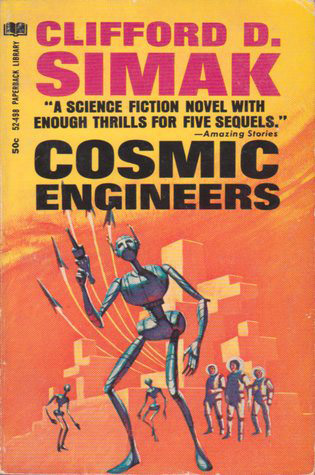
One of several novels about Pluto
Details about the books at: http://www.popmythology.com/10-sci-fi-books-about-pluto/
Eric Brown on Chris Beckett’s Mother of Eden; Becky Chambers’s The Long Way to a Small, Angry Planet; Stephen Palmer’s Beautiful Intelligence; Ian Sales’s All That Outer Space Allows; SL Grey’s Under Ground; Alex Lamb’s Roboteer
by Eric Brown
Source: http://www.theguardian.com/books/2015/jul/31/science-fiction-roundup?CMP=twt_books*gdnbooks
Chris Beckett won the 2013 Arthur C Clarke award for his novel Dark Eden, about the survival and adaptation of human colonists on a world without light. The sequel, Mother of Eden (Corvus, £17.99), begins generations later, charting the growth and political divisions between the colonists. It follows the rise of Starlight Brooking, a humble fishergirl, and her quest to bring equality and revolution to Edenheart, a settlement ruled by a conservative patriarchy. Beckett doesn’t do traditional heroes and villains: Starlight Brooking is contradictory and flawed, at once brave and vulnerable, and likewise his villains are portrayed with sympathy and understanding. He also eschews easy answers and formulaic plotting; where a hundred other writers would have Starlight triumph over her enemies, her victories are on a more profound and personal level, and not without tragedy. Mother of Eden is a masterpiece.
When the captain of the Wayfarer starship is offered a job travelling to a faraway planet that could make him and his crew financially secure, he agrees despite the dangers involved.Such a precis might suggest that Becky Chambers’s first novel, The Long Way to a Small, Angry Planet (Hodder & Stoughton, £18.99), originally self‑published and shortlisted for the Kitschies awards, is an action-adventure space opera. But this is a slow, discursive novel of character as the motivations of the diverse and likable crew, comprising humans and aliens, are laid bare for the reader’s delight. It is a quietly profound, humane tour de force that tackles politics and gender issues with refreshing optimism.
Stephen Palmer’s marvellous ninth novel, Beautiful Intelligence (Infinity Plus, £8.99), posits a beleaguered 22nd century in which oil has run out, water is scarce, and in a neat inversion of the contemporary world order, Europe is an economic ruin and Africa the promised land. Two techno wizards abscond from a Japanese laboratory, each attempting to develop artificial intelligence according to their own philosophies – one based on the social intelligence theory of consciousness, the other on a linguistic approach – but billionaire tech-mogul Aritomo Ichikawa will stop at nothing to get them back. What follows is a thrilling chase across a ravaged Europe, a burgeoning North Africa and balkanised US, interleaving excellent action set-pieces with fascinating philosophising on the nature of consciousness. A gripping read to the poignant last line.
More at: http://www.theguardian.com/books/2015/jul/31/science-fiction-roundup?CMP=twt_books*gdnbooks
Filed under 2015, book review, books
The bestselling SF writer talks about the rush to finish the Long Earth series, being the order to Terry Pratchett’s chaos and how maths helps him write
by Alison Flood
In the summer of 2013, Stephen Baxter and Terry Pratchett published The Long War, the second volume of their Long Earth science-fiction series, about parallel worlds that can be “stepped” into. By the end of that year, the two authors – both prolific by any standards – had completed drafts of the remaining three novels in the series. It was an astonishing rate of work, but there was a deadline that needed to be met: Pratchett had announced his diagnosis with a rare form of early onset Alzheimer’s in 2007. By the summer of 2014, he would pull out of a Discworld convention, citing “The Embuggerance”, which was “finally catching up with me”. He died in March this year.

Stephen Baxter
“I think Terry was aware he was running out of time, and he wanted to do other things as well,” Baxter says. “So we rushed through it a little bit. Terry’s basic vision was the first step, but he also wanted to have a huge cosmic climax at the end, which would be book five … We had no idea how to get there but we knew where we were going.”
The Long Utopia, the fourth in the series, sees settlers on an Earth more than “a million steps” west of ours stumble across a disturbing, insectile form of alien life. Like its predecessors, the novel is compelling not only for its central storyline of exploration and danger and humans doing foolishly human things – and in this case a particularly cataclysmic finale – but also for its slow, unhurried laying out of the minute differences between these empty-of-humanity Earths.
The concept of a chain of parallel worlds, each a little different from its neighbour, was one Pratchett originally had, and set aside, in the 1980s. He told Baxter, a long-time friend and one of the UK’s most respected science-fiction authors, about it over dinner one night, and they decided to collaborate.
“It was a great idea but Terry’s strength did not lie in landscapes and things,” Baxter says. “He’d get a story by having a basic idea, get two people in a room talking and see where it went from there.”
This is not how Baxter works. His fiction, whether about the colonising mission sent to a planet orbiting a nearby red dwarf star, in Proxima, or the exploration of different evolutions of humanity in the Destiny’s Children series, is meticulously planned and pinned down, rooted in the scientific background from which he comes. He has a degree in maths from Cambridge and a PhD in aeronautical engineering; he is a fellow of the British Interplanetary Society and applied for a guest spot on the Mir space station in 1989, making it through a number of stages on his quest to be a cosmonaut but eventually missing out because of his lack of foreign languages.
Whether Baxter decides to submerge the world (Flood), or make humanity live in the centre of a neutron star (Flux), or keep the sea off Doggerland in an alternative prehistory (Stone Spring), there’s always a hook into something real. “I try to get it right. If you can get the maths right, I figure you’re most of the way there,” he says.
Baxter is fiercely intelligent, in a generous way, sharing his enthusiasms and knowledge on everything from recently discovered exoplanets to the Mars project (he’s not hopeful, because he doesn’t think enough has been done on long-term life support systems). At the British Interplanetary Society, he’s been part of study projects on everything from designing star ships to extraterrestrial liberty, an issue explored in Ark, his follow-up to Flood, in which the scraps of humanity flee their devastated planet in “generation ships” for an uncertain future outside the solar system.
“It’s all very well to plan a five-generation mission to Alpha Centauri, but if you’re one of the middle generations, you live out your life with very little room for manoeuvre,” he says. “So what right do you have to submit your children and grandchildren to a life of slavery like that? You get some interesting ethical issues – do you have rights over people who don’t yet exist, do they have rights?”
Rest of the article: http://www.theguardian.com/books/2015/jul/25/stephen-baxter-interview-why-science-fiction-is-like-therapy
Filed under 2015, author interview
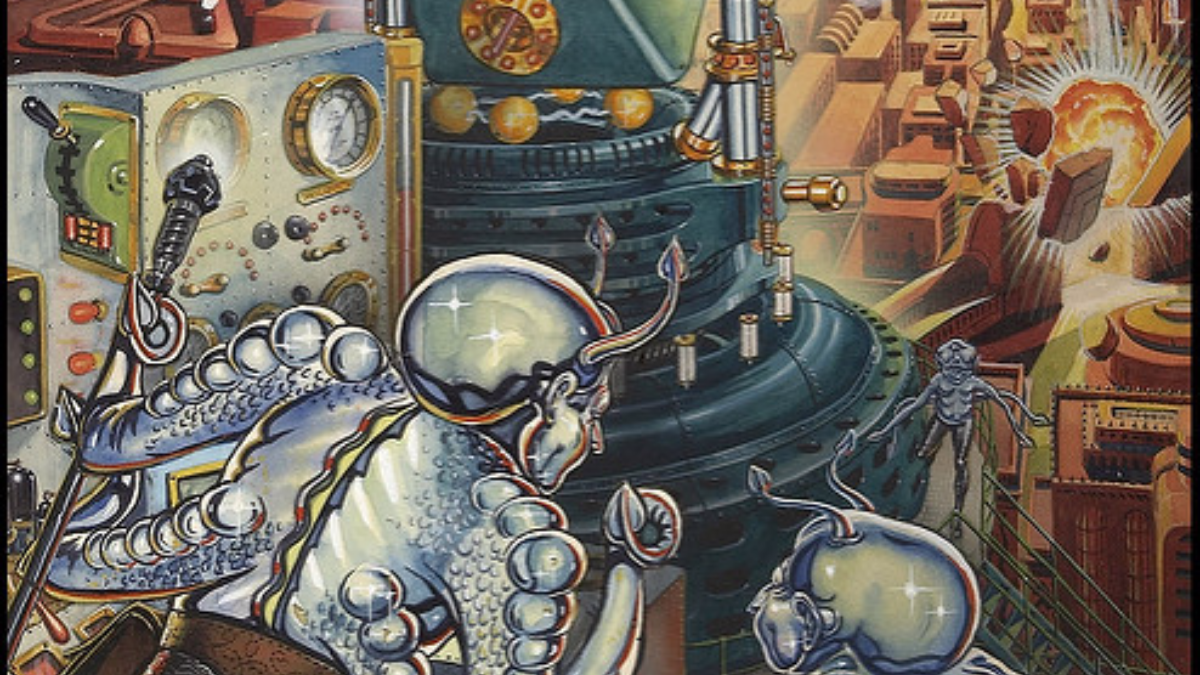


 Booker's Blog