Tag Archives: science

Haiku and photo: “Cane and me”

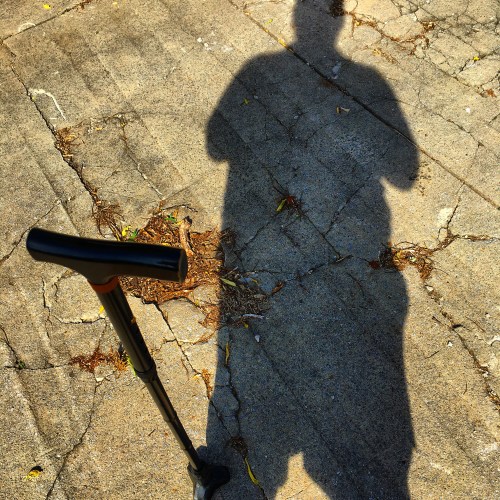
Cane and me

Substance or shadow, /

Science or superstition, /

Love’s dark truth, Hate’s light?

.

.

#haiku #poem #poetry #shadow #substance #love #hate #science #superstition #photooftheday #poemoftheday #davidebooker #oldnorthknoxville #june #monday #2021

Leave a comment

Filed under 2021, haiku, Old North Knoxville, photo by David E. Booker, Poetry by David E. Booker

Positive psychology is a booming industry. But is it science, religion, or something else? – Vox

Just over 20 years old, this field has captivated the world with its hopeful promises — and drawn critics for its moralizing, mysticism, and serious commercialization.

Source: Positive psychology is a booming industry. But is it science, religion, or something else? – Vox

Positive psychology has grown at an explosive rate since Seligman ushered it into the public conscious, surprising even Seligman himself. The field has attracted hundreds of millions of dollars in research grants. Its 2019 World Congress was attended by 1,600 delegates from 70 countries. It inspires tens of thousands of research papers, endless reams of popular books, and supports armies of therapists, coaches, and mentors.

Its institutional uptake has been no less impressive. More than a million US soldiers have been trained in positive psychology’s techniques of resilience just two years after the “Battlemind” program was launched in 2007. Scores of K-12 schools have adopted its principles. In 2018, Yale University announced that an astonishing one-quarter of its undergraduates had enrolled in its course on happiness.

Since that inaugural presidential address in 1998, Seligman has distanced positive psychology from its original focus. At its inception, the field sought to map the paths that end in authentic fulfillment. But with Flourish, Seligman changed course. Happiness, he declared, is not the only goal of human existence, as he’d previously thought.

The purpose of life, he said, is well-being, or flourishing, which includes objective, external components such as relationships and achievements. The road to flourishing, moreover, is through moral action: It is achieved by practicing six virtues that Seligman’s research says are enshrined in all the world’s great intellectual traditions.

This shift toward moral action hasn’t helped the critical response towards positive psychology’s lofty aims and pragmatic methods. Philosophers such as Chapman University’s Mike W. Martin say it has left the field of science and entered the realm of ethics — that it is no longer a purely factual enterprise, but is now concerned with promoting particular values.

But that’s not the only critique. Others decry positive psychology’s commodification and commercial cheapening by the thousands of coaches, consultants, and therapists who have jumped on the bandwagon with wild claims for their lucrative products.

In several high-profile cases, serious flaws have been found in positive psychology’s science, not just at the hysterical fringe, but in the work of big stars including Seligman himself. There are worries about its replicability, its dependence on unreliable self-reports, and the sense that it can be used to prescribe one thing and also its opposite — for example, that well-being consists in living in the moment, but also in being future-oriented.

And for a science, positive psychology can often sound a lot like religion. Consider its trappings: It has a charismatic leader and legions of rapturous followers. It has a year zero and a creation myth that begins with an epiphany.

“I have no less mystical way to put it,” Seligman wrote in Flourish. “Positive psychology called to me just as the burning bush called to Moses.

Seligman’s inclusion of material achievement in the components of happiness has also raised eyebrows. He has theorized that people who have not achieved some degree of mastery and success in the world can’t be said to be flourishing. He once described a “thirty-two-year-old Harvard University summa in mathematics who is fluent in Russian and Japanese and runs her own hedge fund” as a “poster child for positive psychology.” But this can make well-being seem exclusive and out of reach, since accomplishment of this kind is not possible to all, or even most.

Professors Edgar Cabanas and Eva Illouz, authors of the 2019 book Manufacturing Happy Citizens, have accused positive psychology of advancing a Western, ethnocentric creed of individualism. At its core is the idea that we can achieve well-being by our own efforts, by showing determination and grit. But what about social and systemic factors that, for example, keep people in poverty? What about physical illness and underserved tragedy — are people who are miserable in these circumstances just not trying hard enough?

“Positive psychology gives the impression you can be well and happy just by thinking the right thoughts. It encourages a culture of blaming the victim,” said professor Jim Coyne, a former colleague and fierce critic of Seligman.

Then there are positive psychology’s financial ties to religion. The Templeton Foundation, originally established to promote evangelical Christianity and still pursuing goals related to religious understanding, is Seligman’s biggest private sponsor and has granted him tens of millions of dollars. It partly funded his research into universal values, helped establish the Positive Psychology Center at Seligman’s University of Pennsylvania, and endows psychology’s richest prize, the $100,000 Templeton Prize for Positive Psychology. The foundation has, cultural critic Ruth Whippman wrote in her book America the Anxious, “played a huge role in shaping the philosophical role positive psychology has taken.”

We should find this scandalous, Coyne says. “It’s outrageous that a religious organization — or any vested interest — can determine the course of scientific ‘progress,’ that it can dictate what science gets done.”

Despite the criticism, positive psychology remains incredibly popular. Books with “happiness” in the title fly off the shelves, and people sign up for seminars and courses and lectures in droves. We all seem to want what positive psychology is selling. What is it that makes this movement so compelling?

Sonja Lyubomirsky, professor of psychology at the University of California Riverside and an early star of the movement, told me that positive psychology was born at a time of peace and plenty. Many today “have the luxury to reflect and work on their own well-being,” she says. “When people are struggling to get their basic needs met they don’t have the time or resources or energy or motivation to consider whether they are happy.”

The 2008 financial crisis, though, seems to challenge this hypothesis. Suddenly, the luxury to reflect evaporated for vast numbers of people. But analysis by social scientists shows that the number of academic papers published on positive psychology and happiness continued to rise.

That’s led skeptics such as Coyne, Cabanas, and Illouz to suggest that positive psychology’s popularity today is less a question of demand than supply. There’s so much money in the movement now that it is propelled by the energy and entrepreneurial vim of the coaches, consultants, writers, and academics who make livings from it.

It’s also possible, however, that positive psychology’s entanglement with religion may contribute to its popularity. As Vox recently reported, secularism is on the rise in the US. But the propensity to believe in the divine runs very deep in the human psyche. We are, psychologists such as Bruce Hood say, hard-wired for religion. Positive psychology’s spiritual orientation makes it the perfect receptacle for our displaced religious impulses. Critics such as Coyne claim this is by design. The missionary tone, being called like Moses — these are all part of Seligman’s vision for positive psychology.

“Seligman frequently makes claims of mystical intervention that many of us dismiss as marketing,” Coyne told me.

Leave a comment

Filed under 2019

Why Reading Books Should Be Your Priority, According to Science | Inc.com

More than a quarter–26 percent–of American adults admit to not having read even part of a book within the past year. That’s according to statistics coming out of the Pew Research Center. If you’re part of this group, know that science supports the idea that reading is good for you on several levels.

Reading fiction can help you be more open-minded and creative

According to research conducted at the University of Toronto, study participants who read short-story fiction experienced far less need for “cognitive closure” compared with counterparts who read nonfiction essays. Essentially, they tested as more open-minded, compared with the readers of essays. “Although nonfiction reading allows students to learn the subject matter, it may not always help them in thinking about it,” the authors write. “A physician may have an encyclopedic knowledge of his or her subject, but this may not prevent the physician from seizing and freezing on a diagnosis, when additional symptoms point to a different malady.”

People who read books live longer

That’s according to Yale researchers who studied 3,635 people older than 50 and found that those who read books for 30 minutes daily lived an average of 23 months longer than nonreaders or magazine readers. Apparently, the practice of reading books creates cognitive engagement that improves lots of things, including vocabulary, thinking skills, and concentration. It also can affect empathy, social perception, and emotional intelligence, the sum of which helps people stay on the planet longer.

Reading 50 books a year is something you can actually accomplish

While about a book a week might sound daunting, it’s probably doable by even the busiest of people. Writer Stephanie Huston says her thinking that she didn’t have enough time turned out to be a lame excuse. Now that she has made a goal to read 50 books in a year, she says that she has traded wasted time on her phone for flipping pages in bed, on trains, during meal breaks, and while waiting in line. Two months into her challenge, she reports having more peace and satisfaction and improved sleep, while learning more than she thought possible.

Successful people are readers

It’s because high achievers are keen on self-improvement. Hundreds of successful executives have shared with me the books that have helped them get where they are today. Need ideas on where to start? Titles that have repeatedly made their lists include: The Hard Thing About Hard Things by Ben Horowitz; Shoe Dog by Phil Knight; Good to Great by Jim Collins; and Losing My Virginity by Richard Branson.

Source: Why Reading Books Should Be Your Priority, According to Science | Inc.com

Leave a comment

Filed under 2019, writing tip, Writing Tip Wednesday

Monday morning writing joke: “Bounds”

Q.: Why did the physics writer break up with the biology writer?

A.: Because there was no chemistry between them.

Leave a comment

Filed under 2017, Monday morning writing joke, Uncategorized

The aroma of books

What Causes the Smell of New & Old Books?

Source: http://www.compoundchem.com/2014/06/01/newoldbooksmell/

The smell of books.

The smell of books.

Everyone’s familiar with the smell of old books, the weirdly intoxicating scent that haunts libraries and second-hand book stores. Similarly, who doesn’t enjoy riffling through the pages of a newly purchased book and breathing in the crisp aroma of new paper and freshly printed ink? As with all aromas, the origins can be traced back to a number of chemical constituents, so we can examine the processes and compounds that can contribute to both.

As far as the smell of new books goes, it’s actually quite difficult to pinpoint specific compounds, for a number of reasons. Firstly, there seems to be a scarcity of scientific research that’s been carried out on the subject – to be fair, it’s understandable why it might not exactly be high up on the priority list. Secondly, the variation in the chemicals used to manufacture books also means that it’s an aroma that will vary from book to book. Add to this the fact that there are literally hundreds of compounds involved, and it becomes clearer why it evades attribution to a small selection of chemicals.

It’s likely that the bulk of ‘new book smell’ can be put down to three main sources: the paper itself (and the chemicals used in its manufacture), the inks used to print the book, and the adhesives used in the book-binding process.

The manufacture of paper requires the use of chemicals at several stages. Large amounts of paper are made from wood pulp (though it can also be made from cotton and textiles) – chemicals such as sodium hydroxide, often referred to in this context as ‘caustic soda’, can be added to increase pH and cause fibres in the pulp to swell. The fibres are then bleached with a number of other chemicals, including hydrogen peroxide; then, they are mixed with large amounts of water. This water will contain additives to modify the properties of the the paper – for example, AKD (alkyl ketene dimer) is commonly used as a ‘sizing agent’ to improve the water-resistance of the paper.

Many other chemicals are also used – this is just a very rough overview. The upshot of this is that some of these chemicals can contribute, through their reactions or otherwise, to the release of volatile organic compounds (VOCs) into the air, the odours of which we can detect. The same is true of chemicals used in the inks, and the adhesives used in the books. A number of different adhesives are used for book-binding, many of which are based on organic ‘co-polymers’ – large numbers of smaller molecules chemically chained together.

As stated, differences in paper, adhesives, and inks used will influence the ‘new book smell’, so not all new books will smell the same – perhaps the reason why no research has yet attempted to definitively define the aroma.

An aroma that has had much more research carried out around it, however, is that of old books. There’s a reason for this, as it’s been investigated as a potential method for assessing the condition of old books, by monitoring the concentrations of different organic compounds that they give off. As a result, we can be a little more certain on some of the many compounds that contribute to the smell.

Generally, it is the chemical breakdown of compounds within paper that leads to the production of ‘old book smell’. Paper contains, amongst other chemicals, cellulose, and smaller amounts of lignin – much less in more modern books than in books from more than one hundred years ago. Both of these originate from the trees the paper is made from; finer papers will contain much less lignin than, for example, newsprint. In trees, lignin helps bind cellulose fibres together, keeping the wood stiff; it’s also responsible for old paper’s yellowing with age, as oxidation reactions cause it to break down into acids, which then help break down cellulose.

‘Old book smell’ is derived from this chemical degradation. Modern, high quality papers will undergo chemical processing to remove lignin, but breakdown of cellulose in the paper can still occur (albeit at a much slower rate) due to the presence of acids in the surroundings. These reactions, referred to generally as ‘acid hydrolysis’, produce a wide range of volatile organic compounds, many of which are likely to contribute to the smell of old books. A selected number of compounds have had their contributions pinpointed: benzaldehyde adds an almond-like scent; vanillin adds a vanilla-like scent; ethyl benzene and toluene impart sweet odours; and 2-ethyl hexanol has a ‘slightly floral’ contribution. Other aldehydes and alcohols produced by these reactions have low odour thresholds and also contribute.

Other compounds given off have been marked as useful for determining…

Details at: http://www.compoundchem.com/2014/06/01/newoldbooksmell/

1 Comment

Filed under 2016, books

The root of over 400 languages?

Mysterious Indo-European homeland may have been in the steppes of Ukraine and Russia

by Michael Balter

Source: http://news.sciencemag.org/archaeology/2015/02/mysterious-indo-european-homeland-may-have-been-steppes-ukraine-and-russia?utm_source=facebook&utm_medium=social&utm_campaign=facebook

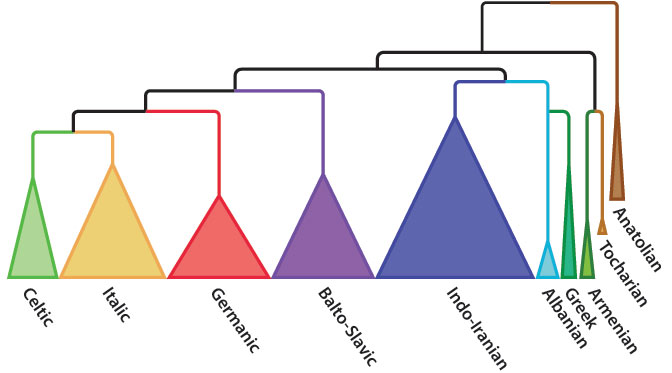
What do you call a male sibling? If you speak English, he is your “brother.” Greek? Call him “phrater.” Sanskrit, Latin, Old Irish? “Bhrater,” “frater,” or “brathir,” respectively. Ever since the mid-17th century, scholars have noted such similarities among the so-called Indo-European languages, which span the world and number more than 400 if dialects are included. Researchers agree that they can probably all be traced back to one ancestral language, called Proto-Indo-European (PIE). But for nearly 20 years, scholars have debated vehemently when and where PIE arose.

Two long-awaited studies, one described online this week in a preprint and another scheduled for publication later this month, have now used different methods to support one leading hypothesis: that PIE was first spoken by pastoral herders who lived in the vast steppe lands north of the Black Sea beginning about 6000 years ago. One study points out that these steppe land herders have left their genetic mark on most Europeans living today.

The studies’ conclusions emerge from state-of-the-art ancient DNA and linguistic analyses, but the debate over PIE’s origins is likely to continue. A rival hypothesis—that early farmers living in Anatolia (modern Turkey) about 8000 years ago were the original PIE speakers—is not ruled out by the new analyses, most agree. Although the steppe hypothesis has now received a major boost, “I would not say the Anatolian hypothesis has been killed,” says Carles Lalueza-Fox, a geneticist at Pompeu Fabra University in Barcelona, Spain, who participated in neither of the new studies.

Up until the 1980s, variations of the steppe hypothesis held sway among most linguists and archaeologists tracking down Indo-European’s birthplace. Then in 1987, archaeologist Colin Renfrew of the University of Cambridge in the United Kingdom proposed that PIE spread with farming from its origins in the Fertile Crescent of the Middle East, moving west into Europe and east further into Asia; over time the languages continued to spread and diversify into the many Indo-European languages we know today.

Traditional linguists, meanwhile, painstakingly reconstructed PIE by extrapolating back from modern languages and ancient writings. (Listen to a short fable spoken in PIE here: http://news.sciencemag.org/2015/02/sound-proto-indo-european.) They disdained Renfrew’s idea of an Anatolian homeland, arguing for example that the languages were still too similar to have begun diverging 8000 years ago.

More than 400 Indo-European languages diverged from a common ancestral tongue; the earliest ones (top right), Anatolian and Tocharian, arose in today’s Turkey and China, respectively.

More than 400 Indo-European languages diverged from a common ancestral tongue; the earliest ones (top right), Anatolian and Tocharian, arose in today’s Turkey and China, respectively.

Rest of the article: http://news.sciencemag.org/archaeology/2015/02/mysterious-indo-european-homeland-may-have-been-steppes-ukraine-and-russia?utm_source=facebook&utm_medium=social&utm_campaign=facebook

1 Comment

Filed under language

NASA Probes Record Sounds In Space – And It’s Terrifying.

The Daily Epic » NASA Probes Record Sounds In Space – And It’s Terrifying..

Despite what you’ve heard, there are actual sounds in space.

Due to the virtual vacuum in space, it’s not sound like you and I experience it (that being waves pulsing through the air), but there are electromagnetic waves that pulsate at the same wavelength as the sound waves we can hear.

Instruments on several NASA probes including Voyager have recorded these waves and translated them into a sound that we can hear, and they are all kinds of spooky. This is the kind of thing you hear in a movie just before someone opens a door in a dark hallway.

So, take a listen to the true nature of the solar system. And sleep tight.

Video at: http://www.thedailyepic.com/nasa-probes-record-sounds-in-space-and-its-terrifying/

Leave a comment

Filed under NASA

Myth About Harvard Book Made of Human Skin Debunked

Myth About Harvard Book Made of Human Skin Debunked.

Sample:
Science: 1, Internet: 0.

For one reason or another—perhaps it was the flashy headline, or the gruesome mysterious details—a nearly decade-old story published by the Harvard Crimsonabout a collection of books at the university’s library, that are allegedly bound in human skin, crawled to the surface of the Internet this week. But unfortunately for the Internet, as the story started to regain traction officials from the school fleshed out the details of what really wraps at least some of the literature in their collection, and discovered it’s not human skin after all—it’s actually sheepskin. “Baaaaaad news for fans of anthropodermic bibliopegy (binding books in human skin): Recent analyses of a book owned by the [Harvard Law School] Library, long believed but never proven to have been bound in human skin, have conclusively established that the book was bound in sheepskin,” according to a post on the Harvard Library Law School’s blog, dated April 3.

http://www.bostonmagazine.com/news/blog/2014/04/03/harvard-book-made-of-human-skin/

Suggested by: Ashlie

Leave a comment

Filed under book covers

Experience Just How Big the Universe is, in One Mind-Blowing Interactive – PolicyMic

Experience Just How Big the Universe is, in One Mind-Blowing Interactive – PolicyMic.

Recently, NASA scientists combined data from the Spitzer and Hubble Space Telescopes to discover the most distant galaxy known to date. The galaxy, named Abell2744 Y1, was formed around 13.2 billion years ago when the universe was extremely young. As the universe is expanding, Abell2744 Y1 is currently closer to 40 billion light years away from us, an astounding distance.

Leave a comment

Filed under size

Saturn Photos: Latest Images from NASA’s Cassini Orbiter | Space.com

Saturn Photos: Latest Images from NASA's Cassini Orbiter | Space.com.

As the year closes, a look at another place in our little corner of the galaxy.

Leave a comment

Filed under astronomy