Tag Archives: Saturday

Random Acts of Poetry: “A little rendezvous”

I fly through the air with the greatest of ease.
If my engine cuts out, I have no trapeze.
Since I have no trapeze, there is no net.
If my engine cuts out, I may not live to regret.
Keep an eye on the sky, watch for me to come by
If my engine cuts out, wave and give me a sigh.
That mountain ahead may be my new home.
Across its ragged face, my body may roam.
If the pilot is sane, I may stay in the air.
If my pilot is nuts, then what do I care?
Birds sucked in the engine? I’ll have a bad day
But then, come to think of it, so will they.
I fly through the air with greatest of ease.
When this damn thing comes down, avoid the trees.
May the landing be soft, the pilot’s touch light
For I’m holding your arm and I’m holding on tight.
A bump as we land could cause an incident:
You could lose your arm and my bowels would be spent.
I fly through the air with the greatest of ease
If the engine cuts out, some regrets there will be.

–by David E. Booker

Leave a comment

Filed under 2015, poetry by author, Random acts of poetry

Be gentle upon him

Be gentle upon him, whatever you do
For killing him outright, could leave you in a stew.
Then what will you do for the rest of the cruise?
Hide the body aboard and leave misleading clues?
Will you tell his friends, “Wait, he’s over there.”
Or strolling down the promenade without a care.
You’ll have to make up stories of where he might be
Which may keep you awake to a quarter past three.
And as you tell these stories of his life aboard the boat
Will you see his body out the window afloat?
Will he be smiling at you, his arm high in the air
waving you to join him, to promenade without a care?
And then oh then tell me what will you do
When he gives you the evil eye and thinks you’re a cutie too?

by David E. Booker

Leave a comment

Filed under 2015, poetry by author, Random acts of poetry

New words to live by: “Disrot”

It is the first or second weekend of the month and time, once again, for a new word to live by. This is a word or phrase not currently in use in the U.S. English lexicon, but might need to be considered. Other words, such as obsurd, crumpify, subsus, flib, congressed, and others, can be found by clicking on the tags below. Today’s New Word is a compounding of a prefix and a root word. Without further waiting, disrot is the new word / phrase for this month:

Dis, a Latin prefix meaning “apart,” “asunder,” “away,” “utterly,” or having a privative, negative, or reversing force.

(For example: disrobe means to remove robe or clothing. Dismount means to climb off the mount, usually an animal such as a horse.)

Rot, v. 1.to undergo decomposition; decay.
2. to deteriorate, disintegrate, fall, or become weak due to decay (often followed by away, from, off, etc.).
3. to languish, as in confinement.
4. to become morally corrupt or offensive.

How about Disrot?

Disrot, v. What happens after spending 5 snow days with your kids, once they have returned to school. You disrot. What happens after a long and tedious meeting in which much is said but little is accomplished. Example: Once the meeting was over, she felt herself disrot. Second example: Once he stopped watching Faux News, he felt himself begin to disrot, and it was a freeing and scary feeling.

Leave a comment

Filed under 2015, new word, New words to live by

Retitled

This Guy Created His Own Hilarious Book Sections At A Local Bookstore

Source: http://www.boredpanda.com/funny-accurate-book-section-names/

Tired of having to look at boring and often misleading book sections at his local bookstore, one guy decided to create his own alternative sections that would describe the books more accurately. He carefully placed them all around the bookstore, photographed the results and quickly got away before anyone noticed.

For example, the culinary section is now called “Meals You Intend To Make, But Never Will” – which we have to agree is a much more accurate description. Also, instead of looking for romance novel section, girls can now ask the store manager to show them where the “Dudes who lost their shirts” section is.

Finally there’s some order in the book world!

Section titles include:

Dudes Who Lost Their Shirts

Meals You Intend To Make, But Never Will

Great Places To Poop

And others.

To see photos and read more about it, go to http://www.boredpanda.com/funny-accurate-book-section-names/

1 Comment

Filed under 2015, bookstore

The origins of English

25 maps that explain the English language

Source: http://www.vox.com/2015/3/3/8053521/25-maps-that-explain-english

English is the language of Shakespeare and the language of Chaucer. It’s spoken in dozens of countries around the world, from the United States to a tiny island named Tristan da Cunha. It reflects the influences of centuries of international exchange, including conquest and colonization, from the Vikings through the 21st century. Here are 25 maps and charts that explain how English got started and evolved into the differently accented languages spoken today.

1. Where English comes from

Old world Language FamiliesEnglish, like more than 400 other languages, is part of the Indo-European language family, sharing common roots not just with German and French but with Russian, Hindi, Punjabi, and Persian. This beautiful chart by Minna Sundberg, a Finnish-Swedish comic artist, shows some of English’s closest cousins, like French and German, but also its more distant relationships with languages originally spoken far from the British Isles such as Farsi and Greek.

2. Where Indo-European languages are spoken in Europe today

Saying that English is Indo-European, though, doesn’t really narrow it down much. This map shows where Indo-European languages are spoken in Europe, the Middle East, and South Asia today, and makes it easier to see what languages don’t share a common root with English: Finnish and Hungarian among them.

3. The Anglo-Saxon migration

531px-Britain.Anglo.Saxon.homelands.settlements.400.500Here’s how the English language got started: After Roman troops withdrew from Britain in the early 5th century, three Germanic peoples — the Angles, Saxons, and Jutes — moved in and established kingdoms. They brought with them the Anglo-Saxon language, which combined with some Celtic and Latin words to create Old English. Old English was first spoken in the 5th century, and it looks incomprehensible to today’s English-speakers. To give you an idea of just how different it was, the language the Angles brought with them had three genders (masculine, feminine, and neutral). Still, though the gender of nouns has fallen away in English, 4,500 Anglo-Saxon words survive today. They make up only about 1 percent of the comprehensive Oxford English Dictionary, but nearly all of the most commonly used words that are the backbone of English. They include nouns like “day” and “year,” body parts such as “chest,” arm,” and “heart,” and some of the most basic verbs: “eat,” “kiss,” “love,” “think,” “become.” FDR’s sentence “The only thing we have to fear is fear itself” uses only words of Anglo-Saxon origin.

Rest of the article and illustrations: http://www.vox.com/2015/3/3/8053521/25-maps-that-explain-english

Leave a comment

Filed under 2015, language, Maps

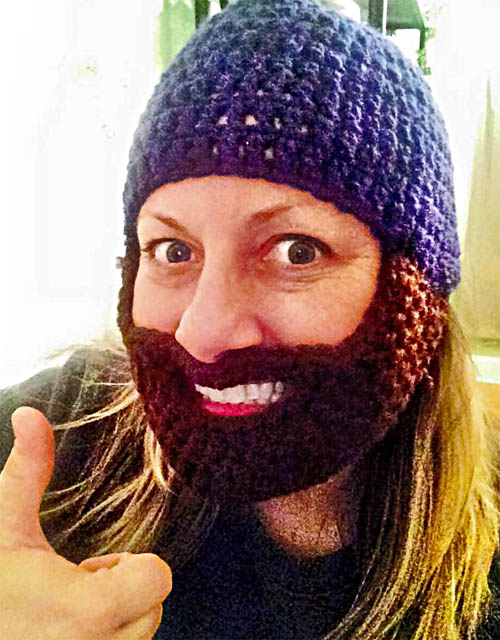
Random act of poetry: “Knitted beard”

The knitted beard.

The knitted beard.

O’ knitted beard
you feel so weird
strapped up against my face.

My neighbors point,
get their noses out of joint,
and say I’m out-of-place.

I’m a circus freak
but cold air can’t leak
up onto my chin.

When warm weather hits
I’ll remove this mitt
and be clean-shaven again.

2 Comments

Filed under 2015, poetry by author, Random acts of poetry

Random act of prose: “The scowl”

Caught in a double scowl.

Caught in a double scowl.

He threatened to give me the over / under scowl. That dreaded scowl only the most celebrated police detectives have mastered.

I said I hadn’t done anything wrong.

He said, “Talk, I hold all the high cards here.”

I told him I didn’t play poker. Or crazy eights, or even solitaire.

He gave me the over scowl. “Put up or shut up.”

“Put up what?”

He placed a mirror on the table between us. “You have thirty seconds.”

“I might if I had a watch. But you guys took it from me. What time is it?”

He tapped one nicotine stained forefinger on the looking glass. “Time’s running out, punk.”

“Can I run with it? I have an appointment, you know.”

“Look at the glass, punk.” He tapped the mirror again.

I didn’t want to, but I couldn’t look at him anymore, and the Pooh Bears and Snoopys on the walls were driving me crazy. All the real interrogation rooms were full and the only thing left was this windowless, makeshift kids’ room used by cops’ kids and perps’ kids depending on what was going down. If only the World War flying Ace knew.

I looked at the mirror. He motioned for me to lean closer to him. I hesitated, but then did what he said until I was less than a foot away.
He tapped the glass again. “Down.”

Slowly, I lowered my eyes and then face. I don’t know how he did it. The mirror must have been slightly warped in some funhouse way, but there in the middle of the mirror was my face, and below and above was his face giving me the dreaded over / under scowl.

Somewhere in the night a Sopwith Camel drones peacefully, even blissfully behind enemy lines, its pilot unaware of the Fokker and the Flying Ace about to drive him to the ground. Somewhere, that ignorant pilot still has a chance. A small, slim chance, but a chance.

Not me.

I am caught in the rapid-fire vice of the over/under scowl and I can’t break free. I can’t escape. I can only feel his piercing eyes – all four of them – ripping bullet holes in my soul. Any hope I had, like the wings of my Sopwith Camel, are now tatters and flames, consumed in the hell caused by his over / under scowl.

Leave a comment

Filed under 2015, Random acts of prose, Story by author

Writers and love

Happy Valentine's Day

Happy Valentine’s Day

Novelists and writers:
Zora Neale Hurston: “Love makes your soul crawl out from its hiding place.”

James Baldwin: “Love takes off masks that we fear we cannot live without and know we cannot live within.”

Novelist Iris Murdoch: “Love is the difficult realization that something other than oneself is real.”

Also: “People often start by falling in love, and they go on for years without realizing that love must change into some other love which is unlike the original.”

W. Somerset Maugham: “We are not the same person this year as last; nor are those we love. It is a happy chance if we, changing, continue to love a changed person.”

Ursula K. Le Guin: “Love doesn’t just sit there, like a stone; it has to be made, like bread, remade all the time, made new.” [Editor’s note: Is this what is meant by love being “kneady”?]

Andre Maurois: “A successful marriage is an edifice that must be rebuilt every day.”

Norman Mailer: “Love asks us that we be a little braver than is comfortable, a little more generous, a little more flexible. It means living on the edge more than we care to.”

Psychological and religious thinkers
Some love advice, courtesy of psychologist James Hillman: “For a relationship to stay alive, love alone is not enough. Without imagination, love stales into sentiment, duty, boredom. Relationships fail not because we have stopped loving but because we first stopped imagining.”

Words from a Buddhist about love: “You can search throughout the entire universe for someone who is more deserving of your love and affection than you are yourself, but that person is not to be found anywhere. You yourself, as much as anyone, deserve your love and affection.”

Poets
A statement attributed to French poet Paul Valery. “Love is being stupid together,” he said. [Editor’s note: does that mean it is better than being stupid apart?]

Poet Pablo Neruda: “I hunger for your sleek laugh and your hands the color of a furious harvest. I want to eat the sunbeams flaring in your beauty.”

Also: “Our love is like a well in the wilderness where time watches over the wandering lightning. Our sleep is a secret tunnel that leads to the scent of apples carried on the wind. When I hold you, I hold everything that is–swans, volcanoes, river rocks, maple trees drinking the fragrance of the moon, bread that the fire adores. In your life I see everything that lives.”

The words of poet Elizabeth Barrett Browning: “I love you not only for what you are, but for what I am when I am with you. I love you not only for what you have made of yourself, but for what you are making of me. I love you for the part of me that you bring out.”

Two final thoughts:
Clarissa Pinkola Estes wrote this in Women Who Run With the Wolves. “The desire to force love to live only in its most positive form is what causes love ultimately to fall over dead.”

And from The Simpsons‘ creator Matt Groening: “Love is a snowmobile racing across the tundra and then suddenly it flips over, pinning you underneath. At night, the ice weasels come.”

Leave a comment

Filed under holiday, love, quotes

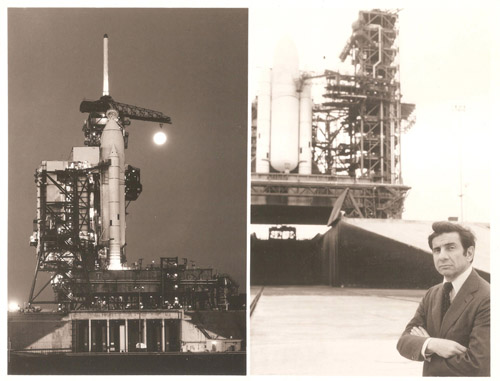
Looking out as a way of looking in

Creation writing: is sci-fi a 21st-century religion?

Space shuttle during the early years.

Space shuttle during the early years.

Source: http://www.theguardian.com/books/booksblog/2015/jan/16/sci-fi-21st-century-religion-universe-hubble

Ever since mankind began to count, the uncountable stars have been filling us with awe. But the splendour revealed by a cloudless night reveals only a fraction of the universe’s truly awe-inspiring scale. The Hubble space telescope reveals a tiny smudge in the sky such as Andromeda to be a galaxy vaster than our own, teeming with a trillion stars, one of a hundred million other galaxies spread across the heavens.

Science today shows us a very different universe than the clockwork model imagined by Isaac Newton in his description of gravity. Jules Verne could imagine shooting a rocket from the Earth to the moon in 1865, but could not have imagined the vastness even of our solar system’s Kuiper belt. It was only when Edwin Hubble identified the first star beyond the Milky Way, and only when the telescope that bore his name photographed 3,000 galaxies in a single patch of “empty” space, that the human eye could glimpse the near infinite depths of space.

The work of the most ambitious SF authors like Iain M Banks, Vernor Vinge and David Brin manages to capture the true scale of the universe in fiction. And even then SF can detail only the tiniest portion of a cosmos some 93bn light years wide (and expanding ever more quickly), shaped by the unifying force of gravity, where the elements of life are created in supernova explosions and destroyed in black holes. The scientific model of the universe begins to look eerily like that expressed by Hindu astronomers over 3,000 years ago, in which the cycles of the universe are measured in aeons 1.28tn years long, reality is maintained by the force of Vishnu, and all things are created by Brahma and destroyed by Shiva.

Perhaps it’s these mythic resonances that have seen science fiction trend more and more towards religious zeal in recent years. The Singularity, a point in the near future when technology evolves so fast that it allows life to transcend all physical boundaries, is now a common idea in SF, explored by writers from Damien Broderick to Charlie Stross. Its believers style themselves as singulatarians and transhumanists, but their rhetoric of life after death in silicon virtual realities so deeply echoes fundamentalist Christianity that no one is joking when they call it the Rapture of the Nerds.

More at: http://www.theguardian.com/books/booksblog/2015/jan/16/sci-fi-21st-century-religion-universe-hubble

Leave a comment

Filed under science fiction

The blathering idiot and powder

The blathering idiot and Lydia were sitting in an Italian restaurant having dinner, discussing politics, or partly discussing politics.

“You know, I really don’t know much about you,” Lydia said, waving a breadstick at him.

“Even after the last campaign.”

“And I did not know you had a daughter,” the blathering idiot said. “Does she like politics?”

“People don’t like politics these days. They just endure it.”

“Like you do?”

“I like it. It’s what gets me going in the morning. What gets you going?”

“My alarm clock,” the blathering idiot said.

“You don’t say much.”

“I say enough.”

“Maybe that can work to our advantage. The Pro-Accordion Party could say it all with music.”

The blathering idiot nodded. He liked the way her face lit up when she thought she had a good idea.

The waiter brought the food and a new basket of breadsticks. He also refilled the water glasses. The blathering idiots had a slice of lemon in it; Lydia’s did not.

“You do play the accordion, don’t you?”

The blathering idiot frowned. She had forgotten since the last election for the highest office in the land. He had told her then he didn’t play the accordion or any other instrument. Since then, he had not learned how. He never expected to be considering running again. The first time was not nearly as much fun as Lydia seemed to remember it being.

“I didn’t know you had a daughter,” the blathering idiot said.

“She will not be coming with us on the campaign trail.”

“But the consultant—”

“The consultant can go to hell. She needs her education and not to be jerked around from one campaign stop to the next.”

“What is her name?”

“Bella.”

“Bella,” the blathering idiot said.

“Short for Isabella.”

“Is she short?”

“No. Where did you get that idea?”

“You said she was short for Isabella.”

“I mean Bella is short for Isabella.”

“Okay. Does she have a dad?”

Lydia glared at him. “Does she need one?”

The blathering idiot shrugged. “You tell me.”

They ate most of their meals in silence, though the blathering idiot couldn’t help slurping his spaghetti every now and then. There was something satisfying to the sound and the feel of a noodle flipping up and down just before the end enter his mouth. He didn’t even mind if a little sauce got on his face.

Lydia looked at him and couldn’t help but giggle.

“Okay, if you want to know, Bella’s father took a powder.”

The blathering idiot wiped his face with his napkin. The napkin was not large. “Which one?”

“What?”

“Which powder did he take? A blue one? Red? Was it over the counter or a prescription powder?”

“He skipped out. Left us high and dry. Ran away.”

“Oh, and he took his powder with him?”

1 Comment

Filed under blathering idiot