Tag Archives: Saturday

Live long and prosper … by reading books

Read Books, Live Longer?

By Nicholas Bakalar

Source: http://well.blogs.nytimes.com/2016/08/03/read-books-live-longer/?smid=fb-nytimes&smtyp=cur&_r=2

Reading books is tied to a longer life, according to a new report.

Researchers used data on 3,635 people over 50 participating in a larger health study who had answered questions about reading.

Chair in the last bookshop

Live longer by reading.

The scientists divided the sample into three groups: those who read no books, those who read books up to three and a half hours a week, and those who read books more than three and a half hours.

The study, in Social Science & Medicine, found that book readers tended to be female, college-educated and in higher income groups. So researchers controlled for those factors as well as age, race, self-reported health, depression, employment and marital status.

Compared with those who did not read books, those who read for up to three and a half hours a week were 17 percent less likely to die over 12 years of follow-up, and those who read more than that were 23 percent less likely to die. Book readers lived an average of almost two years longer than those who did not read at all.

They found a similar association among those who read newspapers and periodicals, but it was weaker.

“People who report as little as a half-hour a day of book reading had a significant survival advantage over those who did not read,” said the senior author, Becca R. Levy, a professor of epidemiology at Yale. “And the survival advantage remained after adjusting for wealth, education, cognitive ability and many other variables.”

Leave a comment

Filed under 2016, books

Beginnings

Beginning writing

Leave a comment

August 6, 2016 · 11:19 pm

The Two Minutes It Takes To Read This Will Improve Your Writing Forever — An Idea For You — Medium

You’re busy, so I’ll keep this quick.

Source: The Two Minutes It Takes To Read This Will Improve Your Writing Forever — An Idea For You — Medium

Leave a comment

Filed under 2016, writing

Clog in the cog of life

I’m just a clog in the cog of life,

When things back up, I get nothing but strife.

Whether at work or at home with the wife,

I’m only a clog in the cog of life.

Remodelers came and ripped out my throne

In the last room where I could be alone.

Now all I have is a slop jar and a phone,

And for a cushion a piece of foam.

I’m just a clog in the cog of life.

I get nothing but toil and strife.

Some days it feels sharp, like the stab of a knife.

I’m only a clog in the cog of life.

Even at work I get no peace:

A place for my tensions to find release.

I look at my paycheck and want to yell: “Police!”

To demand they look for my missing piece.

I’m just a clog in the cog of life.

Nobody cares about my struggles and strife.

Not even heaven where they have their slice

Of the piece of the pie in the afterlife.

Oh, God in heaven, how can this be?

Why, oh, why have you forsaken me?

I’ve always tried to serve unto thee,

But you cut me off like a branch from a tree.

I stand on the ledge of total despair.

No throne. No money. In tattered underwear.

People down below, they don’t even care.

They just don’t want me to land there, there, or there.

I’m just a clog in the cog of life.

I’ve said my prayers, left a note for my wife.

When I land it will end all my strife,

Unless I don’t make it into the afterlife.

I’ve endured war, death, and disease;

A boss, a wife, and a bum knee.

Can’t I have just one thing for me?

Is my life “to be or not to be”?

I’m just a clog in the cog of life,

Suffering the outrageous fortunes of strife.

The slings and arrows carve me like a knife

Into a piece of gristle for the cog of life.

Leave a comment

Filed under 2016, poetry by author

21 Great Novels Worth Finding the Time to Read

21 Must-Read Novels

by Jacquelyn Mitchard

Source: http://www.aarp.org/entertainment/books/info-03-2012/21-must-read-novels.html?cmp=SNP-DSO-FB-ENT-FB_CONTENT_2016_ENT&s_kwcid=AL!4520!45!0bfd56f43fb133993b259a359113b691&ef_id=VtxKvwAABHGV34xO:20160722131844:o#slide1

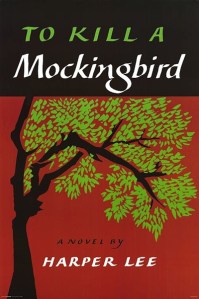
Kill a Mocking Bird 100dpi_4x6_4cI began to list a dozen novels that everyone should read before age 50, but quickly realized that if all you want is a dozen, you should ask an economist, not a novelist. Still, stories are what help us best understand why we are how we are. So after consulting people I admire and my own mental file, I included only novels that I believe you really ought to read. Here are the novels picked, starting with the 21st place selection …

Books range from Charlotte’s Web by E.B. White to The Great Gatsby by F. Scott Fitzgerald to To Kill a Mockingbird by Harper Lee. To see the full list, go to: 21 Great Novels Worth Finding the Time to Read

Leave a comment

Filed under 2016, books

New words to live by: “Utteration”

It is time, once again, for New words to live by. This is a word or phrase not currently in use in the U.S. English lexicon, but might need to be considered. Other words, such as obsurd, crumpify, subsus, flib, congressed, and others, can be found by clicking on the tags below. Today’s New Word is a compounding of two nouns into a new word. Without further waiting, utteration (utter + iteration) and its verb form utterate are the new words for this month.

OLD WORDS
Utter, v. 1. To give audible expression to; speak or pronounce. 2. To express oneself with voice or in written / printed form, especially in words. 3. To make publicly known.

Iteration, n. 1. The act of repeating; a repetition. 2. A repetition with a minor variation.

NEW WORDS
Utteration, n. 1. To utter over and over and over again the same words or phrase or sound, especially as if saying them makes them appear to be true.

Utterate, v. The act of uttering over and over and over again the same words or phrase or sound, especially as if saying them makes them appear to be true.

Example:
A certain U.S. presidential candidate who utterates he’s going to build a wall along the Mexican border and is going to make the Mexicans pay for it, and that the wall will keep undocumented immigrants out of the United States. And because he is, a judge of Mexican decent can’t officiate at a trial that involves one of the candidate’s many failed enterprises.

[Editor’s note: yes, this example is the same as last month’s, showing that such utterations are hyprocrassy.]

Leave a comment

Filed under 2016, New words to live by

Can reading make you happier?

By Ceridwen Dovey

Source: http://www.newyorker.com/culture/cultural-comment/can-reading-make-you-happier?mbid=social_facebook_aud_dev_kwaprsubreadinghappier&kwp_0=140293&kwp_4=619875&kwp_1=321018

No outlet, except maybe to happiness.

No outlet, except maybe to happiness.

Several years ago, I was given as a gift a remote session with a bibliotherapist at the London headquarters of the School of Life, which offers innovative courses to help people deal with the daily emotional challenges of existence. I have to admit that at first I didn’t really like the idea of being given a reading “prescription.” I’ve generally preferred to mimic Virginia Woolf’s passionate commitment to serendipity in my personal reading discoveries, delighting not only in the books themselves but in the randomly meaningful nature of how I came upon them (on the bus after a breakup, in a backpackers’ hostel in Damascus, or in the dark library stacks at graduate school, while browsing instead of studying). I’ve long been wary of the peculiar evangelism of certain readers: You must read this, they say, thrusting a book into your hands with a beatific gleam in their eyes, with no allowance for the fact that books mean different things to people—or different things to the same person—at various points in our lives. I loved John Updike’s stories about the Maples in my twenties, for example, and hate them in my thirties, and I’m not even exactly sure why.

But the session was a gift, and I found myself unexpectedly enjoying the initial questionnaire about my reading habits that the bibliotherapist, Ella Berthoud, sent me. Nobody had ever asked me these questions before, even though reading fiction is and always has been essential to my life. I love to gorge on books over long breaks—I’ll pack more books than clothes, I told Berthoud. I confided my dirty little secret, which is that I don’t like buying or owning books, and always prefer to get them from the library (which, as I am a writer, does not bring me very good book-sales karma). In response to the question “What is preoccupying you at the moment?,” I was surprised by what I wanted to confess: I am worried about having no spiritual resources to shore myself up against the inevitable future grief of losing somebody I love, I wrote. I’m not religious, and I don’t particularly want to be, but I’d like to read more about other people’s reflections on coming to some sort of early, weird form of faith in a “higher being” as an emotional survival tactic. Simply answering the questions made me feel better, lighter.

We had some satisfying back-and-forths over e-mail, with Berthoud digging deeper, asking about my family’s history and my fear of grief, and when she sent the final reading prescription it was filled with gems, none of which I’d previously read. Among the recommendations was “The Guide,” by R. K. Narayan. Berthoud wrote that it was “a lovely story about a man who starts his working life as a tourist guide at a train station in Malgudi, India, but then goes through many other occupations before finding his unexpected destiny as a spiritual guide.” She had picked it because she hoped it might leave me feeling “strangely enlightened.” Another was “The Gospel According to Jesus Christ,” by José Saramago: “Saramago doesn’t reveal his own spiritual stance here but portrays a vivid and compelling version of the story we know so well.” “Henderson the Rain King,” by Saul Bellow, and “Siddhartha,” by Hermann Hesse, were among other prescribed works of fiction, and she included some nonfiction, too, such as “The Case for God,” by Karen Armstrong, and “Sum,” by the neuroscientist David Eagleman, a “short and wonderful book about possible afterlives.”

I worked my way through the books on the list over the next couple of years, at my own pace—interspersed with my own “discoveries”—and while I am fortunate enough to have my ability to withstand terrible grief untested, thus far, some of the insights I gleaned from these books helped me through something entirely different, when, over several months, I endured acute physical pain. The insights themselves are still nebulous, as learning gained through reading fiction often is—but therein lies its power. In a secular age, I suspect that reading fiction is one of the few remaining paths to transcendence, that elusive state in which the distance between the self and the universe shrinks. Reading fiction makes me lose all sense of self, but at the same time makes me feel most uniquely myself. As Woolf, the most fervent of readers, wrote, a book “splits us into two parts as we read,” for “the state of reading consists in the complete elimination of the ego,” while promising “perpetual union” with another mind.

Bibliotherapy is a very broad term for the ancient practice of encouraging reading for therapeutic effect. The first use of the term is usually dated to a jaunty 1916 article in The Atlantic Monthly, “A Literary Clinic.” In it, the author describes stumbling upon a “bibliopathic institute” run by an acquaintance, Bagster, in the basement of his church, from where he dispenses reading recommendations with healing value. “Bibliotherapy is…a new science,” Bagster explains. “A book may be a stimulant or a sedative or an irritant or a soporific. The point is that it must do something to you, and you ought to know what it is. A book may be of the nature of a soothing syrup or it may be of the nature of a mustard plaster.” To a middle-aged client with “opinions partially ossified,” Bagster gives the following prescription: “You must read more novels. Not pleasant stories that make you forget yourself. They must be searching, drastic, stinging, relentless novels.” (George Bernard Shaw is at the top of the list.) Bagster is finally called away to deal with a patient who has “taken an overdose of war literature,” leaving the author to think about the books that “put new life into us and then set the life pulse strong but slow.”

Today, bibliotherapy takes many different forms, from literature courses run for prison inmates to reading circles for elderly people suffering from dementia. Sometimes it can simply mean one-on-one or group sessions for “lapsed” readers who want to find their way back to an enjoyment of books. Berthoud and her longtime friend and fellow bibliotherapist Susan Elderkin mostly practice “affective” bibliotherapy, advocating the restorative power of reading fiction. The two met at Cambridge University as undergraduates, more than twenty years ago, and bonded immediately over the shared contents of their bookshelves, in particular Italo Calvino’s novel “If on a Winter’s Night a Traveller,” which is itself about the nature of reading. As their friendship developed, they began prescribing novels to cure each other’s ailments, such as a broken heart or career uncertainty. “When Suse was having a crisis about her profession—she wanted to be a writer, but was wondering if she could cope with the inevitable rejection—I gave her Don Marquis’s ‘Archy and Mehitabel’ poems,” Berthoud told me. “If Archy the cockroach could be so dedicated to his art as to jump on the typewriter keys in order to write his free-verse poems every night in the New York offices of the Evening Sun, then surely she should be prepared to suffer for her art, too.” Years later, Elderkin gave Berthoud,who wanted to figure out how to balance being a painter and a mother, Patrick Gale’s novel “Notes from an Exhibition,” about a successful but troubled female artist.

They kept recommending novels to each other, and to friends and family, for many years, and, in 2007, when the philosopher Alain de Botton, a fellow Cambridge classmate, was thinking about starting the School of Life, they pitched to him the idea of running a bibliotherapy clinic. “As far as we knew, nobody was doing it in that form at the time,” Berthoud said. “Bibliotherapy, if it existed at all, tended to be based within a more medical context, with an emphasis on self-help books. But we were dedicated to fiction as the ultimate cure because it gives readers a transformational experience.”

Berthoud and Elderkin trace the method of bibliotherapy all the way back to the Ancient Greeks, “who inscribed above the entrance to a library in Thebes that this was a ‘healing place for the soul.’ “ The practice came into its own at the end of the nineteenth century, when Sigmund Freud began using literature during psychoanalysis sessions. After the First World War, traumatized soldiers returning home from the front were often prescribed a course of reading. “Librarians in the States were given training on how to give books to WWI vets, and there’s a nice story about Jane Austen’s novels being used for bibliotherapeutic purposes at the same time in the U.K.,” Elderkin says. Later in the century, bibliotherapy was used in varying ways in hospitals and libraries, and has more recently been taken up by psychologists, social and aged-care workers, and doctors as a viable mode of therapy.

There is now a network of bibliotherapists selected and trained by Berthoud and Elderkin, and affiliated with the School of Life, working around the world, from New York to Melbourne. The most common ailments people tend to bring to them are the life-juncture transitions, Berthoud says: being stuck in a rut in your career, feeling depressed in your relationship, or suffering bereavement. The bibliotherapists see a lot of retirees, too, who know that they have twenty years of reading ahead of them but perhaps have only previously read crime thrillers, and want to find something new to sustain them. Many seek help adjusting to becoming a parent. “I had a client in New York, a man who was having his first child, and was worried about being responsible for another tiny being,” Berthoud says. “I recommended ‘Room Temperature,’ by Nicholson Baker, which is about a man feeding his baby a bottle and having these meditative thoughts about being a father. And of course ‘To Kill a Mockingbird,’ because Atticus Finch is the ideal father in literature.”

Berthoud and Elderkin are also the authors of “The Novel Cure: An A-Z of Literary Remedies,” which is written in the style of a medical dictionary and matches ailments (“failure, feeling like a”) with suggested reading cures (“The History of Mr. Polly,” by H. G. Wells). First released in the U.K. in 2013, it is now being published in eighteen countries, and, in an interesting twist, the contract allows for a local editor and reading specialist to adapt up to twenty-five per cent of the ailments and reading recommendations to fit each particular country’s readership and include more native writers. The new, adapted ailments are culturally revealing. In the Dutch edition, one of the adapted ailments is “having too high an opinion of your own child”; in the Indian edition, “public urination” and “cricket, obsession with” are included; the Italians introduced “impotence,” “fear of motorways,” and “desire to embalm”; and the Germans added “hating the world” and “hating parties.” Berthoud and Elderkin are now working on a children’s-literature version, “A Spoonful of Stories,” due out in 2016.

For all avid readers who have been self-medicating with great books their entire lives, it comes as no surprise that reading books can be good for your mental health and your relationships with others, but exactly why and how is now becoming clearer, thanks to new research on reading’s effects on the brain. Since the discovery, in the mid-nineties, of “mirror neurons”—neurons that fire in our brains both when we perform an action ourselves and when we see an action performed by someone else—the neuroscience of empathy has become clearer. A 2011 study published in the Annual Review of Psychology, based on analysis of fMRI brain scans of participants, showed that, when people read about an experience, they display stimulation within the same neurological regions as when they go through that experience themselves. We draw on the same brain networks when we’re reading stories and when we’re trying to guess at another person’s feelings.

Other studies published in 2006 and 2009 showed something similar—that people who read a lot of fiction tend to be better at empathizing with others (even after the researchers had accounted for the potential bias that people with greater empathetic tendencies may prefer to read novels). And, in 2013, an influential study published in Science found that reading literary fiction (rather than popular fiction or literary nonfiction) improved participants’ results on tests that measured social perception and empathy, which are crucial to “theory of mind”: the ability to guess with accuracy what another human being might be thinking or feeling, a skill humans only start to develop around the age of four.
Keith Oatley, a novelist and emeritus professor of cognitive psychology at the University of Toronto, has for many years run a research group interested in the psychology of fiction. “We have started to show how identification with fictional characters occurs, how literary art can improve social abilities, how it can move us emotionally, and can prompt changes of selfhood,” he wrote in his 2011 book, “Such Stuff as Dreams: The Psychology of Fiction.” “Fiction is a kind of simulation, one that runs not on computers but on minds: a simulation of selves in their interactions with others in the social world…based in experience, and involving being able to think of possible futures.” This idea echoes a long-held belief among both writers and readers that books are the best kinds of friends; they give us a chance to rehearse for interactions with others in the world, without doing any lasting damage. In his 1905 essay “On Reading,” Marcel Proust puts it nicely: “With books there is no forced sociability. If we pass the evening with those friends—books—it’s because we really want to. When we leave them, we do so with regret and, when we have left them, there are none of those thoughts that spoil friendship: ‘What did they think of us?’—‘Did we make a mistake and say something tactless?’—‘Did they like us?’—nor is there the anxiety of being forgotten because of displacement by someone else.”

George Eliot, who is rumored to have overcome her grief at losing her life partner through a program of guided reading with a young man who went on to become her husband, believed that “art is the nearest thing to life; it is a mode of amplifying experience and extending our contact with our fellow-men beyond the bounds of our personal lot.” But not everybody agrees with this characterization of fiction reading as having the ability to make us behave better in real life. In her 2007 book, “Empathy and the Novel,” Suzanne Keen takes issue with this “empathy-altruism hypothesis,” and is skeptical about whether empathetic connections made while reading fiction really translate into altruistic, prosocial behavior in the world. She also points out how hard it is to really prove such a hypothesis. “Books can’t make change by themselves—and not everyone feels certain that they ought to,” Keen writes. “As any bookworm knows, readers can also seem antisocial and indolent. Novel reading is not a team sport.” Instead, she urges, we should enjoy what fiction does give us, which is a release from the moral obligation to feel something for invented characters—as you would for a real, live human being in pain or suffering—which paradoxically means readers sometimes “respond with greater empathy to an unreal situation and characters because of the protective fictionality.” And she wholeheartedly supports the personal health benefits of an immersive experience like reading, which “allows a refreshing escape from ordinary, everyday pressures.”

So even if you don’t agree that reading fiction makes us treat others better, it is a way of treating ourselves better. Reading has been shown to put our brains into a pleasurable trance-like state, similar to meditation, and it brings the same health benefits of deep relaxation and inner calm. Regular readers sleep better, have lower stress levels, higher self-esteem, and lower rates of depression than non-readers. “Fiction and poetry are doses, medicines,” the author Jeanette Winterson has written. “What they heal is the rupture reality makes on the imagination.”

One of Berthoud’s clients described to me how the group and individual sessions she has had with Berthoud have helped her cope with the fallout from a series of calamities, including losing her husband, the end of a five-year engagement, and a heart attack. “I felt my life was without purpose,” she says. “I felt a failure as a woman.” Among the books Berthoud initially prescribed was John Irving’s novel “The Hotel New Hampshire.” “He was a favorite writer of my husband, [whom] I had felt unable to attempt for sentimental reasons.” She was “astounded and very moved” to see it on the list, and though she had avoided reading her husband’s books up until then, she found reading it to be “a very rewarding emotional experience, both in the literature itself and ridding myself of demons.” She also greatly appreciated Berthoud guiding her to Tom Robbins’s novel “Jitterbug Perfume,” which was “a real learning curve for me about prejudice and experimentation.”

One of the ailments listed in “The Novel Cure” is “overwhelmed by the number of books in the world,” and it’s one I suffer from frequently. Elderkin says this is one of the most common woes of modern readers, and that it remains a major motivation for her and Berthoud’s work as bibliotherapists. “We feel that though more books are being published than ever before, people are in fact selecting from a smaller and smaller pool. Look at the reading lists of most book clubs, and you’ll see all the same books, the ones that have been shouted about in the press. If you actually calculate how many books you read in a year—and how many that means you’re likely to read before you die—you’ll start to realize that you need to be highly selective in order to make the most of your reading time.” And the best way to do that? See a bibliotherapist, as soon as you can, and take them up on their invitation, to borrow some lines from Shakespeare’s “Titus Andronicus”: “Come, and take choice of all my library/And so beguile thy sorrow…”

Ceridwen Dovey is the author of the novel “Blood Kin” and the short-story collection “Only the Animals.”

1 Comment

Filed under 2016, reading

“Holly’s Corner,” part 12

[Writer’s note: What began as a writing prompt — photo and first paragraph — has become at least the start of a story. I will endeavor to add short sections to it, at lest as long as there is some interest. It might be a little rough in parts, but that’s because it is coming “hot off the press,” which could be part of the fun of it. In the meantime, you are free to jump off from any part of this story thus far and write your own version. Click Holly’s Corner below to get Parts 1 – 11.]

by David E. Booker

She looked up, saw him, and recoiled back in the chair, her feet swiping through the vomit.
Father Brown left the room again.

I didn’t want to, but I got up and stepped into the other room and told him he didn’t need to come into the room again, that I would handle it.

“But you have a low threshold for puke,” Brown said. “You’ll probably vomit on top of hers.”

It was a cool, rainy day down at Holly's Corner.

It was a cool, rainy day down at Holly’s Corner.

The smell from the other room was not appealing, either. Sharp, sour, and with a hint of booze to it.

“I would suggest you take her outside and I will clean up.”

“That would involve going back in there,” I said.

“Would you prefer I did?”

“No. That’s what started all this.”

I turned back to the room and stepped inside.

#

“Things ain’t always what they seem to be,” Rachel said.

I had escorted her outside and we had made it to the sidewalk before she started feeling queasy again. We made it to the alley behind the building and as is the case of many alleys, it became the home of something you don’t want to see on the main street.

There wasn’t much to her second upheaval, and when she was done, we walked a couple of doors down to The Time Warp Tea Room, where I bought her a water and a soda, hoping one of the other might help settled her stomach. I bought nothing for myself, just in case. I had almost thrown up in the alley, too.

The Time Warp Tea Room is an eclectic mix of vintage motorcycles, pinball and early video games, and a pressed metal ceiling bought from a company in Alabama and installed over the main part of the large main room. The rest of the ceiling is square tiles used often in modern drop ceilings. A large wooden circular table dominates the back of the main room and a dark-stained wooden bar with a mirror and fretwork fills much of the wall to your right as you enter. A photo of Cas Walker and an album cover of Dolly Parton’s are part of the bar décor.

We were sitting at one of the booths on the opposite wall.

“It’s not what you think.”

She had said that already, but it had been a little while ago and in a less sober state. I nodded and tried to let her get past it. She picked up a pepper shaker from the table and shock it once at me. “People killed for this at one time.” She then picked up the salt shaker. “And this used to be worth more than gold in some circles at one time.”

“How does that pertain to your recipe?”

“You must know, I don’t hate my step-sister. Or I do my best not to, but she does get on my nerves at times.”

“And this is one of those times?”

She glared at me as if I were interrupting her, which I was.

“I am willing to share the rewards from the recipe with her, but she says it was her mother’s recipe and it should be all hers.”

“Is it?”

Rachel hesitated. Not usually a good sign.

“If I tell you the truth, what does it get me.”

“The knowledge you won’t have to cover anything up, remember what lies you told, and in what order.”

“You mean people who tell the truth remember things in the exact same order every time.”

“Not every time. We can all get forgetful or tell a story out of order no matter how many times we’ve told it. But usually the same facts are there and the order can more easily be corrected. The value of telling the truth is that you only have to remember one set of facts. Even if you don’t always remember them in the right order.”

“Doesn’t sound like much.”

“Nobody ever said there was profit in truth.”

“You sound like a philosopher or shrink doctor.”

“I hang around with a priest. Some of it might rub off.”

Rachel gave me a quizzical look. My sense of humor tends to bring that out in people.

“Truth be told, the recipe belongs to a dead woman, a woman our father was sleeping with when she died.”

“Then how did your step-mother get it?” I asked.

“Tricia’s mom suspected my father of sleeping with a neighbor lady and one day while Dad and the woman were away, she broke into the woman’s house looking for evidence. She didn’t find any, but she found this recipe. According to the story Tricia’s mom told me once, this recipe was out on the counter and just for spite, she stole it. She didn’t even know what it was. She was just angry and looking for some way to let this woman know that if she was going to steal from her, she was going to steal from this neighbor lady.”

“Does this neighbor lady have a name?”

(To be continued.)

Leave a comment

Filed under 2016, photo by David E. Booker, Story by author

The end of the end (stop)?

Period. Full Stop. Point. Whatever It’s Called, It’s Going Out of Style

http://www.nytimes.com/2016/06/10/world/europe/period-full-stop-point-whatever-its-called-millennials-arent-using-it.html

By DAN BILEFSKY

LONDON — One of the oldest forms of punctuation may be dying

The period — the full-stop signal we all learn as children, whose use stretches back at least to the Middle Ages — is gradually being felled in the barrage of instant messaging that has become synonymous with the digital age

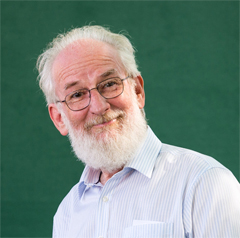
David Crystal

David Crystal

So says David Crystal, who has written more than 100 books on language and is a former master of original pronunciation at Shakespeare’s Globe theater in London — a man who understands the power of tradition in language

The conspicuous omission of the period in text messages and in instant messaging on social media, he says, is a product of the punctuation-free staccato sentences favored by millennials — and increasingly their elders — a trend fueled by the freewheeling style of Facebook, WhatsApp and Twitter

“We are at a momentous moment in the history of the full stop,” Professor Crystal, an honorary professor of linguistics at the University of Wales, Bangor, said in an interview after he expounded on his view recently at the Hay Festival in Wales

“In an instant message, it is pretty obvious a sentence has come to an end, and none will have a full stop,” he added “So why use it?”

In fact, the understated period — the punctuation equivalent of stagehands who dress in black to be less conspicuous — may have suddenly taken on meanings all its own

Increasingly, says Professor Crystal, whose books include “Making a Point: The Persnickety Story of English Punctuation,” the period is being deployed as a weapon to show irony, syntactic snark, insincerity, even aggression

If the love of your life just canceled the candlelit, six-course, home-cooked dinner you have prepared, you are best advised to include a period when you respond “Fine.” to show annoyance

“Fine” or “Fine!,” in contrast, could denote acquiescence or blithe acceptance

“The period now has an emotional charge and has become an emoticon of sorts,” Professor Crystal said “In the 1990s the internet created an ethos of linguistic free love where breaking the rules was encouraged and punctuation was one of the ways this could be done”

Social media sites have only intensified that sense of liberation

Professor Crystal’s observations on the fate of the period are driven in part by frequent visits to high schools across Britain, where he analyzes students’ text messages

Researchers at Binghamton University in New York and Rutgers University in New Jersey have also recently noted the period’s new semantic force

They asked 126 undergraduate students to review 16 exchanges, some in text messages, some in handwritten notes, that had one-word affirmative responses (Okay, Sure, Yeah, Yup) Some had periods, while others did not

Those text message with periods were rated as less sincere, the study found, whereas it made no difference in the notes penned by hand

Geoffrey Nunberg, a linguist who teaches at the University of California, Berkeley, noted that the 140-character limit imposed by Twitter and the reading of messages on a cellphone or hand-held device has repurposed the punctuation mark

“It is not necessary to use a period in a text message, so to make something explicit that is already implicit makes a point of it,” he said “It’s like when you say, ‘I am not going – period’ It’s a mark It can be aggressive It can be emphatic It can mean, ‘I have no more to say’

Can ardent fans of punctuation take heart in any part of the period’s decline? Perhaps.

The shunning of the period, Professor Crystal said, has paradoxically been accompanied by spasms of overpunctuation

“If someone texts, ‘Are you coming to the party?’ the response,” he noted, was increasingly, “Yes, fantastic!!!!!!!!!!!”

But, of course, that exuberance would never be tolerated in a classroom

At the same time, he said he found that British teenagers were increasingly eschewing emoticons and abbreviations such as “LOL” (laughing out loud) or “ROTF” (rolling on the floor) in text messages because they had been adopted by their parents and were therefore considered “uncool”

Now all we need to know is, what’s next to go? The question mark

Leave a comment

Filed under 2016, syntax

Please read

James Patterson Would Like You to Read

By Troy Patterson

Source: http://www.newyorker.com/books/page-turner/james-patterson-would-like-you-to-read?mbid=rss

Author James Patterson would like you to read.

Author James Patterson would like you to read.

In the tradition of Don DeLillo, Salman Rushdie, and Joseph Heller, James Patterson drafted his early books by moonlight while holding a day job as an advertising copywriter. But none of those other guys ever won a Clio, much less rose to an executive suite at J. Walter Thompson, where the storytellers stoke mass desire on an industrial scale.

Patterson became the best-selling novelist of the twenty-first century on the strength of his superlative skills as an adman—his knack for the art of the sale, his gift for managing creative talent. Relying on a retinue of co-authors, he is the chief executive of an unsleeping pulp mill perpetually boosting capacity. He has placed nineteen books on the Times’ best-seller lists since January. He has three hundred and twenty-five million books in print and an annual income of something like ninety million dollars. He has a new pitch.

One recent afternoon, Patterson summoned this interviewer (no relation) to an expense-account joint in midtown. He inhabited his corner banquette with no airs, drank his Diet Coke with mild thirst, and spoke with a lot of Hudson Valley in his voice. Patterson was born sixty-nine years ago in Newburgh, New York—the town across from Beacon on the wrong side of the river—and his accent did something untranscribable when he mentioned his filing drawers. The drawers are in the home office at his winter palace, in Palm Beach. Very deep, they hold a hundred and seventeen fresh manuscripts, slender but all good to go.

Patterson has enticed Hachette Book Group to grant him reign over a new imprint called BookShots. Each volume runs twenty-five to thirty thousand words, or a hundred and twenty-five to a hundred and fifty pages, or somewhere between one full “Double Indemnity” and two-thirds a “Gatsby.” Tolstoy is a full meal; Turgenev is a fabulous dessert; a BookShot is a bag of Funyuns. “We have this convention of the novel that you have to know everything about the frigging characters,” Patterson said. “Like: What? You know, a lot of people don’t know their spouses that well.”

Patterson “grew up being a little literary snob” who matured into knowing his limits. “At a certain point, it occurred to me I couldn’t write ‘One Hundred Years of Solitude,’ but at that point I read ‘The Day of the Jackal.’ “ This he could maybe manage. He settled on a practical poetics: “Action reveals character even more than ‘bullshit, bullshit, bullshit’ in our heads.” BookShots is the natural extension of this philosophy. Why muck around with interiority? Why must a mass-market paperback aspire to the thickness of a foam travel pillow? Why not test the demand for low-commitment narratives priced at five dollars a hit? “I’m certainly not trying to break any new ground in terms of the structure of the novel,” Patterson said. “I just find that less seems to be more.”

One of the first BookShots—published this week, precisely a year after Patterson presented the concept—is “Cross Kill.” An installment of Patterson’s Alex Cross series, it is one of the few productions to flow from his solitary pen. Controlled prose, confirmed audience, a first printing of five hundred thousand copies, great. And Patterson plainly relishes collaborating with reporters on a true-crime horror show, titled “Filthy Rich,” about the highly affluent sex criminal Jeffrey Epstein. But most often he farms out the word processing to co-authors, who receive detailed outlines and send back work that ranges in quality from vibrant schlock to hectic dreck. He’s also curating a BookShots Flames series for readers who crave to imagine the love shared by, say, an Appletini-tippling city gal and a rodeo cowboy named Tanner. “I came up with title for that one,” Patterson said. The title for that one is “Learning to Ride.”

When I asked what inspired BookShots, Patterson said, “I was kinda blocked,” using the word in an awesome caricature of the opposite of its usual sense. He published seventeen books in 2015. Only seventeen! With all his ideas and his infrastructure? With so many pots potentially boiling in his institutional kitchen?! Hachette is scheduled to published twenty-three BookShots in 2016, plus fifteen other Patterson titles. These numbers are open to upward revision.

“My hope is that it increases the habit of reading,” Patterson said. He is sincere in this goal, which aligns both with his philanthropic support of literacy and his personal gripes about the electorate’s analytic skills. “We have this country of nincompoops now.” It is discouraging, for instance, to see the populace swayed by political promises of mass deportations: “Like thirty million cops come to their homes and walk them across the Rio Grande? I mean, stop it already.” (I wondered if the author still golfs at the Trump course in West Palm. “Yeah, I do sometimes,” he said. “I go there to golf, not to vote.”) “You go to Sweden”—a country of ten million people—“and they have books that sell a million copies there. Gas stations sell books. It’s good for people.”

When I wondered about Patterson’s commercial hopes for the new project, he evaded the question quite suavely. “You know, I remember a long time ago—uh, who’s the ‘Star Wars’ guy?” George Lucas? “Yeah, I met him a really long time ago, and we were talking about his idea of success, and he said, ‘My thing is, I just keep pushing the rock up the steep hill, and as long as I feel like I keep going up the hill it’s good.’ You know, same thing.”

“You do what you can do,” Patterson said. “I’m not an empire builder.”

Leave a comment

Filed under 2016, book publishing, books