Tag Archives: Saturday

Poet: Why I would never tell a student what a poem means – The Washington Post

Poet: Why I would never tell a student what a poem means

Source: Poet: Why I would never tell a student what a poem means – The Washington Post

Sara Holbrook, the author of books of poetry for children, teens and adults, as well as professional books for teachers, wrote a piece on this blog earlier this year that was, to say the least, jarring, if not entirely unexpected by those who have been paying attention to how poorly many standardized tests are constructed. That post, “Poet: I can’t answer questions on Texas standardized tests about my own poems,” started this way:

When I realized I couldn’t answer the questions posed about two of my own poems on the Texas state assessment tests (STAAR Test), I had a flash of panic — oh, no! Not smart enough. Such a dunce. My eyes glazed over. I checked to see if anyone was looking. The questions began to swim on the page. Waves of insecurity. My brain in full spin.

[Poet: I can’t answer questions on Texas standardized tests about my own poems]

Now Holbrook is back with a piece about why she never tells a student what a poem means. Why is that a big deal? It is in direct contrast to a good deal of literature instruction today, which is designed to ensure that students take away not their own meaning but what a standardized test would consider correct.

Holbrook also visits schools and speaks at educator conferences worldwide, with her partner Michael Salinger, providing teacher and classroom workshops on writing and oral presentation skills. Her first novel, “The Enemy: Detroit 1954,” was just released.

By Sara Holbrook

Seems fitting that April is poetry month, a season brimming with blossoming possibilities and longer days. Like jolly jonquils, in April poets are released from our winter hibernation, we shed our black attire and start popping up at readings, sprouting bright colors and (presumably) speaking in stanzas. Not sure how April came to be poetry month. Maybe because at the time of its designation, April didn’t already belong to women’s history, colon cancer awareness, or toenail fungus.

Of course as most of the educated world knows, April mostly belongs to taxes and school testing. Still, poets who chew pencils and chase cursors every day all year wait for this month for a little acknowledgment. It’s not too bad of a deal, really. The five-paragraph-essay is still waiting in the wings for its month.

The poem below was not written as a poetry month challenge. I wrote it while sitting in the back of a summer poetry-writing workshop. Mostly, I was biding my time for my turn to present. The instructor began by asking us to write the words, “I remember” and write for five minutes, not letting our pen leave the page (actually a writing exercise conceived by Natalie Goldberg, I later found out). If we got stuck, we were to write, “I remember” again and keep writing.

But I’ve always been a little ornery. I began with “I don’t remember,” and went from there. The image that came to mind was of my mother and the big family secret the entire neighborhood knew. Mom drank too much and took too many pills. I don’t think she would mind my telling this story now since she was sober for the last seven years of her life, and she was really proud of that. But believe me, we had our moments over the years.

A poem is a snapshot in time. Not an entire movie. A focused moment. I do remember the time she brought me brownies as an apology, but I can’t for the life of me remember what she was apologizing for. Memory is a pegboard punched with holes. The older I get, the bigger the holes become.

Still, I remember the brownies, the hug, my forced smile.


Remember


I don’t remember the first time,

how it started

or when.

But I remember

the night you brought me brownies

and said

it would never happen again.


I remember,

your hair was longer then

and how your eyes swam over to mine.

I remember,

my smile stuck to my teeth.

I knew it wasn’t the last time.


My eyes were sealed with tears

and it was hard for them to wake,

but that didn’t seem to matter.

We hugged.

And the brownies tasted great.

©1997 sara holbrook “I Never Said I Wasn’t Difficult,” Boyds Mills Press


Forty years after the brownies were delivered to my bedside, four or five years after the writing and publication of the poem, I was visiting a school in the rural Midwest. It was April, and in preparation for the poet/author visit, kids had been asked to respond to one of my poems with: one their own poems, a hand-drawn picture, or a paragraph. What a display!

Hundreds of responses were posted in the hallways. There was an entire wall in the foyer devoted to my poem, “The Dog Ate My Homework.” Middle-school kids love to laugh and the student poems told tall tales of dogs, goats, and chickens munching on math problems and swallowing spelling words. One, as I remember, involved no eating but did reference cat pee.

But down the hall, around the corner, out of the florescent glare of the reception area, on the tiled wall by the room where (before inclusion) they used to keep “those kids,” I found Paul’s interpretation of my poem, “Remember.” While his classmates were having fun with poetry, he was evidencing his understanding that all of life is not a sit-com.

Paul was 11 years old when he wrote this. I know. I asked. When students are 11, the topic of sex doesn’t come up in the classroom. Teachers and parents make sure of it. What Paul brought to the text of my poem is background knowledge he had acquired somewhere other than school. We can only speculate.

Paul and I are both more than 25 years older now. Still, that spring day is sealed in my memory. I visited two schools, Paul’s in the morning and then I moved on at lunch break. But I took time to make a big deal out of Paul’s response, taking it to the office to have it photocopied (era before cellphone cameras). The secretary read it and wearily sighed, “Yeah, there’s a lot of that ’round here.” I took it to the guidance office. I took it to the vice principal. I don’t know if Paul, age 11, ever got the help he needed. It haunts me.

But one thing I do know, I am not the one to tell Paul what the poem “Remember” is about. Paul knew and probably still knows what this poem means. In my mind, this is not even my poem anymore. It belongs to Paul, age 11.

Famed educator, guru, and overall smart person Louise Rosenblatt wisely distinguishes between interpreting expository writing (journalism, nonfiction) and aesthetic writing. “A novel or a poem or a play remains merely inkspots on paper until a reader transforms them into a set of meaningful symbols.” The reader creates meaning, I heard her explain in a talk she gave at the National Council of Teachers of English in November 2004 at the no-nonsense age of 100. She was peeking over the podium giving a roomful of academics what-for, explaining that the meaning of a poem floats somewhere between the page and the reader’s mind because each reader brings a unique experience to the piece.

A few months ago I wrote an essay, “I Can’t Answer These Texas Standardized Test Questions About My Own Poems,” in which I questioned those of unknown academic distinction who anonymously compose proficiency test questions. Many teachers wrote to tell me that they too are unable to answer these vaguely written test questions being used to evaluate their students. One teacher reported that her kids had to endure 17 days of testing this year. Considering there are only about 20 days of school in a month and that every test requires preparation on the devices and manner of testing, that’s a lot of lost instructional time.

Parents wrote. I did a few television interviews and radio programs. It was my 15 minutes. Additionally, I took some heat from a (very) few academics who jumped to inform me that authors do not own the meaning of a poem, it is up to literary critics to make this determination. Good grief.

It was not my intent to kick off an argument on of the relative merit of learned literary analysis. I’ll leave that to those with letters after their names. But friends, parents, educators, learned folks, please remember, middle-schoolers are not just short college sophomores. They are not lit majors. These are kids like Paul. Kids who are often grappling with a world of unseen and sometimes unspeakable challenges.

As teachers and parents, our main goal is to get them to love learning, to be curious, and grow to understand the difference between fact and fiction. Writing poetry can help with this by the way, poets are into facts, and not just in April. But how can testing help with this? Geez, Louise! Proficiency test questions don’t even have to be fact-based!

One industrious Advanced Placement student wrote to walk me through two of my poems and each STAAR standardized test question, dutifully explaining how to determine which of the right answers on a multiple choice test is the most right. Clearly he has mastered the game of analyzing minutia. A smart, articulate kid; I found his dedication to compliance, well, disconcerting.

“Big can’t get you if small’s got you,” civil rights leader Rep. Elijah Cummings said recently, quoting the wisdom of his sharecropper father.

Answer Sheet newsletter

Education questions and answers, in your inbox weekly.

I worry we are raising a generation of students who view success as the ability to focus on marginal minutia while (too often) missing the big ideas in a piece of writing. Worse, children are learning to disregard their own instincts, their histories, their cultural references by devoting themselves to predetermined interpretations. When we tell students what to think, we short sheet their own thought processes.

What if, in that long ago April, some test had told Paul his interpretation was wrong?

I stick to my contention that if a child reads a poem or a story about a red house, it is fair to test the kid’s reading mastery by asking, what color was that house? Once we ask, why did the author paint the house red, we’ve slid off the pedagogical sidewalk. It may be a good question to stimulate rich discussion, but the answer, particularly when it comes to poetry, is not a right or wrong equation. Deciding why the house is red is where we meet, reader and writer as the reader brings a unique experience to the interpretation. This is how we nurture thinking in students.

Besides, if the author hasn’t told us why the house is red, we just can’t know. In fact, the author’s perception of her intent in writing, of the very meaning of her own poem, may in fact change over time.

Leave a comment

Filed under 2017, poetry

The Writer’s Almanac with Garrison Keillor | A poem each day, plus literary and historical notes from this day in history

A poem each day, plus literary and historical notes from this day in history

Source: The Writer’s Almanac with Garrison Keillor | A poem each day, plus literary and historical notes from this day in history

Leave a comment

Filed under 2017, literature

Philip Pullman unveils epic fantasy trilogy The Book of Dust | Books | The Guardian

Author’s new novel series is set in London and Oxford and overlaps with hugely popular His Dark Materials

Source: Philip Pullman unveils epic fantasy trilogy The Book of Dust | Books | The Guardian

Philip Pullman has ended years of speculation by announcing that The Book of Dust, an epic fantasy trilogy that will stand alongside his bestselling series, His Dark Materials, will be published in October around the world.

The as-yet-untitled first volume of The Book of Dust, due out on 19 October, will be set in London and Oxford, with the action running parallel to the His Dark Materials trilogy. A global bestseller since the first volume, Northern Lights, was published in 1995, Pullman’s series has sold more than 17.5m copies and been translated into 40 languages.

Pullman’s brave and outspoken heroine, Lyra Belacqua, will return in the first two volumes. Featuring two periods of her life – as a baby and 10 years after His Dark Materials ended – the series will include other characters familiar to existing readers, as well as creations such as alethiometers (a clock-like truth-telling device), daemons (animals that are physical manifestations of the human spirit) and the Magisterium, the church-like totalitarian authority that rules Lyra’s world.

The Oxford-based former teacher said he had returned to the world of Lyra because he wanted to get to the bottom of “Dust”, the mysterious and troubling substance at the centre of the original books. “Little by little, through that story the idea of what Dust was became clearer and clearer, but I always wanted to return to it and discover more,” Pullman said.

In a description that will resonate with the current political climate, he added that “at the centre of The Book of Dust is the struggle between a despotic and totalitarian organisation, which wants to stifle speculation and inquiry, and those who believe thought and speech should be free”.

But David Fickling, whose firm, David Fickling Books, will publish The Book of Dust in the UK jointly with Penguin Random House children’s books, warned readers not to draw too many parallels between the new book and the current political situation in the UK or US. “I think it is a really important book for now, not in an intellectual way, but in a storytelling way,” Fickling said. He said the book would “resonate on a psychological level” and added: “Some of the best people for telling us the truth about our times are our great storytellers and Philip is one of them.”

Exact details of the plot are a closely guarded secret. However, Fickling hinted that readers would not have to wait 17 years – the gap between the last volume of His Dark Materials and the first of The Book of Dust – before the new series would conclude. The BBC reported on Wednesday that Pullman had completed the first and second volumes already, and was working on the third. Asked when the second volume would be published, Fickling replied, laughing: “You need to ask him, but readers should know they have a big treat ahead of them.”

The puzzle of how Lyra came to be living at Jordan College, Oxford, in her alternative universe, initiated the new trilogy. “In thinking about it, I discovered a long story that began when she was a baby and will end when she’s grown up,” Pullman said. Describing it as neither sequel nor prequel, but an “equel”, he added: “It doesn’t stand before or after His Dark Materials, but beside it. It’s a different story, but there are settings that readers of His Dark Materials will recognise and characters they’ve met before.”

Speaking to the Today programme on BBC Radio 4, Pullman said the first book of the trilogy opened roughly 10 years before the action of Northern Lights, and the series “continues roughly 10 years after His Dark Materials”.

“So we see Lyra both as a baby and we see her in the second book as an adult; she’s 20 years old,” Pullman added. “There she can fully take agency of the story, so to speak.”

Dust, as described in the original series, has been equated to dark matter. It is expected that Pullman will incorporate the latest findings about the substance, which scientists say exists because of evidence of its gravitational impact on the motion of visible matter.

Though Pullman’s publisher would not confirm how this research would feature in the book, Fickling admitted that it had some influence. “He has a capacious mind and is sent nearly every scientific book before publication,” he said. “If you visit his house, you will see all these books that are way above everyone else, he doesn’t miss much that is going on.”

The quest to understand, use and destroy Dust is central to His Dark Materials. But as well as being analogous to dark matter, Pullman has said that it is a metaphor for the original story, which he based upon Milton’s Paradise Lost. In His Dark Materials, the Magisterium regards it as evidence of original sin, which must be destroyed before children emerge from puberty into adulthood when their daemons, the animal familiars that represent their spirits, take their final form.

“Dust is an analogy of consciousness, and consciousness is this extraordinary property we have as human beings,” Pullman told the Today programme. “The story I’m telling in this book is more about in terms of William Blake’s vision, his idea of a fiercely reductive way of seeing things: it’s right or wrong; it’s black or white.

“He said that was far too limiting and we should bring out truer human vision when we see things, surround them all with a sort of penumbra of imagination and memories and hopes and expectations and fears and all these things.

“It’s an attack on the reductionism, the merciless reductionism, of doctrines with a single answer.”

Speaking to the Sydney Morning Herald in 2003, Pullman noted that the Harry Potter author, JK Rowling, had taken more flak for the magic in her books than he had for his overt criticism of organised religion. “I’ve been surprised by how little criticism I’ve got,” he told the newspaper. “Harry Potter’s been taking all the flak … Meanwhile, I’ve been flying under the radar, saying things that are far more subversive than anything poor old Harry has said. My books are about killing God.”

Leave a comment

Filed under 2017, author, new book

Who doesn’t read books in America? | Pew Research Center

About a quarter of American adults (26%) say they haven’t read a book in whole or in part in the past year. Who, exactly, are these non-book readers?

Source: Who doesn’t read books in America? | Pew Research Center

by Andrew Perrin

About a quarter of American adults (26%) say they haven’t read a book in whole or in part in the past year, whether in print, electronic or audio form. So who, exactly, are these non-book readers?

Several demographic traits correlate with non-book reading, Pew Research Center surveys have found. For instance, adults with a high school degree or less are about three times as likely as college graduates (40% vs. 13%) to report not reading books in any format in the past year. A 2015 Pew Research Center survey shows that these less-educated adults are also the least likely to own smartphones or tablets, two devices that have seen a substantial increase in usage for reading e-books since 2011. (College-educated adults are more likely to own these devices and use them to read e-books.)

Adults with an annual household income of less than $30,000 are about twice as likely as the most affluent adults to be non-book readers (33% vs. 17%). Hispanic adults are also about twice as likely as whites (40% vs. 23%) to report not having read a book in the past 12 months.

Older Americans are a bit more likely than their younger counterparts not to have read a book. Some 29% of adults ages 50 and older have not read a book in the past year, compared with 23% of adults under 50. In addition, men are less likely than women to have read a book, as are adults in rural areas compared with those in urban areas.

The share of Americans who report not reading any books in the past 12 months is largely unchanged since 2012, but is slightly higher than in 2011, when the Center first began conducting surveys of book-reading habits. That year, 19% of adults reported not reading any books.

Given the share that hasn’t read a book in the past year, it’s not surprising that 19% of U.S. adults also say they have not visited a library or a bookmobile in the past year. The same demographic traits that characterize non-book readers also often apply to those who have never been to a library. For example, men, Hispanics, older adults, those living in households earning less than $30,000 and those who have no more than a high school diploma or did not graduate from high school are the most likely to report they have never been to a public library.


Leave a comment

Filed under 2017, reading

New York 2140: Kim Stanley Robinson dreams vivid about weathering climate crisis

In 2012, Kim Stanley Robinson published 2312, imagining how the world and its neighbors might look in 300 years, loosely coupled with the seminal Red Mars books, a futuristically pastoral novel abo…

by Cory Doctorow

Source: New York 2140: Kim Stanley Robinson dreams vivid about weathering climate crisis

In 2012, Kim Stanley Robinson published 2312, imagining how the world and its neighbors might look in 300 years, loosely coupled with the seminal Red Mars books, a futuristically pastoral novel about the way that technology can celebrate the glories of nature; in 2015, Robinson followed it up with Aurora, the best book I read that year, which used 2312’s futures to demolish the idea that we can treat space colonization (and other muscular technological projects) as Plan B for climate change — a belief that is very comforting to those who don’t or can’t imagine transforming capitalism into a political system that doesn’t demolish the planet. Now, with New York 2140, Robinson starts to connect the dots between these different futures with a bold, exhilarating story of life in a permanent climate crisis, where most people come together in adversity, but where a small rump of greedy, powerful people get in their way.

It’s 2140 and trillions of dollars’ worth of the world’s most valuable real estate is now submerged under fifty feet of water, resulting from two great “surges” where runaway polar melting created sudden, punctuated disasters that displaced billions of people, wiped trillions off the world’s balance sheets, and turned the great cities of the world into drowned squatter camps.

But it’s 2140, and the cities are coming back. The combination of financial speculation, desperate refugees willing to do anything to find shelter, and new technological innovations are spawning “SuperVenice”s where boats replace cars and high-rises connect to each other with fairytale skybridges, and pumped-out subway stations become underwater leisure clubs. No SuperVenice is more super than New York City, where the boats ply midtown Manhattan’s skyscrapers and everything from Chelsea down is an intertidal artificial reef where, every now and again, hundreds of squatters die as the buildings topple.

The forces of finance are deeply interested in the intertidal zones. These great cities were once the world’s ultimate luxury products and now they’re marine salvage, waiting to be dredged up from the tidal basins, dusted off and monetized. Yeah, there’s millions of inconvenient poors hanging out in them, but they’re a market failure, producing suboptimal rents on some seriously distressed assets that need a little TLC, capital infusion, and ruthless securitization to bring them back.

Robinson is a master of turning stories about zoning disputes and local politics into gripping, un-put-down-able adventure tales (his novel Pacific Edge remains the most uplifting book in my library). New York 2140 is a spectacular exemplar of the tactic: the financial shenanigans form a backdrop for submarine drone-wars, black-ops kidnappings, private security assassinations, non-state actor cyberwar and economic terrorism, buried treasure hunting, and big, muscular technologies from giant dredging barges to aerosolized diamond sprays.

But more than an adventure tale, New York 2140 is a vivid narrative about how our best natures can best natural catastrophes: how the goodwill, cooperation, and kindness of humans can overcome the wickedness, self-deception, and greed of humans.

I am increasingly certain that these stories are an urgent political project. We are all prone to the availability heuristic, in which things that are easily imagined are considered more likely than things that are hard to imagine. Since the Reagan years, our overwhelming stories about humans is our greed and selfishness (indeed, these are virtues in the Randian conception of free market utopianism), and so whenever someone says, “We will need to cooperate with each other to solve climate change,” it’s hard to imagine — but it’s easy to imagine how, after the change, we can set up brutal, Mad Max-ian strong-man societies (see, e.g., The Walking Dead) where you’re either a cannibal warlord, or your dinner.

The space of stories we can imagine constrains the space of political solutions we’re willing to include in the Overton window. Vivid, engrossing tales about the best natures of humans overcoming the worst are a weapon against despair and cynicism — and may be the necessary precondition for the survival of our species.

Leave a comment

Filed under 2017, book review

5 Reasons Why Your Kids Should Meet One of Their Favorite Authors | Brightly

Source: 5 Reasons Why Your Kids Should Meet One of Their Favorite Authors | Brightly

by Tom Burns

That’s an easy thing to say, isn’t it?

“Your kid should meet their favorite author!”

But it’s not always the easiest thing to do.

In fact, sometimes, it’s literally impossible to do — particularly if your child’s favorite author is E.B. White or A.A. Milne. And, if the author is still alive, sometimes geography and/or fame just makes the chances of a meet-and-greet impossible. (I recognize that the likelihood of my daughter getting to see J.K. Rowling in person is fairly low.)

That being said, there ARE so many opportunities for children to interact with authors they love. Book fairs, library events, bookstore readings — authors head out on the road to market their works more often than you might think. And, if you’re the parent of a book-loving kid, it becomes your job to become aware of those events, so your kid doesn’t find out that “OMG, my favorite author ever was at the library yesterday and we didn’t even know!”
Can it be a lot of work to find these author events? Yes. Is the experience of attending worth all that effort? YES. YES, YES, YES.

If you’re not sure that you want to brave the lines at your local bookstore to have your kid meet the creator of that new book or series they love, here are five reasons why meeting an author has the potential to be one of the coolest experiences your kid will ever have:

1. It humanizes their heroes.
Kids develop a really intimate relationship with authors they love. They see the name Rick Riordan or Amy Krouse Rosenthal, Brad Meltzer or Matt de la Peña on a book cover and, from that name alone, they know, “That book is for ME. That’s MY kind of book.” That’s a powerful connection that only gets deeper once your child has the opportunity to see the author in person.
Last summer, I was lucky enough to get to take my daughter to an event to meet Kate DiCamillo, an author she’d been calling her “favorite writer EVER” since she was six years old. I can’t describe to you what happened to my daughter’s face when Kate walked into the room. There was a flash of recognition, then disbelief, then one of the biggest smiles I’ve ever seen.
It was like watching someone meet an old pen-pal or long-distance acquaintance for the first time. It was magical.

2. There’s nothing like hearing an author read their own work.
Often, when you’re at an author event, you get the privilege of hearing an author read their work aloud. Maybe it’s a chapter from a new book, maybe it’s a short passage from an old favorite. Regardless, there is something wonderful about hearing a writer read their own writing to a large group of children.

It really is fantastic to hear the person who created a fictional world bring it to life with their own voice. They know how to hit all the jokes just right. They bring emotion and depth to pauses you never anticipated on your own. For a kid, it’s like watching an act of creation right in front of them. It’s unbelievable.

3. It lets your kids know “I could do that TOO!”
When your kid gets to see their favorite author in the flesh for the first time, it’s a strange moment. It’s almost like seeing a fictional character brought to life.

But that’s why this is a great experience for kids — because it lets them know that authors AREN’T fictional. They’re real. They’re just like you or me and, most importantly, just like THEM. When a child realizes that an author they adore is just a normal person, it reminds them that they’re capable of creating the exact same kinds of things. They can be a writer too, just like that oddly normal person signing books at the front of the line.

4. Autographs mean something.
They do.

Your child met the person who created that book they loved, and they have PROOF. The author might’ve even written your kid’s name in the inscription as well. It might just be a signature, but it means so much to the person who gets to carry that signed copy of the book around with them for the rest of their lives.

(And, if you meet an author who is also an illustrator, sometimes they draw sketches too! My daughter still can’t get over that Lane Smith actually sketched a picture of the title character of one of her favorite books, Grandpa Green, on the title page of her copy. She will keep that book FOREVER.)

5. It gives them a more personal connection to their favorite books.
As I mentioned, these chances to meet authors aren’t always possible. Sometimes, they only happen in big cities or, sometimes, your child’s favorite writers are already dead.

But, when the opportunity arises, if your child has the chance to meet the author of a book they love, that experience burns that book into your kid’s brain for the rest of their life. The book is elevated. It’s not just a better-than-average read. It becomes a book they now have history with. It’s a book that allowed them behind the scenes. A book that let them meet its author, ask a question, maybe get an autograph.

I’m not saying that meeting an author will always be a phantasmagorical experience. Maybe your kid will be shy. Or the author will be grumpy. Or the lines will just be way too long.

But, if you’re lucky, if your kid gets to meet a person who wrote a book they loved, that book will become a part of your child’s personal history in a way that most creative works never will.

So, if you have the opportunity to take your kid to an author signing, believe me, it’s worth it.

Leave a comment

Filed under 2017, author

Changes In ‘New York Times’ Books Coverage, Explained

At a luncheon in Manhattan yesterday, ‘New York Times Book Review’ editor Pamela Paul, who oversees all books coverage at the ‘New York Times,’ laid out the newspaper’s vision for the future of its newly-unified books desk.

Source: Changes In ‘New York Times’ Books Coverage, Explained

by John Maher

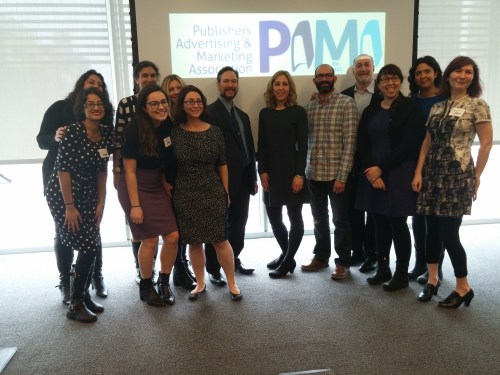
At a luncheon hosted by the Publishers Advertising and Marketing Association (PAMA) at the New York Times headquarters on Wednesday, New York Times Book Review editor Pamela Paul explained the paper’s vision for the future of its books coverage.

Paul has overseen all books coverage at the New York Times since the paper’s executive editor, Dean Baquet, announced changes to the newspaper’s books coverage last summer. She has also previously spoken about some of the changes, including the unification of the paper’s separate books teams under one desk, and the deprioritization of reviews in favor of more custom-tailored and wide-ranging forms of coverage.

But after the Times eliminated a number of its bestsellers lists in January, many in publishing have found themselves asking questions about the paper’s coverage of books and worrying what the shift means.

“When I hear that [a media outlet is consolidating], as an outsider…my very jaundiced, skeptical take is, ‘Oh, they’re cutting back,'” Paul said. “That is actually not the case in this instance. It is the opposite.”

Paul stressed that the Times is actually expanding its books coverage, with the intent of becoming more “strategic” in how it covers particular books. Previously, the paper had three separate desks that covered books entirely independent of one another—the Business Day, which is where publishing reporter Alexandra Alter was assigned; the Daily Critics, comprised of Michiko Kakutani, Dwight Garner, and Jennifer Senior; and the Sunday Book Review—with very little communication between teams and some duplication in what was covered. That will now change, with all books coverage falling under a single Books Desk umbrella.

In simple terms, the Times is moving from a review-oriented strategy to a strategy that aptly covers categories that are of interest to their readers but are “review-proof,” or wouldn’t necessarily benefit from a 1,200-word review in the New York Times Book Review. (Examples include, with exceptions, mysteries, parenting books, business books, or health books.)

Previously, Paul said, the Times’ books coverage consisted “85% of reviews” with the rest being “a mix of profiles, industry news, features, and bestseller lists.” This approach, she said, resulted in “a lot of duplication.” In other words, at a Times that has rapidly expanded its digital strategy, the question will no longer be, she said, “Does this book merit a review,” but rather, “Does this book merit coverage?”

To this end, Paul noted that the Times has been, and will continue, hiring new writers and editors to write about books in different ways. Those editors and writers will be focused “across all genres,” Paul said, and covering—but not reviewing—books she feels the paper did not effectively cover in the past.

While Laura Marmor was brought to the Books Desk from the NYT Styles Desk as deputy editor of news and features, the biggest recent hire at the Books Desk was of new editorial director Radhika Jones, who came from Time magazine, where she edited features including the Time 100 Most Influential People. (Before Time, Jones was at the Paris Review.) Jones will be spearheading an upcoming redesign of the New York Times Book Review, which remains “central” to the newspaper’s books-related mission. The redesign will affect both digital and print and, Paul said, in an email to PW, be unveiled sometime this summer. David Kelly remains the deputy editor of the New York Times Book Review.

Paul also addressed concerns over the slashing of bestseller lists including mass market and comics. Regarding how the bestseller lists team compiles the lists, “their methodology has not changed,” Paul said, “and I can say that with a mix of total confidence and total ignorance.” She continued: “I will say, there does still exist that line between editors and the bestseller lists in that we don’t know their special sauce. We don’t want to know it, nor should we know it. We oversee them and they are part of our group, but we don’t interfere with that process.”

As for the reasoning behind which lists were cut, Paul said that cuts were made “strategically in a way that every book still has a chance to be on a bestseller list.” She then added: “There’s no book that doesn’t have a chance to get on there. It’s just that the competition is tougher.”

Leave a comment

Filed under 2017, book review

New words to live by: “Awesomocity”

Time, once again, for New words to live by. This is a word or phrase not currently in use in the U.S. English lexicon, but might need to be considered. Other words, such as obsurd, crumpify, subsus, flib, congressed, and others, can be found by clicking on the tags below. Today’s New Word is created by combing an adjective and a noun. Without further waiting, Awesomocity.

OLD WORDS
Awesome, adj. 1. Inspiring an overwhelming feeling of reverence, admiration, or fear. 2. Exhibiting or marked by awe.

Velocity, n. 1. Swiftness, speed, rapidity of motion. 2. Mechanics. The rate of change of position of a body in a specified direction.

NEW WORD
Awesomocity, n. The speed and direction with which your awesomeness becomes known to others.

His awesomocity was so fast and complete, it was almost impossible to tell where it began and where it ended. It seemed to be instantaneous: everywhere and all at once.

Leave a comment

Filed under 2017, new word, New words to live by

Publishers are hiring ‘sensitivity readers’ to flag potentially offensive content – Chicago Tribune

Before a book is published and released to the public, it’s passed through the hands (and eyes) of many people: an author’s friends and family, an agent and, of course, an editor.

Source: Publishers are hiring ‘sensitivity readers’ to flag potentially offensive content – Chicago Tribune

by Everdeen Mason

These days, though, a book may get an additional check from an unusual source: a sensitivity reader, a person who, for a nominal fee, will scan the book for racist, sexist or otherwise offensive content. These readers give feedback based on self-ascribed areas of expertise such as “dealing with terminal illness,” “racial dynamics in Muslim communities within families” or “transgender issues.”

“The industry recognizes this is a real concern,” said Cheryl Klein, a children’s and young adult book editor and author of “The Magic Words: Writing Great Books for Children and Young Adults.” Klein, who works at the publisher Lee & Low, said that she has seen the casual use of specialized readers for many years but that the process has become more standardized and more of a priority, especially in books for young readers.

Sensitivity readers have emerged in a climate – fueled in part by social media – in which writers are under increased scrutiny for their portrayals of people from marginalized groups, especially when the author is not a part of that group.

Last year, for instance, J.K. Rowling was strongly criticized by Native American readers and scholars for her portrayal of Navajo traditions in the 2016 story “History of Magic in North America.” Young-adult author Keira Drake was forced to revise her fantasy novel “The Continent” after an online uproar over its portrayal of people of color and Native backgrounds. More recently, author Veronica Roth – of “Divergent” fame – came under fire for her new novel, “Carve the Mark.” In addition to being called racist, the book was criticized for its portrayal of chronic pain in its main character.

This potential for offense has some writers scared. Young-adult author Susan Dennard recently hired a fan to review her portrayal of a transgender character in her “Truthwitch” series.

“I was nervous to write a character like this to begin with, because what if I get it wrong? I could do some major damage,” Dennard said. But, she added, she felt the voice of the character was an important one that wasn’t often portrayed, so she hired a fan, who is a transgender man, just to be sure she did it right.

For authors looking for sensitivity readers beyond their fan base there is the Writing in the Margins database, a resource of about 125 readers created by Justina Ireland, author of the YA books “Vengeance Bound” and “Promise of Shadows.” Ireland started the directory last year after hearing other authors at a writing retreat discuss the difficulties in finding people of different backgrounds to read a manuscript and give feedback about such, well, sensitive matters.

One reader for hire in Ireland’s database is Dhonielle Clayton, a librarian and writer based in New York. Clayton reviews two manuscripts per month, going line by line to look at diction, dialogue and plot. Clayton says she analyzes the authenticity of the characters and scenes, then points writers to where they can do more research to improve their work.

Clayton, who is black, sees her role as a vital one. “Books for me are supposed to be vehicles for pleasure, they’re supposed to be escapist and fun,” she says. They’re not supposed to be a place where readers “encounter harmful versions” and stereotypes of people like them.

Ireland underscores the value of sensitivity readers – both for authors and for readers. (She was a strong voice behind the push to get Keira Drake to make changes to the advance readers’ edition of “The Continent.”)

“Even if authors mean well, even if the intention is good, it doesn’t change the impact,” Ireland said. “It’s nice to be that line of defense before it gets to readers, especially since the bulk of people who come to me write for children.” Fees for a sensitivity readers generally start at $250 per manuscript.

Children’s book author Kate Messner has used sensitivity readers for many of her books, some of which deal with poverty, abuse and race.

“I wouldn’t dream of sending those books out into the world without getting help to make sure I’m representing those issues in a way that’s realistic and sensitive,” she said. Messner, whose works include “The Seventh Wish” and “All the Answers,” asks a reader for feedback on whether the experience she’s written reads realistically or whether anything stands out as problematic.
Her upcoming book, tentatively called “Breakout,” focuses on three girls coping with a prison escape in their small town. Messner has enlisted multiple sensitivity readers to help her work out the class and race issues affecting the town and her characters. A reader has called out when her language doesn’t ring true, and has questioned when her character does something that seems inauthentic and provides her perspective on why that is. Messner said it’s been encouraging to hear when she’s gotten something correct, but also she’s had to make adjustments.

Lee & Low Books has a companywide policy to use sensitivity readers. Stacy Whitman, publisher and editorial director of Lee & Low’s middle-grade imprint Tu Books, said she will even request a sensitivity reader before she chooses to acquire a book to publish.

“It’s important for authors to consider expert reader feedback and figure out how to solve the problems they point out,” Whitman said. “Everyone’s goal is a better book, and better representation contributes to that.”

Still, some sensitivity readers feel they are in part contributing to the problem. Clayton said she’s unsettled by the idea that she’s being paid for her expertise, but also is helping white authors write black characters for books from which they reap profit and praise.

“It feels like I’m supplying the seeds and the gems and the jewels from our culture, and it creates cultural thievery,” Clayton said. “Why am I going to give you all of those little things that make my culture so interesting so you can go and use it and you don’t understand it?”

Concerns about cultural appropriation have been around for years – think of William Styron writing as the slave Nat Turner in 1967. (“That’s what we’re paid to do, isn’t it?” Lionel Shriver said in a controversial speech last year. “Step into other people’s shoes, and try on their hats.”)

But sensitivity readers introduce a new twist in the debate. On the one hand they help a writer create the experience of a marginalized group more authentically. On the other, they legitimize the mimicking of marginalized voices by non-marginalized writers.

Why not just publish more books by black people, Latinos, Native Americans and others? some ask.

Despite the efforts of groups like We Need Diverse Books, “it’s more likely that a publishing house will publish a book about an African-American girl by a white woman versus one written by a black woman like me,” Clayton says.
“So until publishing is equitable and people are still writing cross-culturally,” Clayton points out, “sensitivity reading is going to be another layer of what’s necessary in order to make sure that representation is good.”

Leave a comment

Filed under 2017, book publishing

Fighting Fake News | American Libraries Magazine

Librarians can play a vital role in helping everyone, of any age, fight fake news and become critical and reflective media consumers.

Source: Fighting Fake News | American Libraries Magazine

Librarians—whether public, school, academic, or special—all seek to ensure that patrons who ask for help get accurate information.

Given the care that librarians bring to this task, the recent explosion in unverified, unsourced, and sometimes completely untrue news has been discouraging, to say the least. According to the Pew Research Center, a majority of US adults are getting their news in real time from their social media feeds. These are often uncurated spaces in which falsehoods thrive, as revealed during the 2016 election. To take just one example, Pope Francis did not endorse Donald Trump, but thousands of people shared the “news” that he had done so.

Completely fake news is at the extreme end of a continuum. Less blatant falsehoods involve only sharing the data that puts a proposal in its best light, a practice of which most politicians and interest group spokespeople are guilty.

The news-savvy consumer is able to distinguish fact from opinion and to discern the hallmarks of evasive language and half-truths. But growing evidence suggests that these skills are becoming rarer. A November 2016 study by the Stanford History Education Group (SHEG) showed that students have difficulty separating paid advertising from news reporting, and they are apt to overlook clear evidence of bias in the claims they encounter. These challenges persist from middle school to college.

According to SHEG Director Sam Wineburg, professor at Stanford Graduate School of Education, “nothing less than our capacity for online civic reasoning is at risk.”

Librarians and journalists: natural allies
Librarians can help change this trend. “Librarians are natural allies for educators in helping students become critical news consumers,” says Wineburg. The profession’s deep commitment to verified sources and reliable information mirrors similar values—accountability for accuracy, careful research before drawing firm conclusions, and a willingness to correct errors—that drive responsible journalism.

One emerging solution among journalists is the Trust Project, an initiative of the Markkula Center for Applied Ethics at Santa Clara (Calif.) University.

Headed by longtime reporter Sally Lehrman, director of Santa Clara’s journalism ethics program, the Trust Project has partnered with nearly 70 media organizations to develop a collection of color-coded digital “Trust Indicators” that signify reliable and responsible reporting. Indicators include a commitment to seeking diverse perspectives, linking out to credible sources of further information, offering clear markers regarding whether an article presents opinion or news, and providing information about an article’s author. The complete set is available at the Trust Project website.

Still in the works for the project is computer code that will allow partner media organizations to note when they have achieved a Trust Indicator, which serves as a proxy for reliable journalism. This code should be broadly available by mid-2017. Services such as Facebook and Google would surface these materials more prominently in news feeds and search results, while readers would see clear visual icons that demonstrate fulfillment of the Trust Indicators. As Lehrman explains, “These icons would be cognitive shortcuts to route readers to more reliable sources of news.”

She also notes a strong desire by consumers to be active participants in the shaping of the news, rather than merely a passive audience. In that spirit, she welcomes input and feedback from librarians about how to best achieve the aims of the Trust Project.

Direct collaboration with journalists is another route to increasing media literacy. For example, the Dallas Public Library (DPL) will host an eight-week training course in community journalism for high school students. Its “Storytellers without Borders” project, one of the winners of the 2016 Knight News Challenge, includes oversight from professional librarians as well as reporters at the Dallas Morning News. Students will rotate among three DPL branch locations that represent the socioeconomic and cultural diversity of the city. Journalists will mentor students on how to ask focused questions, while librarians will describe how to use research databases to find accurate information. Library staffers will also provide instruction on how to use multimedia editing tools. In April 2017 these budding digital journalists, with their new skills in the art of providing credible and engaging content, will showcase their efforts at the Dallas Book Festival.

Information literacy at your library
The Trust Project and “Storytellers without Borders” are high-profile efforts, but any library can lead educational programs about the importance of media literacy.

As the SHEG study reveals, this training should begin with young students and continue through college. Resources that range from free LibGuides to enhanced school curricula are available for libraries around the country.
Librarians at Indiana University East in Richmond have developed a LibGuide about how to identify fake news, complete with detailed images of what questions to ask while perusing a site. The News Literacy Project, founded by former Los Angeles Times reporter Alan Miller, offers a comprehensive curriculum of classroom, after-school, and e-learning programs for middle and high school students; the Center for News Literacy at Stony Brook (N.Y.) University offers similar resources for teaching college students.

Despite the clear need for increased media literacy, one risk is that this topic will always be perceived as optional—nice to know but not essential. Wineburg argues that this is misguided. “Online civic literacy is a core skill that should be insinuated into the warp and woof of education as much as possible,” he says. In a paper for College & Research Libraries News, Brian T. Sullivan, information literacy librarian, and Karen L. Porter, sociology professor, of Alfred (N.Y.) University map out how to convert those one-shot information literacy training sessions into full programs with embedded librarians.

Librarians can play a vital role in helping everyone, of any age, become critical and reflective news consumers. One positive outcome of the current furor about fake news may be that information literacy, for media and other types of content, will finally be recognized as a central skill of the digital age.

Leave a comment

Filed under 2017, library