Tag Archives: Saturday

Positive psychology is a booming industry. But is it science, religion, or something else? – Vox

Just over 20 years old, this field has captivated the world with its hopeful promises — and drawn critics for its moralizing, mysticism, and serious commercialization.

Source: Positive psychology is a booming industry. But is it science, religion, or something else? – Vox

Positive psychology has grown at an explosive rate since Seligman ushered it into the public conscious, surprising even Seligman himself. The field has attracted hundreds of millions of dollars in research grants. Its 2019 World Congress was attended by 1,600 delegates from 70 countries. It inspires tens of thousands of research papers, endless reams of popular books, and supports armies of therapists, coaches, and mentors.

Its institutional uptake has been no less impressive. More than a million US soldiers have been trained in positive psychology’s techniques of resilience just two years after the “Battlemind” program was launched in 2007. Scores of K-12 schools have adopted its principles. In 2018, Yale University announced that an astonishing one-quarter of its undergraduates had enrolled in its course on happiness.

Since that inaugural presidential address in 1998, Seligman has distanced positive psychology from its original focus. At its inception, the field sought to map the paths that end in authentic fulfillment. But with Flourish, Seligman changed course. Happiness, he declared, is not the only goal of human existence, as he’d previously thought.

The purpose of life, he said, is well-being, or flourishing, which includes objective, external components such as relationships and achievements. The road to flourishing, moreover, is through moral action: It is achieved by practicing six virtues that Seligman’s research says are enshrined in all the world’s great intellectual traditions.

This shift toward moral action hasn’t helped the critical response towards positive psychology’s lofty aims and pragmatic methods. Philosophers such as Chapman University’s Mike W. Martin say it has left the field of science and entered the realm of ethics — that it is no longer a purely factual enterprise, but is now concerned with promoting particular values.

But that’s not the only critique. Others decry positive psychology’s commodification and commercial cheapening by the thousands of coaches, consultants, and therapists who have jumped on the bandwagon with wild claims for their lucrative products.

In several high-profile cases, serious flaws have been found in positive psychology’s science, not just at the hysterical fringe, but in the work of big stars including Seligman himself. There are worries about its replicability, its dependence on unreliable self-reports, and the sense that it can be used to prescribe one thing and also its opposite — for example, that well-being consists in living in the moment, but also in being future-oriented.

And for a science, positive psychology can often sound a lot like religion. Consider its trappings: It has a charismatic leader and legions of rapturous followers. It has a year zero and a creation myth that begins with an epiphany.

“I have no less mystical way to put it,” Seligman wrote in Flourish. “Positive psychology called to me just as the burning bush called to Moses.

Seligman’s inclusion of material achievement in the components of happiness has also raised eyebrows. He has theorized that people who have not achieved some degree of mastery and success in the world can’t be said to be flourishing. He once described a “thirty-two-year-old Harvard University summa in mathematics who is fluent in Russian and Japanese and runs her own hedge fund” as a “poster child for positive psychology.” But this can make well-being seem exclusive and out of reach, since accomplishment of this kind is not possible to all, or even most.

Professors Edgar Cabanas and Eva Illouz, authors of the 2019 book Manufacturing Happy Citizens, have accused positive psychology of advancing a Western, ethnocentric creed of individualism. At its core is the idea that we can achieve well-being by our own efforts, by showing determination and grit. But what about social and systemic factors that, for example, keep people in poverty? What about physical illness and underserved tragedy — are people who are miserable in these circumstances just not trying hard enough?

“Positive psychology gives the impression you can be well and happy just by thinking the right thoughts. It encourages a culture of blaming the victim,” said professor Jim Coyne, a former colleague and fierce critic of Seligman.

Then there are positive psychology’s financial ties to religion. The Templeton Foundation, originally established to promote evangelical Christianity and still pursuing goals related to religious understanding, is Seligman’s biggest private sponsor and has granted him tens of millions of dollars. It partly funded his research into universal values, helped establish the Positive Psychology Center at Seligman’s University of Pennsylvania, and endows psychology’s richest prize, the $100,000 Templeton Prize for Positive Psychology. The foundation has, cultural critic Ruth Whippman wrote in her book America the Anxious, “played a huge role in shaping the philosophical role positive psychology has taken.”

We should find this scandalous, Coyne says. “It’s outrageous that a religious organization — or any vested interest — can determine the course of scientific ‘progress,’ that it can dictate what science gets done.”

Despite the criticism, positive psychology remains incredibly popular. Books with “happiness” in the title fly off the shelves, and people sign up for seminars and courses and lectures in droves. We all seem to want what positive psychology is selling. What is it that makes this movement so compelling?

Sonja Lyubomirsky, professor of psychology at the University of California Riverside and an early star of the movement, told me that positive psychology was born at a time of peace and plenty. Many today “have the luxury to reflect and work on their own well-being,” she says. “When people are struggling to get their basic needs met they don’t have the time or resources or energy or motivation to consider whether they are happy.”

The 2008 financial crisis, though, seems to challenge this hypothesis. Suddenly, the luxury to reflect evaporated for vast numbers of people. But analysis by social scientists shows that the number of academic papers published on positive psychology and happiness continued to rise.

That’s led skeptics such as Coyne, Cabanas, and Illouz to suggest that positive psychology’s popularity today is less a question of demand than supply. There’s so much money in the movement now that it is propelled by the energy and entrepreneurial vim of the coaches, consultants, writers, and academics who make livings from it.

It’s also possible, however, that positive psychology’s entanglement with religion may contribute to its popularity. As Vox recently reported, secularism is on the rise in the US. But the propensity to believe in the divine runs very deep in the human psyche. We are, psychologists such as Bruce Hood say, hard-wired for religion. Positive psychology’s spiritual orientation makes it the perfect receptacle for our displaced religious impulses. Critics such as Coyne claim this is by design. The missionary tone, being called like Moses — these are all part of Seligman’s vision for positive psychology.

“Seligman frequently makes claims of mystical intervention that many of us dismiss as marketing,” Coyne told me.

Leave a comment

Filed under 2019

A room of your own?

Ambient-Mixer

Leave a comment

August 10, 2019 · 3:44 am

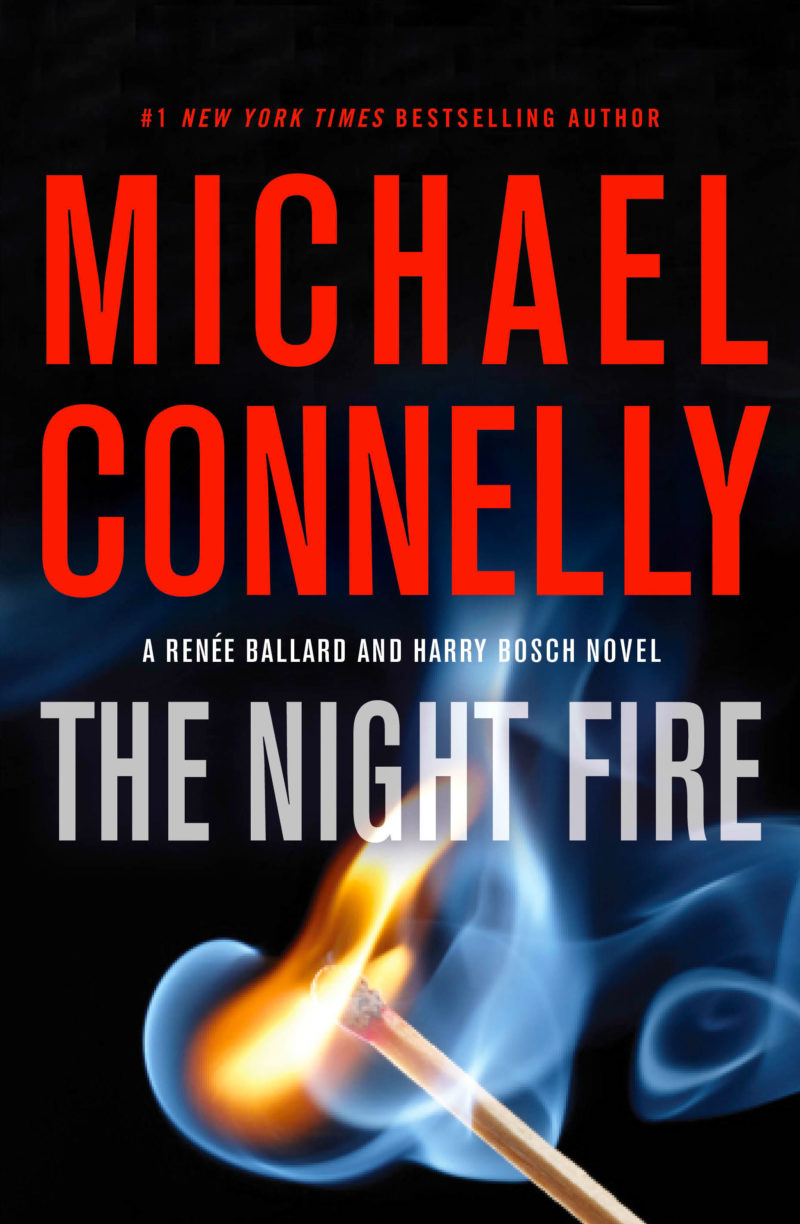
My Summer Reading – Essays & Articles – Michael Connelly

My Summer Reading by Michael Connelly (2019)

We are well into summer at this point and I am well into my summer reading. I have an eclectic stack on my reading list. Here are a few of the highlights. Some you have had the chance to read for a while, some are new, and at least a couple are not out yet, but you can always pre-order them so you get them as soon as they are out.

First off, I just finished If She Wakes by Michael Koryta. A couple of disclaimers first. Those of you who have read my recommendations before will know he is a perennial favorite of mine. This started at least because I love the way he tells a story. Therefore, I love his books. But, of course, we are a friendly bunch in the crime fiction genre and get the chance to meet and greet each other at conventions, books signings and so forth. I met Koryta at a book convention and he’s a friend. His books led to that friendship. So, yes, the caveat here is that I am recommending a friend’s book but it’s a damn good book. The other disclaimer is that this one I listened to instead of reading the printed page. Thanks to this book I increased my stats on my pedometer because I walked more because I wanted to listen more. Every day I put in the buds and went out for my paces, only to go further and last longer so I could get more story in. This book may have helped me lose weight – what better recommendation than that! Told in multiple points of view – including through the point of view of a woman locked but alert in a coma. Ingenious stuff to go with an ingenious story with a lot of switchbacks.

The thing with me is that I can be writing when most people are reading; on a plane, lounging by a pool, even while in bed. So, I listen to a lot of books so I can get to these stories while walking or driving – believe me, in L.A. there is a lot of driving. My next suggestion is also a book I listened to, but of course is readily available in print. Bloodshed by Michael Lister. (what’s with all the Michaels?) I am particularly fond of the John Jordan series set in the panhandle of Florida and this is the 19th book in that amazing run. Lister has really mastered the art of the crime novel and this one – no spoilers – really draws from issues very important in the world today. I hate the cliché “Torn from the Headlines!” and this story is not, but it is certainly inspired by the news of the day and worth the read.

This next recommendation has a couple caveats too. It’s not available yet and I am not even finished it before recommending it. I’m lucky. I get to read it now because I have a galley. You won’t get to read it until October. I write about L.A. and so I am always looking for L.A. voices. It’s not about competition. It’s about getting other takes on this great and flawed city and its vast expanse. In the past I have told you about Joe Ide’s books and Ivy Pochoda’s book Wonder Valley. Many years back I worked with a newspaperman named Al Martinez who wrote a book about L.A. called City of Angles. One of the few titles I was ever jealous of. But he was right about this place and every writer has his or her own angle of view on it. That’s what makes their books so interesting to me. I am right in the middle of reading Steph Cha’s book Your House Will Pay coming out October 15th. I don’t know how it will end yet but to say it is so far so good is a big understatement. I am marveling at what is going on here and where it is going on. Cha has new angles on a city that has been the focus of myriad stories and films. But this one is unique and totally gripping. And her prose at times are pretty stunning. Check out this line I came across this morning:
“Smoke rose in a pillar like something from the Bible, dark and alive and climbing, becoming one with the gray sky. Shawn felt a pinprick of heat on his forehead. Touched it and gazed at his finger. Ash. It was everywhere. Flakes of it landing like snowfall.”
All I can say is, you want to know about that fire. You want to read this book.

Okay, so I told you where I have been and where I am at the moment. Now the future. The next book I’ll read is Cari Mora by Thomas Harris. It’s been out a couple of months and so far the word is that its Thomas Harris light. That’s okay. It’s been over a decade waiting for something from Harris and I’ll take anything. I am pretty sure I would not be doing what I am doing today if I had not gone to school on Thomas Harris books. Red Dragon will always be top five for me. So I am looking forward to this new lesson from the teacher.

After that, I’m reading Gone Too Long by Lori Roy. Roy doesn’t have a lot of work out there but everything she has published has been fantastic. She brings a literary sensibility to the crime genre and this book uses the lens of the past to give us a view on what is happening in our world right now. I can’t wait to dig in to this one.

Then it will be back to L.A. Robert Crais has a new one coming out in August called A Dangerous Man and that is on the schedule with me. Do you know that purely by coincidence, Harry Bosch and Elvis Cole have lived on the same street in L.A.? Yep, good ol’ Woodrow Wilson Drive. It’s actually a long street and they are not exactly neighbors, but it underlines how Elvis and Harry have trod some of the same streets for many, many years and I always want to see what Elvis and Joe Pike are up to.

Lastly, a few books on my stack that I ordered because I got excited by a review or by the words of a bookseller. I got the books and just haven’t gotten to them yet. American Spy by Lauren Wilkinson is a debut spy thriller that got raves. I want to read Bearskin by James A. McLaughlin because it won the Mystery Writers of America’s Edgar award for best first novel. I read all of those. Next week I am also going to get a copy of Colson Whitehead’s novel The Nickel Boys. I seem to favor, at least on this list, Los Angeles and Florida stories. I grew up in Florida and am always drawn to stories about it. So, many on this list are Florida writers or their stories are set in Florida or both. The Nickel Boys is set in Florida and about a hellish reform school for boys. It sounds like it was inspired by a true and horrible story I know of through local newspaper stories. I look forward to reading this book as well before the summer ends.

-Michael Connelly

Source: My Summer Reading – Essays & Articles – Michael Connelly

Leave a comment

Filed under 2019, reading

How to Celebrate Walt Whitman’s Two-Hundredth Birthday – New Yorker

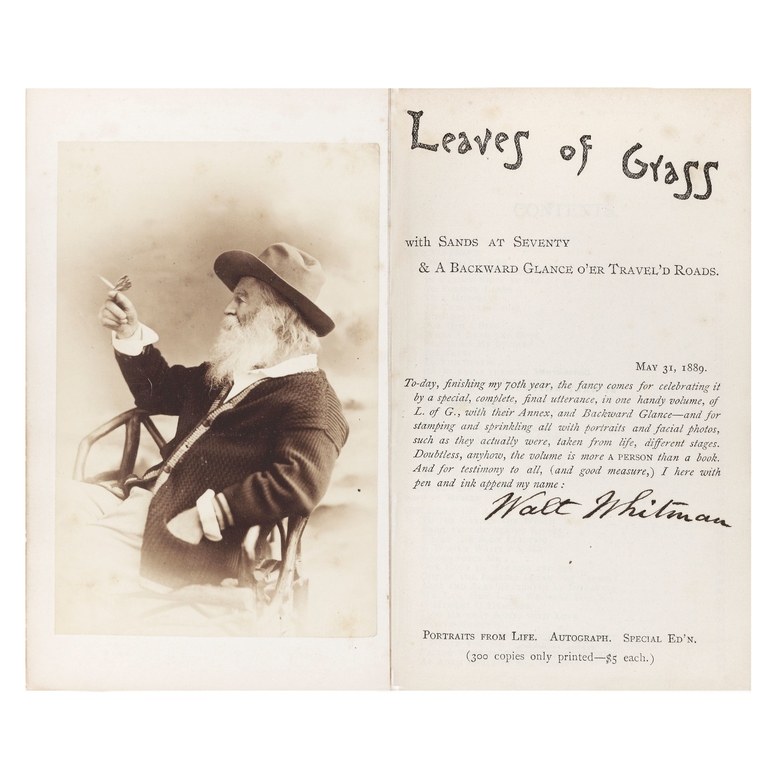
Walt Whitman, Leaves of Grass
Signed copy of “Leaves of Grass” by Walt Whitman, 1889. Known as “the birthday edition”

Loaf at your ease, luxuriating in the poet’s unhurried, insinuated cadences.

Source: How to Celebrate Walt Whitman’s Two-Hundredth Birthday | The New Yorker

This year we celebrate the two-hundredth birthday of Walt Whitman; and by “we” I mean all of us who take conscious pleasure in speaking American English. Whitman invented a poetry specific to this language and open to the kinds of experience, peculiar to democracy in a polyethnic society on a vast continent, that might otherwise be mute. Public events commemorating the bicentennial include three summer shows in New York—at the Morgan Library, the New York Public Library, and the Grolier Club—that touch on the story of his life. There are books, manuscripts, prints, photographs, audio and video elements, and relics—at the Public Library, a lock of his hair, and, at the Grolier, snips that may be from his beard. The shows are excellent of their kind: informational and evocative, about remembering. But I don’t much care for them. They have unavoidably cultish auras, akin to celebrity worship; not that Whitman would have minded, he having been a shame-free self-promoter who ghosted rave reviews of “Leaves of Grass” and played to his sappy popular image as “the Good Gray Poet” (less good if brunet, less gray if bad?). Such exhibits are to poetry as museum wall texts are to art works—supposedly enhancing but often displacing aesthetic adventure.

I recommend observing the occasion at home, or on vacation. Sit down with a loved one and read aloud two poems: the miraculous “The Sleepers” (1855), in which Whitman eavesdrops on the slumber of multitudes, alive and dead, and interweaves dreams of his own—at one point joining a merry company of spirits, of whom he says, “I reckon I am their boss, and they make me a pet besides”—and “When Lilacs Last in the Dooryard Bloom’d” (1865), his epic elegy for Abraham Lincoln, in which the President isn’t named, even as his loss interpenetrates nature, symbolized by the unearthly song of “the gray-brown bird,” a hermit thrush. (I’ve gone online to hear its call: a melancholy arpeggio, repeated at different pitches.) In either case, see how far you get before you’re in tears, then pull yourself together and continue to the end. Reading Whitman silently enriches, but hearing your own or a partner’s voice luxuriate in the verse’s unhurried, insinuating cadences, drawn along on waves of alternately rough and delicate feeling, can quite overwhelm. That’s because your voice, if you are fluent in American, is anticipated, pre-wired into the declarative but intimate, easy-flowing lines. It’s as if you were a phonograph needle dropped into a vinyl groove.

Whitman was born the second of nine children on a farm in West Hills, on Long Island, where his father struggled in various lines of work. When Whitman was three, the family moved to Brooklyn, and, in 1830, he left school, at age eleven, to help support the household. He took jobs as a printer, meanwhile roaming the city and, an insatiable reader, haunting libraries. After the printing district burned down, in 1835, he returned to Long Island, working unhappily as a schoolteacher and pursuing a knockabout career in journalism. By 1846, he was the editor of the prestigious Brooklyn Daily Eagle, from which he was fired, two years later, for his radical free-soil and anti-slavery politics. Among subsequent ventures, he founded a weekly newspaper; another fire destroyed the office after its initial issue.

In 1855, Whitman self-published the first of an eventual nine editions of “Leaves of Grass.” He advertised it by printing, without permission, a private letter of praise that he had received from Ralph Waldo Emerson, whose essay “The Poet,” from 1844, reads in parts like a directive—“America is a poem in our eyes; its ample geography dazzles the imagination, and it will not wait long for metres”—that young Walt more than carried out. The book gradually gained wide notice, while often coming under attack for alleged obscenity. Whitman’s homosexuality became unmistakable in his impassioned “Calamus” poems of “adhesiveness,” named for a plant with phallus-shaped “pink-tinged roots,” but, even before then, his sensuality, regarding women as well as men, was earthy enough to rattle the genteel. He expressed fervent Union patriotism at the start of the Civil War and, in 1862, travelled south of Washington, D.C., to find his brother George, who had been wounded in the Battle of Fredericksburg. For the next three years, he served indefatigably as a volunteer nurse and comforter of wounded, sick, and, too often, dying soldiers in Washington hospitals. “The real war will never get in the books,” he wrote, but certain of its awful aspects are etched in his own writing.

Those harrowing years amplified Whitman’s already Romantic conceptions of death. If Keats was “half in love with easeful death,” Whitman was head over heels for it, as a subject fit for his titanic drive to coax positive value from absolutely anything. (“What indeed is beautiful, except Death and Love,” he wrote. Note that death has pride of place.) Meanwhile, he piloted his soul in genial company with all other souls, afoot like him on ideal democracy’s Open Road, exulting in human variety. If he failed any definitive American experience, it was aloneness. That lack was made good by his younger contemporary Emily Dickinson: the soul in whispered communication with itself. Both poets dealt with the historical novelty of a nation of splintered individuals who must speak—not only for themselves but to be reassured of having selves at all. There have been no fundamental advances in the spiritual character—such as it is, touch and go—of our common tongue since Whitman and Dickinson. It’s a matter of the oneness of what they say with how they sound saying it. Admittedly, Whitman can be gassy and Dickinson obscure, but they mined truth, and mining entails quantities of slag. They derived messages from and for the mess of us.

Whitman’s flaws were at once eccentric and typical of his day. He was a sucker for modish philosophies and supposed sciences, from positivism to phrenology. In “Salut au Monde!” (called “Poem of Salutation” on its first publication, in 1856), he exalted the “divine-souled African, large, fine-headed, nobly-formed, superbly destined, on equal terms with me!” But he was less universalist in his journalism and made pointedly racist remarks in later years, calling blacks “baboons” and “wild brutes”—a serious matter in any era but especially today, at a moment of newly concerted will to face down the pestilential afterlife of slavery. Whitman had imbibed a version of social Darwinism that predicted the decline of nonwhite peoples, Asians sometimes excepted. It’s not for me to say that this, much less his slurs, should be forgiven. Even so, in liberalism he was miles ahead of his most penetrating modern critic, D. H. Lawrence, whose apposite essay in his alternately profound and infuriating “Studies in Classic American Literature” leaps to my mind whenever I think of Whitman.

Lawrence is sardonic about Whitman’s hyperbolism. Quoting the line “I am he that aches with amorous love,” Lawrence comments, “Better a bellyache.” He taxes Whitman with a disintegration of personhood, “leaking out in a sort of dribble, oozing into the universe.” But then he writes, “Whitman, the great poet, has meant so much to me”—as “a strange, modern, American Moses” and “a great changer of the blood in the veins of men.” Lawrence quails at democracy, from which he wants to rescue Whitman. “The only riches, the great souls,” he concludes, with bullying confidence in having one himself. But for Whitman the soul is fungible, shared by all. It’s a terrific contrast: Lawrence bitterly struggling to be free of Old World constrictions, Whitman born free to “loaf at my ease, observing a spear of summer grass.” Lawrence craved the American’s freedom without surrendering his own alpha-male prerogative, recoiling from a charity of spirit that was a common sense of citizenship to Whitman. Having no use for prerogatives, Whitman took in all the world that was and returned himself to it, giving himself continuously away. ♦

Leave a comment

Filed under 2019, author tribute

Book Review: “Drama: An Actor’s Education”

Drama: An Actor's Education

Drama: An Actor’s Education by John Lithgow

My rating: 4 of 5 stars


I listened to the author perform this book, and it was a good choice. John Lithgow is fine actor who can, by turns, be serious and funny. And by turns, so is this memoir and hearing a practiced performer read his own interesting and entertaining book as an extra dimension.

This is a book as much about Lithgow’s father as about himself. His father was an actor and theater entrepreneur, though like most entrepreneurs, Lithgow’s father had many downs or wrong turns. Lithgow learned many things from moving from place to place with his peripatetic family: how to be an “actor” to try to fit into his new schools, what it was like to be lonely, the need for approval to the point that you give up maybe too much of yourself, but also discovering his passion for performing, following in his father’s footsteps, and succeeding in many ways that his father did not.

As with most memoirs, it skips over parts of his life, parts, such as his relationship with his older brother, that I wanted to know a little more about. And also, the memoir doesn’t include any experiences involving what many folks may know him best for: the character of Dr. Solomon on Third Rock From the Sun. But even with these omissions, I highly recommend this memoir, and it really deserves 4.5 stars, but I’m not allowed to do half stars. Thank you, Mr. Lithgow for writing this book and for providing the dramatic reading for the audio version.


View all my reviews

Leave a comment

Filed under 2019, book review, books

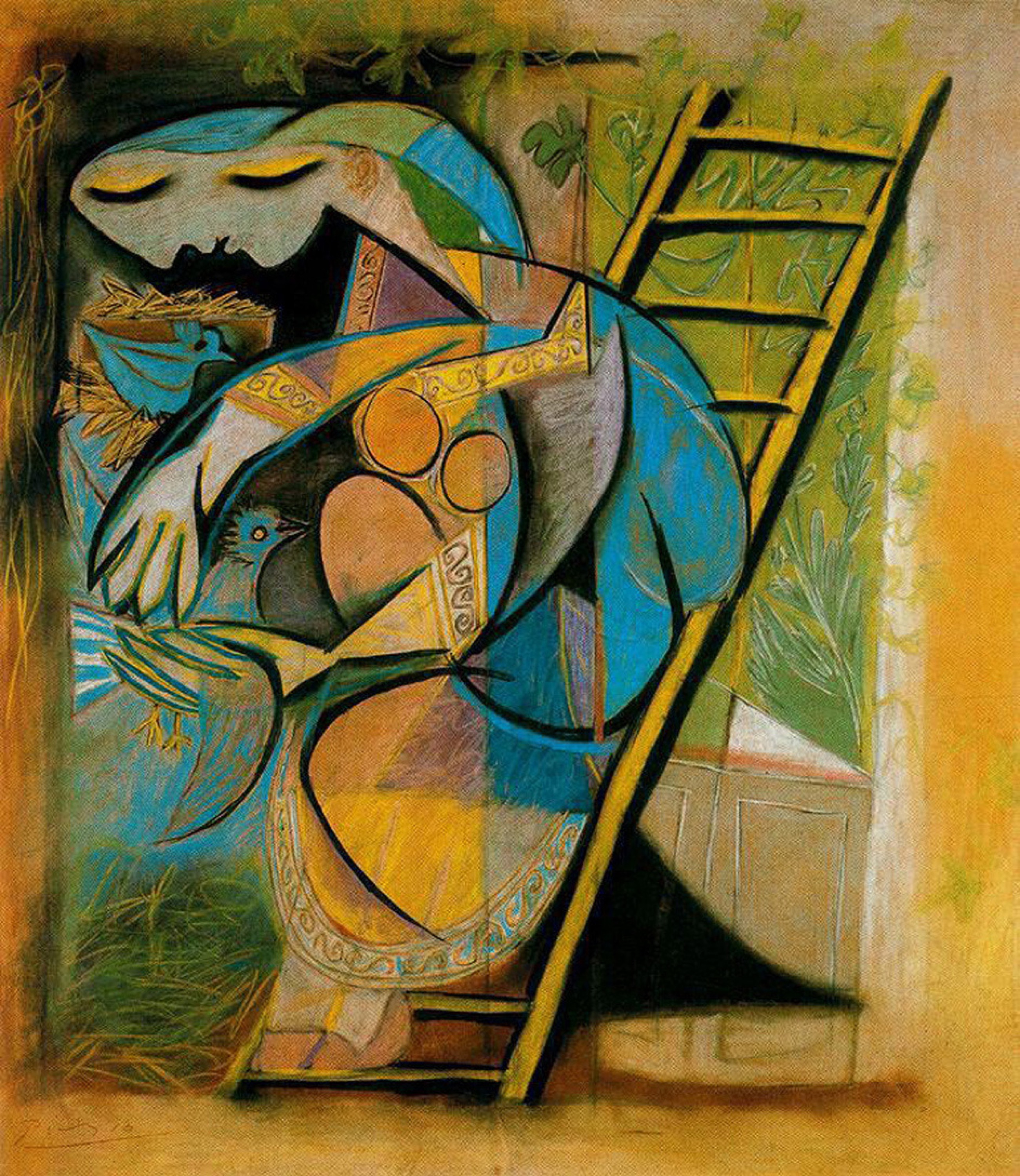
Picasso, 1933, Farmers wife on a stepladder

image_6259F73E-056B-4357-BD06-5A5FB67507C0

What does this painting inspire you to write?

Leave a comment

Filed under 2019, paint, painting

Gene Wolfe, Acclaimed Science Fiction Writer, Dies at 87 – The New York Times

Gene Wolfe, a prolific science fiction and fantasy writer whose best works, full of inventive language, mysteries and subtly conveyed themes, are considered to be among the genre’s finest, died on Sunday in Peoria, Ill. He was 87.

His daughter Therese Goulding said the cause was heart disease.

Mr. Wolfe broke through in 1972 with “The Fifth Head of Cerberus,” a novella (which he soon expanded to three novellas) whose narrator, an inhabitant of the twin planetary system of St. Croix and St. Anne, tells the story of how he came to kill his father.

His most acclaimed work was the four-novel series “The Book of the New Sun,” published from 1980 to 1983.

“The publication of his brilliant ‘Fifth Head of Cerberus’ in 1972 earned him a place among the small band of accomplished stylists in science fiction, along with Samuel R. Delany, Thomas M. Disch, Joanna Russ and one or two others,” Gerald Jonas wrote in The New York Times when the final book of the series, “The Citadel of the Autarch,” appeared. “The completed ‘Book of the New Sun’ establishes his pre-eminence, pure and simple.”

Mr. Wolfe also wrote numerous short stories and published several collections. The most recent of his 30 or so novels were “The Land Across” (2013), an earthbound story about a travel writer who explores an obscure East European country, and “A Borrowed Man” (2015), a futuristic noir.

Mr. Wolfe was much admired by his fellow writers.

“He’s the finest living male American writer of SF and fantasy — possibly the finest living American writer,” Neil Gaiman wrote in 2011 in The Guardian. “Most people haven’t heard of him. And that doesn’t bother Gene in the slightest. He just gets on with writing the next book.”

Gene Rodman Wolfe was born on May 5, 1931, in Brooklyn. His father, Emerson Leroy Wolfe, was a salesman; after the family moved to Houston in about 1937, he and Mr. Wolfe’s mother, Mary Olivia (Ayers) Wolfe, also ran a diner. In the days before readily available air-conditioning, the Texas heat made an impression on young Gene.

The publication of Mr. Wolfe’s “The Fifth Head of Cerberus” in 1972, one critic wrote, “earned him a place among the small band of accomplished stylists in science fiction.”

The publication of Mr. Wolfe’s “The Fifth Head of Cerberus” in 1972, one critic wrote, “earned him a place among the small band of accomplished stylists in science fiction.”

“I stood and read in front of an electric fan,” Mr. Wolfe told the MIT Technology Review in 2014. “That’s what we kids did in that hot weather.”

After graduating from Lamar High School in Houston, he enrolled at Texas A&M, where he wrote his first short stories while studying engineering. But his grades were poor and he dropped out; he then was drafted into the Army, serving during the Korean War as a combat engineer. He returned from Korea “a mess,” as he put it.

“I’d hit the floor at the slightest noise,” he later recalled. His marriage to Rosemary Dietsch in 1956 helped him find stability, he said.

After graduating from the University of Houston on the G.I. Bill he became an engineer at Procter & Gamble, where his accomplishments included developing the machine used to cook the dough for Pringles potato chips. (“I developed it,” he clarified in an interview in the 2007 book “Shadows of the New Sun: Wolfe on Writing, Writers on Wolfe,” in response to the perception that he had come up with the concept. “I did not invent it. That was done by a German gentleman.”) He started looking for a side income, and resumed what he had done at Texas A&M.

“If you have a wife and four children, as I do,” he told The Washington Post in 1983, “you tend to be scraping around for ways to make a bit of additional income.”

In 1965 he finally sold a story, “The Dead Man,” to “one of those skin magazines, a poor man’s Playboy,” as he put it. His fortunes began to improve when the science fiction writer and magazine editor Damon Knight began buying his work.

His first novel, “Operation Ares,” appeared in 1970. “The Fifth Head of Cerberus” appeared two years later and was nominated for both a Nebula and a Hugo, the top awards in the genre. (He lost out on the Nebula to Arthur C. Clarke and on the Hugo to Ursula K. Le Guin.)

Despite the acclaim and more novels — “Peace” in 1975, “The Devil in a Forest” in 1976 and “The Shadow of the Torturer” (the first of the “New Sun” series) in 1980 — writing remained a sideline. From 1972 to 1984 Mr. Wolfe was an editor for Plant Engineering, a trade journal.

“We had a staff of 24, and all of us had several jobs,” he said. “It seemed to me that I had more than most. I was the robot editor; I was the screws editor, the glue editor, the welding editor. I was in charge of power transmission belts, and gears, and bearings, and shafts, and all sorts of stuff like that.”

“The Citadel of the Autarch” was the fourth and final book of the series “The Book of the New Sun,” Mr. Wolfe’s most acclaimed work, published from 1980 to 1983.

“The Citadel of the Autarch” was the fourth and final book of the series “The Book of the New Sun,” Mr. Wolfe’s most acclaimed work, published from 1980 to 1983.

With the success of the “New Sun” series, he became a full-time writer. The series, set in the distant future, involves the journeys of Severian, an apprentice torturer who as the saga begins violates code by showing mercy to a prisoner. He then proceeds to wander the land, encountering giants, cults and more.

“A wise reader will keep a dictionary nearby, but it won’t always prove useful,” The New Yorker said of the series in a 2015 article about Mr. Wolfe. “Though Wolfe relies merely on the strangeness of English — rather than creating a new language, like Elven or Klingon — he nonetheless dredges up some truly obscure words: cataphract, fuligin, metamynodon, cacogens.”

Mr. Wolfe liked to employ the unreliable-narrator technique, keeping readers guessing about what was true and what wasn’t. His stories could be bleak, but they also had dashes of comedy.

“I have been told often enough that I have a sense of humor that makes strong men faint and women reach for weapons,” he said in the introduction to “Castle of Days,” a 1995 story collection.

He returned to the “New Sun” universe with two later series, but he also kept exploring. “The Wizard Knight,” a two-book series published in 2004, had a medieval-inspired setting. “The Land Across,” his recent book about a travel writer, explored a fictional land that, as Alan Cheuse put it in a review for NPR, “appears to have more affinity with Kafka country than any other.”

Mr. Wolfe won numerous awards, including two Nebulas, and in 2013 he was named a Science Fiction and Fantasy Writers of America grand master, one of the field’s most prestigious titles.

His wife died in 2013, and a son, Roy, died in 2017. In addition to Ms. Goulding, he is survived by another daughter, Madeleine Fellers; a son, Matthew; and three granddaughters.

In a 1988 interview with the literary critic Larry McCaffery, Mr. Wolfe talked about the genesis of his often intricate stories, how ideas would knock around inside his head and eventually gel into something.

“There’s a wonderful ‘Peanuts’ cartoon that pretty much describes what I’m talking about,” he said. “Snoopy is on the top of his doghouse and he writes something like: ‘A frigate appeared on the edge of the horizon. The king’s extravagances were bankrupting the people. A shot rang out. The dulcet voice of a guitar sounded at the window.’ Then he turns and looks at the reader and says, ‘In the last chapter I’m going to pull all this together!’ ”

Leave a comment

Filed under 2019, author tribute

Enter an Archive of 6,000 Historical Children’s Books, All Digitized and Free to Read Online | Open Culture

We can learn much about how a historical period viewed the abilities of its children by studying its children’s literature.

Source: Enter an Archive of 6,000 Historical Children’s Books, All Digitized and Free to Read Online | Open Culture

Leave a comment

Filed under 2019, child, literature

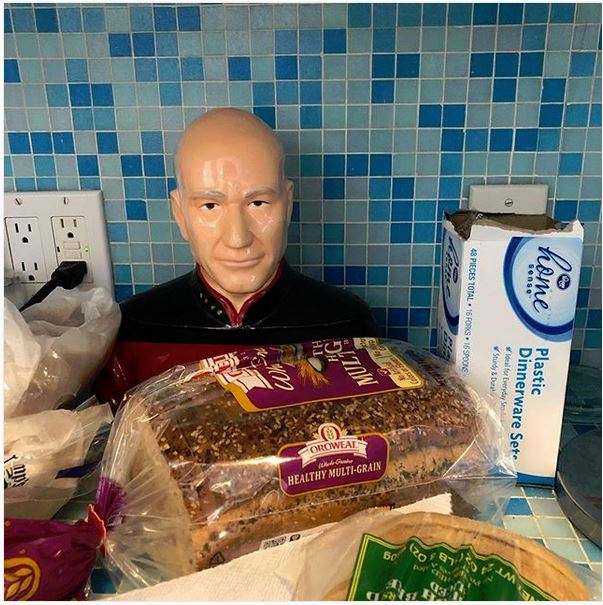
Star Trek: The Next Germination: “The multigrain sandwich and war”

Multigrain for Picard 

Made chewing very hard 

On the bridge to make it so. 

Because of that special dough 

When the Romulans did appear 

The sandwich would not clear

His throat so he could order

“Data, warp 8 to the boarder!”

Now, over 20 years have passed

And his days in Starfleet amassed

In history books where stories are told

Of his feats, both brave and bold.

But there is one footnote aside

About the one mission that was tried.

Enterprise and crew were almost lost

Until Number One grabbed and tossed

The multi-grain demon across the bridge

Striking Worf upon his ridge,

And then he slapped Picard on the back

Which caused the Captain to go “Hack-ack-ack.”

Worf thought that meant aim and fire

Photons and phaser banks entire.

When the weapons were all depleted 

And Picard was finally seated

Worf peeled the sandwich from his head

Took a bite and boldly said,

“Needs mustard.”

Photo used courtesy of Michael Chabon.

Leave a comment

Filed under 2019, poetry by author, Star Trek

How language shapes how we see our world

Leave a comment

Filed under 2019, language