
Tag Archives: reading
“Stories”

Stories
Man stalks the monster /
An amphibious reader /
Halloween stories.
.
.
#halloween #haiku #poem #poetry #writing #poet #writer #stories #stalker #davidebooker #amphibious #102318
Filed under 2018, haiku, Halloween, photo, Photo by Beth Booker, poem, poetry, poetry by author, Poetry by David E. Booker


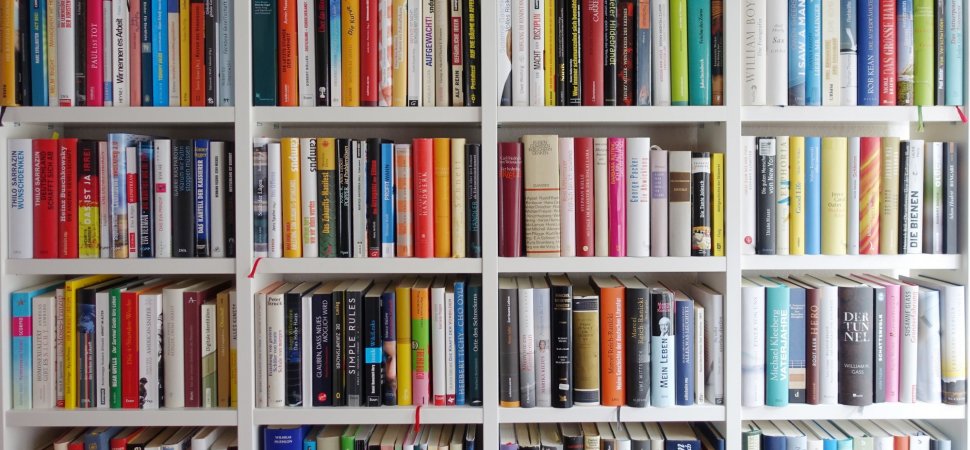
Why Reading Books Should Be Your Priority, According to Science | Inc.com
More than a quarter–26 percent–of American adults admit to not having read even part of a book within the past year. That’s according to statistics coming out of the Pew Research Center. If you’re part of this group, know that science supports the idea that reading is good for you on several levels.
Reading fiction can help you be more open-minded and creative
According to research conducted at the University of Toronto, study participants who read short-story fiction experienced far less need for “cognitive closure” compared with counterparts who read nonfiction essays. Essentially, they tested as more open-minded, compared with the readers of essays. “Although nonfiction reading allows students to learn the subject matter, it may not always help them in thinking about it,” the authors write. “A physician may have an encyclopedic knowledge of his or her subject, but this may not prevent the physician from seizing and freezing on a diagnosis, when additional symptoms point to a different malady.”
People who read books live longer
That’s according to Yale researchers who studied 3,635 people older than 50 and found that those who read books for 30 minutes daily lived an average of 23 months longer than nonreaders or magazine readers. Apparently, the practice of reading books creates cognitive engagement that improves lots of things, including vocabulary, thinking skills, and concentration. It also can affect empathy, social perception, and emotional intelligence, the sum of which helps people stay on the planet longer.
Reading 50 books a year is something you can actually accomplish
While about a book a week might sound daunting, it’s probably doable by even the busiest of people. Writer Stephanie Huston says her thinking that she didn’t have enough time turned out to be a lame excuse. Now that she has made a goal to read 50 books in a year, she says that she has traded wasted time on her phone for flipping pages in bed, on trains, during meal breaks, and while waiting in line. Two months into her challenge, she reports having more peace and satisfaction and improved sleep, while learning more than she thought possible.
Successful people are readers
It’s because high achievers are keen on self-improvement. Hundreds of successful executives have shared with me the books that have helped them get where they are today. Need ideas on where to start? Titles that have repeatedly made their lists include: The Hard Thing About Hard Things by Ben Horowitz; Shoe Dog by Phil Knight; Good to Great by Jim Collins; and Losing My Virginity by Richard Branson.
Source: Why Reading Books Should Be Your Priority, According to Science | Inc.com
Filed under 2019, writing tip, Writing Tip Wednesday
Haiku to you Thursday (and photo): “Read, Donnie, Read”
Savor every word. /
Turn the pages respectfully. /
Arm the mind and heart.

Filed under 2019, Haiku to You Thursday, poetry by author
Why Reading Books Should be Your Priority, According to Science | Inc.com
 You’re not doing yourself any favors if you’re in the 26 percent of American adults who haven’t read even part of a book within the past year.
Source: Why Reading Books Should be Your Priority, According to Science | Inc.com
More than a quarter–26 percent–of American adults admit to not having read even part of a book within the past year. That’s according to statistics coming out of the Pew Research Center. If you’re part of this group, know that science supports the idea that reading is good for you on several levels.
Reading fiction can help you be more open-minded and creative
According to research conducted at the University of Toronto, study participants who read short-story fiction experienced far less need for “cognitive closure” compared with counterparts who read nonfiction essays. Essentially, they tested as more open-minded, compared with the readers of essays. “Although nonfiction reading allows students to learn the subject matter, it may not always help them in thinking about it,” the authors write. “A physician may have an encyclopedic knowledge of his or her subject, but this may not prevent the physician from seizing and freezing on a diagnosis, when additional symptoms point to a different malady.”
People who read books live longer
That’s according to Yale researchers who studied 3,635 people older than 50 and found that those who read books for 30 minutes daily lived an average of 23 months longer than nonreaders or magazine readers. Apparently, the practice of reading books creates cognitive engagement that improves lots of things, including vocabulary, thinking skills, and concentration. It also can affect empathy, social perception, and emotional intelligence, the sum of which helps people stay on the planet longer.
Reading 50 books a year is something you can actually accomplish
While about a book a week might sound daunting, it’s probably doable by even the busiest of people. Writer Stephanie Huston says her thinking that she didn’t have enough time turned out to be a lame excuse. Now that she has made a goal to read 50 books in a year, she says that she has traded wasted time on her phone for flipping pages in bed, on trains, during meal breaks, and while waiting in line. Two months into her challenge, she reports having more peace and satisfaction and improved sleep, while learning more than she thought possible.
Successful people are readers
It’s because high achievers are keen on self-improvement. Hundreds of successful executives have shared with me the books that have helped them get where they are today. Need ideas on where to start? Titles that have repeatedly made their lists include: The Hard Thing About Hard Things by Ben Horowitz; Shoe Dog by Phil Knight; Good to Great by Jim Collins; and Losing My Virginity by Richard Branson.
Filed under 2018

Live long and prosper … by reading books
Read Books, Live Longer?
By Nicholas Bakalar
Source: http://well.blogs.nytimes.com/2016/08/03/read-books-live-longer/?smid=fb-nytimes&smtyp=cur&_r=2
Reading books is tied to a longer life, according to a new report.
Researchers used data on 3,635 people over 50 participating in a larger health study who had answered questions about reading.

Live longer by reading.
The study, in Social Science & Medicine, found that book readers tended to be female, college-educated and in higher income groups. So researchers controlled for those factors as well as age, race, self-reported health, depression, employment and marital status.
Compared with those who did not read books, those who read for up to three and a half hours a week were 17 percent less likely to die over 12 years of follow-up, and those who read more than that were 23 percent less likely to die. Book readers lived an average of almost two years longer than those who did not read at all.
They found a similar association among those who read newspapers and periodicals, but it was weaker.
“People who report as little as a half-hour a day of book reading had a significant survival advantage over those who did not read,” said the senior author, Becca R. Levy, a professor of epidemiology at Yale. “And the survival advantage remained after adjusting for wealth, education, cognitive ability and many other variables.”


 Booker's Blog