
There one day was a poet of the absurd
Who one day gave her word.
She’d tell it straight one day
Come what May
Or the one day she became a bird.
There one day was a poet of the absurd
Who one day gave her word.
She’d tell it straight one day
Come what May
Or the one day she became a bird.
Filed under 2019, Monday morning writing joke, poetry by author
There once was a writer of verse
Who had a wish so perverse.
He put pen to paper
And hoped he’d become Satyr,
But what he became was even much worse.
He had hooves, horns, and some hide
Enough to frighten his would-be bride.
When he glanced in the mirror,
He couldn’t have looked any queerer
Even with the nannies by his side.
Filed under 2019, Monday morning writing joke, poetry by author
There once was a poet from Shanghai
Who wanted to give limericks a try.
But instead of sounding naughty
Or even slightly bawdy,
They sounded like the code of a spy.
Filed under 2019, Monday morning writing joke, poetry by author
The oppressing hand /
Binds through fear and not respect /
Embraces your hate.
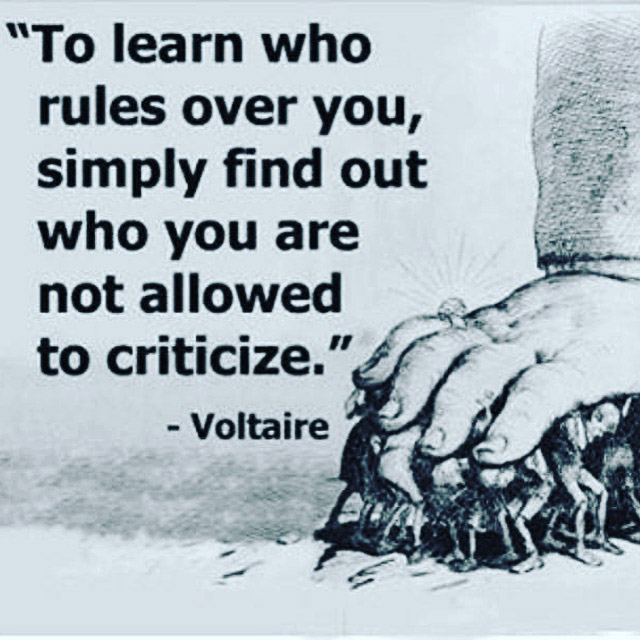
Filed under 2019, Haiku to You Thursday, poetry by author
Another year lapses /
Burdened with what might have beens: /
Tomorrow whispers.

Filed under 2019, Haiku to You Thursday, poetry by author
 Poet: Why I would never tell a student what a poem means
Source: Poet: Why I would never tell a student what a poem means – The Washington Post
Sara Holbrook, the author of books of poetry for children, teens and adults, as well as professional books for teachers, wrote a piece on this blog earlier this year that was, to say the least, jarring, if not entirely unexpected by those who have been paying attention to how poorly many standardized tests are constructed. That post, “Poet: I can’t answer questions on Texas standardized tests about my own poems,” started this way:
When I realized I couldn’t answer the questions posed about two of my own poems on the Texas state assessment tests (STAAR Test), I had a flash of panic — oh, no! Not smart enough. Such a dunce. My eyes glazed over. I checked to see if anyone was looking. The questions began to swim on the page. Waves of insecurity. My brain in full spin.
[Poet: I can’t answer questions on Texas standardized tests about my own poems]
Now Holbrook is back with a piece about why she never tells a student what a poem means. Why is that a big deal? It is in direct contrast to a good deal of literature instruction today, which is designed to ensure that students take away not their own meaning but what a standardized test would consider correct.
Holbrook also visits schools and speaks at educator conferences worldwide, with her partner Michael Salinger, providing teacher and classroom workshops on writing and oral presentation skills. Her first novel, “The Enemy: Detroit 1954,” was just released.
By Sara Holbrook
Seems fitting that April is poetry month, a season brimming with blossoming possibilities and longer days. Like jolly jonquils, in April poets are released from our winter hibernation, we shed our black attire and start popping up at readings, sprouting bright colors and (presumably) speaking in stanzas. Not sure how April came to be poetry month. Maybe because at the time of its designation, April didn’t already belong to women’s history, colon cancer awareness, or toenail fungus.
Of course as most of the educated world knows, April mostly belongs to taxes and school testing. Still, poets who chew pencils and chase cursors every day all year wait for this month for a little acknowledgment. It’s not too bad of a deal, really. The five-paragraph-essay is still waiting in the wings for its month.
The poem below was not written as a poetry month challenge. I wrote it while sitting in the back of a summer poetry-writing workshop. Mostly, I was biding my time for my turn to present. The instructor began by asking us to write the words, “I remember” and write for five minutes, not letting our pen leave the page (actually a writing exercise conceived by Natalie Goldberg, I later found out). If we got stuck, we were to write, “I remember” again and keep writing.
But I’ve always been a little ornery. I began with “I don’t remember,” and went from there. The image that came to mind was of my mother and the big family secret the entire neighborhood knew. Mom drank too much and took too many pills. I don’t think she would mind my telling this story now since she was sober for the last seven years of her life, and she was really proud of that. But believe me, we had our moments over the years.
A poem is a snapshot in time. Not an entire movie. A focused moment. I do remember the time she brought me brownies as an apology, but I can’t for the life of me remember what she was apologizing for. Memory is a pegboard punched with holes. The older I get, the bigger the holes become.
Still, I remember the brownies, the hug, my forced smile.
Remember
I don’t remember the first time,
how it started
or when.
But I remember
the night you brought me brownies
and said
it would never happen again.
I remember,
your hair was longer then
and how your eyes swam over to mine.
I remember,
my smile stuck to my teeth.
I knew it wasn’t the last time.
My eyes were sealed with tears
and it was hard for them to wake,
but that didn’t seem to matter.
We hugged.
And the brownies tasted great.
©1997 sara holbrook “I Never Said I Wasn’t Difficult,” Boyds Mills Press
Forty years after the brownies were delivered to my bedside, four or five years after the writing and publication of the poem, I was visiting a school in the rural Midwest. It was April, and in preparation for the poet/author visit, kids had been asked to respond to one of my poems with: one their own poems, a hand-drawn picture, or a paragraph. What a display!
Hundreds of responses were posted in the hallways. There was an entire wall in the foyer devoted to my poem, “The Dog Ate My Homework.” Middle-school kids love to laugh and the student poems told tall tales of dogs, goats, and chickens munching on math problems and swallowing spelling words. One, as I remember, involved no eating but did reference cat pee.
But down the hall, around the corner, out of the florescent glare of the reception area, on the tiled wall by the room where (before inclusion) they used to keep “those kids,” I found Paul’s interpretation of my poem, “Remember.” While his classmates were having fun with poetry, he was evidencing his understanding that all of life is not a sit-com.
Paul was 11 years old when he wrote this. I know. I asked. When students are 11, the topic of sex doesn’t come up in the classroom. Teachers and parents make sure of it. What Paul brought to the text of my poem is background knowledge he had acquired somewhere other than school. We can only speculate.
Paul and I are both more than 25 years older now. Still, that spring day is sealed in my memory. I visited two schools, Paul’s in the morning and then I moved on at lunch break. But I took time to make a big deal out of Paul’s response, taking it to the office to have it photocopied (era before cellphone cameras). The secretary read it and wearily sighed, “Yeah, there’s a lot of that ’round here.” I took it to the guidance office. I took it to the vice principal. I don’t know if Paul, age 11, ever got the help he needed. It haunts me.
But one thing I do know, I am not the one to tell Paul what the poem “Remember” is about. Paul knew and probably still knows what this poem means. In my mind, this is not even my poem anymore. It belongs to Paul, age 11.
Famed educator, guru, and overall smart person Louise Rosenblatt wisely distinguishes between interpreting expository writing (journalism, nonfiction) and aesthetic writing. “A novel or a poem or a play remains merely inkspots on paper until a reader transforms them into a set of meaningful symbols.” The reader creates meaning, I heard her explain in a talk she gave at the National Council of Teachers of English in November 2004 at the no-nonsense age of 100. She was peeking over the podium giving a roomful of academics what-for, explaining that the meaning of a poem floats somewhere between the page and the reader’s mind because each reader brings a unique experience to the piece.
A few months ago I wrote an essay, “I Can’t Answer These Texas Standardized Test Questions About My Own Poems,” in which I questioned those of unknown academic distinction who anonymously compose proficiency test questions. Many teachers wrote to tell me that they too are unable to answer these vaguely written test questions being used to evaluate their students. One teacher reported that her kids had to endure 17 days of testing this year. Considering there are only about 20 days of school in a month and that every test requires preparation on the devices and manner of testing, that’s a lot of lost instructional time.
Parents wrote. I did a few television interviews and radio programs. It was my 15 minutes. Additionally, I took some heat from a (very) few academics who jumped to inform me that authors do not own the meaning of a poem, it is up to literary critics to make this determination. Good grief.
It was not my intent to kick off an argument on of the relative merit of learned literary analysis. I’ll leave that to those with letters after their names. But friends, parents, educators, learned folks, please remember, middle-schoolers are not just short college sophomores. They are not lit majors. These are kids like Paul. Kids who are often grappling with a world of unseen and sometimes unspeakable challenges.
As teachers and parents, our main goal is to get them to love learning, to be curious, and grow to understand the difference between fact and fiction. Writing poetry can help with this by the way, poets are into facts, and not just in April. But how can testing help with this? Geez, Louise! Proficiency test questions don’t even have to be fact-based!
One industrious Advanced Placement student wrote to walk me through two of my poems and each STAAR standardized test question, dutifully explaining how to determine which of the right answers on a multiple choice test is the most right. Clearly he has mastered the game of analyzing minutia. A smart, articulate kid; I found his dedication to compliance, well, disconcerting.
“Big can’t get you if small’s got you,” civil rights leader Rep. Elijah Cummings said recently, quoting the wisdom of his sharecropper father.
Answer Sheet newsletter
Education questions and answers, in your inbox weekly.
I worry we are raising a generation of students who view success as the ability to focus on marginal minutia while (too often) missing the big ideas in a piece of writing. Worse, children are learning to disregard their own instincts, their histories, their cultural references by devoting themselves to predetermined interpretations. When we tell students what to think, we short sheet their own thought processes.
What if, in that long ago April, some test had told Paul his interpretation was wrong?
I stick to my contention that if a child reads a poem or a story about a red house, it is fair to test the kid’s reading mastery by asking, what color was that house? Once we ask, why did the author paint the house red, we’ve slid off the pedagogical sidewalk. It may be a good question to stimulate rich discussion, but the answer, particularly when it comes to poetry, is not a right or wrong equation. Deciding why the house is red is where we meet, reader and writer as the reader brings a unique experience to the interpretation. This is how we nurture thinking in students.
Besides, if the author hasn’t told us why the house is red, we just can’t know. In fact, the author’s perception of her intent in writing, of the very meaning of her own poem, may in fact change over time.
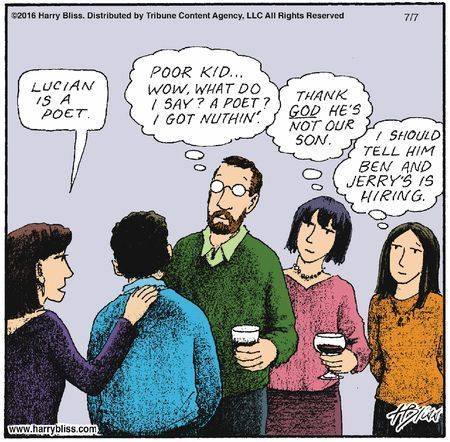
Sometimes there is no rhyme or meter to what people think.
Filed under 2016, CarToonsday
There once was a crude poet of verse, /
Whose rhymes would always end with a curse. /
Then a woman walked by /
And gave him the loving eye. /
Now his verse has taken a turn for the adverse.
Filed under 2016, Monday morning writing joke, poetry by author

Happy Valentine’s Day
Novelists and writers:
Zora Neale Hurston: “Love makes your soul crawl out from its hiding place.”
James Baldwin: “Love takes off masks that we fear we cannot live without and know we cannot live within.”
Novelist Iris Murdoch: “Love is the difficult realization that something other than oneself is real.”
Also: “People often start by falling in love, and they go on for years without realizing that love must change into some other love which is unlike the original.”
W. Somerset Maugham: “We are not the same person this year as last; nor are those we love. It is a happy chance if we, changing, continue to love a changed person.”
Ursula K. Le Guin: “Love doesn’t just sit there, like a stone; it has to be made, like bread, remade all the time, made new.” [Editor’s note: Is this what is meant by love being “kneady”?]
Andre Maurois: “A successful marriage is an edifice that must be rebuilt every day.”
Norman Mailer: “Love asks us that we be a little braver than is comfortable, a little more generous, a little more flexible. It means living on the edge more than we care to.”
Psychological and religious thinkers
Some love advice, courtesy of psychologist James Hillman: “For a relationship to stay alive, love alone is not enough. Without imagination, love stales into sentiment, duty, boredom. Relationships fail not because we have stopped loving but because we first stopped imagining.”
Words from a Buddhist about love: “You can search throughout the entire universe for someone who is more deserving of your love and affection than you are yourself, but that person is not to be found anywhere. You yourself, as much as anyone, deserve your love and affection.”
Poets
A statement attributed to French poet Paul Valery. “Love is being stupid together,” he said. [Editor’s note: does that mean it is better than being stupid apart?]
Poet Pablo Neruda: “I hunger for your sleek laugh and your hands the color of a furious harvest. I want to eat the sunbeams flaring in your beauty.”
Also: “Our love is like a well in the wilderness where time watches over the wandering lightning. Our sleep is a secret tunnel that leads to the scent of apples carried on the wind. When I hold you, I hold everything that is–swans, volcanoes, river rocks, maple trees drinking the fragrance of the moon, bread that the fire adores. In your life I see everything that lives.”
The words of poet Elizabeth Barrett Browning: “I love you not only for what you are, but for what I am when I am with you. I love you not only for what you have made of yourself, but for what you are making of me. I love you for the part of me that you bring out.”
Two final thoughts:
Clarissa Pinkola Estes wrote this in Women Who Run With the Wolves. “The desire to force love to live only in its most positive form is what causes love ultimately to fall over dead.”
And from The Simpsons‘ creator Matt Groening: “Love is a snowmobile racing across the tundra and then suddenly it flips over, pinning you underneath. At night, the ice weasels come.”
For S.C.’s Poet Laureate, An Inauguration Poem Without An Inaugural Audience
by LAURA SULLIVAN
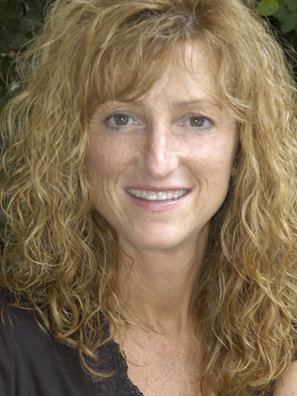
South Carolina’s Poet Laureate Marjory Wentworth snubbed at recent GOP governor’s inauguration.
South Carolina Gov. Nikki Haley starts her second term today. But absent from the inaugural ceremony will be a long-standing tradition: a poem read by the state’s poet laureate.
State officials say they cut the two-minute poem for time, but some residents suspect it was the mention of slavery that got it tossed.
Poet Laureate Marjory Wentworth has written poems for South Carolina’s past three inaugurations. She describes those efforts as “safe.”
The poems leaned heavily on nature and animals.
But this year, she says, she was moved watching the protests across the country ignited by the deaths of unarmed black men. She wanted to incorporate some of that subject matter into her writing.
She took to Facebook and asked South Carolina’s residents their opinions and asked them to tell her what they thought she should write about.
“Some of them were quite beautiful,” she said of the posts she got.
Many suggested that the sensitive topic of slavery was the reason the poem was snubbed.
The rest of the story at: http://www.npr.org/blogs/thetwo-way/2015/01/14/377028376/for-s-c-s-poet-laureate-an-inauguration-poem-without-an-inaugural-audience


 Booker's Blog