Tag Archives: New York Times

Changes In ‘New York Times’ Books Coverage, Explained

At a luncheon in Manhattan yesterday, ‘New York Times Book Review’ editor Pamela Paul, who oversees all books coverage at the ‘New York Times,’ laid out the newspaper’s vision for the future of its newly-unified books desk.

Source: Changes In ‘New York Times’ Books Coverage, Explained
by John Maher

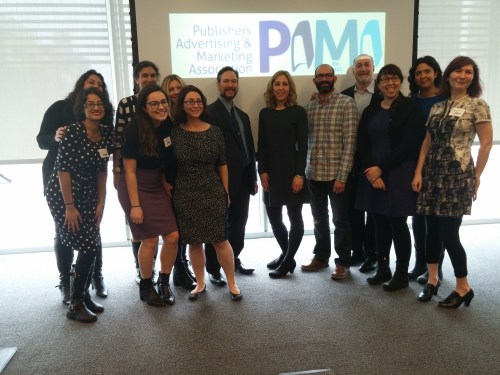
At a luncheon hosted by the Publishers Advertising and Marketing Association (PAMA) at the New York Times headquarters on Wednesday, New York Times Book Review editor Pamela Paul explained the paper’s vision for the future of its books coverage.

Paul has overseen all books coverage at the New York Times since the paper’s executive editor, Dean Baquet, announced changes to the newspaper’s books coverage last summer. She has also previously spoken about some of the changes, including the unification of the paper’s separate books teams under one desk, and the deprioritization of reviews in favor of more custom-tailored and wide-ranging forms of coverage.

But after the Times eliminated a number of its bestsellers lists in January, many in publishing have found themselves asking questions about the paper’s coverage of books and worrying what the shift means.

“When I hear that [a media outlet is consolidating], as an outsider…my very jaundiced, skeptical take is, ‘Oh, they’re cutting back,'” Paul said. “That is actually not the case in this instance. It is the opposite.”

Paul stressed that the Times is actually expanding its books coverage, with the intent of becoming more “strategic” in how it covers particular books. Previously, the paper had three separate desks that covered books entirely independent of one another—the Business Day, which is where publishing reporter Alexandra Alter was assigned; the Daily Critics, comprised of Michiko Kakutani, Dwight Garner, and Jennifer Senior; and the Sunday Book Review—with very little communication between teams and some duplication in what was covered. That will now change, with all books coverage falling under a single Books Desk umbrella.

In simple terms, the Times is moving from a review-oriented strategy to a strategy that aptly covers categories that are of interest to their readers but are “review-proof,” or wouldn’t necessarily benefit from a 1,200-word review in the New York Times Book Review. (Examples include, with exceptions, mysteries, parenting books, business books, or health books.)

Previously, Paul said, the Times’ books coverage consisted “85% of reviews” with the rest being “a mix of profiles, industry news, features, and bestseller lists.” This approach, she said, resulted in “a lot of duplication.” In other words, at a Times that has rapidly expanded its digital strategy, the question will no longer be, she said, “Does this book merit a review,” but rather, “Does this book merit coverage?”

To this end, Paul noted that the Times has been, and will continue, hiring new writers and editors to write about books in different ways. Those editors and writers will be focused “across all genres,” Paul said, and covering—but not reviewing—books she feels the paper did not effectively cover in the past.

While Laura Marmor was brought to the Books Desk from the NYT Styles Desk as deputy editor of news and features, the biggest recent hire at the Books Desk was of new editorial director Radhika Jones, who came from Time magazine, where she edited features including the Time 100 Most Influential People. (Before Time, Jones was at the Paris Review.) Jones will be spearheading an upcoming redesign of the New York Times Book Review, which remains “central” to the newspaper’s books-related mission. The redesign will affect both digital and print and, Paul said, in an email to PW, be unveiled sometime this summer. David Kelly remains the deputy editor of the New York Times Book Review.

Paul also addressed concerns over the slashing of bestseller lists including mass market and comics. Regarding how the bestseller lists team compiles the lists, “their methodology has not changed,” Paul said, “and I can say that with a mix of total confidence and total ignorance.” She continued: “I will say, there does still exist that line between editors and the bestseller lists in that we don’t know their special sauce. We don’t want to know it, nor should we know it. We oversee them and they are part of our group, but we don’t interfere with that process.”

As for the reasoning behind which lists were cut, Paul said that cuts were made “strategically in a way that every book still has a chance to be on a bestseller list.” She then added: “There’s no book that doesn’t have a chance to get on there. It’s just that the competition is tougher.”


Leave a comment

Filed under 2017, book review

Live long and prosper … by reading books

Read Books, Live Longer?

By Nicholas Bakalar

Source: http://well.blogs.nytimes.com/2016/08/03/read-books-live-longer/?smid=fb-nytimes&smtyp=cur&_r=2

Reading books is tied to a longer life, according to a new report.

Researchers used data on 3,635 people over 50 participating in a larger health study who had answered questions about reading.

Chair in the last bookshop

Live longer by reading.

The scientists divided the sample into three groups: those who read no books, those who read books up to three and a half hours a week, and those who read books more than three and a half hours.

The study, in Social Science & Medicine, found that book readers tended to be female, college-educated and in higher income groups. So researchers controlled for those factors as well as age, race, self-reported health, depression, employment and marital status.

Compared with those who did not read books, those who read for up to three and a half hours a week were 17 percent less likely to die over 12 years of follow-up, and those who read more than that were 23 percent less likely to die. Book readers lived an average of almost two years longer than those who did not read at all.

They found a similar association among those who read newspapers and periodicals, but it was weaker.

“People who report as little as a half-hour a day of book reading had a significant survival advantage over those who did not read,” said the senior author, Becca R. Levy, a professor of epidemiology at Yale. “And the survival advantage remained after adjusting for wealth, education, cognitive ability and many other variables.”

Leave a comment

Filed under 2016, books

The end of the end (stop)?

Period. Full Stop. Point. Whatever It’s Called, It’s Going Out of Style

http://www.nytimes.com/2016/06/10/world/europe/period-full-stop-point-whatever-its-called-millennials-arent-using-it.html

By DAN BILEFSKY

LONDON — One of the oldest forms of punctuation may be dying

The period — the full-stop signal we all learn as children, whose use stretches back at least to the Middle Ages — is gradually being felled in the barrage of instant messaging that has become synonymous with the digital age

David Crystal

David Crystal

So says David Crystal, who has written more than 100 books on language and is a former master of original pronunciation at Shakespeare’s Globe theater in London — a man who understands the power of tradition in language

The conspicuous omission of the period in text messages and in instant messaging on social media, he says, is a product of the punctuation-free staccato sentences favored by millennials — and increasingly their elders — a trend fueled by the freewheeling style of Facebook, WhatsApp and Twitter

“We are at a momentous moment in the history of the full stop,” Professor Crystal, an honorary professor of linguistics at the University of Wales, Bangor, said in an interview after he expounded on his view recently at the Hay Festival in Wales

“In an instant message, it is pretty obvious a sentence has come to an end, and none will have a full stop,” he added “So why use it?”

In fact, the understated period — the punctuation equivalent of stagehands who dress in black to be less conspicuous — may have suddenly taken on meanings all its own

Increasingly, says Professor Crystal, whose books include “Making a Point: The Persnickety Story of English Punctuation,” the period is being deployed as a weapon to show irony, syntactic snark, insincerity, even aggression

If the love of your life just canceled the candlelit, six-course, home-cooked dinner you have prepared, you are best advised to include a period when you respond “Fine.” to show annoyance

“Fine” or “Fine!,” in contrast, could denote acquiescence or blithe acceptance

“The period now has an emotional charge and has become an emoticon of sorts,” Professor Crystal said “In the 1990s the internet created an ethos of linguistic free love where breaking the rules was encouraged and punctuation was one of the ways this could be done”

Social media sites have only intensified that sense of liberation

Professor Crystal’s observations on the fate of the period are driven in part by frequent visits to high schools across Britain, where he analyzes students’ text messages

Researchers at Binghamton University in New York and Rutgers University in New Jersey have also recently noted the period’s new semantic force

They asked 126 undergraduate students to review 16 exchanges, some in text messages, some in handwritten notes, that had one-word affirmative responses (Okay, Sure, Yeah, Yup) Some had periods, while others did not

Those text message with periods were rated as less sincere, the study found, whereas it made no difference in the notes penned by hand

Geoffrey Nunberg, a linguist who teaches at the University of California, Berkeley, noted that the 140-character limit imposed by Twitter and the reading of messages on a cellphone or hand-held device has repurposed the punctuation mark

“It is not necessary to use a period in a text message, so to make something explicit that is already implicit makes a point of it,” he said “It’s like when you say, ‘I am not going – period’ It’s a mark It can be aggressive It can be emphatic It can mean, ‘I have no more to say’

Can ardent fans of punctuation take heart in any part of the period’s decline? Perhaps.

The shunning of the period, Professor Crystal said, has paradoxically been accompanied by spasms of overpunctuation

“If someone texts, ‘Are you coming to the party?’ the response,” he noted, was increasingly, “Yes, fantastic!!!!!!!!!!!”

But, of course, that exuberance would never be tolerated in a classroom

At the same time, he said he found that British teenagers were increasingly eschewing emoticons and abbreviations such as “LOL” (laughing out loud) or “ROTF” (rolling on the floor) in text messages because they had been adopted by their parents and were therefore considered “uncool”

Now all we need to know is, what’s next to go? The question mark

Leave a comment

Filed under 2016, syntax

Meanwhile, in a dank corner of the dictionary

We Know You Hate ‘Moist.’ What Other Words Repel You?

By JONAH BROMWICH

http://www.nytimes.com/2016/05/07/science/moist-word-aversion.html?rref=collection%2Fsectioncollection%2Fscience&action=click&contentCollection=science&region=rank&module=package&version=highlights&contentPlacement=5&pgtype=sectionfront

Super Moist cake mix

Moist. Luggage. Crevice. Stroke. Slacks. Phlegm.

How did those words make you feel?

Certain everyday words drive some people crazy, a phenomenon experts call “word aversion.” But one word appears to rise above all others: “moist.” For that reason, a recent paper in the journal PLOS One used the word as a stand-in to explore why people find some terms repellent.

“It doesn’t really fit into a lot of existing categories for how people think about the psychology of language,” the study’s author, Paul Thibodeau, a professor of psychology at Oberlin College, said of moist. “It’s not a taboo word, it’s not profanity, but it elicits this very visceral disgust reaction.”

A little less than a quarter of the approximately 2,500 unique subjects tested in Mr. Thibodeau’s five experiments over four years had trouble dealing with any appearance of the word.

When asked to react to moist in a free-association task, about one-third of those people responded with “an expression of disgust,” Mr. Thibodeau said. Almost two-thirds of those who later reported an aversion were so bothered by “moist” that they could recall its inclusion among a set of 63 other words — an unusually high rate.

The peer-reviewed study attempted to explain why moist had become the linguistic equivalent of nails on a chalkboard for some people.

Words that sound similar — including hoist, foist and rejoiced — did not put off participants in the same way, suggesting that aversion to the word was not based on the way it sounds. But people who were bothered by moist also found that words for bodily fluids — vomit, puke and phlegm — largely struck a nerve. That led Mr. Thibodeau to conclude that for those people moist had taken on the connotations of a bodily function.

It has long been acknowledged that many people are cursed with moist phobia. In 2007, a linguistics professor from the University of Pennsylvania, Mark Liberman, wrote about moist in exploring the concept of word aversion. In 2012, the word came up again, after The New Yorker asked readers which ones they would eliminate from the English language. Mr. Thibodeau’s study cites People magazine’s 2013 attempt to have some of its “sexiest men” make “the worst word sound hot!”

But Jason Riggle, a linguistics professor at the University of Chicago, said the excessive focus on moist might have made a broader understanding of word aversion more difficult.

“Moist has become such a flagship word for this, and the fact that so many people talk about it now makes it harder to get a handle on” word aversion more generally, he said.

That may help explain why other recent studies on word aversion, unlike Mr. Thibodeau’s, found a close link between a word’s phonological properties — its combination of sounds — and people’s reactions.

David Eagleman, a neuroscientist at the Baylor College of Medicine whose lab has conducted its own experiments into word aversion over the past year, found that an unusual combination of sounds in a group of made-up words was more likely to put people off than several other factors. A study at Colby College last year also suggested that a word’s phonological properties could repel people.

Dr. Eagleman suspects that word aversion is similar to synesthesia, the blending of senses in which an aural phenomenon, such as a musical note, can trigger a visual or even an emotional response. He suggested that the process through which a specific combination of sounds evokes disgust might be similar.

“There appears to be this relationship between phonological probability and aversion,” he said. “In other words, something that is improbable, something that doesn’t sound like it should belong in your language, has this emotional reaction that goes along with it.”

Dr. Eagleman said that his lab’s experiments were a prelude to neuroimaging that could investigate how the brain responds when faced with aversive words. But in the meantime, it might help to compile a broader list of words that certain people cannot stand.

So here’s a question for you: Forgetting all things moist for a second, what other words (without explicit sexual, scatological, racial or taboo connotations) do you find repulsive? And we don’t mean the merely annoying (like “literally”) or obnoxious (like “synergy”), but words that are viscerally repellent.

Name them, and tell us why they disgust you in the comments section. Feel free to recommend words already listed by others.

[Editor’s note: I find nothing wrong with the word moist. A serviceable word. On cake batter boxes, mixes are promoted as moist and even “Super Moist.” I think people are confusing moist with dank and need a dictionary or dictionary application.]

Leave a comment

Filed under 2016, words

The return of independent bookstores

Indie Bookstores Are Back, With a Passion

by Francis X. Clines

Source: http://www.nytimes.com/2016/02/13/opinion/indie-bookstores-are-back-with-a-passion.html?smid=tw-share&_r=0

Man holding up heavy book like Atlas holding up the world

Independent bookstores making a comeback.

The decades of trauma suffered by independent neighborhood bookstores — damage from bargain megastores, the ascension of the e-book and Amazon’s flash delivery of cut-rate reading — hardly hindered Chris Doeblin’s search for the right place to open his fourth independent bookstore in Manhattan.

In fact those serial threats across 30 years in the business drove his search for his next “indie” locale. “We are pushed from behind and driven ahead by the pull of the future,” Mr. Doeblin said last month, explaining why his three Book Culture stores are not enough. “I have 10-year-old kids. You have to reinvent yourself.”

A reader might find his determined search a noble but counterintuitive escapade after years of watching the lights sadly go out on small neighborhood bookshops where social warmth was such a part of the browsing. But the good news is that the indies are quietly resurging across the nation, registering a growth of over 30 percent since 2009 and sales that were up around 10 percent last year, according to the American Booksellers Association, the indies’ main organization with more than 2,200 stores.

“Existing stores are selling once more to a new generation of owners,” said Oren Teicher, the A.B.A.’s chief executive officer, noting that such stores could never be resold during the gloomiest years, when they were under threat from Barnes & Noble and then later, Internet sales. The indies now find that readers are looking for life beyond their computer screens. They want to embrace books in all three dimensions and to select them in a tactile, less anonymous marketplace. Booksellers are fellow readers who converse knowledgeably and jot down their current favorites on helpful bookshelf notes.

“It’s a more holistic consumerism,” says Mr. Doeblin, describing the bookstore resurgence as part of the explosion of the localism movement that finds young new farmers delivering fresh produce to Main Street markets. “The computer screen just hurts; you need a real book in your hand,” he says. “People become antisocial through technology and social media.”

Mr. Doeblin relished opening his third Book Culture store in 2014 on the upper West Side only a few blocks from a Barnes & Noble that was reportedly struggling to survive in the face of Amazon. He had giant advance notices emblazoned on the windows announcing: “You’ve Got Mail, New York! You’re Going to Get Another Independent Book Store!” He was delighted to find eager customers when it opened, and now has 15,000 people registered for discounts. The store holds various social activities and sells plenty of products like stationery, greeting cards, children’s games and toys, even backpacks — all part of the merchandise of most successful bookstores nowadays.

Mr. Doeblin has no idea what form the competitive threat will take next — Amazon drones delivering books to Broadway apartments? But he’s been walking through assorted neighborhoods, convinced that a fourth Book Culture store can hold its own among the sorts of customers who savor true community as much as a good read.

***

Source: http://www.nytimes.com/2016/02/13/opinion/indie-bookstores-are-back-with-a-passion.html?smid=tw-share&_r=0

1 Comment

Filed under 2016, bookstore

The Harper Lee “Go Set a Watchman” Fraud

by Joe Nocera

Source: http://www.nytimes.com/2015/07/25/opinion/joe-nocera-the-watchman-fraud.html?smid=fb-share&_r=0

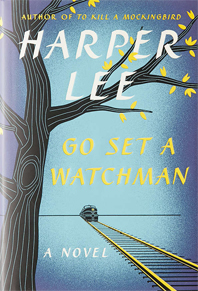
Called away on family business, I was afraid I’d missed the sweet spot for commentary on the Harper Lee/“To Kill a Mockingbird”/“Go Set a Watchman” controversy — that moment right after “Watchman’s” release on July 14 when it was all anybody in literary circles could talk about.

Go Set a Watchman

Go Set a Watchman

Then again, the Rupert Murdoch-owned publishing house HarperCollins announced just this week that it had sold more than 1.1 million copies in a week’s time, making it the “fastest-selling book in company history.” “Watchman” has rocketed to the top of the New York Times best-seller list, where it will surely stay for a while. And the Rupert Murdoch-owned Wall Street Journal not only excerpted the first chapter on the Friday before publication, but it also gave its readers a chance to win a signed first edition of the book. Talk about synergy!

So perhaps it’s not too late after all to point out that the publication of “Go Set a Watchman” constitutes one of the epic money grabs in the modern history of American publishing.

The Ur-fact about Harper Lee is that after publishing her beloved novel, “To Kill a Mockingbird,” in 1960, she not only never published another book; for most of that time she insisted she never would. Until now, that is, when she’s 89, a frail, hearing- and sight-impaired stroke victim living in a nursing home. Perhaps just as important, her sister Alice, Lee’s longtime protector, passed away last November. Her new protector, Tonja Carter, who had worked in Alice Lee’s law office, is the one who brought the “new novel” to HarperCollins’s attention, claiming, conveniently, to have found it shortly before Alice died.

If you have been following The Times’s cleareyed coverage, you know that Carter participated in a meeting in 2011 with a Sotheby’s specialist and Lee’s former agent, in which they came across the manuscript that turned out to be “Go Set a Watchman.” In The Wall Street Journal — where else? — Carter put forth the preposterous claim that she walked out of that meeting early on and never returned, thus sticking with her story that she only discovered the manuscript in 2014.

But the others in the meeting insisted to The Times that she was there the whole time — and saw what they saw: the original manuscript that Lee turned in to Tay Hohoff, her editor. Hohoff, who appears to have been a very fine editor indeed, encouraged her to take a different tack. After much rewriting, Lee emerged with her classic novel of race relations in a small Southern town. Thus, The Times’s account suggests an alternate scenario: that Carter had been sitting on the discovery of the manuscript since 2011, waiting for the moment when she, not Alice, would be in charge of Harper Lee’s affairs.

That’s issue No. 1. Issue No. 2 is the question of whether “Go Set a Watchman” is, in fact, a “newly discovered” novel, worthy of the hoopla it has received, or whether it something less than that: a historical artifact or, more bluntly, a not-very-good first draft that eventually became, with a lot of hard work and smart editing, an American classic.

Rest of the article: Source: http://www.nytimes.com/2015/07/25/opinion/joe-nocera-the-watchman-fraud.html?smid=fb-share&_r=0

Leave a comment

Filed under 2015, publishing

John Scalzi, Science Fiction Writer, Signs $3.4 Million Deal for 13 Books

Mr. Scalzi said he hoped books like “Lock In” could draw more readers toward science fiction, since many, he said, are still “gun-shy” about the genre.

By JOHN SCHWARTZ

Source: http://www.nytimes.com/2015/05/25/business/media/science-fiction-writer-signs-a-3-4-million-deal.html?ref=books&_r=2

John Scalzi, a best-selling author of science fiction, has signed a $3.4 million, 10-year deal with the publisher Tor Books that will cover his next 13 books.

Mr. Scalzi’s works include a series known as the “Old Man’s War” and the more recent “Redshirts,” a Hugo-award-winning sendup of the luckless lives of nonfeatured characters on shows like the original “Star Trek.” Three of his works are being developed for television, including “Redshirts” and “Lock In,” a science-inflected medical thriller that evokes Michael Crichton. Mr. Scalzi’s hyper-caffeinated Internet presence through his blog, Whatever, has made him an online celebrity as well.

Mr. Scalzi approached Tor Books, his longtime publisher, with proposals for 10 adult novels and three young adult novels over 10 years. Some of the books will extend the popular “Old Man’s War” series, building on an existing audience, and one will be a sequel to “Lock In.” Mr. Scalzi said he hoped books like “Lock In” could draw more readers toward science fiction, since many, he said, are still “gun-shy” about the genre.

Patrick Nielsen Hayden, the executive editor for Tor, said the decision was an easy one. While Mr. Scalzi has never had a “No. 1 best seller,” he said, “he backlists like crazy.”

“One of the reactions of people reading a John Scalzi novel is that people go out and buy all the other Scalzi novels,” Mr. Nielsen Hayden said.

He said Mr. Scalzi sells “a healthy five-figure number of his books every month,” and that he “hasn’t even begun to reach his full potential audience.”

Science fiction films like “2001: A Space Odyssey” and “Star Wars” have been considered popular classics for decades, “but there’s a lot of work to be done,” Mr. Scalzi said, in bringing readers to the genre. He said the long-term contract would allow him to continue experimenting with different forms of publishing, including online serialization, a technique he has tried with some success.

Mr. Scalzi, who lives in Ohio, said he was still trying to come to grips with the size and scope of the deal. He said his wife, Kristine, had kept his ego from going supernova.

“My celebration, personally, has just been standing around,” exclaiming with profane expressions of delight, he said. “And my wife saying, ‘Yes, now go take out the trash.’ ”

Leave a comment

Filed under 2015, writer

This Is Your Brain on Metaphors – NYTimes.com

This Is Your Brain on Metaphors – NYTimes.com.

Despite rumors to the contrary, there are many ways in which the human brain isn’t all that fancy. Let’s compare it to the nervous system of a fruit fly. Both are made up of cells, of course, with neurons playing particularly important roles. Now one might expect that a neuron from a human will differ dramatically from one from a fly. Maybe the human’s will have especially ornate ways of communicating with other neurons, making use of unique “neurotransmitter” messengers. Maybe compared to the lowly fly neuron, human neurons are bigger, more complex, in some way can run faster and jump higher.

But no. Look at neurons from the two species under a microscope and they look the same. They have the same electrical properties, many of the same neurotransmitters, the same protein channels that allow ions to flow in and out, as well as a remarkably high number of genes in common. Neurons are the same basic building blocks in both species.

So where’s the difference? It’s numbers — humans have roughly one million neurons for each one in a fly. And out of a human’s 100 billion neurons emerge some pretty remarkable things. With enough quantity, you generate quality.

Read more at: http://opinionator.blogs.nytimes.com/2010/11/14/this-is-your-brain-on-metaphors/?_php=true&_type=blogs&_php=true&_type=blogs&_php=true&_type=blogs&_r=2

Leave a comment

Filed under brain, metaphor

Writer makes it big … elsewhere

BIG IN JAPAN

by David Gordon

You might not know me, but I’m famous. Don’t feel bad. Until recently, I didn’t know I was famous either, and most days, even now, it’s hard to tell.

In 2010 I published a novel, “The Serialist.” It did fine for a debut, which is to say well enough to warrant a second, but my daily life didn’t change much: I wrote, I ran, I hung out with my friends. Then a Japanese translation came out, and things got strange. My book won a major Japanese literary contest, which was nice. Then it won another. Then another. Apparently this was extraordinary: No one had ever won all three before. I received copies of articles, which were totally incomprehensible to me except for the picture of my face and a big No. 1. I tried Google Translate, which rendered it all into tantalizing gibberish. My book was not even called “The Serialist” in Japan: The character is a pulp writer, so they used the title “Niryuu Shousetsuka,” which translates back into English as “Second-Rate Novelist.” That was me!

The odd, or oddest, part, was that I had always been a fan of Japanese culture, its films, books and art, though I had never studied it, and it played no role in my books. It was like having a distant teenage crush on someone who suddenly wrote and said, “I like you, too.”

The culmination of this peculiar adventure, which I had observed only from afar, occurred when Toei Studio made “Niryuu Shousetsuka: Serialist,” a film based on my book. That is to say, a Japanese movie set in Tokyo, with Japanese actors speaking Japanese, rather than my version, which features non-Japanese people and takes place mostly in Queens.

They made the movie very fast, in about six months, and invited me to the premiere in June 2013. My Japanese publishers had contrived to release my new book, “Mystery Girl,” at the same time. The novel wouldn’t even be published in English until July. Maybe it had something to do with the international date line, the way emails from East Asia seem to come from tomorrow, but my Japanese life was clearly way ahead of my American life. So I went.

Rest of the article at:

http://www.nytimes.com/2014/01/12/magazine/big-in-japan.html?ref=lives&_r=1


[Editor’s note: thanks to Ashlie for sending this my way.]

Leave a comment

Filed under authors, writer

E-book publishing and price fixing

Source: http://www.nytimes.com/2012/04/18/business/economy/competition-needs-protection.html?_r=1&smid=fb-share&pagewanted=all

April 17, 2012

Competition Needs Protection

New York Times

By EDUARDO PORTER

To believe publishers and authors, the government just handed Amazon a monopoly over the book market: The price-fixing suit against Apple and the nation’s top publishers filed by the Justice Department last week will free Amazon to offer ruinous discounts in the booming new market of electronic books, drive brick-and-mortar bookstores out of existence and kill off publishers’ lucrative business of ink on paper.

Yet there is a different reading to this story. Publishing companies — like bookstores — fear they are on the losing end of a technological whirlwind of digital distribution that will make much of what they do obsolete. They would like to stop it. But though publishers may be happy to subvert competition to protect their business, this can entail a heavy cost for the rest of society.

The media industry’s efforts to limit competition date at least as far back as the 1920s and 1930s, when the emergence of radio threatened newspapers’ stranglehold of local markets.

At a meeting at the Biltmore Hotel in New York in December 1933, newspaper executives offered what was essentially a plan to divvy up the audience between radio entertainment and newspaper news. The newspapers would stop their campaign against radio and reinstate radio listings if the major radio networks would limit their news offerings to a couple of short bulletins a day from the newspapers’ wire services.

The Biltmore Agreement, as their pact was known, soon fell apart, as independent stations not part of the deal started buying information from new radio news services and offering real news. Despite that cartel’s failure, the anticompetitive impulse survives to this day.

The Internet is walloping media perhaps like no other technology before. And the media establishment again looks upon competition as a hindrance to its survival.

Flailing under the loss of readers and advertisers to online competition, newspaper executives approached regulators three years ago floating the idea of an antitrust waiver. They wanted to coordinate on a strategy to charge readers for their online news and take steps against the aggregator Web sites that were republishing much of their content. Though they gained the sympathy of crucial members of Congress, the government rightly shot down the idea.

The top record labels, meanwhile, are facing a class action antitrust suit that accuses them of colluding to keep the price of online music artificially high to protect their lucrative CD business.

The suit filed last week against Apple and five of the nation’s six main publishers has a similar plot. Amazon had been buying e-books wholesale and selling many best sellers at a heavily discounted $9.99, taking the loss to encourage sales of its Kindle e-reader. Fearful that this discounting could destroy the $25-a-book hardcover business, publishers took advantage of Apple’s entry into the market to change the terms. According to the lawsuit, they colluded with the computer colossus to establish an “agency model” under which publishers would set e-book prices in a range of $12.99 to $14.99, and give the distributor — be it Apple or Amazon — a 30 percent cut.

It’s natural to feel some sympathy for old media firms as technology juggernauts bear down on them. To many of us, book publishers and newspapers are more than just businesses. They are the keepers of the culture, the guarantors of our democracy. And they are small compared with Amazon, which controls 60 percent of the growing e-book market, as well as a big share of the market for books on paper. Absent any collusion, Apple’s entry into the e-book market would be the kind of competitive challenge we should welcome in the digital world.

But the charges aren’t trivial. The kind of collusion alleged by the Justice Department is called price-fixing. It has been illegal for a very long time, even if one is fighting a very large rival. According to the Consumer Federation of America, it would cost readers about $200 million this year alone. More important perhaps, this behavior could arrest the development of innovative platforms to sell digital goods on the Web.

Competition in the digital domain doesn’t look like carmakers’ slugging it out for market share. In digital markets, dominant firms are almost inevitable. There is no other social media firm with anywhere near Facebook’s 850 million members. Almost two-thirds of all Internet searches in the United States happen on Google.

The concentration is driven by the economics of the Web. The cost to Amazon of selling one more e-book is pretty near zero. This increasing return to scale makes big digital companies much more profitable than small ones. It is compounded by what economists call “network effects”: If many programmers design apps for iPads, they will become more popular, which will encourage more programmers to write apps for them.

Competition is nonetheless crucial to keeping innovation alive. Think of Google’s successful move into the smartphone business with Android, or its less successful stab at social media with Google Plus. A lot of innovation is also built on top of the dominant platforms. That is perhaps where competition most needs protection.

European and American regulators are looking into Google’s behavior not to check how it treats Microsoft’s Bing, but to determine whether it abuses its dominant search engine to increase secondary businesses — like, say, its shopping guide — while pushing innovative rivals down the rankings. The Justice Department is interested in how Apple sets terms for media companies because it wants to make sure they have a shot to innovate on the iPad and Apple’s other platforms.

Just as important as ensuring that platforms cannot abuse their dominance is to ensure that the companies that make the products that flow on these platforms — book publishers, say — do not use anticompetitive tactics to benefit one platform at the expense of others. This is the kind of competition that the Justice Department’s civil suit against Apple and the book publishers is meant to protect.

Admittedly, the Justice Department’s case may be bad news for the established book industry. Amazon and other online competitors have squeezed Borders out of business. It is only a matter of time before cheap e-books put an end to hardcover tomes selling for $25. And with Amazon pushing into publishing itself, some publishers could become victims as well.

But what really matters to society is what the case means for the production and consumption of books. That might not be so dreadful.

For sure, if brick-and-mortar bookstores disappear, browsing will die with them. But writers and publishers will have plenty of other ways — think Amazon, Facebook or Google — of letting readers know about their books. E-books, moreover, can be profitable. Mark Cooper of the Consumer Federation of America estimated that producing, distributing and selling an e-book costs about 25 percent of the cost of a physical tome; a $10 e-book still gives publishers about $4 to cover overhead and profit. And in an e-book world, publishers’ costs are sure to fall.

While Amazon remains dominant, its share of the e-book market has fallen to about 60 percent from 90 percent. Barnes and Noble, which has about a quarter of the market, would suffer if Amazon discounts sharply. But it could shed costs by getting rid of bookstores. And publishers can recover pricing power. Apple and two of the five publishers decided to fight the charges in court. But three settled. Though they must allow Amazon to resume discounting, they must do so for only two years.

And even if every existing publisher were driven out of business, reading would probably survive. Without the middlemen, publishers might even pay higher royalties to creators.

Music offers perhaps the best parallel of what could happen to the written word online. Record labels that originally welcomed Apple’s iTunes soon realized it was a killer in disguise, allowing consumers to unbundle $13 CDs and buy only their preferred singles for 99 cents.

But it wasn’t generally terrible for musicians. ITunes offered a shot to garage bands that could never have signed with a label. And fans didn’t fare too badly. Last year, consumers bought 1.3 billion singles — saving about $5 billion by not having to buy entire albums. This is hardly chump change. Would we be willing to give this up to save endangered record labels? While we ponder this, why not consider reviving Blockbuster, Circuit City and Tower Records?

1 Comment

Filed under e-book, opinion, publishers, publishing