Tag Archives: Michael Connelly

My Summer Reading – Essays & Articles – Michael Connelly

My Summer Reading by Michael Connelly (2019)

We are well into summer at this point and I am well into my summer reading. I have an eclectic stack on my reading list. Here are a few of the highlights. Some you have had the chance to read for a while, some are new, and at least a couple are not out yet, but you can always pre-order them so you get them as soon as they are out.

First off, I just finished If She Wakes by Michael Koryta. A couple of disclaimers first. Those of you who have read my recommendations before will know he is a perennial favorite of mine. This started at least because I love the way he tells a story. Therefore, I love his books. But, of course, we are a friendly bunch in the crime fiction genre and get the chance to meet and greet each other at conventions, books signings and so forth. I met Koryta at a book convention and he’s a friend. His books led to that friendship. So, yes, the caveat here is that I am recommending a friend’s book but it’s a damn good book. The other disclaimer is that this one I listened to instead of reading the printed page. Thanks to this book I increased my stats on my pedometer because I walked more because I wanted to listen more. Every day I put in the buds and went out for my paces, only to go further and last longer so I could get more story in. This book may have helped me lose weight – what better recommendation than that! Told in multiple points of view – including through the point of view of a woman locked but alert in a coma. Ingenious stuff to go with an ingenious story with a lot of switchbacks.

The thing with me is that I can be writing when most people are reading; on a plane, lounging by a pool, even while in bed. So, I listen to a lot of books so I can get to these stories while walking or driving – believe me, in L.A. there is a lot of driving. My next suggestion is also a book I listened to, but of course is readily available in print. Bloodshed by Michael Lister. (what’s with all the Michaels?) I am particularly fond of the John Jordan series set in the panhandle of Florida and this is the 19th book in that amazing run. Lister has really mastered the art of the crime novel and this one – no spoilers – really draws from issues very important in the world today. I hate the cliché “Torn from the Headlines!” and this story is not, but it is certainly inspired by the news of the day and worth the read.

This next recommendation has a couple caveats too. It’s not available yet and I am not even finished it before recommending it. I’m lucky. I get to read it now because I have a galley. You won’t get to read it until October. I write about L.A. and so I am always looking for L.A. voices. It’s not about competition. It’s about getting other takes on this great and flawed city and its vast expanse. In the past I have told you about Joe Ide’s books and Ivy Pochoda’s book Wonder Valley. Many years back I worked with a newspaperman named Al Martinez who wrote a book about L.A. called City of Angles. One of the few titles I was ever jealous of. But he was right about this place and every writer has his or her own angle of view on it. That’s what makes their books so interesting to me. I am right in the middle of reading Steph Cha’s book Your House Will Pay coming out October 15th. I don’t know how it will end yet but to say it is so far so good is a big understatement. I am marveling at what is going on here and where it is going on. Cha has new angles on a city that has been the focus of myriad stories and films. But this one is unique and totally gripping. And her prose at times are pretty stunning. Check out this line I came across this morning:
“Smoke rose in a pillar like something from the Bible, dark and alive and climbing, becoming one with the gray sky. Shawn felt a pinprick of heat on his forehead. Touched it and gazed at his finger. Ash. It was everywhere. Flakes of it landing like snowfall.”
All I can say is, you want to know about that fire. You want to read this book.

Okay, so I told you where I have been and where I am at the moment. Now the future. The next book I’ll read is Cari Mora by Thomas Harris. It’s been out a couple of months and so far the word is that its Thomas Harris light. That’s okay. It’s been over a decade waiting for something from Harris and I’ll take anything. I am pretty sure I would not be doing what I am doing today if I had not gone to school on Thomas Harris books. Red Dragon will always be top five for me. So I am looking forward to this new lesson from the teacher.

After that, I’m reading Gone Too Long by Lori Roy. Roy doesn’t have a lot of work out there but everything she has published has been fantastic. She brings a literary sensibility to the crime genre and this book uses the lens of the past to give us a view on what is happening in our world right now. I can’t wait to dig in to this one.

Then it will be back to L.A. Robert Crais has a new one coming out in August called A Dangerous Man and that is on the schedule with me. Do you know that purely by coincidence, Harry Bosch and Elvis Cole have lived on the same street in L.A.? Yep, good ol’ Woodrow Wilson Drive. It’s actually a long street and they are not exactly neighbors, but it underlines how Elvis and Harry have trod some of the same streets for many, many years and I always want to see what Elvis and Joe Pike are up to.

Lastly, a few books on my stack that I ordered because I got excited by a review or by the words of a bookseller. I got the books and just haven’t gotten to them yet. American Spy by Lauren Wilkinson is a debut spy thriller that got raves. I want to read Bearskin by James A. McLaughlin because it won the Mystery Writers of America’s Edgar award for best first novel. I read all of those. Next week I am also going to get a copy of Colson Whitehead’s novel The Nickel Boys. I seem to favor, at least on this list, Los Angeles and Florida stories. I grew up in Florida and am always drawn to stories about it. So, many on this list are Florida writers or their stories are set in Florida or both. The Nickel Boys is set in Florida and about a hellish reform school for boys. It sounds like it was inspired by a true and horrible story I know of through local newspaper stories. I look forward to reading this book as well before the summer ends.

-Michael Connelly

Source: My Summer Reading – Essays & Articles – Michael Connelly

Leave a comment

Filed under 2019, reading

There’s a real-life Michael Connelly character in the LAPD, and she’s gunning for Harry Bosch’s job – Los Angeles Times

Mitzi Roberts always wanted to talk to serial killers.

A Los Angeles bartender and diner manager, Roberts was used to seeing cops stagger into her establishments, seeking a bite or a beer after their shift. Conversation between the investigators and Roberts, a self-described true-crime “fanatic,” came easily.

She told them of her desire to chase predators. At some point, one of them suggested a career change.

The move from diner manager to detective set Roberts on a career path that saw her climb the ranks of the Los Angeles Police Department — from a graveyard shift that is sometimes home to cops who have “screwed up” to a treasured spot in the elite Robbery-Homicide Division. After years spent fighting an uphill battle as a woman traversing a department long regarded as a boys’ club, Roberts found herself zipping around the southeastern United States on a collision course with one of America’s most prolific killers.

The veteran detective’s career history may read like it borrows a bit from the jacket copy of a popular crime novel, but it’s actually the other way around. In her 24-year career, Roberts has not only found herself involved in some of L.A.’s most infamous cases, but she’s also served as a muse to the city’s modern master of detective fiction.

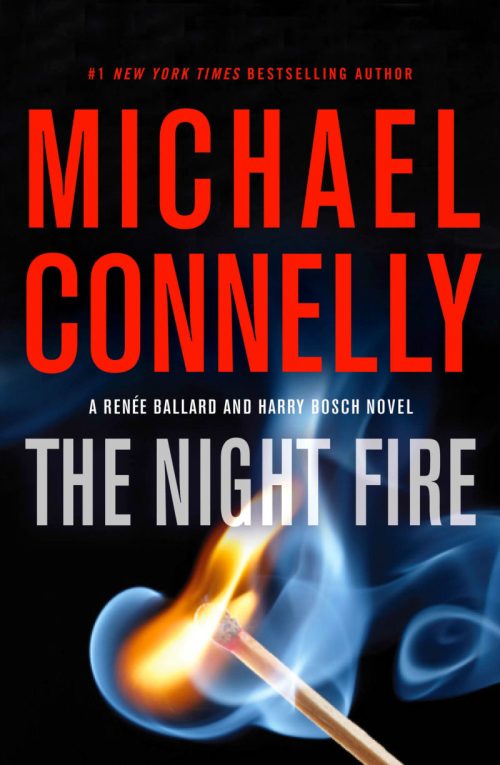
In recent years, Roberts became the inspiration for Renee Ballard, the newest protagonist to grace the pages of Michael Connelly’s bestselling novels. Ballard — a Hollywood Division detective exiled from Robbery-Homicide who shares Roberts’ real-life love of surfing, knack for swift verbal jabs and dogged dedication to the job — is more than just a passing interest for Connelly. According to the author, Ballard could one day replace Harry Bosch, the beleaguered LAPD detective who appears in 22 of his novels.

swift verbal jabs and dogged dedication to the job — is more than just a passing interest for Connelly. According to the author, Ballard could one day replace Harry Bosch, the beleaguered LAPD detective who appears in 22 of his novels.

Source: There’s a real-life Michael Connelly character in the LAPD, and she’s gunning for Harry Bosch’s job – Los Angeles Times

Leave a comment

Filed under 2019

Random act of prose: “The scowl”

Caught in a double scowl.

Caught in a double scowl.

He threatened to give me the over / under scowl. That dreaded scowl only the most celebrated police detectives have mastered.

I said I hadn’t done anything wrong.

He said, “Talk, I hold all the high cards here.”

I told him I didn’t play poker. Or crazy eights, or even solitaire.

He gave me the over scowl. “Put up or shut up.”

“Put up what?”

He placed a mirror on the table between us. “You have thirty seconds.”

“I might if I had a watch. But you guys took it from me. What time is it?”

He tapped one nicotine stained forefinger on the looking glass. “Time’s running out, punk.”

“Can I run with it? I have an appointment, you know.”

“Look at the glass, punk.” He tapped the mirror again.

I didn’t want to, but I couldn’t look at him anymore, and the Pooh Bears and Snoopys on the walls were driving me crazy. All the real interrogation rooms were full and the only thing left was this windowless, makeshift kids’ room used by cops’ kids and perps’ kids depending on what was going down. If only the World War flying Ace knew.

I looked at the mirror. He motioned for me to lean closer to him. I hesitated, but then did what he said until I was less than a foot away.
He tapped the glass again. “Down.”

Slowly, I lowered my eyes and then face. I don’t know how he did it. The mirror must have been slightly warped in some funhouse way, but there in the middle of the mirror was my face, and below and above was his face giving me the dreaded over / under scowl.

Somewhere in the night a Sopwith Camel drones peacefully, even blissfully behind enemy lines, its pilot unaware of the Fokker and the Flying Ace about to drive him to the ground. Somewhere, that ignorant pilot still has a chance. A small, slim chance, but a chance.

Not me.

I am caught in the rapid-fire vice of the over/under scowl and I can’t break free. I can’t escape. I can only feel his piercing eyes – all four of them – ripping bullet holes in my soul. Any hope I had, like the wings of my Sopwith Camel, are now tatters and flames, consumed in the hell caused by his over / under scowl.

Leave a comment

Filed under 2015, Random acts of prose, Story by author

Writing tip Wednesday: “Introductions”

Write Better: 3 Ways To Introduce Your Main Character

by Les Edgerton

Source: http://www.writersdigest.com/online-editor/write-better-3-ways-to-introduce-your-main-character?et_mid=711152&rid=239626420

1. Keep physical description minimal.

A character’s physical description—unless markedly different than the norm—does relatively little to draw the reader in. The character’s actions, or details such as his occupations and interests, are much more useful. The readers will furnish a perfectly good description on their own if you simply let them know that the Uncle Charley of your story is a butterfly collector, or the elderly toll-gate keeper on the Suwannee River. Doing so will accomplish more than 10 pages of describing hair and eye color, height, weight and all of that kind of mundane detail.

My own writing contains very little description of any of my characters—it’s virtually nonexistent—yet for years I’ve asked readers if they can describe a character I pick at random from my stories, and invariably they come up with a detailed description, no matter which character I choose. When I tell them I haven’t ever described the character mentioned, they’re surprised, and some swear that I did, even going so far as to drag out the story and skim for where I’ve included the description. They never find it.

2. Characterize through action.

Bestselling British writer Nick Hornby starts his novel How to Be Good by taking us through his protagonist’s inciting incident, revealed in an action that is contrary to her normal behavior and personality.

I am in a car park in Leeds when I tell my husband I don’t want to be married to him anymore. David isn’t even in the car park with me. He’s at home, looking after the kids, and I have only called him to remind him that he should write a note for Molly’s class teacher. The other bit just sort of … slips out. This is a mistake, obviously. Even though I am, apparently, and to my immense surprise, the kind of person who tells her husband that she doesn’t want to be married to him anymore, I really didn’t think I was the kind of person to say so in a car park, on a mobile phone. That particular self-assessment will now have to be revised, clearly. I can describe myself as the kind of person who doesn’t forget names, for example, because I have remembered names thousands of times and forgotten them only once or twice. But for the majority of people, marriage-ending conversations happen only once, if at all. If you choose to conduct yours on a mobile phone, in a Leeds car park, then you cannot really claim that it is unrepresentative, in the same way that Lee Harvey Oswald couldn’t really claim that shooting presidents wasn’t like him at all. Sometimes we have to be judged by our one-offs.

Wow! Don’t you wish you’d written that? I sure do!

3. Instill Individuality and Depth.

A very different example of establishing the protagonist’s character from the start is found in crime novelist Michael Connelly’s Lost Light:

There is no end of things in the heart.

Someone once told me that. She said it came from a poem she believed in. She understood it to mean that if you took something to heart, really brought it inside those red velvet folds, then it would always be there for you. No matter what happened, it would be there waiting. She said this could mean a person, a place, a dream. A mission. Anything sacred. She told me that it is all connected in those secret folds. Always. It is all part of the same and will always be there, carrying the same beat as your heart.

I am fifty-two years old and I believe it. At night when I try to sleep but can’t, that is when I know it. It is when all the pathways seem to connect and I see the people I have loved and hated and helped and hurt. I see the hands that reach for me. I hear the beat and see and understand what I must do. I know my mission and I know there is no turning away or turning back. And it is in those moments that I know there is no end of things in the heart.

What makes this opening different? Well, it’s by a brand-name author with a sizable audience already in place. Michael Connelly’s books have made the bestseller lists at least 19 more times than I’ve hit a grand-slam walk-off home run at Yankee Stadium as a member of the Bronx Bombers. This means he can write just about any opening he wants and it’s going to get published. It also means that in the hands of a writer without a ready-made audience such as Connelly enjoys, opening with the protagonist’s bit of philosophy might not work, if not done well. It could easily come across as sentimental or self-indulgent.

More details at: http://www.writersdigest.com/online-editor/write-better-3-ways-to-introduce-your-main-character?et_mid=711152&rid=239626420

Leave a comment

Filed under Writing Tip Wednesday

Tampa crime author sings praises of jazz great | TBO.com, The Tampa Tribune and The Tampa Times

Tampa crime author sings praises of jazz great | TBO.com, The Tampa Tribune and The Tampa Times.

TAMPA — Michael Connelly is no stranger to crime.

After all, he is the bestselling author of 27 crime fiction books that have sold 58 million copies worldwide, most featuring detective Harry Bosch or defense attorney Mickey Haller.

A television series “Bosch” is under production by Amazon Studios, and Matthew McConaughey played Haller in the 2011 film “The Lincoln Lawyer.”

Once upon a time, Connelly also covered the crime beat for the Los Angeles Times.

Yet even Connelly admits he was uncomfortable attending a jazz concert in California’s San Quentin prison in 2012.

“Everyone in that audience was pretty much a murderer,” said Connelly, who has lived in Tampa since 2001. “The night before the concert a sergeant from the prison spoke to us about precautions and how there is a no-hostage policy.”

But once the music started, Connelly noticed a change in the room full of hardened criminals.

“You saw it in their faces — how the music affected them,” he said. “It showed that there was still humanity in them, and where there is humanity there is a possibility for redemption.”

The concert, in fact, was filmed and now is featured in the documentary “Sound of Redemption: The Frank Morgan Story.”

Connelly is executive producer.

The name Frank Morgan may ring a bell to fans of the Bosch series. His real music emerges as a character in the books, bringing solace to the troubled fictional detective.

The film tells the story of the man behind that music.

To read the rest of the article: http://tbo.com/arts_music/tampa-author-sings-praises-of-jazz-great-20140726/

1 Comment

Filed under music, writing

Crime Writer Michael Connelly Shares Secrets With Students | TheLedger.com

Crime Writer Michael Connelly Shares Secrets With Students | TheLedger.com.

Sample:
Bestselling crime novelist Michael Connelly had just returned from two weeks in New York, where he met with writers planning scripts for a new TV series adapted from his books about the Los Angeles Detective Harry Bosch.

He planned to take part in a conference call Thursday evening to help determine who would direct each episode for the first season of “Bosch.”

In between, Connelly stood in the Mini Theater at Harrison School for the Arts on Thursday afternoon, handing out copies of the script for the first episode of “Bosch” to a group of teenagers. Connelly, also author of “The Lincoln Lawyer,” spent nearly two hours talking to some 30 students in the Motion Picture Arts program at the Lakeland school.

Connelly, who lives in Tampa, talked about the writing process, the creation of characters and the challenges of adapting novels for TV and movies. He also treated Motion Pictures Arts instructor Rick Jansen’s class to the opening scene of the pilot for “Bosch,” which is still in production will be available for streaming on Amazon as early as next fall.

“I think that’s really nifty,” senior Eric Moots said afterward about Connelly’s visit to the school. “I don’t think this could happen anywhere besides Harrison.”

Continued at: http://www.theledger.com/article/20140419/NEWS/140419149/1002/sports?p=1&tc=pg

Leave a comment

Filed under Writers on writing

Writing tip Wednesday: “Three pieces of advice”

In his recent 2013 ThrillerFest session “The Series Character: How to Do it Right,” Michael Connelly (author of the Harry Bosch series) offered three of his favorite bits of advice that he’s collected from other writers.

“I’ve carried these with me for decades,” he said. “I think they really sum up where you should be if you’re going to do this”—especially if you want to write crime fiction.

1. The best crime novels are not how cops work on cases; it’s how cases work on cops.
–Joseph Wambaugh

In other words, Connelly said, it’s all about character. Character is key, especially in series fiction. Readers don’t return to your work because of a plot twist—they return because of character.

2. Every character should want something, even if it is only a glass of water.
–Kurt Vonnegut

Regarding series characters, Connelly said this ties into a character’s sense of searching (which, he added, when unfulfilled, is what draws people to the next book).

3. When you circle around a murder long enough, you get to know a city.
–Richard Price

Connelly said this was Price’s reply when asked why a great writer would spend their time writing crime fiction. He pointed out that a writer should have a higher aspiration in their work—to use the form to say something about society, something about one’s city.

Source: http://www.writersdigest.com/online-editor/3-of-michael-connellys-favorite-bits-of-writing-advice?et_mid=627736&rid=1985858

Leave a comment

Filed under Writing Tip Wednesday

Writing Tip Wednesday: 15 minutes

By David E. Booker

So, how much time to do you have a day to write? How much time a day do you spend?

I read about a noted short story writer who started out writing 15 minutes a day, between 11:45 PM and midnight. As a single mom of several kids, working very hard just to hold her family together, that was the only time she had after all her kids were in bed and before she went to bed.

I wish I could remember her name, but the point is not so much her name or even that she won awards for her short stories. It is that she wrote regularly, even if all she had was 15 minutes.

Fifteen (15) minutes.

If there is one piece of advice that I have heard over and over and over again, it is to develop a routine and stick to it. Show up for your writing just like you would for your job that you work to hold body and soul together so you can write. If all you have is 15 minutes a day, use it wisely and use it well. If you can spare more, or if you operate better by setting yourself a word quota, then do it that way.

The writer James Scott Bell doesn’t have a daily quota, but a weekly one, which he then breaks down into daily installments. He says having a weekly quota works better for him because it misses a day or doesn’t write the full amount one day, he can work to make it up on the other days and still hit his weekly quota.

Certainly, if having a daily quota, then set one. I believe the writer Graham Greene had a daily quota of 500 words a day. He would write 500 words and then stop.

The writer Harry Crews often rose at 4 AM to write before going to work as a professor. One of his students, the New York Times bestselling crime novelist Michael Connelly said recently of Crews, “The singular lesson I took from him was his simple adage that if you are going to be a writer then you must write every day, even if only for 15 minutes. The last part about the 15 minutes has served me well. I’m going on 30-plus years of writing every day, even sometimes for only 15 minutes.”

So, where are your 15 minutes?

[Editor’s note: Connelly quote taken from LA Times obituary article on Harry Crews, who died earlier this year. He was known to write from 4 AM to 9 AM and to begin each session with the same plea: “God, I’m not greedy. Just give me the next 500 words.”]

Leave a comment

Filed under fifteen minutes, writing tip, Writing Tip Wednesday

E-book pricing: lawsuit filed

Source: http://www.latimes.com/entertainment/news/la-et-apple-authors-20120413,0,6062761.story

Lawsuit against Apple: Writers wary of action by Dept. of Justice

Michael Connelly and Sherman Alexie are among authors who view the Justice Department’s suit against Apple and five publishers as acting against writers’ interests.

By Carolyn Kellogg, Los Angeles Times

April 13, 2012

When the Department of Justice and state officials announced their lawsuits against Apple and five major publishers Wednesday, it sent a ripple of anxiety through the talent at the industry’s heart.

“I’m in a bit of an awkward position because this has pitted my publisher against the retailer that far and away sells more of my books than any other,” says Michael Connelly, the bestselling mystery novelist. “I don’t want to bite the hand that feeds me, and both of these hands feed me.”

Connelly is published by Little, Brown, which is owned by Hachette, one of the publishers named in the suits that has since agreed to settle.

The scrutiny given to Apple’s alleged arrangement with the publishers — they are accused of colluding to raise the price of e-books, which they have denied — is largely perceived in publishing as shifting the balance of power in bookselling to Amazon. Publishers rely on Amazon as a major source of print book sales and have generally cooperated with its policies. When it launched the Kindle, Amazon deeply discounted e-book prices and offset the loss with profits from other parts of its business. Apple has been the first significant alternative to Amazon as an e-book retailer.

“I think the DOJ’s suit is misguided,” explains Andrew Wylie, the most powerful agent in publishing, who counts a number of Nobel Prize-winners among his 800 clients. “I think it is acting against the interests of culture and diversity in publishing. I think it is acting against the interests of authors.”

In part, that’s because the pricing of e-books directly affects the way authors can earn a living — and the publishing ecosystem that sustains them. “I know for a fact that my publishers and my editors publish books that they know are going to lose money but they think should be of the world,” says National Book Award-winning writer Sherman Alexie. “The John Grishams of the world support the experimental nature of publishing.” The DOJ’s suit, he says, “gave Amazon explicit permission to go for a total monopoly.”

Connelly observes that the DOJ suit seems to be unbalanced. “I believe in fair play. So I feel that if the government is going to step in and put controls on how publishers act to ensure a competitive marketplace, then I hope the government will be just as vigilant in guarding this amazing, creative and important industry from being monopolized by one entity,” he says. ” Amazon spreads my work far and wide. You can’t beat that. I’m very grateful. But I don’t want a world where there are no bookstores or other venues for discovering my work or the work of any other writers.”

For a writer just starting out, the suit served as a reminder that publishing is in flux. “I love writing and am going to continue writing, but having all my eggs in one basket is kind of scary,” says Elliott Holt, whose debut novel will be published by Penguin in 2013.

carolyn.kellogg@latimes.com

Copyright © 2012, Los Angeles Times

[Editor’s note: while I read and enjoy the works of Michael Connelly and Sherman Alexie, I don’t think the lawsuit is “misguided.” I think colluding to fix prices is misguided and as history shows, only furthers to protect the profits of those on the inside (Those fixing the prices.) at the expensive of those on the outside (Those having to pay them). Apple should not be allowed to set prices and neither should Amazon, but in this case it appears that Apple with the aid of publishers was doing just that, which profited them at the expense of book buyers. To read earlier articles on this, click on one of the Category listings below: e-book, publishers, or publishing.]

Leave a comment

Filed under authors, e-book, publishers, publishing