Tag Archives: luke skywalker

Writing tip Wednesday: “Plotting, part 2”

MAKE PLOTTING EASIER WITH THE PLOTCLOCK – PART 2

By JOYCE SWENEY

FROM LOW POINT TO DENOUEMENT

Plotting time

Plotting takes time.


Last time we covered the first half of the Plotclock template, up through Act 1; this month, we’re taking it home with the rest of the story structure.

Act 2 is usually a series of failures, losses and attempts to navigate the new world using the old skills. Events will punish the main character for refusing to change until they are at a breaking point and all seems lost. Fun to observe that at this point in stories, main character is often actually shown making a physical descent of some kind, like a symbolic falling to their knees. The story “breaks” them here and opens them to:

THE CHANGE

Right after The Low Point in the beginning of Act 3, the main character makes a major tactical change, the one the reader has been hoping for: the shy person starts to speak up, for instance. In Act 3, the main character is rewarded for the change by gaining strength and power. But at the same time, the forces against her react and also become stronger.

Stakes and hopes for the reader begin to climb in Act 3, but reader is encouraged to think no one can stop our Main Character now until:

THE TURNING POINT

More like a curveball, this is a surprise that comes from left field and changes the game, raising the stakes and making the eventual climax look much more difficult for the main character than we ever could have guessed. This is the most often overlooked plot point and probably the one that separates a good plotter form a great plotter. The classic example would be Luke Skywalker doing very well in his battle with Darth Vadar until….”Luke, I am your father.”

THE CLIMAX

Another moveable plot point, this is the mother-of-all battles in the novel, when the main character gets his final exam, as it were… when all the marbles are at stake and tension is at the highest. The climax will change everything one way or another. In action/adventure, it’s literally a battle, but there should be a high stakes climax even in the quietest, most literary work.

A main character who stands up to a bully might just do it with words, but it should still be big and powerful as a moment. In a very commercial story, the climax comes almost at the end (because who cares about denouement when the monster is dead?) In a literary story you can take almost a quarter of the book to clean up the emotional havoc wreaked at the climax.

THE DENOUNEMENT

Whatever you need to clean up the mess and let the reader know what they need to know about how things turned out after the battle was won. No more, no less.

The joy of The Plot Clock is this: that it guides you when you’re lost, helps you realize which plot points you might be missing, clears up the terror on where to begin, and just in general, is a good friend to hold your hand as you plot your novel. If you’re a plotter, you probably will consult it before you even start to write. If you like to plunge and discover as you go, it’s a great revision tool.

—-

Joyce Sweeney is the author of 14 novels for young adults and one book of poetry. A writing teacher and mentor to aspiring authors, she runs writer’s workshops, critiques manuscripts, and conducts classes and seminars throughout the state of Florida. This article is just one of the ten lessons included in her Fiction Writing Essentials which starts in July and is taking registrations now at: www.sweeneywritingcoach.com.

[Editor’s note: This entry comes courtesy of Bruce Hale. Bruce has written and illustrated over 25 books for kids. His Underwhere series includes Prince of Underwhere and Pirates of Underwhere. His Chet Gecko Mysteries series includes: The Chameleon Wore Chartreuse, The Big Nap, The Malted Falcon, Hiss Me Deadly, and others. More at http://www.brucehale.com/]

Leave a comment

Filed under Writers on writing, Writing Tip Wednesday

Ten Rules for Writing, and a bonus rule

Pathway

Rules are like a pathway and can be helpful.

Despite the writer W. Somerset Maugham’s admonition that there are three rules for writing, but unfortunately nobody knows them, there continue to be plenty of offerings from an ever-growing number of people. Here is yet another set of rules provided by European bestselling author Glenn Meade at the Knoxville Writers’ Guild on Thursday, Feb. 2, 2012. Commentary and fleshing out provided by the blog editor, David E. Booker. A partial list of Meade’s novels are at the end of this entry. Use these writing rules as you see fit.

1) First, action, then reaction

Your protagonist needs to be taking action, not just reacting to the events of the story / novel / film / play. Of course, there is always one major exception to this. That is at the very beginning. At that point, the protagonist is usually reacting to what is referred to as the inciting incident. For example, think of the first Star Wars movie. Luke Skywalker is “stuck” on his uncle’s farm in an out-of-the-way part of the galaxy. He longs for something else, but feels like he will never get it. Then storm troopers arrive, ransack the farm, kill his uncle and aunt, and as it puts it: “There is nothing for me here now.” So, to borrow from another story about a young boy: he lights out for the territories. So, at the start of your story, it is usually the antagonist that takes the first action, to which the protagonist reacts, and then begins action to restore the balance upset by the antagonist.

2) Showing is better than telling

It usually works better if you show how a character feels about another one rather than telling. If boy loves his dog, how does he show it? By feeding the dog, playing with it, letting it sleep with him (especially if his parents object), or in spite of having allergies which the dog dander might aggravate.

3) Every scene has three senses

Photo of three leaves

Every scene has three senses.

There is more than meets the eye on the printed page. How do the flowers smell? What does the rain feel like? Even, how does a particular place make the protagonist feel? Does going back to a childhood home make him feel sad or happy, angry or melancholic? Smells can evoke emotions, so describe how something smells, then maybe describe how the protagonist reacts to the smell, if it is important for him or her to do.

4) If you have two heroines, make one blond and the other brunette

Give your main characters distinguishing physical characteristics, or some sort of distinguishing characteristics. Certainly, hair color is a very easy characteristic, and can help you, the author, tell your characters apart, regardless of their sex.

5) Likeable protagonist

Readers want to at the very least empathize with your protagonist and her situation and the easiest way to do this is to make her likeable. That doesn’t meant she should be perfect. Perfection won’t help your character.

There are other ways to make your protagonist empathetic. One, make her the best at whatever she does. Two, put her in extreme peril early on in the story. This could be mental or physical, though physical might be easier to show. Three, make her the underdog. Almost everybody has a soft spot for the underdog, even a smart alecky one. Four, use humor. Nothing like humor to break the ice and break the barrier between protagonist and reader.

6) Dialogue is people talking

It is not, as it is sometimes referred to: “As you know, Fred” exchanging of information. It is not one chemist telling another chemist something they should both already know about chemical reactions.

It is also not rambling speech that goes nowhere, or tails off, or full of the “ahs” and “ohs” and other verbal ticks we all have.

Dialogue

Dialogue is not as easy as it sounds.

No real-life conversation would work verbatim in a story. Dialogue is “heighten” speech. It gives the impression of everyday speech, but with “half the fat” so to say.

Also, the best dialogue is often not about what the dialogue is about. Or, to quote Bob McKee, from his writing book Story: “If the scene is about what the scene is about, then the scene is dead.” In short, dialogue is often as much about what is NOT said as what is said.

All of the above is part of what makes dialogue tough to master.

7) Speech ties to speech acts

This can be overdone, both in the number of times used and as a way to sneak in adverbs and adjectives. Example: “Hey,” Bob said, waving his hand to get her attention. He straightened his tie as his date approached. This lets the reader know that Bob might be a little nervous, that this could be his first date with the woman. What you don’t want to do is go: “Hey,” Bob said, waving his hand excitedly to get her attention. He straightened his tie nervously as she approached.

Speech ties to speech acts is also the simple matter of if there is an action that follows somebody speaking, the action is that of the person speaking. Example: “Hey,” Bob said. She waved her hand to get his attention. Unless Bob is short for Bobbie is short for Roberta and “Bob” is how she is usually referred to and the reader knows this, the above is one person speaking followed by another person doing an action.

8) Paragraphs are for point of view

Within a paragraph, stick to one character’s point of view. If you need to switch points of view, start a new paragraph.

9) Scenes have a certain movement

Each scene or chapter has its own small arc to it. A chapter might have several small arcs to them. Within that arc, there is movement: physical, emotional, mental, spiritual. That movement is generally from a negatively charge beginning to a positively charged ending, or from a positive beginning to a negative ending.

Example, if in scene A, your protagonist is trying to get to a friend’s house, the end of that scene will be when he gets there or doesn’t. But along the way, he shouldn’t stop to buy a Mother’s Day card for his mother, a sweet role for his breakfast, stop and read the newspaper (whatever that is), or anything else that interrupts the flow. Certainly, the protagonist can run into obstacles, but the obstacles should be in importance to the scene and story. For example, if the protagonist getting to his friends house is a minor part of the story, it should not be weighed down with major obstacles. The only possible exception to this is if you are writing a humorous story, the obstacles can be out of proportion, but they should still be weighed against the overall flow of the story. After all, a humorous story with one scene that is much more funny than the rest of the story will only make the rest of the story seem flat.

10) Stick to the rules

If a character has a characteristic on page one, she should still have that characteristic on page 10 and throughout the story.

11) Upon occasion, don’t be afraid to break the rules

Know the rules, but also know when to bend or even break them. God won’t smite you and sometimes it’s necessary. But it should not be the first thing you try and like seasoning in a soup often works best when done in small amounts. A little salt can go a long.

Writing books to consider:
Stein on Writing by Sol Stein
Writing the Breakout Novel by Donald Maass
Story: Substance, Structure, Style, and the Principles of Screenwriting by Robert McKee.

Some novels by Glenn Meade:
The Second Messiah: a Thriller
Snow Wolf
Resurrection Day
Web of Deceit
The Devil’s Disciple.

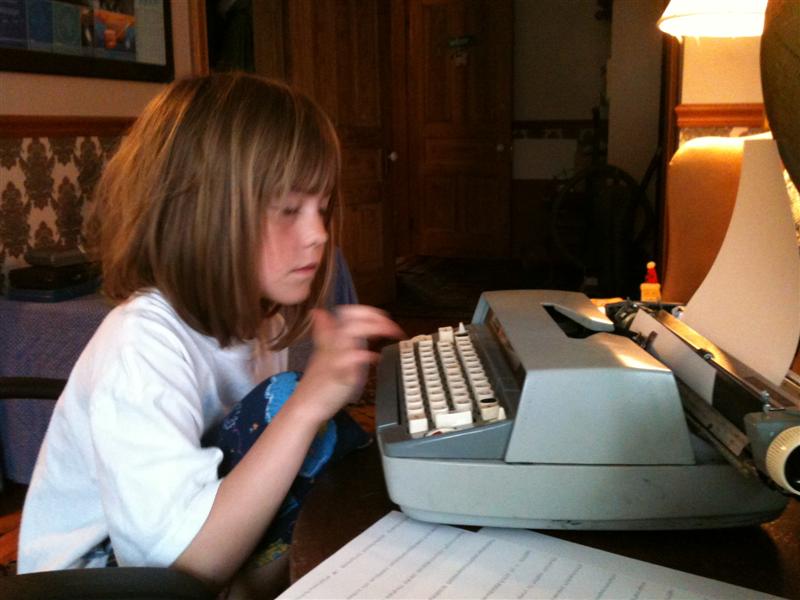
Young writer at work

Young writer at work.

Some novels by the web log editor:
Not one. Not yet, anyway. Working on it.

Disclaimer: any errors are mine. Somebody has to own them.

2 Comments

Filed under Glenn Meade, Knoxville Writers' Guild, writer, writing, writing tip