Tag Archives: Knoxville Writers’ Guild

2017 Knoxville Writers’ Guild Contest

Preamble

“Home is where the heart is.” – Proverb

“After a good dinner one can forgive anybody, even one’s own relatives.”
– Oscar Wilde, A Woman of No Importance

As the shadows lengthen and the verdure of summer yellows and browns, thoughts turn to the approach of cooler weather, longer nights, and our families. For many of us the start of the new school year conjures gilded memories of childhood. Increasingly, Halloween kicks off the holiday season by letting our imaginations dabble in alternative realities: costumes, masks, hauntings, and mazes let us self-determine the constructs of our lives, at least for an evening. We disguise ourselves and play tricks on one another before the formalities and traditions of Thanksgiving and the winter holidays order our hours, days, and weeks. Throughout autumn the idea of family moves closer and closer to the center of our thoughts and activities. And as it does, we reflect on ourselves in relation to others with whom we share the moniker ‘family’.

With this in mind, the Knoxville Writers’ Guild is opening its first Autumn Writing Contest with ‘Family’ as the theme. We are inviting submissions that examine the complex nature of families and our relationships with those deemed closest to us by culture, society, and blood.

2017  Knoxville Writers’ Guild Autumn Contest

The Knoxville Writers Guild is accepting submissions for the its first Autumn Knoxville Writers Guild Contest beginning August 31, 2017 through midnight, October 31, 2017.

Contestants may enter their work in several categories including poetry, literary nonfiction and literary short fiction. There is also a Young Writers category in which student may submit in any of the previously mentioned genres. Judges will be announced shortly.

Please direct questions regarding the contest here.

Literary Short Fiction

Guidelines:
Entry consists of one short story totaling no more than 3,000 words. See General Guidelines for additional instructions.
Members: Free
Non-Members: $30

Poetry

Guidelines:
Entry consists of no more than three typed poems totaling 100 lines or fewer. If more than one poem is entered on the same submission, poems will be judged as a collection. There are no restrictions as far as style, content or spacing.
See General Guidelines.
Members: Free
Non-Members: $30

Literary Nonfiction

Guidelines:
Entry consists of one typed, double-spaced nonfiction essay of no more than 3,000 words.
See General Guidelines.
Members: Free
Non-Members: $30


Young Writers
Open to all students grades 7 through 12 of Knox and adjoining counties.

Guidelines:
Fiction: Entry consists of one short story or stand-alone novel excerpt totaling no more than 3,000 words, double-spaced.
Nonfiction: Entry consists of essay totaling no more than 3,000 words, double-spaced.
Poetry: Up to a maximum of three typed poems totaling 100 lines or fewer with no restrictions as far as style, content or spacing.  Poems should be submitted as a single document. Poems will be judged as a collection.

Do not include any identifying information on the submissions themselves.

If you are a teacher or school submitting entries on behalf of your students, please add the following information in addition to the information required by the General Guidelines:

  • School name
  • Teacher or school representative name
  • School Address
  • School phone number

Please contact us if your school or club needs any additional information for bookkeeping or payment purposes.
Students: Free

Complete guidelines for the entries can be found here.

Leave a comment

Filed under 2017, contest

Photo finish Friday: “Shameless self-promotion, part2”

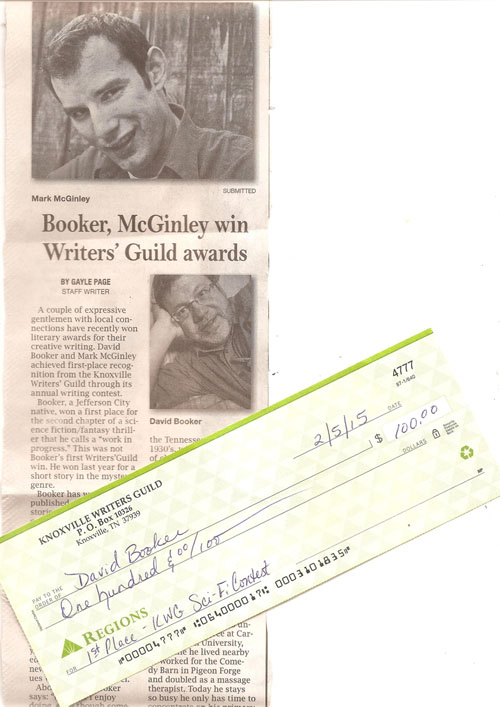
After some delays, the 1st Place Check for the Knoxville Writers' Guild Science Fiction and Fantasy writing contest arrived. The 2015 KWG writing contest is now accepting submissions. Go to http://www.knoxvillewritersguild.org/contest.

After some delays, the 1st Place Check for the Knoxville Writers’ Guild Science Fiction and Fantasy writing contest arrived. The 2015 KWG writing contest is now accepting submissions. Go to http://www.knoxvillewritersguild.org/contest.

1 Comment

Filed under 2015, photo by David E. Booker, Photo Finish Friday

Some shameless self-promotion

Booker, McGinley win Writers’ Guild awards

Source: http://www.standardbanner.com/news/booker-mcginley-win-writers-guild-awards/article_87118cd4-bd2b-11e4-ba8a-b37639bc4d99.html

By Gayle Page – Staff Writer

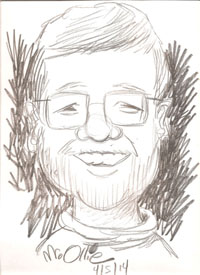
David E. Booker -- lost in the cosmos, as always.

David E. Booker — lost in the cosmos, as always.

A couple of expressive gentlemen with local connections have recently won literary awards for their creative writing. David Booker and Mark McGinley achieved first-place recognition from the Knoxville Writers’ Guild through its annual writing contest.

Booker, a Jefferson City native, won a first place for the second chapter of a science fiction/fantasy thriller that he calls a “work in progress.” This was not Booker’s first Writers’ Guild win. He won last year for a short story in the mystery genre.

Booker has written and published several short stories, and he has been a contributor to a few area newspapers, including the Morristown Citizen Tribune.

He earns his living as a writer, currently doing technical writing for Y-12. Earlier, he did technical and promotional consumer writing for Phillips Electronics (formerly Magnavox), and has done some promotional writing for Log Home magazines, as well. For the past three years Booker has served as editor of his neighborhood newsletter, and he continues working on his novel.

About writing Booker says: “It’s what I enjoy doing, even though sometimes I sit frustrated in front of a blank screen.” He is a long-time member of the Knoxville Writers’ Guild, and invites other interested writers to join and enjoy the support of an active, dedicated and diverse writing community.

Mark McGinley, another former resident of Jefferson City who is now Assistant Professor of Theater and Technical Director of Stage Design at Lincoln Memorial University, is also a winner of the Knoxville Writers’ Guild 2014 contest.

McGinley’s writing primarily focuses on his work as a playwright. His winning entry “Still Waters,” is a one-act play set in the Tennessee hills in the 1930’s, with a ragtag cast of characters and a moonshine theme. It hasn’t been performed on stage yet, but whenever that happens, the 32-page script will take actors about 30 minutes to execute.

He has had one play entitled “Sold” performed by a theater workshop group (now disbanded), but McGinley still has plenty of other ideas and plays he hopes to produce. It’s possible that one of his plays will be performed at the Tiger Lily Theater in Knoxville, in April.

McGinley earned his undergraduate degree at Carson-Newman University, and while he lived nearby he worked for the Comedy Barn in Pigeon Forge and doubled as a massage therapist. Today he stays so busy he only has time to concentrate on his primary vocation, which is theater. He received his graduate degree, a masters in theater design and stage combat, from Louisiana Tech.

About writing McGinley says: “It’s hard work until you come up with an idea that burns inside of you until you put it on a page. Then it’s more work, work, work.”

Of course, he would never want to do anything else.
Finishing first earned Booker and McGinley $100 each in prize money. Aspiring writers who might be interested in joining the Knoxville Writers Guild are invited to go online to http://www.knoxvillewritersguild.org and see what they have to offer, or write to them for an informational brochure, at Knoxville Writers’ Guild, P.O. Box 10326, Knoxville TN 37939-032.

Leave a comment

Filed under 2015, Self-promotion

2014 Contest | Knoxville Writers’ Guild

2014 Contest | Knoxville Writers' Guild.

Still time to enter. Deadline has been extended to August 15th.

Categories include Creative Nonfiction, Crime/Mystery. Science Fiction/Fantasy, Novel Except, One Act Play, Short Story, Poetry, Romance, Screenwriting, Young Writer’s Fiction Prize, and Young Writer’s Poetry Prize.

Details located at: http://www.knoxvillewritersguild.org/contest

Leave a comment

Filed under writing contest, writing tip

Writing tip Wednesday: “Character Dimensions and Sketch”

On Saturday, February 1, 2014, I took a workshop sponsored by the Knoxville Writers’ Guild (www.knoxvillewritersguild.org) and led by nationally published author Pamela Schoenewaldt (www.PamelaSchoenewaldt.com and on Facebook at https://www.facebook.com/pages/Pamela-Schoenewaldt/158580547517755?ref=tn_tnmn).

Answering questions beforehand could save you heartburn later.

Answering questions beforehand could save you heartburn later.

The workshop was on character development. What you have below is the third of the three handout exercises from the workshop. The first one, “Who are you?” was posted two Wednesdays ago. The second one, “Conflict Worksheet” was posted last Wednesday.

Each previous worksheet / exercise could be done in ten minutes or less, and oftentimes not pondering too long is best. This worksheet may take a little longer, but like the others can be used for the both the protagonist and antagonist of the story or novel you are working on, or just about any character you want to use it on. It might also be helpful if writing a memoir or biography.

CHARACTER SKETCH EXERCISE

Answer without worrying about grammar or logic.
• NAME your character

• LEARN your character by considering these dimension (writing notes on each or most is ideal)

• REMEMBER that your goal is a rounded character (not all good or bad) with a capacity for moving action.

• SKIP dimensions which repeat information.

• BEWARE of main characters who are very young, psychotics, or whose condition severely restricts their capacity for change.

• KNOW everything about this person.

CHARACTER DIMENSIONS

1. Age, physical appearance and attitude to body.

2. Significant health issues.

3. Distinctive physical signs: scars, handicaps, beauties, tics, tattoos, gestures.

4. Manner of speaking (level of language, accent, peculiarities). Manner of dress.

5. Living situation (where, with whom, how living space reflects character).

6. Socio-economic level and attitude to this level (satisfied, indifferent, ambitious?).

7. Work/ profession/ main activity.

8. Performance in Work/ profession/ main activity.

9. Sexuality and relationship to it (fears, doubts, longings, obsessions).

10. Quality of childhood.

11. Current relationship with family – how does it affect the person?

12. Significant intimate relationships and how they reflect the person.

13. What friends does character have? Attitude to friends, their attitudes to him/her.

14. Significant interests, hobbies, passions, obsessions.

15. Religious/spiritual practice and faith.

16. Fundamental belief about life/self (“The most important thing is . . . “)

17. How does the way the character sees him/her self compare to others’ views of him/her?

18. Major strength (include hidden strengths which could be mobilized).

19. Major success/failure or secret of past. (Any significant patterns?)

20. Typical way of dealing with stress or crisis… (Does it work? Should it change?)

21. Major weakness and fear.

22. Ambitions and blocks to achievement.

23. Shaping force/person/event of past.

24. What is not working for your character now?

25. What would your character sacrifice or fight for?

26. Where does your character experience a major conflict in values?

27. Where does your character draw the line: s/he wouldn’t do this….

28. What might push your character up to the line?

29. What conflict, choice or crisis faces the character now?

Leave a comment

Filed under Photo by author, writing tip, Writing Tip Wednesday, writing tips

Writing tip Wednesday: “Conflict”

On Saturday, February 1, 2014, I took a workshop sponsored by the Knoxville Writers’ Guild (www.knoxvillewritersguild.org) and led by nationally published author Pamela Schoenewaldt (www.PamelaSchoenewaldt.com and on Facebook at https://www.facebook.com/pages/Pamela-Schoenewaldt/158580547517755?ref=tn_tnmn).

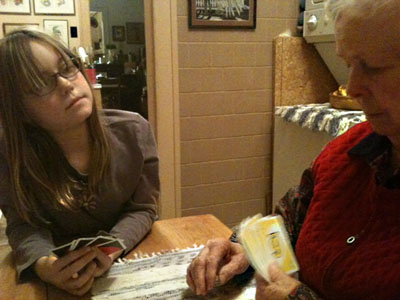
Even a friendly game of cards might harbor some conflict.

Even a friendly game of cards might harbor some conflict.

The workshop was on character development. What you have below is the second of the three handout exercises from the workshop. The first one, “Who are you?” was posted last Wednesday. Each handout can be done in ten minutes or less, and oftentimes not pondering too long is best. The first exercise was called “Who are you?” The you refers to the character. This worksheet can be used for the both the protagonist and antagonist of the story or novel you are working on, or just about any character you want to use it on. It might even be helpful if writing a memoir or biography.

CONFLICT WORKSHEET

Answer without worrying about grammar or logic. Emotions can be messy and illogical. The point is that they MATTER.

1. More than anything, my character wants. . .

2. Getting it matters so much because . . .

3. But the problem/obstacle is . . .

4. My character feels (use 4+ adjectives)

5. Giving up would mean . . .

6. To “win” the character must overcome . . .

7. Who will help and how?

8. Name 3 possible LOCATIONS where this conflict will play out. What OBJECTS will be important?

9. The outcome/ resolution will change the character. Now s/he will . . .

Leave a comment

Filed under writing tip, Writing Tip Wednesday, writing tips

Writing tip Wednesday: “Who are you?”

On Saturday, February 1, 2014, I took a workshop sponsored by the Knoxville Writers’ Guild (www.knoxvillewritersguild.org) and led by nationally published author Pamela Schoenewaldt (www.PamelaSchoenewaldt.com and on Facebook at https://www.facebook.com/pages/Pamela-Schoenewaldt/158580547517755?ref=tn_tnmn).

The workshop was on character development. What you have below is one of the three handout exercises from the workshop. I will be posting the others over time. Each handout can be done in ten minutes or less, and oftentimes not pondering too long is best. The first exercise is called “Who are you?” The you refers to the character. This worksheet can be used for the both the protagonist and antagonist of the story or novel you are working on, or just about any character you want to use it on. It might even be helpful if writing a memoir or biography.

WHO ARE YOU?

Your name is . . .

Your age is . . .

I can see that you are . . . (location)

And you’re looking at . . .

And you’re feeling . . . .

Your great strength is . . . .

Your fear or weakness is . . . .

It’s too bad that . . . .

You’d really laugh if . . . .

Most people don’t know that you . . .

Very soon you must . . . .

The challenge will be . . . .

You will get strength from . . . .

Looking in your eyes, I know that . . .

Leave a comment

Filed under writing tip, Writing Tip Wednesday

Sunday Shameless Self-Promotion: “I am a winner!”

Below is an e-mail I received recently in regards to a contest I entered earlier this year.

Award winning writers

Award winning writers

Congratulations to all who won. No contest is easy to enter. You are putting your writing out there and hoping it will attract the right readers and judges. Among the judges for these contest categories are nationally and even internationally known writers, for example, Michael Knight, The Typist, and Glenn Meade, Resurrection Day, as well as published and awarding-winning poets William Pitt Root and Pam Uschuk. Now, if you look under the Crime/Mystery category you find that the first-place winner is (and this is the shameless self-promotion) me. I won for submitting a section of my novel, The Painted Beast, about a once-lionized cop who finds true heroism in saving his family and in so doing saving himself.

Anyway, here is the e-mail:

Thanks to everybody for waiting so patiently for our contest to wrap up. Winners were announced at the October guild meeting and have been posted to the KWG web site, but I wanted to follow up via email as well for the sake of those who didn’t make it to the meeting and who may not have their eyes trained on the web site. Prizes were awarded as follows:

Leslie Garrett Prize – judged by Michael Knight, Author
1. ) Milk House Water, by Rita Welty Bourke
2. ) A Fine Party, by Phyllis Gobbell

SciFi/Fantasy – judged by Debra Dixon, Publisher, Belle Bridge Books
1. ) Remi Bids Farewell, by Wendy Jo Rogers
2. ) Flight of the Victory, by Zachariah Foster
3. ) The Gersemian Relic, by Jeff L. Horner

Crime/Mystery – judged by Glen Meade, Author
1. ) The Painted Beast, by David E. Booker
2. ) Wheels of Justice, by Robert W. Godwin
3. ) World of their Own, by Mark Freeman

Novel Excerpt – judged by Dr. Alan Wier, Professor of English, UT, Knoxville
1. ) Where You Ought to Be, by Jane Sasser

Creative Nonfiction – judged by John Adams, Author
1. ) True Love, One Story in the Life of an Innkeeper, by Stephanie Levy
2. ) Where There’s Smoke, by Eli Mitchell
3. ) Playing by Ear, by Phyllis Gobbell

Poetry – judged by William Pitt Root and Pam Uschuk, Poets
1. ) Jane Sasser
2. ) Eli Mitchell
3. ) Cathy Kodra

Youth Poetry – judged by William Pitt Root and Pam Uschuk, Poets
1. ) Noah Gurley
2. ) Christian Cain
3. ) Eric Nutter

Youth Fiction – judged by Flossy McNabb, Co-Owner Union Avenue Books
1. ) Melancholy Discord, by Isabel Gellert
2. ) Follow Your Hands, by Vanessa Slay
3. ) Deciding Justice, by Alyssa J. Stewart

Plays – judged by Dr. Deborah Anderson, Professor of Theater, MTSU
1. ) Sold, by Mark McGinley

Thanks for entering the contest. We look forward to reading another great batch of entries next year.

The KWG Contest Committee
www.knoxvillewritersguild.org

2 Comments

Filed under Self-promotion

KWG Contests deadline is April 30, 2013

Contests deadline April 30th.

Contests deadline April 30th.

Prepare your manuscripts! The Knoxville Writers’ Guild is accepting submissions for its annual writing contests through April 30. This year’s categories include SciFi/Fantasy, One Act Play, Screenwriting, Literary Fiction, Novel Excerpt, Poetry, Creative Nonfiction and Crime/Mystery. Young adults have categories in both poetry and fiction this year. For more information, including submission guidelines, visit www.knoxvillewritersguild.org/contests.htm

You don’t have to live in Knoxville, TN and you don’t have to be a member of the Knoxville Writers’ Guild in order to enter. But time is running out.

Leave a comment

Filed under Knoxville Writers' Guild, writing contest

Ten Rules for Writing, and a bonus rule

Pathway

Rules are like a pathway and can be helpful.

Despite the writer W. Somerset Maugham’s admonition that there are three rules for writing, but unfortunately nobody knows them, there continue to be plenty of offerings from an ever-growing number of people. Here is yet another set of rules provided by European bestselling author Glenn Meade at the Knoxville Writers’ Guild on Thursday, Feb. 2, 2012. Commentary and fleshing out provided by the blog editor, David E. Booker. A partial list of Meade’s novels are at the end of this entry. Use these writing rules as you see fit.

1) First, action, then reaction

Your protagonist needs to be taking action, not just reacting to the events of the story / novel / film / play. Of course, there is always one major exception to this. That is at the very beginning. At that point, the protagonist is usually reacting to what is referred to as the inciting incident. For example, think of the first Star Wars movie. Luke Skywalker is “stuck” on his uncle’s farm in an out-of-the-way part of the galaxy. He longs for something else, but feels like he will never get it. Then storm troopers arrive, ransack the farm, kill his uncle and aunt, and as it puts it: “There is nothing for me here now.” So, to borrow from another story about a young boy: he lights out for the territories. So, at the start of your story, it is usually the antagonist that takes the first action, to which the protagonist reacts, and then begins action to restore the balance upset by the antagonist.

2) Showing is better than telling

It usually works better if you show how a character feels about another one rather than telling. If boy loves his dog, how does he show it? By feeding the dog, playing with it, letting it sleep with him (especially if his parents object), or in spite of having allergies which the dog dander might aggravate.

3) Every scene has three senses

Photo of three leaves

Every scene has three senses.

There is more than meets the eye on the printed page. How do the flowers smell? What does the rain feel like? Even, how does a particular place make the protagonist feel? Does going back to a childhood home make him feel sad or happy, angry or melancholic? Smells can evoke emotions, so describe how something smells, then maybe describe how the protagonist reacts to the smell, if it is important for him or her to do.

4) If you have two heroines, make one blond and the other brunette

Give your main characters distinguishing physical characteristics, or some sort of distinguishing characteristics. Certainly, hair color is a very easy characteristic, and can help you, the author, tell your characters apart, regardless of their sex.

5) Likeable protagonist

Readers want to at the very least empathize with your protagonist and her situation and the easiest way to do this is to make her likeable. That doesn’t meant she should be perfect. Perfection won’t help your character.

There are other ways to make your protagonist empathetic. One, make her the best at whatever she does. Two, put her in extreme peril early on in the story. This could be mental or physical, though physical might be easier to show. Three, make her the underdog. Almost everybody has a soft spot for the underdog, even a smart alecky one. Four, use humor. Nothing like humor to break the ice and break the barrier between protagonist and reader.

6) Dialogue is people talking

It is not, as it is sometimes referred to: “As you know, Fred” exchanging of information. It is not one chemist telling another chemist something they should both already know about chemical reactions.

It is also not rambling speech that goes nowhere, or tails off, or full of the “ahs” and “ohs” and other verbal ticks we all have.
Dialogue

Dialogue is not as easy as it sounds.

No real-life conversation would work verbatim in a story. Dialogue is “heighten” speech. It gives the impression of everyday speech, but with “half the fat” so to say.

Also, the best dialogue is often not about what the dialogue is about. Or, to quote Bob McKee, from his writing book Story: “If the scene is about what the scene is about, then the scene is dead.” In short, dialogue is often as much about what is NOT said as what is said.

All of the above is part of what makes dialogue tough to master.

7) Speech ties to speech acts

This can be overdone, both in the number of times used and as a way to sneak in adverbs and adjectives. Example: “Hey,” Bob said, waving his hand to get her attention. He straightened his tie as his date approached. This lets the reader know that Bob might be a little nervous, that this could be his first date with the woman. What you don’t want to do is go: “Hey,” Bob said, waving his hand excitedly to get her attention. He straightened his tie nervously as she approached.

Speech ties to speech acts is also the simple matter of if there is an action that follows somebody speaking, the action is that of the person speaking. Example: “Hey,” Bob said. She waved her hand to get his attention. Unless Bob is short for Bobbie is short for Roberta and “Bob” is how she is usually referred to and the reader knows this, the above is one person speaking followed by another person doing an action.

8) Paragraphs are for point of view

Within a paragraph, stick to one character’s point of view. If you need to switch points of view, start a new paragraph.

9) Scenes have a certain movement

Each scene or chapter has its own small arc to it. A chapter might have several small arcs to them. Within that arc, there is movement: physical, emotional, mental, spiritual. That movement is generally from a negatively charge beginning to a positively charged ending, or from a positive beginning to a negative ending.

Example, if in scene A, your protagonist is trying to get to a friend’s house, the end of that scene will be when he gets there or doesn’t. But along the way, he shouldn’t stop to buy a Mother’s Day card for his mother, a sweet role for his breakfast, stop and read the newspaper (whatever that is), or anything else that interrupts the flow. Certainly, the protagonist can run into obstacles, but the obstacles should be in importance to the scene and story. For example, if the protagonist getting to his friends house is a minor part of the story, it should not be weighed down with major obstacles. The only possible exception to this is if you are writing a humorous story, the obstacles can be out of proportion, but they should still be weighed against the overall flow of the story. After all, a humorous story with one scene that is much more funny than the rest of the story will only make the rest of the story seem flat.

10) Stick to the rules

If a character has a characteristic on page one, she should still have that characteristic on page 10 and throughout the story.

11) Upon occasion, don’t be afraid to break the rules

Know the rules, but also know when to bend or even break them. God won’t smite you and sometimes it’s necessary. But it should not be the first thing you try and like seasoning in a soup often works best when done in small amounts. A little salt can go a long.

Writing books to consider:
Stein on Writing by Sol Stein
Writing the Breakout Novel by Donald Maass
Story: Substance, Structure, Style, and the Principles of Screenwriting by Robert McKee.

Some novels by Glenn Meade:
The Second Messiah: a Thriller
Snow Wolf
Resurrection Day
Web of Deceit
The Devil’s Disciple.

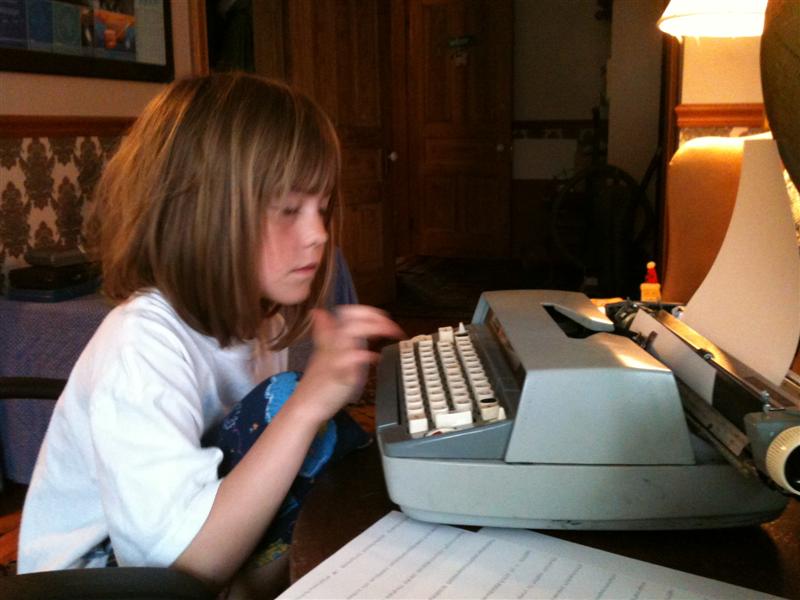
Young writer at work

Young writer at work.

Some novels by the web log editor:
Not one. Not yet, anyway. Working on it.

Disclaimer: any errors are mine. Somebody has to own them.

2 Comments

Filed under Glenn Meade, Knoxville Writers' Guild, writer, writing, writing tip